
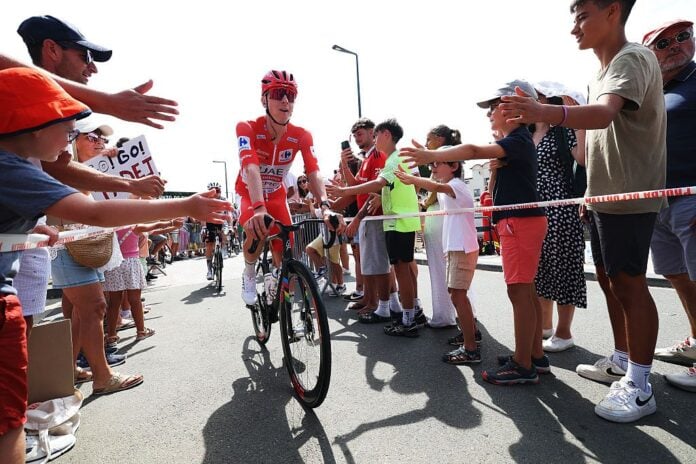
The Vuelta a España 2026 heads into Andorra on Tuesday 25 August for a brutally compressed 104.8-kilometre mountain stage starting and finishing in Andorra la Vella, with three Category 1 climbs and almost 3,000 metres of ascent packed into little more than two and a half hours of racing.
Stage 4 was already one of the most important days in the Vuelta a España 2026 route. The events of Monday have made it even more significant. Stage 3 towards Font-Romeu was stopped and ultimately cancelled after a severe hailstorm hit the race near the end of the Col de Mont-Louis, denying the GC contenders the first summit-finish test that had been expected to begin separating them.
That means Andorra should now provide the first genuine mountain reckoning of the race, rather than the second half of a two-day Pyrenean sequence. Tadej Pogačar still enters the stage as the rider everyone has to beat, but Oscar Onley, João Almeida, Mattias Skjelmose, Félix Gall, Richard Carapaz, Enric Mas, Primož Roglič, Ben Tulett and the rest of the GC field have reached the hardest stage so far without having been properly tested against one another uphill.
The short distance makes the stage particularly dangerous. There is virtually no gentle opening section, because the road begins climbing towards the Port d’Envalira almost immediately. From there the Collada de Beixalis and Col de Ordino arrive in quick succession before the final ascent of La Comella and a fast descent into Andorra la Vella.
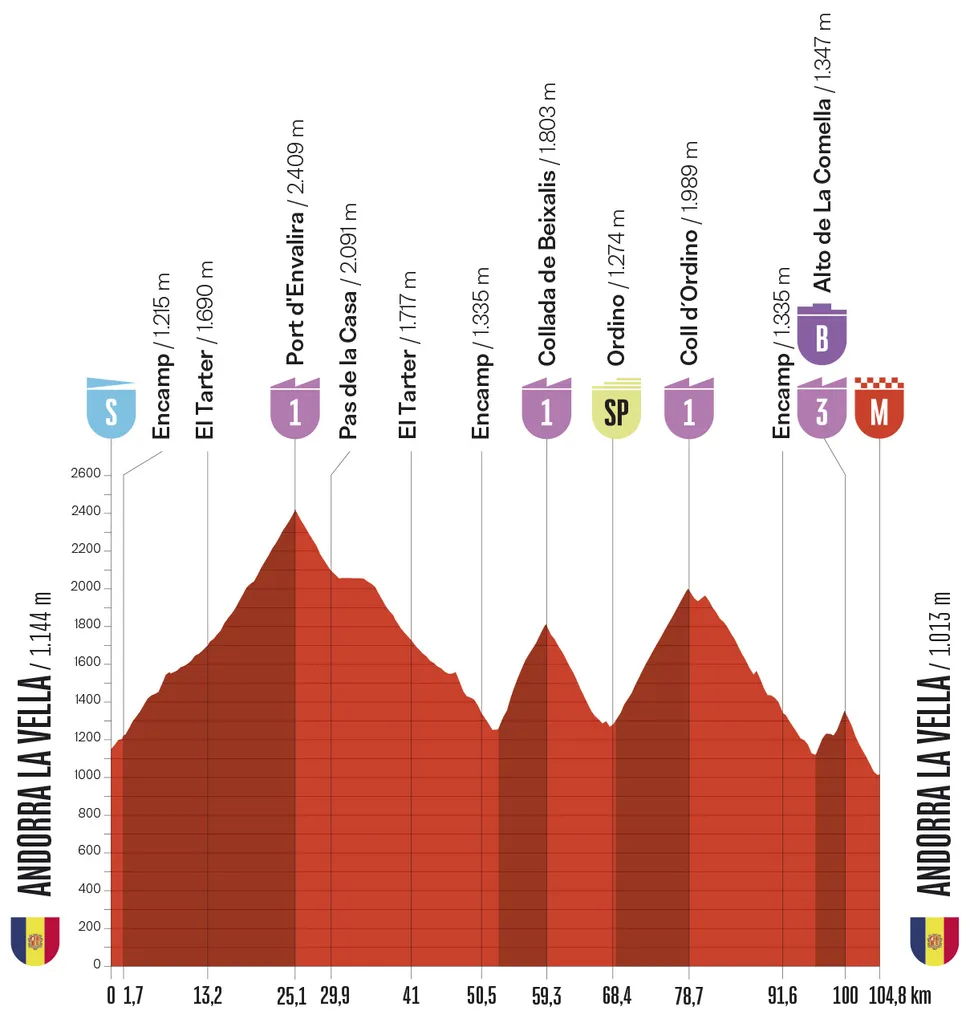
Vuelta a España Stage 4 route
Date: Tuesday 25 August 2026
Start: Andorra la Vella
Finish: Andorra la Vella
Distance: 104.8km
Stage type: Mountain
Elevation gain: Around 3,000m
Category 1 climbs: Three
Final climb: La Comella, 3.9km at 5.9%
Final summit: 4.8km from the finish
Neutralised start: 14:49 CEST / 13:49 BST
Expected finish: Around 17:22-17:39 CEST / 16:22-16:39 BST
The stage begins with one of the most unusual starts of the entire Vuelta. After barely two kilometres of racing, the peloton starts climbing the Port d’Envalira, a 23.3-kilometre Category 1 ascent averaging 5.1%.
There is then a long descent towards Encamp before the race becomes considerably steeper. The Collada de Beixalis measures 6.5 kilometres at 8.5%, followed after another descent by the Col de Ordino, 9.9 kilometres at 7%.
The final classified ascent is La Comella, 3.9 kilometres at 5.9%, topping out with only 4.8 kilometres remaining. Instead of another summit finish, the riders then plunge back towards Andorra la Vella.
That final descent completely changes the tactical possibilities. The strongest climber does not simply need to create a gap. They also have to defend it downhill, while riders such as Pogačar and Onley who descend confidently can continue racing aggressively after the summit rather than waiting for the finish.
Stage 3 cancellation changes everything
Stage 4 had originally been designed to follow the first mountain selection at Font-Romeu.
That selection never happened.
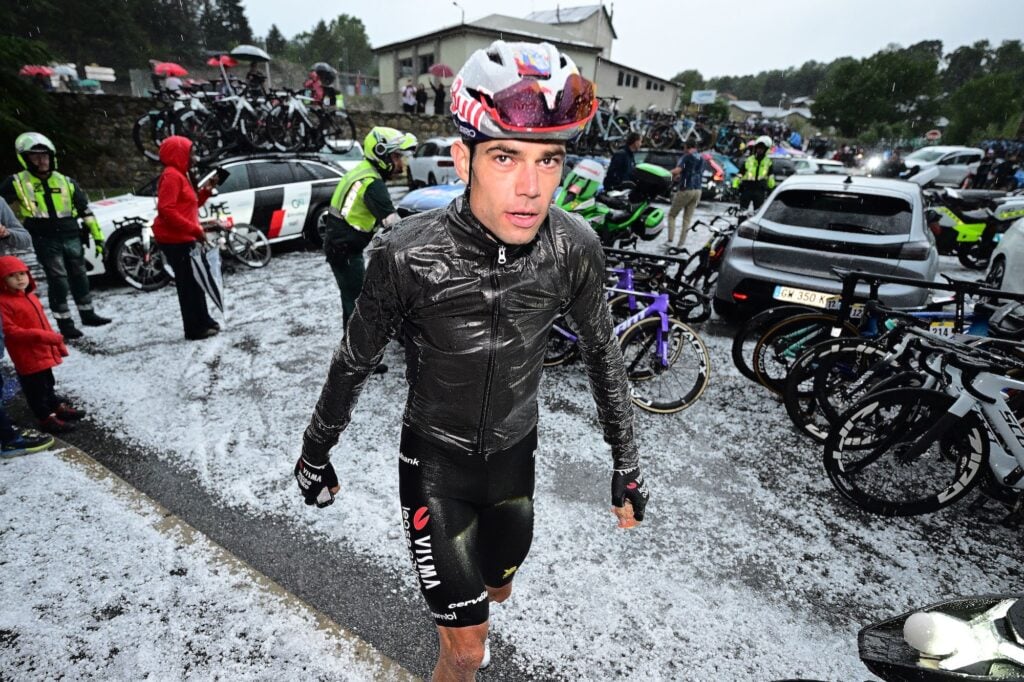
The race reached the Col de Mont-Louis in extreme weather on Monday before a severe hailstorm forced riders to stop and seek shelter. The stage was cancelled before the planned Font-Romeu finish, leaving the general classification without the mountain reshuffle expected from Stage 3.
At the time of writing, the official Stage 3 classification had not been published following the cancellation, so the safest reference point remains the standings established after Stage 2 while the commissaires finalise any consequences from Monday.
That makes Tuesday much more important than originally expected.
Rather than starting Andorra with the strongest climbers already identified, the peloton arrives with almost the entire pre-race hierarchy still intact. The first proper evidence of who can challenge Pogačar may therefore come on terrain much harder than Font-Romeu would have provided.
Port d’Envalira starts almost immediately
The first important feature of Stage 4 is that there is essentially no warm-up.
The Port d’Envalira begins after only around 1.8 kilometres and continues for more than 23 kilometres.
At 5.1%, the average gradient is not particularly intimidating, but that does not make it easy. The climb rises to more than 2,400 metres above sea level and accounts for a significant proportion of the day’s total climbing before the riders have even completed the opening quarter of the stage.
That is potentially dangerous for anyone who struggles to begin hard mountain stages.
Teams also have to decide how much energy they are willing to spend fighting for the breakaway. Any move formed on Envalira will contain riders who have already demonstrated strong climbing legs, making it potentially much stronger than a normal early escape.
The combination of altitude, fresh legs and riders attacking for the break could make the opening hour remarkably fast.
Collada de Beixalis is where the stage becomes brutal
If Envalira creates fatigue, the Collada de Beixalis is where the race can begin doing real damage.
The climb is only 6.5 kilometres long, but its 8.5% average gradient is considerably more severe than anything the riders faced during the opening two completed stages.
That is the type of climb where a strong GC team can reduce a peloton extremely quickly.
There is little value in UAE Team Emirates-XRG riding the whole ascent at maximum pace unless Pogačar has a specific plan, but they have enough mountain depth to make the race uncomfortable without exposing their leader.
The wider Vuelta a España 2026 team-by-team guide identified UAE’s climbing strength as one of the biggest structural advantages Pogačar possesses. Stage 4 is the first day where that advantage can be used fully.
If riders begin losing contact on Beixalis, there is almost no route back into the race before the next major climb.
Col de Ordino could decide who actually has GC form
The Col de Ordino measures 9.9 kilometres at 7% and summits with around 26 kilometres remaining.
This may be the most important climb for understanding the overall classification.
Beixalis is steeper, but Ordino is long enough for sustained pressure to expose riders who have been surviving through short efforts. By the time the peloton reaches it, the race will already have spent much of the afternoon either climbing or descending.
A team that still has several domestiques at the bottom can make a major difference.
Pogačar should be surrounded by UAE riders. Netcompany INEOS need to preserve enough support around Onley to stop him becoming isolated too early. Decathlon CMA CGM have every reason to make the race hard for Gall, while Movistar can use Mas and Cian Uijtdebroeks in different ways if both are still present.
This is also the point where riders who arrived at the Vuelta below their expected level can no longer hide.
La Comella creates one final attacking opportunity
The last climb is much shorter.
La Comella is officially 3.9 kilometres at 5.9%, topping out just 4.8 kilometres before the finish.
Those numbers understate its tactical importance.
By that stage, almost 3,000 metres of climbing have been compressed into barely 100 kilometres. A gradient that looks manageable on paper can feel dramatically different after Envalira, Beixalis and Ordino.
The position of the summit matters even more.
Anyone attacking on La Comella does not need to maintain the gap for another ten kilometres uphill. They only need enough separation to survive a short, fast descent into the capital.
That gives riders who descend well another weapon.
It also means the final attack may come from someone who cannot necessarily drop Pogačar through pure climbing strength but believes they can create a small gap through timing and then take risks downhill.
Tadej Pogačar has the strongest hand again
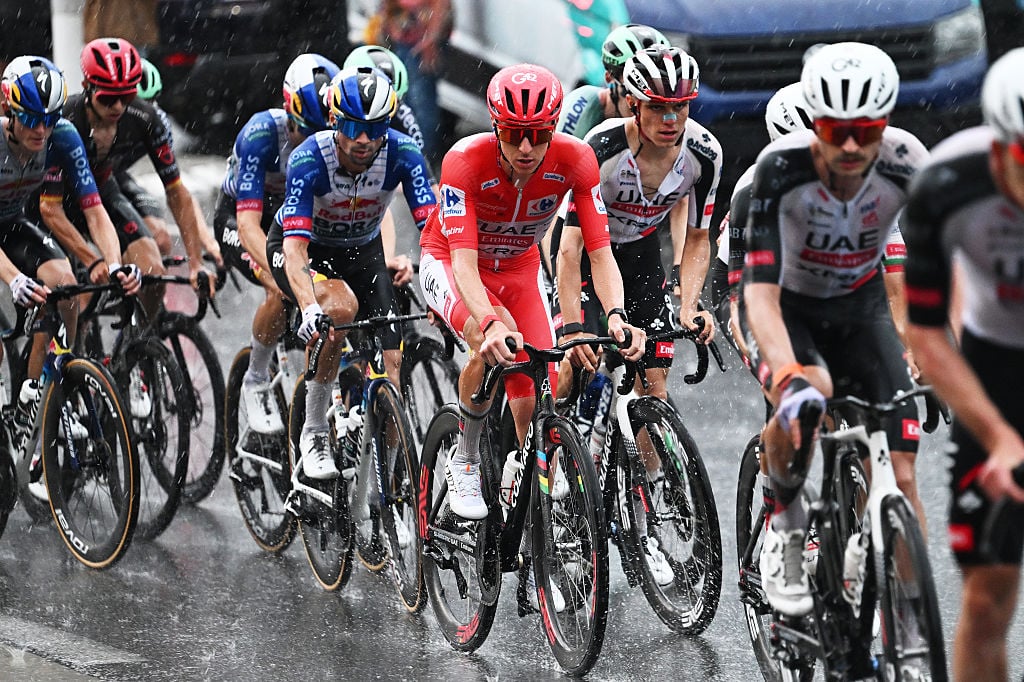
Tadej Pogačar remains the obvious reference for Stage 4.
The opening two stages already demonstrated that he has arrived at the Vuelta in excellent condition. He won the Monaco time trial, remained involved in the Stage 2 finale and reaches Andorra with the strongest overall combination of climbing ability, acceleration and descending.
The cancelled Font-Romeu stage may actually make his tactical position simpler.
UAE did not have to complete the planned summit finish on Monday, meaning Pogačar reaches Andorra without having spent the final kilometres repeatedly responding to GC attacks at altitude.
The question is how early he wants to use that freshness.
There is no need for Pogačar to attack on Envalira or even Beixalis. UAE can instead use the succession of climbs to reduce the field before their leader chooses whether to attack on Ordino or La Comella.
The Vuelta a España 2026 contenders preview started with Pogačar as the clear benchmark. Andorra is where his rivals finally get the terrain to test whether that hierarchy can be challenged.
Oscar Onley gets the mountain test Font-Romeu never delivered
Oscar Onley may be the most important British rider to watch on Tuesday.
The British Vuelta story has already been unusually strong. Ethan Hayter missed the opening red jersey by a fraction of a second and has repeatedly attacked for bonus seconds, Matthew Brennan won Stage 2 in Manosque and Josh Tarling produced another major time-trial result in Monaco.
Now the focus moves towards Britain’s main GC rider.
Onley was supposed to receive his first proper mountain examination at Font-Romeu, but the cancellation means Andorra becomes the test instead. It is a considerably harder one.
The Netcompany INEOS leader has the climbing profile to handle a short mountain stage particularly well. His acceleration suits climbs such as Beixalis and La Comella, while his descending gives him another route towards staying involved if the final group fragments late.
The key target is not necessarily beating Pogačar.
It is establishing himself among the strongest riders immediately behind him.
ProCyclingUK’s British riders at the Vuelta a España 2026 guide identified Onley as Britain’s principal GC hope before the race. Tuesday is the first day where that role can be judged properly on the road.
There is also a broader progression behind it. The existing Oscar Onley GC profile looked at why his climbing had developed to the point where major Grand Tour results were realistic. Andorra provides the first opportunity of this Vuelta to turn that potential into a meaningful GC statement.
João Almeida may be ideally suited to the long climbs
João Almeida gives UAE much more than conventional support.
On a stage containing several long climbs, his ability to maintain a high threshold pace can become extremely valuable. He may be used to control the race for Pogačar, but if Almeida reaches the final climbs with the strongest GC group, UAE also retain a second rider capable of sitting very high overall.
That becomes tactically important if Pogačar attacks.
Rivals following the Slovenian cannot simply assume Almeida will disappear behind. If they chase too aggressively, they may bring another UAE rider back into the classification.
The downside for Almeida is the repeated acceleration required on Beixalis and La Comella. He generally prefers a steady climbing rhythm, while riders such as Pogačar and Onley are more comfortable producing sudden changes of pace.
His best scenario is UAE controlling the climbs at a sustained high tempo rather than allowing constant attacks.
Félix Gall needs the gradients to make a difference
Félix Gall finally gets terrain capable of reducing Pogačar’s advantage in raw power.
Font-Romeu’s moderate gradients would have been useful but not ideal. Beixalis at 8.5% and Ordino at 7% are much more attractive for a pure climber.
Gall’s challenge is whether he can use them.
Waiting until La Comella probably plays towards Pogačar’s acceleration. Decathlon’s better approach may be to make the stage increasingly hard from Beixalis onwards and turn Ordino into a sustained climbing test.
That carries risk.
There are still more than 25 kilometres to the finish from the Ordino summit, and attacking too early can leave Gall exposed on the descents.
But if he wants to challenge Pogačar rather than simply defend a high placing, this is the sort of stage where he needs to try something.
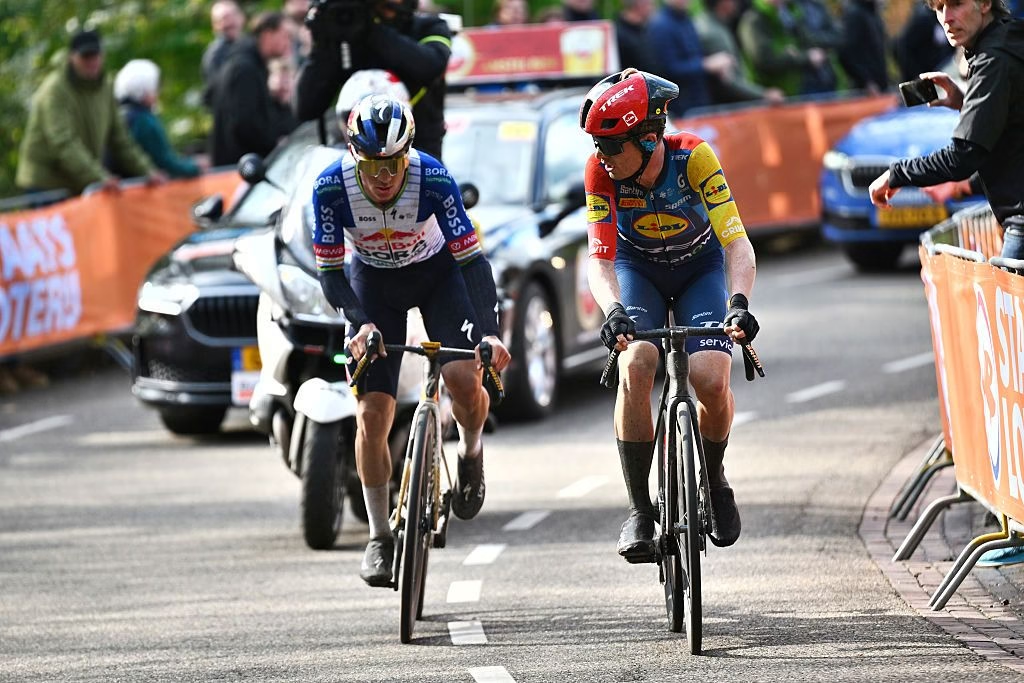
Mattias Skjelmose should welcome a short, explosive mountain stage
Mattias Skjelmose has a profile well suited to the stage’s unusual rhythm.
He is a strong enough climber to survive the longer ascents but also possesses the punch required when a climb becomes a series of accelerations rather than one constant threshold effort.
The 104.8-kilometre distance should also suit him.
There is little opportunity for the race to settle, but there is equally less total racing time before the decisive climbs. Riders with strong one-day characteristics often perform well on these compact Grand Tour mountain stages.
Lidl-Trek do not need to control anything.
Their priority should be keeping Skjelmose positioned near Pogačar and allowing UAE to carry the responsibility until the race becomes selective.
Richard Carapaz will want chaos rather than control
Richard Carapaz is one of the riders most likely to welcome the unpredictability of Stage 4.
EF Education-EasyPost gain very little from allowing UAE to dictate every climb at one controlled pace.
Carapaz’s best Grand Tour performances have frequently come when races become tactically unstable. A short mountain stage with virtually no flat terrain and a descent to the finish provides several opportunities to create exactly that situation.
He can move on Beixalis.
He can attack around Ordino.
He can try again on La Comella.
The difficulty is that Pogačar is exceptionally strong in the same type of racing.
Carapaz therefore needs allies rather than one isolated attack. If several teams decide that sitting behind UAE simply guarantees a Pogačar-controlled finish, the Andorran loop can become far more interesting.
Enric Mas knows exactly what Andorra can do to a GC
Enric Mas has enough Vuelta experience to understand how dangerous a short Andorra stage can become.
The obvious strength is his climbing consistency. The question is whether he can remain close when the decisive accelerations begin.
Mas should be comfortable with the length of Envalira and Ordino, but Beixalis and La Comella put more emphasis on explosive changes of pace.
Movistar’s second card matters here.
Cian Uijtdebroeks gives them the possibility of following or initiating a move without immediately forcing Mas to expose himself. If both reach the final climbs together, Movistar can make the stage significantly less predictable.
Primož Roglič cannot hide his condition in Andorra
Primož Roglič entered the Vuelta with uncertainty surrounding his form after a disrupted build-up.
Stage 4 should begin answering that question.
A short mountain stage with repeated steep climbs is normally excellent terrain for Roglič. At his best, the combination of climbing acceleration, positioning and descending would make him one of the obvious stage favourites.
The uncertainty is whether that level is currently available.
If Roglič remains with Pogačar through Beixalis and Ordino, expectations around his Vuelta change immediately.
If he begins losing ground, Red Bull-BORA-hansgrohe have much clearer evidence that a fifth overall victory is not a realistic priority.
The team also have Finn Fisher-Black available as another rider who has started the race strongly, giving them no reason to structure every tactical decision around Roglič alone.
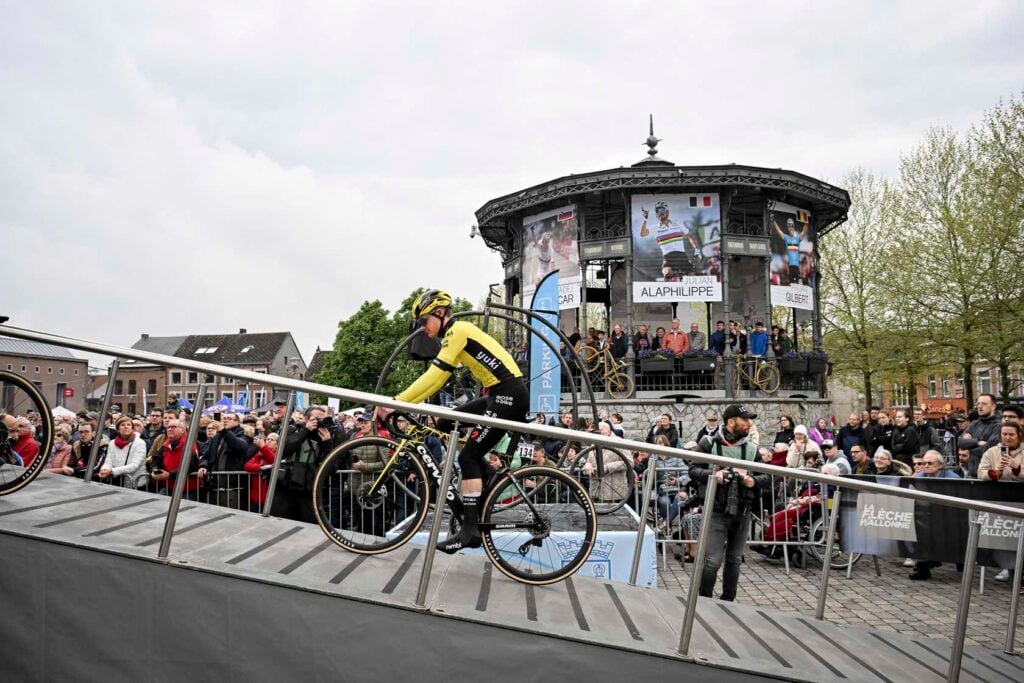 Photo Credit: A.S.O./Billy Ceusters
Ben Tulett has exactly the right terrain to test his top-10 ambitions
Ben Tulett was already one of the most interesting outsiders before the Vuelta started, and Stage 4 gives him an excellent chance to justify that status.
The British rider is particularly effective on steep, repeated climbs where his low weight and acceleration can become decisive.
Visma | Lease a Bike also have Sepp Kuss and Jørgen Nordhagen, meaning Tulett does not need to carry the team’s entire mountain strategy.
That freedom could be useful.
Rather than simply following the GC favourites, Visma can put one rider into an attack and force UAE or another team to decide whether to chase.
Tulett featured prominently in ProCyclingUK’s Vuelta a España 2026 dark horses for the general classification, and Andorra is the stage most likely to show whether a top-10 challenge can become something more ambitious.
Sepp Kuss becomes much more dangerous once the road goes uphill
Sepp Kuss has little reason to fear the terrain.
His overall role remains more flexible than during previous Vuelta campaigns, but the Andorran route gives Visma the chance to use him much more aggressively.
Kuss knows these roads, climbs naturally at altitude and does not need to protect one clear team leader at all costs.
That makes him an obvious candidate to attack earlier than the main GC favourites.
If he goes on Ordino, UAE need to decide whether his history and climbing ability make him too dangerous to ignore even if his immediate GC position does not demand an instant chase.
That is exactly the type of uncertainty Visma can exploit.
Tobias Halland Johannessen should not wait for the final kilometre
Tobias Halland Johannessen is another rider with the characteristics to make Stage 4 aggressive.
A conventional Pogačar-controlled finale gives him relatively little chance of victory.
Attacking earlier gives him much more.
Uno-X Mobility do not have the same obligation to protect a podium position, meaning Johannessen can use Beixalis or Ordino without worrying too much about whether the move ultimately costs him a handful of seconds.
That freedom frequently matters during the first mountain stages of a Grand Tour.
If the established contenders begin waiting for Pogačar, riders such as Johannessen can become the ones who force the race to move.
Mikel Landa should finally become relevant
Mikel Landa reaches his first truly suitable terrain of the Vuelta.
The opening stages were built around time trialling and faster finishes. Andorra is completely different.
Long climbs, steep gradients and little flat road should bring Landa much closer to the centre of the race.
His challenge is the final descent.
If he wants to win the stage, simply following on La Comella is unlikely to be enough because Pogačar and several other contenders possess faster finishes.
Landa therefore needs to use the longer climbs and try to create separation before the final descent begins.
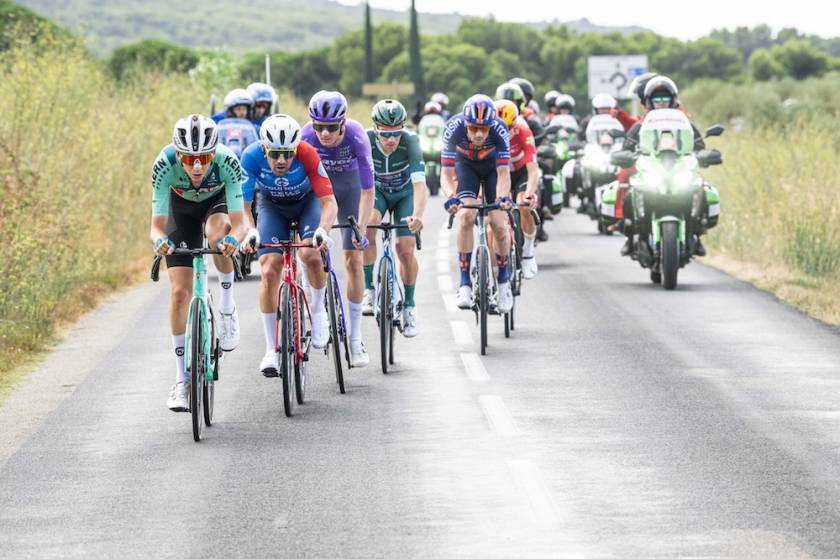
The breakaway has a chance, but forming it will hurt
Stage 4 looks like an obvious breakaway day until the opening kilometres are considered.
The fight to get into the move happens almost entirely uphill.
That means there is no easy 20-kilometre flat section where stage hunters can establish themselves before the peloton relaxes. Riders have to earn their place on the Port d’Envalira.
The eventual break should therefore contain strong climbers.
The question is whether UAE allow it enough room.
If Pogačar wants the stage, an escape starting with only a few minutes is unlikely to survive Beixalis, Ordino and La Comella.
If UAE are content to focus exclusively on GC gaps, a rider already safely down overall can build enough of an advantage to remain ahead.
The cancellation of Stage 3 may increase the temptation to chase. Pogačar and his rivals have been denied one mountain-stage opportunity already, leaving Andorra as the first major chance to establish authority.
-
 Photo Credit: Getty
The final descent makes Stage 4 unusually tactical
One of the most important details is that Stage 4 does not finish at the top of La Comella.
The riders crest with only 4.8 kilometres remaining and descend into Andorra la Vella.
That creates several possible outcomes.
A solo climber can attack on the ascent and try to defend the gap downhill.
A small group can crest together and race aggressively through the descent before sprinting in the capital.
A rider briefly distanced on La Comella can potentially return if they are confident enough on the descent.
It also reduces the value of waiting for the final 500 metres.
Anyone who wants to create GC separation needs to attack before the summit rather than saving everything for a finish-line sprint.
Who wins Vuelta a España 2026 Stage 4?
Tadej Pogačar remains the strongest individual pick.
The stage combines almost everything he does well. He can sustain the long Envalira effort, respond to the steep gradients of Beixalis, accelerate on Ordino or La Comella and descend confidently towards the finish.
The cancelled Stage 3 also means he reaches Andorra without having completed the summit-finish battle that was expected at Font-Romeu.
Oscar Onley deserves to be treated as a serious contender rather than simply a British GC storyline. The short, steep nature of the stage suits his punch, and a descent to the finish removes some of the advantage that a longer summit climb would give pure mountain specialists.
João Almeida should thrive if UAE turn the race into a sustained threshold contest, while Félix Gall needs the steeper climbs to become hard enough to expose riders with greater outright power.
Mattias Skjelmose and Richard Carapaz both have strong cases if the race becomes aggressive. Skjelmose brings punch and all-round strength, while Carapaz should be one of the riders most willing to turn the stage into something chaotic.
Primož Roglič is impossible to dismiss on this terrain, but Tuesday is as much a test of his current condition as a straightforward stage opportunity.
Behind them, Enric Mas, Ben Tulett, Sepp Kuss, Tobias Halland Johannessen and Mikel Landa all have routes into the result if the attacks begin before La Comella.
The most likely scenario is a very small GC group emerging over the Col de Ordino before repeated attacks on La Comella and the descent into Andorra la Vella.
The distance is only 104.8 kilometres, but that makes the stage more dangerous rather than less. There is almost no flat road, no gentle opening hour and no long section where a struggling favourite can organise a chase.
Font-Romeu was supposed to provide the first mountain answers of the 2026 Vuelta. The hailstorm prevented that.
Andorra now has to provide them all at once.

