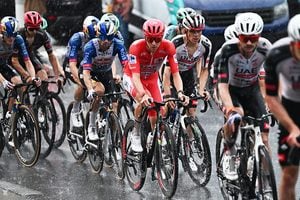
The hotel which unexpectedly became a refuge for the Vuelta a España peloton during Monday’s extraordinary hailstorm has received perhaps the most unusual collection of five-star reviews of the year.
Riders were forced off their bikes on the Col de Mont-Louis during Stage 3 of the 2026 Vuelta a España when torrential rain turned into a violent hailstorm, leaving the road covered in ice and making it impossible to continue towards the planned finish at Font-Romeu.
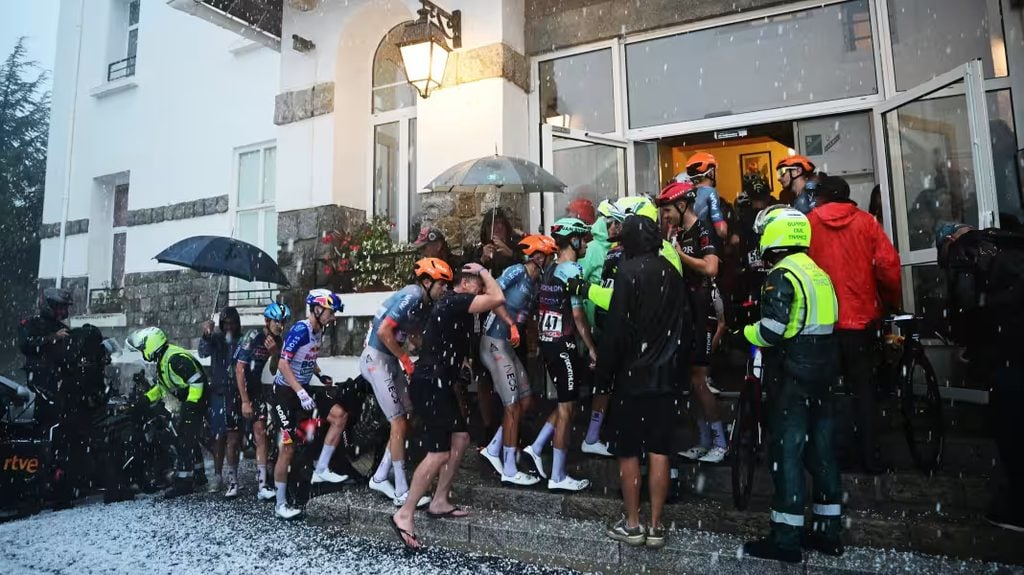
With the race initially neutralised and eventually cancelled, a large part of the peloton sought refuge inside the IGESA Village Club Mont-Louis Les Sorbiers, close to the race route at La Cabanasse.
What happened next provided a much warmer postscript to one of the strangest Vuelta stages in recent years.
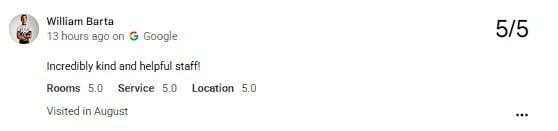
The hotel’s staff suddenly found themselves dealing with around 180 soaked professional cyclists arriving without warning, handing out towels, drinks and food while the riders waited for their team vehicles to reach them. Once everyone had warmed up and moved on, several riders and teams repaid the favour by heading to Google and leaving the hotel five-star reviews.
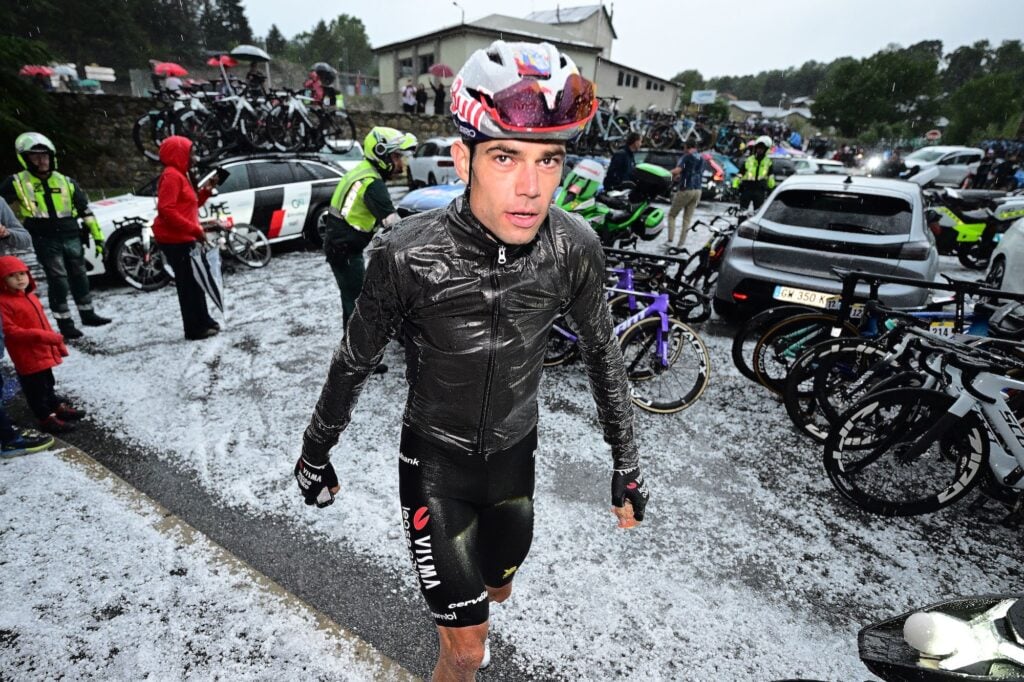
Tobias Halland Johannessen gives the hotel five stars
Uno-X Mobility’s Tobias Halland Johannessen was among those to leave a particularly memorable review after escaping the hail.
He described Les Sorbiers as the “perfect location in hailstorms”, before praising the staff for producing towels within minutes of roughly 180 cyclists arriving completely unannounced.
The five-star verdict was emphatic: the hotel, Johannessen wrote, deserved every star it could get.
Given the circumstances, it was probably one of the better hotel experiences he has had during a Grand Tour. The riders had not booked rooms, nobody was supposed to be stopping there, and the hotel had suddenly become an emergency shelter for almost an entire professional bike race.
Lidl-Trek’s Julien Bernard also left five stars and thanked the hotel for its welcome, while Chris Hamilton praised the staff’s hospitality after the peloton descended on the building.
Roland Thalmann was similarly impressed by just how quickly staff adapted to what was happening, noting the provision of towels, drinks and food despite suddenly having around 200 unexpected guests to look after.
Picnic PostNL get involved as well
It was not only individual riders leaving reviews.
Picnic PostNL joined in, praising the warm reception and suggesting the hotel was a particularly good place to shelter from poor weather in the area.
Under normal circumstances, that might sound like a fairly standard comment about a hotel in the Pyrenees.
After watching riders being pelted by large hailstones before sprinting for cover, the context made it considerably funnier.
The reviews also captured something television pictures could only partly show. The Font-Romeu stage cancellation was not simply a race organisation pressing a button and telling everyone to stop.
The peloton was scattered across a mountain road in rapidly deteriorating conditions. Riders were soaked, cold and trying to find somewhere safe while team cars and buses remained elsewhere on the course.
Les Sorbiers happened to be in exactly the right place.

How a Pyrenean hotel became the Vuelta headquarters
Stage 3 had begun in very different conditions.
The race left Gruissan-Aude with warm weather on the flatter approach to the Pyrenees. Ethan Hayter again went into the breakaway, crosswinds briefly threatened to split the peloton and Mats Wenzel later pushed clear as the race began climbing towards Mont-Louis.
Then the weather changed almost instantly.
Heavy rain became hail, the temperature plummeted and the road began turning white. Riders could be seen trying to shield themselves from the hailstones before competitive racing became impossible.
Tadej Pogačar was among those at the front of the peloton as the riders effectively stopped racing. Others moved towards buildings and vehicles before a significant number made their way into the nearby hotel.
Les Sorbiers suddenly became an improvised Vuelta holding area.
Riders filled the reception, lounges and other available spaces. Towels appeared. Hot drinks and food followed. Team staff eventually reached their riders, but for those first minutes the responsibility for looking after a cold and drenched Grand Tour peloton had fallen almost entirely on a hotel that had never expected them to arrive.
The internet then discovered the hotel
Once cycling fans worked out where the riders had taken shelter, the hotel’s Google page took on a life of its own.
The genuine reviews from professional riders were soon joined by considerably less genuine reviews from people who had simply watched the stage.
There were jokes about travelling by bicycle with 180 friends, unexpectedly finding Pogačar inside the hotel and the suitability of the building as emergency accommodation during a hailstorm.
Others riffed on the sight of an entire peloton suddenly piling through the doors.
The distinction between actual guests and cycling fans rapidly became almost impossible to miss, but the underlying point remained the same: the hotel staff had made an impression on people watching the Vuelta as well as the riders who actually needed their help.
By Tuesday morning, the hotel had been inundated with hundreds of reviews.


A very different sort of five-star cycling hotel story
Grand Tour hotel stories do not usually go this way.
Earlier in the summer, Halland Johannessen himself attracted attention after criticising accommodation during the Tour de France. This time there could be little doubt about his verdict.
The circumstances were obviously rather different. Nobody was assessing room size, air conditioning or the quality of the beds. What mattered was that a hotel full of staff saw nearly 200 freezing cyclists appear at the door and immediately started helping them.
For riders who had gone from summer conditions to being battered by hail in the space of a few kilometres, a towel and somewhere warm suddenly represented five-star service.
Stage 3 never reached Font-Romeu
The surreal hotel scenes ultimately became the defining images of a stage that never produced a winner.
Wenzel and Lorenzo Fortunato had been at the front when the weather worsened, while Pogačar and the other general classification contenders were preparing for what should have been the first meaningful mountain battle of the race.
Instead, the organisers initially neutralised the stage before deciding it could not safely resume.
There were no finishing times at Font-Romeu and no stage winner, with the overall classification effectively carrying forward into Tuesday’s Stage 4 around Andorra la Vella.
The full 2026 Vuelta route will continue without Font-Romeu being rescheduled.
For most riders, Monday will probably be remembered as the Vuelta stage when racing disappeared beneath a layer of hail.
For IGESA Village Club Mont-Louis Les Sorbiers, it was the afternoon when nearly an entire Grand Tour peloton appeared without a booking and subsequently decided the service was worth five stars.