
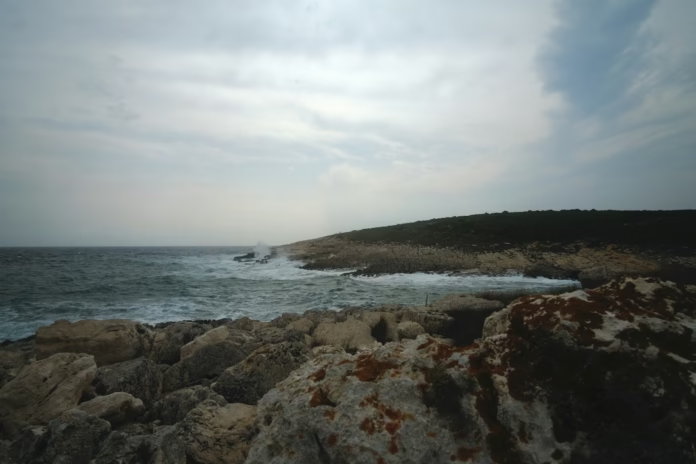
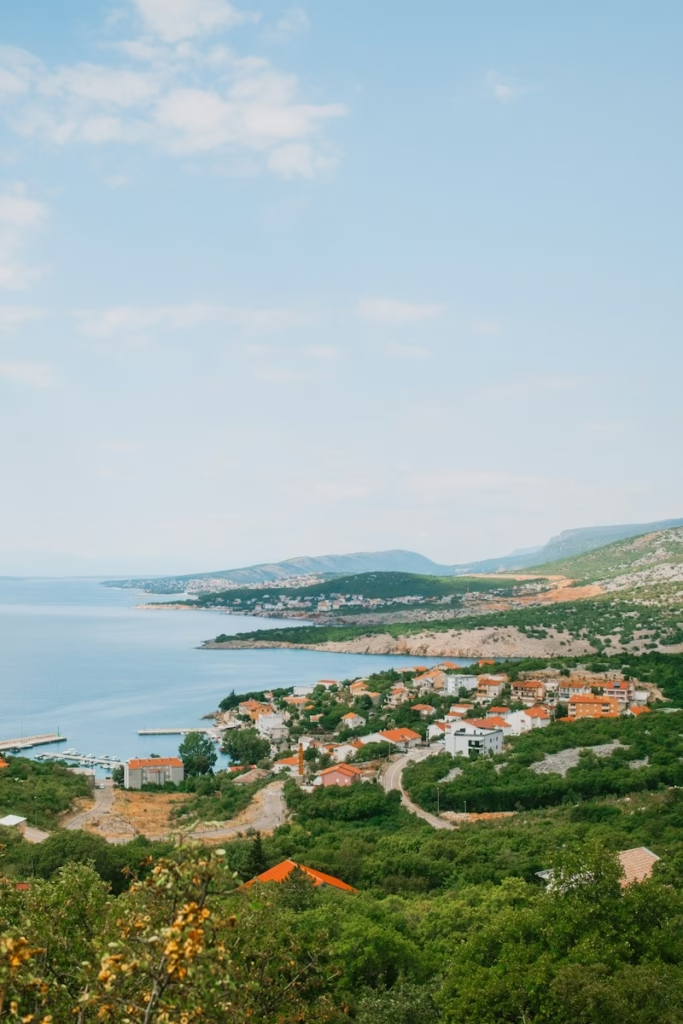
The Dalmatian Coast looks like obvious cycling country from a distance: blue water, limestone mountains, small harbour towns and roads squeezed between the Adriatic and the hills. In practice, the riding around Split and Makarska is more varied than the postcard suggests. Split gives you short urban escapes, Marjan and access to the inland roads around Mosor, while Makarska puts you directly beneath Biokovo and into a landscape where almost every road away from the sea starts climbing.
This is not a destination built around one famous sportive route. It is better approached as a series of contrasting days. Coastal roads can be fast and exposed, the hinterland is quieter and more broken, and the climbs above Makarska become serious very quickly. For riders prepared to start early, manage heat and accept that some of the main coastal roads carry traffic, it is one of the more distinctive warm-weather road trips in southern Europe.
Dalmatian Coast cycling at a glance
- Best bases: Split for variety and transport, Makarska for climbing
- Riding style: Coastal roads, steep inland climbs, rolling hinterland and mixed-surface options
- Bike: Road bike with low gears; gravel bike useful for Marjan and rougher tracks
- Tyres: 28mm to 32mm is a sensible road setup
- Best period: April to June and September to October
- Hardest feature: Repeated climbing away from the coast, especially below Biokovo
- Biggest planning issue: Summer heat and traffic on the D8 coastal road
- Ideal trip length: Four to six riding days
Split works best as the flexible first base
Split is the easier place to begin because the logistics are simple. The airport is close, the city has a wide choice of accommodation and bike rental, and there are several directions in which a ride can develop without a long transfer. The limitation is that the city itself is busy. The official tourism board is unusually frank about cycling infrastructure not always keeping pace with the popularity of riding, so the best days are built around getting out of the central traffic efficiently rather than pretending Split is a giant cycle lane.
Marjan is the obvious short ride. The forest park sits immediately west of the old town and gives access to both paved and off-road riding. One official mountain-bike route is only 5km but climbs 121 metres in 1.22km at an average 10.5%, with a short section above 20%. That is not a road-bike route in its official form, but it demonstrates how sharply the terrain can rise even within the city limits.
For a road rider, Marjan is more useful as an opening spin or a place to add short climbing before heading east along the coast. It also gives a safe way to check the bike after travel. Riders who want a longer first day can continue through the eastern edge of Split and towards Žrnovnica, where the city gives way to the lower slopes of Mosor and quieter roads begin to dominate.
The roads behind Split are better training roads than the seafront
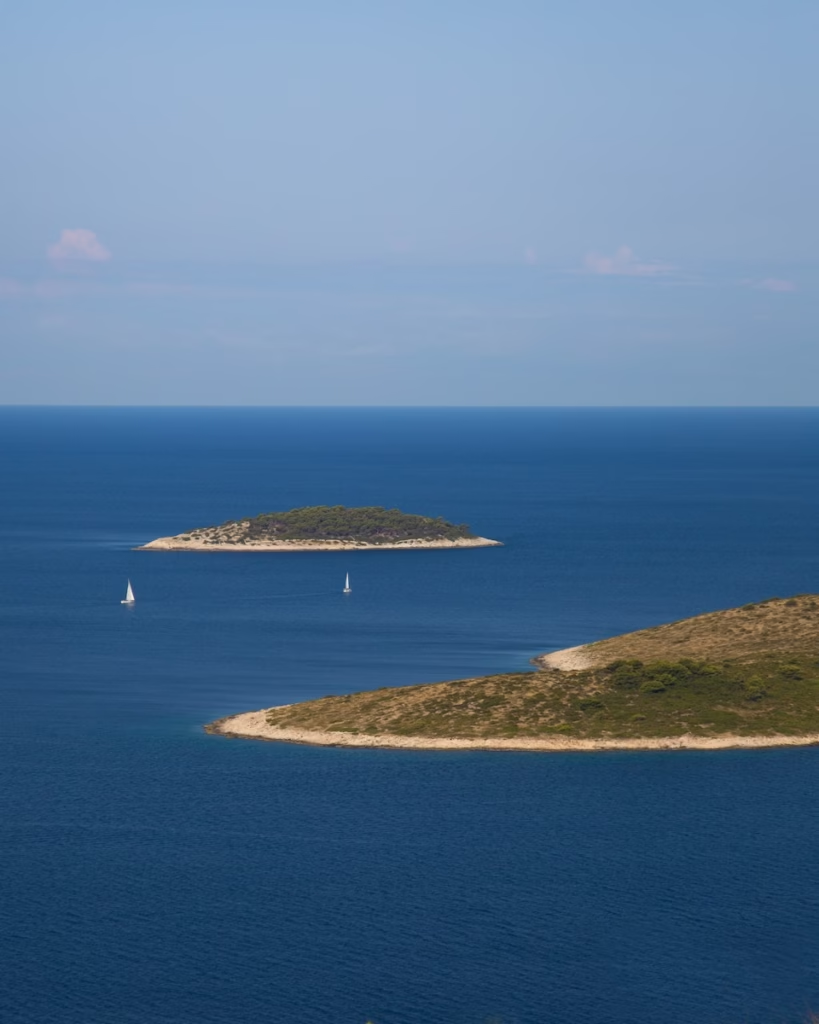
The most satisfying road riding around Split generally starts when you turn away from the water. The terrain behind the city is a mixture of limestone hills, small settlements and narrow roads that rise and fall without ever becoming high mountains. Routes towards Žrnovnica, Srinjine, Gornje Sitno and the Mosor foothills can be joined into loops that feel far removed from the urban coast within an hour of leaving the centre.
These roads suit riders who enjoy repeated tempo climbing rather than one long pass. The gradients can be irregular, and short ramps often matter more than total elevation. A compact chainset and at least a 30-tooth sprocket make sense if the trip includes several consecutive days, especially when heat turns a moderate climb into something much harder.
The inland option also solves one of the coast’s main problems: traffic. Croatia’s D8 coastal road is scenic but important enough to carry local, tourist and through traffic. There are stretches where it is unavoidable or useful, but it should not be treated as the default route for an entire holiday. Minor roads inland are often where the best cycling begins.
Makarska puts Biokovo into every serious route plan
Makarska feels more like a dedicated cycling base because the mountain is impossible to ignore. Biokovo rises directly behind the town, compressing the coastal strip and forcing almost every inland route upwards. Even local access roads can gain several hundred metres in a short distance, and the official regional trail network around Makarska mixes asphalt with macadam on steep slopes above the sea.
The riding is therefore more vertical than around Split. A morning loop through Tučepi or Podgora can remain relatively gentle near the coast, but turn towards the villages above the Riviera and the gradients become serious. The roads towards Kotišina and the Biokovo foothills are good examples: short distances, large elevation gains and very little flat recovery once climbing begins.
Biokovo itself should be treated with respect rather than as a box to tick. Conditions can change with altitude, summer heat is intense lower down and exposed sections can feel far hotter than the temperature suggests. Check current road access before setting out, carry more water than seems necessary and avoid building a major mountain day around the hottest part of the afternoon.
The coastal road is useful, but timing matters
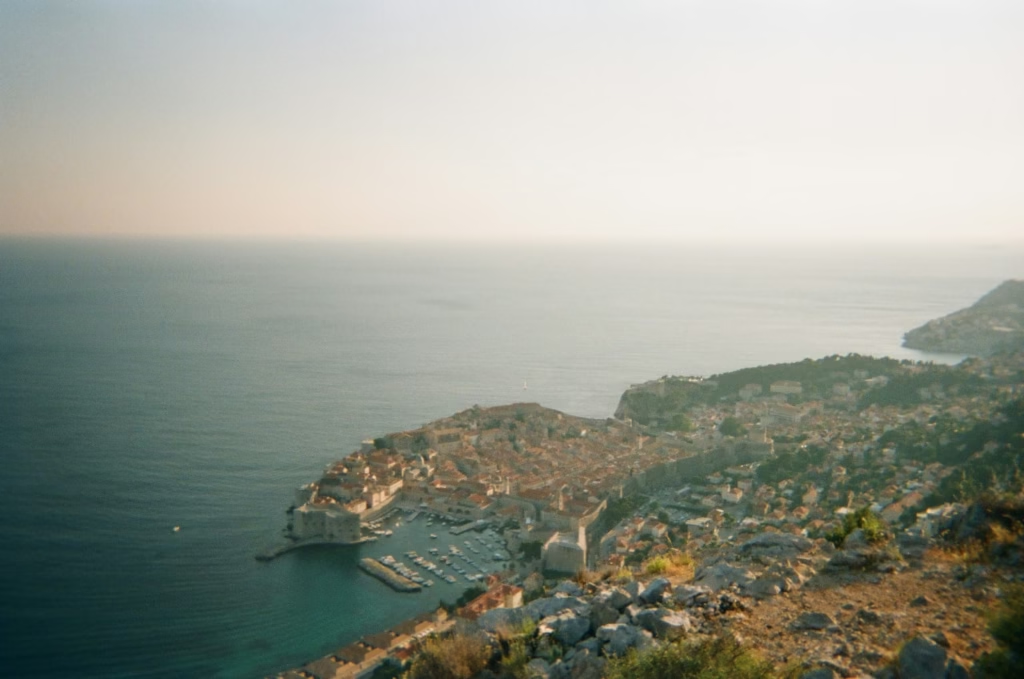
The D8 between Split and Makarska is one of the most visually spectacular roads in the region, particularly around Omiš and the Makarska Riviera. It is also a main transport artery. Riders should expect faster traffic, buses and tourist vehicles, especially in July and August. Early morning transforms the experience because temperatures are lower and traffic is usually lighter.
Sections of the coast work well as connectors between quieter loops rather than as the whole day’s objective. From Makarska, short rides south through Tučepi, Podgora and Igrane can be combined with inland climbs before returning to the sea. From Split, the run towards Omiš is more exposed to traffic, so many riders will prefer to use it selectively and spend more of the day on secondary roads.
A bright rear light is worth using even in full sun. Croatian road rules require cyclists to use cycle lanes where provided and otherwise keep to the right; groups are expected to ride in single file. That is particularly relevant on coastal roads where drivers may have limited room to pass.
Spring and autumn suit serious riding far better than midsummer
July and August are the obvious holiday months, but they are not the best months for long road rides. Heat can become the limiting factor before distance or climbing does, and the coastal roads are at their busiest. If a summer visit is unavoidable, plan to be on the bike early and finished before the hottest part of the day.
May and June are stronger cycling months. The days are long, tourist traffic is lower and the coast is already warm enough to feel Mediterranean without turning every climb into a heat-management exercise. September is arguably better still: the sea remains warm, the roads begin to quieten and morning temperatures are usually more comfortable for sustained climbing.
April and October can work well for riders prepared for more changeable weather. Coastal rain can be heavy, and strong winds are capable of turning an exposed road into a poor place to ride. The advantage is space. A cool, quiet road below Biokovo is a very different proposition from the same road at midday in August.

Road bike, gravel bike and gearing choices
A road bike remains the best choice if the main plan is Split, Makarska and paved loops in the hinterland. Wider tyres improve the experience because smaller roads can be rough or patched, and 28mm to 32mm gives enough comfort without sacrificing speed. There is little reason to arrive on a narrow race setup unless you know every route will stay on the cleanest tarmac.
Gravel opens extra possibilities around Marjan, old roads and the regional trail network. The Split-Dalmatia tourist board publishes separate cycling maps for Makarska, Brač, Hvar and the Zagora, which shows how much of the local riding extends beyond pure road cycling. A gravel bike is particularly useful for riders who want one bike to handle city paths, rougher connectors and long paved sections.
Low gearing matters on either bike. The mountains are not Alpine in height, but the slopes regularly become steep enough that a race cassette feels unnecessary. A 34×30 or 34×32 bottom gear is a much better starting point for a multi-day trip than trying to preserve a professional-looking setup at the expense of tired legs.
A five-day Split and Makarska itinerary
Use day one in Split for Marjan and a short coastal or river loop. The goal is to settle into the traffic patterns, test the bike and keep the first ride light. Day two can head inland towards Žrnovnica and the Mosor foothills, adding enough climbing to make it the first proper training day.
Transfer to Makarska for day three and ride a moderate coastal loop through Tučepi and Podgora with one or two climbs above the Riviera. Day four should be the hardest day, using the roads beneath Biokovo and extending inland only if the weather is stable. Keep day five flexible: either repeat a favourite climb, ride south along the coast early or use a gravel route if the legs are tired of steep tarmac.
The structure is similar to other coastal cycling trips where the best riding comes from moving between sea level and nearby hills. ProCyclingUK’s guide to Lisbon and the Sintra coast provides a useful comparison, while the wider cycling travel hub collects more destination guides for planning a longer European riding trip.

