
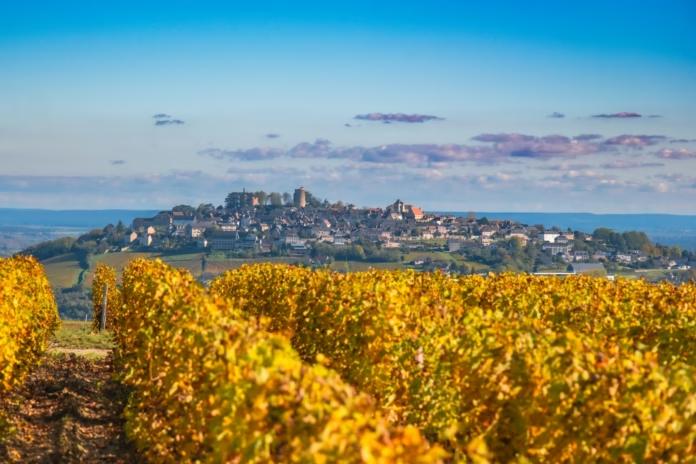
The Loire Valley is one of the easiest places in France to build a cycling holiday around distance rather than climbing. The Loire à Vélo route now stretches for roughly 900km from Cuffy in central France to the Atlantic coast, linking major towns, châteaux, vineyards and long sections of river riding on a mixture of dedicated cycle paths and low-traffic roads.
That scale can make the route sound like a touring project that only makes sense end to end. In practice, its strongest feature is flexibility. Riders can choose a single base around Tours, Blois, Saumur or Angers and use the signed route as the backbone for day rides, or travel point to point with luggage over several days. Stronger road cyclists can also leave the official line for hillier vineyard roads and then use the river corridor to return.
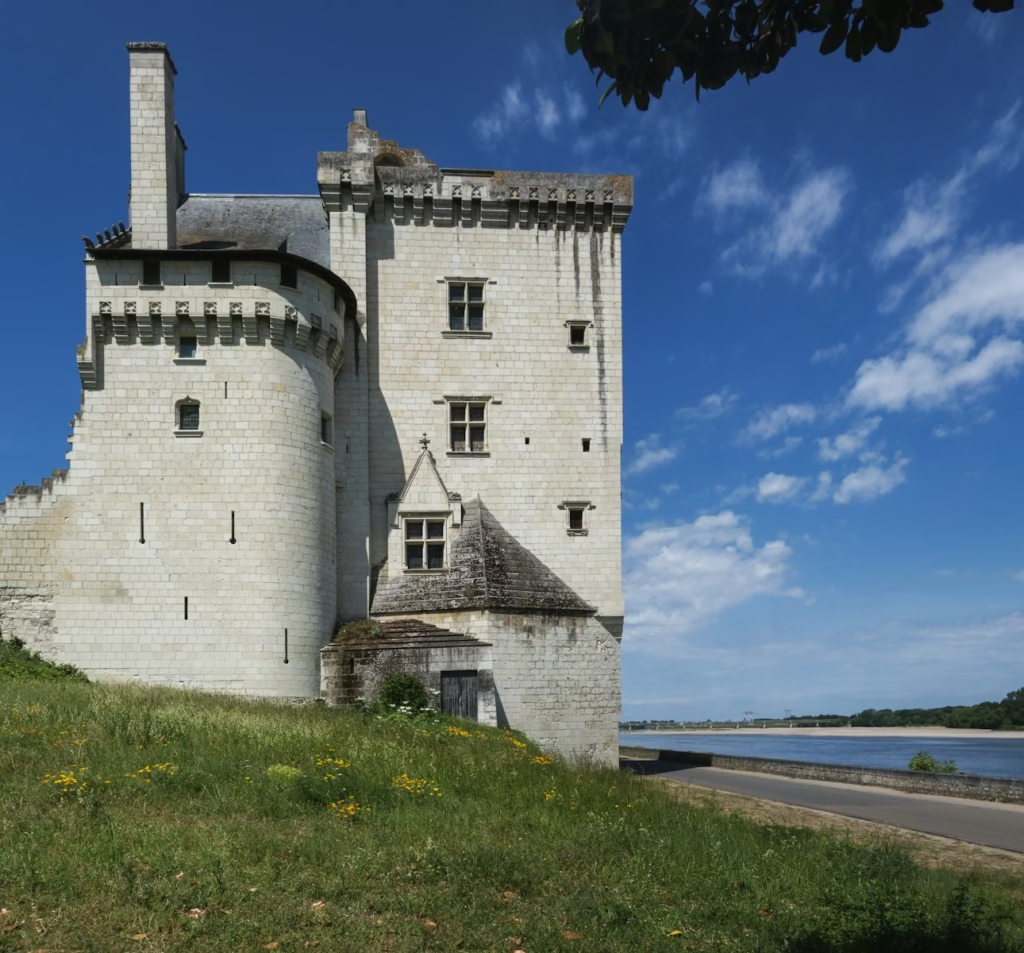
Loire Valley cycling at a glance
- Route: Loire à Vélo, roughly 900km including official variants and links
- Best bases: Tours for central access, Blois for château loops, Saumur for vineyards and quieter western riding
- Riding style: Mostly flat or rolling river riding with optional vineyard and plateau climbs
- Bike: Endurance road bike, touring bike or gravel bike depending on route choice
- Tyres: 28-32mm is a sensible all-round range
- Best period: May to June and September
- Navigation: Strong official signposting in both directions
- Ideal trip length: Three days for one section, a week or longer for a substantial point-to-point journey
Tours is the most practical central base
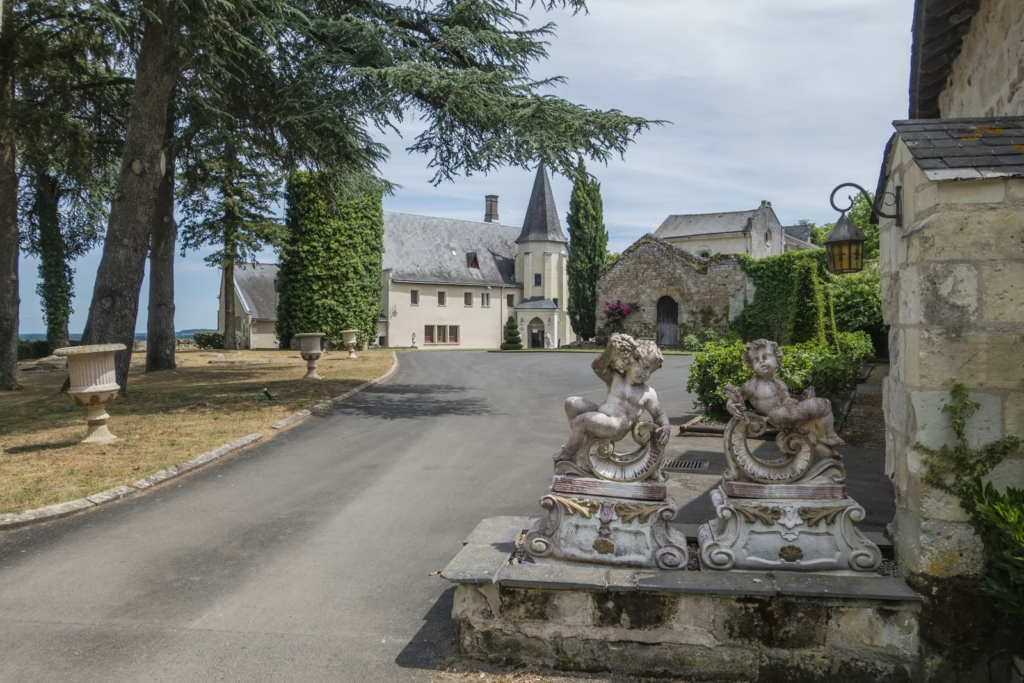
Tours works well for riders who want to sample the Loire rather than commit to a full tour. The city sits close to the middle of the best-known château country and has useful rail connections, enough accommodation and straightforward access to the signed route. From here, rides can head east towards Amboise and Blois or west towards Villandry, Langeais and Chinon.
The river itself keeps much of the terrain manageable. Elevation is generally modest on the official cycle corridor, but leaving the floodplain quickly changes the character of a ride. Roads through vineyards and villages rise onto low plateaux, creating enough climbing to make an 80-100km day feel like training rather than simple sightseeing.
That makes Tours useful for mixed groups. One rider can stay on flatter signed sections while another extends into the hills and rejoins later. The infrastructure is mature enough that route planning does not depend on improvising safe roads through every town.
Blois and Chambord are the obvious château riding days
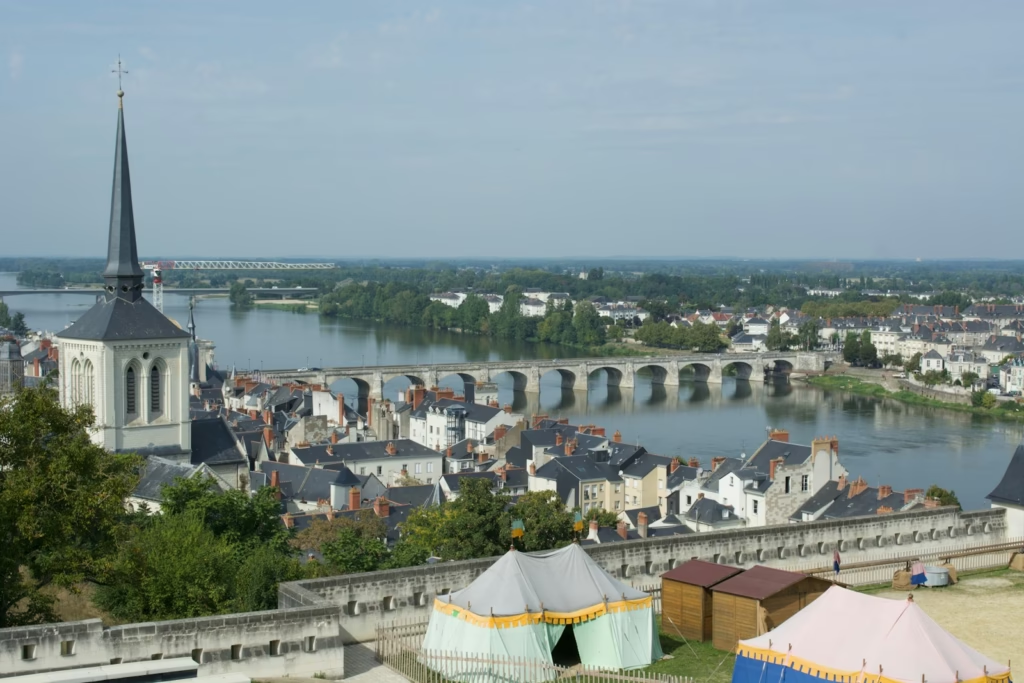
East of Tours, Blois gives access to some of the Loire Valley’s most recognisable architecture. Chambord is the obvious destination, but the better cycling day usually comes from linking several quieter roads rather than treating one château as the finish line.
The signed network around Blois and the Loire makes it possible to combine river sections with forest roads and agricultural lanes. Traffic rises around the major visitor sites during summer, especially in the middle of the day, so early starts are worthwhile if the goal is steady road riding rather than sightseeing pace.
Château visits also change the practical shape of a ride. Cleats, bike security and carrying normal footwear become relevant if the day includes several hours off the bike. Riders focused purely on distance may prefer to view the buildings from outside and keep moving, while a slower itinerary can deliberately build long stops into a 50-70km day.
Saumur gives the route a stronger wine-country character
West of Tours, Saumur is one of the strongest bases for riders who want quieter roads and more vineyard riding. The Loire remains the central navigation line, but routes can climb away from the river into the Saumur-Champigny wine area and towards villages built into the limestone landscape.
The gradients remain modest by mountain standards, yet repeated short climbs add useful variety. This section feels less urban than the Tours and Blois corridor and can suit riders who prefer longer uninterrupted stretches between major tourist centres.
Saumur also works well as a transition point on a longer tour. Continue west towards Angers and the landscape gradually opens, with the route eventually leading through Anjou and onward towards Nantes and the Atlantic section. Riders do not need to complete all 900km for the journey to feel coherent.
The official route is easy to follow, but surface choice still matters
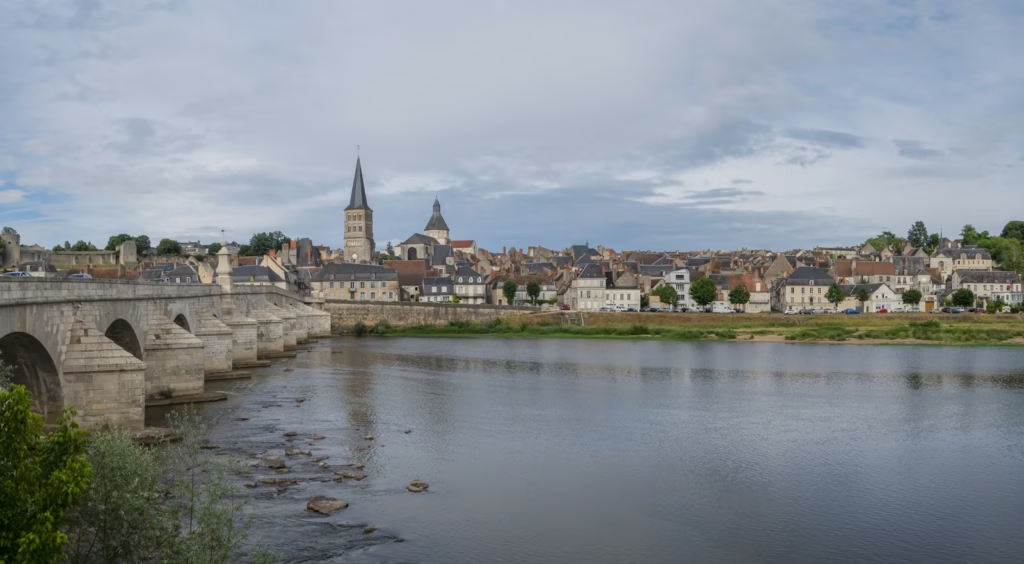
Loire à Vélo is heavily developed as a cycling route and is signposted in both directions. Official material describes a mixture of greenways, cycle lanes and low-traffic roads, with some sections where surfaces are less suited to narrow racing tyres.
A 28mm tyre is workable for road-focused riders who are prepared to avoid rougher alternatives, while 30-32mm gives more freedom and comfort. Touring and gravel bikes make sense for riders carrying luggage or following the route without worrying about every surface change.
The main risk is assuming that a cycle route is automatically empty. Popular sections can be busy with families, e-bikes and walkers, especially around the most famous châteaux. High-speed group riding is better kept for quieter road extensions rather than crowded greenways.
The train makes point-to-point riding unusually straightforward
Rail access is one of the route’s biggest practical strengths. The seasonal Train Loire à Vélo links several major towns along the corridor, including Orléans, Blois, Amboise, Tours, Saumur, Angers, Ancenis and Nantes. That allows riders to design one-way days without arranging a private transfer.
For the 2026 season, dedicated bicycle arrangements run from 1 May to 27 September and bike reservations are mandatory on the relevant service, with a small supplementary charge. Timetables and carriage rules should be checked before travel because the bicycle spaces are limited and the seasonal service does not operate like a normal unlimited turn-up system.
This makes a split-base trip particularly effective. A rider can spend two nights in Tours, take the train to Saumur and continue west from there rather than riding the same corridor twice. It also provides an escape route if weather turns poor or fatigue makes a planned return leg unattractive.
May, June and September give the strongest balance
Spring brings green landscapes and comfortable temperatures, although rainfall remains part of the equation. May and June usually provide long enough daylight for big road days without the heaviest summer visitor traffic.
July and August are perfectly rideable but can be hot, particularly on exposed sections away from the river, and the major château towns are busier. Starting early reduces both heat and tourist traffic. Shade is inconsistent, so riders should not assume a river route will stay cool all day.
September is arguably the best month for stronger cyclists. Temperatures are usually easier to manage, the vineyards become more active around harvest and the route remains well within the usable season. The trade-off is shorter daylight and agricultural traffic on some smaller roads.

A four-day trip can cover the strongest central sections
Day one can stay around Tours with a moderate loop through Villandry and the surrounding valley. Day two should head east towards Amboise, using vineyard roads to add climbing rather than following the flattest possible route throughout.
Use day three for Blois and Chambord, either from a second base or with rail assistance. Day four can shift west towards Saumur and finish with a longer vineyard loop. Riders with another two or three days can continue to Angers and Nantes rather than returning to the central valley.
The Loire is therefore a different proposition from ProCyclingUK’s guide to cycling in the Vosges, where climbing defines the trip. It is closer to a flexible touring landscape in which distance, history and food can share the same day. More destination ideas are collected in the cycling travel hub.
Bike-friendly accommodation is another reason the corridor works well for multi-day riding. The Accueil Vélo network includes hundreds of businesses close to the route, covering accommodation, hire, repair and visitor services. That does not remove the need to check secure storage before booking, but it gives cyclists a much larger pool of places accustomed to bikes and point-to-point travellers.
The UNESCO-listed Loire landscape also changes the rhythm of a training trip. Roughly 280km of the valley sits within the World Heritage area, so even riders focused on mileage repeatedly pass historic towns, châteaux and cultivated river landscapes. It is one of the few long-distance French routes where stopping for an hour can feel like part of the cycling day rather than time lost from it.
The route’s scale also means a mechanical does not automatically end the trip. Bike-hire and repair businesses are spread along the major sections, although opening hours and Sunday availability should be checked before relying on them. Carry the normal tools for punctures and minor adjustments rather than assuming the tourist infrastructure replaces basic self-sufficiency.
For riders who want France without measuring the holiday by famous cols, Loire à Vélo is unusually easy to recommend. The route is long enough for a serious journey, well connected enough for short trips and varied enough that stronger cyclists can turn an apparently gentle river corridor into several substantial days on the bike.

