
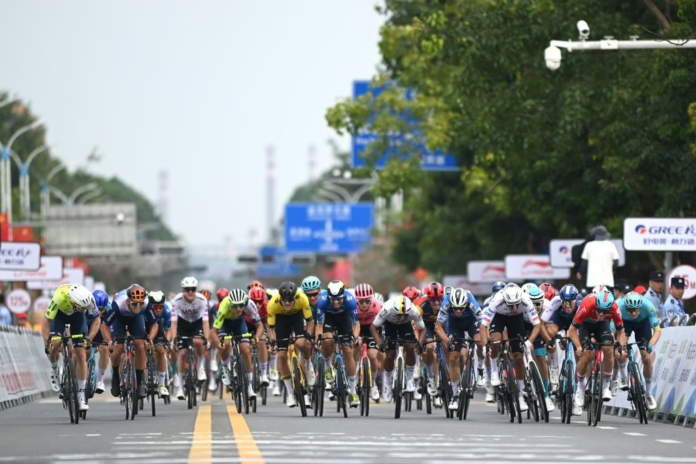
The Tour of Guangxi is one of the newest stage races on the men’s WorldTour, but its position as the traditional final stage race of the season has given it a distinct role since its launch in 2017. Held in southern China, the race combines sprint stages with short, steep climbing and a general classification usually decided by seconds rather than minutes. That formula has produced winners ranging from Tim Wellens and Enric Mas to Milan Vader, Lennert Van Eetvelt and Paul Double.
Guangxi is also part of a wider attempt to give the WorldTour a genuinely international finish. After months of racing centred largely on Europe, the peloton travels to China for one final block of racing. The event has had interruptions and route changes, but its core identity has remained consistent. Our beginner’s guide to the Tour of Guangxi 2026 covers the current format. Its short history explains why the race has become a useful late-season test rather than a ceremonial finale.
A new WorldTour race in 2017
The inaugural Tour of Guangxi took place in 2017 as a six-stage event and immediately joined the UCI WorldTour. That was unusual. Most races spend years moving through lower classifications before reaching the top tier, but Guangxi was created with WorldTour status and an international field from the beginning.
Tim Wellens won the first edition. The Belgian was an appropriate first champion because Guangxi’s decisive terrain suited his strengths: short climbs, repeated accelerations and the ability to take time without needing a high mountain. The race also offered several opportunities for sprinters, establishing the balance that would become familiar in later editions.
The late October date shaped the racing immediately. Some riders arrived with a long season already behind them, while others had deliberately maintained form after the European autumn Classics. Teams were also racing for final victories, UCI points and momentum before the winter. That creates a different atmosphere from a major summer stage race, but the WorldTour status means the results still carry weight.
Moscon and Mas establish the early pattern
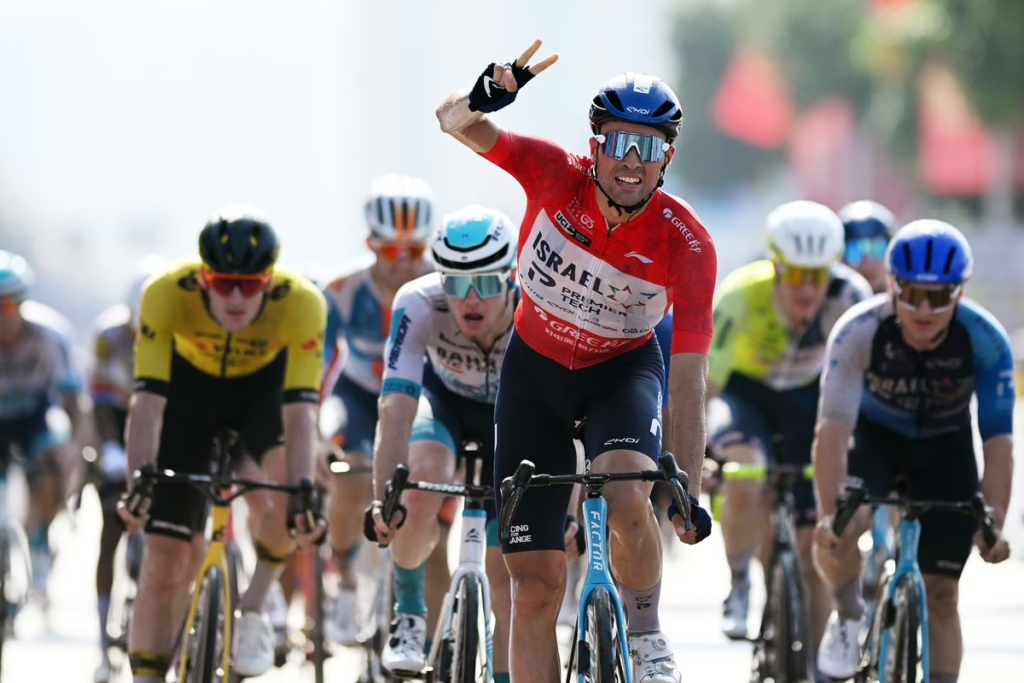
Gianni Moscon won the 2018 Tour of Guangxi, taking advantage of a course that again rewarded riders capable of surviving fast racing and making the difference on the key uphill finish. Enric Mas followed in 2019. Mas was already established as a Grand Tour contender, and his victory showed that the race could suit a pure GC rider when the decisive climb was hard enough.
Those first three winners gave Guangxi a useful range. Wellens was a puncheur and aggressive stage racer, Moscon a powerful Classics-style rider with climbing ability, and Mas a specialist in multi-day general classification racing. The race was not mountainous enough to create large gaps, but it was selective enough to stop the overall becoming simply an extension of the sprint classification.
The summit finish at Nongla became particularly important to that balance. Its steep gradients can create separation even when the preceding stages have left the GC tightly packed. Teams therefore need to bring both sprint resources and at least one rider capable of producing a hard effort on a short climb.
The long pandemic interruption
The Tour of Guangxi disappeared from the calendar after 2019 as the Covid-19 pandemic and restrictions on international sport in China made the event impossible to stage. The 2020, 2021 and 2022 editions did not take place. For a race only three editions old, a three-year absence was particularly significant because it interrupted the process of building traditions and a recognisable winners list.
The WorldTour itself changed during that gap. Teams merged, sponsors changed and a new generation of riders arrived. When Guangxi returned in 2023, it effectively had to reintroduce itself to part of the peloton while retaining the same basic late-season role.
The return nevertheless showed that the event still had a viable sporting place. China remained a major market for cycling manufacturers and sponsors, while the race offered the WorldTour a geographic reach that the European-heavy calendar otherwise struggled to provide.
Vader and Van Eetvelt after the return
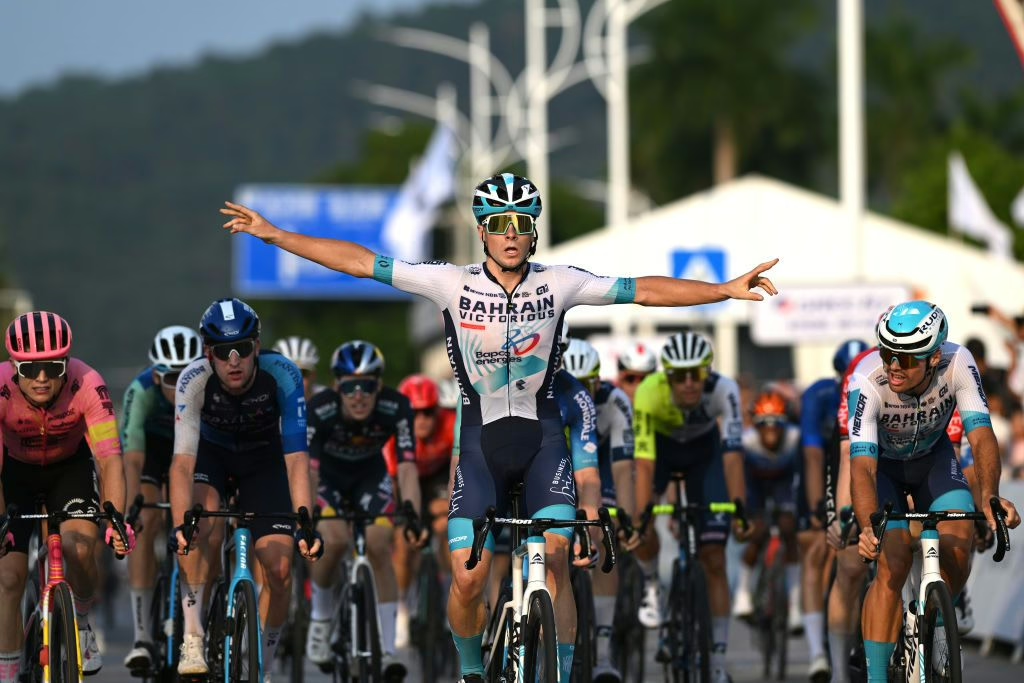
Milan Vader won the returning edition in 2023. His victory was one of the biggest results of his road career and fitted Guangxi’s tendency to create opportunities beyond the established Grand Tour hierarchy. The gaps remained small, making positioning and bonus seconds important around the decisive climbing stages.
Lennert Van Eetvelt followed in 2024. The Belgian beat Oscar Onley and Alex Baudin in the final general classification after six stages and just over 1,000 kilometres of racing. Van Eetvelt’s success again highlighted the value of explosive climbing rather than long Alpine endurance. His later career progression also gave the result greater significance, and ProCyclingUK has since covered Van Eetvelt’s move to NSN Cycling Team.
The 2024 edition reinforced another recurring feature of Guangxi: the race can remain open even while individual stages are dominated by sprinters. Ethan Vernon won the points classification, while Van Eetvelt took the overall and young rider competitions. Different objectives can therefore coexist without one rider controlling every aspect of the week.
Paul Double and Magnier dominate different contests in 2025
The 2025 Tour of Guangxi produced perhaps the clearest example of that split. Paul Double won the general classification, while Paul Magnier turned the sprint stages into an extraordinary run of victories. Magnier won five of the six stages, an exceptional sequence at WorldTour level, but the climbing stage still allowed Double to secure the overall.
Magnier’s success gave the race a different type of headline. Guangxi had always offered several sprint opportunities, but winning five stages in one edition turned the event into a showcase for one of the sport’s emerging fast men. It also demonstrated why sprint teams continue to value the trip to China even when they have little chance of winning the general classification.
Double’s GC victory, meanwhile, continued the event’s record of producing champions who are not always the obvious names at the start of the season. Late-season form can be very different from July form. Riders who have managed their programme carefully can arrive in Guangxi fresher than rivals who have raced a full Grand Tour and Classics schedule.

Why the race works as a season finale
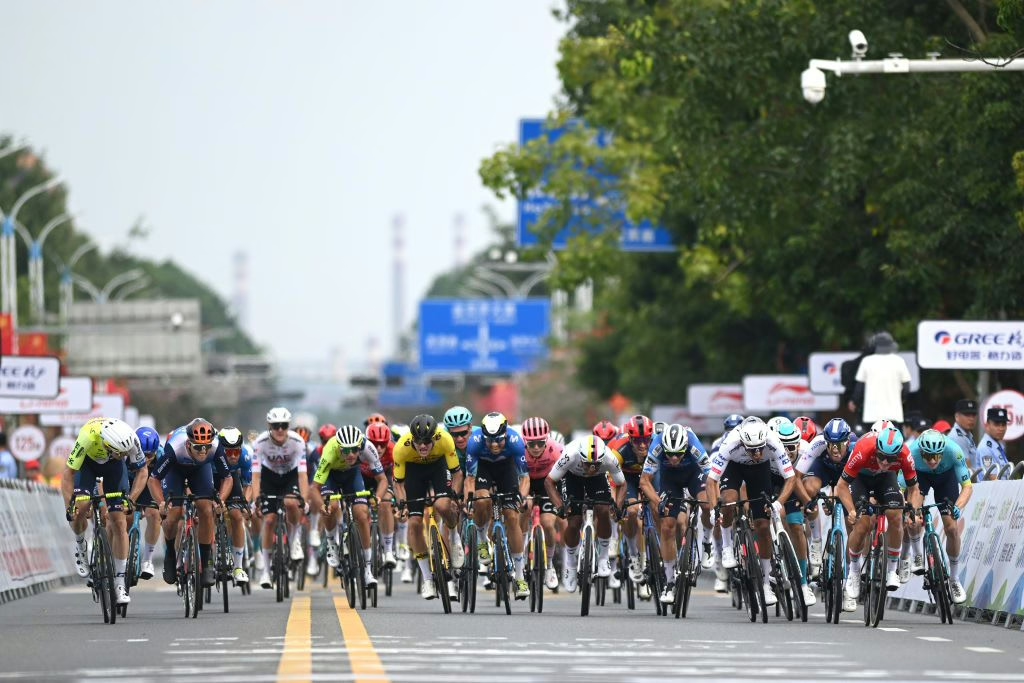
The Tour of Guangxi is unlikely to acquire the prestige of the historic European stage races simply through WorldTour status. Its value comes from a different place. It gives the men’s top-level calendar a late-season stage race outside Europe, creates a final set of opportunities for sprinters and puncheurs, and offers developing GC riders a WorldTour race they can realistically target.
The late-season position also changes how teams approach selection. A rider who spent July riding for a leader may receive personal opportunities in October, while younger riders can be given responsibility that would be difficult to justify in a Grand Tour. That has helped Guangxi produce a winners list that is less predictable than its WorldTour status might suggest. The race can reward riders on the edge of becoming established leaders, which in turn makes the result useful when assessing the following season.
Travel and logistics add another layer. Moving an entire WorldTour operation to southern China for six stages is a significant commitment, so teams generally arrive with clear objectives rather than treating the race as a holiday at the end of the year. Sprint squads need enough riders to control long flat stages, while GC teams must preserve climbing support for the decisive uphill finish. The terrain is central to that. A harder mountain race would discourage many sprinters, while an entirely flat course would make the GC too dependent on bonuses. Guangxi’s combination of broad sprint finishes and one or two selective climbing days keeps several types of team invested in the race.
The race has also become a useful closing chapter for the WorldTour narrative. Results in October do not erase what happened in the Grand Tours or Monuments, but they can alter the way a rider’s season is remembered. A breakthrough stage win, a first WorldTour GC or a dominant sprint week can send a rider into the winter with a very different status inside a team. That is particularly relevant for contract negotiations and leadership planning for the following year. That mix also makes Guangxi a useful race for teams developing lead-out systems. With several likely bunch finishes in the same week, a squad can test positioning and personnel repeatedly rather than judging a combination from one one-day race.
The accumulated fatigue then changes the final sprints, rewarding riders who can keep producing speed after five or six days. For spectators, that repeated contrast is part of the race’s appeal: the same week can contain several full-speed bunch finishes and one GC day where every second matters. Its history is still brief and the pandemic removed three editions, but the winners list already tells a coherent story. Wellens, Moscon, Mas, Vader, Van Eetvelt and Double all found different ways to use the same basic formula. By 2026, the Tour of Guangxi has become an established final examination for riders who still have form left when most of the European season is already over.

