
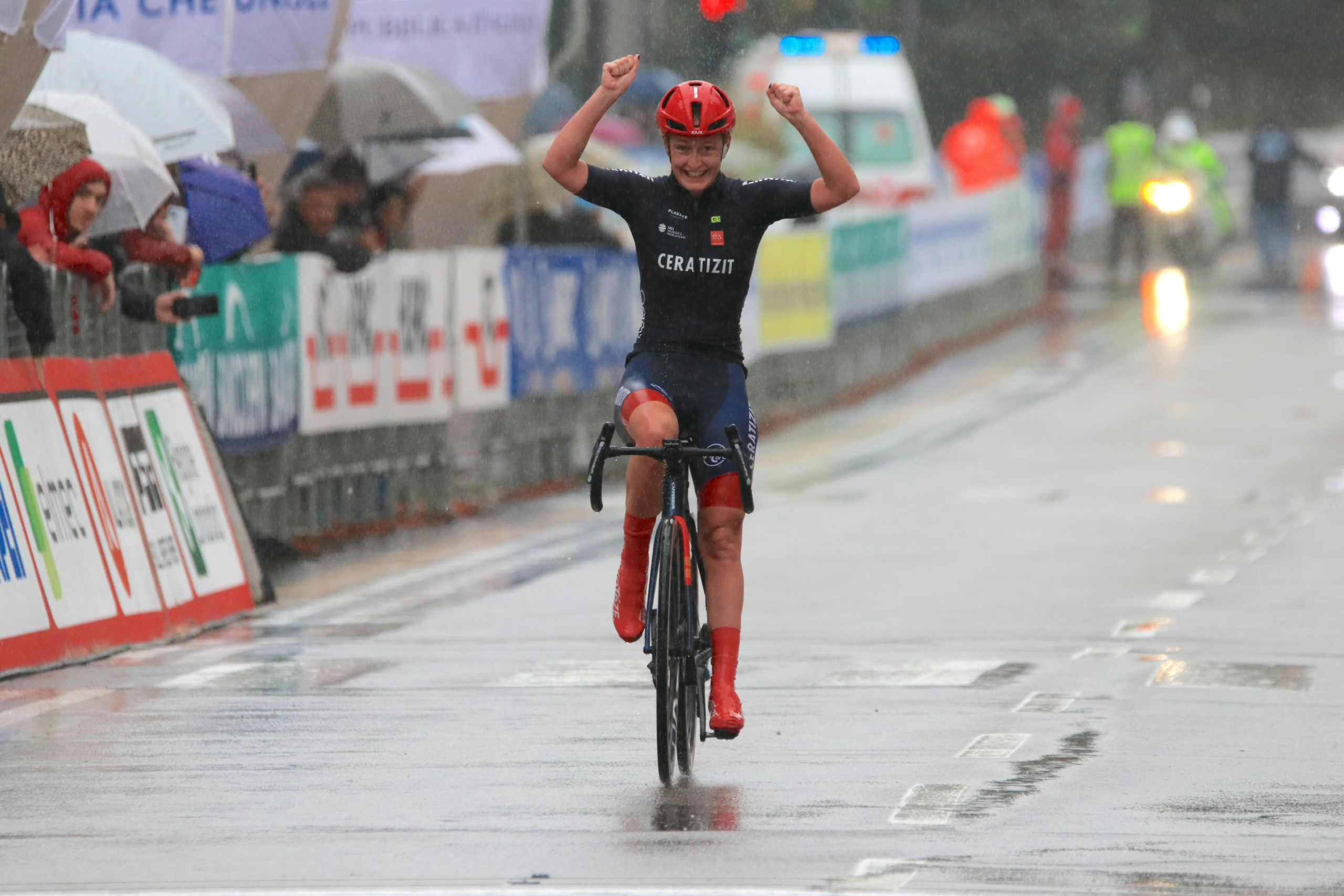
Tre Valli Varesine Women returns on Tuesday 6 October with a strong field but no obvious reference point. Defending champion Elisa Longo Borghini and 2025 runner-up Demi Vollering are both absent, removing the two riders who split the race apart on the final Montello last year and leaving a much broader group with a realistic chance of winning in Varese.
Noemi Rüegg, Sarah van Dam, Niamh Fisher-Black, Mavi García, Silvia Persico, Magdeleine Vallieres and Gaia Realini all have a route to victory. Some need the final circuits to become genuinely selective, while others can afford to wait because the finish in Via Sacco rewards riders who still have a sprint after repeated climbing.
The official FCI technical listing gives the women’s race as 133.86km from Busto Arsizio to Varese. Around 40km is covered before the race reaches the finishing circuit, followed by six laps through the city, over Montello, down towards Lake Varese and back uphill through Ronchi. Neither climb is severe enough to decide the race alone. Repetition is the problem.
That should make team depth important. UAE Team L’IMAD, EF Education-Oatly, FDJ United-Suez, Lidl-Trek, Team Visma | Lease a Bike and Movistar all bring more than one rider who can influence the final hour. With no dominant favourite, the race is likely to be shaped as much by who can force others to chase as by the strongest individual climber.
Previous winners
2025 – Elisa Longo Borghini
2024 – Cédrine Kerbaol
2023 – Liane Lippert
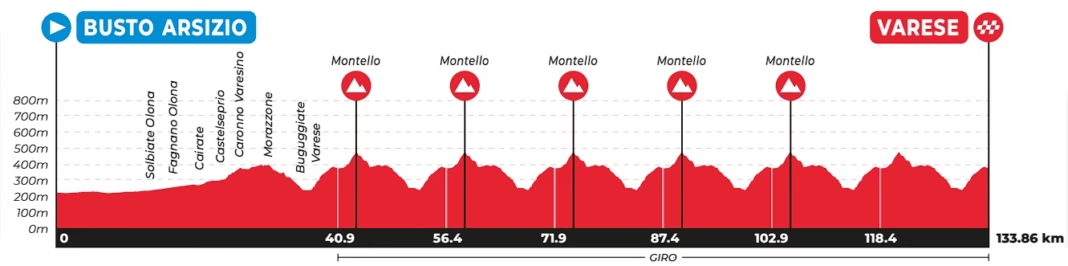
Tre Valli Varesine Women 2026 route
The women start from the Museo del Tessile in Busto Arsizio at 09:15 CEST before heading north towards Varese. The opening section is the least selective part of the day and gives an early break the best chance to establish itself before the repeated climbing begins.
Once the race reaches Varese, the character changes. The six laps begin in Via Sacco and take the riders through the city to Montello, then down towards Schiranna and Lake Varese before the return climb through Ronchi. There is very little genuinely restful road. The climbs are short, the descents demand concentration and every lap creates another fight for position.
Montello is the obvious point for a sharp acceleration. The main uphill section is a little over a kilometre at roughly 6-7%, with steeper ramps close to 10%. It is short enough for punchier riders to attack hard rather than settle into a steady climbing rhythm, and late in the race a small gap over the top can be difficult to close.
Ronchi asks a different question. It is longer and steadier, making it better suited to sustained pressure. A rider who survives an attack on Montello still has to deal with another climb before the road turns back towards the centre. Our Tre Valli Varesine Women 2026 route guide breaks down both climbs and the final circuit in more detail.
The 2025 race showed how the two climbs can work together. Vollering attacked on the final Montello, Longo Borghini followed and the pair stayed clear before the Italian won in Via Sacco. The decisive move formed on the climb, but the winner was still determined by who had the better finish. That distinction matters again this year.
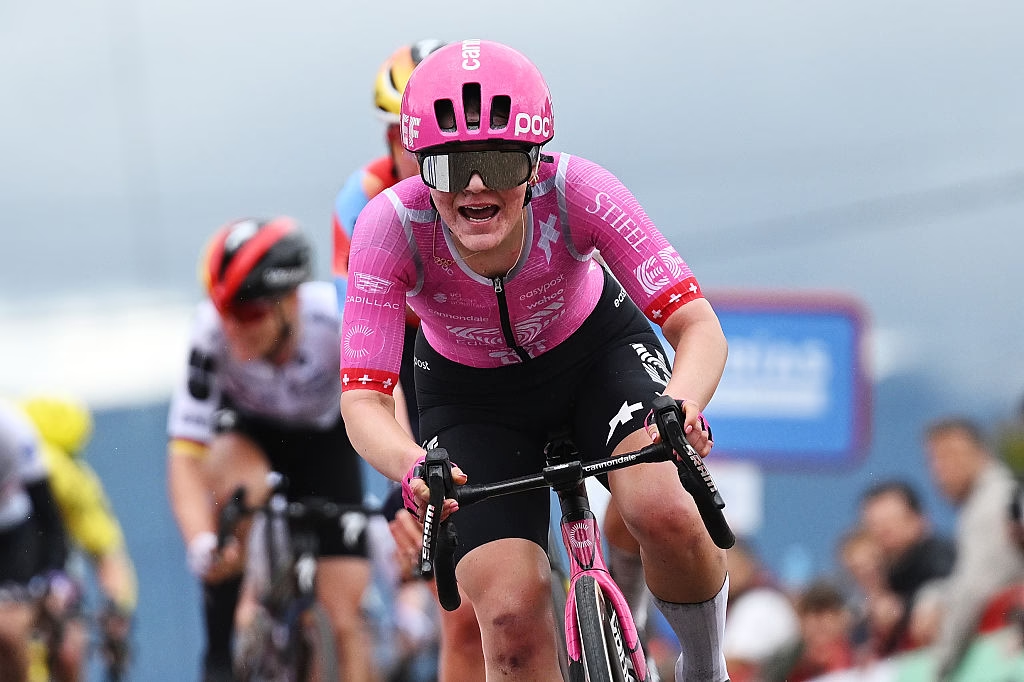 Photo Credit: Getty
Noemi Rüegg has the best combination of course history and finishing speed
Noemi Rüegg finished third here in 2025, arriving in the first chasing group behind Longo Borghini and Vollering. That result is important because it shows she can absorb the repeated circuit climbing without losing the speed that makes her dangerous once the race returns to Via Sacco.
Her 2026 season has reinforced that profile. She began the year by winning the Tour Down Under and later took a stage at the Vuelta Femenina. Tre Valli sits somewhere between those demands: not a pure sprint, not a mountain race, but a day where repeated accelerations gradually reduce the field.
EF Education-Oatly also have enough depth to avoid racing only for Rüegg. Magdeleine Vallieres can attack before the final lap and Henrietta Christie arrives after ninth at Giro dell’Emilia Donne. That gives Rüegg a chance to save herself for the moments when the front group is already under pressure.
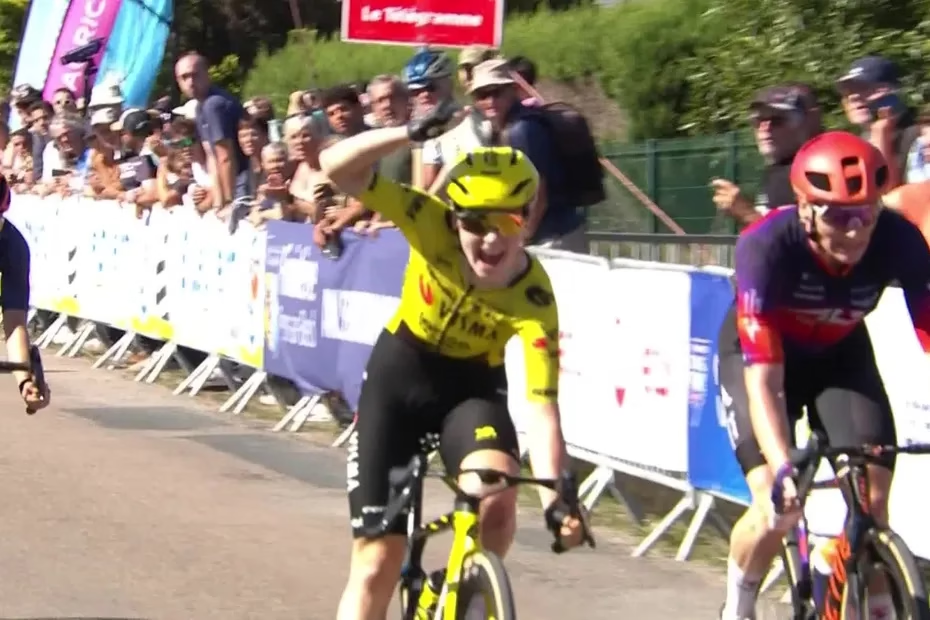
Sarah van Dam arrives with the clearest immediate form
Sarah van Dam was second at Giro dell’Emilia Donne on Saturday, producing the strongest late chase on San Luca and coming within seconds of catching Alessia Vigilia. Three days later she gets a course that should suit her at least as well.
San Luca concentrated the decisive effort into a steep final climb. Varese is more about repeating hard efforts without losing position or speed. Van Dam has enough climbing ability to stay with the front group and enough acceleration to win from a reduced selection, so she does not need to make the race herself.
Team Visma | Lease a Bike can also use Maud Oudeman, who was seventh in Bologna, and Marion Bunel before the final lap. That should allow van Dam to avoid spending energy every time the race stretches on Montello.
Niamh Fisher-Black needs to make the race harder before Via Sacco
Niamh Fisher-Black enters the race with one of the strongest recent climbing blocks in the field. She finished second overall at the Faun Tour Femmes in September after repeatedly making the front group on the hardest days.
Her problem is the finish. Fisher-Black does not want to arrive in Via Sacco with Rüegg, van Dam or Persico still attached, so Lidl-Trek have every reason to make the final two laps difficult. Montello is the obvious place to accelerate, but an earlier move could be more useful if it forces the faster riders to chase.
Gaia Realini and Amanda Spratt give Lidl-Trek two more ways to apply pressure, while Loes Adegeest is dangerous if the race comes back together. The team does not need to decide on one leader before the circuit starts.
UAE Team L’IMAD can attack without sacrificing their finish
UAE Team L’IMAD may have the most flexible line-up in the race. Mavi García can attack if the climbs become selective, while Silvia Persico is better suited to a reduced group that stays together until Via Sacco. Karlijn Swinkels and Eleonora Camilla Gasparrini add further options if the race remains less selective than expected.
García is the rider with the clearest tactical need to create separation. She is strong enough to hurt most of the field on the final laps, but a finish alongside Rüegg, van Dam or Persico is unlikely to be her preferred scenario. UAE can use their numbers to make other teams chase before García commits.
FDJ United-Suez have no reason to commit to one scenario
FDJ United-Suez bring a team that can adapt as the race changes. Évita Muzic is the strongest climbing option, Eva van Agt can attack before the expected decisive point, while Sofia Bertizzolo gives them more finishing speed if a larger group survives.
That should make them awkward to race against. Muzic does not need to chase every move because van Agt can go with attacks, and Bertizzolo gives the team a reason not to panic if the race repeatedly comes back together. On a circuit where the strongest teams can burn riders quickly, that flexibility matters.
Julie Bego and Nikola Nosková carry Giro dell’Emilia form
Cofidis arrive only three days after placing two riders in the top six at Giro dell’Emilia Donne. Nikola Nosková finished fifth and Julie Bego sixth on San Luca, putting both firmly into the outsider group for Varese.
Bego in particular should appreciate a race where the selection comes through repeated accelerations rather than one sustained climb. Cofidis are unlikely to be asked to control the race from the front, which gives them more freedom to attack while the WorldTeams watch one another.
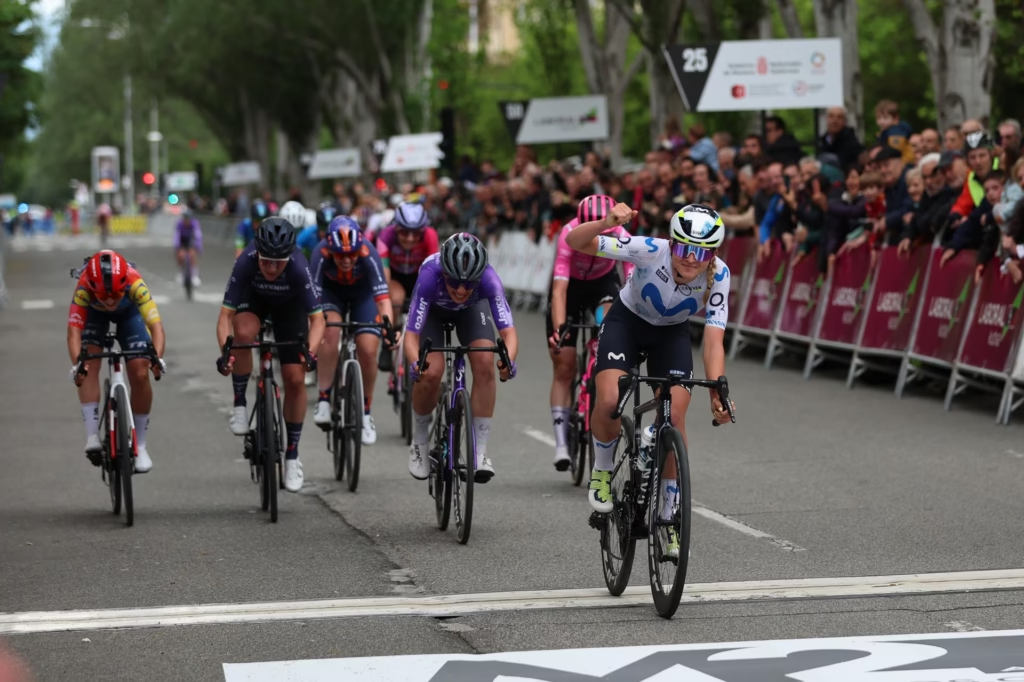 Photo Credit: J.C. Cordovilla
Tre Valli is a better test for Cat Ferguson as she returns from injury
Cat Ferguson is still rebuilding after the double ankle fracture suffered at the Giro d’Italia Women, an injury that ruled her out of the Tour de France Femmes and interrupted a spring in which she had already won the Navarra Women’s Elite Classic.
Her return has included the World Championships and Giro dell’Emilia Donne, where the final San Luca ascent was never likely to be the ideal test at this stage of the comeback. Tre Valli offers a more natural route for her. The climbs are shorter, there is more recovery between the hardest efforts and the finish rewards a rider who can still accelerate after a selective race.
The question is therefore less about whether Ferguson has the right characteristics and more about how much race sharpness has returned. Movistar do not need to put the whole race on her shoulders, which gives her a chance to follow rather than force the action until the final laps.
Liv AlUla Jayco can wait longer than the pure climbers
Liv AlUla Jayco have a useful split between riders who can survive the climbing and riders who can finish quickly. Ella Wyllie and Nadia Gontova can follow a harder race, while Ruby Roseman-Gannon and Letizia Paternoster become more dangerous the larger the front group remains.
That gives the team an incentive to avoid doing unnecessary work. If Fisher-Black, García or Realini attack, Liv can use the climbers to follow rather than immediately committing the whole team to the chase. If the race reforms, their faster finishers come back into play.
Sarah Gigante needs attrition rather than one final attack
Sarah Gigante is among the strongest pure climbers on the start list, but this is not a straightforward climber’s race. The climbs are short and the finish comes after them, so waiting for one decisive ascent would leave her vulnerable to faster riders.
AG Insurance-Soudal therefore need the repetition to count. A hard pace from the earlier laps could make the final Montello much more selective than its gradient suggests. If the front group is already small before the last climb, Gigante becomes considerably more dangerous.
Malou Eisen and Henrietta Christie have earned attention
Saturday’s Giro dell’Emilia Donne also changed the outsider picture. Malou Eisen finished fourth behind Vigilia, van Dam and Lauren Dickson, while Christie was ninth. Both arrive in Varese with a strong result only three days old.
Neither needs to control the race. That can be useful in a field where the bigger teams have several riders to protect. An attack from Eisen or Christie on the penultimate lap is exactly the sort of move that can become dangerous while the nominal favourites hesitate.
How Tre Valli Varesine Women 2026 could be won
The most likely pattern is gradual reduction rather than one enormous split. The first laps should remove riders from the back before the final two circuits become a sequence of attacks, counters and short regroupings.
Fisher-Black, García, Realini, Muzic and Gigante have reasons to make the race harder before Via Sacco. Rüegg, van Dam, Persico and the faster finishers can afford to be more patient. That conflict is likely to decide when the real race begins.
If one or two strong climbers crest the final Montello clear and still have a gap over Ronchi, the race can be won alone. If five to ten riders survive together, the advantage swings towards those with more speed. Teams with several cards may matter more than the nominal favourite because they can attack without immediately sacrificing their best finisher.
How to watch Tre Valli Varesine Women 2026
Tre Valli Varesine Women takes place on Tuesday 6 October. The official start is at 09:15 CEST, 08:15 BST, with the finish expected around lunchtime in Varese. UK viewers should check the final TNT Sports and HBO Max listings on race morning because the exact broadcast window can move around the wider sports schedule.
Our Tre Valli Varesine Women 2026 TV guide has the latest viewing information and UK timings, while the race history covers the short but increasingly important development of the women’s event.
Top 3 prediction
1. Noemi Rüegg
2. Sarah van Dam
3. Niamh Fisher-Black

