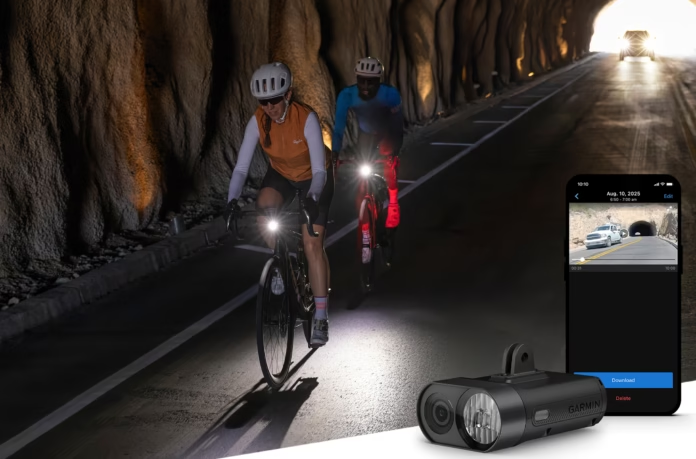
Garmin’s Varia Vue combines a front-facing incident camera with a powerful bicycle headlight. On paper, it addresses two problems at once: lighting the road and recording traffic interactions without filling the handlebars with separate devices. At around £410, however, it needs to do both jobs convincingly. Independent testing suggests that the headlight is capable but the camera, particularly after dark, is the weakness that makes the purchase difficult to recommend without reservations.
This is a research-based review informed by Garmin’s specifications and independent testing from road.cc, Cyclingnews and heise, rather than a claim of first-hand ProCyclingUK testing. All three assessments identify limitations in recorded image quality, despite the headline 4K resolution. The hardware is thoughtfully integrated with Garmin’s ecosystem, but the value depends on whether the recordings will actually be useful when a rider needs them.
The Vue is particularly relevant to commuters and road cyclists who want evidence of close passes or incidents. Those riders should judge a camera by the detail it preserves under awkward lighting, not merely by how smooth a video looks on a phone. An unreadable registration plate can make the difference between footage that documents an event and footage that identifies the vehicle involved. This article contains affiliate links. See the Garmin Varia Vue at Tredz. Purchases through qualifying links may earn a commission without increasing the price.
What Garmin has built
The Varia Vue is a rechargeable front light and camera weighing approximately 200g. Garmin rates it IPX7 for water resistance and supplies a mounting arrangement designed to place a compatible Edge computer above the light. This keeps the cockpit relatively tidy, which is welcome on modern road bikes where bells, computers and other accessories compete for limited handlebar space.
Garmin specifies 4K video at 30 frames per second, with lower-resolution alternatives including 1440p and 1080p. Electronic image stabilisation reduces the effective resolution to 2,688 by 2,160 pixels, so stabilised footage is not full-width 4K. The distinction matters because stabilisation is particularly useful on a bicycle, where road vibration and imperfect surfaces can make a rigidly mounted camera shake.
A microSD card is required and is not included. Garmin specifies a Class 10 or faster card, with supported capacities up to 512GB. The camera can record continuously and protect footage when its incident-detection system triggers. It also supports Garmin’s Varia app for settings, viewing and transferring clips, although those functions have drawn criticism from reviewers.
Camera quality is the sticking point
road.cc’s extended testing found that number plates were generally readable in daylight but became difficult or impossible to identify in dusk and night-time recordings. Glare from vehicle headlights and reflected light from plates created a problem precisely when commuters riding in the darker months would want dependable evidence. That is a serious weakness for a camera sold as part of a premium safety-focused product.
Cyclingnews reported similarly disappointing clarity, along with vibration and connectivity frustrations. Its assessment was particularly cautious about whether the footage could reliably capture vehicle details outside favourable conditions. German technology publication heise also identified shortcomings in exposure, colour handling and the distinction between advertised 4K and stabilised recording resolution.
These findings do not mean the camera has no value. Even when a plate cannot be read, footage can establish road position, a vehicle’s movements, the direction of travel and the sequence leading up to an incident. However, riders paying this much for a combined light and incident camera are entitled to expect better performance when the light fades.
The problem is not simply a matter of pixel count. Fast-moving vehicles, reflections, vibration, changing exposure and low light can all undermine useful detail. Increasing resolution cannot fully compensate for those limitations. The three independent assessments point towards the same practical conclusion: the Vue is much more reliable as a daylight recording device than as an all-conditions identification camera.
A more convincing headlight
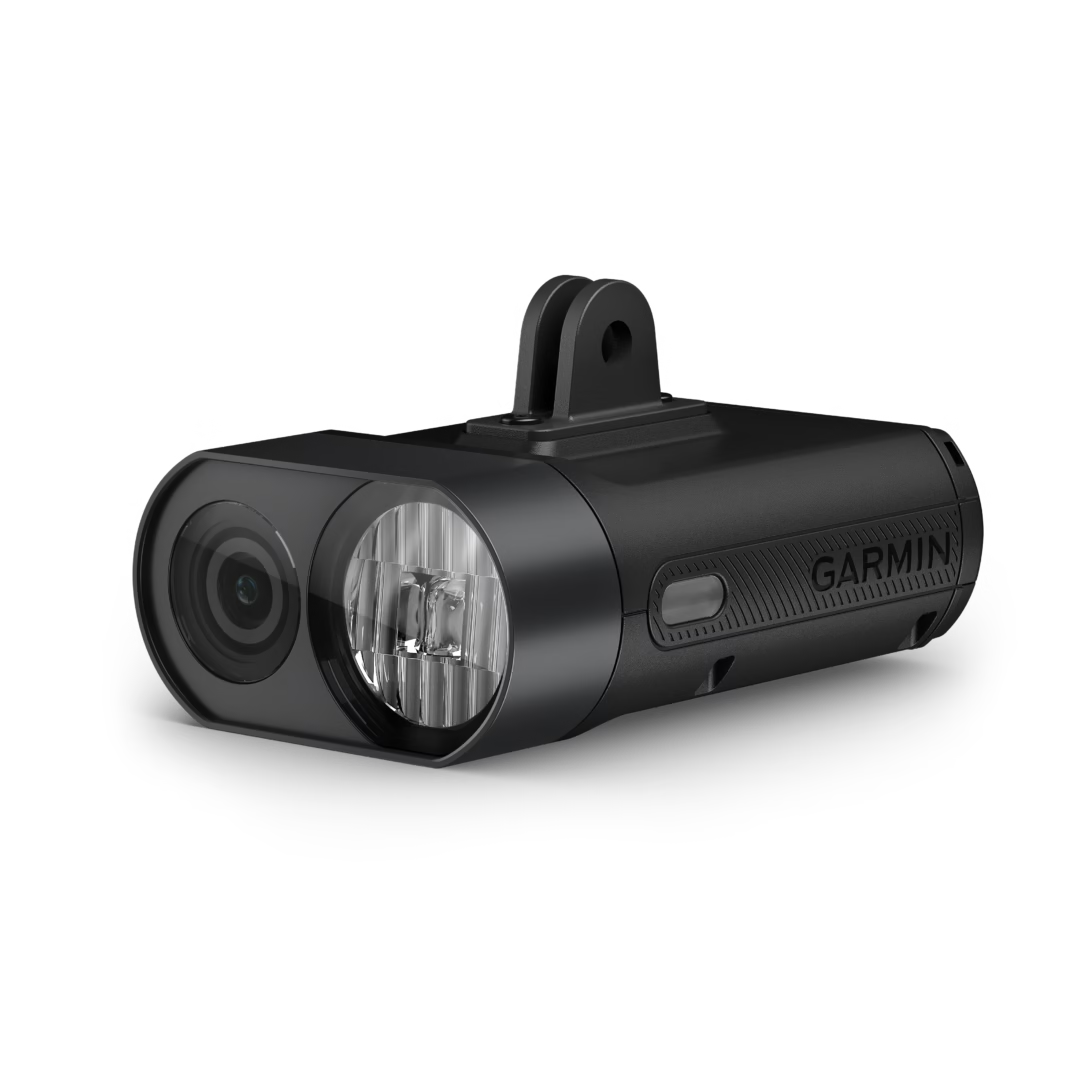
The headlight has a maximum output of 600 lumens in daytime flash mode. Its brightest steady beam is rated at 550 lumens, with medium and low settings of 300 and 140 lumens. Garmin has shaped the beam to illuminate the road while reducing unnecessary glare above the cutoff. This is a useful feature when riding around other road users.
road.cc praised the beam’s practical performance on dark roads and found the light itself well designed. That makes the overall package more frustrating: the lighting component is good, yet a separate high-quality front light can be bought for substantially less. The premium is being paid for the camera and integrated controls, which need to justify the difference.
Compatible Garmin Edge computers can control the light and camera and link the Vue into a wider Garmin light network. For riders already using Garmin equipment, the ability to manage several accessories together is a meaningful convenience. It avoids having to operate multiple devices independently at the beginning and end of every ride.
Battery life requires careful planning
Garmin quotes just 1 hour 15 minutes with the high steady beam and 4K recording, compared with five hours in daytime flash mode at the same recording resolution. With the headlight switched off, it estimates up to six hours at 4K or nine hours at 1080p. These figures describe very different operating conditions and should not be compared without checking the settings.
road.cc found that the Vue exceeded Garmin’s demanding-mode estimate in its own test, which is encouraging. Nevertheless, a long winter ride with a bright continuous beam can quickly exhaust the battery. The unit supports operation while charging, but adding a power bank and cable undermines some of the simplicity of an integrated light and camera.
For commuting, the endurance may be adequate if the device is charged frequently. For long-distance riders, touring or winter training, the most demanding settings are a significant limitation. Buyers should calculate battery requirements around their actual ride duration, lighting needs and recording preferences rather than the most generous headline figure.
App and recording workflow
Garmin’s Varia app provides access to settings and recorded clips, while an optional Vault subscription offers cloud storage. The device can protect footage around an automatically detected incident, although no detection system should be treated as infallible. Riders should understand how to preserve important recordings manually after a close pass or other event.
road.cc reported very slow wireless transfers of lengthy clips. Cyclingnews also experienced connectivity problems. Removing the microSD card and copying files directly to a computer may be more practical for regular users, especially when reviewing several rides or preserving original files for a report.
There is an important distinction between recording continuously and managing footage effectively. A useful cycling camera needs a straightforward way to locate, preserve and export a particular incident. The Vue has the essential recording functions, but its app experience does not appear as polished as the rest of the hardware.
Mounting and everyday use
The supplied mount can position the Vue beneath a Garmin Edge head unit. That arrangement saves space and looks tidy, but the camera needs to remain stable and correctly aligned. Cyclingnews experienced movement in its test setup, which affected footage. Even a technically capable camera can produce poor results when its mounting arrangement introduces vibration.
The unit measures approximately 92 by 60 by 33mm, according to Garmin. USB-C charging, weather resistance and integrated controls make it a practical object to live with. Its strongest appeal is to riders who value Garmin compatibility and want one accessory to replace two, rather than those who primarily want the sharpest possible camera footage.
Riders outside the Garmin ecosystem can still use the device, but some connected conveniences depend on compatible equipment. That reduces the value proposition for someone using another computer brand. Before buying, check the mounting arrangement and how frequently the camera’s settings will need changing during a ride.
Alternatives and value
A separate front light and dedicated cycling camera can be less elegant, but it allows each component to be chosen on its own merits. road.cc compared the Vue with the Cycliq Fly12 Sport, another combined front camera-light. The alternative deserves consideration because Garmin’s higher price does not guarantee more useful low-light footage.
Riders considering a broader safety setup should also distinguish recording devices from radar systems. Our Wahoo TRACKR RADAR and Lezyne Radar Drive Rear reviews examine rearward vehicle alerts, which address a different need from recording evidence. A radar may warn of an approaching vehicle, but it does not replace a front-facing incident camera. Check current availability and pricing.
The Vue is best suited to riders who primarily ride in daylight, already own compatible Garmin equipment and place a high value on a tidy integrated setup. It is less compelling for winter commuters who expect reliable number-plate identification after dark, or for anyone who needs hours of bright continuous lighting while recording.
Verdict
The Garmin Varia Vue is a well-considered product whose weakest element is also its most important selling point. The light is capable, the construction is appealing and the Garmin integration is genuinely useful. Yet the independent evidence repeatedly points to disappointing camera performance in challenging light, and that makes the price difficult to justify.
For daylight riders who want an integrated camera-light and accept its limitations, the Vue remains worth considering. For those buying primarily to gather reliable evidence after dark, a different camera setup may be the wiser choice. It is a strong light with a compromised incident camera, not an unequivocal safety upgrade.