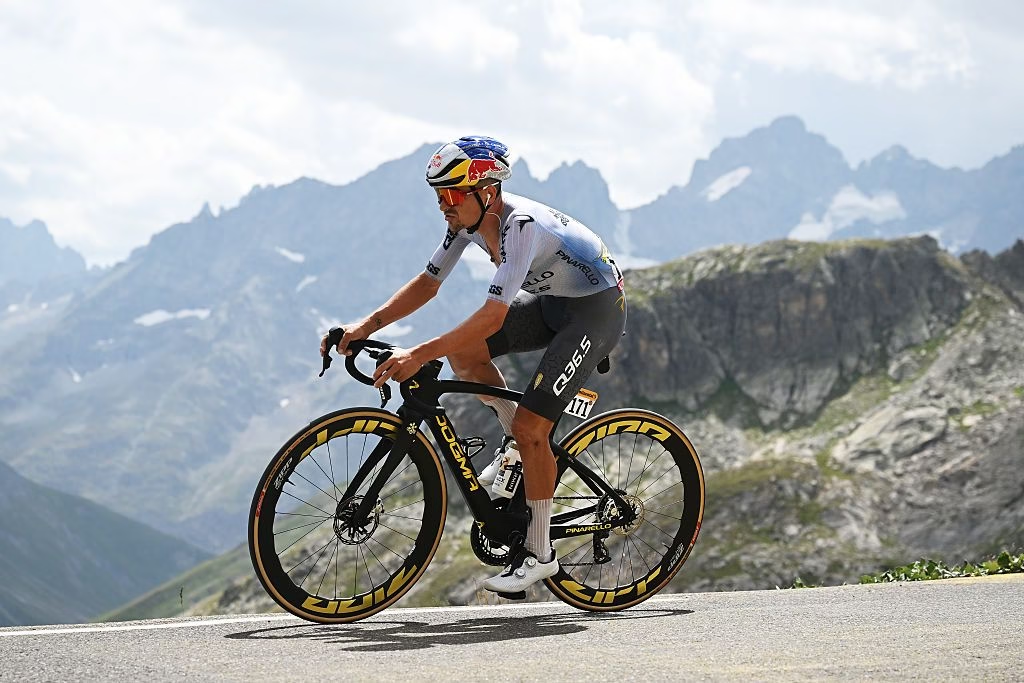
Paul Seixas did not need another promising performance to finish 2026. He needed a win that stood alongside his fourth place at the Tour de France and his podium at Liège-Bastogne-Liège. He got it at Il Lombardia, attacking on the Civiglio and reaching Como alone, 48 seconds ahead of Enric Mas.
At 20, the Frenchman has already shown that he can survive three weeks in a Grand Tour and win a race decided by climbing after nearly six hours. The interesting question is no longer whether he belongs among the leading riders. It is how Decathlon CMA CGM builds a calendar around someone who can target so many different races.
The Civiglio was the difference
The 239-kilometre course was designed to wear down the field before the final climbs. By the time the race reached the Civiglio, Seixas had little reason to wait. He attacked with roughly 19 kilometres remaining, on terrain where following wheels was becoming less useful and the strongest climbers could make their advantage count.
Tom Pidcock tried to respond but could not stay with him. Mas and Giulio Ciccone then had to decide how much to commit to a chase that might cost them their own podium places. Seixas’s advantage was not simply the result of a disorganised group behind. He continued riding strongly through the descent and towards Como, where the gaps were substantial rather than marginal.
Mas and Ciccone still earned their places
Mas finished second at 48 seconds, with Ciccone third at 1:05. Remco Evenepoel and Brandon McNulty were another 15 seconds back. Those gaps matter: the podium was sorted by more than a late hesitation in the chase. Seixas was strongest when the decisive climb arrived, and the riders behind had to manage the damage.
Mas showed enough form to separate himself from the remaining contenders, while Ciccone held on for a major late-season result. Neither could match the winning acceleration. It is a better reading of the race than suggesting the entire field somehow allowed a 20-year-old to escape.
A Monument changes his standing
Before Lombardia, Seixas’s season already looked remarkable. Fourth at the Tour demonstrated his recovery and climbing over three weeks; Liège showed that he could compete with the best in a hard one-day race. Lombardia supplied the missing win at the highest level of the Classics.
There is a difference between repeatedly being close and forcing a race to unfold on your terms. Seixas did the latter. His rivals now know that letting him attack on a late climb can be costly, but that matching the first acceleration may also take them beyond their limit. That makes him a more complicated rider to race against in 2027.
The Tour and the Classics cannot both be everything
Decathlon’s biggest decision is how to organise his next season. A rider who can challenge at Liège, race for the Tour classification and still win Lombardia offers tempting possibilities, but those targets demand different peaks. Spring form cannot simply be held until October without a cost.
The team must decide which races deserve a full build-up and which can be approached with fewer expectations. Protecting his recovery and keeping his programme manageable will matter more than chasing every start line that might produce another headline. His age is an advantage in terms of development, not a reason to accelerate the process.
What opponents will do differently
Seixas is unlikely to get the same freedom on the Civiglio again. Teams with several riders near the front will try to attack before his preferred point, keep him isolated or force Decathlon to use its support riders earlier. Other contenders may choose to follow at their own pace rather than blow up trying to match one acceleration.
That does not mean Lombardia was a one-off. It means the next victories will demand different solutions. The strongest riders are rarely allowed to repeat the same move indefinitely, particularly once they have shown how much damage they can do in the finale.
The right conclusion from 2026
Seixas ends the season with a Monument and a collection of results across two very different kinds of racing. That is enough to make 2026 a breakthrough year without predicting a Tour de France victory or a succession of Monuments.
His next campaign will tell us how he handles closer marking, greater responsibility and the demands of a team increasingly built around him. For now, the clearest evidence is the race itself: an attack on the decisive climb, no successful response and a solo finish in Como.