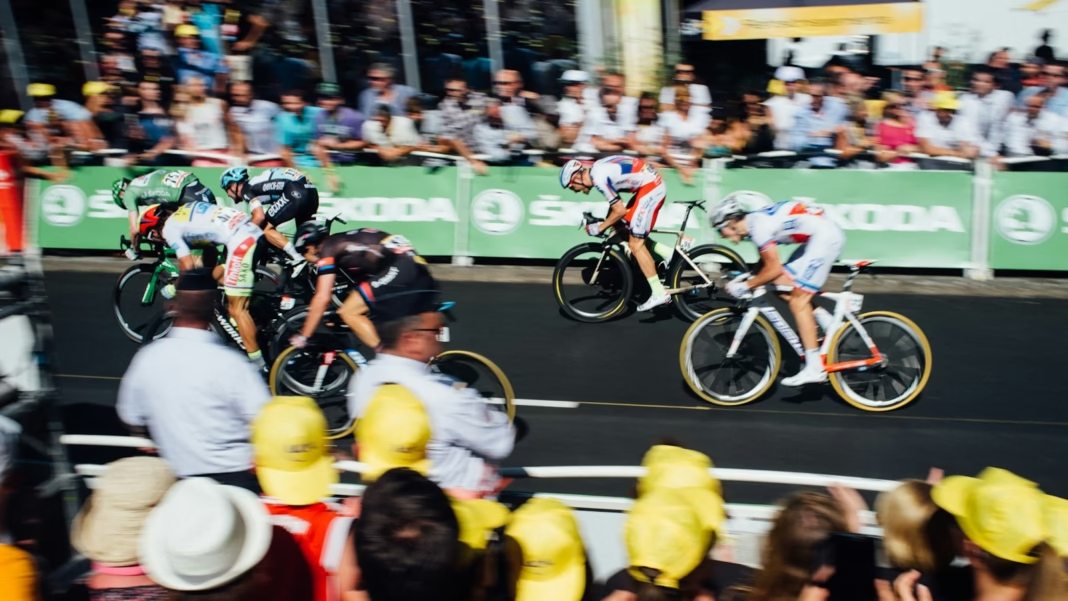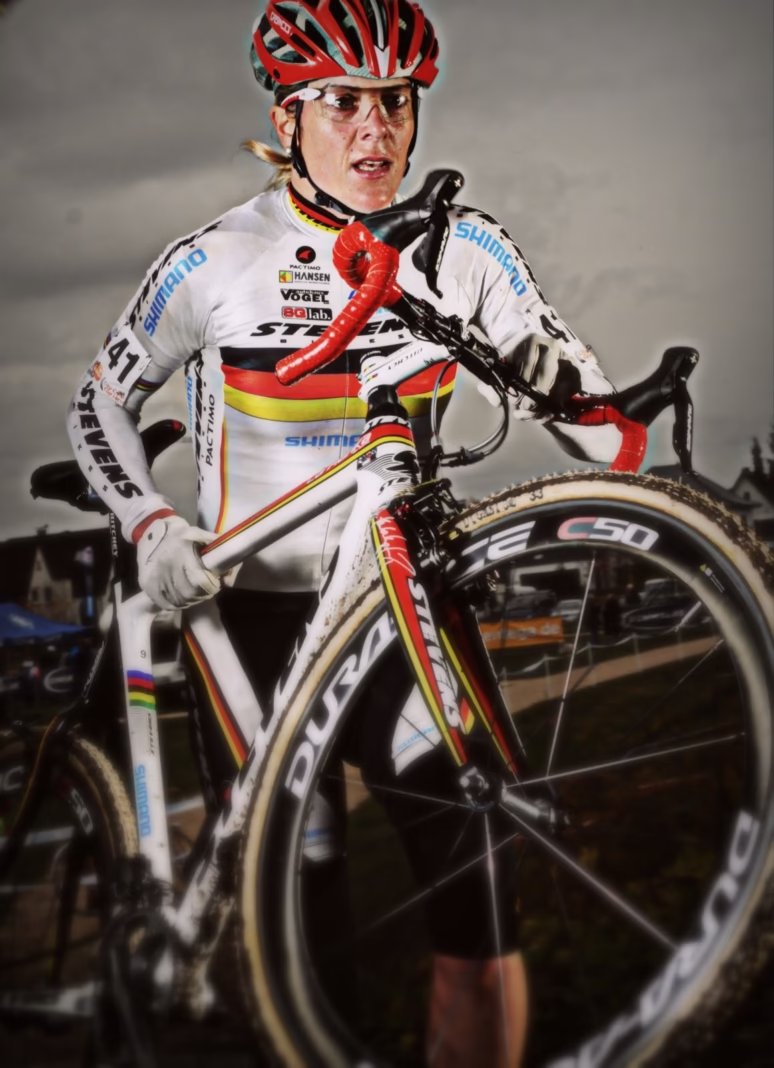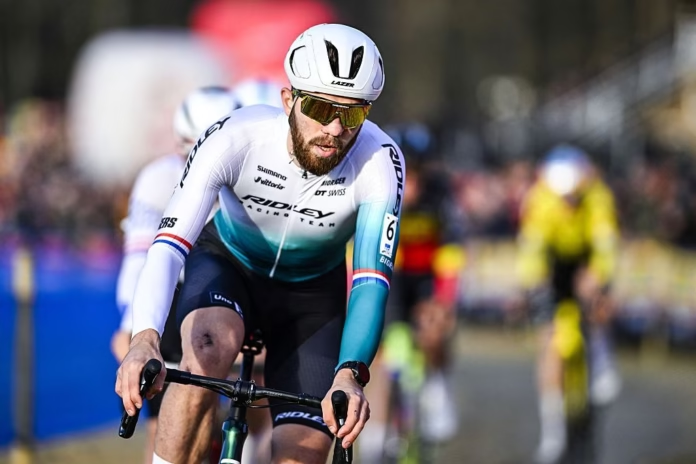
Joris Nieuwenhuis returns to the Heerderstrand on Saturday 24 October 2026, defending the men’s title he won after a close contest with Pim Ronhaar last autumn. Niels Vandeputte, the 2023 winner, is also among the first confirmed entrants. The elite men’s race starts at 15:00 in the Netherlands, 14:00 BST in the UK, on a course where loose sand and repeated accelerations usually decide the order long before the finishing straight.
Heerde is the third stop on the seven-event HG Cross calendar, following Dendermonde and Meulebeke. It was previously organised under the Exact Cross umbrella and retains its own identity as the Internationale Cyclocross Heerderstrand. This is a standalone UCI C2 race, rather than a round where riders collect points towards a single HG Cross overall classification. Its place in the calendar, the day before Superprestige Overijse, could also influence who ultimately chooses to start.
The first names announced on 13 October give the men’s race a strong Dutch-Belgian contest. Nieuwenhuis and Ronhaar have recent form on precisely this circuit, while Vandeputte’s 2023 victory shows he can handle the mixture of sand and fast transitions. Further starters may be announced before Saturday, so the analysis below separates named entrants from riders whose participation has yet to be confirmed.
The Heerderstrand course: sand, short recoveries and hard accelerations
Heerderstrand is a recreational lake near Heerde in Gelderland, surrounded by woodland, grassy paths and stretches of sand. The organisers use this landscape to make an unusual cross course. Unlike races on farmland, where muddy turns and steep banks often provide the main obstacles, Heerde asks riders to regain traction after being slowed sharply by loose ground. A rider can be visibly faster through the sand, only to give away that advantage by fumbling a remount or entering the next corner in the wrong gear.
The sand is coarse and difficult to ride continuously. That changes the value of running skills. A rider who dismounts promptly, carries the bike through the softest metres and remounts cleanly may be more efficient than one determined to stay seated until the back wheel almost stops. The calculation changes from lap to lap as the surface is churned up and existing tyre tracks become deeper. A useful line early in the race may be slower after dozens of riders have passed.
The technical work continues beyond the obvious obstacles. Short paved sections encourage riders to gather speed, while the next grassy turn or sandy entrance immediately forces them to brake and accelerate again. Those efforts raise the physical cost of every mistake. A rider two seconds behind at the start of a long straight may close the gap with relatively little effort; the same deficit through a narrow, single-file turn can require another sustained acceleration.
The precise 2026 layout and the effect of race-day weather still need confirmation. The course may be altered from the one used in 2025, and it would be misleading to present an archive map as the final design. Nevertheless, the lake, sand and repeated changes of surface are established characteristics. On a dry afternoon, speed over the transitions should be important. If rain changes grip on the grass, tyre choice, pressure and pit decisions become more influential.
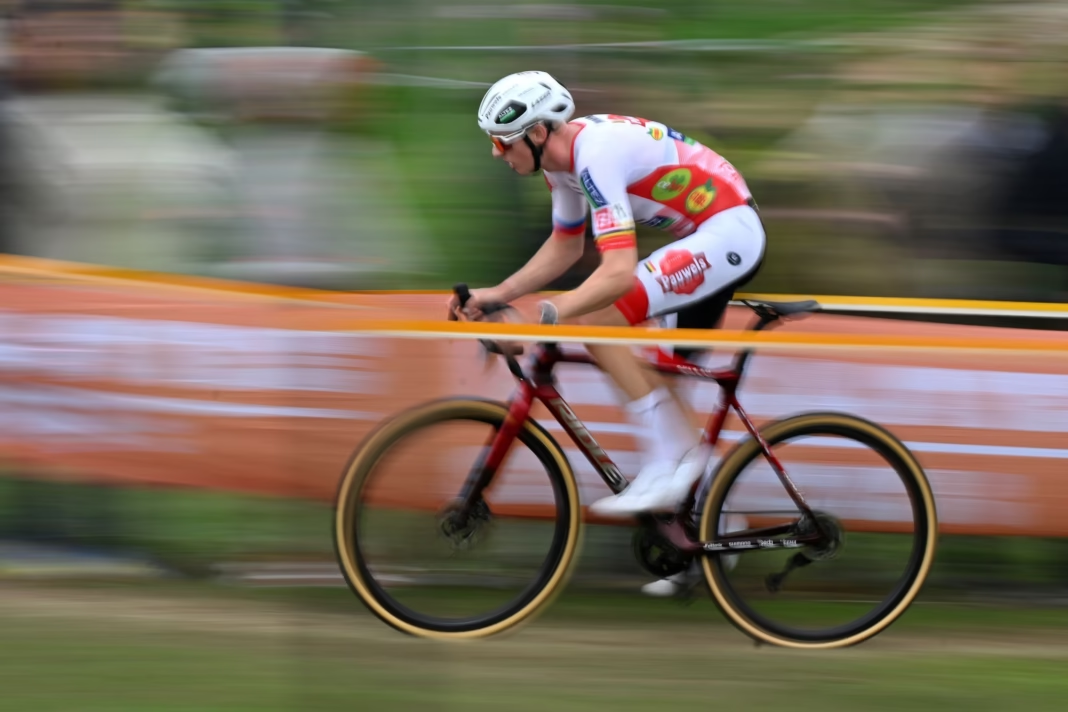
Nieuwenhuis, Ronhaar and Vandeputte: three different routes to victory
Nieuwenhuis won the 2025 edition by making his difference on the final lap, after Ronhaar had kept the contest alive into the closing minutes. His ability to keep producing powerful efforts after a succession of difficult transitions makes him the natural reference point. He has also enjoyed major results in races requiring a sustained tempo, although Heerde’s short corners prevent a strong rider from treating the circuit like a time-trial.
Ronhaar has a particular connection to this race. The Hellendoorn rider regards Heerde as a home fixture and has the local familiarity that can be valuable on a circuit without much room to recover from positioning mistakes. Second place in 2025 was no isolated result. When he gets clear air he can string together quick laps, but he has to avoid spending the opening kilometres overtaking riders who happen to start ahead of him.
Vandeputte won at Heerderstrand in 2023, before the event became a more established fixture on the major broadcast calendar. The Belgian’s ability to carry speed between corners can be a genuine advantage here, provided he can keep his rear wheel moving through the soft sand. His inclusion is important because it prevents the men’s race from becoming a straightforward repeat of last year’s duel. The wider field has not been finalised, so his status as a contender should not be confused with any claim that he faces only two serious rivals.
A race in late October can reward recent cyclocross rhythm over reputation. Some riders have already raced several high-intensity weekends, others are working around road commitments or building towards November. The comparison that matters on Saturday is less about palmarès and more about how quickly each rider finds grip and rhythm over the first two laps. An early acceleration by one of the three named favourites could force the rest of the group to chase from an awkward position.
Lessons from the 2025 race and the Heerde roll of honour
The 2025 men’s race ended with Nieuwenhuis ahead of Ronhaar and Yordi Corsus. Laurens Sweeck finished fourth and Vandeputte fifth, giving the established Belgian specialists useful course knowledge even though not all are confirmed for this edition. Felipe Orts, Mees Hendrikx and David Haverdings also featured in the top ten. The depth of that result explains why a seemingly simple lakeside course can expose even experienced cyclocross riders.
The previous winners offer different reference points. Vandeputte took the 2023 race, while Nieuwenhuis won in 2025. At such a venue, a winning approach does not have to look the same each year: a rider can force a separation by running the sand better than everybody else, by exploiting a series of accelerations, or by arriving at the final lap with enough left to make one more effort. The position of the decisive move matters as much as its size.
For the spectators watching the opening laps, it is useful to compare how often the first six riders remain together after the main sand stretches. If a group repeatedly splits and regroups on the faster paths, the eventual winner may be the rider who can attack immediately after the recovery. If gaps stay open after the sandy section, handling and running economy will probably prove more important than the finishing sprint.
Race tactics: where the men’s contest could turn
The first key decision is positioning. A rider who reaches the loose sand at the front has a choice of lines and can dismount on his own terms. Somebody several places back is restricted by other riders’ tracks and mistakes. Even if the leading group remains intact, its order on the approach to each obstacle can dictate who spends the most energy getting out of it.
Bike changes can also become part of the contest, particularly if rain makes the grassy sections slippery. A fresh bike is useful only when the time gained from cleaner tyres or better grip exceeds the seconds lost in the pit. On a relatively quick circuit, teams may prefer careful tyre-pressure decisions before the start to unnecessary changes later. Watch whether the riders make a change immediately after an error, or deliberately wait for a more convenient lap.
There is also the next-day factor. Superprestige Overijse follows on Sunday, demanding a different physical effort on its hills and technical sections. Riders with ambitions across both races may try to finish Saturday without an unusually costly chase from behind, but it would be wrong to assume anyone will hold back once the decisive group is established. A victory at Heerde still carries its own value, and the opening pace will show who is prepared to take risks.
The final lap could again be decisive if several riders remain close. In that situation the best attack is often placed just before a section that makes it difficult to respond, rather than on the fastest open path. A small lead gained into the sand forces the rider behind to choose a riskier line or to dismount later. The time difference may be small, yet the leading rider can preserve it through the next set of corners.
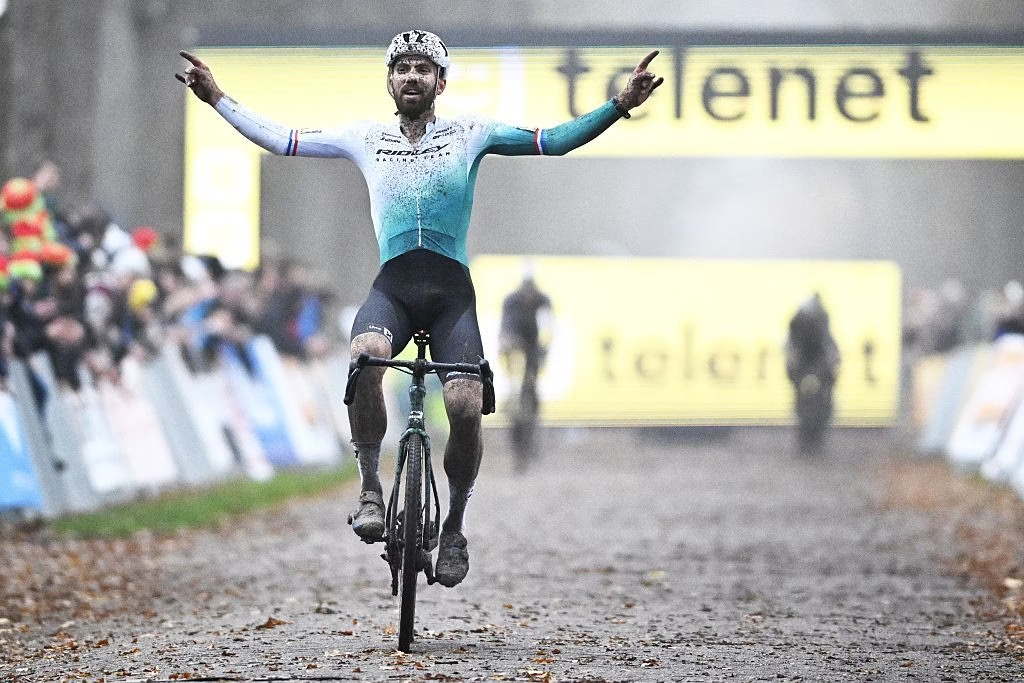 Photo Credit: Getty
Start time, television coverage and watching from Heerde
The race takes place on Saturday 24 October. The organiser’s programme lists junior men at 12:30 CEST, elite women at 13:45 and elite men at 15:00. For viewers in Britain those times are 11:30, 12:45 and 14:00 BST respectively. Both countries change from summer time on the following day, so Saturday’s two-hour UK-Netherlands difference does not apply: the Netherlands is one hour ahead of the UK.
The Heerde organisers advertise live coverage on Sporza and Eurosport in their home markets. The Belgian television listing has VRT coverage from around 13:30 local time, while Dutch listings include Eurosport and an HBO Max stream. Rights, linear channels and actual stream availability differ between territories. UK viewers should check their broadcaster’s Saturday listings rather than assume a Dutch Eurosport listing guarantees the same channel in Britain. The 2026–27 cyclocross calendar is a useful companion for the wider weekend.
Admission to Heerderstrand itself is free. Spectators travelling by car should use the event’s designated parking at the MSV-NOV motocross site near Kamperweg, where the published charge is €15 and cash payment is required. A free shuttle connects the parking area with the course. Cyclists have separate access by Ossenbergweg. The venue opens at 09:00 local time, offering time to watch practice and the earlier categories before the elite races.
A good viewing position for the men’s event is near a sand entrance or the first technical bend afterwards, where the repeated changes of pace are easiest to see. Riders who appear comfortable on the television’s wide shots can be losing a metre at every remount. For readers following both races, the 2025 women’s Heerde report gives an indication of how quickly the same terrain can separate leading contenders.