The Tour de France, Giro d’Italia and Vuelta a España are cycling’s three men’s Grand Tours. Each lasts three weeks and consists of 21 stages, but the similarities can conceal very different races. The Tour carries the greatest global media attention, the Giro is closely associated with the steep and often unpredictable Italian mountains, and the Vuelta has become known for its testing late-summer routes and frequent uphill finishes.
There is a tendency to treat one race as the hardest or most prestigious and leave it there. The reality depends on the route and the field in a given year. A mountainous Tour can be more demanding than a relatively balanced Giro, and a Vuelta with multiple summit finishes can produce bigger general-classification gaps than either. It is more useful to understand how each race is organised, what its leader’s jersey signifies and why riders choose particular goals.
The 2026 routes illustrate their different identities. The Giro started in Bulgaria and finished in Rome. The Tour began in Barcelona, returned to France and ended on the Champs-Élysées in Paris. The Vuelta opened with a Monaco time-trial and finished in Granada after a route weighted towards southern Spain. They were three different journeys using the same broad Grand Tour framework.
What makes a race a Grand Tour?
The three Grand Tours are the only men’s road stage races currently classified as three-week Grand Tours on the UCI calendar. Riders contest 21 stages with two rest days and an overall classification calculated mainly from their cumulative stage times, adjusted by relevant bonuses and penalties. The rider with the lowest total time at the end wins the general classification, or GC.
Stage types usually include flat days for sprinters, hilly stages that suit breakaways and versatile riders, mountain finishes capable of changing the GC and individual or team time-trials. An overall contender must survive all of them. A poor time-trial, crash, crosswind split or unexpectedly hard transition stage can undo the advantage gained from an excellent mountain performance.
That breadth is what makes a Grand Tour different from a shorter WorldTour stage race. The challenges accumulate over weeks rather than days. Recovery, nutrition, illness, the ability to work with team-mates and repeated decisions under fatigue become part of the sporting contest. An individual stage victory is a major achievement, but it is a separate prize from the overall classification.
| Grand Tour | Founded | Leader’s jersey | Typical calendar position |
|---|---|---|---|
| Tour de France | 1903 | Yellow | July |
| Giro d’Italia | 1909 | Pink | May |
| Vuelta a España | 1935 | Red | Late August and September |
Tour de France: yellow jersey, July and the biggest stage
The Tour de France began in 1903 and has become the sport’s best-known race internationally. Its yellow jersey, first awarded during the 1919 edition, is one of cycling’s most widely recognised symbols. For many leading teams, the Tour shapes everything from winter training to rider recruitment and the selection of a squad’s supporting climbers.
July usually brings long days, large roadside crowds and the highest level of scrutiny of the race’s leading riders. The Alps and Pyrenees have supplied many decisive GC stages, but the Tour is not limited to big climbs. Time-trials, crosswinds and positioning on apparently simple stages can determine whether a contender reaches the major mountains with a realistic chance of winning.
The 2026 Tour began with a team time-trial in Barcelona on 4 July and finished in Paris on 26 July. The official route comprised seven flat stages, four hilly stages, eight mountain stages, one team time-trial and one individual time-trial. Five summit finishes were scheduled, including two days finishing on Alpe d’Huez. That profile made mountain endurance central, while the Barcelona opening created immediate pressure on teams to ride together at speed.
The attention is both an advantage and a burden. Sponsors prize a strong Tour performance, but the best general-classification riders face constant demands for interviews and analysis. A team may concentrate almost all of its strongest support riders around its leader, leaving fewer opportunities for others to pursue individual victories.
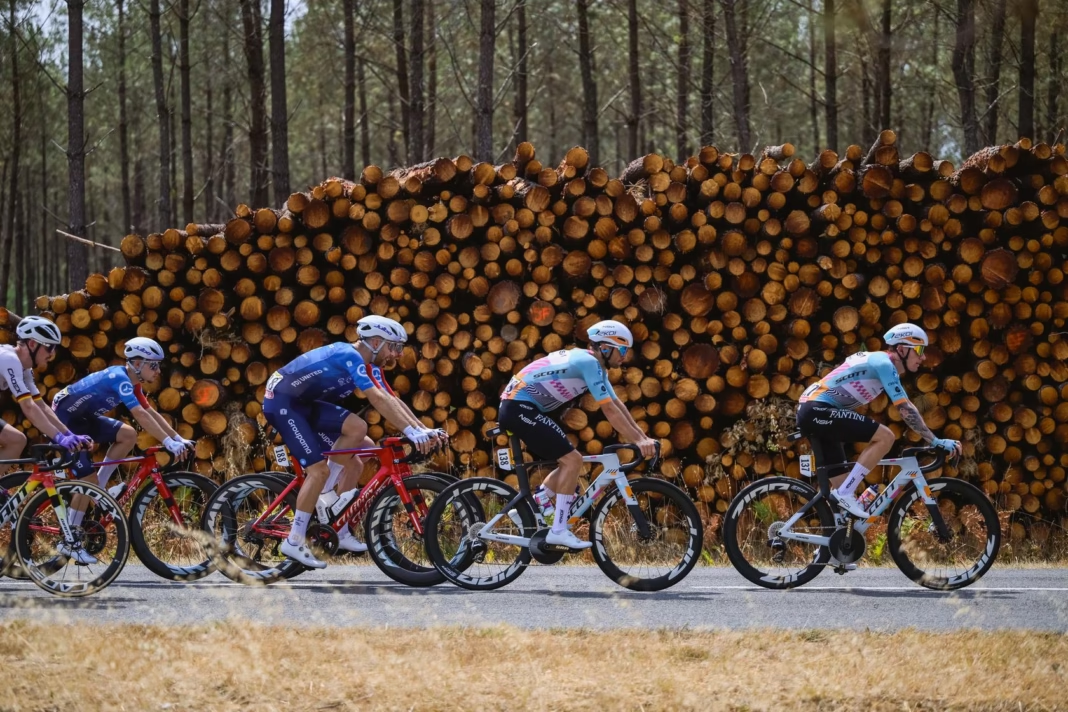 Photo Credit: A.S.O./Charly López
Giro d’Italia: pink jersey and the Italian mountains
The Giro d’Italia began in 1909. Its race leader wears the maglia rosa, or pink jersey, a colour associated with the newspaper La Gazzetta dello Sport, which helped establish the event. The Giro frequently includes major mountain stages in the Alps, Dolomites and Apennines, though the exact balance shifts substantially from one edition to another.
The Giro’s May position creates a different weather risk from the Tour. High passes can still be affected by snow or severe cold, and mountain stages have sometimes been altered when conditions make the roads unsafe. Riders may face hot lowland stages and freezing mountain descents during the same three-week race. A team prepared only for summer conditions can be caught out.
The 2026 Giro started in Bulgaria on 8 May with a stage between Nessebar and Burgas, followed by two further Bulgarian stages before transferring to Italy. The 21-stage race finished in Rome on 31 May. Mountain destinations included Blockhaus, the Corno alle Scale, Pila and Piancavallo, while a 42-kilometre individual time-trial near the middle of the race created a very different test.
It is too simplistic to say the Giro always has the hardest climbs. What distinguishes its route is the mix of mountain regions, road types and weather, combined with a somewhat different field from the Tour. Some of the world’s strongest riders target the Giro specifically, while others use it as one of two major objectives. A rider’s programme matters when considering the competitiveness of any individual edition.
 Photo Credit: RCS
Vuelta a España: red jersey and late-summer climbing
La Vuelta began in 1935 and is the youngest of the three Grand Tours. Its current leader’s jersey is red, although the colour changed several times through the race’s history. Its placement in late August and September makes it an important target for riders whose form developed later in the year, those recovering from injuries and those attempting a second Grand Tour.
The Vuelta has often used steep summit finishes that create gaps even on comparatively short mountain stages. That is part of its identity, but the race also features heat, wind and varied terrain across Spain. A difficult uphill finish after a long day can reward explosive climbers, while high temperatures can make hydration and recovery as important as the gradient itself.
The 2026 edition began in Monaco on 22 August with an individual time-trial, then travelled through southern France and Andorra before concentrating on Spain. The official route listed 21 stages and finished in Granada on 13 September. It included six mountain stages, four medium-mountain stages, two individual time-trials and two rest days, with several significant uphill tests.
The Vuelta’s position in the calendar changes the competitive picture. Some riders start after completing the Tour, others arrive fresher after concentrating on the second half of the season, and some seek an opportunity to rescue a year disrupted by illness or injury. That often makes the field’s relative form harder to judge than a simple comparison of early-season results would suggest.
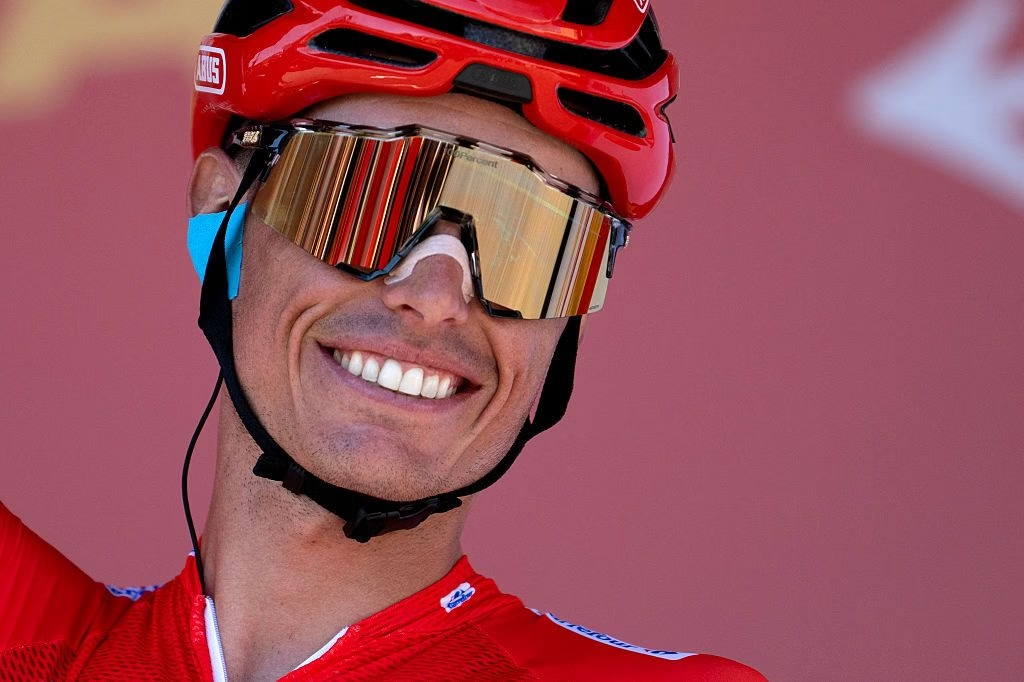 Photo Credit: Getty
Which jerseys and classifications are the same?
All three races have a general-classification leader’s jersey, a points competition, a mountains classification and a best-young-rider classification. The precise rules, eligible age limits and points scales can differ between events and editions, so an identical jersey colour is not a guarantee of identical scoring. In every case the GC winner is the rider with the best cumulative time, not necessarily the rider who has won the most stages.
The Tour’s yellow jersey, Giro’s pink jersey and Vuelta’s red jersey are the most visible symbols of overall leadership. The Tour awards green for points and polka dots for mountains, while the Giro traditionally has cyclamen for points and blue for mountains. The Vuelta currently uses green for points and blue polka dots for mountains. These are separate classifications that can be won by riders with very different strengths.
A sprinter might win four stages without challenging for the overall race, while a general-classification winner may take only one stage or none. The best young rider competition likewise measures the GC of qualifying younger competitors rather than a separate age-group road race. This creates several simultaneous stories during the same stage, sometimes with different teams chasing quite different objectives.
Points systems can change, and stage finishes, intermediate sprints and time bonuses are governed by each organiser’s regulations. It is therefore important not to claim that a mountain-stage winner necessarily receives the same number of ranking or points-jersey credits in all three events.
Which Grand Tour is the hardest?
There is no useful permanent answer. A race’s difficulty depends on the number of climbing metres, length and positioning of stages, time-trial kilometres, weather and the quality of the opposition. The Tour’s pressure and field can make it hard to dominate, the Giro’s high mountains can introduce extreme conditions, and the Vuelta’s repeated steep finishes can test recovery and explosiveness.
A Grand Tour with longer but less steep climbs might suit a steady climber, while another with many ramps could reward a rider who can repeatedly accelerate above threshold. More time-trial kilometres favour a different balance of skills. The hardest route for a particular rider may not be the one with the highest total elevation gain.
Fatigue also compounds differently. A stage-race leader who has been forced to defend the jersey for two weeks can arrive at the final mountains with a very different energy balance from a rival who has ridden conservatively. Team strength and tactics can influence that outcome just as much as the published race profile.
Can riders race or win all three in one season?
Riding the Giro, Tour and Vuelta in one calendar year is possible but extremely demanding. It involves up to 63 racing stages plus transfers, race-day stress and very limited time to recover or prepare between events. Some experienced domestiques have completed all three in one season, but most overall contenders focus on one major target and possibly a second rather than attempting all three.
A rider winning all three Grand Tours during a career is a different achievement from winning them in the same year. Winners of all three across their careers form a small group, including Jacques Anquetil, Felice Gimondi, Eddy Merckx, Bernard Hinault, Alberto Contador, Vincenzo Nibali, Chris Froome and Jonas Vingegaard after his 2026 Giro victory. No rider has won the three men’s Grand Tours in a single season.
The calendar gaps make such an attempt difficult. The Giro finishes at the end of May, the Tour begins in early July and the Vuelta starts in late August. Recovery must be weighed against training, altitude preparation and the need to arrive healthy. Winning one Grand Tour already requires sustained form against an elite field; reproducing it three times would be an extraordinary undertaking.
Where do the women’s races fit?
The Tour de France Femmes, Giro d’Italia Women and Vuelta Femenina are leading stage races in women’s road cycling, but their stage counts and history are not identical to the men’s three-week Grand Tours. The modern Tour de France Femmes began in 2022, while the Giro Women has a much longer history and La Vuelta Femenina has developed from a shorter stage-race format.
They are each central to the Women’s WorldTour calendar and can create major sporting narratives without copying the 21-stage men’s structure. The distinction matters when comparing riders’ wins, because an event bearing the same national or sponsor name may have a different competition length or points scale.
For readers who want the basic framework before comparing race strategies, ProCyclingUK’s beginner’s guide to Grand Tours covers the three-week format and classifications. The 2026 Tour in historical context looks more closely at how one particular route fits the development of the biggest men’s stage race.