Mario Cipollini was cycling’s most recognisable sprinter for much of the 1990s and early 2000s. His record includes 42 Giro d’Italia stage victories, 12 Tour de France stages, three Giro points classifications, Milan-Sanremo and the 2002 world road race title. He was a central figure in the development of the modern lead-out train, a team-based approach to sprinting that made his finishing speed more difficult for rivals to challenge.
The Italian’s public image was almost as famous as his results. The elaborate team clothing, long hair, Roman costumes and his nickname, ‘Il Re Leone’, made him difficult to miss even on days when he did not win. But a full retrospective has to be wider than both the sprint victories and the publicity. In 2022 he received a three-year prison sentence at first instance in a case involving abuse of his former wife, Sabrina Landucci. An appeal was opened in September 2026 and remains unresolved as of this article’s publication.
Cipollini therefore presents two distinct questions. What did he achieve in road racing, and how should those results be discussed in the context of the legal case that followed his career? Neither a record of victories nor a criminal proceeding should be misrepresented to make the answer more convenient. They are both part of the history of a prominent sporting figure.
Lucca, Del Tongo and the beginnings of a sprinter
Born in Lucca on 22 March 1967, Cipollini turned professional in 1989 with Del Tongo. He quickly began winning, including a stage at the Giro d’Italia in his first professional season. That mattered in an Italian racing culture in which the Giro provided a major commercial return for sponsors and where a sprinter could become a household name through repeated appearances on national television.
He raced for teams including MG-Bianchi, Mercatone Uno, Saeco, Acqua & Sapone, Domina Vacanze and Liquigas. The names changed as sponsors entered and left the sport, but Cipollini remained associated with a direct tactical objective: keep the race sufficiently controlled for a high-speed finish and deliver him into the final few hundred metres with as little wasted energy as possible.
He was a powerful finisher, but describing him simply as quick ignores the way his race programme evolved. He could win on flat stages against elite opposition and had the confidence to commit early to his sprint. His teams increasingly organised their strategy around that capacity, sometimes asking several riders to give up their own opportunities to control the peloton.
The 42 Giro stage victories and what the record represents
Cipollini won Giro stages across fifteen seasons, beginning in 1989 and reaching his record-breaking 42nd victory in 2003. The previous mark had belonged to Alfredo Binda, one of the race’s greatest early champions. Unlike a Grand Tour overall win, a stage record rewards a very particular skill repeated over many seasons. Cipollini had to remain competitive against changing generations of sprinters and adapt to evolving equipment and lead-out tactics.
He also won the Giro’s points competition in 1992, 1997 and 2002. The classification is important because it considers results across multiple days rather than one finishing straight. His three victories reflect both the frequency with which he contested sprints and the ability to perform repeatedly during the parts of the race that suited him.
The Giro was the right commercial and sporting setting for Cipollini. He could dominate the headlines with a sprint victory, use his personality to increase the exposure of Italian sponsors and take advantage of a calendar that contained several stages suitable for a fast finish. But the association should not be used to imply that he could contend for the overall classification. He was a specialist rather than an all-round stage racer.
The difference matters when comparing him with riders from other eras. A mountain climber’s stage victories come under different circumstances from a sprinter’s, and a general-classification champion may sometimes avoid the risks involved in bunch sprints. Cipollini’s exceptional stage total is evidence of long-term superiority in one discipline, not a mathematical answer to who was the best cyclist overall.
 Photo Credit: Getty
How Saeco changed the modern sprint
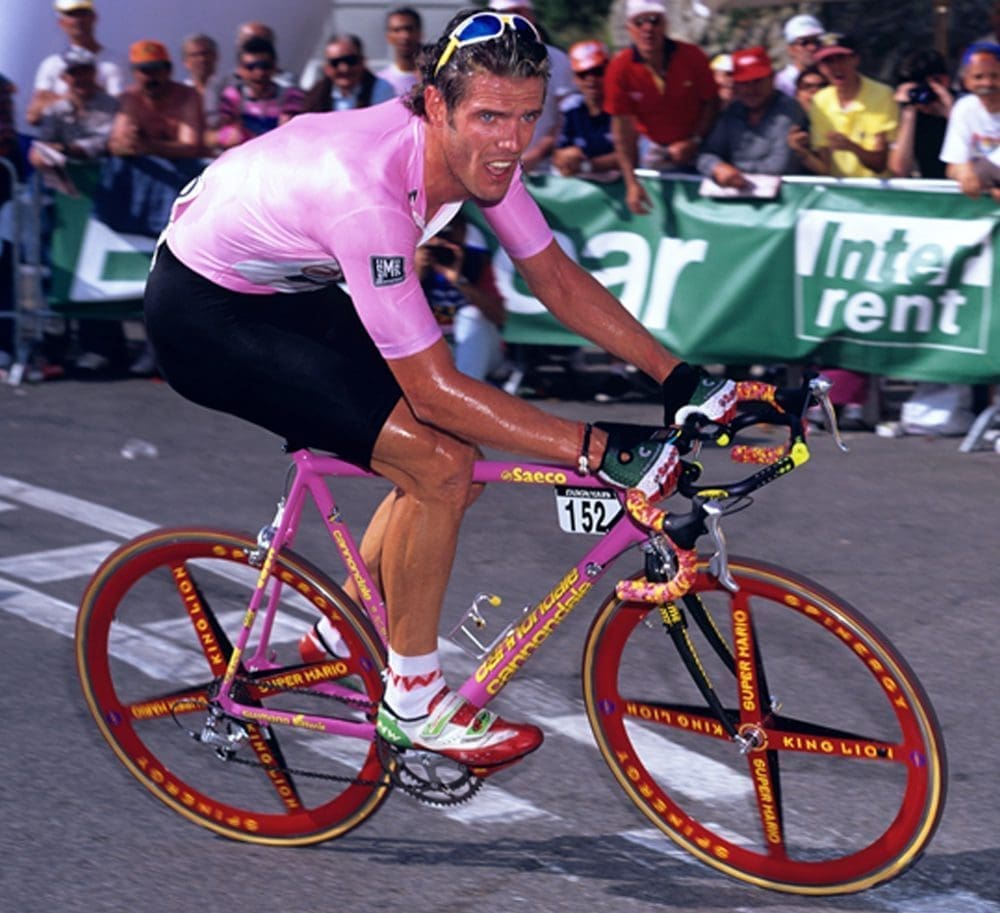
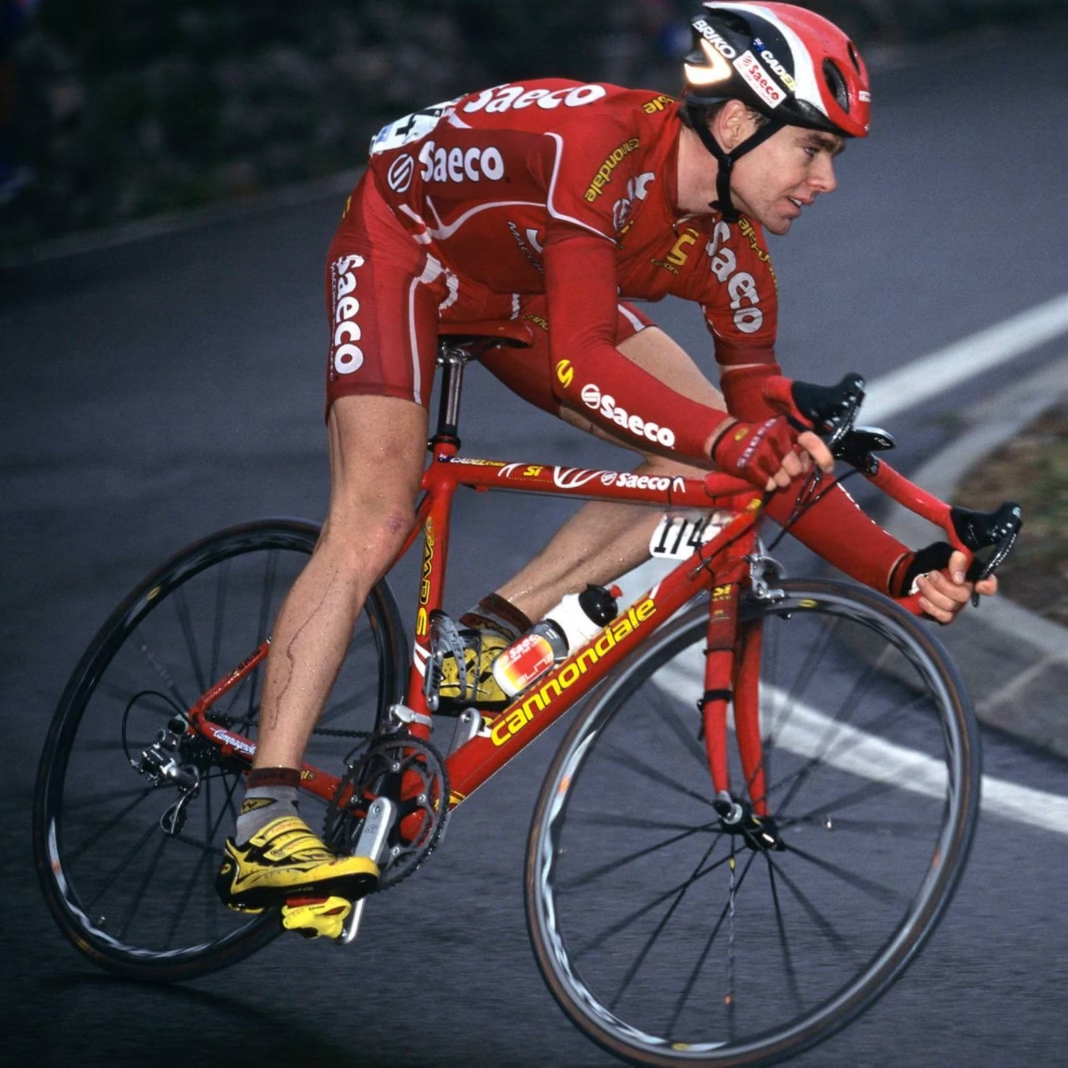
The lead-out train became one of the defining features of Cipollini’s racing. At Saeco, specialist team-mates such as Gian Matteo Fagnini helped create a long, ordered line at the front of the peloton. Each rider had a particular task, keeping the speed high, defending position or setting up the final acceleration. Cipollini waited behind them rather than fighting for every available wheel himself.
This organisation reduced the risk of his sprint being compromised by traffic. A fast rider can be beaten if he starts too far back or is forced to brake at a roundabout. A disciplined lead-out tries to make those problems somebody else’s concern. The train did not merely provide shelter: it helped dictate where and when the finishing contest would begin.
A strong lead-out also discourages late attacks by maintaining sufficient speed to make a gap difficult to open. Rivals are forced either to challenge the train directly or to accept a sprint on its terms. That tactical influence was copied and refined by the teams of other leading sprinters, making Saeco’s methods significant beyond Cipollini’s own stage victories.
It would be a mistake to erase the workers behind the lead-out. Their contribution was often invisible in the results, although it could be decisive. The strongest accounts of Cipollini’s career place those riders alongside the finisher rather than making every victory an individual feat of speed.
ProCyclingUK’s history of the Saeco cycling team looks more closely at the squad, the sponsors and how the racing structure developed.
Four Tour stages in a row, but rarely a ride into Paris
Cipollini recorded twelve Tour de France stage victories between 1993 and 1999. Four came on consecutive racing days during the 1999 edition, a remarkable period of sprint dominance. He also wore the yellow jersey at the Tour. In the early stages he could be almost impossible to beat on a suitable finish, particularly when his team controlled the lead-in.
His Tour career nevertheless raised questions because he often left the race when the mountains began. He was not a rider who treated surviving every stage to Paris as an essential part of his professional identity. That does not reduce the sporting legitimacy of his stage wins, but it makes comparisons with the Tour’s most successful green-jersey contenders more complicated.
The mountain problem was also one of team priorities. A squad built to win sprints had to balance those ambitions against the exhaustion and risk of taking the same line-up through three weeks of varied terrain. Cipollini’s results showed how effective a focused programme could be, while also demonstrating what it did not deliver. He never built the type of all-round Tour record that demands mountain survival as well as fast finishes.
The Tour’s invitation system eventually became an additional issue. Cipollini was famous, but race organisers still controlled access and teams needed to offer more than celebrity. His relationship with the French race was therefore more uneven than his raw count of twelve stage wins might suggest.
The 2002 season: Milan-Sanremo, Gent-Wevelgem and Zolder
The 2002 season was the strongest argument that Cipollini’s career amounted to more than flat-stage victories. He won Milan-Sanremo after numerous attempts, took a third Gent-Wevelgem title and became world road race champion at Zolder. That combination of results gave him major one-day victories that could stand alongside the many stage successes.
Milan-Sanremo required more than a finishing burst. The race demands hours of endurance, good positioning over the Riviera climbs and enough strength to reach the sprint after nearly 300 kilometres. Cipollini had previously found the event frustrating, but his 2002 win answered those doubts within the type of course on which a fast finisher could still prevail.
The world title at Zolder was a carefully planned Italian team effort. Cipollini was the obvious finishing option on a course suited to a sprint, and the national team executed the race around that opportunity. His win placed the rainbow jersey on one of cycling’s most recognisable figures and confirmed his capacity to deliver when the entire opposition knew his intended tactic.
The single-day results matter because they widen his racing legacy. A sprinter may accumulate stage wins without a major Classic, but Cipollini showed he could prepare for and win events that demanded both endurance and a high-speed finish. He was not suddenly transformed into a climber or a rider for every type of one-day race. The victories were an extension of his strengths used in more demanding circumstances.
Clothing, showmanship and commercial influence
Cipollini regularly appeared in unusual clothing, including animal-print uniforms and costumes designed to attract attention. His presentation after the 1999 Tour sprint sequence remains one of the better-known examples. He was fined for breaches of clothing regulations and made sponsor exposure part of his public identity long before most riders approached personal branding with similar intensity.
There were commercial reasons for the performance. A television camera following the team’s most noticeable rider brought additional visibility to a sponsor’s name, and that exposure mattered to a business financing a professional cycling squad. Cipollini understood that a result could be amplified through image, especially in Italy during the Giro.
The same personality was divisive. Some followers enjoyed the theatre; others saw it as self-promotion that overshadowed the racing and the team-mates who made his success possible. That tension is worth remembering because it explains why conversations about him can become arguments about personal style rather than evidence from actual results.
He retired in 2005, returned briefly with Rock Racing in 2008 and developed bicycle and clothing businesses connected to his name. The commercial afterlife was consistent with a rider who had always recognised how sporting visibility could be turned into a brand.
The criminal conviction and the continuing appeal
On 17 October 2022, the criminal court in Lucca sentenced Cipollini to three years in prison at first instance for offences involving mistreatment, injuries and threats towards his former wife Sabrina Landucci, and threats towards her partner Silvio Giusti. Landucci had reported him in January 2017. The court also ordered financial compensation to both Landucci and Giusti. These findings were reported by Italian national news agency ANSA and the public broadcaster Rai.
The distinction between a first-instance conviction and a completed appeals process is important. In September 2026 the appeal proceedings opened in Florence. Contemporary reporting stated that the case was adjourned until 19 November 2026. Landucci had received compensation and did not participate as a civil party in the appeal. As of 22 October 2026, no final appeal judgment had been reported from that scheduled November hearing.
The gravity of the case makes it a material part of his biography. A profile that treats the allegation as little more than a controversy or omits the criminal judgment altogether would be misleading. Conversely, it would be inaccurate to state that the final appeal had been decided or that Cipollini had served the sentence without evidence for either claim.
Sporting records do not disappear because of criminal proceedings, but the later history affects how a prominent athlete should be presented to readers. It is possible to explain the technical importance of Cipollini’s lead-out trains and also report the court’s findings without trying to reconcile them into a more comfortable personal narrative.
Where his sporting record stands
The recorded achievements remain substantial: 42 Giro stage wins, twelve Tour stages, three Vuelta stages, the 2002 world title, Milan-Sanremo and three Gent-Wevelgem wins. Few sprinters have matched that combination of longevity and one-day success. His teams also contributed to the development of sprint tactics that are still recognisable today.
Those results should be considered alongside his limitations. The Tour stage tally is not the same as a complete three-week Grand Tour record, and his most effective strategy often relied on the collective work of a powerful squad. His greatest influence may have been to demonstrate how an entire team could organise the final ten kilometres around one carefully timed sprint.
A useful companion is ProCyclingUK’s comparison of the greatest Tour de France sprinters, which places Cipollini’s results alongside riders with different approaches to the points jersey and mountain stages. His name belongs in that sporting discussion, without treating his post-career legal history as something that can simply be set aside.