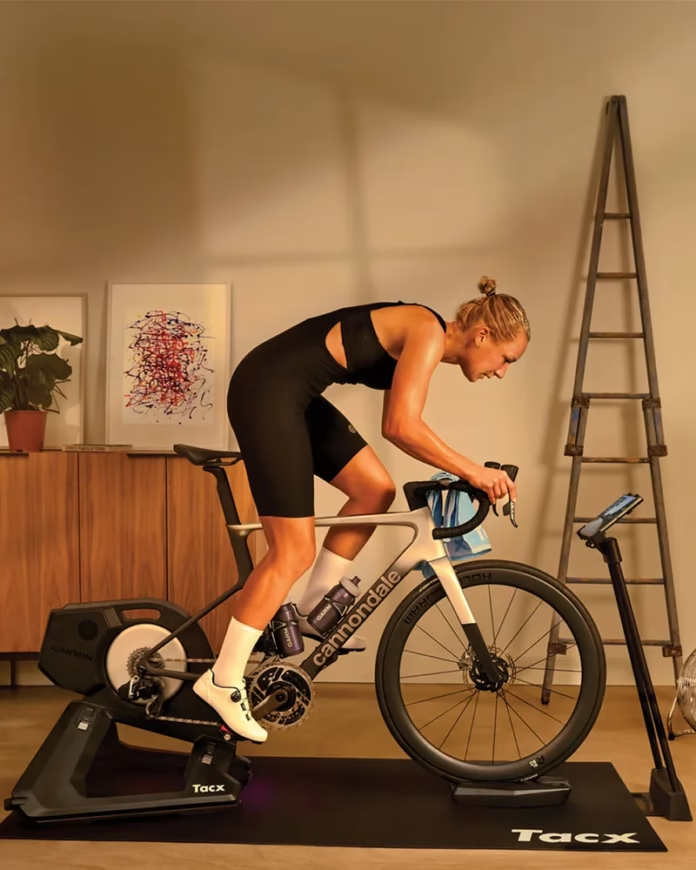
The Wahoo KICKR CORE 2 and Tacx NEO 3M both put a road bike on a direct-drive smart trainer, measure power and control resistance for indoor training. Their prices make them very different purchases. On 30 October 2026, UK retailer Tredz listed the CORE 2 with an 11-speed cassette at £499.99 and the NEO 3M at £1,129.99, a £630 difference. The question is not whether the Tacx has more technology. It does. The question is whether its extra precision, movement and ride simulation would change the training you actually do.
For most riders, the CORE 2 is the more sensible buy. It covers structured workouts, virtual racing and winter mileage without approaching four figures. The NEO 3M has a stronger case for riders who spend long hours indoors, place exceptional value on power measurement and ERG performance, or specifically want the integrated movement and road-feel features. Neither machine has been tested head-to-head by ProCyclingUK; this comparison draws on official specifications, current UK listings and independent riding tests.
Wahoo KICKR CORE 2 vs Tacx NEO 3M specifications
| Specification | Wahoo KICKR CORE 2 | Tacx NEO 3M |
|---|---|---|
| UK price checked 30 October | £499.99 at Tredz, 11-speed cassette version | £1,129.99 at Tredz, 11-speed cassette version |
| Claimed power accuracy | ±2% | Within 1% |
| Maximum resistance | 1,800W | 2,200W |
| Maximum simulated gradient | 16% | 25% |
| Trainer weight | 13.6kg | 23.6kg |
| Movement | Fixed frame; no integrated motion plates | Built-in fore-aft and side-to-side movement, lockable |
| Wireless connections | Bluetooth, ANT+ and built-in Wi-Fi | Bluetooth and ANT+; optional adapter for Wi-Fi/Ethernet |
| Cassette in specified UK listing | 11-speed 11-28 cassette | Pre-installed Shimano/SRAM 11-speed cassette |
| Calibration | Wahoo setup and calibration guidance applies | No calibration required |
| Distinctive features | Race Mode, KICKR Bridge, Zwift Cog/Click option | Road-surface simulation, descent simulation, motion plates, standalone operation |
These are manufacturer figures rather than results from one controlled laboratory test. Accuracy tolerances are specifications, not a guarantee that every reading will differ by exactly one or two per cent. Similarly, a 25 per cent gradient rating does not mean the Tacx makes every climb feel more realistic. Resistance control, flywheel behaviour and the bike fitted to the trainer matter just as much.
The price gap is now smaller, but it remains substantial
Garmin lists the NEO 3M at £1,599.99 on its own UK website, but a live Tredz listing showed £1,129.99 in stock. That makes a significant difference to the value calculation. The Wahoo remains £499.99 for the cassette-equipped version at both Wahoo and Tredz. These are reference prices checked on 30 October, not permanent prices or exclusive offers. Stock, cassette configurations and delivery terms should be checked again before ordering.
A £630 premium buys more than an upgraded resistance unit. It buys the Tacx motion system, a virtual flywheel, road-surface effects and unusually high claimed accuracy. Yet the same money could also fund a large fan, a trainer desk, a decent mat, a bike fit or months of indoor-platform subscriptions. For riders assembling a complete training setup from scratch, those additions may have a greater impact on comfort and consistency than the trainer upgrade itself.
The exact versions matter. The CORE 2 cassette listing is not the same bundle as the Zwift Cog and Click version. Both can suit indoor training, but the virtual-shifting hardware and the way you change gear differ. The NEO 3M listing includes a conventional 11-speed cassette. Check your drivetrain and freehub requirements before treating either as a plug-and-play purchase.
Power accuracy and ERG workouts
The CORE 2 is rated to ±2 per cent power accuracy, while Garmin specifies the NEO 3M at within 1 per cent. For a rider targeting 250W in a steady interval, the nominal difference between those tolerances is small compared with the normal variation in pedalling and the effect of fatigue. The bigger practical issue is whether a trainer holds the requested power smoothly when cadence changes and whether its data remain consistent from one session to the next.
Independent evidence suggests the Tacx is exceptional at the latter task. BikeRadar’s detailed NEO 3M test reported remarkably close agreement with reference power meters and particularly strong ERG control. Its reviewer also highlighted the cadence measurement as unusually clean. That is valuable if indoor sessions are used to track small performance changes over months, but it is not proof that everyone needs the extra accuracy to improve fitness.
The Wahoo’s picture is more mixed, which is worth acknowledging rather than choosing the most flattering test. BikeRadar found good accuracy, a quiet ride and strong overall value. Road.cc also reported accurate power data but criticised sluggish ERG transitions and software or connectivity problems during its test period. Those experiences are not interchangeable: firmware, apps and connection methods can influence behaviour, and a problem observed in one review should not be presented as inevitable for every owner.
 Photo Credit: Wahoo
Ride feel, movement and long indoor sessions
This is the clearest physical difference. The NEO 3M incorporates motion plates that permit fore-aft and lateral movement and can be locked when preferred. Garmin’s virtual flywheel also simulates different surfaces and descents in supported software. The CORE 2 uses a conventional fixed trainer arrangement with a physical flywheel. It is designed to be stable and predictable rather than to move with the rider.
Movement is not automatically better. It may make a long endurance session feel less rigid and allow the bike to respond more naturally when seated, but sprinting is a different matter. BikeRadar’s NEO 3M review praised its ride feel while finding the movement awkward under hard sprint efforts. Riders who want an absolutely planted platform for maximum efforts should try the motion system, or at least be comfortable with the ability to lock it, before paying for it.
The Wahoo has its own practical appeal. It weighs about ten kilograms less, making it easier to move out of a spare room or lift into storage. The CORE 2’s revised legs are simpler to assemble than the previous model’s arrangement, although it is still not a trainer designed to fold into a tiny package. Neither machine removes the need for ventilation: a good fan and manageable room temperature will usually matter more to an indoor rider’s comfort than the difference between these two frames.
Connectivity, virtual racing and platform choice
The CORE 2 includes Wi-Fi as standard, alongside Bluetooth and ANT+ connections. It also adds Race Mode for more frequent power reporting and KICKR Bridge to pass compatible sensor information through the trainer. That is a compelling specification at £499.99, especially for riders who race regularly on Zwift or want to reduce the number of separate connections their device must manage.
The NEO 3M connects by Bluetooth and ANT+ out of the box. Garmin offers an optional Smart Network Adapter for Wi-Fi or Ethernet connectivity, which means the headline price does not include every networking option. It also has a Race Mode and can run without a mains connection in a basic standalone configuration, useful for warm-ups or situations where a screen and training app are not available. Its road-surface effects depend on software support rather than being present in every workout.
Both work with popular training platforms including Zwift and TrainerRoad. Riders buying the CORE 2 specifically for Zwift should decide whether they want a cassette or the Zwift Cog and Click bundle. Virtual shifting can simplify sharing a trainer between bikes with different drivetrains, but it is not equivalent to conventional mechanical shifting across every training app. Do not assume that a Cog-equipped trainer will provide the same shifting experience outside supported software.
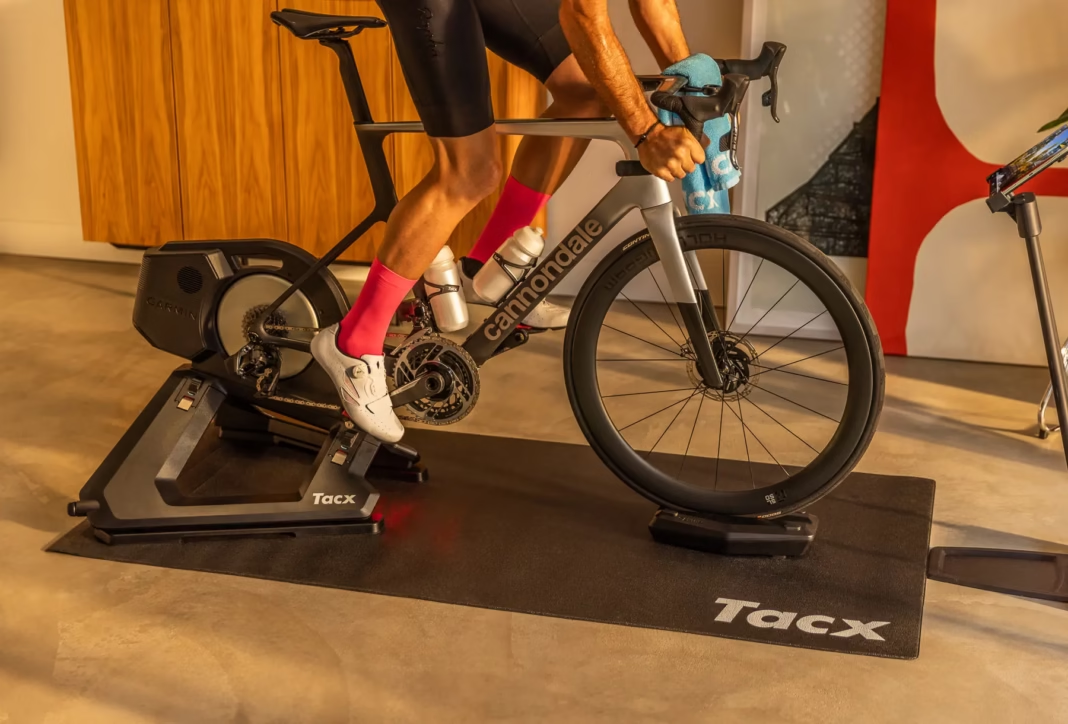 Photo Credit: Garmin
Setup, cassette compatibility and storage
Both UK configurations checked include an 11-speed cassette. That is convenient if your bike uses a compatible Shimano or SRAM 11-speed drivetrain, but it should not be taken as universal compatibility. Twelve-speed road systems, certain freehub standards and Shimano CUES/LinkGlide arrangements may require different parts or a cassette change. Garmin and Wahoo publish compatibility guidance, and that is the place to confirm your exact bike rather than relying on a generic claim that a trainer fits all road and gravel bikes.
The Tacx is a much heavier object at 23.6kg, although Garmin includes a carrying handle. It is a realistic permanent-room purchase, especially if you intend to leave a bike mounted for months. The Wahoo at 13.6kg is easier to reposition, but still needs a clear area behind the bike and sufficient ventilation. Either will transmit some drivetrain and vibration noise through a floor, so a suitable mat and considerate positioning matter in flats and shared houses.
Who benefits from the Tacx’s extra resistance?
The NEO 3M can simulate 25 per cent climbs and handle up to 2,200W; the CORE 2 is rated to 16 per cent and 1,800W. These are substantial numbers in both cases. A rider performing ordinary sweet-spot, threshold or VO2 max intervals is unlikely to be constrained by the Wahoo’s ceiling. The Tacx becomes more interesting for very strong sprinters, riders who enjoy exaggerated steep-gradient simulations or those who want its more sophisticated response rather than simply a higher maximum figure.
There is also a distinction between simulated gradient and real-world gearing. A trainer cannot make a badly chosen cassette, chainring or indoor-bike fit disappear. The gradient setting changes resistance according to the platform’s physics and the user’s trainer-difficulty settings. Buying a 25 per cent-capable trainer will not necessarily make you faster up a 25 per cent road, particularly if most of your training is done in ERG mode at prescribed wattages.
Which smart trainer should you buy?
Buy the Wahoo KICKR CORE 2 if you want a capable, well-connected direct-drive trainer for structured training, winter base miles and virtual racing without spending more than £500. Its accuracy and resistance range are sufficient for almost everyone, and the built-in Wi-Fi is a genuine advantage over some expensive alternatives. Be aware of the mixed independent findings on ERG response and check the cassette or Cog version carefully.
Choose the Tacx NEO 3M if the trainer is a central part of your riding, you value outstanding power and cadence data, and you specifically want integrated movement and road-surface simulation. At £1,129.99 it is much more persuasive than at Garmin’s £1,599.99 direct price, but it remains a specialist purchase. The wider smart trainer buying guide also covers models between these two price points if neither represents the right compromise.