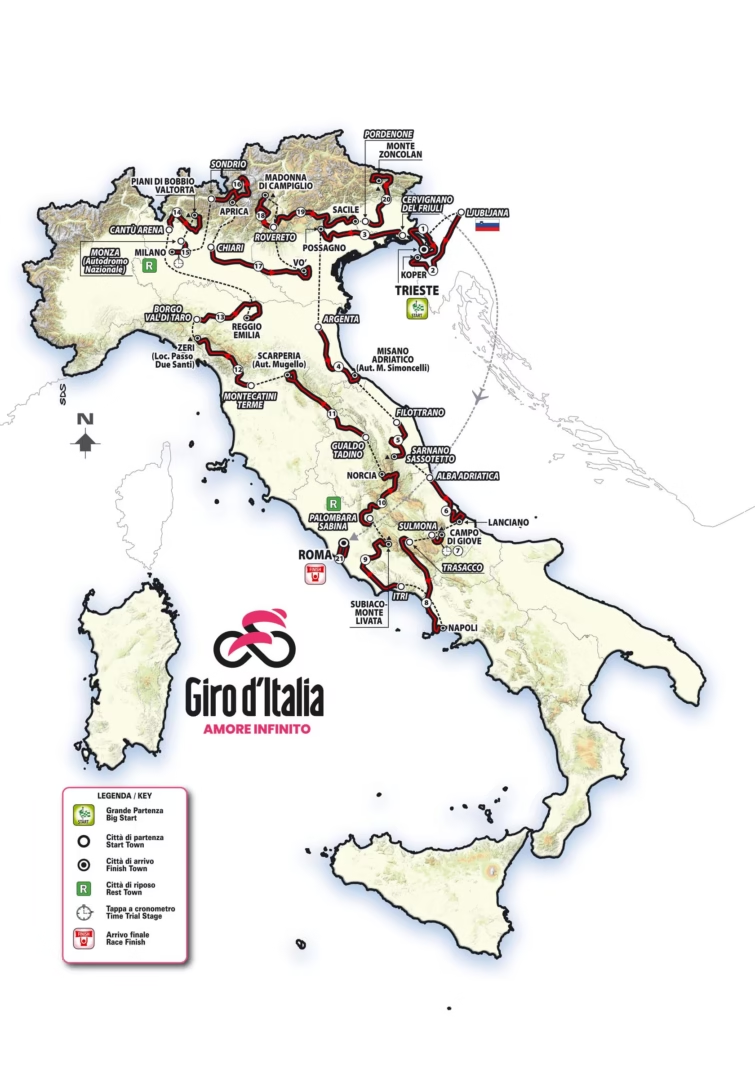
The 2027 Giro d’Italia Women will start on the Tuscan coast and finish in the Alps after nine stages that appear designed to keep the battle for the Maglia Rosa open until the final afternoon. Unveiled by RCS Sport in Rome on Tuesday, 3 November, the route covers 1,132 kilometres from Viareggio to the Monte Bianco stage in the Aosta Valley, with 17,450 metres of climbing.
The race runs from Saturday, 29 May, to Sunday, 6 June. Three stages are classified as suitable for sprinters, two are hilly and three are mountain days, with two summit finishes. An 11km uphill individual time-trial on the penultimate day means the principal general classification contenders will have to perform both in the high mountains and alone against the clock.
It is a markedly more mountainous route than 2026: RCS Sport’s published totals are 17,450 metres of climbing for 2027 against 12,100 metres in 2026, an increase of 5,350 metres, or approximately 44 per cent. The overall distance is slightly shorter. That combination matters because the additional climbing is concentrated on stages likely to separate the strongest general classification riders rather than being spread evenly across the race.
RCS Sport’s official route presentation video accompanies the unveiling. The nine-stage route is set out below, including the profiles released by the organisers.
Giro d’Italia Women 2027 stages and dates
| Stage | Date | Route | Distance | Key feature |
|---|---|---|---|---|
| 1 | Sat 29 May | Viareggio – Viareggio | 124km | Four ascents of Pitoro |
| 2 | Sun 30 May | Massa – Genoa | 139km | Hilly coastal stage |
| 3 | Mon 31 May | Cogorno – Viadana | 171km | Long sprint opportunity |
| 4 | Tue 1 June | Credaro – Passo della Presolana | 131km | Mountain summit finish |
| 5 | Wed 2 June | Cassano d’Adda – Cassano d’Adda | 140km | Flat circuit stage |
| 6 | Thu 3 June | Bergamo – Madesimo-Valle Spluga | 137km | Passo San Marco and summit finish |
| 7 | Fri 4 June | Carugate – Rho | 147km | Sprint or breakaway |
| 8 | Sat 5 June | Valdigne Tudor ITT | 11km | Uphill individual time-trial |
| 9 | Sun 6 June | Monte Bianco stage, Aosta Valley | 132km | 3,950m climbing and Colle San Carlo |
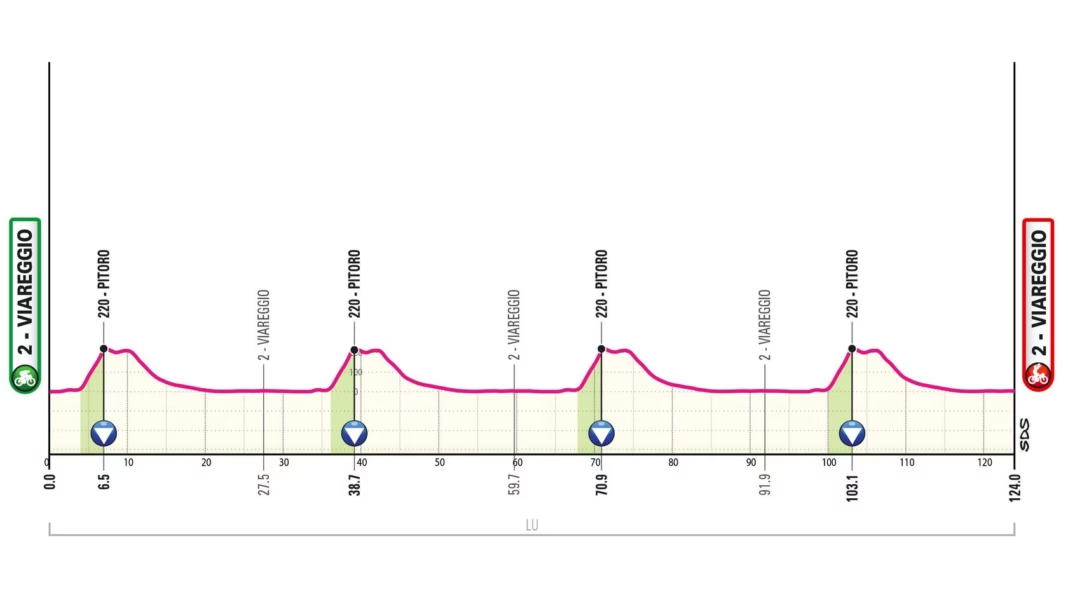
Stage 1, Saturday 29 May – Viareggio to Viareggio, 124km
The Grande Partenza takes place on a circuit around Viareggio, a first for the Tuscan seaside town. Although the opening stage could end in a sprint, it is not an uncomplicated introduction. The Pitoro ascent appears four times, giving aggressive teams repeated opportunities to test the pure sprinters and make the first pink jersey a contest between fast finishers who can climb and Classics-style attackers.
With roughly 1,200 metres of climbing, the stage is unlikely to settle the overall race, but it could immediately divide the contenders for stage wins. Teams with a versatile leader may prefer to race hard over the last ascent rather than deliver an intact peloton to Viareggio.
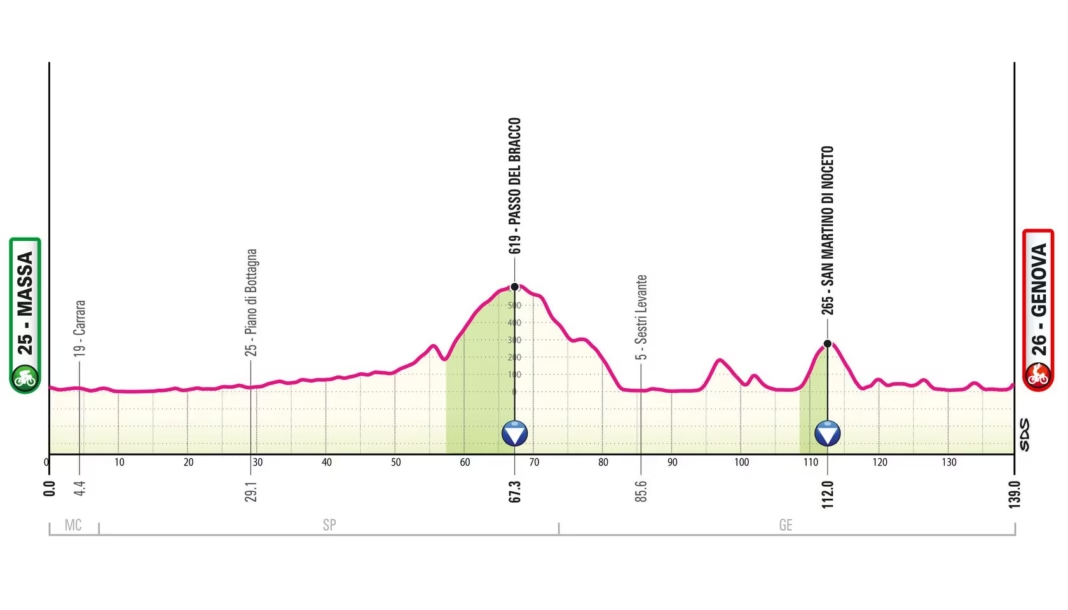
Stage 2, Sunday 30 May – Massa to Genoa, 139km
The route follows the Ligurian coast but asks more of the peloton than the sea-level finish might imply. The stage contains about 2,100 metres of climbing, including Passo del Bracco and San Martino di Noceto, before heading towards Genoa. The second climb comes late enough to test the chase organisation of the sprint teams.
A breakaway with strong descending riders could make life difficult for the favourites, particularly if a reduced group reaches the final kilometres. The general classification teams should be attentive, but this remains a stage in which the race could be won by a rider outside the main climbing contenders.
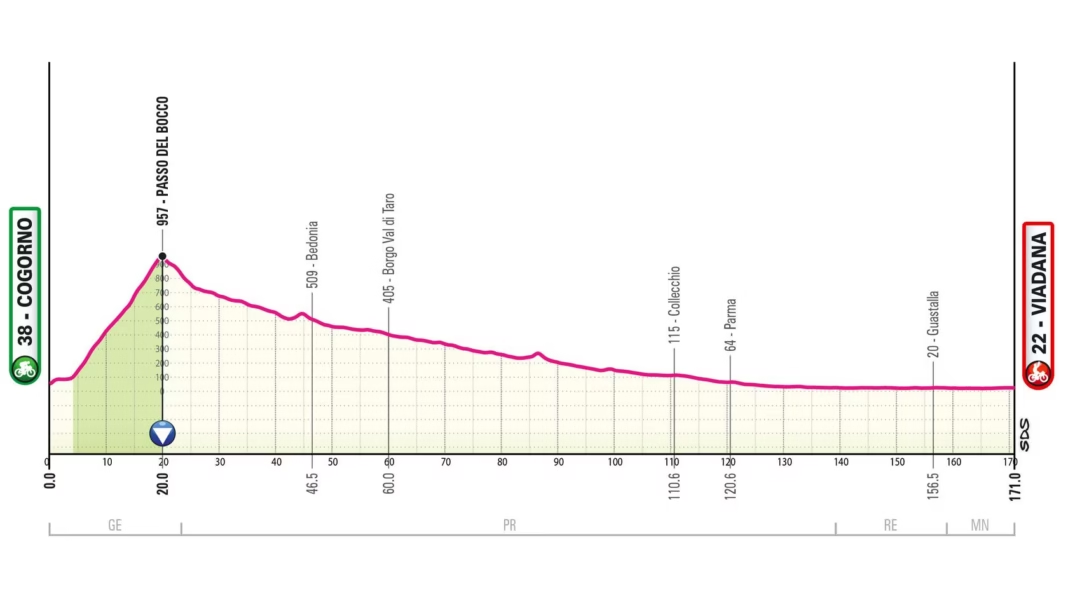
Stage 3, Monday 31 May – Cogorno to Viadana, 171km
At 171km, this is the longest stage of the 2027 Giro d’Italia Women. Passo del Bocco arrives early, but the route then trends towards easier terrain across the Po Valley. After two openings in which the sprinters may have been forced onto the defensive, the road to Viadana provides a more obvious chance for a large-group finish.
The distance is still significant. Even without a mountainous finale, a long stage can expose teams that have spent the first two days controlling repeated attacks. Sprint trains will also need to manage the positioning fight without losing time ahead of the first major mountain test.
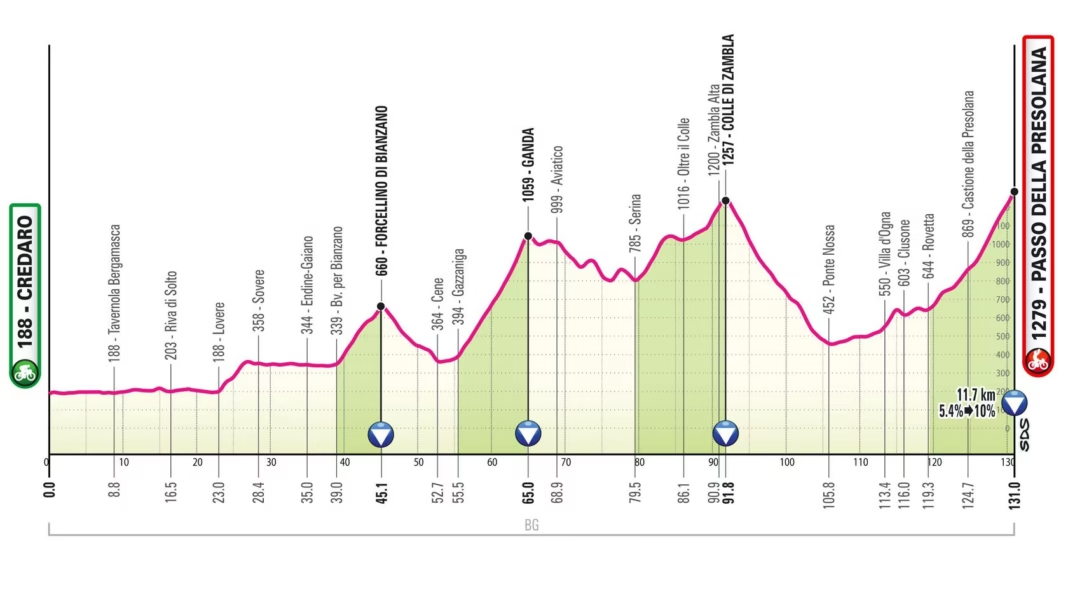
Stage 4, Tuesday 1 June – Credaro to Passo della Presolana, 131km
The first genuine test of the Maglia Rosa comes with 3,500 metres of climbing on the roads around Bergamo. The route crosses Forcellino di Bianzano, Ganda and Colle di Zambla before the finish at Passo della Presolana. The final climb is approximately 11km at an average gradient of 5.4 per cent, with steeper ramps capable of creating gaps.
This is the first stage on which teams defending a leading rider will have to show their strength across several climbs, not simply in the last kilometre. The repeated ascents should reduce the size of the front group before Presolana, making it difficult for an isolated contender to respond to a sequence of attacks. It offers the first opportunity to establish a meaningful general classification hierarchy.
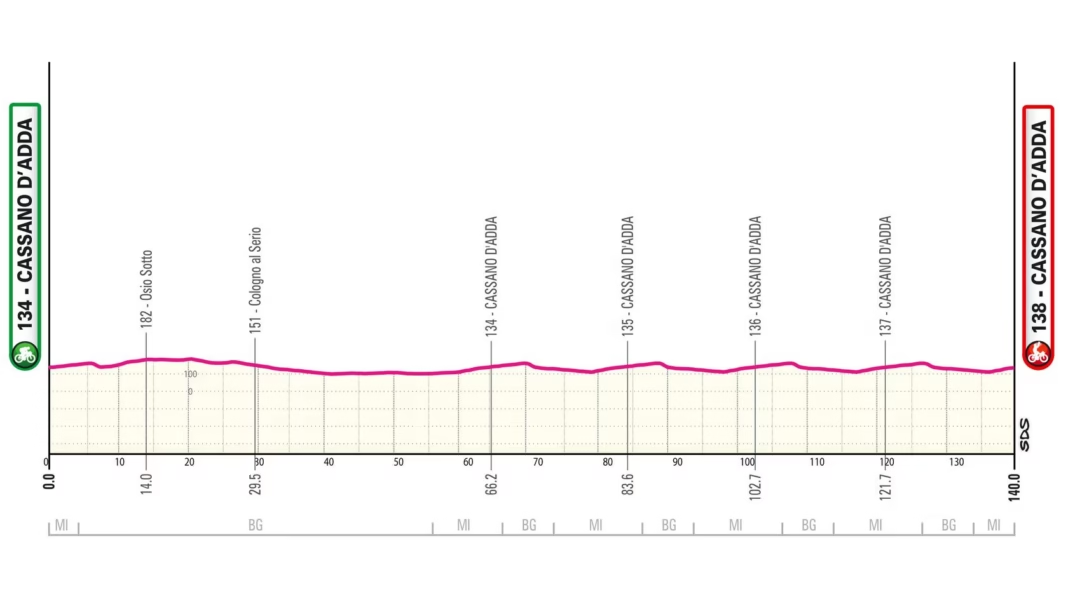
Stage 5, Wednesday 2 June – Cassano d’Adda to Cassano d’Adda, 140km
The race briefly leaves the mountains for a 140km circuit around Cassano d’Adda. With just 300 metres of climbing, this is comfortably the flattest day of the week and the most straightforward opportunity for the pure sprinters.
For the general classification contenders, the main job will be to avoid crashes and unnecessary energy expenditure between two major climbing stages. Sprint teams that still have a full lead-out will regard this as one of the few days when they can impose a conventional finish.
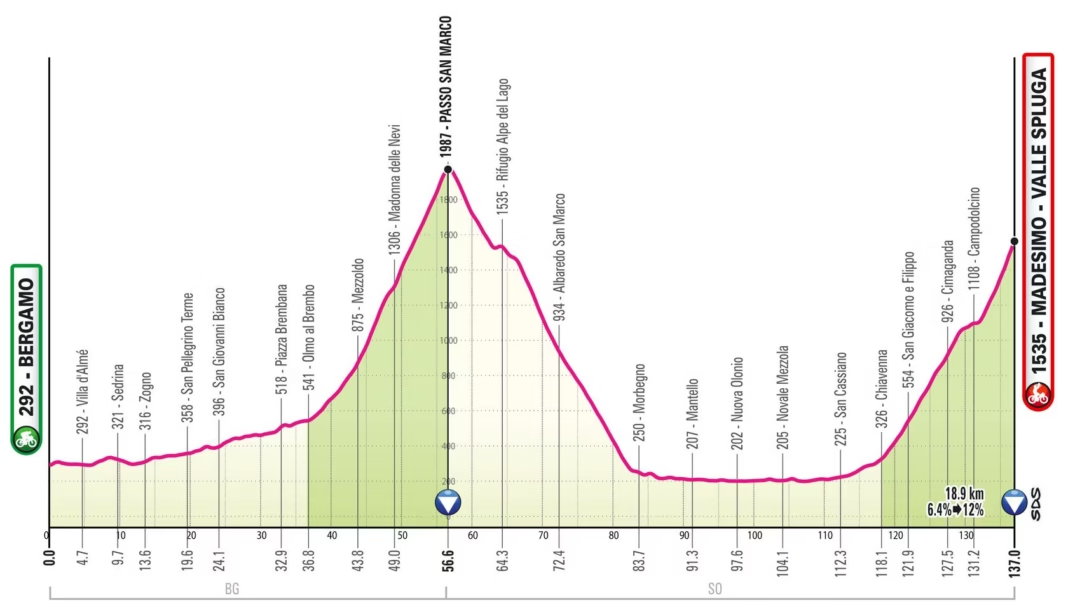
Stage 6, Thursday 3 June – Bergamo to Madesimo-Valle Spluga, 137km
This is the first of the two highest-rated mountain days, covering 137km with 3,550 metres of climbing. The opening major test is Passo San Marco, which reaches 1,987 metres and has been designated the Cima Alfonsina Strada, the highest point of the 2027 race. The climb is close to 20km long, averaging around 7.4 per cent, before the stage ultimately heads towards the summit finish at Madesimo-Valle Spluga.
Passo San Marco is far enough from the finish to encourage a strong breakaway, but the combination of altitude, length and gradient could also produce a long-range general classification attack. The closing ascent to Madesimo is itself approximately 19km at 6.3 per cent, making this more than a simple one-climb contest. The strongest climbing teams will have the option of putting their rivals under pressure well before the final ascent.
Because of its altitude, the stage could also be sensitive to mountain weather in early June. The 2026 Giro provided a reminder of how high-level racing can be affected by Alpine conditions when its Colle delle Finestre stage had to be shortened for safety reasons.
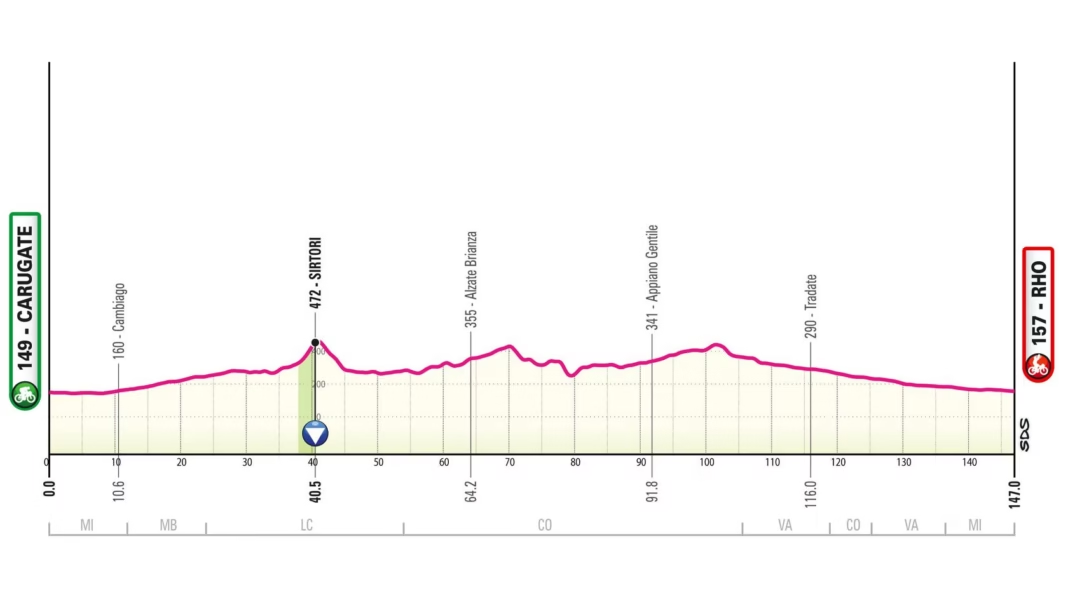
Stage 7, Friday 4 June – Carugate to Rho, 147km
Another more forgiving day comes between the mountains and the decisive weekend. The 147km route from Carugate to Rho offers around 1,000 metres of elevation gain and a predominantly flat run-in, pointing towards either a sprint or a successful breakaway.
Timing could matter more than the profile. After the effort to Madesimo, teams with general classification ambitions may be reluctant to use their remaining resources to control another stage, while riders with no overall ambitions will know that only the uphill time-trial and the Monte Bianco finale remain.
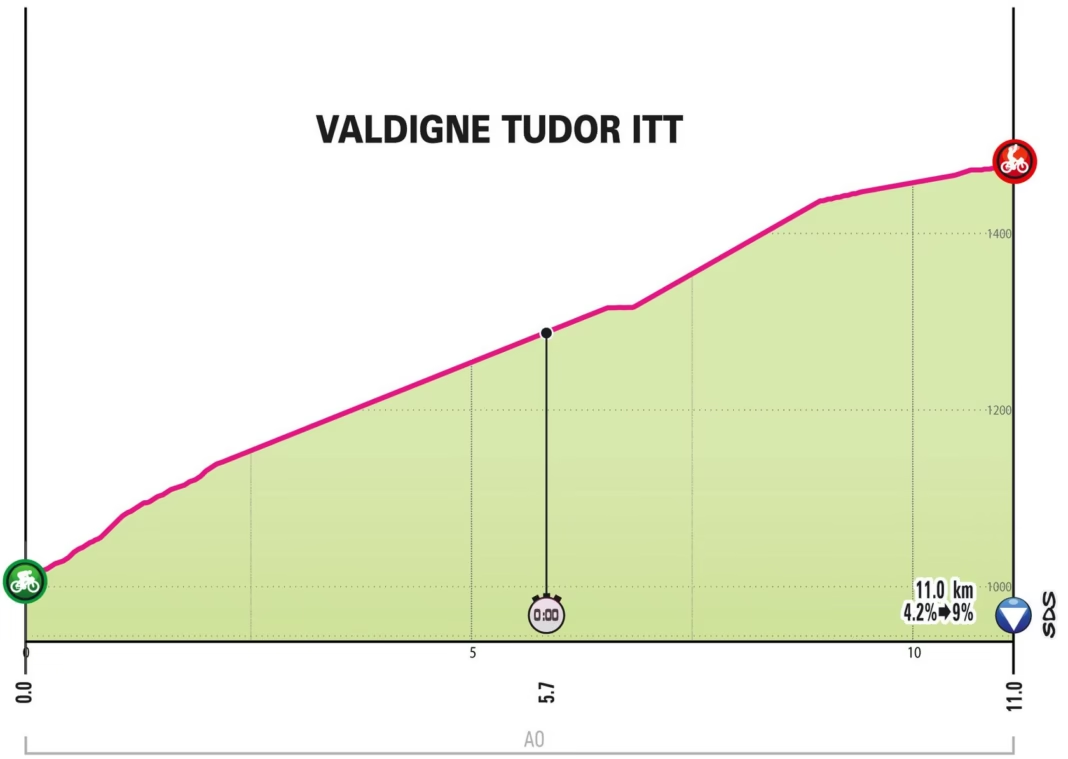
Stage 8, Saturday 5 June – Valdigne Tudor uphill time-trial, 11km
The penultimate stage is a short but highly selective individual time-trial. RCS Sport describes an 11km uphill course at Valdigne, with approximately 650 metres of climbing in the announcement. Unlike a conventional time-trial, it will reward the ability to sustain climbing power without the help of teammates or the tactical shelter of a group.
Its position on day eight makes it particularly important. Riders with a small cushion from the road stages will need to defend it in a discipline that cannot be managed through team support. Conversely, strong climbers who have lost time in the mountains will have one controlled effort in which to recover seconds before the final road stage.
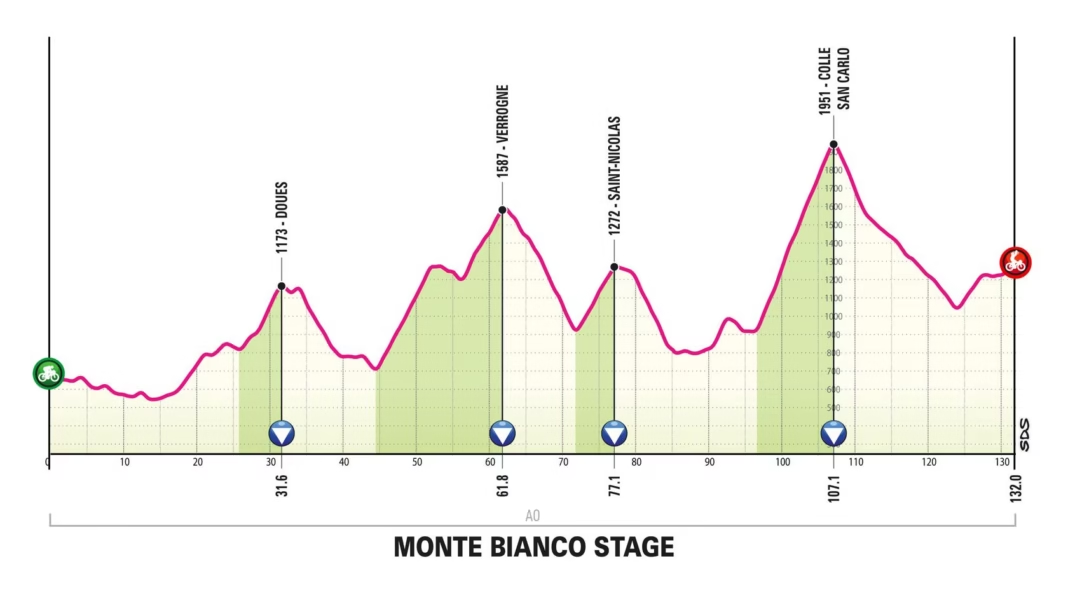
Stage 9, Sunday 6 June – Monte Bianco stage, 132km
There is no ceremonial finish to the 2027 Giro. The closing stage remains entirely within the Aosta Valley and delivers 3,950 metres of climbing in 132km, making it the biggest day for elevation gain and another potential race-decider. The route includes ascents of Doues, Verrogne, Saint-Nicolas and Colle San Carlo before the final run to the finish.
Colle San Carlo is the central obstacle, with around 10km of climbing at an average approaching 10 per cent and sections reaching 15 per cent. It comes late enough for a determined attacker to turn a small general classification deficit into a much larger advantage, but the earlier climbs could be equally important if teams start putting rivals under pressure from the opening kilometres.
The organisers say the route retraces some of the roads used by the men’s Giro d’Italia in 2019. For the women’s race, the significance lies in its timing: with no stage left to recover lost time, a pink-jersey contender who runs out of teammates or loses contact on the Colle San Carlo will have to respond personally. That was the dynamic that decided the 2026 Giro, when Demi Vollering overturned Anna van der Breggen’s advantage on the final day.
Which stages could decide the 2027 Giro d’Italia Women?
Stages 4 and 6 offer the clearest chances to build a lead in the mountains, with the Presolana and Madesimo summit finishes placing the pressure on the pure climbers. Stage 8 will test whether those gaps can survive an individual uphill effort, while Stage 9 leaves enough climbing for a final-day reversal. The late placement of the time-trial is especially interesting because the riders will reach it carrying the accumulated fatigue of two difficult mountain stages.
In 2026, Vollering started the last stage 49 seconds behind Van der Breggen yet won the Giro outright after attacking on the final day’s climbs. RCS Sport has kept that possibility alive in 2027 by putting one of the race’s hardest stages last. The Monte Bianco stage is not simply a final opportunity for a stage victory; it is a course that could force the pink jersey to fight all the way to the finish.
-
 Photo Credit: RCS Sport
-
 Photo Credit: Getty
-
Photo Credit: Getty