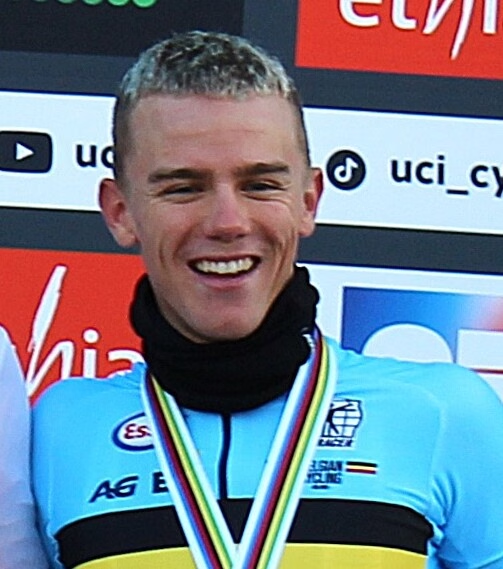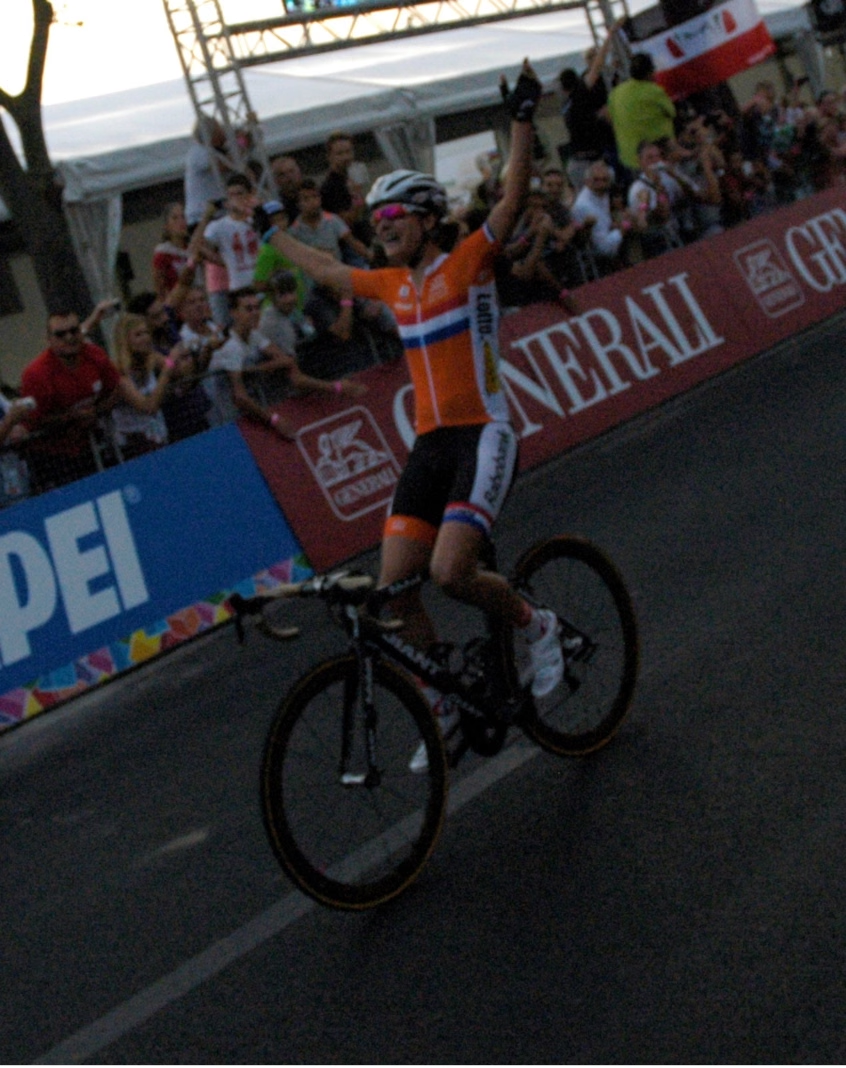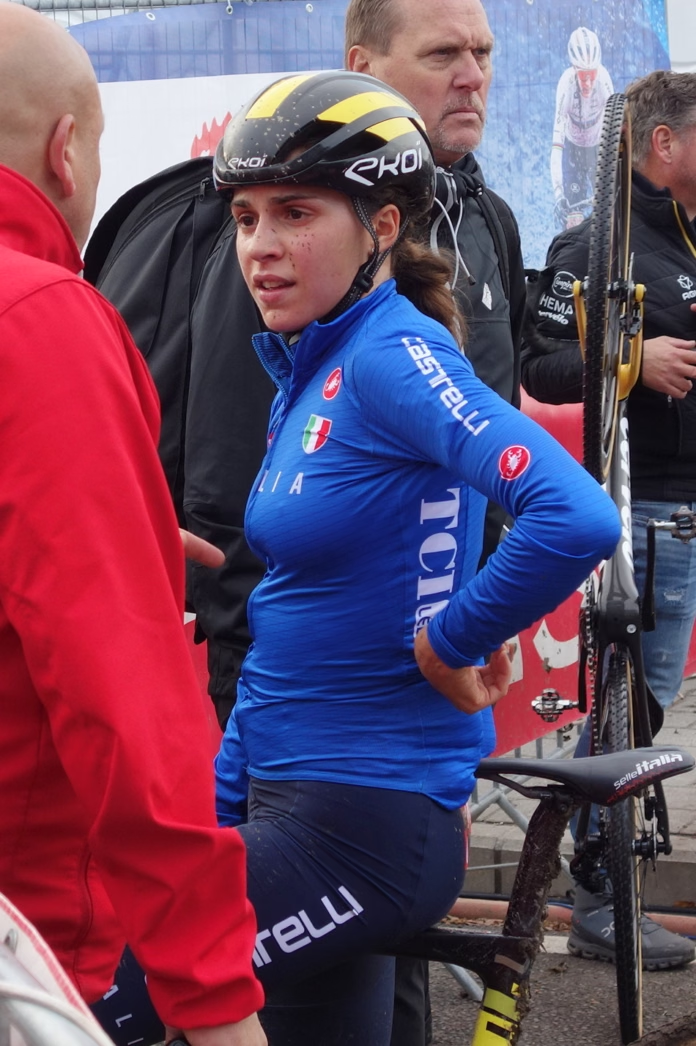
World champion Lucinda Brand begins the defence of her overall World Cup title in Ostrava on Friday, 27 November. Her record through the opening autumn races makes her the favourite, but the first World Cup round takes place under floodlights at a new industrial-site course that may be affected by snow and ice.
Shirin van Anrooij and Britain’s Zoe Bäckstedt are due to make their first cyclocross starts of the winter, while Ceylin del Carmen Alvarado, Fem van Empel, Marie Schreiber and Aniek van Alphen add depth to the prospective field. Sara Casasola has just won consecutive races at Lokeren and Beringen and has been identified by the UCI as a major challenger, although her final participation must be checked against the definitive starting list.
Brand opens the World Cup as the rider to beat
Brand became the women’s record holder for overall World Cup titles during the 2025–26 season, securing her fourth. She also claimed the elite world championship in Hulst early in 2026. Those achievements underline the unusual combination of sustained consistency and championship-level speed that she has maintained well into her thirties.
Her autumn has produced victories and setbacks in quick succession. She won repeatedly in the first X²O and Superprestige races, then suffered an ankle scare at Niel before returning to the front. Casasola subsequently beat her on consecutive days at Lokeren and Beringen, bringing the first sustained interruption to Brand’s winning sequence.
The Beringen encounter is particularly relevant: Casasola attacked early and kept the pressure on after Brand caught her. Brand crashed on a descent late in the race but still finished second, 24 seconds behind. Our Beringen women’s race report covers the incident and why it would be an oversimplification to attribute Casasola’s result solely to the crash.
The short interval after a heavy fall raises questions about comfort and confidence, especially if Ostrava becomes slippery. Those questions cannot be answered by an advance start list. Brand’s presence in the national selection shows the intention to race, but a final assessment has to be based on how she moves through the first technical sections on Friday.
Bäckstedt and Van Anrooij begin their winter
Bäckstedt and Van Anrooij begin their Canyon SRAM cyclocross programmes together in Ostrava, with Glasgow among their later planned World Cup stops. Their returns add riders with considerable ability but relatively little recent cyclocross racing to a field whose early-season specialists are already sharp.
Bäckstedt has been particularly effective when a course demands high power and accurate handling through muddy or technical sections. Her experience on the road and track gives her a broad athletic base, but a first cyclocross start involves getting comfortable again with repeated dismounts, tyre-pressure decisions and the intensity of racing from the first corner.
Van Anrooij also has an exceptional record as a young cyclocross rider, combining endurance with the ability to carry speed over difficult ground. Her move to Canyon SRAM brings her into the same programme as Bäckstedt. The result is a potentially powerful partnership, although their individual preparation and competition plans should not be confused with the kind of coordinated tactics available to a team in road racing.
Our Bäckstedt and Van Anrooij schedule report explains the team’s announcement and the planned sequence through the winter. Their opening performances in Ostrava will reveal more about current cross-racing sharpness than an assessment based on their road programmes alone.
2026 World Cup Ostrava women’s startlist and other contenders
The published provisional entries and national selections feature Brand, Alvarado, Van Alphen, Van der Heijden, Van Empel, Manon Bakker, Leonie Bentveld, Denise Betsema, Annemarie Worst, Bäckstedt, Van Anrooij and Marie Schreiber among others. The varied field means there are several possible ways for a decisive group to form, not one inevitable head-to-head.
Alvarado can make up ground quickly through technical sections and has the acceleration to turn a narrow gap into a meaningful selection. Van Alphen has been one of the most consistent early-season performers, while Van der Heijden’s strong rhythm can become particularly valuable if the surface rewards accuracy rather than repeated explosive attacks.
Van Empel returned to racing before this World Cup and finished fourth at Beringen. Her previous dominance gives her a formidable reputation, but current race form must take precedence over past titles when judging what she can do under Ostrava’s conditions. Schreiber’s ability to launch a fast first lap makes her another rider who could change the race before the favourites settle into their rhythm.
Casasola deserves attention after her November weekend double. The UCI has identified her as a contender for the opening World Cup, but the available provisional entries should not be represented as final confirmation that she will start. Advance entries remain subject to late changes, making the final start order the authority on who actually races.
The women to watch in the 2026–27 cyclocross season feature provides broader profiles. The key point for Friday is that the likely leading group contains strong starters, powerful climbers and technical specialists, making early positioning on an unfamiliar course unusually important.
How Ostrava’s night course could change the race
The race takes place beneath the blast furnaces and towers of Dolní oblast Vítkovice, an industrial site transformed into a new World Cup venue. Ostrava has hosted domestic cyclocross before but is making its first appearance on the UCI World Cup calendar. With no past World Cup winner to compare against, the riders will be learning the venue’s competitive behaviour together.
Organisers have selected an evening start under artificial lighting, a change from the usual daytime autumn race. The technical sections will demand both good sight lines and confidence when choosing a racing line, especially where the route changes surface or approaches a tight corner. A minor hesitation on one lap might cost little, but the same mistake repeated several times can determine the order at the finish.
Forecast snow could turn a technical course into a test of traction on ice or thawing ground. A patch of frost can behave differently from conventional mud: the best tyre for one section may not be ideal for another, and choosing a slightly wider line with more grip can be more effective than taking the shortest route.
Brand and Alvarado have extensive experience managing difficult conditions, while Bäckstedt and Van Anrooij may bring fresh physical power after their road programmes. The decisive factor could be who finds a stable rhythm without repeatedly braking and accelerating. Our Ostrava course and history guide explains the industrial setting and the character of the debut World Cup route.
World Cup points make a clean start important
The 2026–27 World Cup has twelve elite rounds, so Ostrava is the first chance to collect points towards the overall classification. A win would bring a new leader’s jersey and early momentum, but one victory cannot decide a series that stretches into late January. The next round at Tábor is scheduled two days later.
The two-day turnaround changes the value of every avoidable hard effort. Riders who spend the evening repeatedly chasing gaps may arrive at Tábor with accumulated fatigue, while a rider who suffers a crash could have even less time to recover. A podium or high placing earned through careful racing may be extremely valuable to an athlete with the overall World Cup in mind.
Brand’s previous overall titles have been built on consistency as well as race wins. Her opponents know that a strong opening result could prevent her establishing an early advantage, but they also have to avoid taking unnecessary risks to force a spectacular upset. The World Cup standings and rules guide explains the points system, while the complete calendar shows how the title will be contested across different countries and courses.
Several younger riders may use Ostrava as an opportunity to test themselves against the defending champion rather than target an overall trophy immediately. That does not make their attacks less dangerous. A newcomer willing to take risks can disrupt the strategy of a more established rider whose principal concern is accumulating points over the winter.
Race time, watching options and the main tactical questions
The women’s elite race starts at 18:15 CET on Friday, 27 November, which is 17:15 GMT in the UK. The men’s elite event follows at 19:45 local time, or 18:45 GMT. British television coverage is listed from 17:00 on TNT Sports 2, with HBO Max also carrying live coverage. The UK viewing guide has the platform information and advice on checking the final channel allocation.
The opening laps will reveal whether Schreiber can force the favourites to chase and how quickly Bäckstedt and Van Anrooij find their cross-racing rhythm. A difficult start is not automatically decisive on an unfamiliar circuit, but passing riders through narrow technical sections can consume energy even when the initial gap is small.
The most revealing mid-race comparison may be between riders who can descend cleanly and those who must brake hard before every technical feature. With possible snow and ice, the cost of an incorrect line is unusually high. Any late attack will have to survive those same sections without a mistake that allows the chasing group back into contention.
Brand enters as the benchmark, but Ostrava offers an unusually open set of technical questions. Her recent fall, the return of two high-profile riders, the improving form of Alvarado and Van Alphen, and Casasola’s breakthrough all add uncertainty to a World Cup whose opening result will establish the first order of the season.
-
 Photo Credit: MFonzatti / Wikimedia Commons (CC BY-SA 4.0)
-
 Photo Credit: Sander van Ginkel / Wikimedia Commons
-
 Photo Credit: SKS Germany