The rivalries that define women’s road cycling cannot be reduced to a ranking of career victories. Some have been fought in the mountains over three-week-style stage-racing tactics, others in the last 200 metres of a sprint, and some across a sequence of Classics in which the strongest rider did not always have the strongest team.
Annemiek van Vleuten and Anna van der Breggen defined an era of elite climbing and world championships. Demi Vollering and Kasia Niewiadoma-Phinney have turned the Tour de France Femmes into a tactical contest decided by seconds. Lorena Wiebes and Charlotte Kool have repeatedly challenged each other in sprints, while Marianne Vos and Elisa Balsamo provide another example of two riders whose contrasting routes to a finish can produce a memorable duel.
What makes a genuine rivalry?
A sporting rivalry requires repeated meaningful competition, not personal animosity. Two riders can respect each other and still alter the way races are ridden because each understands what the other can do. A climber may attack earlier to avoid a sprint, while a faster finisher may accept some pressure in the mountains to stay close enough for the final kilometres.
Results need to be read alongside the circumstances that produced them. A podium where one rival wins because the other crashes tells a different story from a direct sprint. A three-week general classification cannot be compared with a one-day championship simply by counting how many times two names appear together in the top ten.
Specific races, margins and tactical decisions offer a stronger comparison than a crude total of victories. Selected snapshots can illustrate a rivalry without pretending to be a complete head-to-head database. Equally, a rider who has won the most races overall may have done so in a different period or on different terrain from her principal rival.
Women’s cycling has become a deeper, more specialised professional sport. That has sharpened rivalries because teams can target particular races with highly prepared riders and support squads. A specialist sprinter, a cobbled Classics rider and a general-classification contender can each be dominant in their own arena without any single ranking settling who is the better cyclist.
Annemiek van Vleuten and Anna van der Breggen
Van Vleuten and Van der Breggen shaped the women’s peloton from the later 2010s into the early 2020s. Both were exceptional climbers, but their preferred ways of winning were different. Van Vleuten was willing to launch prolonged solo attacks and turn a stage race into an endurance test. Van der Breggen combined formidable climbing power with controlled pacing and a tactical awareness that made her difficult to isolate.
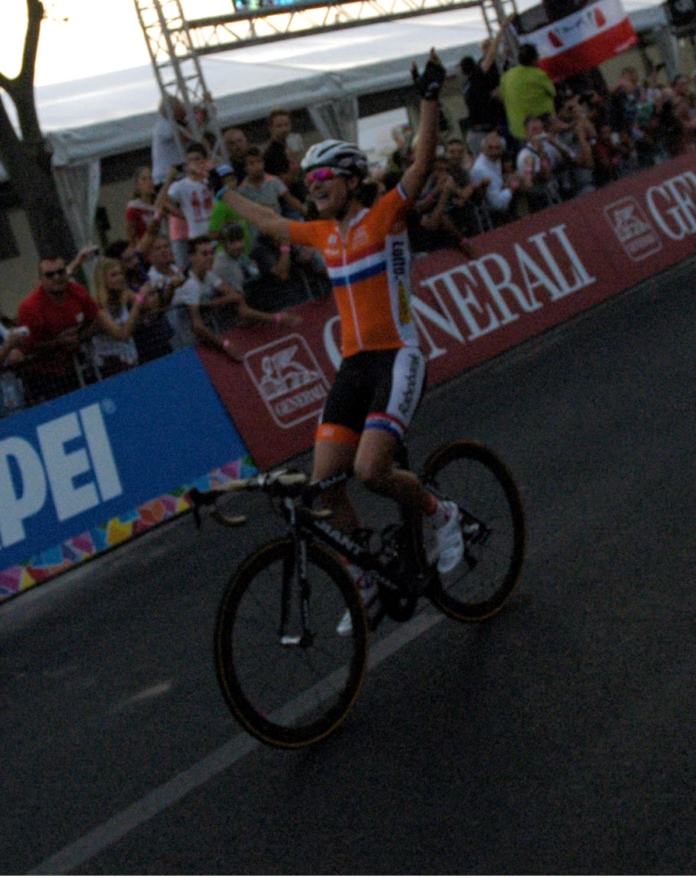
The 2019 road World Championships in Yorkshire offered a particularly clear result. Van Vleuten attacked from around 100 kilometres from the finish and completed a remarkable solo victory. Van der Breggen took silver, 2 minutes 15 seconds behind her compatriot. It was not a close sprint, but it was an extraordinary demonstration of how one rider could overwhelm the tactical calculations of the others.
Van der Breggen had already taken the Olympic road race title in Rio in 2016 and became road world champion in Innsbruck in 2018. Van Vleuten won the women’s road title in 2019 and again in 2022, alongside repeated success in the Giro Rosa and later the Tour de France Femmes. Their differing peaks mean it is unhelpful to declare one universally superior: Van der Breggen’s controlled mastery and Van Vleuten’s solo endurance produced different kinds of winning performances.
Team support added another dimension to their contests. The Dutch national team added another dimension to their rivalry: two cyclists who usually competed against one another could be required to work within the same national selection. The result was not simply a series of individual duels but an ongoing question about how to use multiple potential winners in one team.
Our comparison of Marianne Vos and Van Vleuten’s careers provides wider context for that period of Dutch strength. Their collective record illustrates just how demanding it was for riders outside the Netherlands to break through in the biggest races.
Demi Vollering and Kasia Niewiadoma-Phinney
Four seconds at the 2024 Tour de France Femmes made the Vollering–Niewiadoma rivalry impossible to ignore. Niewiadoma arrived at the final mountain stage in yellow and watched Vollering attack on the Col du Glandon, then win the stage on Alpe d’Huez. The Polish rider had to limit the gap rather than beat her Dutch rival on the road, and she secured the overall title by just four seconds.
The four-second margin does not tell the whole story. Vollering had lost significant time in a crash earlier in the race, while Niewiadoma produced a determined defence on the decisive final day. The result was therefore a mixture of physical ability, resilience and the accumulation of small incidents across the race. It made the rivalry memorable without reducing either rider to one finishing margin.
The rivalry developed again in 2026. Vollering won her second Tour de France Femmes title, finishing 1 minute 18 seconds ahead of Niewiadoma-Phinney after a decisive final weekend around Nice. The complete 2026 Tour de France Femmes results detail the final classification, while our race review examines the changes in leadership that made that year’s contest far less straightforward than the margin alone suggests.
Just weeks later, the pair fought for the road world title in Montréal. Vollering won the two-rider sprint ahead of Niewiadoma-Phinney, with both credited with the same finishing time. It was a different kind of contest from the Tour, but it reinforced the sense that each rider’s tactical decisions were being made with the other’s strengths in mind.
The repeated contests have rarely followed the same tactical script. Vollering often has the superior acceleration on long climbs, but Niewiadoma is exceptionally persistent and tactically resourceful. If a race is broken by an unexpected crash or poorly timed chase, the advantage can move quickly. These are the details that make the next confrontation worth examining rather than assuming the previous result will be repeated.
Lorena Wiebes and Charlotte Kool in the sprint
Wiebes has been one of the outstanding sprint specialists of her generation, combining explosive speed with the ability to survive increasingly selective races. Kool developed much of her early professional experience alongside her before establishing herself as a rival in major bunch finishes. Their story is different from the climbing contests because the decisive margin can be less than a wheel length after hours of positioning and lead-out work.
The opening days of the 2024 Tour de France Femmes in the Netherlands illustrated that balance. Kool won the first stage in The Hague as Wiebes suffered a dropped chain at the crucial moment, a reminder that a sprint result cannot always be interpreted as a clean comparison of pure speed. Kool then won stage two in Rotterdam in a direct sprint ahead of Wiebes, providing a much clearer measure of how well she was racing.
The two stages exposed how much of a sprint is decided before the final acceleration. A rider may have the highest potential top speed and still be beaten if the lead-out leaves her exposed too early or if she starts the sprint from a poor position. Kool’s timing and confidence mattered, as did the work of teammates controlling the last kilometres.
Wiebes’s broader career record remains exceptional, but Kool’s breakthrough proved that a dominant sprinter can be beaten when another rider executes the finish more accurately. The rivalry is most interesting when the road is flat and a large bunch reaches the last kilometre, yet even there changing weather, sharp corners and the pace of earlier attacks can decide who remains in contention.
The comparison of the longest women’s WorldTour races helps illustrate how sprint specialists must survive very different demands across the calendar. A rider able to win a flat stage after a controlled day may not have the same opportunity after several hours of difficult climbs.
Marianne Vos and Elisa Balsamo across generations
Vos had already established herself as one of the most successful road and cyclocross riders in history when Balsamo emerged as a major sprint threat. Their contrasting backgrounds made the rivalry particularly revealing. Vos could win from selective attacks, difficult climbs or reduced sprints, while Balsamo built her best results around a powerful finish and precise positioning.
The 2021 road World Championships in Leuven provided a defining encounter. Balsamo won the elite women’s road race from a sprint, with Vos finishing second. It was an important generational moment: a rising Italian champion beat a rider whose reputation and record had shaped the sport for well over a decade.
The Leuven result was a breakthrough, not a permanent transfer of supremacy. Vos continued to win major road races after 2021, while Balsamo’s career also involved injuries, changes in form and the normal difficulty of sustaining a sprint advantage across different terrains. A single championship is a milestone, but not proof that the winner will prevail in every future encounter.
The enduring interest is the contrast in their options. Vos can make a race selective to reduce the influence of pure sprinters, while Balsamo needs to protect her energy and position through the final approach. Both have benefited from strong team support at different points, and the strongest tactical move may be to deny the rival her preferred type of finish rather than try to beat her on identical terms.
Lotte Kopecky and Elisa Longo Borghini in the Classics
Kopecky and Longo Borghini have often contested the same spring objectives without being carbon copies of one another. Kopecky has the explosive power and finishing speed to dominate a small group, while Longo Borghini’s sustained attacks and experience on the cobbles make her particularly dangerous when the race becomes selective before the finale.
The 2024 Tour of Flanders was a useful example of how even a strong favourite can be beaten through team tactics and positioning. Longo Borghini won the race from a three-rider group ahead of Niewiadoma and her Lidl–Trek teammate Shirin van Anrooij. Kopecky, attempting to complete three consecutive Flanders victories, missed the winning move and finished outside the podium.
Longo Borghini’s success was not only the product of her individual strength. Van Anrooij’s attack forced rivals to respond, and the Italian then had a teammate able to contribute to controlling the winning move. A rider with Kopecky’s finishing speed is less threatening if the decisive group has already escaped and the chase cannot close the gap.
In the Classics, the choice of when and how to use teammates can matter as much as an individual comparison of power. Kopecky’s success at major one-day races shows how dangerous she is when she survives the selection, while Longo Borghini’s record demonstrates the value of attacking before the strongest sprinter can dictate the final 200 metres.
Selected results that shaped the rivalries
These results show several different forms of rivalry. They are selected benchmarks, not a complete database of career head-to-heads, because comparing different seasons and formats without that context would create a misleading ranking.
The closest example is the 2024 Tour de France Femmes, where four seconds separated two general-classification rivals after eight days. The 2026 world championship sprint was decided on the finish line with both riders on the same time. Yorkshire in 2019, by contrast, produced a huge solo margin, while the 2024 Dutch Tour stages showed how mechanics and a clean lead-out can alter a sprint duel.
Looking across these examples, rivalry is best measured by how much one rider changes the other’s decisions. It is the repeated tactical adjustment, over several seasons and different courses, that gives these contests their place in women’s racing history.
| Race | Winner | Rival | Result |
|---|---|---|---|
| 2019 road Worlds | Van Vleuten | Van der Breggen | +2:15 |
| 2021 road Worlds | Balsamo | Vos | same sprint group |
| 2024 Tour Femmes GC | Niewiadoma | Vollering | +0:04 |
| 2024 Tour Femmes stage 2 | Kool | Wiebes | bunch sprint |
| 2026 Tour Femmes GC | Vollering | Niewiadoma-Phinney | +1:18 |
| 2026 road Worlds | Vollering | Niewiadoma-Phinney | same time |
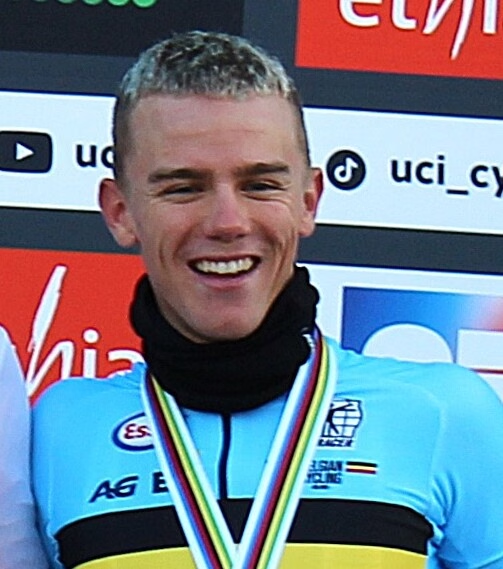
-
 Photo Credit: MFonzatti / Wikimedia Commons (CC BY-SA 4.0)
-
 Photo Credit: SKS Germany
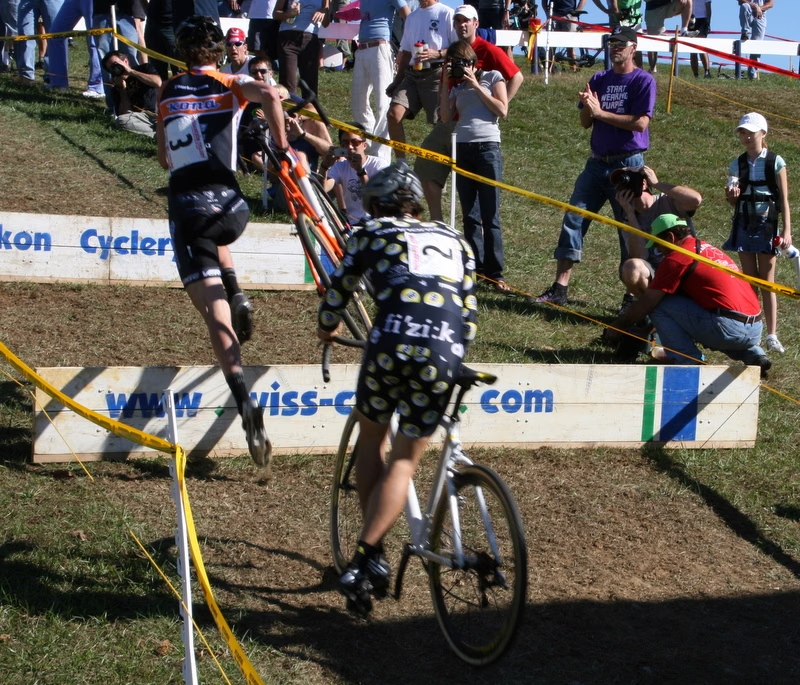
-
 Photo Credit: Joshua Furman / Wikimedia Commons (CC BY-SA 3.0)