
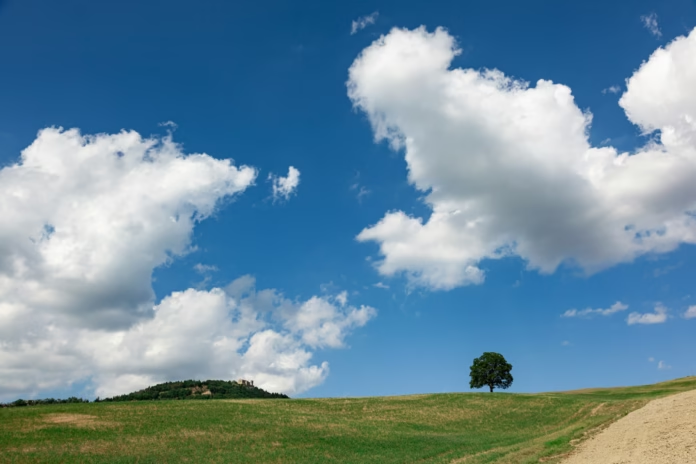
Riccione and Cattolica offer one of the most accessible cycling bases on Italy’s Adriatic coast. Both towns sit on a broad, largely flat shoreline, but the first serious hills begin only a few kilometres inland. That creates a useful mix for a cycling holiday: gentle recovery rides beside the sea, rolling routes through vineyards and medieval villages, longer days into San Marino and Montefeltro, and steeper coastal roads around Monte San Bartolo.
The area is best suited to riders who want variety rather than one famous climb. There is no equivalent of an Alpine pass directly behind Riccione, but there is an unusually dense network of roads linking the Conca Valley, the hills of Romagna, the northern Marche and the Republic of San Marino. A rider can leave a beach hotel, complete more than 1,500 metres of climbing and still return to the seafront for lunch.
Riccione has the more established cycling-hotel culture and a larger choice of organised rides, mechanics and hire options. Cattolica is slightly quieter and better placed for Gradara, Monte San Bartolo and the Marche coastline. The two towns are close enough that either works as a base for the same wider riding area.
This corner of the country sits within a much broader range of destinations collected in our Cycling in Italy guide, from the Adriatic coast and Tuscany to Sicily and the high Alps.
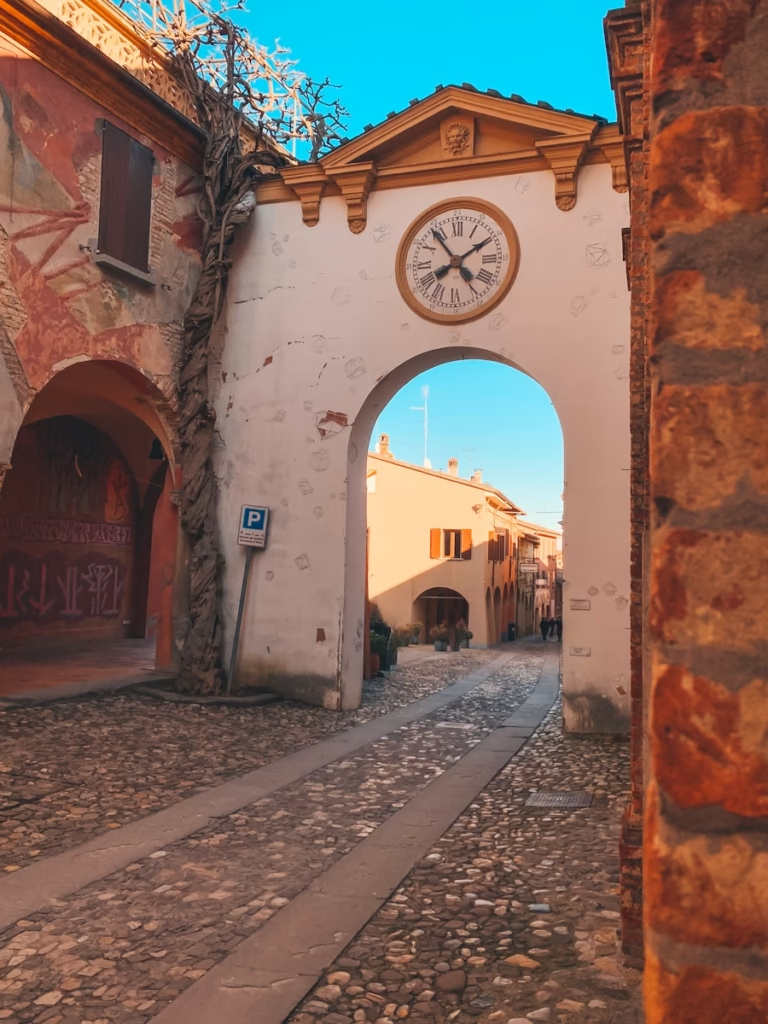
Riccione and Cattolica cycling at a glance
| Detail | Information |
|---|---|
| Best for | Road cycling, gravel, e-bikes and relaxed coastal riding |
| Terrain | Flat seafront, rolling inland hills and short steep climbs |
| Main riding areas | Conca Valley, Montefiore Conca, Mondaino, San Marino and Monte San Bartolo |
| Best months | April to June and September to October |
| Summer conditions | Hot, humid and busy near the coast |
| Winter conditions | Mild by northern European standards, but wetter and quieter |
| Best base for organised cycling | Riccione |
| Best base for Monte San Bartolo | Cattolica |
| Nearest major station | Rimini |
| Local rail stations | Riccione and Cattolica-San Giovanni-Gabicce |
| Main local airport | Federico Fellini International Airport near Rimini |
The local cycling identity is built around the contrast between the flat Riviera and the hills immediately behind it. Routes commonly head towards Mondaino, Saludecio, Montefiore Conca, the Conca and Marano valleys and Monte San Bartolo.
Why this part of the Adriatic works so well for cyclists
The coastline between Rimini, Riccione, Misano Adriatico and Cattolica is almost completely flat. That makes it easy to spin the legs after travelling, ride gently on a rest day or add distance without accumulating more climbing.
The contrast begins inland. Roads rise from the coast towards Coriano, San Clemente, Saludecio, Mondaino and Montefiore Conca, often through vineyards, olive groves and farmland. Most climbs are not especially long, but the terrain repeatedly rises and falls. A 70km ride can contain considerably more climbing than expected because there are few genuinely flat inland sections.
The road network also crosses regional and national boundaries without feeling fragmented. From Riccione, a longer ride can pass through Emilia-Romagna, enter the Marche and climb into San Marino before returning to the Adriatic.
Professional racing regularly demonstrates the same transition from coast to hills. The 2026 Giro d’Italia stage from Cervia to Corno alle Scale began on the Adriatic before moving inland towards the Apennines, following the basic geographical pattern riders experience from Riccione and Cattolica.
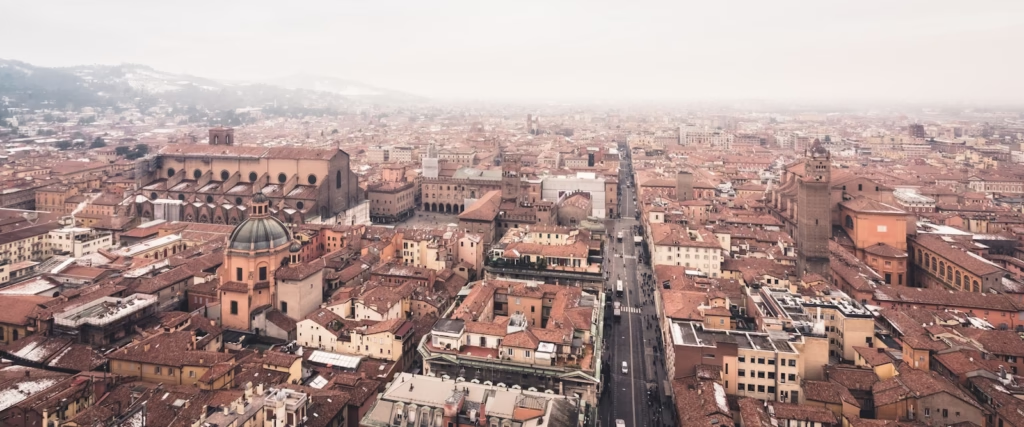
Riccione or Cattolica: which is the better cycling base?
Riccione
Riccione is the stronger all-round base for a dedicated cycling holiday. Its bike-hotel network is well established, and the town has more obvious access to group rides, guides and performance-focused services.
The seafront is lively, with plenty of cafés, restaurants and evening activity. That suits riders travelling with non-cycling partners or anyone wanting a holiday atmosphere after the ride.
Its position also gives straightforward access north towards Rimini and inland towards Coriano, San Clemente and the Marano Valley. Riders planning several long road days may find it easier to join organised groups or arrange guided routes from Riccione.
The main drawback is that the town can feel extremely busy during peak summer. Traffic around the coast becomes heavier, beach access dominates local life and early starts become essential.
Cattolica
Cattolica is slightly smaller and calmer. It sits just north of the Marche border and offers quicker access towards Gradara, Gabicce Monte and Monte San Bartolo.
For riders prioritising coastal scenery and quieter roads towards Pesaro, Cattolica can be the better location. It remains close enough to Riccione and Misano for rides north along the seafront or inland through the Conca Valley.
The centre, port and beach are compact, which makes Cattolica a particularly convenient base for mixed holidays. Gradara is close enough for an easy ride or evening visit, while the roads of Monte San Bartolo begin almost immediately south of town.
The coastal cycle route
The easiest ride is the shoreline route linking Cattolica, Misano, Riccione and Rimini.
Much of the seafront uses dedicated or clearly marked cycle infrastructure. It is ideal for recovery riding, families and anyone hiring a city bike or e-bike rather than bringing a road bike.
The route is almost entirely flat, but it is not designed for high-speed training. Pedestrians, runners, children, hotel entrances and junctions make it more suitable for relaxed riding.
A simple out-and-back from Cattolica to Rimini can provide 40 to 55km depending on the turnaround point. Continuing farther north towards Bellaria extends the ride again, with the coast remaining largely level.
The flatness of this stretch is familiar from professional racing. Riccione hosted the start of a sprint stage in the 2024 Giro d’Italia, while the 2026 Giro d’Italia Women opened with another almost completely flat Adriatic stage from Cesenatico to Ravenna. Our Giro d’Italia Women 2026 Stage 1 preview explains how exposed roads, crosswinds and urban obstacles can complicate terrain that appears straightforward on a profile.
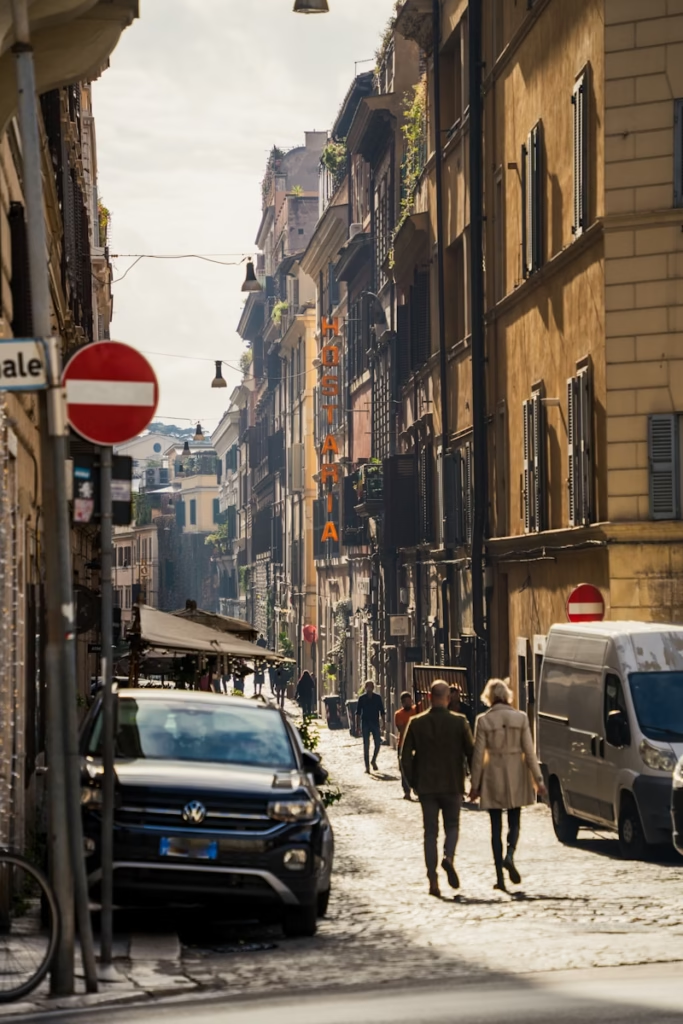
The Conca Valley: the easiest route inland
The Conca Valley provides a natural corridor from the coast towards Morciano di Romagna and the first inland hills.
From Riccione or Cattolica, riders can reach Portoverde and follow the river inland. The lower section includes traffic-free or lightly trafficked paths, although some parts are unpaved and better suited to gravel bikes, hybrids or wider road tyres.
Road riders can use nearby lanes instead, heading through San Giovanni in Marignano towards Morciano. From there, the terrain opens into several possible climbs.
This is one of the best first rides for learning the local geography. The sea remains behind, Morciano acts as the inland junction and the hilltop villages become visible ahead.
A straightforward route can remain almost completely flat, while a turn towards Montefiore, Saludecio or Mondaino changes the character of the ride immediately.
Montefiore Conca: the classic hilltop target
Montefiore Conca is one of the most rewarding destinations from either Riccione or Cattolica.
The village sits beneath an imposing Malatesta fortress and offers broad views back towards the Adriatic. There are several ways to reach it, allowing riders to create loops rather than repeat the same road.
A typical ride from Riccione is likely to fall between 60 and 80km, with roughly 800 to 1,300 metres of climbing depending on the approach.
The final climb is not an Alpine effort, but the gradient becomes uncomfortable in places. After a sequence of earlier rises, it can feel much harder than its raw length suggests. The old road arrangement around hilltop villages also tends to produce sharper ramps near the centre, where streets were built for defence rather than smooth cycling gradients.
Montefiore works particularly well as a café or water stop. The village itself is compact, and the fortress provides a clear reason to pause rather than simply turn around at the summit.
Mondaino, Saludecio and Montegridolfo
The cluster of villages south and west of Morciano provides some of the area’s best rolling road riding.
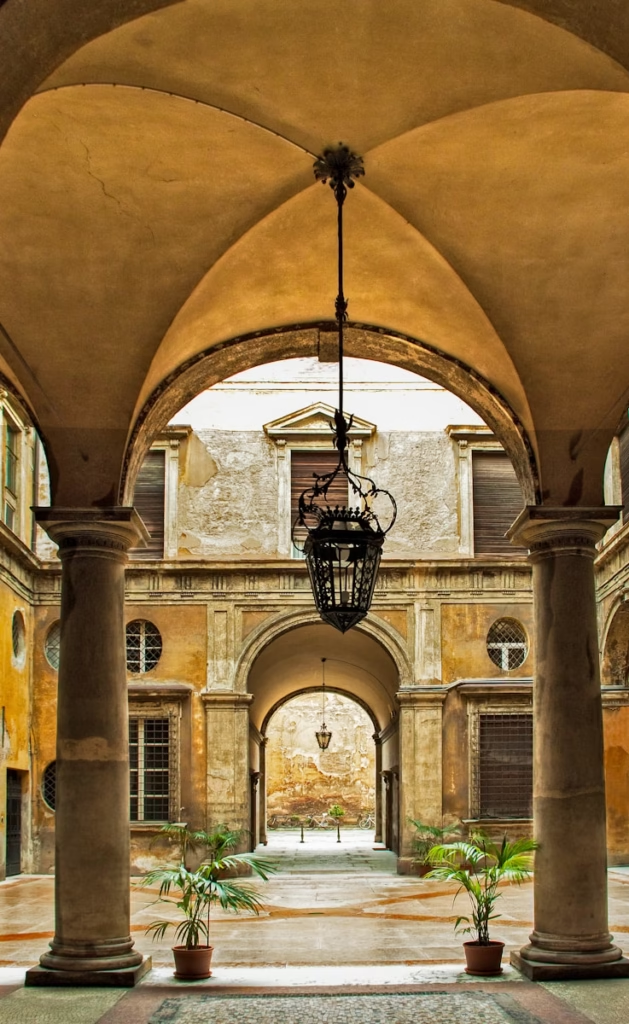
Mondaino is known for its fortress and unusual semicircular central square. Saludecio has historic streets and a strong cultural identity, while Montegridolfo is a restored medieval village close to the regional border.
These roads suit riders who enjoy repeated short climbs rather than one continuous ascent. A loop through San Giovanni in Marignano, Saludecio, Mondaino and Montegridolfo may cover around 65 to 90km from the coast, with 1,000 metres or more of climbing.
The average gradients often conceal the irregular nature of the roads. A climb may include a brief flatter section followed by a ramp into double figures, making pacing more difficult than on a steady mountain pass.
This is classic Romagna riding. The climbs are rarely long enough to dominate an entire route, but they accumulate quickly and ensure there is little uninterrupted recovery once the ride moves away from the valley floor.
San Marino from the Adriatic
San Marino is the obvious long ride from Riccione.
The historic centre sits on the slopes of Monte Titano. From the coast, there are several approaches through the Marano Valley, Coriano or the roads south of Rimini.
A return ride from Riccione usually falls between 75 and 110km depending on the route and how high into the old town the rider continues. Climbing can range from around 1,200 to more than 2,000 metres.
The final approach is the defining part. Traffic can increase near the main tourist roads, so a planned route using quieter secondary roads is preferable. The gradients are sustained enough to expose tired legs, and the climb often comes after a long sequence of smaller hills.
The reward is the view. On clear days, the Adriatic coastline is visible far below, making the return descent feel like a transition from the Apennine foothills back to the sea.
The area has also been used by the Giro d’Italia Women. Our 2025 Giro d’Italia Women Stage 6 preview follows a route from the Adriatic into San Marino and the Romagna hills, showing how quickly the flat coastline can give way to serious climbing.
Monte San Bartolo: the best coastal climbing
South of Cattolica, the coastline changes character.
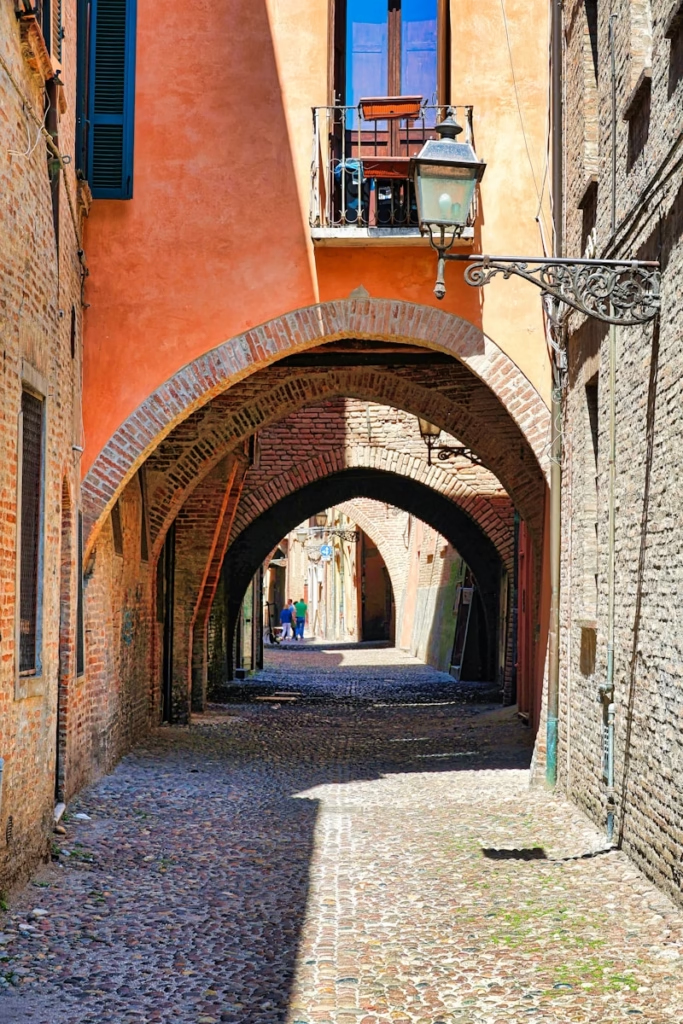
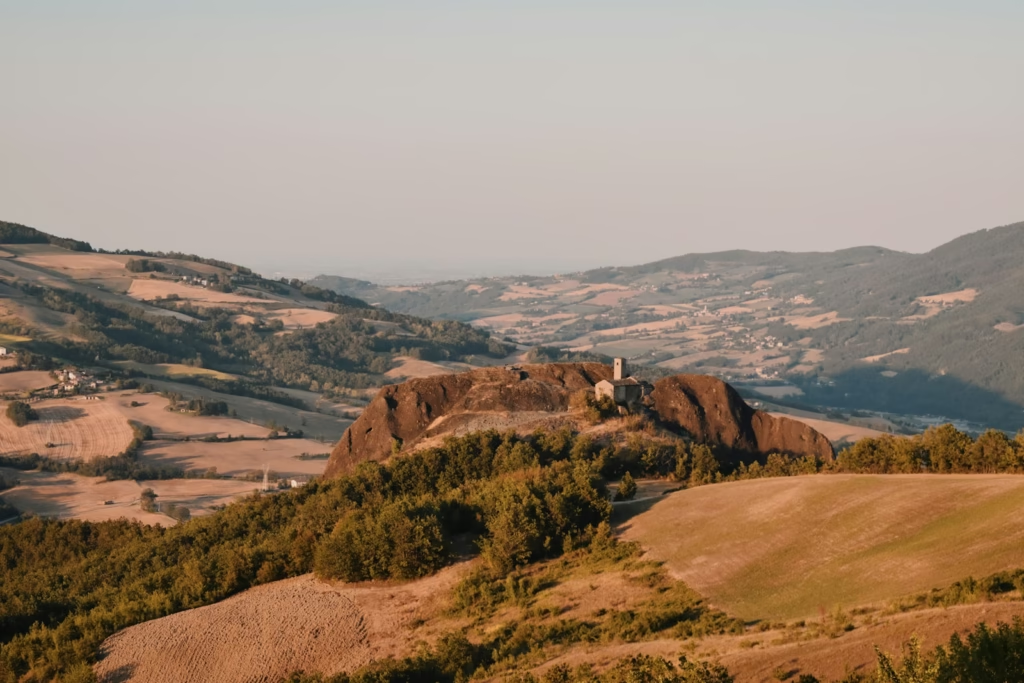
Gabicce Monte and the Monte San Bartolo Natural Park rise above the Adriatic between Cattolica and Pesaro. Instead of flat beach roads, riders find short climbs, wooded lanes and viewpoints over the sea.
This is the most scenic road-cycling option close to the coast. A loop from Cattolica through Gabicce Monte and the park can be kept below 50km, although adding Pesaro or further inland roads creates a longer day.
The climbs are generally shorter than those around San Marino, but several sections are steep enough to demand low gears. Constant changes in gradient and repeated descents make the ride feel more like a compact coastal Classic than a mountain stage.
The combination of sea views and climbing makes Monte San Bartolo unusual. It offers the visual appeal of a coastal ride without confining cyclists to a flat promenade, and the hills begin close enough to Cattolica that a worthwhile loop does not require an entire day.
Road conditions and closures should be checked before setting off, particularly after bad weather. The park’s exposed position means wind can also make the return harder than expected.
Gradara: a shorter historic ride
Gradara is one of the easiest cultural destinations from Cattolica.
The walled medieval village and fortress sit only a short distance inland, allowing a rider to create a 25 to 45km loop depending on the route. It is suitable for a recovery day, e-bike ride or afternoon outing.
The final rise to the village adds enough gradient to make the ride interesting without turning it into a major training day.
Gradara is especially useful for mixed groups. Stronger riders can add Monte San Bartolo or inland climbs, while less experienced cyclists can ride directly to the village and return.
Carpegna and the harder Apennine option
Riders seeking a genuinely difficult mountain day need to travel farther inland.
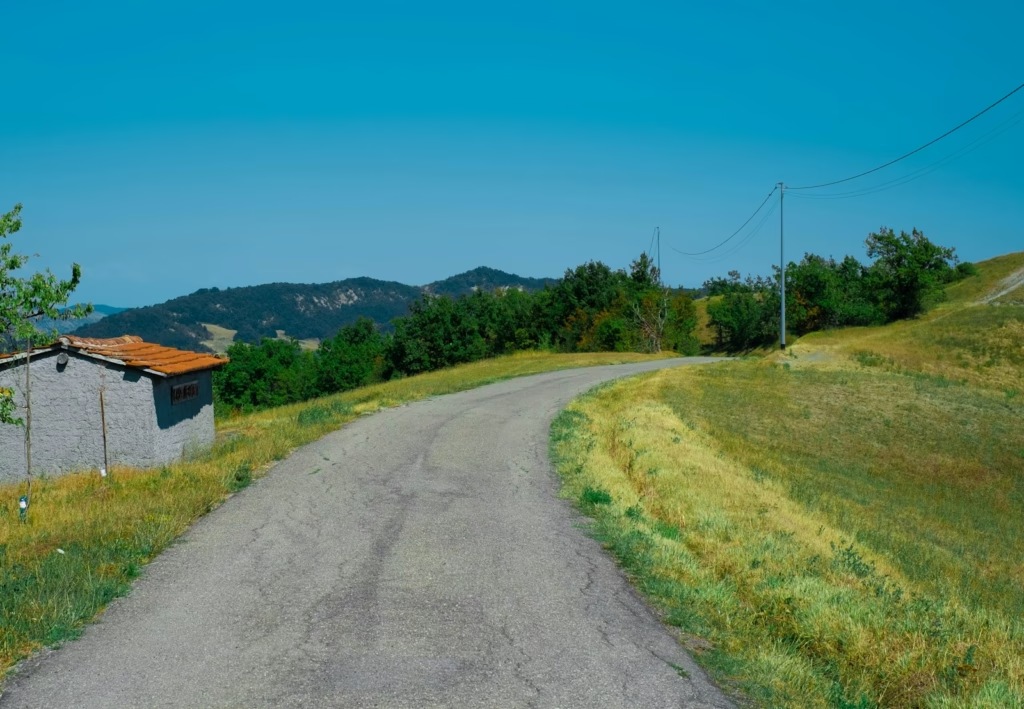
Monte Carpegna, closely associated with Marco Pantani, lies west of the coast in the northern Apennines. It is possible to include it in a very long ride from Riccione or Cattolica, but many visitors will prefer to drive or arrange a transfer inland before starting.
The climb is steeper and more sustained than the roads immediately behind the coast. It provides the clearest option for riders wanting something closer to a mountain-pass experience.
A full coast-to-Carpegna ride can easily exceed 130km and 2,500 metres of climbing. Heat, water availability and the return distance make it unsuitable as an improvised day out.
For most riders, San Marino, Montefiore and the Montefeltro villages provide enough difficulty without needing to go this deep into the Apennines.
Anyone seeking a holiday built entirely around long mountain passes may be better suited to cycling in Aosta Valley or riding the Stelvio, Gavia and Mortirolo from Bormio. Riccione and Cattolica offer a different type of riding, based on variety and accessibility rather than sustained high-altitude climbing.
Suggested cycling routes from Riccione and Cattolica
The distances below are approximate because each ride can be shortened or extended through different approach roads.
Riccione to Rimini coastal recovery ride
Approximate distance: 35 to 50km
Climbing: Minimal
Best bike: Any bike
Follow the seafront north through the resort towns towards Rimini. The route is ideal after travelling or the morning following a harder inland ride.
The main challenge is congestion rather than terrain. Ride early and treat the promenade as shared space rather than a training circuit.
Cattolica, Portoverde and the Conca Valley
Approximate distance: 35 to 60km
Climbing: 100 to 400 metres
Best bike: Gravel, hybrid or endurance road bike
Use the coast to reach Portoverde, then follow the Conca corridor inland. Gravel riders can use more of the river path, while road cyclists can switch onto nearby lanes.
This route provides an easy introduction to the area without committing to the steeper hilltop villages.
Riccione, Morciano and Montefiore Conca
Approximate distance: 65 to 80km
Climbing: 900 to 1,300 metres
Best bike: Road bike
Ride inland through the Conca Valley before climbing to Montefiore. Return through San Clemente or Saludecio to create a loop.
The route combines manageable distance with a clear summit destination and is one of the best representative rides in the region.
Cattolica, Gradara and Monte San Bartolo
Approximate distance: 45 to 70km
Climbing: 700 to 1,200 metres
Best bike: Road bike
Climb to Gradara before heading towards Gabicce Monte and the coastal roads of Monte San Bartolo.
This is the most visually dramatic route near Cattolica, with repeated views over the Adriatic and a succession of short, sharp climbs.
Riccione to San Marino
Approximate distance: 80 to 110km
Climbing: 1,300 to 2,000 metres
Best bike: Road bike
Head through Coriano or the Marano Valley before climbing towards Monte Titano. Avoid the busiest main roads where possible and allow time for a stop in or below the historic centre.
The return is generally faster, but the terrain remains rolling until the final kilometres towards the sea.
The Romagna and Marche hill villages
Approximate distance: 90 to 120km
Climbing: 1,600 to 2,300 metres
Best bike: Road bike
Link San Clemente, Saludecio, Mondaino, Tavoleto and Montefiore Conca. The exact order can be changed, but the constant climbing makes this a demanding day.
This is the closest self-guided equivalent to the terrain used by Granfondo Riccione.
What are the climbs like?
The defining characteristic is repetition.
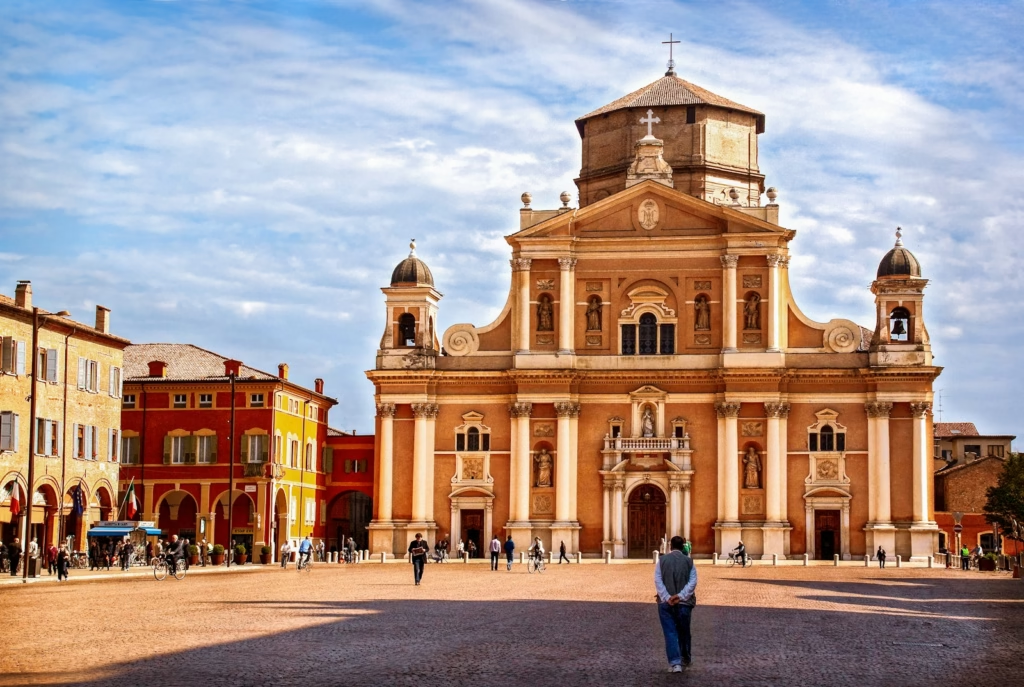
Many climbs are between two and six kilometres long, often averaging five to eight per cent. The steeper ramps can reach double figures, particularly near village centres where old roads rise directly towards fortified hilltops.
Descents are similarly irregular. They can be narrow, shaded and broken by junctions, making them less suitable for unrestricted high-speed descending than wide Alpine roads.
The surface is usually reasonable on main routes, but minor lanes can vary. Potholes, patched tarmac and agricultural debris are possible, particularly after winter or heavy rain.
Compact gearing is sensible. A 34-tooth chainring with at least a 30 or 32-tooth largest sprocket will make the steepest ramps much more manageable.
The riding has more in common with the repeated hills of Chianti and Tuscany than the long, continuous ascents of the Dolomites. The difference is that the Adriatic remains close, giving many routes a flatter opening and finish.
Road, gravel or e-bike?
Road bike
A road bike is the best option for San Marino, Montefiore, Mondaino and Monte San Bartolo. The area rewards responsive handling because the roads constantly change direction and gradient.
An endurance setup may be more comfortable than an aggressive race position, particularly on rougher secondary roads.
Gravel bike
A gravel bike opens up the Conca river corridor, farm tracks and quieter mixed-surface routes. It also provides more confidence on imperfect roads.
Tyres between 35mm and 45mm are suitable for most non-technical routes. Route surfaces should still be checked in advance because local itineraries can range from smooth compacted tracks to rougher agricultural sections.
E-bike
The coast and nearby hills are well suited to e-bikes. A rider can reach the inland villages without needing race-level fitness, although battery management matters on longer routes containing repeated climbing.
Several cycling hotels and local hire businesses offer e-bikes alongside road bikes and city bikes.
When is the best time to visit?
April to June
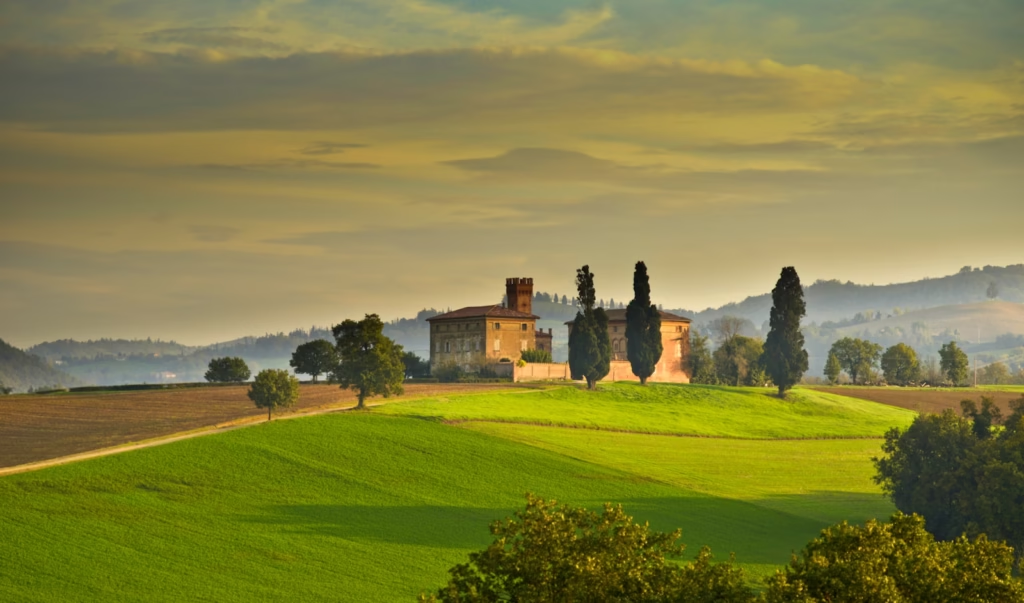
Spring is the best all-round period. Temperatures are generally comfortable, the inland landscape is green and the coast is lively without reaching peak summer congestion.
May is particularly cycling-focused in Riccione, with the Granfondo Riccione and associated cycling festival traditionally taking place during the month.
July and August
Summer brings reliable sunshine but also heat, humidity and heavy tourism.
Road rides should begin early. Inland temperatures can become severe by midday, while coastal cycle paths are busiest during the morning and evening.
Hotels are also more expensive, and beach traffic can make the first and final kilometres frustrating.
September and October
Early autumn is another strong period. The sea remains warm, temperatures are more manageable and the roads become quieter after the main holiday season.
Rain becomes more likely later in October, but good days can still provide excellent riding.
Winter
Winter is mild compared with Britain, but not reliably warm or dry. Some hotels and tourist services operate seasonally, and inland roads may be damp or affected by debris.
It can work for a training break, but spring and autumn offer a better balance.
For riders prioritising warmer winter conditions and much longer climbs, cycling around Etna in Sicily offers a more dramatic southern alternative.
Bike hotels and guided rides
Riccione’s specialist cycling hotels are one of the area’s main advantages.
Typical services include:
- Secure bike storage
- Workshop space and basic tools
- Laundry for cycling kit
- Guided group rides
- Route files
- Road-bike and e-bike hire
- Early breakfasts
- Post-ride food
- Airport or station transfers
Not every property offers the same standard of workshop or storage. Riders travelling with an expensive bike should confirm whether the storage room is locked, monitored and restricted to guests.
It is also worth asking how guided rides are divided. A hotel describing itself as cycling-friendly may offer anything from gentle e-bike tours to fast road groups covering more than 100km.
Cattolica also has cycling-focused accommodation, although the network is less visible than in Riccione.
Bringing a bike by train
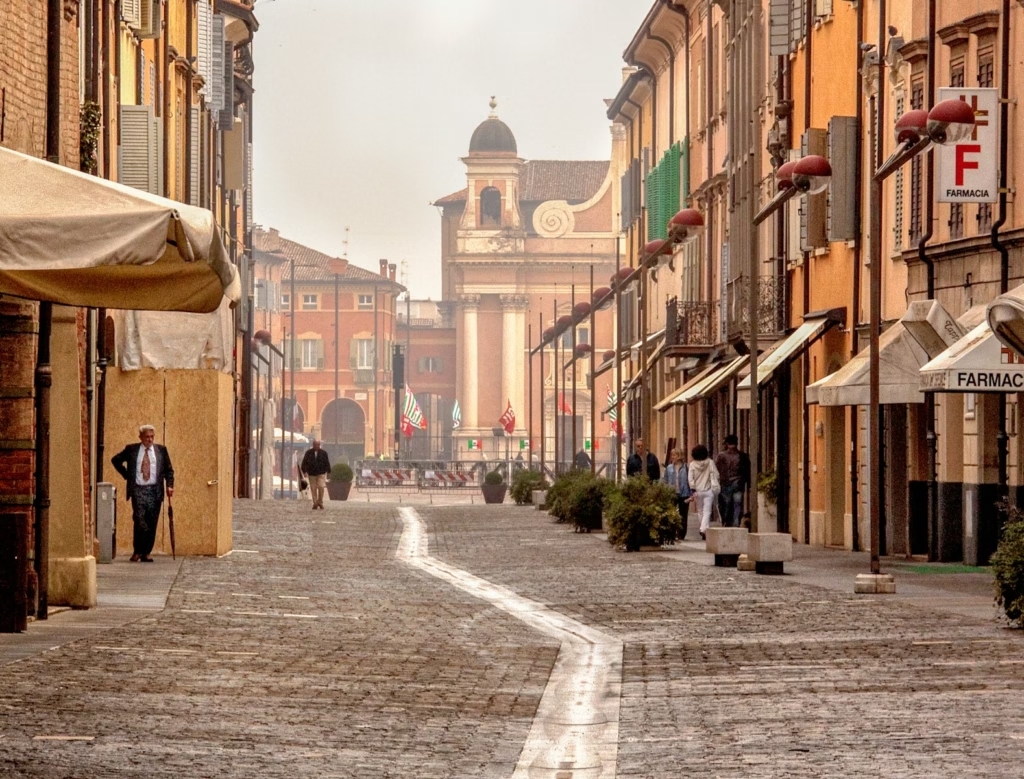
Riccione and Cattolica both sit on the Adriatic railway line, making train travel practical from Rimini, Bologna and other Italian cities.
Assembled bicycles can be carried on eligible regional trains subject to space and the appropriate bicycle ticket or supplement. Riders should check the specific service for a bicycle symbol before travelling.
Intercity bike spaces are more limited and may require advance booking. A dismantled bike packed inside an approved bag is normally treated differently from an assembled bicycle.
During busy summer weekends, regional trains can be crowded. Travelling outside peak periods reduces the chance of finding the bicycle area full.
Flying with a bike
Federico Fellini International Airport is close to Riccione, but its route network is smaller and more seasonal than Bologna.
Bologna Airport offers a wider range of international flights. From there, riders can travel by train through Bologna Centrale towards Rimini, Riccione or Cattolica.
A private transfer is easier with a bike box, particularly for groups. Cycling hotels may arrange collection, although the price and vehicle capacity should be confirmed in advance.
Bike boxes can be awkward in small hotel rooms, so it is worth asking whether the accommodation has dedicated storage for cases.
Traffic and road safety
The roads are generally enjoyable once away from the coast, but Italian driving culture requires alertness.
Main routes around Rimini, Riccione and San Marino can be busy. Quieter lanes are preferable, although they may have poorer surfaces and less predictable junctions.
Roundabouts are common, and drivers may expect cyclists to move decisively rather than hesitate. Holding a clear line is usually safer than riding too close to the edge.
The seafront cycle paths are physically protected in many places, but they are shared environments rather than training circuits.
A rear light is useful even during daylight. Tunnels are limited on the most common local routes, but shaded lanes can still make riders difficult to see.
Heat, hydration and café stops
Summer heat is the biggest environmental risk.
Water fountains exist in many villages, but riders should not assume every one is working. Carrying two bottles is sensible for any inland ride, and longer routes may require planned stops.
The hilltop villages are useful for coffee, pastries and refilling bottles, although opening hours can be irregular outside the main tourist season.
Italian bars are well suited to quick cycling stops. Coffee is usually taken standing at the counter, while filled piadine, cakes and cold drinks are widely available.
Riders should avoid delaying all food until the return to the coast. The repeated short climbs make under-fuelling obvious very quickly.
What to eat after riding
Emilia-Romagna is one of Italy’s strongest food regions, and its Adriatic end has a distinct identity.
Piadina is the obvious cycling meal: a thin flatbread filled with cheese, cured meat, vegetables or combinations such as squacquerone and rocket.
Fresh pasta, passatelli, grilled fish and seafood become more useful after longer rides. Cattolica’s harbour and coastal restaurants naturally lean more heavily towards fish.
The region also produces Sangiovese and other local wines, although these are better treated as part of the post-ride experience than a hydration strategy.
Is Riccione suitable for non-cycling companions?
Yes.
This is one of the strongest reasons to choose the area over a remote mountain base.
The beaches, restaurants, shopping and rail connections provide plenty to do without riding. Riccione’s Viale Ceccarini is the centre of its shopping and evening life, while Cattolica has a more compact resort atmosphere around the waterfront and centre.
Rimini, Gradara, Ravenna, Bologna and San Marino are all possible day trips.
A cyclist can complete a demanding morning ride and still join the rest of the group at the beach or for lunch.
That balance makes Riccione and Cattolica more versatile than destinations built almost entirely around cycling. Riders wanting a quieter Italian base with a similar mix of riding and culture may also consider cycling in Lucca and northern Tuscany.
Common mistakes to avoid
The first is assuming the area is flat because the hotels sit beside the sea. Inland routes accumulate climbing quickly, and the steepest ramps can be uncomfortable without suitable gearing.
The second is leaving too late during summer. A 09:30 start may feel reasonable at the coast but can place the rider on the hardest inland climb during the hottest part of the day.
The third is relying entirely on the coastal cycle path for fast training. It is useful for easy kilometres, but too busy and interrupted for sustained high-speed efforts.
The fourth is downloading a route without checking the surface. Some local cycling itineraries combine paved roads with gravel or river paths.
The fifth is trying to include too many hilltop villages in one ride. The map makes them appear close together, but every connection tends to add another descent and climb.
-
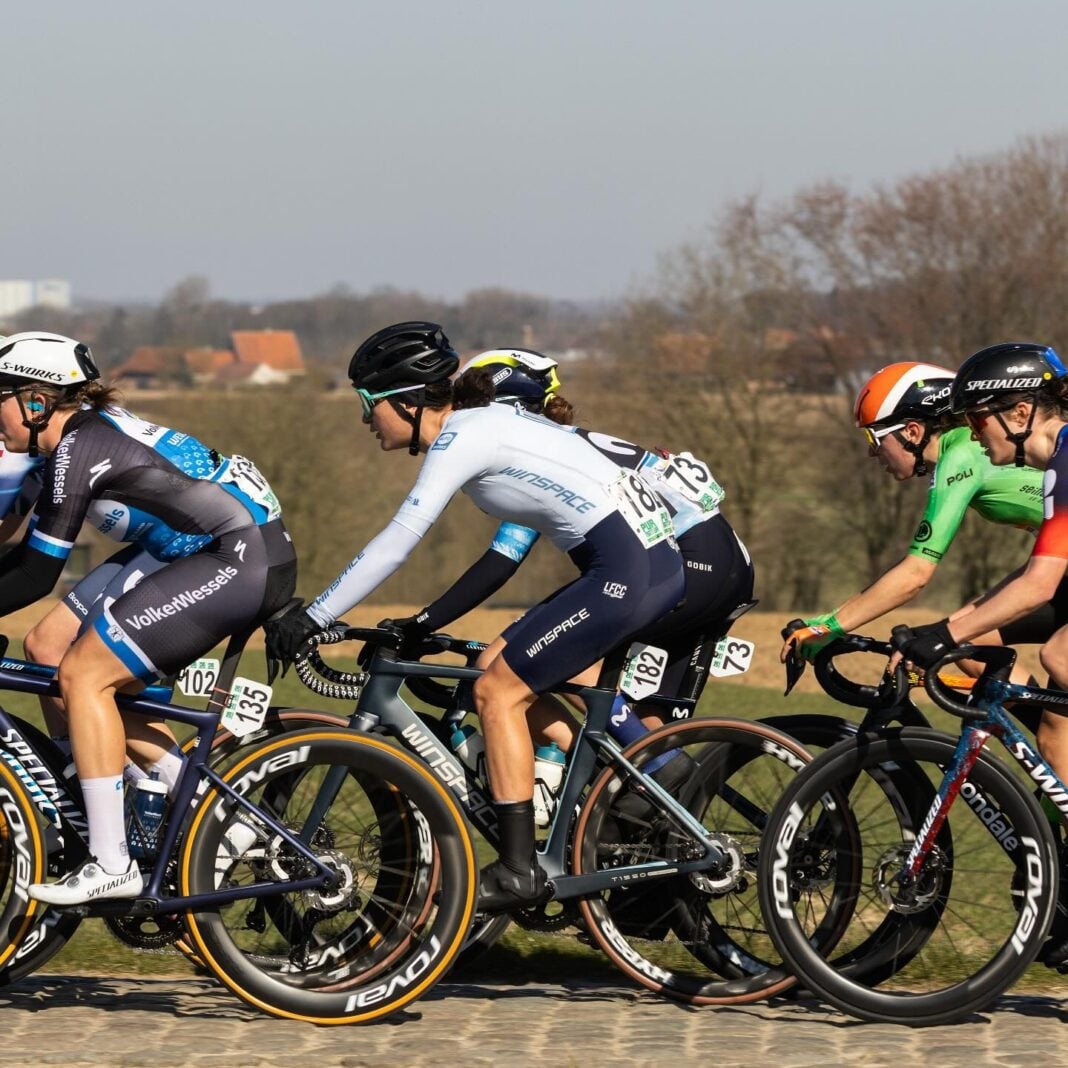
 Photo Credit: quentinphotographiebe
 -
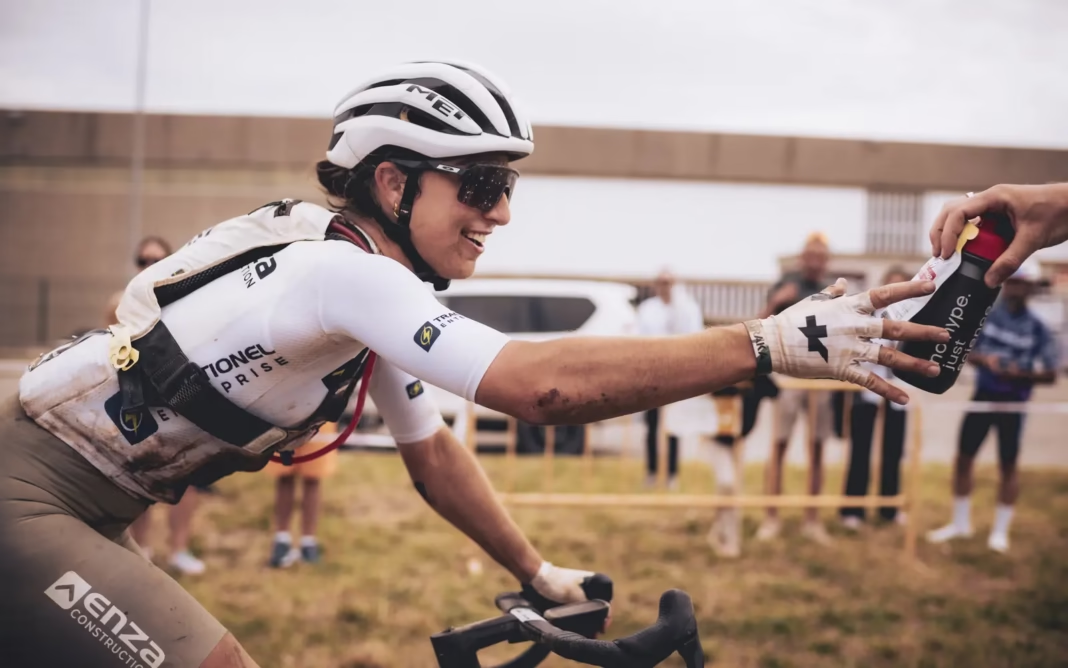
 Photo Credit: Getty

Frequently asked questions about cycling in Riccione and Cattolica
Is Riccione good for road cycling?
Yes. It combines flat coastal access with a large network of rolling and hilly roads inland.
Is Cattolica better than Riccione for cycling?
Riccione has the stronger bike-hotel infrastructure. Cattolica offers easier access to Gradara and Monte San Bartolo and has a slightly quieter atmosphere.
Are there long climbs nearby?
Most nearby climbs are short or medium length. San Marino provides a longer sustained ascent, while Carpegna offers a more serious mountain ride farther inland.
Can beginners cycle in the area?
Yes. The coastal path and lower Conca Valley are suitable for beginners. The hilltop villages require more fitness or an e-bike.
Is the coastal route traffic-free?
Parts use dedicated cycle paths, but the route is not completely uninterrupted. Riders encounter pedestrians, junctions and shared sections.
What is the best month for a cycling holiday?
May, June and September offer the best combination of weather, road conditions and lower tourist pressure.
Can road bikes be hired?
Yes. Riccione has several bike hotels and hire providers offering road bikes, gravel bikes and e-bikes.
Is San Marino rideable from Riccione?
Yes. A return ride usually covers around 80 to 110km depending on the route.
Is Monte San Bartolo worth riding?
Yes. It provides the best coastal views and some of the most interesting climbing close to Cattolica.
Can bikes be taken on local trains?
Yes, on qualifying services and subject to capacity and the correct bicycle ticket or supplement. The specific train should be checked before travel.
A coast that becomes hilly almost immediately
Riccione and Cattolica work because they allow several different cycling holidays to occupy the same base.
A rider can spend one morning cruising beside the Adriatic and the next climbing through Montefiore, Mondaino and Saludecio. San Marino provides a longer objective, Monte San Bartolo adds coastal drama and the Conca Valley offers a gentler route inland.
The roads are not as monumental as the Dolomites or the Alps, but they are more varied than the flat resort setting initially suggests. The riding is built around repeated hills, historic villages, quiet valleys and the recurring sight of the sea from higher ground.
Riccione is the better choice for riders wanting organised support and a larger cycling community. Cattolica suits those prioritising quieter evenings and easier access to the Marche coastline.
Both provide the same central advantage: serious riding begins within minutes of the beach.
More destination ideas, route guides and practical advice are available through our Travel and Riding Abroad hub.

