
Tasmania feels like it was made for cyclists who like their rides with texture. Not just climbs and coast roads, but weather that changes the mood of a day, empty-feeling beaches, cold blue water, forested valleys, old towns, ferry crossings, mountain silhouettes and cafés that appear at exactly the point you start thinking about a second breakfast.
Hobart is the natural place to begin. It has the water, the food, the airport, the hotels and the great dark shape of kunanyi / Mount Wellington rising behind the city. From the waterfront, you can be climbing into eucalyptus and alpine air in less than an hour. From the suburbs, you can roll out towards Richmond, the Huon Valley, the Channel, Bruny Island or the Tasman Peninsula. Then, when you are ready to stretch the trip north, the East Coast gives Tasmania its softer, brighter cycling face: Orford, Swansea, Freycinet, Bicheno, St Helens and the Bay of Fires.
This is not a place to treat like a simple training camp. Tasmania is more interesting than that. The riding can be hard, but the appeal is the way the roads move through landscapes that feel unusually alive. You can smell damp forest on the lower slopes of kunanyi, seaweed and salt around Triabunna, hot roadside dust near Swansea, woodsmoke in small towns, and the sharp mineral scent of granite around Freycinet. A good Tasmanian cycling trip is part road ride, part food trip, part weather gamble and part slow unravelling of the island’s geography.
For UK riders, it also offers something different from the usual winter escape. It is not Mallorca with gum trees. It is not the Alps with beaches. Tasmania has its own rhythm: quieter, wilder, less polished and often more memorable. If you are comparing it with other long-haul riding destinations, our wider Australia and New Zealand cycling travel guides are a useful starting point.

Why Tasmania works so well for cyclists
Tasmania’s size is part of its appeal. It is big enough to feel adventurous, but compact enough that you can build a varied cycling trip without spending half your time in transit. Hobart works as a city base, while the East Coast can be ridden as a point-to-point journey, a self-drive trip with day rides, or a slower touring route.
The riding varies quickly. Around Hobart, you get steep urban climbs, waterfront roads, mountain access and rolling countryside. On the East Coast, the road opens out, with long stretches where the sea sits just beyond the scrub and the light seems to bounce between pale sand, blue water and dry grass. Further north, the riding becomes more remote, with mountain bike networks around St Helens and Derby offering another version of the island entirely.
The best thing is the contrast. One day can be a hard climb to kunanyi, your hands cold on the descent as cloud moves across the summit. The next can be a gentler roll through Richmond and the Coal River Valley, stopping for coffee beside sandstone buildings. Later in the week, you can be pedalling towards Freycinet with the Hazards rising pink-grey in the distance and the road warm enough to smell of sun-baked eucalyptus.
Tasmania rewards cyclists who are willing to ride, stop, look around and then ride again. It shares some of the coastal drama of our Great Ocean Road cycling guide, but feels more compact, wilder and less polished.
Hobart as a cycling base
Hobart is one of the best cycling bases in Australia because the riding begins almost immediately. You do not need a long transfer to reach good roads. The city sits between the Derwent River and kunanyi / Mount Wellington, with suburbs climbing into the foothills and quieter roads spreading south, east and north.
The waterfront is a good place to stay if you want food, atmosphere and easy access to the city. Battery Point and Salamanca put you close to cafés and restaurants, while South Hobart is better if you want to be near the mountain. North Hobart gives you another food-heavy option, and Sandy Bay works well if you want river views and a slightly calmer base.
For a cyclist, Hobart’s biggest advantage is range. You can do a short spin along the river, a brutal climb to the summit, a rolling ride to Richmond, a longer day to Kettering and Bruny Island, or a full coastal loop if you have the legs and time. It is also a good place to recover properly. You can ride in the morning, eat seafood at lunch, wander the waterfront in the afternoon and still feel like the trip is about more than training.
The city has enough bike shops and services to support a cycling trip, but you should still arrive prepared. Tasmania can be hard on equipment, especially if you are mixing sealed roads with gravel sections, mountain roads or wet-weather days. If you are still building confidence with travel riding, our start cycling beginner’s guide is a useful foundation before committing to a more adventurous overseas trip.
Riding kunanyi / Mount Wellington
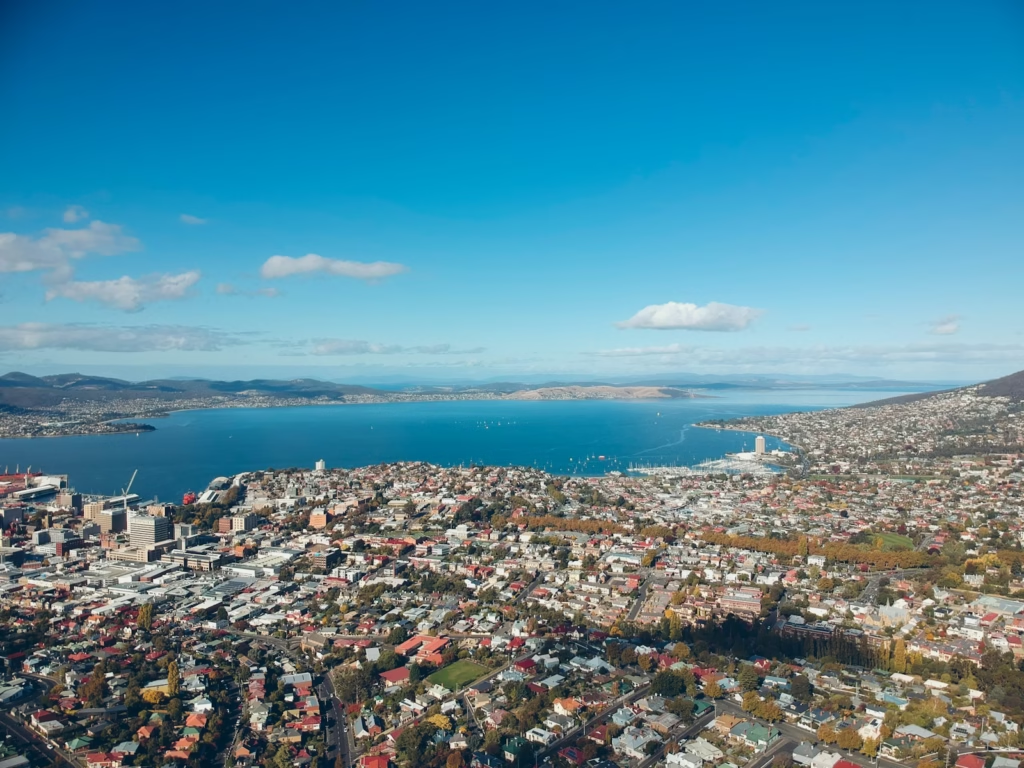
Every cyclist visiting Hobart will look up at kunanyi sooner or later and start making private calculations. The mountain dominates the city. It is there from the waterfront, from the suburbs, from the river and from half the roads you might use for an easy spin. It is not just a climb. It is Hobart’s cycling reference point.
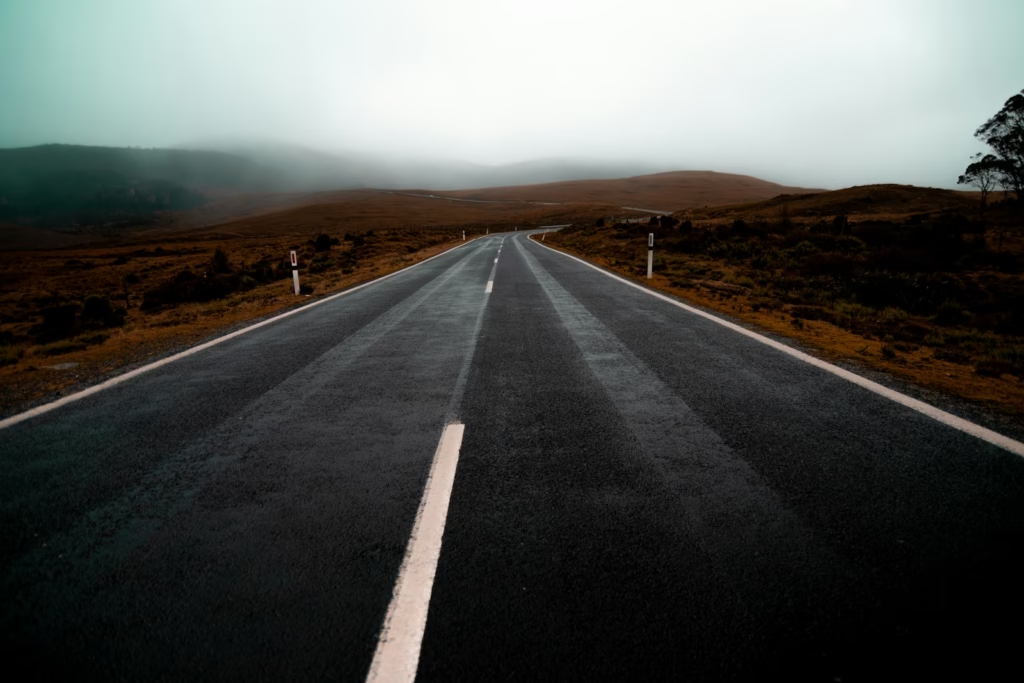
The road climb from the city is long enough to feel like a proper mountain ascent. You rise out of the lower suburbs, pass through ferny, damp-feeling forest, then climb into more open, exposed country as the temperature drops and the city starts to shrink below you. On a clear day, the views open across Hobart, the Derwent, South Arm, Bruny Island and the broken line of hills beyond. On a cloudy day, the mountain can feel more secretive, with mist moving across the road and the summit appearing only in fragments.
The climb is not savage in the same way as the steepest UK lanes, but it is sustained. That makes it a good test of pacing. Start too hard near the bottom and the upper slopes will find you out. The mountain also has its own weather. It can be warm in Hobart and cold near the summit, especially if wind or cloud comes in. Take a gilet or light jacket even if the city feels mild.
The descent needs respect. Pinnacle Road is narrow in places, exposed near the top and subject to closures when snow, ice or severe weather make conditions unsafe. Check the road status before committing to the full climb, and do not assume that what feels safe at sea level will feel the same near the summit.
The best way to ride it is early, before traffic builds and before the day becomes complicated. Roll out through South Hobart, settle into the climb, stop at The Springs if you want a pause, then continue to the summit if conditions are good. The descent back to the city is long enough that your hands and shoulders will know about it by the end.
The Springs, North-South Track and Hobart’s mountain bike side
Tasmania is not only a road-cycling destination, and Hobart makes that clear. The eastern slopes of kunanyi / Mount Wellington have shared-use and mountain bike trails, with the North-South Track one of the best-known routes linking The Springs area towards Glenorchy Mountain Bike Park.
This gives Hobart a useful second cycling identity. You can bring a road bike and focus on the sealed climbs, or you can add a mountain bike day and see the mountain from a different angle. The riding is forested, cooler and more enclosed than the road climb, with that distinctive Tasmanian mix of damp earth, bark, rock and sudden views.
For visitors, the main thing is to choose the right bike and the right route. Do not assume every trail is suitable for casual riding, and check local grading before setting out. If you are mainly a road rider, a guided or shuttle-supported option can be a good way to experience the mountain bike side without turning it into a navigation exercise.
A Hobart cycling trip works especially well if you give yourself one hard road day on kunanyi, one easier recovery spin, and one optional off-road day. That creates a better rhythm than trying to turn every ride into a summit effort.
Hobart to Richmond and the Coal River Valley
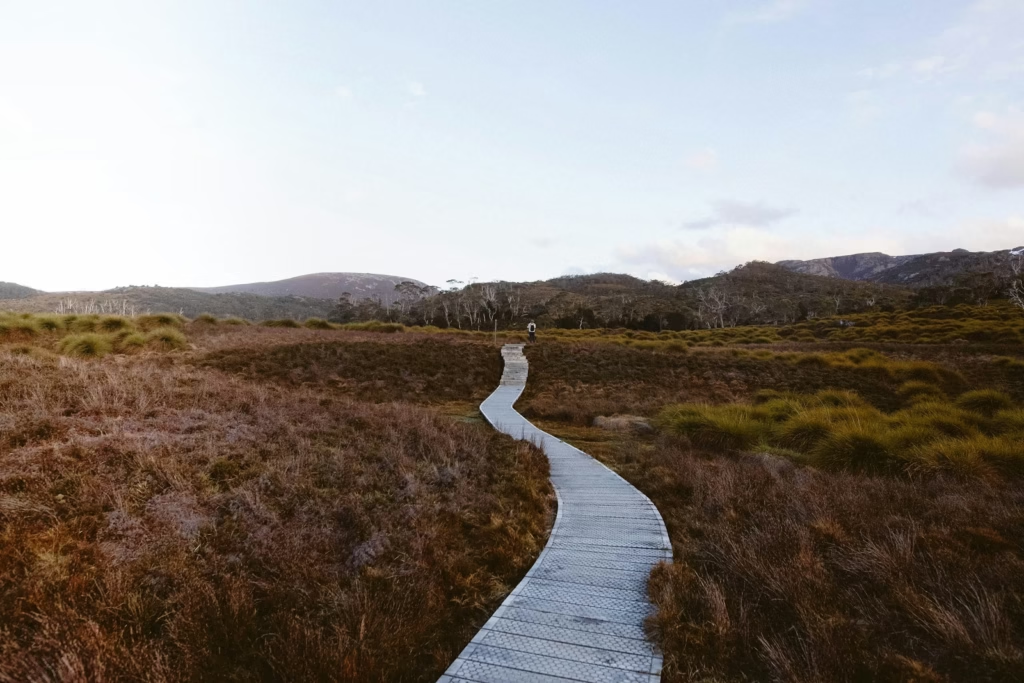
If kunanyi is the hard ride from Hobart, Richmond is the gentler classic. The route north-east out of the city takes you towards one of Tasmania’s best-known historic towns, with rolling roads, vineyards, open fields and a very different mood from the mountain.
This is a good ride for the day after a hard climb. It still gives you enough distance and undulation to feel like a proper outing, but the reward is more relaxed. Richmond has old sandstone buildings, a calm riverside feel, bakeries, cafés and enough history to make the stop feel worthwhile rather than just functional.
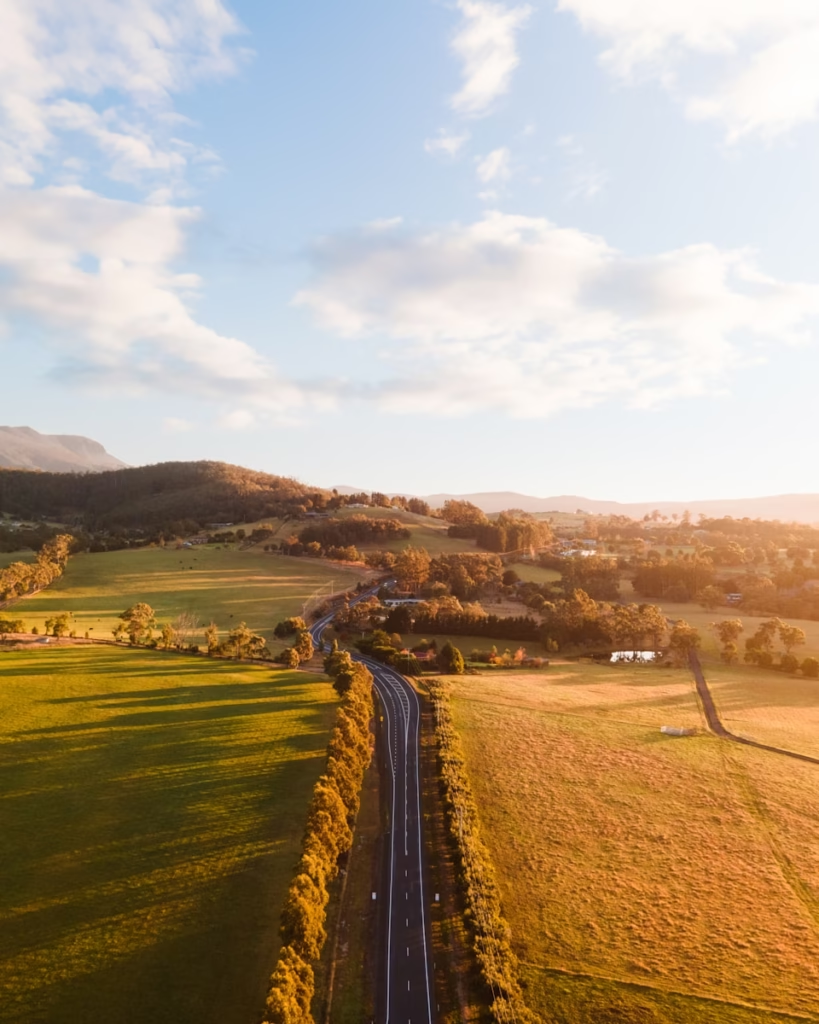
The riding around the Coal River Valley is not dramatic in the same way as the East Coast or kunanyi, but it has an easy charm. Dry grass, low hills, farm fencing and wide skies give it a spacious feel. In the right weather, it is the sort of ride where the kilometres pass quietly and you remember the day through small details: the smell of warm pastry, the sound of tyres on coarse chipseal, the shadow of a bird moving across the road, the first sight of Richmond’s old bridge.
It is also a useful acclimatisation ride. If you have just arrived from the UK, Richmond lets you get used to Tasmanian roads, light, heat and traffic patterns without immediately committing to a mountain or remote coastline.
South of Hobart: Kettering, the Channel and Bruny Island
South of Hobart, the riding changes again. The roads towards Kingston, Margate, Snug, Kettering and the Channel give you water views, small settlements and the sense of moving towards the edge of something. It is a good direction for riders who want a coastal day without leaving Hobart too far behind.
Kettering is the gateway to Bruny Island, reached by ferry. For cyclists, Bruny is tempting because it feels like a trip within a trip. The ferry crossing breaks the day, the roads are rolling, and the island brings together beaches, forest, food producers, wildlife and views across the D’Entrecasteaux Channel.
You can ride Bruny as a long day from Hobart if you are strong and organised, but it is better enjoyed with time. Take the ferry, ride the island properly, stop for food, and avoid turning every road into a race against the return schedule. South Bruny has a wilder feel, while the narrow isthmus known as The Neck gives one of the island’s most recognisable views.
The practical warning is that Bruny is bigger than people expect. The roads roll constantly, services are limited in places, and ferry timing matters. If you are carrying only two bottles and a vague plan, the island can feel longer than it looked on the map. Bring food, lights, layers and a repair kit.
The East Coast: where the road trip becomes a cycling trip
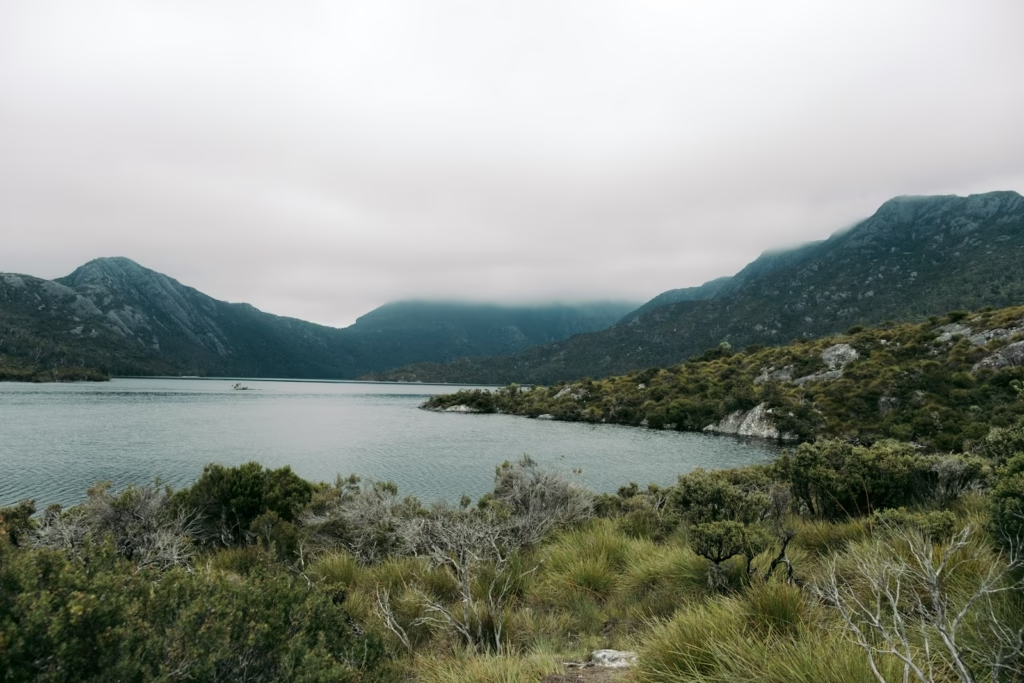
The East Coast is Tasmania’s scenic showpiece. The Great Eastern Drive is the name most travellers know, but cyclists should think of it less as one route and more as a corridor of options. Orford, Triabunna, Swansea, Coles Bay, Freycinet, Bicheno, Scamander, St Helens and the Bay of Fires all give you different ways to shape the trip.
The road is beautiful, but it needs respect. Parts of the coast route use main roads, and traffic can move quickly between towns. It is not always a dreamy separated cycle path beside the sea. The best experience comes from timing, route choice and a willingness to break the journey into sensible sections.
A good approach is to base yourself in two or three places rather than trying to ride the whole coast in one push. Hobart to Orford or Triabunna sets up the lower East Coast. Swansea or Coles Bay gives you Freycinet access. Bicheno is a relaxed coastal stop with penguin-tour appeal. St Helens gives you access to Bay of Fires and mountain bike trails.
The East Coast’s rhythm is different from Hobart. The light is brighter, the towns smaller, the roads more open. You ride through dry forest and coastal scrub, then suddenly the sea appears, wide and startlingly blue. The beaches can look almost unreal in good weather, white sand against turquoise water and orange-stained granite. It is the part of Tasmania where you most understand why people build holidays around the coast.
If you are comparing Tasmania with other Australian cycling trips, this is where the contrast with Victoria becomes clear. The East Coast is less alpine than the rides in our Bright and Falls Creek cycling guide, but it has a coastal spaciousness that makes it feel just as distinctive.
Orford, Triabunna and Maria Island
Orford and Triabunna make sense as the first East Coast cycling base after Hobart. The ride or drive out from the capital brings you towards quieter coastal country, and Triabunna is the ferry gateway to Maria Island.
Maria Island is one of the best cycling side trips in Tasmania because it removes cars from the experience. Apart from Parks management vehicles, it is car-free, and bikes are one of the main ways to explore. You can bring your own bike on the ferry or hire one on the island, though availability can be limited, especially in busier periods.
The riding is not about speed. Maria Island is about moving gently through a landscape of old convict history, grasslands, beaches, cliffs, wildlife and silence. Roads and vehicle tracks are rideable, but walking tracks are not for bikes, and conditions can change with weather. A gravel bike or sturdy hybrid makes more sense than a fragile road setup if you want to explore confidently.
For a cyclist, Maria Island offers a rare kind of calm. No traffic, no urban noise, no need to hold a line while cars pass. Just the crunch of tyres, the wind, the occasional bird call, and the strange, wonderful feeling of an island where the pace has been turned down.
It works best as a full day. Take an early ferry, bring food, ride slowly, walk where needed, and do not try to overpack the schedule.
Swansea and the road towards Freycinet
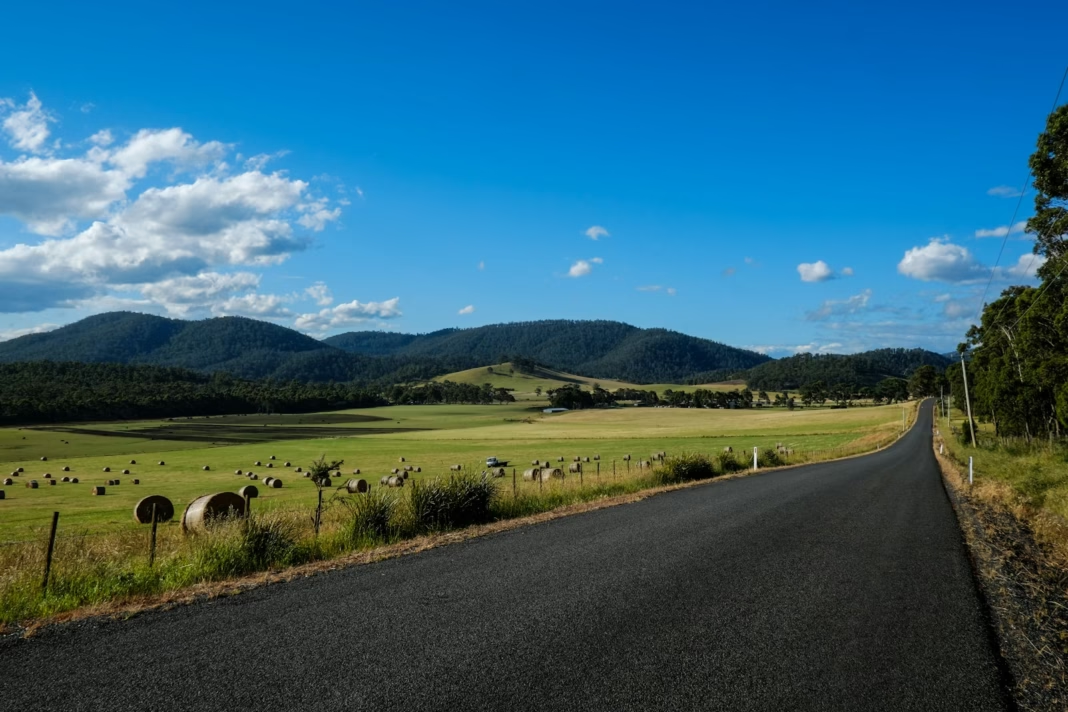
Swansea is a useful East Coast base because it sits between the lower coast and Freycinet. It has enough services to be practical without losing the small-town feel, and the riding north or south gives you sea views, rolling terrain and access to vineyards and beaches.
The road towards Freycinet is one of the best parts of the coast for a mixed cycling and travel day. It is not always quiet, so choose your timing carefully, but the reward is the gradual approach towards the Hazards. These granite peaks begin to appear ahead of you, low and pinkish against the sky, turning the ride into a slow reveal.
Coles Bay is the obvious base for Freycinet National Park. It is not a place for hammering out anonymous kilometres. It is a place to ride early, walk later, eat well and let the landscape do some of the work. The views across Great Oyster Bay, the pull of Wineglass Bay, the smell of dry eucalyptus and the evening colour on the Hazards all make it one of the most memorable stops on the East Coast.
If you are riding here, give yourself time off the bike too. Walk to the Wineglass Bay lookout. Sit by the water. Eat seafood. Have a coffee in Coles Bay. Freycinet is a cycling destination, but it is also a place where the best memories may happen after you have locked the bike.
Bicheno, Scamander and the softer middle coast
North of Freycinet, Bicheno gives the East Coast a more relaxed, slightly old-fashioned holiday feel. It works well as an overnight stop because it has accommodation, food, beaches and enough to do after the ride. It is also a good place to slow the trip down.
The riding through this middle section of the coast is best approached with patience. Some sections are open and exposed, with main-road traffic, while others give you flashes of sea, scrubby forest and small beachside communities. The wind can change the character of the day quickly. A route that looks modest on paper can feel harder if you are pushing into a headwind across rolling roads.
Scamander and the coast towards St Helens continue that pattern. The landscape becomes broader and quieter, and the road begins to feel like it is pulling you towards the north-east corner of the island. There is less drama than Freycinet, but also a pleasing sense of space. Long beaches sit just beyond the dunes, and the air often carries that mix of salt, warm grass and eucalyptus that makes the East Coast feel so distinct.
For touring riders, this is where Tasmania can feel generous. Distances between towns are manageable if planned properly, and the scenery keeps changing just enough to stop the day becoming monotonous.
St Helens, Bay of Fires and mountain biking
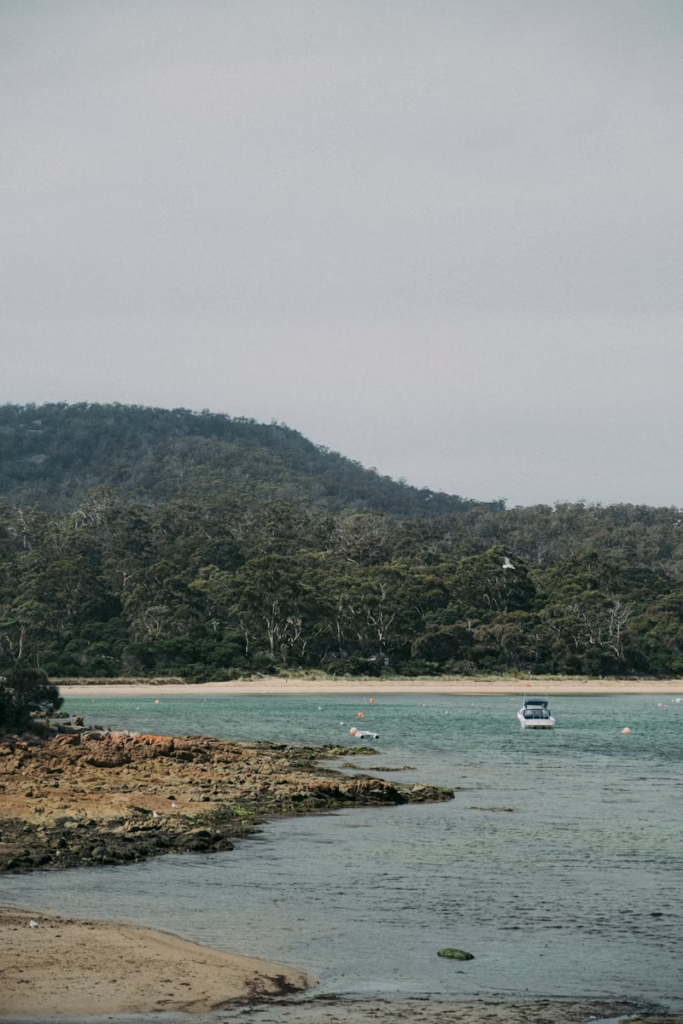
St Helens is the natural northern anchor for an East Coast cycling trip. For road riders, it gives access to the Bay of Fires, one of Tasmania’s most visually striking coastal areas. For mountain bikers, it is one of the island’s key destinations, with trail networks and the well-known Bay of Fires mountain bike experience linking inland riding with the coast.
The Bay of Fires is famous for clear water, pale beaches and orange lichen-covered granite. On a bike, the appeal is not just the view. It is the way the colours come in layers: blue sea, white sand, red-orange rock, grey-green scrub, bright sky. If you have spent the previous days riding through Hobart’s mountain air and Freycinet’s granite country, the Bay of Fires feels like the final coastal flourish.
St Helens also works well if you are travelling with different kinds of cyclists. Road riders can explore the coast and nearby roads, while mountain bikers can build a trip around the trails. If you only have one bike, choose the one that matches your main aim. A road bike is better for a Hobart-to-East-Coast journey. A gravel or mountain bike opens up more side options.
For a first Tasmanian cycling trip, St Helens is a good place to finish rather than rush through. Stay a night or two, ride early, swim if the weather allows, and let the trip end with something that feels properly Tasmanian: bright water, quiet roads, a tired body and a meal that tastes better because you earned it.
A suggested 7-day cycling itinerary from Hobart to the East Coast
A week is enough to get a proper taste of Hobart and the East Coast, though it will leave you wanting more. This itinerary works best with a hire car or support vehicle, allowing you to combine rides with transfers rather than forcing every kilometre to be ridden.
If this would be your first cycling holiday with multiple riding days, it is worth reading our guide on how to train for your first multi-day cycling holiday before shaping the itinerary too aggressively.
Day 1: Arrive in Hobart and ride the waterfront
Arrive, build the bike, check everything works, then ride easily along the Derwent or through the lower city roads. Keep it short. The aim is to adjust, not train.
Day 2: kunanyi / Mount Wellington
Ride from Hobart to the summit if conditions allow. Start early, take layers, and descend carefully. Use the afternoon for food, the waterfront and recovery.
Day 3: Richmond and the Coal River Valley
A rolling ride to Richmond gives you a gentler contrast after the mountain. Stop for coffee, take the scenic return if time allows, and keep the effort controlled.
Day 4: Kettering, the Channel or Bruny Island
Ride south towards Kettering, or make a fuller day of it by crossing to Bruny Island. If you choose Bruny, plan ferry times and distances properly.
Day 5: Transfer or ride towards Orford, Triabunna and Maria Island
Move towards the lower East Coast. If time allows, take the ferry to Maria Island for a car-free cycling day. This is best done slowly rather than squeezed into a busy schedule.
Day 6: Swansea, Coles Bay and Freycinet
Base yourself around Swansea or Coles Bay. Ride early towards Freycinet, then walk to the Wineglass Bay lookout later in the day. This is one of the best ride-and-hike combinations in Tasmania.
Day 7: Bicheno, St Helens and Bay of Fires
Continue north if your schedule allows. Ride around St Helens or towards Bay of Fires, then either stay another night or begin the return journey.
A slower 10-day version
If you have 10 days, the trip becomes much better. Add an extra Hobart day, a full Bruny Island day, a full Maria Island day and another night around Freycinet or St Helens. Tasmania rewards spare time. The roads, ferries, weather and food all work better when you are not constantly chasing the next booking.
A 10-day trip might look like this:
- Day 1: Arrive Hobart
- Day 2: kunanyi / Mount Wellington
- Day 3: Richmond and Coal River Valley
- Day 4: Channel ride and Kettering
- Day 5: Bruny Island
- Day 6: Orford and Triabunna
- Day 7: Maria Island
- Day 8: Swansea and Freycinet
- Day 9: Bicheno and St Helens
- Day 10: Bay of Fires and return
This gives the trip breathing room. It also gives you flexibility if the weather closes in on kunanyi or makes a coastal day less appealing.
Road riding safety in Tasmania
Tasmania can be excellent for cycling, but it is not automatically easy. Roads vary, shoulders can be narrow, wildlife is a real consideration, and main-road traffic can feel fast in places, especially on touring corridors.
The best safety advice is practical rather than dramatic:
- Start rides early where possible
- Avoid the busiest main-road sections at peak times
- Use bright clothing and good rear lights
- Carry more food and water than you think you need
- Check weather before riding into remote areas
- Watch for gravel, rough chipseal and debris
- Be cautious at dawn and dusk because of wildlife
- Give descents respect, especially on kunanyi and inland roads
- Do not assume mobile coverage everywhere
- Tell someone your route if riding alone
Tasmania’s roads can feel quiet compared with mainland Australia, but that can create its own problem. A rider may go from peaceful kilometres to a fast vehicle passing on a narrow road. Stay alert, especially on the East Coast highway sections.
What bike should you take?
For a Hobart and East Coast trip, a road bike with sensible tyres is the best choice if you plan to focus on sealed riding. Something with 28mm to 32mm tyres will usually feel better than a delicate race setup, especially on coarse surfaces and longer days.
A gravel bike is the most versatile option if you want to include Maria Island, Bruny backroads, light gravel, national park tracks where cycling is allowed, or a more relaxed touring style. It will be slightly slower on the road but more forgiving overall.
A mountain bike makes sense if St Helens, Derby or Hobart trails are a major part of your trip. If they are only an optional extra, hire locally rather than compromising the whole road trip.
The ideal setup for most visiting cyclists:
- Endurance road bike or gravel bike
- 28mm to 35mm tyres depending on route
- Compact gearing for kunanyi and rolling coast roads
- Two bottle cages
- Good rear light
- GPS route files downloaded offline
- Repair kit and spare tube even if running tubeless
- Light rain jacket or gilet
Do not arrive with tyres that are already squared off, brake pads near the limit or gearing chosen for flat roads. Tasmania rewards reliable equipment. For more general kit and riding advice, see our cycling tips and reviews hub.
When is the best time to cycle in Tasmania?
The best cycling months are generally late spring, summer and early autumn. For UK riders, that means Tasmania is especially appealing during the northern winter. December to March can bring warmer, longer days, but also busier roads and accommodation pressure in popular coastal areas. November and April can be excellent if the weather behaves, with fewer crowds and a more relaxed feel.
The island’s weather is famously changeable. Hobart can be mild while kunanyi is cold, windy or closed near the top. The East Coast is often sunnier than the west, but that does not mean it is always calm. Wind can shape a ride as much as gradient.
Pack layers rather than relying on one forecast. A light jacket, arm warmers, gilet and full-finger gloves can all earn their place, even on a trip that also includes sun cream and beach stops.

Food, coffee and the pleasure of stopping
Tasmania is a good place to be hungry. Hobart has a strong food scene, from waterfront seafood to bakeries, cafés, markets and restaurants that make the most of local produce. On the East Coast, the mood shifts towards oysters, fish, wineries, simple cafés and small-town bakeries.
For cyclists, this matters because the stops are part of the trip. A ride to Richmond feels better with coffee and pastry. A day around Freycinet should include seafood or something cold by the water. Bruny Island is hard to separate from cheese, bread, berries, chocolate, oysters or whatever else your route happens to pass.
The practical note is that services thin out between towns. Do not assume there will always be a café at the next corner. Carry emergency food, especially on longer East Coast days, and plan water stops carefully in summer.
The best Tasmanian rides often have a rhythm: ride early, eat well, ride again, stop somewhere beautiful, then finish before the light goes. It is not a place where every day needs to be a suffer score.
Practical information
Location
Tasmania is an island state south of mainland Australia. Hobart is the capital and the main base for this guide. The East Coast route covered here runs broadly from Orford and Triabunna through Swansea, Freycinet, Bicheno, St Helens and the Bay of Fires.
Getting there from the UK
Most UK riders will fly to mainland Australia first, usually via hubs such as Singapore, Dubai, Doha or Kuala Lumpur, then connect to Hobart. Melbourne is the most common domestic gateway, with flights to Hobart taking around an hour and a quarter.
Allow enough time for bike luggage transfers. If your cycling trip is short, consider arriving a day earlier than you think you need. A delayed bike can ruin the start of a tightly planned itinerary.
Getting around
A hire car makes the Hobart and East Coast combination much easier. You can base yourself in Hobart, ride locally, then transfer to East Coast towns for day rides. Fully loaded touring is possible, but it requires more planning around road choice, accommodation, food and weather.
Riding
Expect rolling terrain, coarse road surfaces, changeable weather and some narrow roads. Hobart offers the best climb in kunanyi / Mount Wellington, while the East Coast gives scenic road riding and access to Freycinet, Maria Island and St Helens. Mountain bikers should look at Hobart’s kunanyi trails, St Helens and Derby if extending the trip.
When to go
Late spring to early autumn is the main window. December to March brings longer days and warmer weather, but also more visitors. November and April can be quieter and still excellent for cycling. Always check conditions before riding kunanyi, especially if cloud, wind, snow or ice is forecast.
Accommodation
Stay in Hobart for the first part of the trip, ideally near the waterfront, South Hobart, Battery Point, Sandy Bay or North Hobart. On the East Coast, useful bases include Orford, Triabunna, Swansea, Coles Bay, Bicheno and St Helens. Book early in summer and around holiday periods.
Bike hire and support
Hobart has bike shops and some hire options, while mountain bike destinations such as St Helens and Derby have more specialist support. If bringing your own bike, pack spares that match your setup. Do not rely on small towns having specific parts.
Road conditions
Main roads can be fast, and shoulders are not always generous. Start early, use lights, avoid peak traffic where possible and plan routes carefully. For Maria Island, bikes can be brought on the ferry or hired, but cycling is limited to roads and vehicle tracks, not walking tracks.
How many days do you need?
A long weekend is enough for Hobart and kunanyi. A week gives you Hobart plus a taste of the East Coast. Ten days is much better if you want Bruny Island, Maria Island, Freycinet and St Helens without rushing. Two weeks would allow a broader Tasmania loop.
Best rides for a first trip
- Hobart to kunanyi / Mount Wellington
- Hobart to Richmond and the Coal River Valley
- Kettering and the Channel
- Bruny Island
- Maria Island by bike
- Swansea to Coles Bay and Freycinet
- Bicheno to St Helens
- Bay of Fires from St Helens
- St Helens mountain bike trails
-
 Photo Credit: Canyon SRAM (supplied media release)
 -
 Photo Credit: Park Tool



Why Tasmania stays with cyclists
Some cycling destinations impress immediately, then blur together afterwards. Tasmania works differently. It leaves you with separate fragments: the first view from kunanyi when Hobart appears below the cloud, the ferry engine on the way to Bruny or Maria Island, the dry smell of the East Coast, the pink granite around Freycinet, the empty blue of a beach near St Helens, the taste of seafood after a long ride, the way the light changes as evening comes over the water.
For riders used to chasing famous climbs, Tasmania offers something slower and more varied. The roads are not always perfect, the weather does not always cooperate, and the best days often require a bit of improvisation. But that is part of the appeal. It feels like a cycling trip with edges, not a packaged route designed to behave.
Start in Hobart. Climb the mountain. Ride to Richmond. Cross to an island. Follow the coast north. Stop often. Eat properly. Take the long view when the road rises. Tasmania rewards the cyclist who gives it time.
For more destination ideas, see our wider cycling travel hub and Australia and New Zealand cycling guides.

