
The Tour de Pologne Women 2026 race preview starts with an unusual general classification question. There is no long mountain climb, summit finish or individual time trial to create a conventional hierarchy. Instead, the winner will need to combine sprint speed, positioning, short-climb resilience and tactical judgement across three compact stages.
The race takes place from Friday 24 July to Sunday 26 July, with all three stages held in Poland’s Lubelskie region. Stage 1 runs from Tomaszów Lubelski to Zamość over 141.8km, stage 2 covers 118.1km between Włodawa and Lubartów, and the final 101.4km stage travels from Janowiec to Lublin. The complete profiles are covered in the Tour de Pologne Women 2026 route guide, while late team changes can be followed through the full Tour de Pologne Women 2026 start list.
UK broadcast and streaming information is available in our guide on how to watch Tour de Pologne Women 2026. New viewers can also use the beginner’s guide to Tour de Pologne Women 2026 for an explanation of the race format, teams and general classification.
Tour de Pologne Women 2026 race preview: the quick answer
Lotte Kopecky begins as the most complete favourite for the 2026 Tour de Pologne Women. She can collect bonus seconds in reduced sprints, survive the harder final stage and attack if the race becomes tactical.
Elisa Balsamo and Lorena Wiebes have the speed to build a GC advantage through stage finishes, while Marta Lach, Karlijn Swinkels and Eleonora Gasparrini should become increasingly dangerous if the final stage into Lublin creates a more selective race.
The central question is whether the sprinters can collect enough time before stage 3, or whether the rolling final day gives the classics riders an opportunity to overturn the classification.
What previous editions tell us about the race
The modern Tour de Pologne Women has already produced two very different types of overall winner.
Laura Molenaar won in 2024 after a decisive solo attack on stage 2. The VolkerWessels rider created a 25-second advantage on the undulating road to Kraśnik and then defended the yellow jersey on the final day. Scarlett Souren completed the team’s control of the race by winning stage 3 in Kazimierz Dolny.
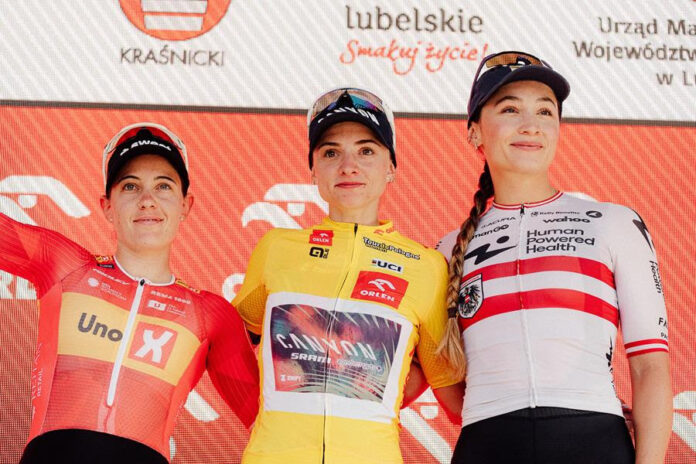
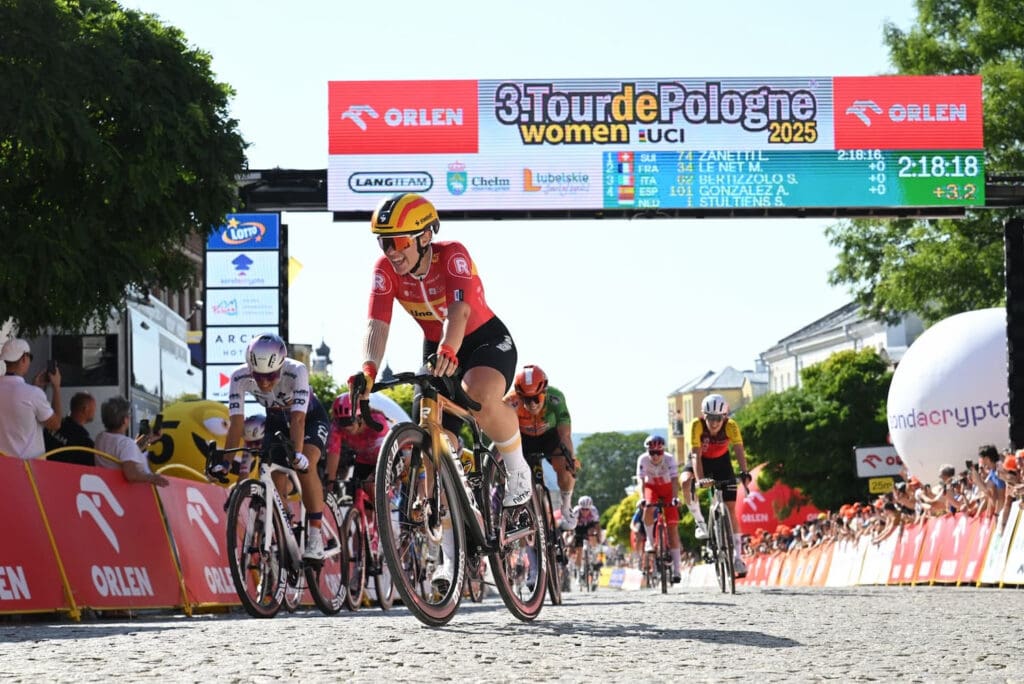
Chiara Consonni followed a different route in 2025. The Italian won stages 1 and 3, repeatedly collected bonus seconds and used her sprint to secure both the general classification and points jersey. Her victory showed that the overall does not need to be won through a major attack if one rider can consistently finish ahead of the other contenders.
The wider development of the event is covered in our history of Tour de Pologne Women, including the 2024 revival and the race’s move to UCI Women’s ProSeries level for 2026.
That recent history creates two obvious paths towards victory. A rider can follow Molenaar’s example by creating a decisive split, or copy Consonni by using sprint speed, consistency and bonus seconds.
What kind of rider does the 2026 route favour?
The ideal Tour de Pologne Women contender is not necessarily the strongest climber or the fastest pure sprinter.
Stage 1 is long and rolling enough to expose riders who arrive short of form or repeatedly lose position. Stage 2 should provide the clearest conventional sprint opportunity. Stage 3 is shorter, hillier and more difficult to control, making it the obvious day for attacks on the general classification.
The leading contenders will need:
- A fast finish from a full or reduced group
- Enough climbing strength to survive repeated short efforts
- Strong positioning through technical roads and nervous finales
- A team capable of controlling breakaways
- The recovery to repeat their effort across three consecutive days
- The tactical confidence to attack if the bonus-second battle is not enough
That places Team SD Worx-Protime at the centre of the race. Lotte Kopecky, Lorena Wiebes, Marta Lach, Blanka Vas and Femke Gerritse give the team almost every possible route towards victory.
Lidl-Trek can build around Elisa Balsamo while retaining Shirin van Anrooij and Margot Vanpachtenbeke for harder racing. UAE Team ADQ may have the deepest collection of alternatives, with Karlijn Swinkels, Eleonora Gasparrini, Lara Gillespie and Federica Venturelli all suited to different versions of the race.
Lotte Kopecky
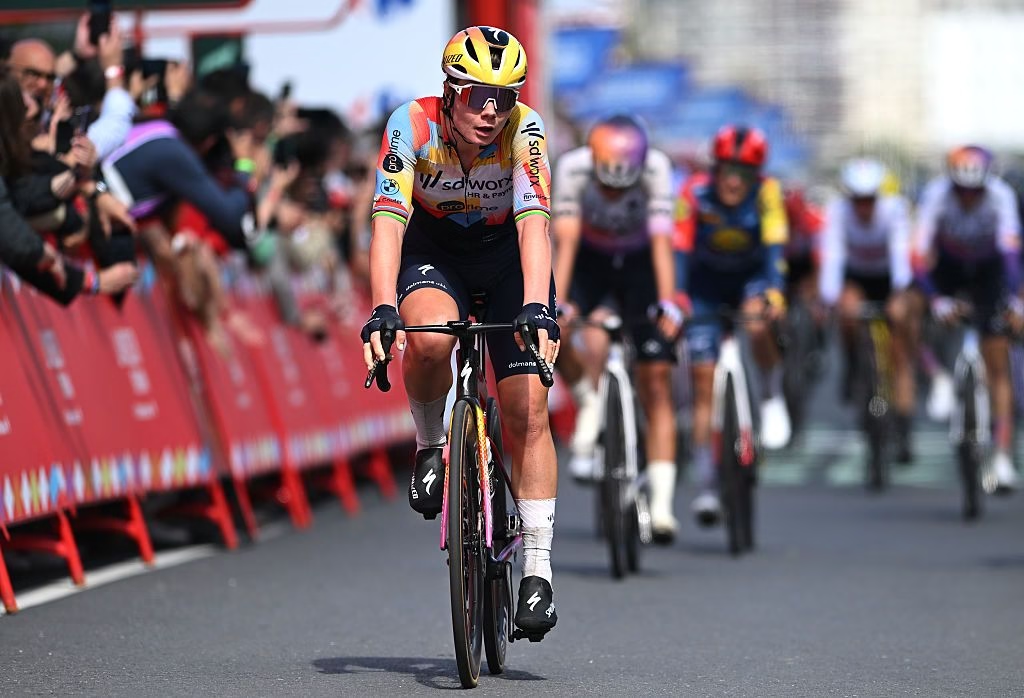
Lotte Kopecky is the most complete rider on the start list and the clearest overall favourite.
The route asks her to do the things she already does exceptionally well. Kopecky can survive short climbs, accelerate after difficult terrain, position herself through technical finales and finish quickly from almost any size of group.
Her victory at Milano-Sanremo Women 2026 is the strongest evidence of that range. Kopecky survived the decisive selection on the Poggio, responded to the late tactical movements and then beat Noemi Rüegg and Eleonora Gasparrini from the five-rider front group.
It was precisely the kind of performance required in Poland. Follow the decisive move, remain calm when the race becomes tactical and still have enough speed to finish the job.
Kopecky also arrives with recent stage-racing in her legs after the Baloise Ladies Tour. She attacked on the harder roads, finished third in the Maaseik time trial and remained involved around the sprint finales. She did not dominate the race, but it provided several consecutive days of competition immediately before Poland.
The uncertainty is not whether Kopecky can win. It is how SD Worx-Protime divide their opportunities.
Wiebes is the natural sprint leader, Lach has a strong home-race case and Vas offers another option if stage 3 becomes selective. Kopecky may work for others during parts of the race, but she remains the rider least likely to be exposed by any of the three stages.
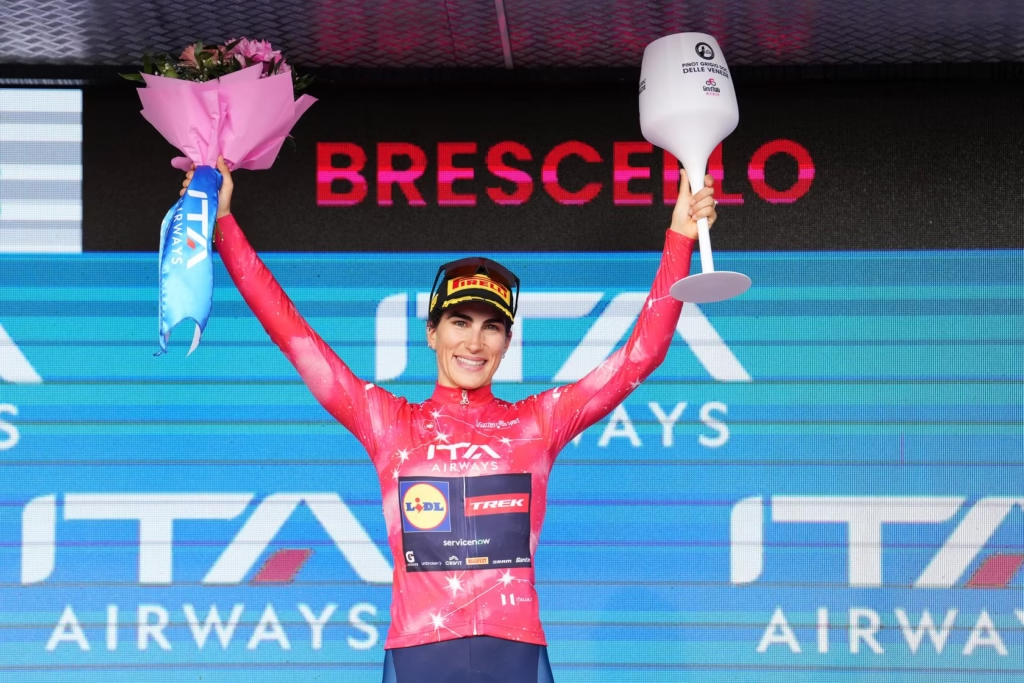 Photo Credit: RCS
Elisa Balsamo
Elisa Balsamo brings the strongest recent stage-race sprint form into the Tour de Pologne Women.
The Italian won four stages and the points classification at the Giro d’Italia Women. Her performances were not limited to untouched flat finishes. Balsamo also won the more complicated stage 3 into Buja, where repeated attacks and rolling terrain reduced the peloton before the sprint.
She later added a fourth victory on stage 6 in Brescello, confirming that she could continue producing results after several days of racing. Balsamo eventually won the points classification by a wide margin, as covered in the Giro d’Italia Women final classification recap.
That repeatability gives Balsamo a realistic path towards the overall in Poland. Stage 2 is an obvious target, but she should also be competitive in Zamość and could survive the Lublin finale if Lidl-Trek control the climbing rather than allowing repeated attacks.
The comparison with Consonni’s 2025 victory is difficult to ignore. Consonni did not need to dominate through climbing. She repeatedly placed herself correctly, collected bonus seconds and finished the job on the uphill drag into Kraśnik.
Balsamo can attempt the same approach.
Lidl-Trek also have enough depth to protect her. Clara Copponi provides another fast option, while Van Anrooij, Gaia Realini and Vanpachtenbeke can manage the harder sections.
Realini is unlikely to become the team’s principal GC rider on this terrain, but she can help increase the pace on stage 3 and remove some of Balsamo’s sprint rivals.
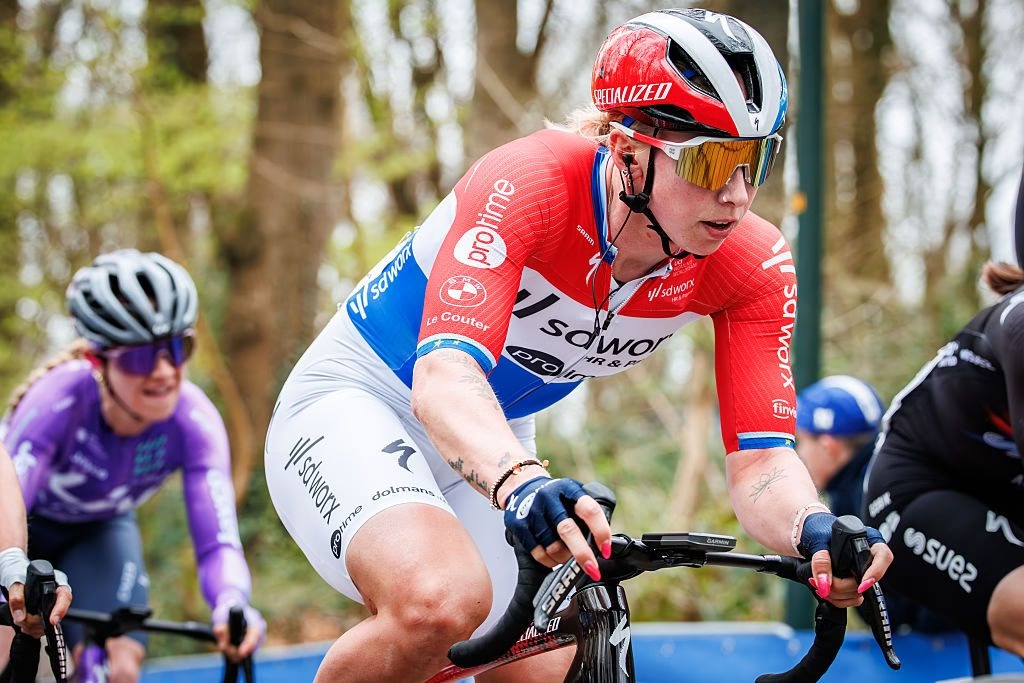
Lorena Wiebes
Lorena Wiebes could win the Tour de Pologne Women without ever needing to attack.
If stages 1 and 2 remain together, Wiebes has the speed to begin the final day with a meaningful advantage. Even a lead of 10 or 15 seconds would alter the tactical balance because Kopecky, Lach and Vas could then mark attacks while rival teams carried the responsibility for making stage 3 selective.
Wiebes returned from her Giro d’Italia Women disqualification by winning the Copenhagen Sprint Women 2026, beating Charlotte Kool and Nienke Veenhoven after launching a long sprint inside the final 400 metres.
She had already won In Flanders Fields Women 2026 from a selective five-rider group, which is particularly relevant to Poland. That result showed that Wiebes does not need a completely flat, controlled finish to use her speed.
The final stage remains the concern. The approach to Lublin contains enough climbing to encourage attacks, although the stage is only 101.4km long. If SD Worx-Protime keep the race controlled and prevent sustained moves, Wiebes may still be present at the finish.
The 2025 edition proved that a sprinter can win this race. Wiebes is faster than anyone who contested last year’s GC, but the stronger 2026 field also means more teams have the strength to make the final stage difficult.
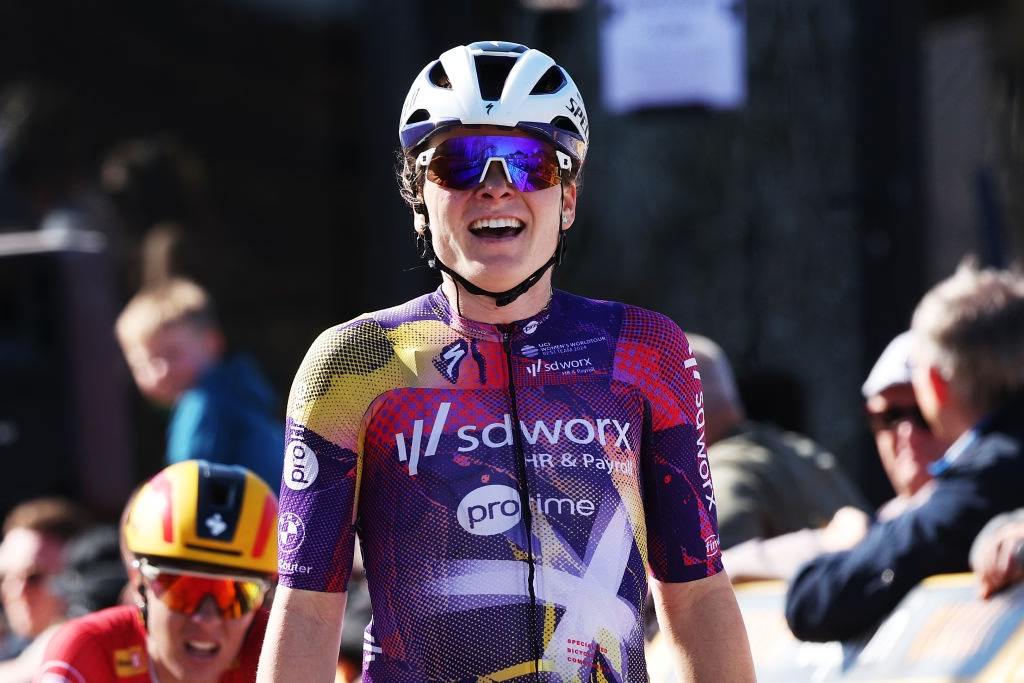
Marta Lach
Marta Lach has one of the most convincing route profiles in the field.
She is quick enough to collect bonus seconds, strong enough to survive stage 3 and aggressive enough to attack if the race needs to be opened. Her motivation as the leading Polish contender adds another layer, but the case for Lach is based on results rather than nationality alone.
Lach won the 2026 Festival Elsy Jacobs à Garnich from a reduced group, beating teammate Femke Gerritse after SD Worx-Protime helped force the selection. That early-season form was one of the reasons she was highlighted as a contender in our Veenendaal-Veenendaal 2026 preview.
She later finished third at Dwars door de Westhoek 2026, where Federica Venturelli won from the decisive breakaway. Both results rewarded the combination of endurance, positioning and reduced-group speed that should matter in Poland.
Lach’s role may depend on the opening two stages. If Wiebes collects bonuses, Lach can become an attacking card on stage 3. If Wiebes loses time or the race splits on stage 1, Lach is strong enough to pursue her own classification.
That makes her especially dangerous. Rival teams cannot allow Lach freedom simply because Kopecky and Wiebes are the bigger names.
An attack from the Polish rider on the final stage could force Lidl-Trek, Canyon SRAM or UAE Team ADQ to chase while SD Worx-Protime keep Kopecky behind as insurance.
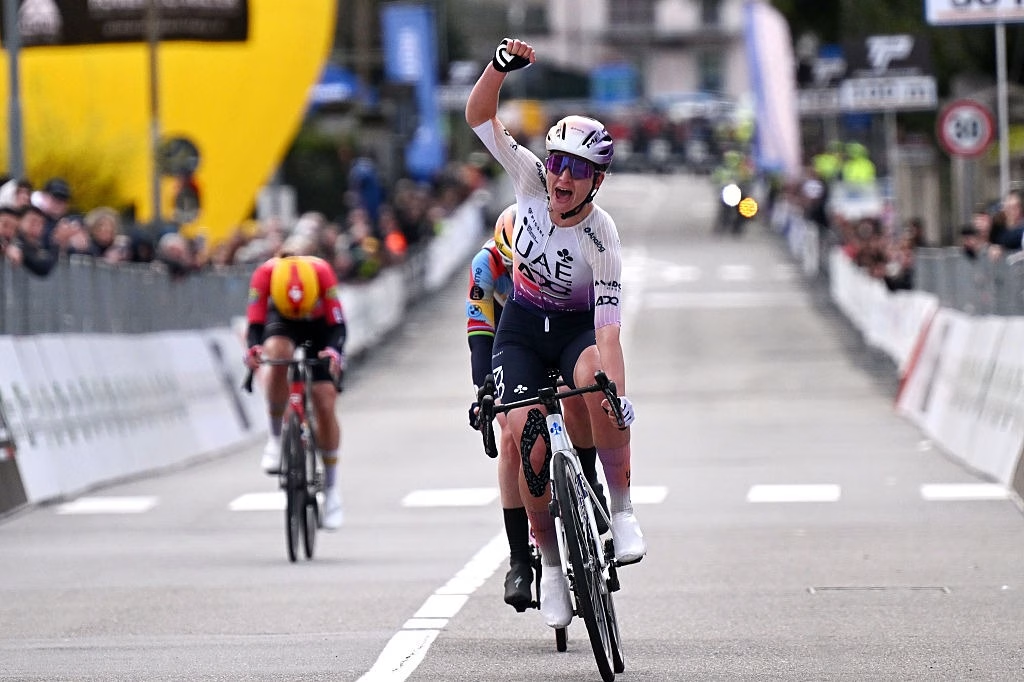 Photo Credit: Getty
Karlijn Swinkels
Karlijn Swinkels may be the most credible alternative to the obvious sprint favourites.
She won Trofeo Alfredo Binda 2026 after surviving a selective WorldTour race and finishing from a three-rider move ahead of Anna van der Breggen and Mie Bjørndal Ottestad.
Swinkels then finished third at In Flanders Fields Women, reaching the finish with the five-rider group created by the Kemmelberg selection.
Those results demonstrate her value in races that are too difficult for many sprinters but not mountainous enough to belong to the pure climbers.
Swinkels is unlikely to beat Wiebes or Balsamo in an untouched sprint, but she can win the race before the final straight. Stage 1 gives her room to apply pressure, while stage 3 should suit her ability to survive repeated climbing and accelerate after a hard day.
UAE Team ADQ’s depth also helps her. Swinkels does not need to chase every move because Gasparrini, Gillespie and Venturelli are all capable of representing the team near the front.
That allows UAE to race proactively rather than simply protecting one designated leader.
 Photo Credit: Getty
Eleonora Gasparrini
Eleonora Gasparrini gives UAE Team ADQ another rider who closely matches the demands of the route.
Her third place at Milano-Sanremo Women was an important result because it came after she survived the Cipressa and Poggio selection with Kopecky, Rüegg, Puck Pieterse and Marlen Reusser.
Gasparrini then still had the speed to reach the podium from that elite front group.
That is a highly relevant form line for Poland. Gasparrini is unlikely to beat Wiebes in an untouched sprint, but she becomes much more dangerous when the terrain removes some of the pure speed.
She should be a contender on stages 1 and 3, with bonus seconds potentially carrying her into the GC battle. UAE may use Swinkels as the stronger attacking option, but Gasparrini has the better chance if the race repeatedly ends in reduced sprints.
 Photo Credit: Getty
Lara Gillespie
Lara Gillespie has developed into one of the most dangerous riders in races that sit between a sprint and a classics contest.
She was consistently prominent during the Giro d’Italia Women and finished fourth in the final points classification. Gillespie then won the Argenta Classic 2026, beating Maggie Coles-Lyster and Lonneke Uneken in the sprint.
The Tour de Pologne Women suits that profile. Gillespie is quick enough to contest bonus seconds but does not require a completely flat finish. Her track background also helps in races where positioning, acceleration and repeated high-speed efforts are decisive.
Gillespie may begin as a stage option rather than UAE’s designated GC leader. Two strong finishes across the opening weekend could quickly change that hierarchy.
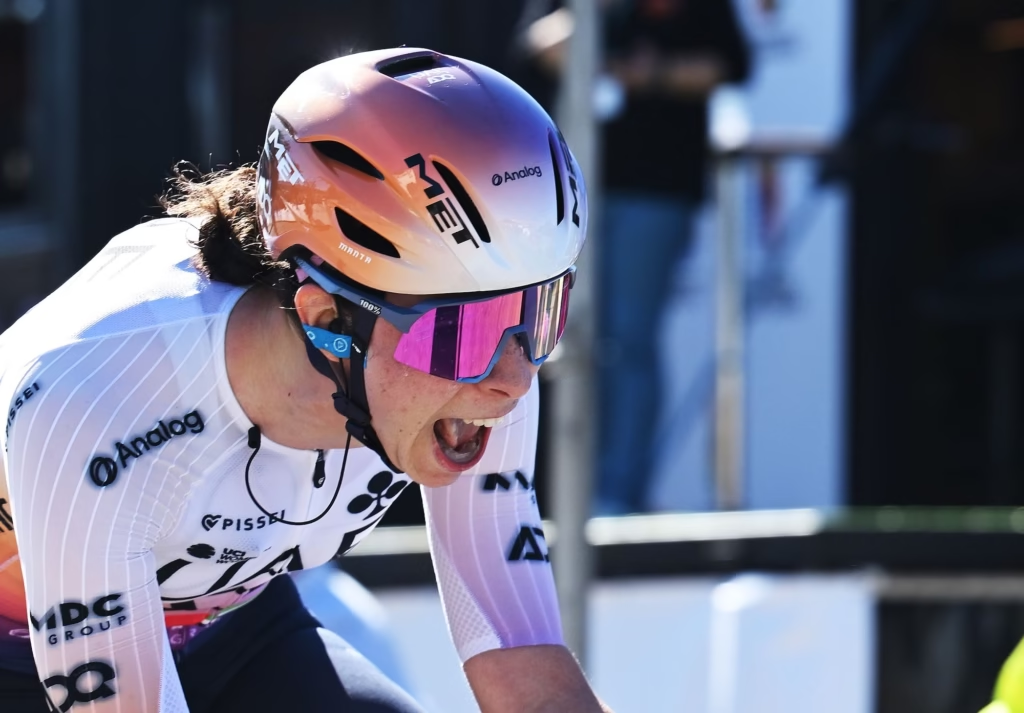
Federica Venturelli
Federica Venturelli provides UAE Team ADQ with a younger and more aggressive route towards the general classification.
She won Dwars door de Westhoek from the day’s decisive breakaway, beating Uneken and Lach in the reduced sprint.
Venturelli then won the points classification at the Tour Féminin International des Pyrénées, showing that she could remain influential across consecutive stages and contribute to UAE’s wider control of the race.
Stage 3 looks like her clearest opportunity in Poland. Teams may hesitate to chase Venturelli while watching Swinkels, Gasparrini and Gillespie, giving the young Italian the freedom to turn an attack into a GC challenge.
She may not begin the race as UAE’s first leader, but that could make her more dangerous rather than less.
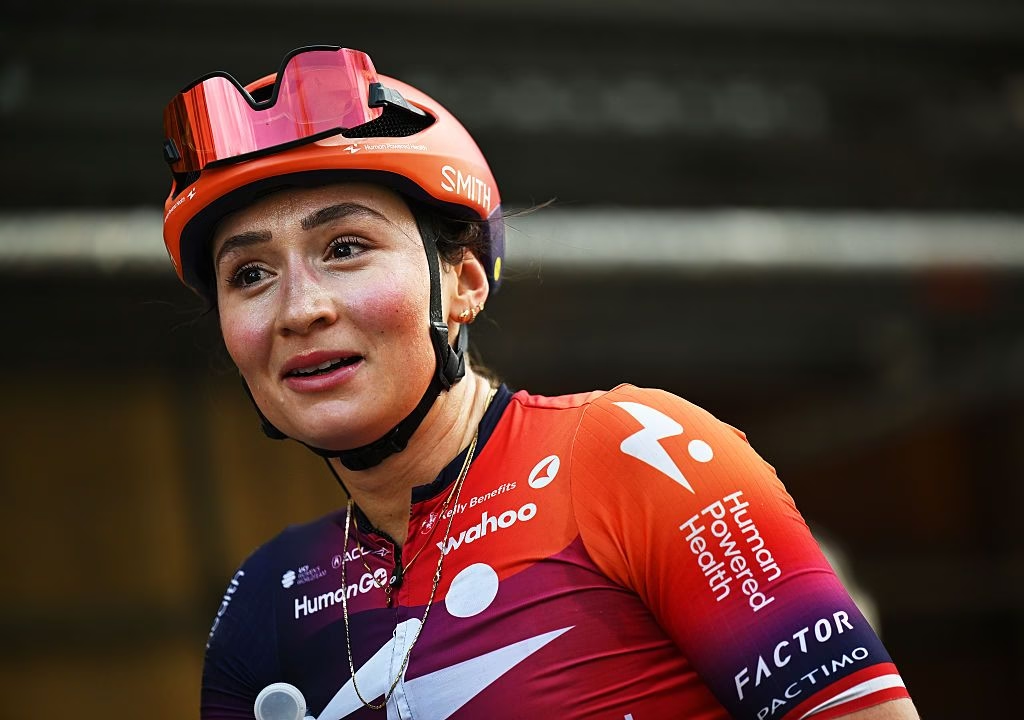
Kathrin Schweinberger
Kathrin Schweinberger has the strongest recent Tour de Pologne Women GC result among the returning contenders.
She finished third overall in 2025, eight seconds behind Linda Zanetti and 21 seconds behind Consonni. Schweinberger did not need one decisive stage victory to reach the podium. Instead, she remained consistently close to the front and avoided the mistakes that can quickly remove a rider from contention in a short race.
Her performance is covered in the report from the final stage of the 2025 Tour de Pologne Women.
Schweinberger also finished fourth at Dwars door de Westhoek in June. The race split through an aggressive breakaway rather than finishing in the expected large sprint, but she still made the decisive selection.
Human Powered Health bring several riders capable of supporting a GC campaign. Silvia Zanardi, Maggie Coles-Lyster and Wiktoria Pikulik provide sprint depth, while Katia Ragusa can contribute when the terrain becomes more selective.
Another podium would not be a surprise. Schweinberger’s challenge is converting consistency into enough bonus seconds to beat riders with greater outright speed.
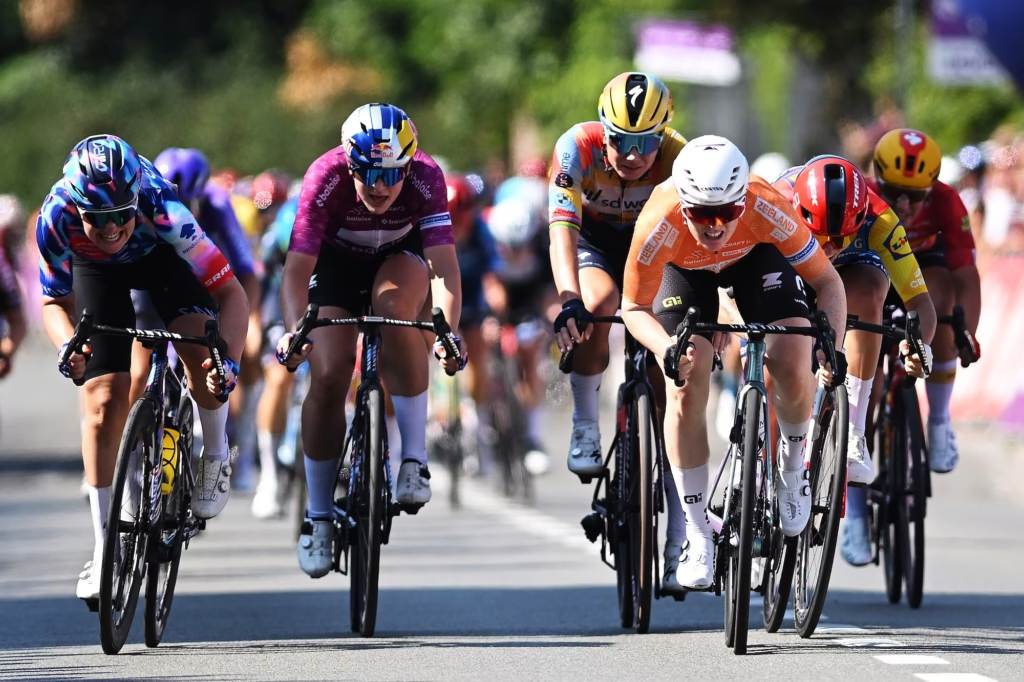
Maike van der Duin
Maike van der Duin arrives with encouraging form after a disrupted period.
The Canyon SRAM rider finished third on stage 2 of the Baloise Ladies Tour, behind Charlotte Kool and Nienke Veenhoven.
That podium was important because Van der Duin has dealt with illness, injury and interrupted racing across the previous year. It showed that her acceleration and positioning are returning at the right point of the season.
Canyon SRAM will need to decide how aggressively to pursue the overall. Van der Duin should be protected for stage 2, while Tiffany Cromwell, Maria Martins and Wilma Aintila give the team useful experience and support.
The deciding question is whether she can survive stage 3. Van der Duin is more resilient than a pure sprinter, but Kopecky, Lach and UAE Team ADQ are likely to test her before the finish in Lublin.
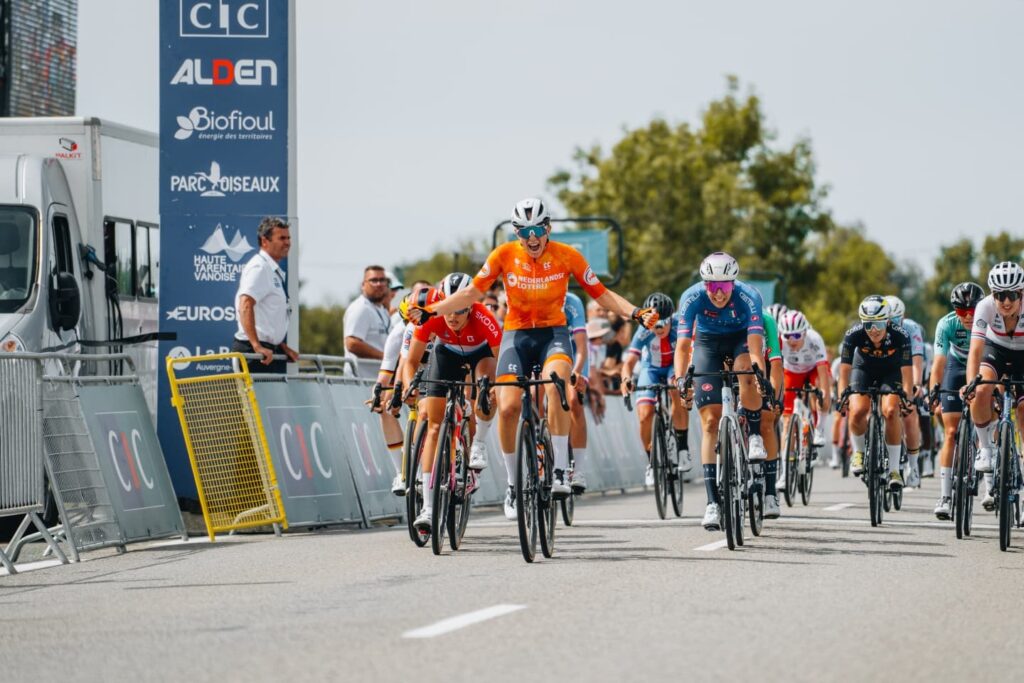
Scarlett Souren
Scarlett Souren’s case is built around proven Tour de Pologne Women performance.
She finished second overall in 2024 and won the final stage in Kazimierz Dolny. That edition contained a short opening time trial and a different route, but it still demonstrated her ability to remain competitive across three days and finish strongly after rolling terrain.
Her 2025 return was less successful, but the 2026 route again gives her opportunities. Stage 3 in particular resembles the kind of race where Souren can survive the selection and sprint from a smaller group.
VolkerWessels also bring Lonneke Uneken, who finished second at Dwars door de Westhoek and third at the Argenta Classic.
That gives the team another fast option and prevents Souren from carrying the full responsibility for every stage result.
Souren is not among the first favourites, but few riders on the start list have stronger evidence from this specific race.
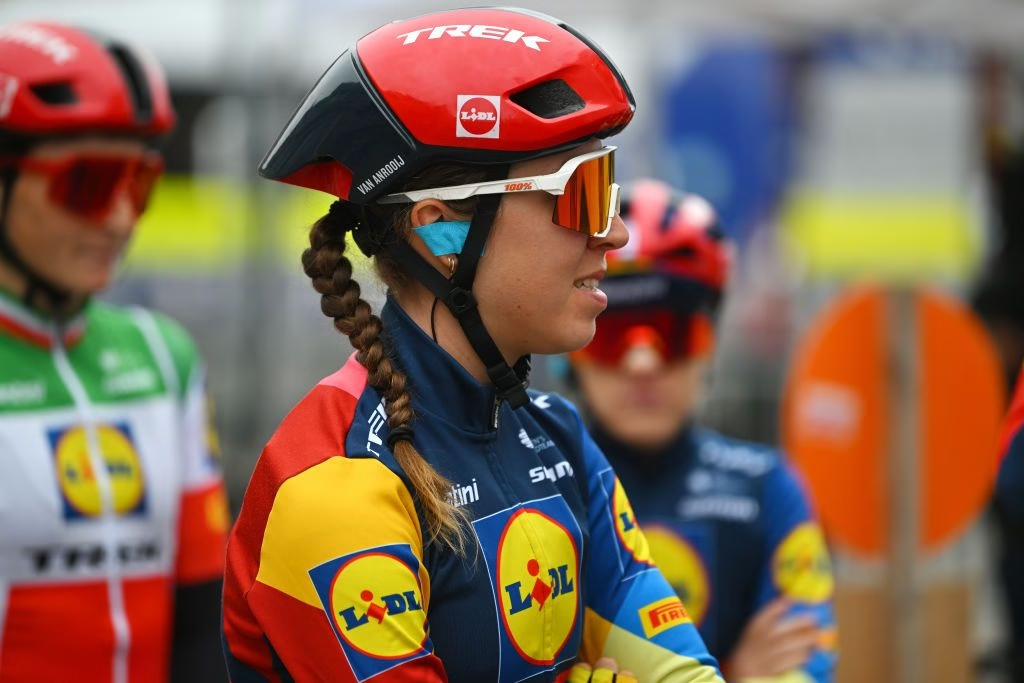 Photo Credit: Getty
Other riders who could enter the GC battle
Shirin van Anrooij gives Lidl-Trek an alternative if Balsamo is distanced. She can follow attacks, contribute to making stage 3 harder and potentially finish from a reduced group.
Blanka Vas would ordinarily be one of the strongest route matches in the race. Her punch, sprint and climbing resilience suit all three stages, although her role may depend on her condition and SD Worx-Protime’s wider priorities.
Femke Gerritse finished second behind Lach at Festival Elsy Jacobs and provides another SD Worx-Protime rider capable of initiating or following attacks.
Pfeiffer Georgi is well suited to a selective stage 3 and should be Team Picnic PostNL’s strongest option if the race moves away from the pure sprinters.
Eleonora Ciabocco offers Picnic PostNL a younger and more climbing-oriented alternative if the final stage proves harder than expected.
Clara Copponi brings another sprint option for Lidl-Trek and could become relevant to the general classification if she collects bonuses while rival teams focus on Balsamo.
Lonneke Uneken has strong recent results and could become VolkerWessels’ leading option if the opening stages are decided through sprints.
Wiktoria Pikulik will be one of the strongest Polish sprint options and should be prominent on stage 2.
Rasa Leleivyte, Chiara Reghini, Linda Riedmann and Kaja Rysz could benefit if stage 3 creates a more substantial selection than expected.
The tactical problem facing SD Worx-Protime
SD Worx-Protime clearly have the strongest individual line-up, but that does not guarantee a simple race.
Wiebes gives them the fastest sprint. Kopecky gives them the most complete GC rider. Lach and Vas can attack, while Gerritse can enter moves that other teams may not immediately want to chase.
That strength creates control, but it can also create hesitation. If Venturelli, Swinkels, Van Anrooij or Souren attacks, rival teams may look towards SD Worx-Protime to respond. The team must then decide whether the move threatens Wiebes, Kopecky or Lach.
UAE Team ADQ are particularly well equipped to exploit that uncertainty. They can place one rider in a move while keeping several alternatives behind. Lidl-Trek have a similar, if slightly less flexible, option through Balsamo, Van Anrooij and Vanpachtenbeke.
The race may ultimately be decided by which team is willing to spend energy first.
How the Tour de Pologne Women 2026 could be won
The most obvious route to victory is through bonus seconds.
Wiebes, Balsamo and Van der Duin will want stages 1 and 2 to remain controlled. Kopecky can follow that strategy while retaining the option to attack on stage 3.
Lach, Swinkels, Gasparrini, Venturelli and Georgi need the final day to become more aggressive. Schweinberger and Souren sit somewhere between those two groups. They can collect strong stage placings, but they may also need to follow the right attack if the race begins to split.
The short format makes every decision more important. There is no fourth or fifth stage on which to repair a mistake. A missed split, poorly timed chase or lost position before a bonus sprint could decide the final classification.
Kopecky has the best combination of both winning models demonstrated by the previous editions. She can collect seconds in the finishes like Consonni, but she can also create or follow the decisive move as Molenaar did.
Tour de Pologne Women 2026 race preview FAQs
When is the Tour de Pologne Women 2026?
The Tour de Pologne Women 2026 takes place from Friday 24 July to Sunday 26 July.
How many stages are in the 2026 Tour de Pologne Women?
The race contains three road stages. There is no individual or team time trial.
Who is the favourite to win the Tour de Pologne Women 2026?
Lotte Kopecky is the leading favourite because she combines sprint speed, climbing resilience, positioning and the ability to attack. Elisa Balsamo, Lorena Wiebes and Marta Lach are among her strongest challengers.
Which stage is most likely to decide the general classification?
Stage 3 from Janowiec to Lublin is the most likely decisive stage. It is short enough to encourage aggressive racing and contains more climbing than the first two days.
Can a sprinter win the Tour de Pologne Women?
Yes. Chiara Consonni won the 2025 edition after taking stages 1 and 3 and using bonus seconds to build her overall advantage. Wiebes and Balsamo can follow a similar strategy in 2026.
Is Tour de Pologne Women part of the Women’s WorldTour?
No. The 2026 Tour de Pologne Women is a UCI Women’s ProSeries race, one level below the Women’s WorldTour.

