
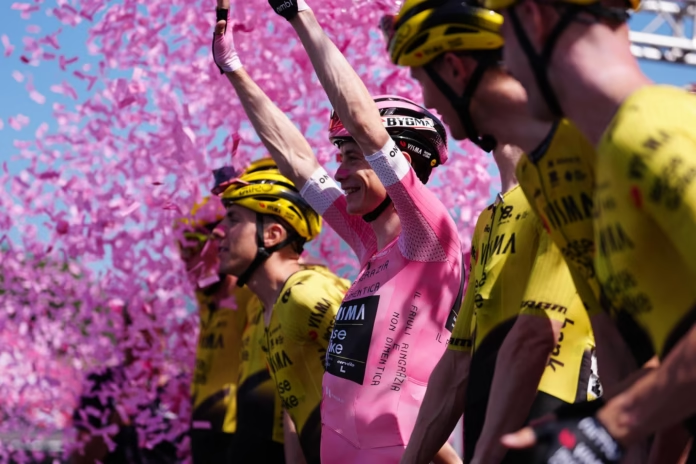
Giro d’Italia 2026 stage 21 brings the race to Rome for its final day, with a 131km route from Roma to Roma on Sunday, 31st May. After three weeks that began in Bulgaria, crossed southern Italy, climbed through the Alps and finished its GC battle in the high mountains, the Giro ends with a largely celebratory stage before one final sprint in the capital.
Jonas Vingegaard starts the final stage with the maglia rosa all but secured after winning stage 20 on Piancavallo. His fifth stage win of the race extended his lead over Felix Gall to 5:22, leaving only a crash or major incident between him and overall victory. Gall is set to finish second, with Jai Hindley third after a strong final mountain block moved him onto the podium.
The GC race may be effectively settled, but the final stage still has a clear sporting purpose. Rome gives the sprinters one last chance, Paul Magnier has the maglia ciclamino to defend and the peloton will still need to handle a technical city circuit before the Giro reaches its final finish line.
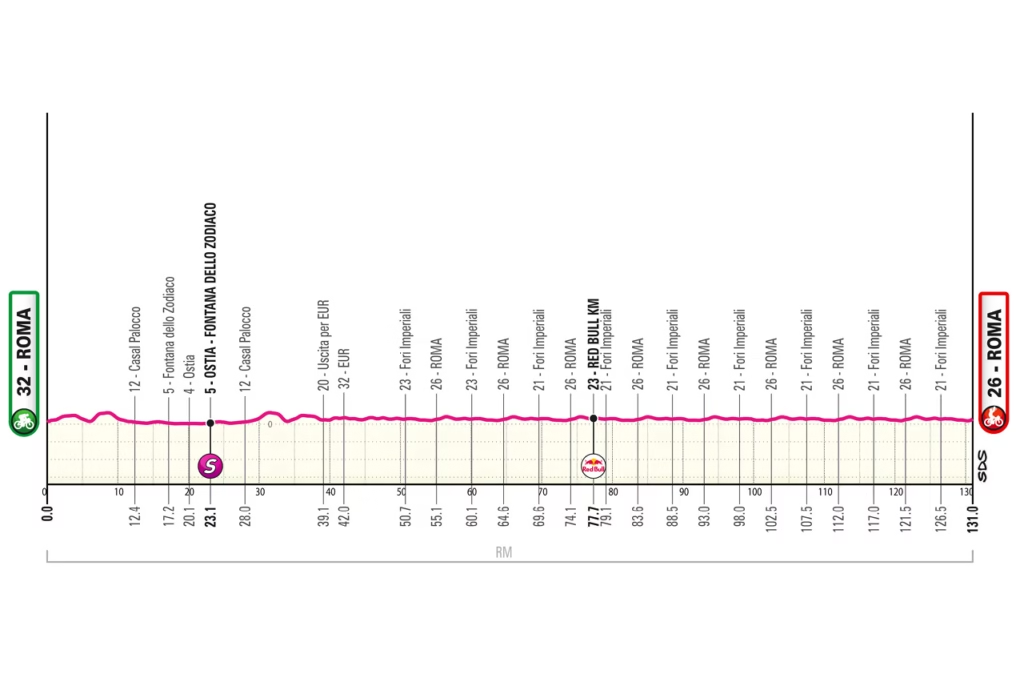
Giro d’Italia 2026 stage 21 route
Stage 21 is a Rome circuit stage, but it is not only a short parade around the city centre. The route begins in Rome-EUR, heads out towards the coast at Ostia, then returns to the capital before the riders enter the final circuit.
The stage covers 131km with around 500 metres of elevation gain. That makes it one of the easiest stages of the race on paper, especially compared with the brutal Dolomite and Piancavallo days that came immediately before it. The first part should be controlled, ceremonial and relatively calm, with the usual final-day photos, jersey celebrations and relaxed early pace.
The tone changes once the race reaches the finishing circuit. The riders will cover a 9.5km circuit eight times inside Rome, using wide city roads but also facing central reservations, changes of direction, short undulations and technical corners. It is not a mountain stage, but it is not a completely neutral finishing circuit either.
The final kilometres include only slight changes of direction, but the last kilometre rises at around 5% midway through it. The finishing straight is 350 metres long and eight metres wide, which should give the sprinters room, but the drag before the line could make timing more important than on a completely flat boulevard finish.
For the full race context, ProCyclingUK’s Giro d’Italia 2026 full route guide breaks down how the race reached its final day in Rome.
What’s on offer on stage 21?
- Stage: Stage 21
- Date: Sunday, 31st May
- Route: Roma to Roma
- Distance: 131km
- Stage type: Flat / final circuit
- Elevation gain: around 500 metres
- Key feature: eight laps of a 9.5km circuit in Rome
- Stage start: around 14:40 BST
- Expected finish: around 17:45 BST
- UK live coverage: TNT Sports and HBO Max
Vingegaard’s Giro is almost complete
The final stage should be the day when Vingegaard formally completes his Giro d’Italia victory. He has controlled the race since taking the maglia rosa in the second half of the Giro, then removed almost all remaining doubt with his stage 20 win on Piancavallo.
That performance was another reminder of the scale of Team Visma | Lease a Bike’s race. Vingegaard won again, Sepp Kuss had already taken stage 19, and the team repeatedly controlled the mountain stages through depth as well as leadership. The Giro has become a display of collective strength around an outstanding leader.
With the final day expected to end in a sprint, Vingegaard’s task is simple: stay upright, avoid unnecessary stress and reach the finish in Rome. The pink jersey is not normally attacked on the final stage, and with a lead of more than five minutes, the overall race is effectively decided.
What stage 20 changed before Rome
Stage 20 settled the final mountain questions. Vingegaard won on Piancavallo ahead of Gall and Hindley, stretching his overall lead and giving himself a commanding margin before the ceremonial final day.
Gall strengthened his grip on second overall, while Hindley confirmed his podium place after moving ahead of Thymen Arensman in the previous mountain stage. Derek Gee remains one of the strongest stories of the final week after climbing into the top five, while Afonso Eulálio is set to complete the Giro in the young rider jersey.
Giulio Ciccone also did enough to secure the mountains classification after his huge stage 19 points haul and further work on Piancavallo. That leaves Rome mostly about celebration, sprinting and avoiding last-day chaos.
For the previous mountain stage build-up, ProCyclingUK’s Giro d’Italia 2026 stage 20 preview looked at why Piancavallo was the final serious GC test of the race.
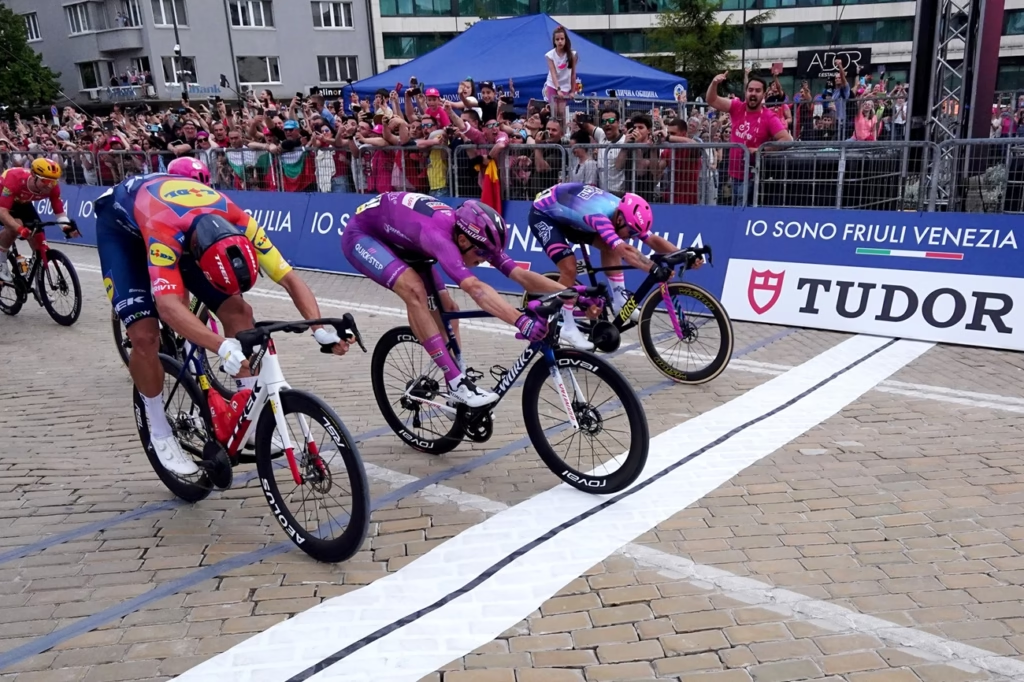 Photo Credit: RCS
Will stage 21 end in a sprint?
A sprint is the obvious outcome. Final Giro stages are usually controlled by the sprinters’ teams once the early ceremonial section is complete, and this route gives the fast finishers one more proper opportunity after a brutally hard final week.
The circuit adds a little uncertainty. Eight laps in Rome mean repeated positioning battles, corners, road furniture and the constant need to stay near the front. A team that becomes disorganised could lose the sprint before the final straight, especially if the pace rises on the slight drag inside the final kilometre.
Still, the sprinters’ teams should have enough motivation to control the stage. Many riders have survived three weeks with this kind of finish in mind, and there are few reasons for the GC teams to chase or disrupt the day. If the peloton stays calm, the Giro should end with a bunch sprint.
Points classification: Magnier’s final chance to finish in style
Paul Magnier starts the final day in control of the points classification. His sprinting consistency across the race, combined with Jhonatan Narváez’s withdrawal, has left him in a strong position to take the maglia ciclamino to Rome.
Stage 21 is also a chance for him to add one more stage win. A Rome sprint, after three weeks of racing, often rewards more than pure top speed. Positioning, freshness and nerve all come into it. Magnier has already shown that he can handle the pressure of this Giro, and the final stage gives him a high-profile platform to close the race properly.
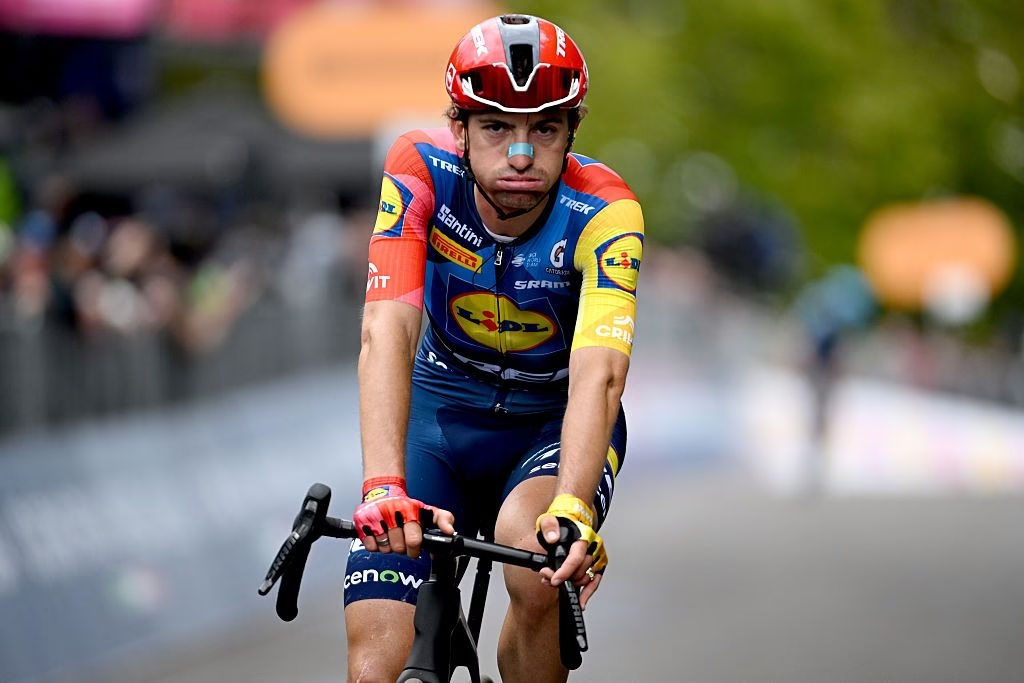
Jonathan Milan is the other obvious name in the sprint conversation. He has the power for a long, fast finish, and the slight rise inside the final kilometre should not hurt him if he is placed well. The key question is whether Lidl-Trek can control the final laps and deliver him cleanly into the last 350 metres.
Riders to watch on Giro d’Italia stage 21
Paul Magnier is the leading sprint name after a race where he has been central to the points classification. If Soudal Quick-Step can keep him near the front through the final circuit, he has the speed to finish the Giro with another victory.
Jonathan Milan should be one of the most dangerous challengers. The final straight is wide enough for a powerful sprinter to open up properly, and the slight uphill drag inside the last kilometre could suit his strength if he launches from a good position.
Jasper Stuyven offers Soudal Quick-Step another strong option if the final becomes more chaotic or if the sprint is launched from further out. His experience and positioning could be valuable on a city circuit.
Guillermo Thomas Silva has been present in the points classification and could be a factor if the sprint opens up behind the biggest favourites. A final-stage sprint can reward riders who still have legs after the mountains, not only those with the biggest names.
Axel Huens is another rider to keep in mind if the finale becomes messy. Rome’s finishing circuit should still favour the main sprint trains, but a disrupted lead-out could give riders outside the obvious favourites a chance to place highly.
Jonas Vingegaard will not be chasing the stage, but he will be the focus of the day. His race is about staying safe, crossing the line and completing what has become a dominant Giro victory.
Could the breakaway win in Rome?
A breakaway win is unlikely. The final stage normally gives the sprinters’ teams a clear target, and the route does not contain enough climbing to make control especially difficult. The opening section towards Ostia and back may allow an early move to form, but the finishing circuit gives the peloton plenty of time to organise the chase.
The only real chance for attackers would be if the sprint teams misjudge the circuit, hesitate too long or become disrupted by the technical sections. Even then, the wide roads and repeated laps should make it difficult for a small group to stay away.
More realistically, any breakaway will be part of the final-day spectacle before being brought back for the sprint. The Giro’s last real tactical and climbing uncertainty has already passed. Rome should belong to the sprinters.
Key tactical question: who controls the final circuit?
The tactical battle will be about control rather than long-range attacks. Soudal Quick-Step, Lidl-Trek and the other sprint teams will need to keep their lead-outs intact through the laps, while GC teams will want to keep their leaders out of trouble without wasting too much energy at the front.
The final circuit’s central reservations and technical corners make positioning important. It may be wide enough for a sprint, but riders still need to be in the right place before the last kilometre. If a team drops too far back, the slight rise and short finishing straight may leave too little time to recover.
The last kilometre is also not completely straightforward. The road rises midway through it at around 5%, which could tempt some riders to go early. That makes timing crucial. A sprinter who opens too soon may fade before the line, while anyone waiting too long could run out of road on the 350-metre finishing straight.
-
 Photo Credit: Getty

Giro d’Italia 2026 stage 21 prediction
Stage 21 should end in a bunch sprint, and the strongest case belongs to the rider who has made the points classification his own. Magnier has the form, the confidence and the motivation to finish the Giro with both the maglia ciclamino and another stage win.
Prediction: Paul Magnier
Jonathan Milan is the obvious danger, especially if the finish becomes a power sprint, but Magnier has repeatedly shown the speed and timing needed in this race. If Soudal Quick-Step guide him cleanly through the final circuit, he is the pick to win in Rome.
How to watch Giro d’Italia 2026 stage 21 in the UK
UK viewers can watch Giro d’Italia 2026 stage 21 live on TNT Sports and HBO Max. The stage is scheduled to start at around 14:40 BST, with the finish expected at around 17:45 BST.
For the full broadcast details across the final weekend, ProCyclingUK’s how to watch Giro d’Italia 2026 in the UK guide explains the TV and streaming options for British viewers.
Giro d’Italia 2026 stage 21 verdict
Stage 21 should be part celebration, part sprint showdown. Vingegaard is set to ride into Rome as Giro d’Italia champion, Team Visma | Lease a Bike will have time to enjoy the final kilometres, and the GC contenders should mainly be focused on avoiding unnecessary risk.
The racing edge comes from the sprinters. Magnier can seal the points classification in style, Milan has one last chance to beat him, and the Rome circuit gives the final finish enough tension to avoid feeling like a procession.
After the mountains decided the Giro, Rome should provide the final image: pink jersey celebrations, a fast circuit finish and one last sprint before the 2026 Giro d’Italia closes in the capital.

