
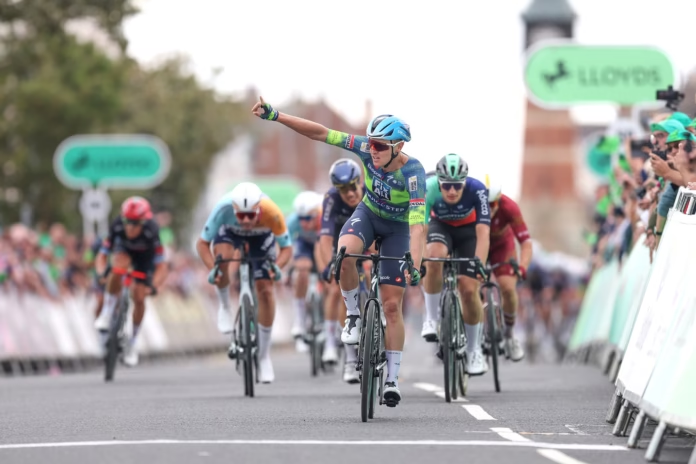
Tim Merlier won stage 2 of the 2026 Lloyds Tour of Britain Men, proving too fast for Olav Kooij in a bunch sprint finish in Skegness.
The Soudal Quick-Step sprinter converted the race’s first clear sprint opportunity after the opening day’s selective Michaelgate finish in Lincoln, beating Kooij of Decathlon CMA CGM and Sam Bennett of Pinarello-Q36.5 Pro Cycling Team.
Matteo Moschetti finished fourth, also for Pinarello-Q36.5, with Ethan Vernon fifth for NSN Cycling Team. Riley Pickrell, Rick Pluimers, Matteo Trentin, Jake Stewart and Brody McDonald completed the top 10.
Lewis Askey finished safely in the peloton and retained the overall lead after his stage 1 victory in Lincoln, where he had attacked on the final ascent of Michaelgate. Stage 2 was a very different test, but it still carried enough wind, exposure and late tension to make the sprinters earn their finish.
A day built for the sprinters
Stage 2 took the Tour of Britain from Boston to Skegness, giving the fast men their first obvious opportunity of the race.
After the steep cobbles of Michaelgate had decided stage 1, this was a day with a much clearer sprint profile. The route crossed the flat roads of Lincolnshire and headed towards the coast, leaving the wind as the main threat to a bunch finish.
That shaped the race from the start. The teams with sprinters knew this was not a day to miss, but they also had to stay alert. On exposed roads, especially in a British stage race, control is never only about the breakaway. It is also about positioning, avoiding splits and making sure a sudden change in wind direction does not turn a sprint stage into an echelon stage.
For Merlier and Soudal Quick-Step, the task was clear. Keep the race together, survive any wind stress, and make sure the Belgian was still in position when the road opened up into Skegness.
Askey’s team start life in yellow
NSN Cycling Team began the day defending the race lead through Askey.
The British rider’s stage 1 win had given the team the first leader’s jersey of the race, but stage 2 was not a day where they needed to control everything alone. The sprint teams had more reason to take responsibility, and that allowed Askey’s team to focus on keeping him safe rather than chasing the stage.
That did not make the day simple. Holding the race lead on a flat, exposed stage brings its own stress. The leader has to stay high in the bunch, avoid crashes, avoid crosswind splits and make sure no late move gains enough time to create a surprise.
Askey came through that test cleanly. After winning on a climb, his next job was to survive a day built for sprinters. He did exactly that.
Sprint teams keep the race under watch
The race settled into the expected pattern, with the sprint teams keeping the breakaway under control.
There was no appetite to allow the early move a serious advantage. Soudal Quick-Step had Merlier, Decathlon CMA CGM had Kooij, Pinarello-Q36.5 had Bennett and Moschetti, and NSN Cycling Team had Vernon among their options. With that many teams carrying sprint ambitions, the breakaway was always going to need more than cooperation to survive.
The chase was not frantic, but it was consistent. The bunch kept the gap manageable, allowing the escape to give the stage shape without letting it become a proper threat.
That was the main difference from stage 1. In Lincoln, the repeated climbs created a front selection and took the pure sprinters out of the picture. In Lincolnshire, the terrain gave the peloton time to organise. The race was still tense, but the logic was always pulling it towards a bunch sprint.
Wind threatens but does not split the race
The biggest danger was the wind.
On flat roads towards the coast, the peloton spent long periods lined out and alert to the possibility of echelons. Several teams moved up whenever the race hit exposed sections, and the pace lifted enough to keep the bunch nervous.
But the decisive split never came. There were moments where the race looked stretched, and the positioning battle was constant, but no team managed to force the kind of separation that would have changed the stage completely.
That was important for the sprinters. A stage like this can look straightforward afterwards if it finishes in a bunch sprint, but much of the work is done before the final kilometres. The favourites had to stay near the front, avoid wasting energy, and make sure they were not caught behind a split at the wrong moment.
Merlier’s team handled that part well. Soudal Quick-Step were never forced into panic, and the race continued to move towards the finish they wanted.
Late attack briefly disrupts the plan
The sprint teams still had to deal with a late attack before the finish.
Florian Vermeersch made the most dangerous move in the closing kilometres, using his power to open a gap and force the peloton to react. It was exactly the kind of attack that can complicate a sprint stage. The breakaway had been controlled, the bunch was starting to organise, and then a strong rouleur tried to exploit the moment before the lead-out trains were fully set.
Vermeersch’s move stretched the race and briefly unsettled the sprint teams. Soudal Quick-Step could not afford to let him go too far, especially with a rider of his strength and time-trialling ability. Decathlon CMA CGM and the other sprint teams also had no reason to gamble.
The catch came in time, but it removed any sense that the finale was simply a procession into Skegness. The sprinters still had to reassemble quickly after the disruption.
Soudal Quick-Step deliver Merlier
Once Vermeersch was caught, the sprint trains took over.
Soudal Quick-Step moved Merlier into position and gave him the platform he needed. The Belgian does not need much space when he is delivered cleanly, and the final run into Skegness gave him the chance to use his top-end speed.
Kooij was well placed and launched a strong sprint for Decathlon CMA CGM, but Merlier had the faster finish. He opened up, held his line and had enough to beat the Dutchman to the line.
Bennett took third, a useful result for Pinarello-Q36.5 on a day where the team placed two riders inside the top four. Moschetti followed in fourth, while Vernon gave NSN Cycling Team fifth place to go with Askey’s continued race lead.
For Soudal Quick-Step, it was the stage they had targeted and the finish they had worked for.
Merlier takes his chance
Merlier’s victory was exactly the kind of result expected from a sprinter in his form.
The Belgian has built his reputation on being able to finish off the days that his team controls. Stage 2 suited him, but that also brought pressure. When a route looks this good for a pure sprinter, anything less than a win feels like a missed opportunity.
He avoided that problem in Skegness. Soudal Quick-Step kept the race under control, brought back the late danger and delivered him to the final sprint. Merlier then did the rest.
It was not a chaotic reduced sprint or a climb-heavy finish. It was a proper bunch sprint, decided by positioning, timing and raw speed. Merlier was the best rider in that equation.

Kooij and Bennett settle for the podium
Kooij’s second place confirmed that Decathlon CMA CGM had read the stage correctly, even if they could not finish it off.
The Dutchman was one of the most obvious challengers to Merlier before the start and was exactly where he needed to be in the finale. He simply could not come past once the sprint opened.
Bennett’s third place was also a positive result. The Irish sprinter was beaten by two of the fastest riders in the field but still put himself on the podium, while Moschetti’s fourth place gave Pinarello-Q36.5 another strong finish.
The top 10 reflected the nature of the day. Vernon, Pickrell, Stewart and McDonald all made it into the front group of sprinters, while Pluimers and Trentin showed the value of positioning and experience in a fast finish.
Askey keeps control of the race lead
Askey remains in the leader’s jersey after a stage that was more about avoiding trouble than gaining time.
The stage winner from Lincoln did not need to chase bonuses or contest the sprint. His job was to stay safe, finish in the bunch and keep the race lead ahead of the next phase of the Tour of Britain.
That is exactly what happened. The general classification remains shaped by the time gaps created on Michaelgate, where Askey, Filippo Ganna, Tim Wellens and the other strongmen gained ground on the pure sprinters.
Stage 2 did not undo that. It gave the sprinters their day, but it left Askey in yellow and kept the broader race picture intact.
A sprint stage that did its job
Stage 2 gave the Tour of Britain the sprint finish it had not produced on the opening day.
The race was not dramatic in the same way as Lincoln, but it still had a clear shape. The breakaway forced a chase, the wind kept the bunch alert, Vermeersch’s late attack tested the sprint teams, and Soudal Quick-Step finished the job through Merlier.
That made it a successful day for the Belgian team and a useful one for Askey. Merlier took the stage, Kooij and Bennett confirmed themselves as the main sprint rivals, and NSN Cycling Team kept the leader’s jersey without unnecessary stress.
After one day for the Classics-style riders and one day for the pure sprinters, the Tour of Britain already has two different kinds of winner.
Lloyds Tour of Britain Men 2026 stage 2 result
| Position | Rider | Team | Time/gap |
|---|---|---|---|
| 1 | Tim Merlier | Soudal Quick-Step | 3:53:55 |
| 2 | Olav Kooij | Decathlon CMA CGM Team | same time |
| 3 | Sam Bennett | Pinarello-Q36.5 Pro Cycling Team | same time |
| 4 | Matteo Moschetti | Pinarello-Q36.5 Pro Cycling Team | same time |
| 5 | Ethan Vernon | NSN Cycling Team | same time |
| 6 | Riley Pickrell | Modern Adventure Pro Cycling | same time |
| 7 | Rick Pluimers | Tudor Pro Cycling Team | same time |
| 8 | Matteo Trentin | Tudor Pro Cycling Team | same time |
| 9 | Jake Stewart | NSN Cycling Team | same time |
| 10 | Brody McDonald | Modern Adventure Pro Cycling | same time |
Main photo credit: Getty

