
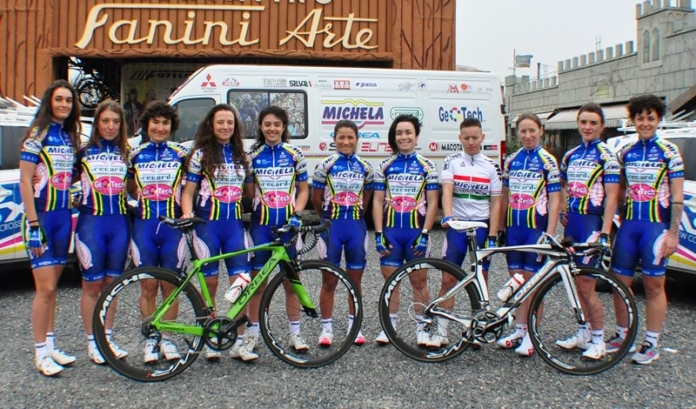
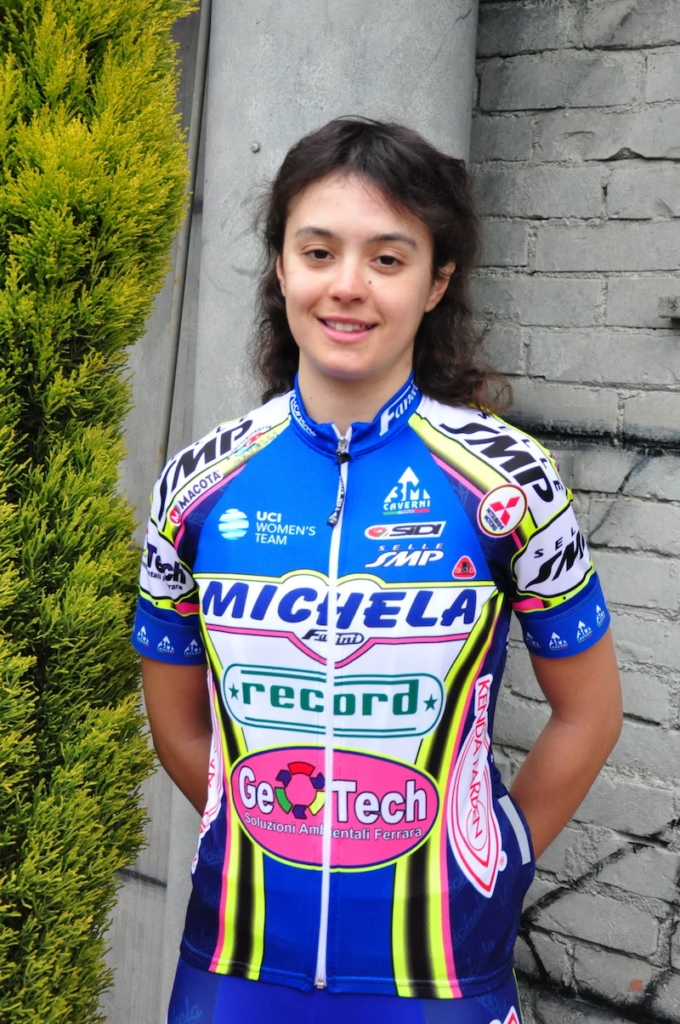
S.C. Michela Fanini occupied a distinctive place in Italian women’s cycling for almost two decades. Founded in 1999 and active through 2018, the team was built around something more personal than a conventional sponsor cycle. It carried the name of Michela Fanini, the 1994 Giro d’Italia Femminile winner who died in a car crash later that year at the age of 21.
That origin shaped the team’s identity from the beginning. Brunello Fanini, Michela’s father, had already been deeply involved in women’s cycling, and the new squad became part sporting project, part memorial and part continuation of an Italian racing culture centred on Lucca and Tuscany. The result was a team that rarely matched the budgets of the biggest international structures but remained visible for twenty seasons.
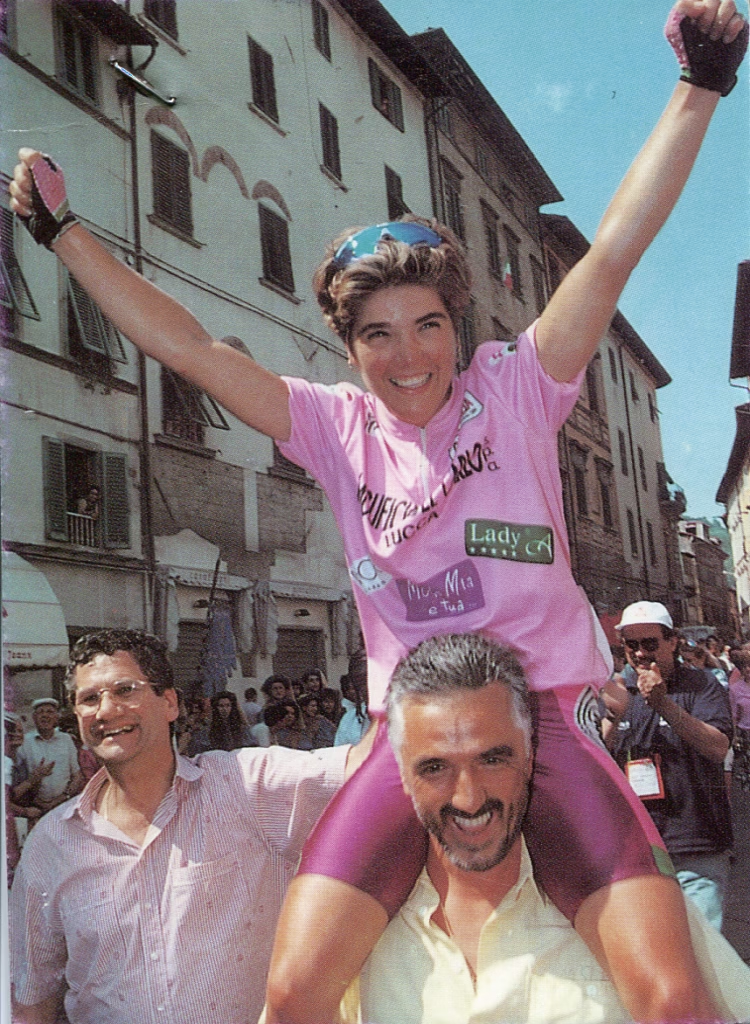
The team grew from Michela Fanini’s legacy
Michela Fanini’s career had been brief but extraordinary. In 1994 she won the Giro d’Italia Femminile, taking the overall victory before her death later that year. Her family’s involvement in women’s cycling did not stop with the tragedy. Instead, the Fanini name became attached to races, teams and development projects that kept her memory present in the sport.
The UCI team that eventually became known simply as S.C. Michela Fanini was established in 1999. Its identity changed with secondary sponsors over the years, but the central name remained. That continuity mattered in a part of cycling where teams regularly disappeared as sponsors changed, especially before the modern Women’s WorldTour era.
The wider context is important. Italian women’s cycling already had a deep domestic calendar, strong stage races and riders capable of winning world titles, but team structures were often fragile. Michela Fanini survived because the project was tied to a family and sporting organisation rather than being dependent on one corporate title sponsor alone.
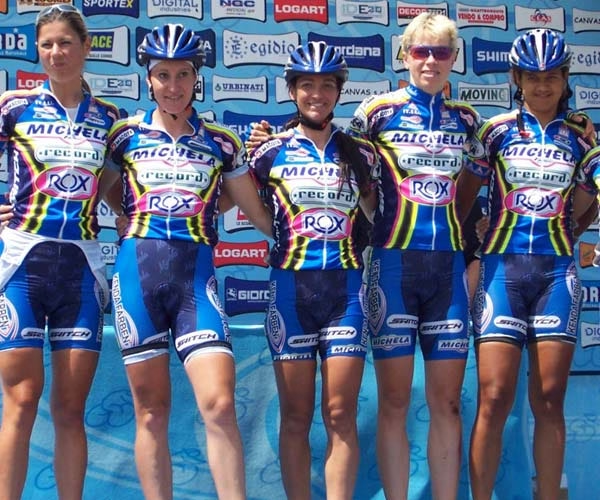
The early 2000s brought the team its strongest international results
The first half of the 2000s was the period when the team made its biggest mark internationally. German sprinter Regina Schleicher won a World Cup round for the squad in 2002, while Edita Pučinskaitė delivered another World Cup victory in 2004. Those results placed Michela Fanini among teams capable of winning at the highest one-day level rather than simply filling the peloton.
Pučinskaitė also won the Trophée d’Or Féminin in 2004, adding a significant stage-race success. Nicole Brändli won Gracia-Orlová that same year, showing that the team could compete across very different types of stage racing. It was a period when experienced international riders and Italian talent could coexist inside the same structure.
That range was typical of women’s teams of the era. A relatively small squad needed riders who could cover several roles because there was less specialisation and less roster depth than on today’s largest teams. Michela Fanini often relied on experienced riders who could race one-day events, stage races and national championships without the luxury of a large support group built around them.
National champions became a recurring part of the team’s identity
One of the clearest patterns across the team’s history was its ability to recruit riders who could win national titles. Monia Baccaille became Italian road champion in 2009 while riding for Michela Fanini, one of the highest-profile domestic results in the team’s later years.
The list extended well beyond Italy. Riders associated with the squad won national championships in Lithuania, Estonia, Mexico, Ukraine, the Czech Republic and elsewhere. Pučinskaitė, Grete Treier, Małgorzata Jasińska and other international riders gave the team a multinational identity even though its base and culture remained distinctly Italian.
Those titles mattered commercially as well as competitively. A national champion brought a distinctive jersey into races and gave a smaller team visibility it might otherwise struggle to obtain. For a project without the marketing budget of a major multinational-backed squad, that visibility had real value.
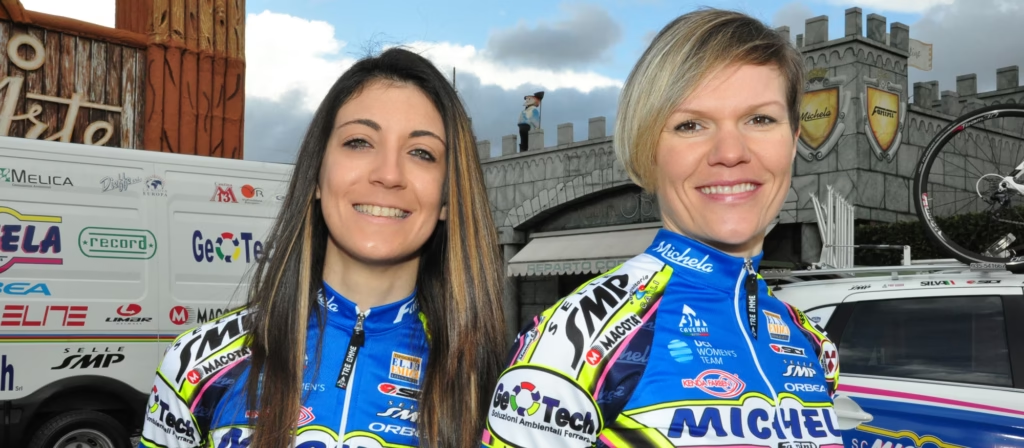
Stage racing remained central after the World Cup successes
As the decade progressed, Michela Fanini continued to find results through stage races rather than relying on one-day wins alone. Grete Treier won the Tour Féminin en Limousin in both 2010 and 2011, giving the team repeated success in a demanding French stage race. Riders such as Jasińska also developed within a programme that gave them freedom to chase general classifications and individual stages.
The Giro d’Italia Women remained especially important for any Italian squad. Michela Fanini’s own victory in 1994 gave the family a unique connection to the race, and the team’s later appearances carried that history with them. ProCyclingUK’s complete history of the Giro d’Italia Women provides the wider context for the race the Fanini name is permanently tied to.
Results were not always spectacular, but remaining present in major stage races mattered during an era when women’s team survival could change from season to season. Michela Fanini gave riders access to an international programme and kept an Italian professional structure on the road when many similarly sized teams disappeared.
The Giro della Toscana created a second strand of the Fanini story
The Fanini organisation was also closely connected to the Giro della Toscana Femminile, officially held in memory of Michela Fanini. It is important to distinguish the race from the team, because they were separate sporting entities, but the shared family connection meant the two histories inevitably overlapped.
The race became one of the established fixtures of the Italian women’s calendar, attracting many of the leading riders of different eras. Its history has also contained controversy. In 2013, a large group of riders refused to start the final stage after concerns about safety and organisational conditions, an episode covered in ProCyclingUK’s look back at the 2013 Giro della Toscana rider strike.
The race nevertheless continued and remains part of the late-season calendar. The 2025 edition, for example, was won overall by Eline Jansen after she also took two stages, another example of the event continuing long after the professional team itself had closed. ProCyclingUK’s 2025 Giro Toscana race recap shows how that part of the Fanini legacy has carried on independently.
The final years became harder as women’s cycling professionalised
The economics of elite women’s cycling changed significantly during Michela Fanini’s final decade. Teams backed by larger bike brands, national programmes and increasingly professional commercial partners raised the level of staffing, equipment and rider support. The introduction of the Women’s WorldTour in 2016 accelerated that process.
For a long-running independent Italian project, competing against those structures became increasingly difficult. Michela Fanini could still recruit promising riders and experienced professionals, but the gap in resources was harder to bridge. Results became less frequent and the team was increasingly positioned as part of the sport’s second tier rather than a squad expected to win major international races.
That should not be confused with irrelevance. Smaller teams remained essential to the functioning of the women’s calendar because they provided race opportunities and professional contracts to riders outside the largest programmes. Michela Fanini’s longevity meant it had already performed that role for years before development pathways became a more formal part of major team structures.
Twenty seasons gave the project unusual continuity
The team stopped after the 2018 season, ending a run that had begun in 1999. Twenty seasons is a substantial lifespan in women’s professional cycling, particularly across a period when sponsor turnover was high and many respected teams survived for only a handful of years.
Its importance therefore extends beyond the biggest wins. Michela Fanini linked several generations of riders, from the World Cup era through to the first years of the Women’s WorldTour. It gave Italian riders a domestic professional home, recruited internationally and maintained a recognisable identity without repeatedly changing the core name of the project.
The strongest seasons produced results that stand on their own: World Cup wins, national titles and stage-race victories. The quieter seasons still contributed by keeping another professional team in the peloton. In a sport where continuity has often been difficult to achieve, that record is part of the team’s significance.
The Michela Fanini name outlasted the team itself
The professional squad is gone, but the Fanini name remains embedded in Italian women’s cycling through the Giro della Toscana and through Michela’s place in the history of the Giro d’Italia Women. That gives the project a legacy different from most defunct teams. It was never only a commercial identity waiting for the next sponsor to replace it.
For riders who passed through the team, the squad provided a platform during a period when professional opportunities were far scarcer than they are now. For Italian cycling, it represented continuity between the 1990s, the World Cup era and the early WorldTour years. Its history is uneven, as the history of any twenty-year team is, but the duration itself tells an important story about how women’s cycling survived and gradually professionalised.

