
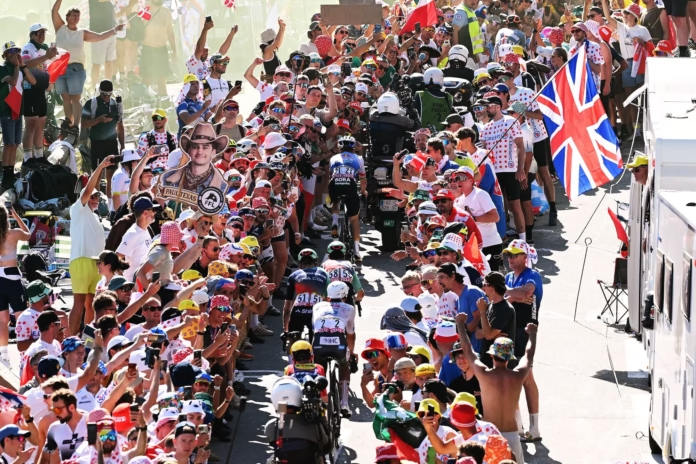
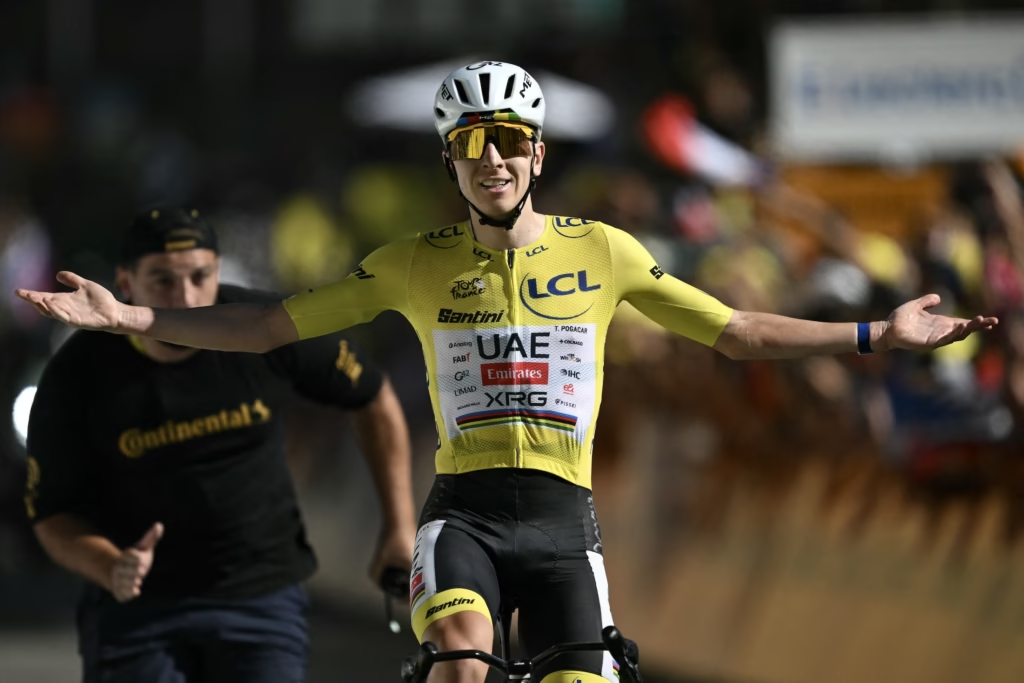
Tadej Pogačar did more than win on Alpe d’Huez on Stage 19 of the 2026 Tour de France. He rode the fastest recorded ascent of cycling’s most famous climb, taking apart a benchmark that had survived since Marco Pantani’s extraordinary performance there in 1995.
Pogačar climbed Alpe d’Huez in approximately 35 minutes and 27 seconds, compared with the widely accepted 36:40 benchmark set by Pantani 31 years earlier. On a like-for-like comparison, that makes Pogačar around 1 minute and 13 seconds faster.
That figure is worth stressing because some post-stage comparisons have claimed an improvement of more than two minutes. Those numbers generally use different start and finish points for the climb. Historical Alpe d’Huez records are unofficial and timings vary slightly between datasets, so comparing the same segment matters.
The underlying point is unchanged. Pogačar did not edge past one of cycling’s most famous climbing records. He removed more than a minute from it while wearing yellow, deep into the third week of the Tour.
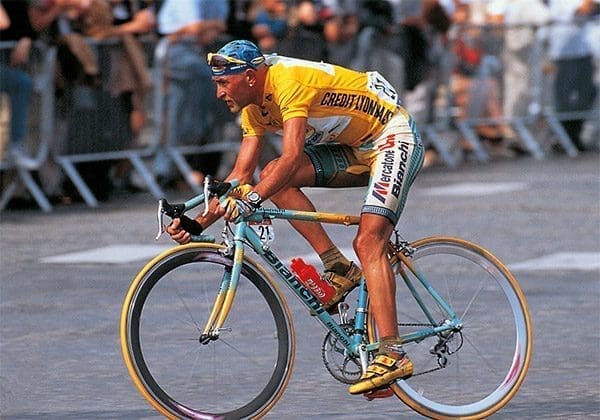
What was Marco Pantani’s Alpe d’Huez record?
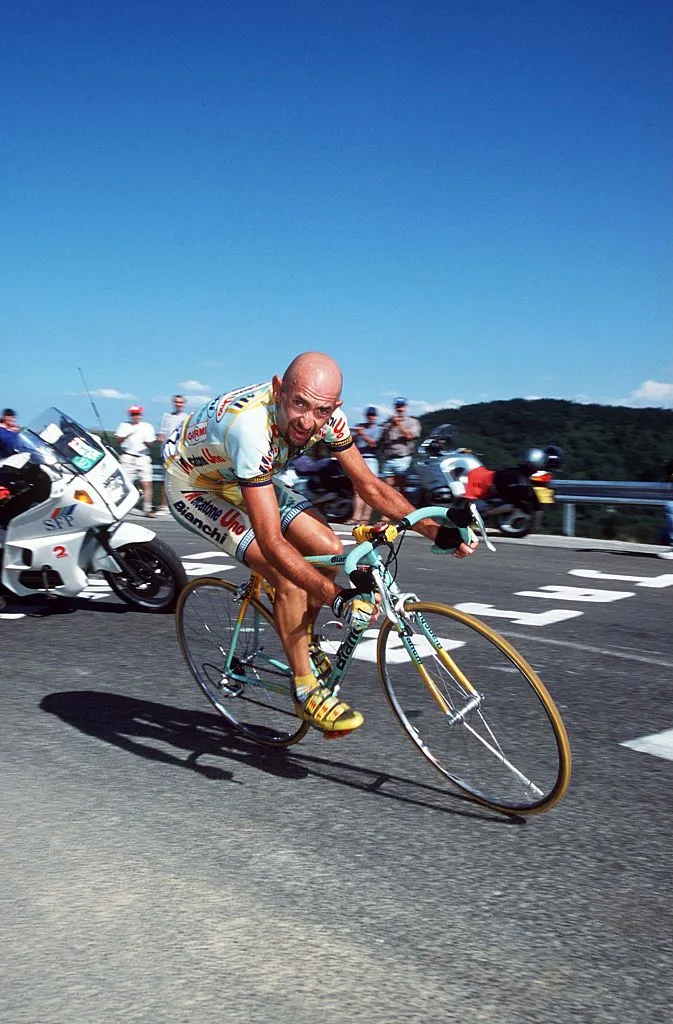
Pantani produced the benchmark during Stage 10 of the 1995 Tour de France, attacking on Alpe d’Huez and climbing through riders from the breakaway before winning alone.
His ascent is generally timed at 36 minutes and 40 seconds for the traditional climb from Bourg-d’Oisans used in modern historical comparisons.
Pantani returned to win on Alpe d’Huez again in 1997 and produced several of the fastest ascents ever associated with the mountain, but his 1995 ride became the standard against which later generations were measured.
For more than three decades, nobody displaced it.
That longevity helped turn the time into part of the Alpe d’Huez mythology. The climb has returned repeatedly to the Tour, equipment and training have advanced dramatically, and several generations of elite climbers have raced over the same 21 hairpins.
Yet Pantani remained at the top of the list until Pogačar arrived on Stage 19.
The wider context of Pantani, Coppi, Hinault, Sastre, Thomas and Pidcock is covered in our 10 greatest Alpe d’Huez moments in Tour de France history.
How fast did Pogačar climb Alpe d’Huez in 2026?
Pogačar’s Stage 19 time was approximately 35:27 for the classic ascent.
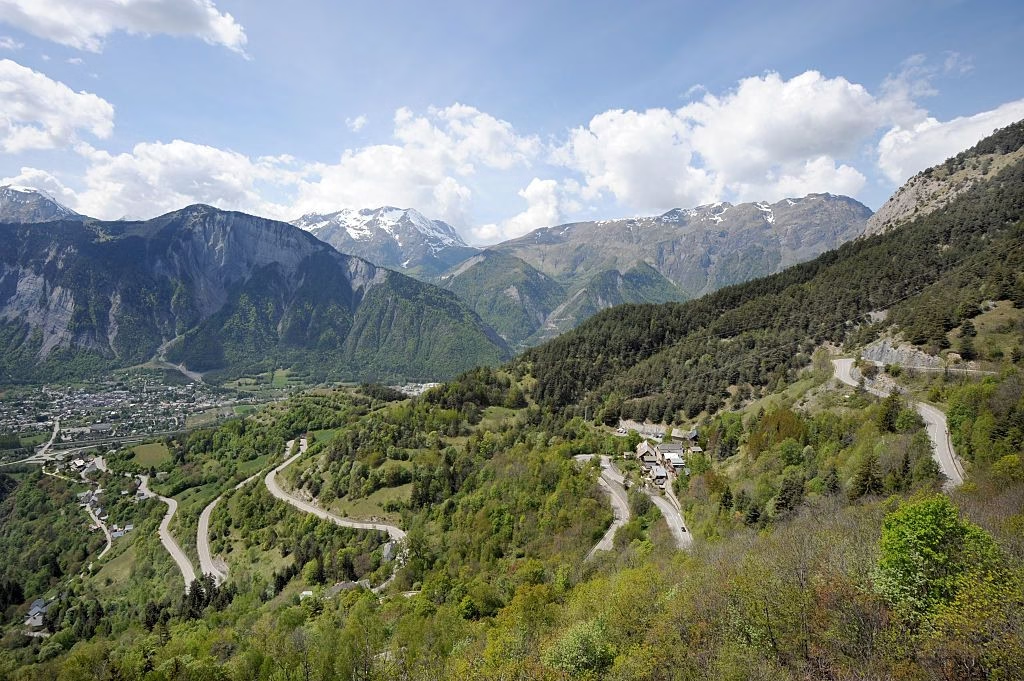
The official 2026 Tour profile lists Alpe d’Huez at 13.7km with an average gradient of 8.1%, rising from Bourg-d’Oisans through its famous 21 bends to the ski resort.
At 35:27, Pogačar averaged a little over 23km/h uphill.
That number is easier to appreciate when placed alongside the gradient. He sustained a speed many recreational cyclists would be happy to average over rolling roads while climbing continuously at more than eight per cent for well over half an hour.
It also came at the end of a 127.9km Tour de France mountain stage after almost three weeks of racing.
The full climb, its pacing challenges and the particularly steep opening kilometres are broken down in our guide to cycling Alpe d’Huez.
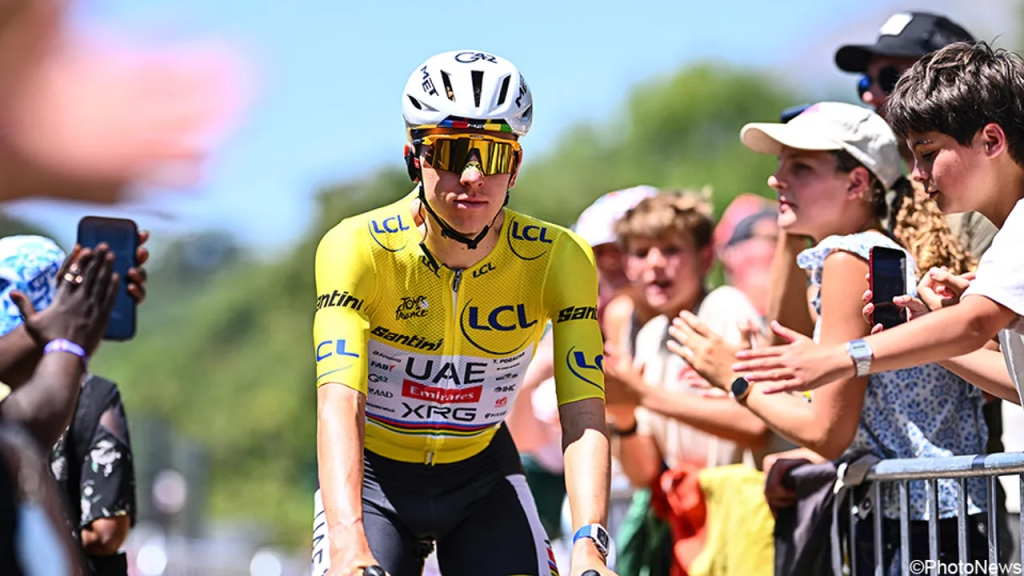
Pogačar attacked almost from the bottom
The stopwatch only tells half of the story.
Pogačar did not sit behind UAE Team Emirates-XRG until the final kilometres and then sprint clear.
He attacked the GC group with around 12km still remaining.
At that point the surviving breakaway riders, including Richard Carapaz, Sepp Kuss and Lenny Martinez, still had roughly three and a half minutes in hand. Pogačar began eating into that advantage almost immediately.
Adam Yates, who had been ahead, briefly helped when Pogačar reached him before the yellow jersey continued alone.
He then caught the remaining riders one after another and eventually passed the leaders to win the stage.
That attacking approach was exactly the possibility we identified before the stage in our Stage 19 preview. The steep opening kilometres of Alpe d’Huez are where Pogačar’s acceleration can cause the most damage, and he chose to use them rather than waiting.
Pogačar beat Pantani by more than a minute
Using the most commonly cited comparable timings, the difference is striking.
| Rider | Year | Alpe d’Huez ascent |
|---|---|---|
| Tadej Pogačar | 2026 | 35:27 |
| Marco Pantani | 1995 | 36:40 |
| Difference | 1:13 |
Seventy-three seconds on a climb lasting less than 37 minutes represents an improvement of roughly 3.3 per cent.
That is a huge margin at this level.
Records on climbs are normally discussed in seconds, particularly once a benchmark has survived for decades. Pogačar instead took more than a minute from Pantani.
The significance is even greater because Alpe d’Huez is not some rarely used ascent with little historical depth. It has been one of the Tour’s defining summit finishes since Fausto Coppi won there in 1952.
Why are there several different Alpe d’Huez record times?
Unlike athletics, professional cycling does not have an official world-record timing system for individual climbs.
There is no permanent start line at the bottom of Alpe d’Huez used in every edition, and historical timing has often been reconstructed from television footage, race data, GPS files and landmarks.
Some timing systems begin slightly earlier in Bourg-d’Oisans. Others begin at the recognised foot of the climb. Finish locations can also vary slightly between Tour editions.
That is why Pogačar’s ride has appeared as approximately 35:24 to 35:27 and why Pantani’s fastest historical ascent can also be shown with slightly different numbers.
The useful comparison is one measured across equivalent sections.
On that basis, Pogačar’s Stage 19 ride is around 1:13 quicker than Pantani’s 1995 benchmark.
The claim that he beat Pantani by more than two minutes should therefore be avoided unless the timing points being compared are clearly explained.
Why Pantani’s record carried so much weight
Pantani’s time survived because it came from one of the fastest climbing periods in Tour history and because almost nobody who followed could get close enough to remove it.
Alpe d’Huez has hosted many of the greatest riders of the last 30 years.
Lance Armstrong raced there during the US Postal era. Alberto Contador, Chris Froome, Nairo Quintana, Geraint Thomas, Jonas Vingegaard and Pogačar himself all climbed it during later Tours.
Tom Pidcock became the youngest Tour stage winner on Alpe d’Huez in 2022, but his victory came from a very different kind of race. Pidcock used his descending to bridge into the breakaway before attacking on the climb rather than attempting to set a historical ascent time from the GC group.
Pantani’s number remained untouched through all of it.
That is why Pogačar’s performance immediately became more than another mountain-stage win.
The circumstances were very different from Pantani in 1995
Pantani was not racing for the yellow jersey when he set the benchmark.
Miguel Induráin was heading towards his fifth consecutive Tour victory, while Pantani had already lost enough time to be given more freedom to race for stages.
That allowed him to treat Alpe d’Huez as an opportunity rather than a GC defence.
Pogačar arrived in 2026 from the opposite position.
He started Stage 19 wearing yellow with a 4:32 lead over Remco Evenepoel and had little tactical reason to attack from near the bottom of Alpe d’Huez. The following Stage 20 was even harder, with the Croix de Fer, Télégraphe, Galibier and Sarenne still to come.
Before the stage, the question was whether Pogačar would even consider spending the energy required to chase victory. Our feature asking whether Pogačar would finally win on Alpe d’Huez noted that defending yellow would have been the more conservative option.
He chose the record-setting one.
Alpe d’Huez had been one of the gaps in Pogačar’s Tour record
Pogačar had raced the traditional Alpe d’Huez ascent before, most notably in 2022, but had never won there.
That absence stood out because of how many other defining Tour stages and climbs he had already conquered.
Eddy Merckx never won on Alpe d’Huez. Jacques Anquetil never did either. Miguel Induráin and Chris Froome also completed their dominant Tour careers without winning at the summit.
Pogačar could easily have joined that group and still remained one of the greatest Tour riders ever.
Instead, his first Alpe d’Huez victory came with the fastest ascent associated with the mountain.
That strengthens the historical argument around a rider now approaching a fifth Tour title. Our wider analysis of whether Pogačar can become the greatest Tour de France rider of all time looks at how his record compares with Merckx, Hinault, Anquetil and Induráin.
What do the estimated power numbers mean?
Public modelling of the climb has placed Pogačar at close to 7 watts per kilogram for approximately 35 minutes.
Those figures need more caution than the stopwatch.
Unless Pogačar publishes his complete power file, any watts-per-kilogram figure is an estimate based on assumptions around body mass, bicycle weight, rolling resistance, aerodynamics, drafting, wind and the exact climb segment.
Small changes to those assumptions alter the result.
The ascent time is the cleaner piece of evidence.
Whatever the exact power number, Pogačar covered the same mountain faster than the benchmark that had survived since 1995.
That alone describes the scale of the performance.
Modern cycling is faster than it was in Pantani’s era
Comparisons between 1995 and 2026 cannot ignore how much professional cycling has changed.
Modern tyres have lower rolling resistance. Clothing, helmets and bikes are more aerodynamic. Nutrition has evolved enormously, particularly the amount of carbohydrate riders can consume during a stage.
Altitude camps, training load, recovery, cooling and pacing are all managed with far greater precision.
Road surfaces have changed too.
Those improvements are part of the reason modern climbing records are increasingly vulnerable.
But they do not make Pogačar’s ride ordinary.
Every other elite rider in the 2026 peloton has access to broadly the same developments.
Pantani’s Alpe d’Huez benchmark still survived until Pogačar took more than a minute from it.
-
 Photo Credit: A.S.O./Gaëtan Flamme

The gap to the rest of the race adds another layer
Historical comparisons are always complicated by equipment, tactics and conditions. The riders around Pogačar provide a cleaner reference.
He was not racing Pantani.
He was racing the best climbers and GC riders of 2026 on the same mountain, in the same weather and after the same stage.
Pogačar attacked close to the foot, erased a substantial breakaway advantage and rode alone for much of the ascent. Riders behind were not cruising. They were producing elite Tour de France climbing performances of their own.
They still could not match him.
That is what made Stage 19 look extraordinary even before the historical timings began circulating.
Why an Alpe d’Huez record means more than many climbing records
There are longer Tour climbs and steeper Tour climbs.
Few have anything like the cultural weight of Alpe d’Huez.
Its 21 hairpins have carried Coppi, Hinault, Pantani, Sastre, Thomas and Pidcock towards some of the race’s defining victories. The Dutch victories of the 1970s and 1980s created Dutch Corner, while the mountain has repeatedly become a reference point for comparing generations of climbers.
The Tour returned in 2026 with consecutive Alpe d’Huez finishes, with Stage 19 using the classic ascent before the considerably harder mountain marathon on Stage 20. Our 2026 summit finishes guide identified the double visit as the defining feature of the final week.
Pogačar did not wait for the harder stage to make history.
On the traditional climb, against the historical benchmark most closely associated with Alpe d’Huez, he produced the fastest time yet recorded.
For 31 years, Pantani’s 1995 ride was the number every exceptionally quick Alpe d’Huez ascent was compared against.
After Tour de France 2026 Stage 19, that number belongs to Tadej Pogačar.

