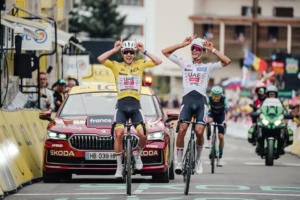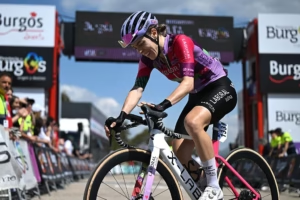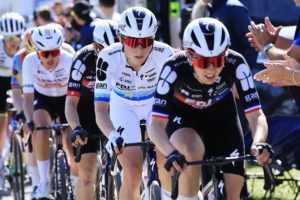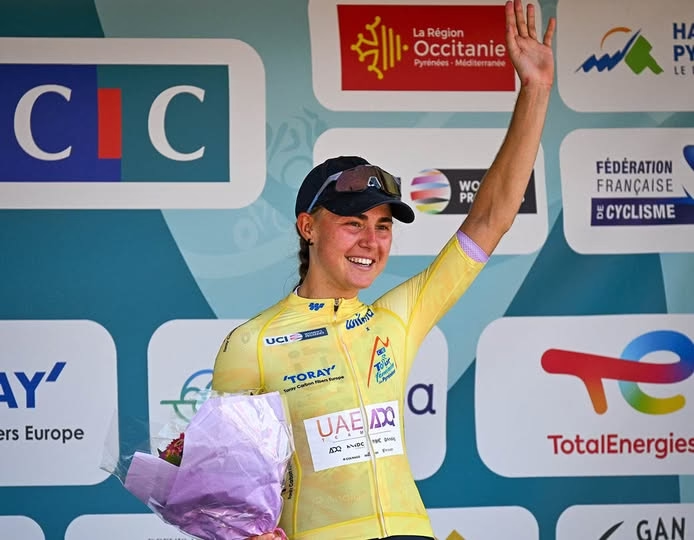
Paula Blasi has gone from promising young climber to one of the favourites for the Tour de France Femmes in the space of a few months.
For anyone who has not followed the women’s peloton closely through 2026, that status can look sudden. Demi Vollering, Pauline Ferrand-Prévot, Kasia Niewiadoma-Phinney and Elisa Longo Borghini are established names. Blasi is only 23 and has never previously started the Tour de France Femmes.
Yet she arrives at the 2026 race as a Grand Tour winner, an Ardennes Classic winner and one of the strongest climbers of the season. She won La Vuelta Femenina, won Amstel Gold Race, finished third at Flèche Wallonne and fifth at Liège-Bastogne-Liège.
That progression has been significant enough that Blasi now sits alongside Vollering and defending champion Ferrand-Prévot in the first group of Tour de France Femmes 2026 GC favourites, rather than simply among the young riders to watch.
For UK viewers discovering her during the Tour, this is the rider who could become one of the defining names of the race.
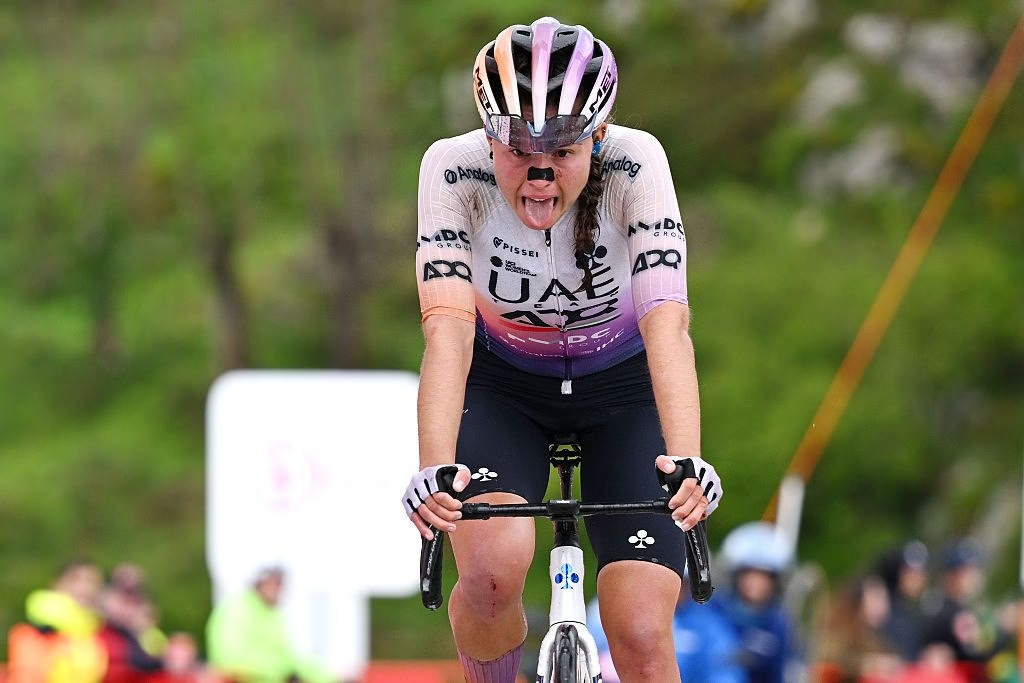 Photo Credit: Getty
Who is Paula Blasi?
Paula Blasi is a 23-year-old Spanish rider who will race the Tour de France Femmes for UAE Team L’IMAD.
She has developed rapidly from a promising young stage racer into one of Spain’s strongest GC riders. Her trajectory was already moving upwards before 2026, but the scale of this year’s improvement has changed the way she has to be viewed.
Blasi is primarily a climber, although calling her simply a mountain specialist increasingly undersells what she can do.
She can win on prolonged climbs, handle repeated accelerations on short steep gradients and survive tactical one-day racing well enough to win a major Classic. Those characteristics matter because the 2026 Tour de France Femmes route is not designed around one isolated mountain test. Riders have to negotiate hilly stages, positioning battles and repeated changes in race rhythm before the biggest climbs arrive.
Blasi has increasingly shown that she can do all of it.
The clearest remaining weakness compared with someone such as Vollering is the time trial. That could be particularly important in this Tour because the 21km Stage 4 test from Gevrey-Chambertin to Dijon gives the strongest riders against the clock a genuine opportunity to create GC gaps.
Everything after that, however, increasingly moves towards Blasi’s strengths.
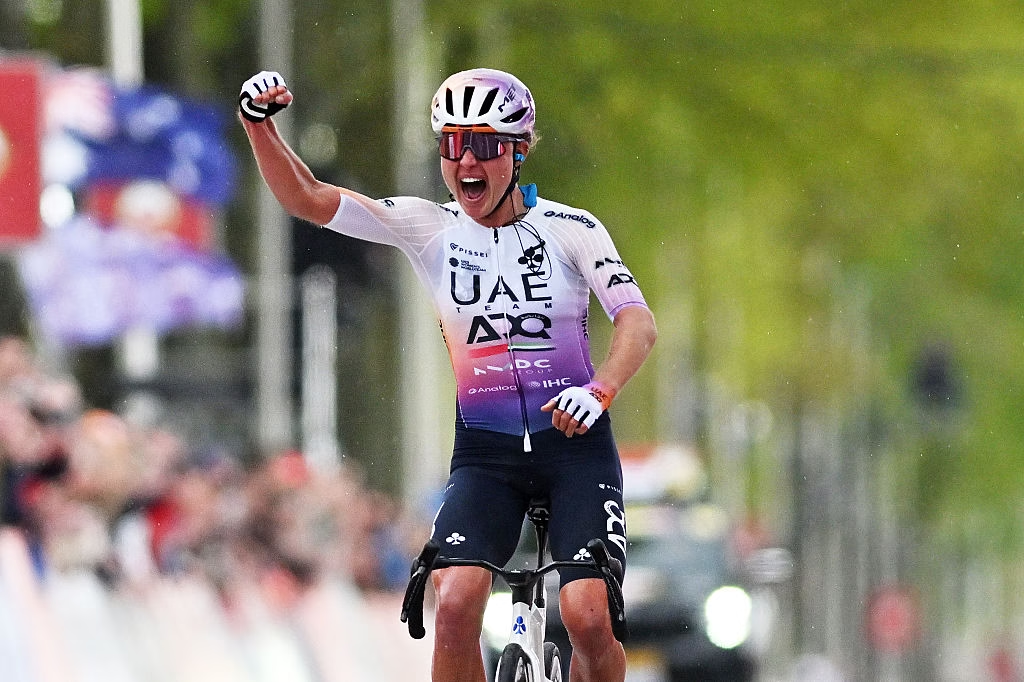 Photo Credit: Getty
Amstel Gold Race changed the perception of Blasi
Blasi’s Amstel Gold Race victory was the result that made the wider cycling world pay attention.
Winning Amstel requires much more than climbing ability. The constantly changing roads of Limburg reward positioning, repeated efforts and the confidence to commit to an attack rather than waiting for a final sprint from a reduced group.
Blasi did not win because the favourites cancelled each other out and she happened to survive.
She took responsibility for the race.
Her attack developed into a substantial solo advantage and, instead of collapsing when the chase gathered behind, Blasi continued to hold the gap through the decisive terrain. It was the sort of victory that changes how the peloton views a rider.
Before Amstel, Blasi could still be considered someone whose development might eventually make her a major stage-race contender.
After it, she was already winning one of the biggest races in women’s cycling.
Flèche Wallonne and Liège showed it was not a one-off
An unexpected Classic victory can occasionally be explained by circumstances. A sustained Ardennes campaign cannot.
Blasi followed Amstel by finishing third at Flèche Wallonne and then fifth at Liège-Bastogne-Liège.
That sequence was arguably more important than the victory itself.
Flèche Wallonne is built around explosive climbing, culminating on the Mur de Huy. Liège is longer, harder and rewards endurance as much as acceleration. Performing across all three Ardennes Classics demonstrated that Blasi’s Amstel win was not simply the product of one perfectly timed attack.
She had reached a different competitive level.
It also gave an early indication of why the Tour de France Femmes might suit her. Blasi can handle short, severe climbs when the race becomes explosive, but she does not depend on them. She is equally comfortable when the climbing stretches out and the race becomes an endurance contest.
That versatility became even clearer at La Vuelta Femenina.
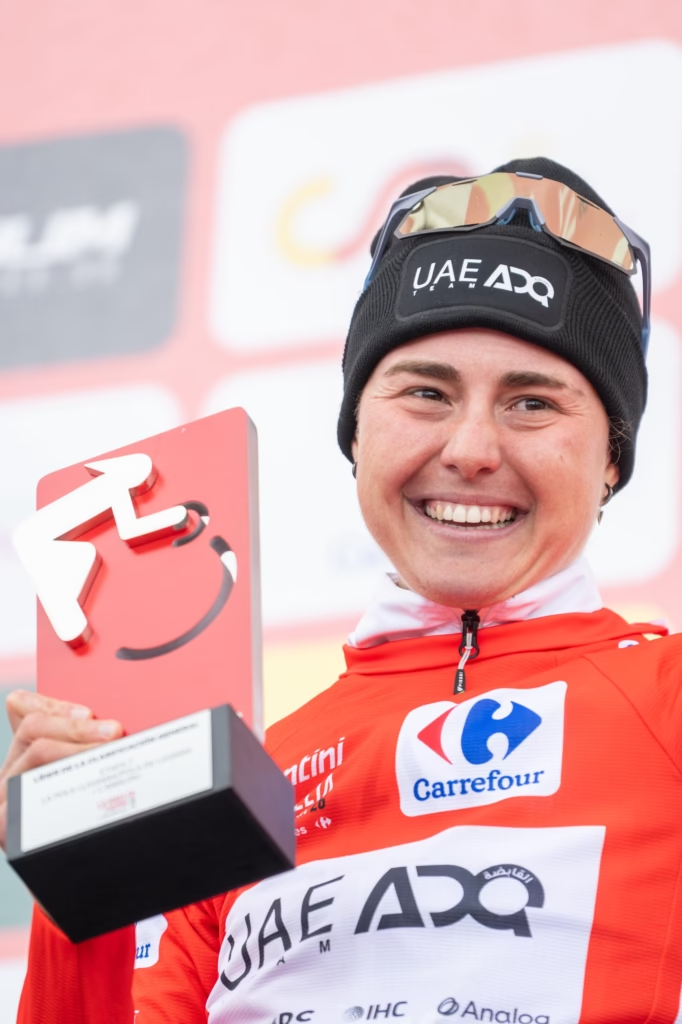 Photo Credit: Naike Erenozaga
Winning La Vuelta turned potential into Grand Tour proof
The decisive step came in May.
Blasi won the 2026 Vuelta Femenina, converting her spring form into something far more relevant to the Tour de France Femmes.
One-day results show peak ability. Grand Tours reveal whether a rider can reproduce it repeatedly while managing fatigue, positioning, pressure and recovery.
Blasi passed that examination.
She ultimately secured the red jersey on the Angliru, beating Anna van der Breggen on one of the hardest climbs used in professional cycling. It was not a GC victory built from an early breakaway or a fortunate split. Blasi won the race by being strong enough when the classification was decided.
Her breakthrough changed the shape of the season, something explored in our analysis of what La Vuelta Femenina 2026 means for the season.
By the end of the Vuelta, the conversation around Blasi had shifted completely.
She was no longer a young rider who might one day win a Grand Tour.
She had already done it.
That distinction is particularly important before the Tour. Plenty of riders arrive with climbing performances suggesting they could challenge for yellow. Blasi arrives having already handled the tactical and physical demands of protecting a GC position across a Grand Tour.
The Tour is a different race, with a stronger field and greater pressure, but the basic question of whether she can sustain a classification challenge has already been answered.
Why Blasi can challenge for the 2026 Tour
The biggest reason Blasi belongs among the Tour favourites is simple: the hardest stages suit her.
There are stages before the mountains where she can lose time, most obviously the Dijon individual time trial, but the route gives climbers repeated opportunities to reverse those losses.
Blasi’s ability on sustained gradients is particularly important. She has shown this season that when a race settles into prolonged climbing, she does not merely survive alongside established GC riders. She can put them under pressure.
That makes her one of the riders most likely to benefit when the Tour reaches Mont Ventoux.
The mountain stages of the 2026 Tour de France Femmes come late enough that any weakness accumulated earlier will already be visible. By then, Blasi’s task is likely to be clear.
If she reaches the decisive climbs within a manageable distance of Vollering and Ferrand-Prévot, she has already shown enough in 2026 to believe she can attack them.
Ventoux is different from the short steep climbs on which positioning and explosiveness can distort the hierarchy. It is long enough for the strongest climbers to separate themselves through sustained power and fatigue resistance.
For Blasi, that is an opportunity rather than something to endure.
Dijon is the stage she has to survive
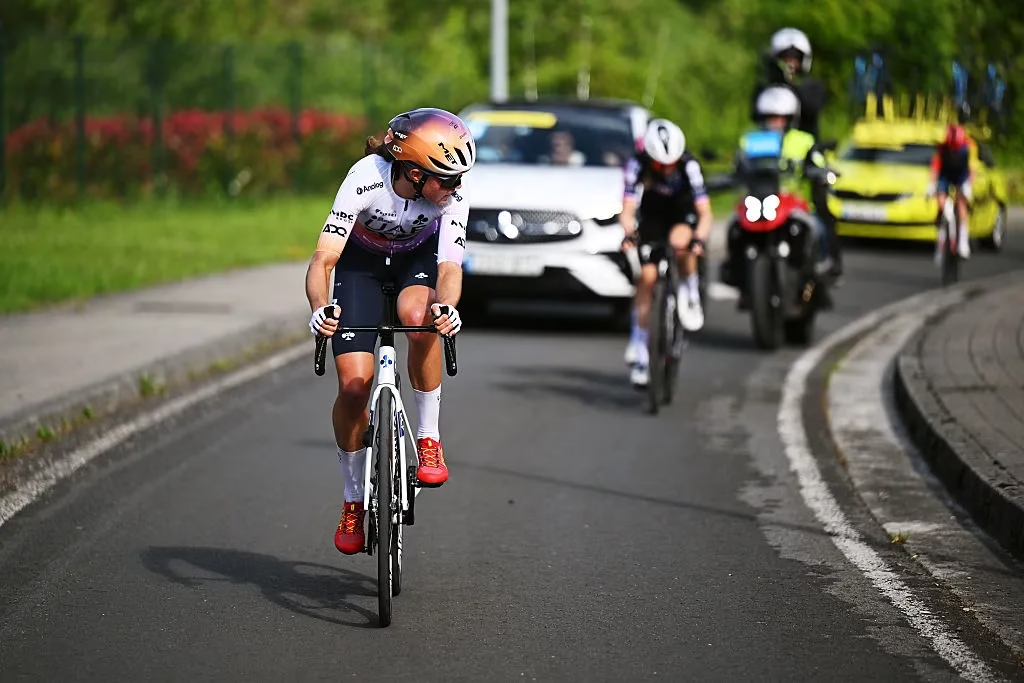
The Tour’s 21km individual time trial may be the most important stage of Blasi’s race before the mountains begin.
She is not a poor time triallist, but she does not possess the same proven advantage against the clock as Vollering or Marlen Reusser.
That matters because Blasi could ride a perfectly respectable time trial and still concede enough time to change the tactical equation.
If she loses only a relatively small amount, the route remains straightforward. She can wait for the major climbing stages and try to reverse the difference there.
If the gap becomes substantial, she will have to begin taking risks.
The important point is that Blasi does not need to win the Tour in Dijon. She simply needs to prevent Vollering, Reusser or another strong time triallist from putting it beyond reach.
That makes Stage 4 damage limitation rather than an opportunity.
For several of her rivals, it is the exact opposite.
UAE have two genuine GC options
Blasi’s position inside UAE Team L’IMAD adds another layer.
Elisa Longo Borghini is also capable of challenging for the general classification. She brings vastly more experience, has already won the Giro and should be stronger against the clock.
Normally, having two potential leaders can create uncertainty.
At this Tour it could become one of UAE’s biggest strengths.
The team can allow both riders to remain protected through the opening stages and wait for the race to establish a hierarchy naturally. Longo Borghini could emerge from the Dijon time trial ahead on GC. Blasi could then prove stronger when the race reaches the mountains.
There is no reason to force that decision prematurely.
Silvia Persico, Maëva Squiban, Dominika Włodarczyk, Brodie Chapman and Mavi García also give UAE considerable strength around them. It is a squad capable of placing riders into moves, protecting two GC leaders and still retaining climbing support later in difficult stages.
That could become particularly valuable against Vollering, whose rivals may need to isolate her before attempting to attack.
Blasi does not have to carry that responsibility alone.
-
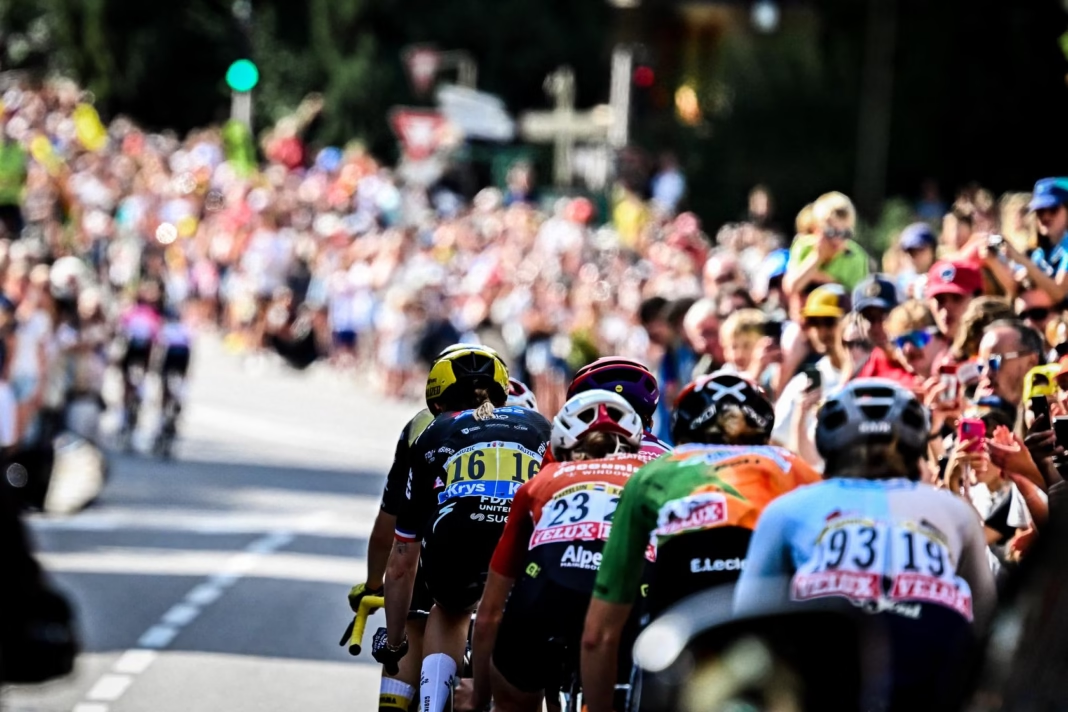 Photo Credit: A.S.O./Pauline Ballet
Why Blasi is different from most young Tour contenders
Blasi is still only 23, but she arrives at the Tour with a results profile that makes comparisons with normal young-rider development difficult.
Most emerging GC riders first demonstrate that they can climb with the favourites. Then they begin collecting podiums. Eventually they win a stage race.
Blasi has compressed those steps.
She has won a major Classic and a Grand Tour in the same season, while also finishing among the best riders throughout the Ardennes.
That does not mean the Tour will follow automatically.
The level is higher. Vollering is arguably the most complete stage racer in the women’s peloton. Ferrand-Prévot is defending a Tour she won through overwhelming climbing strength. Niewiadoma-Phinney has already won this race, Reusser brings a significant time-trial advantage and Longo Borghini is riding alongside Blasi rather than against her tactically.
But Blasi no longer needs a hypothetical argument.
The evidence is already there.
The wider Tour de France Femmes 2026 riders to watch guide places her firmly in the first group of yellow jersey contenders alongside Vollering and Ferrand-Prévot. That would have sounded wildly ambitious at the beginning of the season. By the end of July, it reflects what she has actually done.
Can Paula Blasi win the Tour de France Femmes 2026?
Yes.
That answer would have looked dramatically different a year ago.
Blasi does not start as the outright favourite. Vollering remains the most complete rider for this particular route, while Ferrand-Prévot has the advantage of knowing exactly what it takes to win the Tour.
But Blasi belongs immediately behind them.
Her Tour depends largely on how much she loses in Dijon. If the gap remains within reach, the balance of the race shifts towards terrain where Blasi has repeatedly demonstrated in 2026 that she belongs among the very best.
Her Vuelta victory proved she can win a Grand Tour. Her Ardennes campaign proved she can beat elite riders when races become explosive and tactical. Her climbing has established her as much more than a future prospect.
For anyone coming to the race through UK television coverage and encountering Blasi for the first time, she is not the unexpected young rider who happens to be high on GC.
She is already one of the favourites.
If Blasi reaches Mont Ventoux still in contention for yellow, nobody should regard an attack from her as a surprise. By that stage of 2026, it would simply be the latest step in the breakout season that has transformed her from an emerging Spanish talent into a genuine Tour de France Femmes contender.