
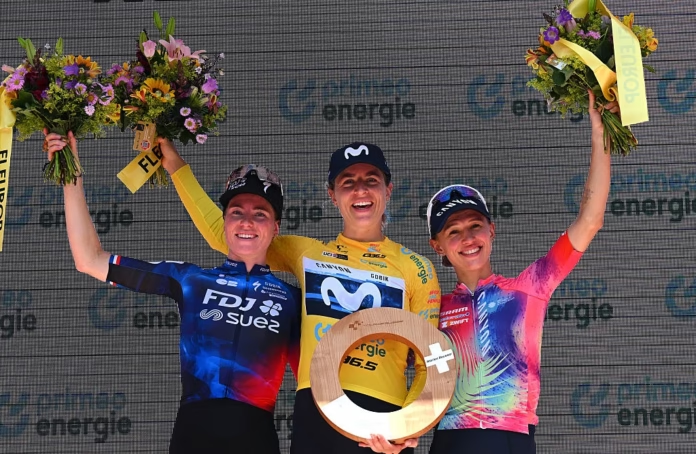
The Tour de Suisse Women 2026 begins on Wednesday, 17th June, with a stage that immediately sets the tone for the new five-day format. Stage 1 starts and finishes in Sondrio, in Italy’s Valtellina region, over 109.3km and 1,642m of climbing. It is not a gentle roll-out, not a parade for the sprinters, and not the kind of opener where the general classification contenders can hide for a day.
The official route gives the opening stage a hilly 4/5 difficulty rating, and the finale includes two short but steep climbs that should make a conventional bunch sprint unlikely. That makes Sondrio a proper first test for the Tour de Suisse Women 2026, especially with a compact race structure that leaves little room for a slow build-up.
The five-day race moves from Sondrio to Locarno, Bad Ragaz, Aarburg and Villars-sur-Ollon, with a 23.8km individual time trial on stage 4 and a mountain stage on stage 5. The overall contenders do not need to win on stage 1, but they cannot afford to lose concentration. A small split, a missed move or a poor descent could already shape the race before it even reaches Switzerland.
For wider race context, see our Tour de Suisse Women 2026 full route guide, the full start list for Tour de Suisse Women 2026 and our Tour de Suisse Women 2026 contenders preview.

Tour de Suisse Women 2026 stage 1 route
Stage 1 takes place in and around Sondrio, a town set in the Valtellina valley and surrounded by terraced vineyards, alpine roads and the kind of mid-altitude terrain that makes rhythm difficult. The stage is officially 109.3km with 1,642m of elevation gain, and while that is not a mountain stage by Tour de Suisse standards, it is a hard opener.
The stage begins with a flatter section before the route turns into repeated climbing and descending. The first hour may be relatively controlled, but the race should become more selective once the terrain starts to rise and fall more regularly. It is not simply one decisive climb followed by a run-in. It is a stage where fatigue can build through constant changes of gradient.
The official description compares the character of the day less to flat Classics and more to races such as Il Lombardia. That is the right way to think about it. Stage 1 is not about high-altitude climbing or long Alpine passes. It is about hilly roads, repeated accelerations, technical positioning and a finale that should reward riders who can climb sharply and still sprint from a reduced group.
The two steep climbs in the finale are the key. They should give attackers and GC riders the chance to test the peloton, while making it difficult for pure sprinters to survive. If the front group is small enough after those climbs, the opening yellow jersey could go to a climber, a punchy all-rounder or a classics-style rider rather than a fast finisher.
Why stage 1 matters for the GC
The Tour de Suisse Women 2026 route gives the GC contenders three obvious checkpoints: the hilly opening stage in Sondrio, the time trial in Aarburg and the final mountain stage in Villars-sur-Ollon. Stage 1 may not decide the whole race, but it can immediately remove riders from contention.
That is the danger of the new format. In a longer stage race, a rider can lose 20 or 30 seconds on the opening day and still have several mountain stages to recover. Here, the race is only five days long. The time trial will create gaps, the final mountain stage will create gaps, and every bonus second or small split before then becomes more valuable.
The best GC riders will want to stay near the front through the final 30km. The stage is unlikely to reward a team that tries to ride passively and rescue the situation late. If the final climbs are ridden hard, the peloton should fracture before the finish. Anyone caught behind a split will have little time to recover, especially with stage 2 in Locarno also offering punchy terrain rather than an easy reset.
For Marlen Reusser, Kasia Niewiadoma-Phinney, Elisa Longo Borghini, Liane Lippert, Cédrine Kerbaol, Ricarda Bauernfeind, Riejanne Markus and the rest of the overall contenders, the first task is simple: avoid losing the race before the more obvious GC days arrive.
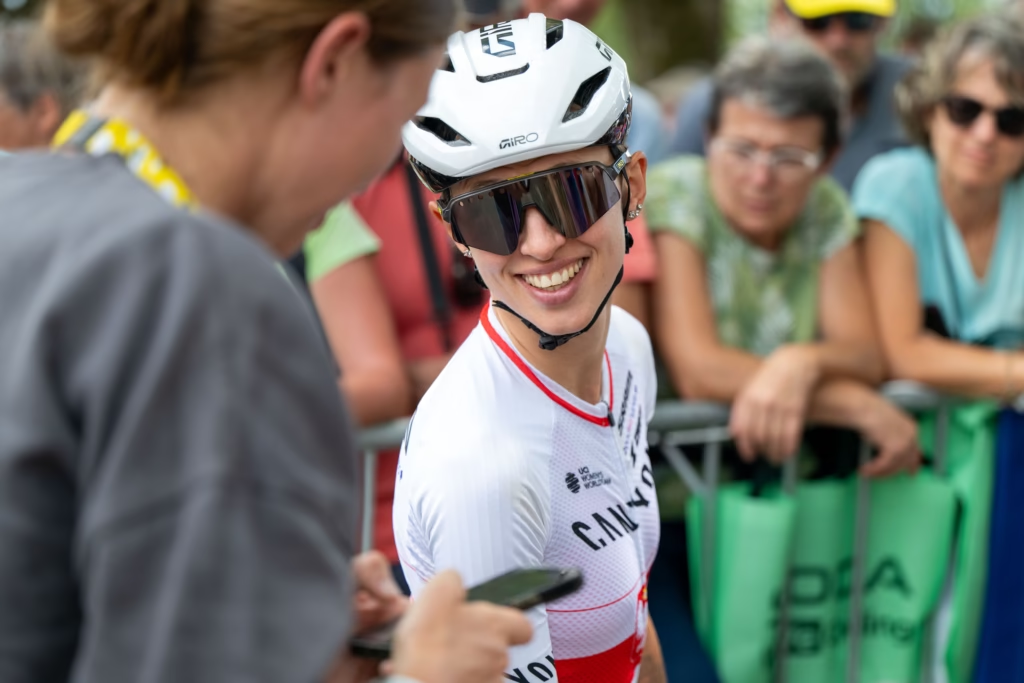 Photo Credit: Getty
What kind of rider can win in Sondrio?
Stage 1 looks best suited to a punchy climber or classics-style all-rounder. The winner will need to survive the repeated climbing, stay positioned through the finale and still have a finish after a hard day.
A pure sprinter will struggle unless the pace is surprisingly controlled. The route does not look selective enough for a pure climber to be the only type of contender, but the steep late climbs should thin the group enough to make the sprint very different from a flat bunch finish.
That points towards riders who can climb at threshold, follow attacks over short steep sections and then sprint from a reduced group. It also creates room for a solo move if the favourites hesitate. With several GC teams likely to be nervous about losing time, the final could become tactical. If the strongest riders mark each other, an aggressive rider could slip clear on one of the steep late ramps and hold on.
The stage also suits teams with multiple options. Kim Le Court can be a threat if the group is reduced but not destroyed, while Liane Lippert and Julie De Wilde also have the kind of finish that can matter from a selective group. Niewiadoma-Phinney can attack and still finish well from a small group. Reusser can use power and timing if the finale becomes less explosive and more attritional.
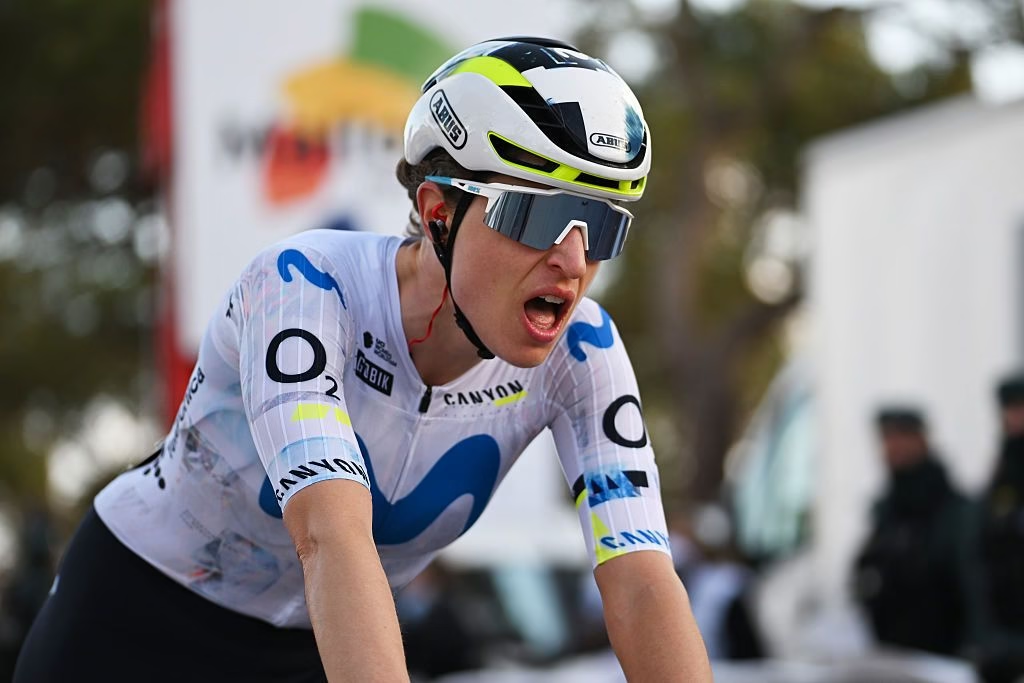 Photo Credit: Getty
Marlen Reusser – Movistar
Marlen Reusser gives the race one of its strongest storylines. She has already built serious Tour de Suisse history, and the 2026 route gives her several opportunities, especially with the Aarburg time trial still to come. Stage 1 is not her most obvious day on paper, but it should not be overlooked.
The hilly Sondrio circuit could suit Reusser if the racing becomes attritional rather than explosive. She is powerful enough to turn repeated climbs into a grinding selection, and if a small group forms with no one fully committed to chasing, she has the engine to make a late move dangerous.
Movistar also have Liane Lippert, which gives them a strong second option for exactly this kind of terrain. Lippert may be the more natural reduced-group finisher, while Reusser is the bigger GC and time-trial threat. That combination makes Movistar one of the teams that can shape stage 1 without needing to ride only for one outcome.
Kasia Niewiadoma-Phinney – Canyon SRAM
Kasia Niewiadoma-Phinney is a natural contender for a stage like this. The Sondrio route rewards repeated accelerations, technical confidence and the ability to race aggressively on terrain that is too hard for sprinters but not mountainous enough for pure climbers to dominate.
For Canyon SRAM, the stage offers both opportunity and responsibility. Niewiadoma-Phinney cannot afford to lose time before the race reaches the bigger GC days, but she also has the profile to gain time if others hesitate. A short, steep climb in the finale is exactly the kind of terrain where she can force a selection without needing a long solo move.
The question is whether she waits for the final climb or tries to make the race difficult earlier. If the final group is too large, Kopecky and other fast finishers become harder to beat. If Niewiadoma-Phinney can reduce the group before the final kilometres, she can turn the stage into something much more selective.
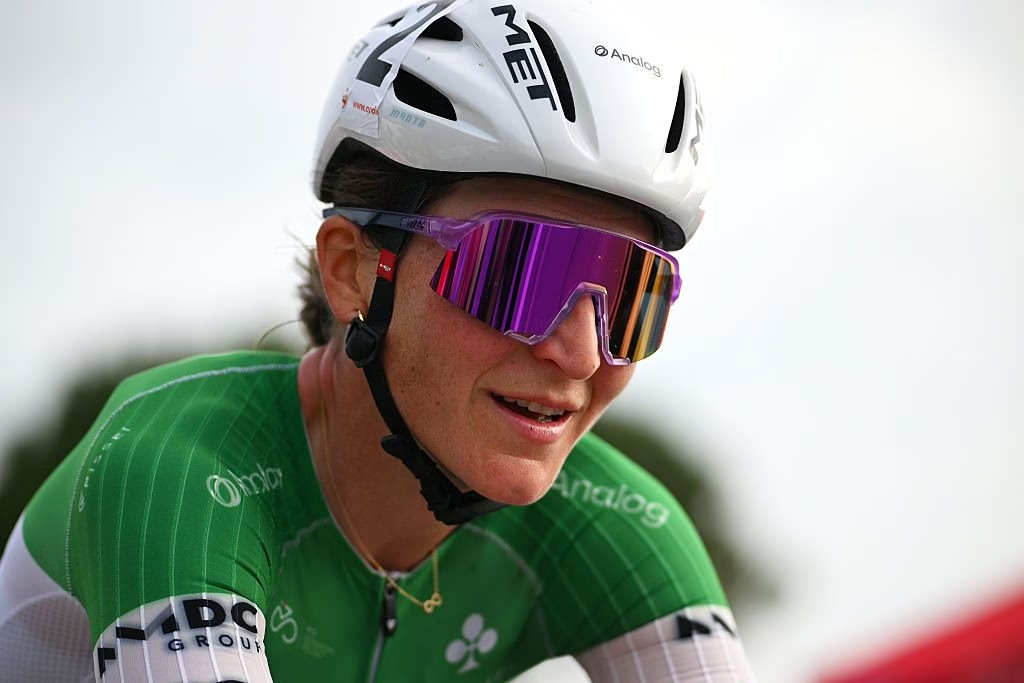 Photo Credit: Getty
Elisa Longo Borghini – UAE Team ADQ
Elisa Longo Borghini comes into the race with a strong stage 1 case if she is carrying the form she showed late at the Giro d’Italia Women. The Sondrio opener has the right mix of climbing, technical roads and tactical pressure for a rider who has spent a career making hard days even harder.
This is not the type of stage where she needs a full mountain train. It is a day for awareness, timing and aggression. Longo Borghini can follow the best climbers, attack when the favourites look at each other, or sprint from a small group if the race is selective enough.
UAE Team ADQ also have Brodie Chapman, Karlijn Swinkels and Maëva Squiban, giving Longo Borghini useful support if the race becomes selective before the final climbs. The team’s best stage 1 approach may be to keep Longo Borghini close to the front, let others take some responsibility, and use the late climbs to test who is already under pressure.
Liane Lippert – Movistar
Liane Lippert may be one of the best stage-specific options for Movistar. If Reusser is the broader GC and time-trial card, Lippert is the rider who looks particularly well suited to a reduced-group finish after steep late climbs.
Her strengths match the stage profile neatly. She can climb short, sharp gradients, handle technical finales and sprint well from a small group. That makes her dangerous if the GC favourites neutralise each other but do not fully control the race.
Movistar’s dual threat is important. Reusser can force other teams to think about the overall, while Lippert can focus on the stage-winning moment. If both are still in the front group after the final climb, Movistar may be one of the hardest teams to manage.
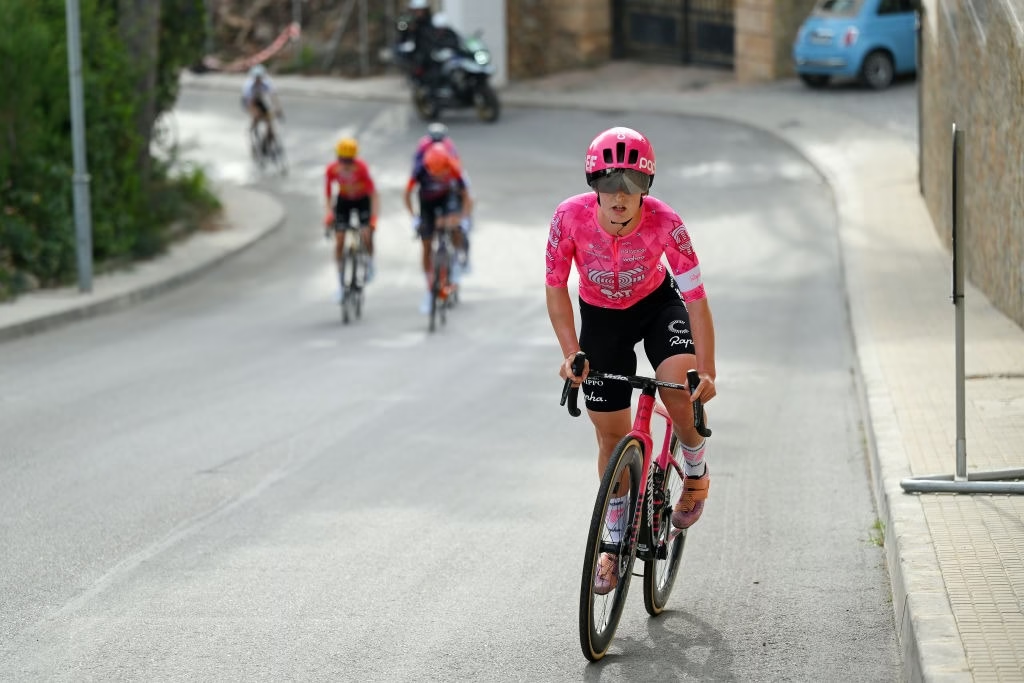
Cédrine Kerbaol – EF Education-Oatly
Kerbaol gives EF their strongest climbing and GC option. The Sondrio opener should suit her if the late climbs make the race selective, and she has the kind of punch and descending confidence to make a difficult stage more complicated. EF can also use Henrietta Christie and Alice Towers as support or secondary options, but Kerbaol is the obvious rider to frame here.
Kim Le Court – AG Insurance-Soudal
Kim Le Court is a stage 1 danger because the route sits close to her best racing profile. She can handle hilly terrain, she can survive selective finales, and she has the kind of finish that becomes very useful if the group is reduced but not reduced enough for a pure climber to go clear.
AG Insurance-Soudal also have Justine Ghekiere and Urška Žigart for more climbing-heavy scenarios. That gives the team flexibility. If the stage becomes very hard, Ghekiere or Žigart may be better placed to follow the strongest climbers. If it becomes a reduced sprint, Le Court is the obvious name to watch.
The team’s tactical problem is choosing the right moment. Too much early commitment could leave them exposed if the GC teams take over. Too little could leave Le Court too far back before the steep climbs. If they get the positioning right, she is a realistic outside bet for the stage.
-
 Photo Credit: Getty
Other riders to watch
Sarah Van Dam could be interesting if the race becomes more open. She has the punch and racing instinct for hilly terrain, although the depth of the start list means she will need the right move rather than a straightforward head-to-head with the biggest favourites.
Ricarda Bauernfeind and Riejanne Markus give Lidl-Trek two useful options if the opener becomes more GC-focused, while Yara Kastelijn, Thalita de Jong and Marta Jaskulska all have the profile to follow or animate a selective hilly stage. Juliette Berthet, Cédrine Kerbaol, Nadia Gontova and Linda Zanetti also belong in the wider watch list if the final climbs make the front group smaller than expected.
Race tactics
The first half of the stage should be about control. Teams with GC riders will want to avoid early stress, while teams without overall ambitions may try to place riders in the breakaway. Because the stage is short, however, the peloton cannot allow a strong move too much freedom.
The race should sharpen once the route turns into the constant up-and-down section through the Valtellina. This is where positioning becomes more important. Even if the decisive moves do not happen immediately, teams will want their leaders near the front before the late climbs.
The final two steep climbs should decide the stage shape. If Movistar, UAE Team ADQ, Canyon SRAM, AG Insurance-Soudal or Lidl-Trek ride hard, the group could shrink quickly.. If the favourites watch each other, the door opens for a late attacker or a reduced-group sprint.
Bonus seconds also matter. In a race with a time trial and final mountain stage still to come, nobody will win the GC only because of stage 1 bonuses, but they could still change the race rhythm. Taking the first yellow jersey also brings control responsibilities, so some teams may want the stage without wanting to carry the race for four more days.
Prediction
The stage looks too hard for a full bunch sprint and not quite mountainous enough to guarantee a pure climber wins. That makes Kim Le Court, Liane Lippert and Kasia Niewiadoma-Phinney particularly interesting if the front group is reduced but not completely broken apart. Reusser and Longo Borghini remain major threats if the finale becomes more attritional, while Kerbaol, Bauernfeind and Markus could come into play if the final climbs make the stage more GC-driven.
Reusser is the strongest GC-based pick because the wider route suits her best, but stage 1 may not be her most obvious winning day. If the final climbs are ridden hard enough to reduce the race to the main favourites, Longo Borghini, Niewiadoma-Phinney and Lippert all have clear routes to the first yellow jersey.
The most likely pattern is a selective finish from a reduced group rather than a solo win. A late attack is possible, especially from Reusser, Niewiadoma-Phinney or Longo Borghini, but the first yellow jersey should come from the strongest group that survives Sondrio’s steep final climbs.

