
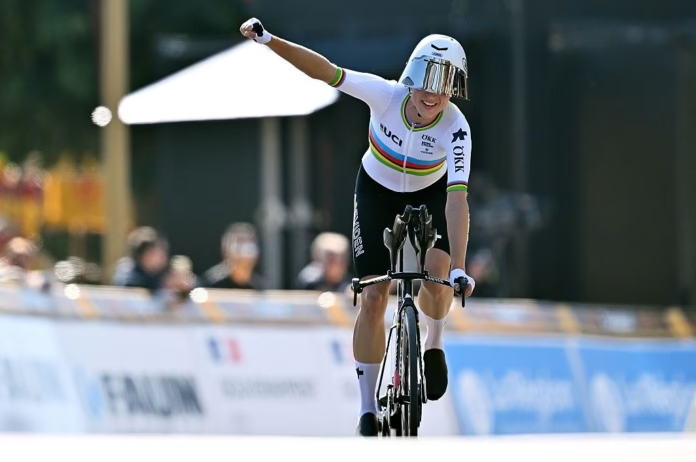
The Tour de Suisse Women 2026 reaches its final and hardest day on Sunday, 21st June, with stage 5 in Villars-sur-Ollon set to decide whether Marlen Reusser can convert her Aarburg time-trial win into overall victory. After four very different stages, the race now ends with the one format that can still put the yellow jersey under direct pressure: a short, climbing-heavy mountain stage with almost no room to hide.
Reusser did exactly what she needed to do on stage 4. The Movistar rider won the 23.7km individual time-trial in Aarburg, beating Zoe Bäckstedt by 12 seconds and putting more than a minute into Elisa Longo Borghini. That moved Reusser into yellow with one day remaining, 10 seconds ahead of Longo Borghini, with Cédrine Kerbaol third at 1:20, Sarah Van Dam fourth at 1:35 and Femke de Vries fifth at 1:43.
The race is now perfectly set up. Reusser has the lead, but not enough of a cushion to ride passively. Longo Borghini is close enough to attack. Kerbaol, Van Dam, De Vries and Kasia Niewiadoma-Phinney are all within range of a podium fight. Behind them, Kim Le Court, Steffi Häberlin, Yara Kastelijn and Thalita de Jong all have reasons to race aggressively rather than simply defend their positions.
For wider race context, see our Tour de Suisse Women 2026 full route guide, the full start list for Tour de Suisse Women 2026, our Tour de Suisse Women 2026 stage 4 preview and the stage 4 report on Marlen Reusser winning the Aarburg time-trial and taking yellow.
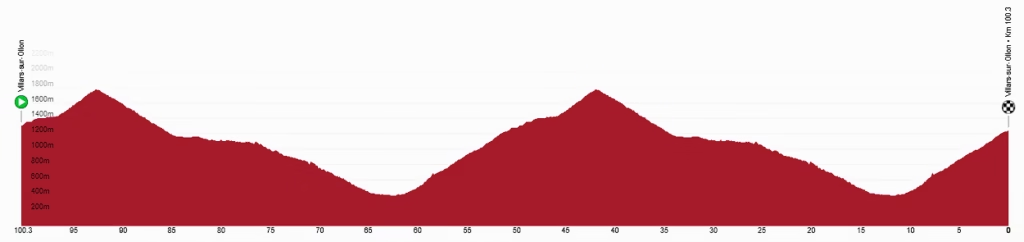
Tour de Suisse Women 2026 stage 5 route
Stage 5 starts and finishes in Villars-sur-Ollon, covering 100.3km with around 2,795m of climbing. It is the queen stage of the 2026 race and the day the route has been building towards since the opening stage in Sondrio.
The stage is short, but that is part of the danger. There is little room for teams to settle into a long waiting game, and the climbing density is high enough to make the race difficult from early on. The route includes repeated work around the Col de la Croix, with the riders climbing in and around Villars rather than facing one isolated final ascent.
That should create a very different tactical feel from a single summit finish. Reusser cannot simply wait for one final climb and mark Longo Borghini there. Movistar will need to control repeated climbing sections, descents, transitions and potential attacks from riders further down the overall. The race may split before the final phase, especially if UAE Team ADQ, EF Education-Oatly or Canyon SRAM decide the only way to dislodge Reusser is to make the stage hard early.
The official Villars programme lists the women’s stage start at 09:00 local time, with the finish expected around 12:05 local time. For UK viewers, that means the stage starts at 08:00 BST and should finish around 11:05 BST.
Why stage 5 matters
Stage 5 matters because the time-trial created a clear hierarchy but did not settle the race.
Reusser has the jersey, but her lead over Longo Borghini is only 10 seconds. That is small enough for bonus seconds, a late split or a single acceleration to change the overall. It is also small enough that Movistar cannot afford to give Longo Borghini freedom at any point on the climbs.
The podium is even more open. Kerbaol sits third, but Van Dam, De Vries, Niewiadoma-Phinney and Le Court are all close enough to think about moving up. Häberlin and Kastelijn are further back, but both have reasons to attack if the race becomes messy. This is not a stage where only the top two matter.
The route also changes the psychology. Reusser’s stage 4 performance was controlled, individual and measurable. Stage 5 will be chaotic, tactical and collective. The strongest time-triallist now has to defend on a mountain stage against riders who are better suited to repeated climbing pressure.
That is the tension. Reusser may be the strongest all-round rider in the race, but this stage gives her rivals the terrain they need to challenge her.
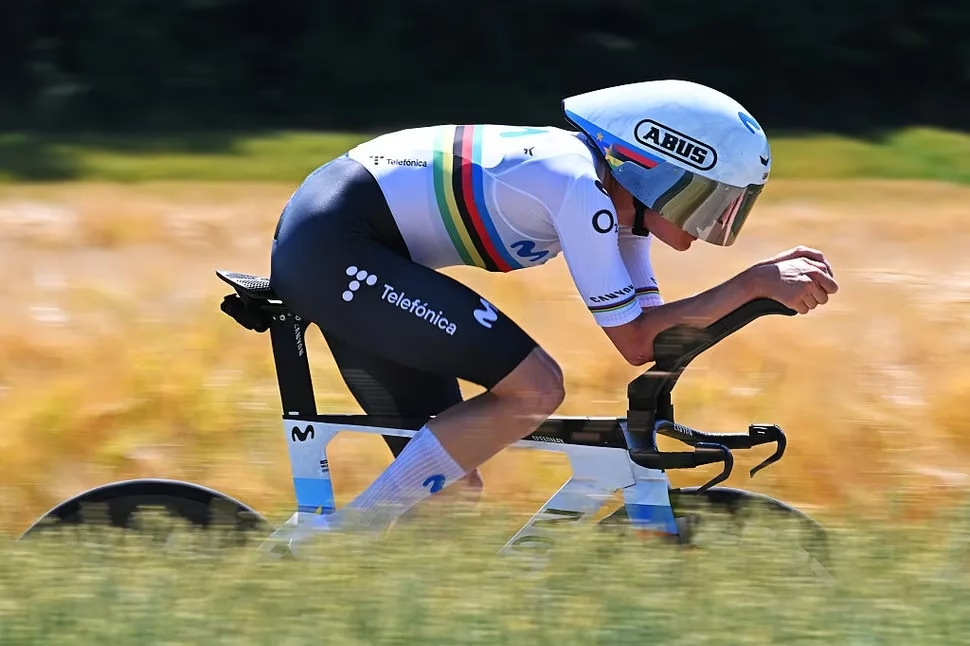 Photo Credit: Getty
Current GC after stage 4
Marlen Reusser leads the race after her time-trial win in Aarburg, with Elisa Longo Borghini just 10 seconds behind. That makes the final day a direct duel between the Swiss rider’s all-round strength and Longo Borghini’s climbing aggression.
Cédrine Kerbaol is third at 1:20 and has enough climbing quality to defend the podium, but her margin is not comfortable. Sarah Van Dam is fourth at 1:35, Femke de Vries fifth at 1:43 and Kasia Niewiadoma-Phinney sixth at 1:49. Kim Le Court is also close at 2:01, with Häberlin eighth at 2:26.
Those gaps create the tactical shape of the stage. Longo Borghini needs only a small margin to win the race. Kerbaol and Van Dam need to watch each other as much as the top two. De Vries and Niewiadoma-Phinney may have to attack if they want the podium rather than simply protect their current places.
There are also stage-hunting possibilities from riders further down. Justine Ghekiere and Maëva Squiban are too far back for the overall, but both have climbing ability and could be dangerous if the GC teams hesitate.
Marlen Reusser
Marlen Reusser has the race lead, the home advantage and the confidence of a dominant time-trial victory, but stage 5 is not a simple defensive exercise. The yellow jersey is only 10 seconds clear, and the route is hard enough to expose even the strongest rider if she is isolated.
Movistar’s job is clear. They need to keep the race controlled enough that Longo Borghini cannot slip away, but not so controlled that they burn the team before the decisive climbs. Liane Lippert will be important, particularly if the race starts to split on the repeated climbing sections. Reusser can climb well, but she will not want to be forced into repeated accelerations on every ascent.
Her best path is to ride steadily, follow Longo Borghini directly and avoid panic. She does not need to attack to win the race. She needs to avoid giving away the kind of small gap that would flip the GC.
That sounds simple, but the final stage is designed to make it difficult. Reusser can win the Tour de Suisse Women from this position, but she will have to do it in a completely different way from stage 4.
Elisa Longo Borghini
Elisa Longo Borghini is the rider with the clearest tactical brief. She is 10 seconds down and has a route that suits attacking. UAE Team ADQ do not need to wait for the final kilometre. They need to make Movistar defend.
The Italian has already shown her shape in this race. She won stage 2 in Locarno with a late attack and took the race lead there, before losing yellow to Reusser in the time-trial. The final stage gives her the chance to turn the race back onto terrain where instinct, climbing and aggression matter more than aerodynamics.
Longo Borghini’s best chance is probably not a single, obvious final attack. Reusser will be waiting for that. The better option may be repeated pressure: UAE sending riders up the road, forcing Movistar to chase, then using the harder climbing sections to test whether Reusser can respond every time.
The 10-second gap makes the race simple but tense. Longo Borghini does not need to take minutes. She needs one clean move, one hesitation, one small split or one bonus-second swing. That makes her extremely dangerous.
Cédrine Kerbaol
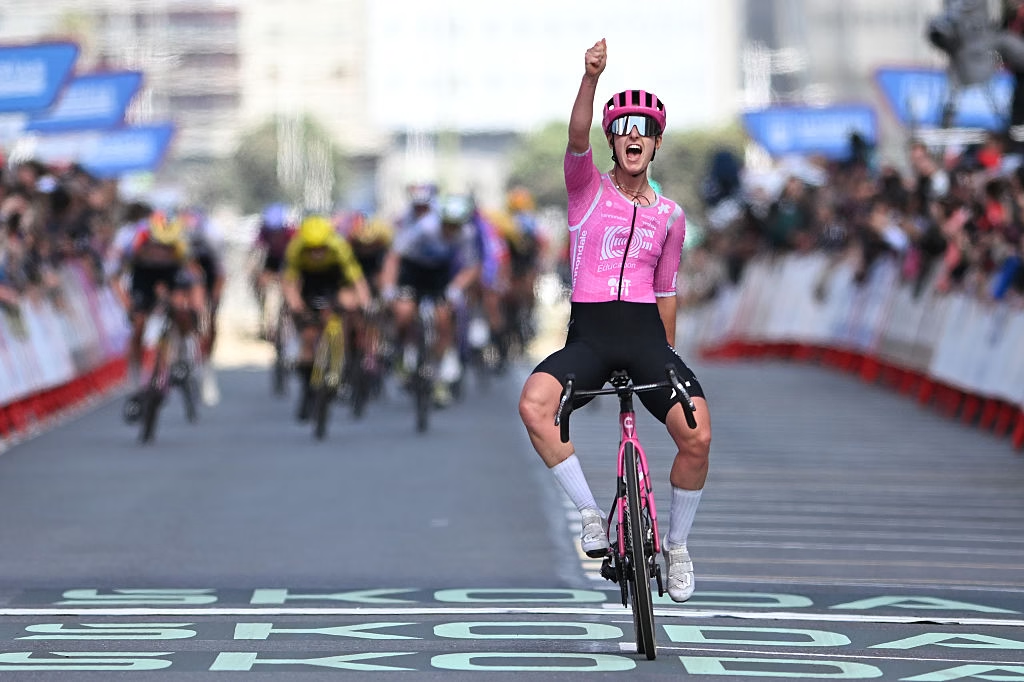
Cédrine Kerbaol starts stage 5 third overall and has a real chance to finish on the final podium. That is a strong position, but not a safe one.
Kerbaol’s climbing and descending strengths make this route interesting for her. She is not simply trying to survive a summit finish. She can use the stage’s repeated climbing and descending structure to stay active, especially if the race becomes fragmented.
Her immediate priority is defending against Van Dam, De Vries and Niewiadoma-Phinney. All are close enough to threaten her podium place. But Kerbaol is also close enough to Longo Borghini that a big day could move her higher if the top two become locked into their own duel.
EF Education-Oatly do not have to control the whole stage, but they need to keep Kerbaol in the right group. If the race is ridden hard from early on, she should be one of the riders most capable of staying in the front selection.
Sarah Van Dam
Sarah Van Dam has been one of the revelations of the race. Sitting fourth overall after four stages, she now has a major chance to turn a strong week into a WorldTour podium.
The final stage is both an opportunity and a threat. She has shown she can handle the hills, but the Villars-sur-Ollon stage is a different level of climbing density. Team Visma | Lease a Bike have two riders high on GC with Van Dam fourth and Femke de Vries fifth, and that gives them tactical options.
Van Dam may not want to wait for a straight climbing contest against Kerbaol and Niewiadoma-Phinney. If she feels strong, she can use De Vries as a second card and force others to chase. If De Vries attacks, Van Dam can sit in. If Van Dam attacks, De Vries gives the team protection behind.
That could make Team Visma | Lease a Bike one of the most interesting teams on the final day. They are not defending yellow, so they can take more risks than Movistar.

Femke de Vries
Femke de Vries began the race with a stage win in Sondrio and has stayed high in the overall throughout the week. Stage 5 gives her one more chance to turn that opening success into a final GC result.
She sits fifth overall, close enough to the podium to attack, and close enough to Van Dam that Team Visma | Lease a Bike need to decide how they use their two cards. The ideal scenario is that De Vries and Van Dam are both in the front group deep into the stage, giving them tactical leverage against Kerbaol and Niewiadoma-Phinney.
De Vries does not need to ride passively. She has already shown in this race that she can take advantage of tactical hesitation, and the final stage should offer several moments where a well-timed move can become dangerous.
Her challenge is the weight of the climbing. Stage 1 was hard, but Villars-sur-Ollon is the heaviest climbing stage of the week. If she survives the repeated ascents, she can still move up. If the pure climbers turn the screw, she may have to defend.
Kasia Niewiadoma-Phinney
Kasia Niewiadoma-Phinney is still in the GC picture, but she needs to attack if she wants more than a lower top-10. Sitting sixth at 1:49, she is close enough to the podium to make the race interesting, but not close enough to rely on others.
Canyon SRAM have had a strong race through Zoe Bäckstedt, who won stage 3 and then finished second in the Aarburg time-trial. Niewiadoma-Phinney now gives them a GC card for the final mountains. Her best chance is a hard, aggressive race rather than a controlled final climb.
The route suits that. Repeated climbs around Villars-sur-Ollon give her several chances to attack, follow moves or apply pressure. She is one of the riders most likely to animate the stage if the podium battle starts to stall.
The question is whether she has enough margin left after the earlier missed turn in Locarno and the time lost before Aarburg. She probably needs a proper selection rather than a small sprint from the favourites. If the stage becomes attritional, she can still make a difference.

Kim Le Court
Kim Le Court sits seventh overall at 2:01 and remains close enough to take advantage if the race opens up. She may not be the obvious favourite for a mountain stage of this depth, but she has the strength and racing instinct to stay involved if the front group is reduced gradually rather than blown apart immediately.
AG Insurance-Soudal have also had to absorb the loss of Urška Žigart after her crash on stage 3, which changes the team’s options. Le Court becomes even more central as the rider who can carry their GC hopes into the final day.
Her best path is to survive the first major accelerations, stay close to the podium battle and use any hesitation behind the Reusser-Longo Borghini duel. If the top two mark each other too closely, riders like Le Court may find space to move.
A stage win may be difficult, but a strong GC gain is still possible.
Steffi Häberlin
Steffi Häberlin has been one of the standout Swiss riders of the week and starts the final stage eighth overall at 2:26. On home roads, with a mountain stage to finish, she has plenty to race for.
The time-trial confirmed that she can stay competitive across different types of stages, but Villars-sur-Ollon will ask a more direct climbing question. If Häberlin can stay with the main GC group, she has a chance to protect a strong overall result. If she can go one step further and follow attacks from the podium contenders, she could still move up.
Team SD Worx-Protime do not have the same overwhelming race situation they might have with a full-strength Grand Tour line-up, but Häberlin has given them a clear GC focus here. The final stage is a chance to turn a good week into a very strong one.

Yara Kastelijn and Thalita de Jong
Yara Kastelijn and Thalita de Jong both sit inside the top 10 and have different reasons to attack.
Kastelijn is ninth overall at 3:19, far enough back that she may get a little more freedom if the top GC riders focus on each other. She is also well suited to a hard, selective route with repeated climbing and a race that may become more tactical than controlled. If Fenix-Premier Tech want a stage result, she has to be active.
De Jong is tenth at 3:57 and can approach the stage with a similar mindset. She is unlikely to win the overall from this position, but the top 10, stage result and possible GC movement are all still worth chasing. Human Powered Health can use her aggressively if the race starts to split.
Both riders benefit from the fact that the top two are only 10 seconds apart. Reusser and Longo Borghini may spend much of the stage watching each other, which can open space for riders just behind the main podium fight.
Stage hunters
The GC battle should dominate the day, but stage hunters still have a route into the race if Movistar and UAE Team ADQ mark each other too tightly.
Justine Ghekiere is the obvious type of rider to watch. She is far enough back overall that she should not be the first priority for the GC teams, but she has the climbing strength to make a move dangerous. If she gets up the road early, she could force Movistar to make an uncomfortable decision: chase hard for stage control or keep riders around Reusser.
Maëva Squiban is another interesting option. She rode strongly in the time-trial before crashing late, and if she has recovered, UAE Team ADQ can use her tactically before Longo Borghini makes her move. Brodie Chapman and Karlijn Swinkels also give UAE depth, which could be crucial if they try to isolate Reusser.
Ricarda Bauernfeind is another rider who may look at the final day as an opportunity. Lidl-Trek no longer have an obvious route to overall victory, but a hard mountain stage can still reward a rider willing to attack before the main favourites move.
The stage winner does not have to come from the top two on GC. The final yellow jersey fight may create the space for someone else.
-
 Photo Credit: Getty
Race tactics
The race should revolve around Movistar against UAE Team ADQ, but the podium battle gives several other teams a reason to disrupt that duel.
Movistar’s safest option is control. Keep the pace steady, keep Reusser protected, and make sure Longo Borghini never gets a free gap. The problem is that controlling a 100.3km stage with almost 2,800m of climbing is not simple. If the race starts fast, Movistar may have to use riders earlier than planned.
UAE Team ADQ’s best option is pressure. They have Longo Borghini just 10 seconds down, and that gap is too small to justify waiting passively. They can attack with secondary riders, force Movistar to chase, and then try to use Longo Borghini’s climbing strength later.
EF Education-Oatly will want to protect Kerbaol’s podium, but they may also need to race proactively if Van Dam, De Vries or Niewiadoma-Phinney start attacking. Team Visma | Lease a Bike have two riders in the top five and can use that to create movement. Canyon SRAM need Niewiadoma-Phinney to be aggressive if they want the podium, while Bäckstedt’s stage 3 and stage 4 performances mean the team has already taken plenty from the race.
The key question is whether the stage becomes a controlled final climb or a full mountain fight from much earlier. Given the small gap between Reusser and Longo Borghini, UAE have every reason to make it hard before the finish.
Prediction
Marlen Reusser starts the final day in the best position, but the route gives Elisa Longo Borghini enough terrain to attack. A 10-second gap is small enough that the Italian can realistically win the race without needing a dramatic long-range collapse from Reusser. One sharp move on the right climb, one split over the top, or one missed response could be enough.
The stage itself may be harder to predict than the overall. Reusser can defend yellow without winning the stage, and Longo Borghini may care more about taking time than taking the stage victory. That creates space for a rider like Kerbaol, Niewiadoma-Phinney or Ghekiere to go for the win if the GC favourites watch each other.
Still, the most likely outcome is that the top two fight directly. Longo Borghini has the climbing profile and the tactical need to attack, while Reusser has the strength and yellow jersey control to respond. Kerbaol looks the strongest podium contender behind them, but Van Dam, De Vries and Niewiadoma-Phinney should all make that fight uncomfortable.
Reusser is the favourite to win the Tour de Suisse Women 2026, but stage 5 should give Longo Borghini the road she needs to test that lead properly.

