
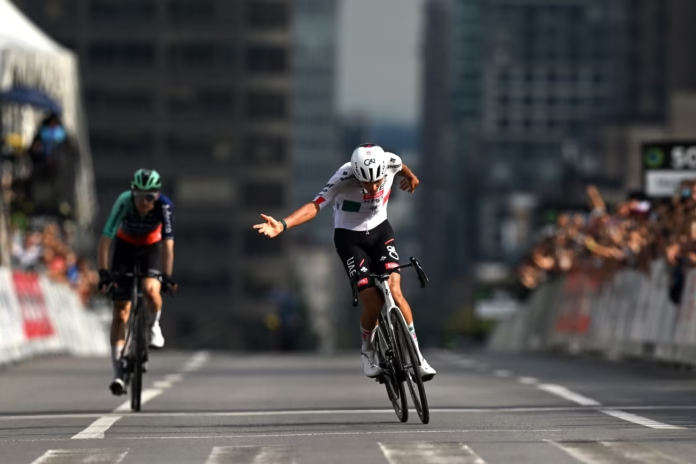
The GP Montréal has always been useful as a late-season form check, but the 2026 edition carried far more weight than usual. With the UCI Road World Championships returning to Montréal only a week later, the same roads around Mount Royal gave the leading contenders a competitive rehearsal on terrain they will see again in national colours.
Isaac del Toro came out of it with the clearest result. The Mexican followed Paul Seixas when the Frenchman forced the decisive selection on the final ascent of Camillien-Houde, stayed with him through the run towards the finish and then used the sprint advantage that had made the tactical equation obvious once the pair reached the closing metres together. Del Toro won, Seixas was second, while Brandon McNulty completed the podium 27 seconds later.
The result matters beyond one WorldTour victory. ProCyclingUK’s GP Montréal race report showed how closely the decisive moves mapped onto the roads that will shape the Worlds. It also came two days after Remco Evenepoel’s emphatic GP Québec victory, leaving the Canadian double-header with several different form signals rather than one dominant favourite.
Del Toro has converted promise into repeatable winning form
Del Toro’s Montréal win was not built on surprise. His 2026 season has increasingly shown a rider capable of winning hard races through several different routes: climbing strength, tactical patience and enough speed to finish the job against reduced groups. Montréal brought those qualities together. He did not need to make the first decisive attack because Seixas did that work, but he recognised the move immediately and had the legs to close it.
That distinction matters for the Worlds. Trade-team racing allowed UAE Team Emirates-XRG to use McNulty and Adam Yates around Del Toro, while the Mexican team will have a different depth profile. He cannot assume the same level of control. What Montréal demonstrated, however, is that he does not need a race to be controlled perfectly. If the decisive group is reduced to a handful of riders, he can follow an acceleration rather than manufacture every split himself.
His sprint against Seixas also changes how rivals have to race him. Taking Del Toro to the line after a selective final lap is now a visibly dangerous option. Riders such as Evenepoel and Tom Pidcock may need to make the race harder or earlier if Del Toro is still present, while Seixas learned directly that climbing clear with the Mexican does not necessarily solve the problem.
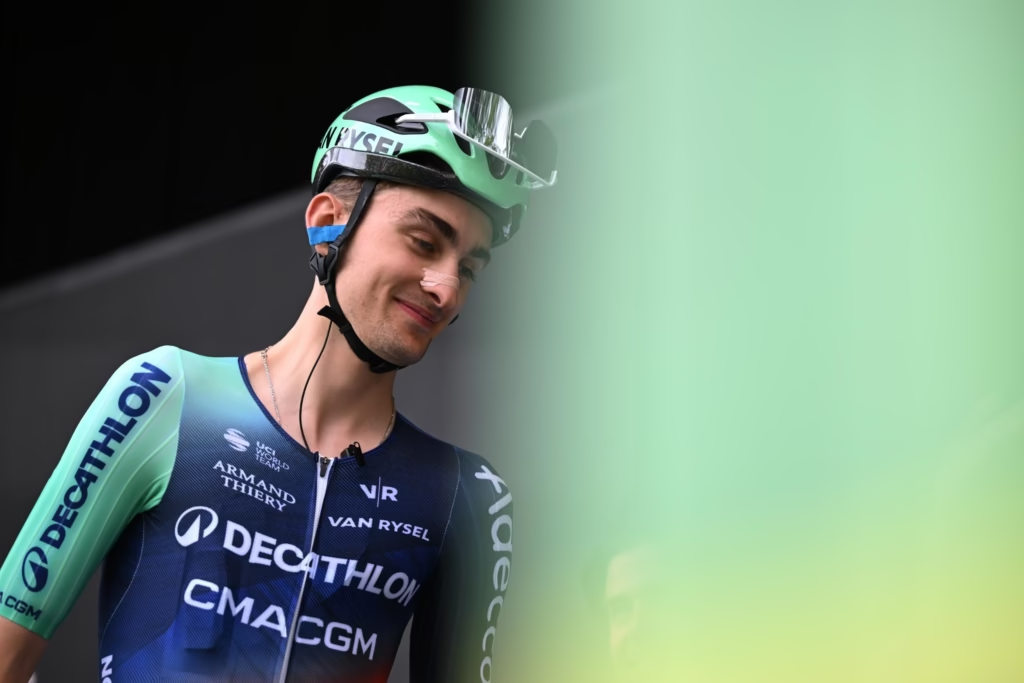 Photo Credit: Getty
Seixas may have produced the most revealing ride
Second place can undersell what Paul Seixas did. The 20-year-old attacked on the final Camillien-Houde climb and was strong enough to separate himself from a group containing riders with far greater experience in major one-day races. Del Toro was the only rider able to bridge, and Seixas continued trying to dislodge him rather than immediately accepting a two-up sprint.
That performance adds another layer to a season in which Seixas has moved from elite prospect to a rider who can influence the biggest races. The World Championships will be longer and tactically less predictable, and national-team dynamics will remove the familiar Decathlon CMA CGM structure. Even so, the physical message from Montréal was difficult to miss. On the central climb of the Worlds circuit, Seixas could make a selection rather than merely survive one.
France therefore has a rider who can be used aggressively even if it does not choose to build the entire race around him. That could be especially valuable if the favourites begin watching one another. A Seixas move cannot now be treated as a speculative attack from a young outsider.
Evenepoel remains dangerous despite the fifth place
Evenepoel’s fifth in Montréal, 35 seconds behind Del Toro, looks less impressive than his Québec victory but should not be read as a collapse in form. Québec showed his ability to sustain a long attacking effort. Montréal showed that the harder circuit can produce a different race, one in which repeated climbing and the timing of the final selection may matter as much as raw solo power.
For Belgium, that is useful information before the Worlds rather than a reason for alarm. Evenepoel still arrives as one of the riders most capable of turning a tactical pause into a race-winning gap. The key question is where he spends that effort. If Del Toro and Seixas are still alongside him late, waiting for the final kilometre is unlikely to be his best route.
The absence of Tadej Pogačar after his Vuelta crash has also altered the hierarchy. Evenepoel no longer has the defending champion absorbing much of the attention. The 2026 World Championships guide sets out a week in which Belgium can reasonably target both the time trial and road race, but Montréal made clear that the road title has several live contenders.
Pidcock and McNulty leave Montréal with useful evidence
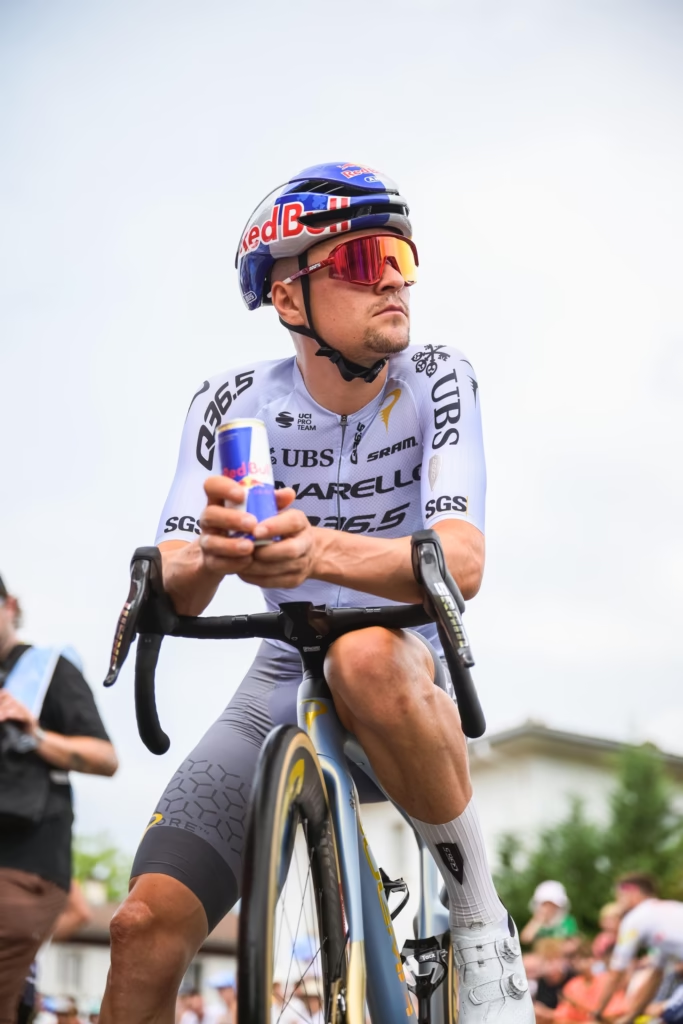
McNulty’s third place reinforced UAE Team Emirates-XRG’s strength on the day, but his individual form deserves attention as well. He finished 27 seconds behind the leading pair and ahead of Quinn Simmons, Evenepoel and Pidcock. The American team can take confidence from having multiple riders capable of surviving deep into a hard race, even if the World Championships will not reproduce UAE’s numerical advantage.
Pidcock’s sixth place was similarly encouraging without being decisive. He finished 36 seconds down and used the race as a direct reconnaissance of the circuit he will tackle again for Great Britain. With Oscar Onley also selected, Britain has climbing depth as well as a leader with proven one-day finishing ability. ProCyclingUK’s Great Britain Worlds preview looks at how those options fit together.
Quinn Simmons, fourth at 30 seconds, is another rider whose Montréal result deserves more attention than a simple placing suggests. The American can race from distance and has the durability for a long championship day. A fourth place against this field strengthens the case for the United States to race proactively rather than waiting for the final circuit.
The Worlds form picture is open, but not vague
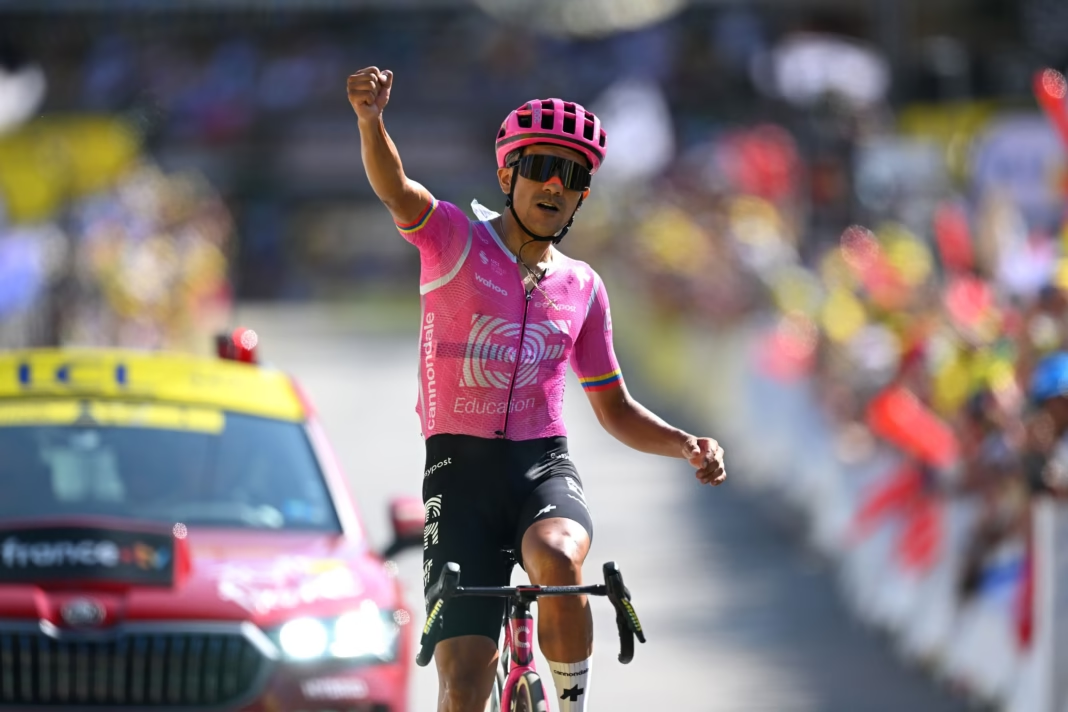
The Canadian races have narrowed the form picture without producing one overwhelming favourite. Evenepoel was the strongest rider in Québec. Del Toro won on the actual Montréal circuit. Seixas produced perhaps the sharpest uphill acceleration of the weekend, while McNulty, Simmons and Pidcock all finished close enough to confirm that they belong in the leading group of contenders.
That makes the final week before the road race unusually useful for interpretation. Riders do not need to prove their fitness again in another race. The evidence is already on the same climbs and roads. The main unknown is how national-team tactics reshape what happened under trade-team control.
The Montréal World Championships course guide explains the repeated climbing that will accumulate across the championship distance. GP Montréal suggests the final selection can happen on Camillien-Houde, but the longer Worlds distance creates more room for fatigue and earlier attacks. Del Toro and Seixas now carry the strongest direct evidence from the circuit. Evenepoel carries the clearest proof that he can win from distance. That is a much sharper form hierarchy than existed before the Canadian weekend.

