
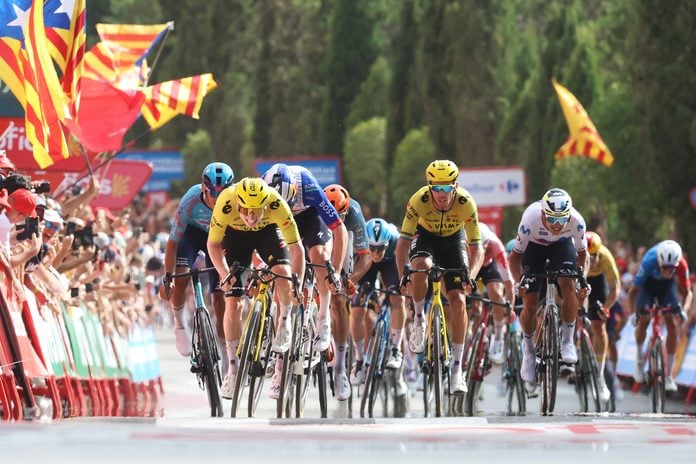
The sprinters finally get a Vuelta stage that looks as though it genuinely wants them to win it.
Stage 11 of the 2026 Vuelta a España takes the peloton 153.8km from Cartagena to Lorca on Wednesday 2 September, with only one categorised climb and long stretches of relatively straightforward terrain through the Region of Murcia. The Alto de Aledo provides one late complication, but its 9.5km at 4.2% should be manageable for most of the stronger fast finishers.
That makes this one of the clearest opportunities yet for Matthew Brennan to claim a third stage victory on his Grand Tour debut. There is still enough terrain to stop Wednesday becoming completely routine, with the Alto de Aledo topping out 32km from the finish and temperatures in Lorca forecast to reach around 35°C. Teams without a genuine sprint option also have little reason to politely wait for Visma | Lease a Bike to organise the finale.
Compared with the relentlessly rolling Stage 10 route to Elche de la Sierra, however, Cartagena to Lorca provides considerably fewer places for the race to escape the sprinters’ control.
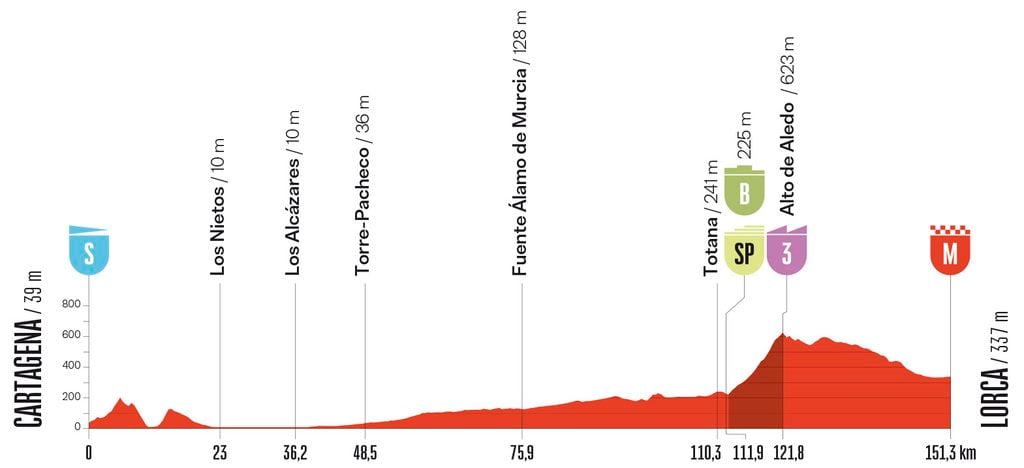
Vuelta a España 2026 stage 11 route at a glance
| Detail | Stage 11 |
|---|---|
| Date | Wednesday 2 September 2026 |
| Start | Cartagena |
| Finish | Lorca |
| Distance | 153.8km |
| Stage type | Flat |
| Categorised climbs | 1 |
| Intermediate sprint | Totana, 41.9km remaining |
| Main climb | Alto de Aledo, 9.5km at 4.2% |
| Alto de Aledo summit | 32km remaining |
| Neutralised start | 12:50 BST |
| Racing begins | Around 13:05 BST |
| Expected finish | 16:21-16:39 BST |
The official schedule is based on average speeds between 43km/h and 47km/h, underlining how quickly the stage could unfold compared with the mountainous days that dominate so much of this Vuelta.
Stage 10 gave the sprinters another warning
Tuesday provided another reminder that simply identifying a stage as suitable for fast riders does not mean the Vuelta will cooperate.
Bastien Tronchon took the biggest victory of his career in Elche de la Sierra after a chaotic finale in which Yevgeniy Fedorov and Xabier Mikel Azparren were only caught metres from the line. Tronchon came through to beat Magnus Cort and Thibau Nys, with Wout van Aert fourth and Alessandro Romele fifth.
Matthew Brennan finished 1:20 down after the accumulating climbing and aggressive finale ultimately took him out of contention, while Jordi Meeus conceded more than five minutes. The result was broadly in line with what the Stage 10 preview suggested could happen. Almost 3,000 metres of climbing and a constantly changing final hour produced something much less controlled than a conventional sprint.
Stage 11 should be different. The distance is shorter, there is considerably less climbing and, crucially, the one recognised ascent comes early enough before the finish for teams to repair much of the damage it causes.
Cartagena provides an awkward rather than difficult opening
The stage starts in Cartagena before initially heading towards the coast around Portmán. The opening section is not completely flat, with several short uncategorised rises interrupting the first 20km and giving riders interested in the breakaway enough terrain to attack.
That may make the opening half-hour lively, but the difference from Tuesday is what happens afterwards. Once the race moves through Los Belones, Los Nietos and Los Alcázares, the route begins opening into much more manageable roads across the Murcia region.
The peloton then passes Torre-Pacheco, Roldán, Fuente Álamo and El Paretón during a lengthy middle section containing almost no significant climbing. For the breakaway, that is a problem. There are few places to use superior climbing ability to increase an advantage, while much of the stage gives an organised peloton the opportunity to ride at a consistently high speed.
If Visma want a sprint for Brennan, this is exactly the terrain on which they can control one.
Why the early break has poor odds
The likely early move should contain riders who understand perfectly well that their chances are limited, although that does not mean nobody will try.
Teams without Brennan, Bryan Coquard, Jordi Meeus or another genuine fast finisher still need to create a route towards victory somehow. Putting someone into the break at least avoids spending the entire afternoon waiting for a sprint they are unlikely to win.
The quality and size of that break will matter more than usual. Two or three riders with no significant stage-winning pedigree are unlikely to concern the peloton, but eight or ten strong rouleurs representing teams that would otherwise contribute to the chase become much more interesting. That is probably the only realistic way the breakaway significantly complicates Stage 11.
There should simply be too many teams interested in bringing the race back together for a conventional small escape to survive.
The intermediate sprint in Totana matters for green
The intermediate sprint comes in Totana after 111.9km, leaving 41.9km to race, and its position immediately before the day’s only categorised climb makes it particularly useful for Wout van Aert.
The Belgian strengthened his green jersey position again on Tuesday by finishing fourth and remains firmly in control of the points classification entering Stage 11. Visma can therefore pursue two objectives within a few kilometres, allowing Van Aert to collect intermediate sprint points in Totana before switching the team’s attention towards getting Brennan safely across the Alto de Aledo.
That division of responsibilities has become one of Visma’s major strengths during this race. Brennan gets the more conventional sprint opportunities, while Van Aert can pursue green, attack on harder stages and take responsibility when the course becomes too demanding for the young Briton.
The arrangement has already helped Brennan win twice, a start to his first Grand Tour examined in more detail in Matthew Brennan’s remarkable Vuelta debut is becoming much bigger than two stage wins. Stage 11 looks like another day where that system should work in his favour.
Alto de Aledo is the only obvious place to disrupt the sprint
Almost immediately after Totana, the race begins its one recognised ascent.
Alto de Aledo
9.5km at 4.2% | Category 3 | summit 32km from the finish
The climb gains 401 metres and reaches an altitude of 623 metres. Its length is more important than its gradient, because an average of 4.2% means drafting remains significant and the strongest sprint teams can potentially regulate the pace rather than simply watching their leader become isolated.
That should suit Brennan. His opening week already demonstrated that he is not dependent on completely flat stages. The late Puerto de Paüls on Stage 5 could not remove him before his second victory in Roquetes, while his uphill sprint win in Manosque showed another side to his range.
The opening-week review of this Vuelta made clear how quickly that versatility turned Brennan from an interesting debutant into one of the race’s main stories. Aledo should fall comfortably inside his normal climbing range, although the bigger question is how aggressively rival teams choose to race it.
Can anyone make Aledo hard enough to drop Brennan?
Teams without a sprinter have an obvious incentive to try. Simply allowing Visma to control the climb before delivering Brennan towards Lorca is unlikely to improve anyone else’s chances.
The difficulty is making a 4.2% climb sufficiently selective. One rider attacking rarely achieves much because the drafting benefit remains substantial, so a team would need to commit several riders and sustain a very high tempo for most of the 9.5km. Even then, permanently distancing Brennan is another matter because there are 32km remaining after the summit.
A rider who loses ten or 15 seconds can return. A sprinter who is completely emptied and drops by a minute probably cannot. The more realistic objective may therefore be weakening Visma rather than removing Brennan altogether.
If Christophe Laporte and Van Aert are forced to work hard on Aledo, Brennan may arrive in Lorca with fewer riders available to position him. That could make the final kilometre considerably more competitive even if the Brit remains comfortably within the peloton.
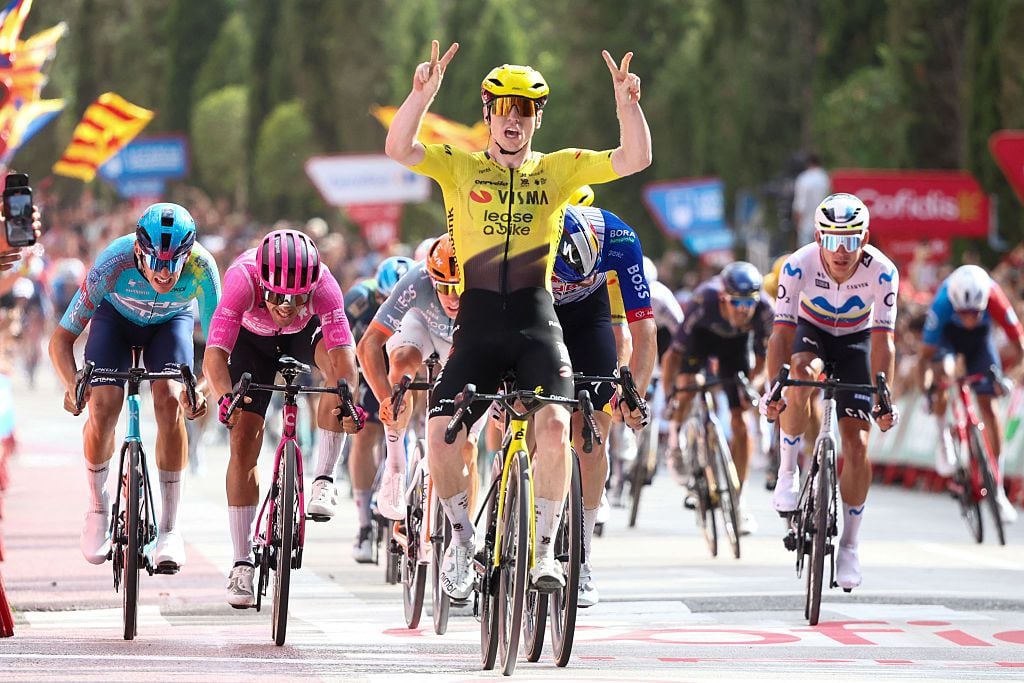
The run towards Lorca strongly favours regrouping
The road after Aledo is precisely why a bunch sprint remains the strongest prediction. After cresting the climb with 32km remaining, the route largely descends towards Lorca, with no second categorised climb or prolonged difficult section waiting to catch tired sprinters.
A group containing 40 or 50 riders can move extremely quickly across these roads. That makes attacking on Aledo a difficult calculation because five riders holding 15 seconds over the summit could cooperate well and still find themselves caught within ten kilometres. A solo rider faces even worse odds.
For the sprinters, the objective is simply to remain close enough to the front over the summit that regrouping becomes straightforward. Once that happens, the tactical emphasis changes almost immediately from survival to positioning.
The Lorca finish puts the lead-outs under pressure
The riders enter Lorca with 6.8km remaining before passing through a succession of urban roads on the way towards the finish on Avenida del Presidente Adolfo Suárez.
The final approach is not excessively technical, but several roundabouts and changes of direction mean teams cannot leave their positioning work until the final kilometre. That again favours Visma, because Van Aert and Laporte provide Brennan with an extraordinary amount of experience around a Grand Tour sprint.
Their value goes beyond the final acceleration. They can keep Brennan near the front through the final five kilometres, prevent him being boxed into poor positions and make rival sprinters expend energy simply trying to reach his wheel. That organisation has been one of the clearest differences between Brennan and several of his rivals during the opening ten stages.
The Brit has the speed. Visma are consistently giving him the opportunity to use it.
Matthew Brennan is the clear favourite
Everything about Wednesday points towards Matthew Brennan. His two victories already make his debut Vuelta exceptional, with the first coming on the uphill finish at Manosque and the second in Roquetes proving he could also convert a much more recognisable sprint opportunity after surviving late climbing.
Stage 11 arguably suits him better than either. Aledo should not be hard enough to remove him, while the 32km after its summit gives Visma time to recover from any temporary difficulty. There is also a strategic reason to prioritise Wednesday because Thursday’s summit finish at Calar Alto immediately removes Brennan and Van Aert from the stage-winning equation.
Visma should therefore have little reason to hold anything back in Lorca. Brennan has gone from being a rider discovering Grand Tour sprinting to the rider everyone else needs to beat.
Jordi Meeus needs to turn speed into a victory
Jordi Meeus should be one of Brennan’s strongest challengers if Red Bull-Bora-Hansgrohe can give him enough support. He finished second behind Brennan on Stage 5 and third in the chaotic Stage 8 sprint won by Bryan Coquard, so his basic speed is not in question and neither should Aledo cause him significant difficulty.
The complication is Red Bull’s wider race. Primož Roglič sits second overall and faces the summit finish at Calar Alto on Thursday, meaning every rider used extensively controlling Stage 11 is a rider who enters that mountain stage with slightly less energy.
Red Bull therefore have less incentive than Visma to spend the entire afternoon chasing. Meeus may need to rely on Visma doing much of the work before using rival wheels in the finale, but if he reaches Brennan’s wheel in good position he has already shown he can challenge him.
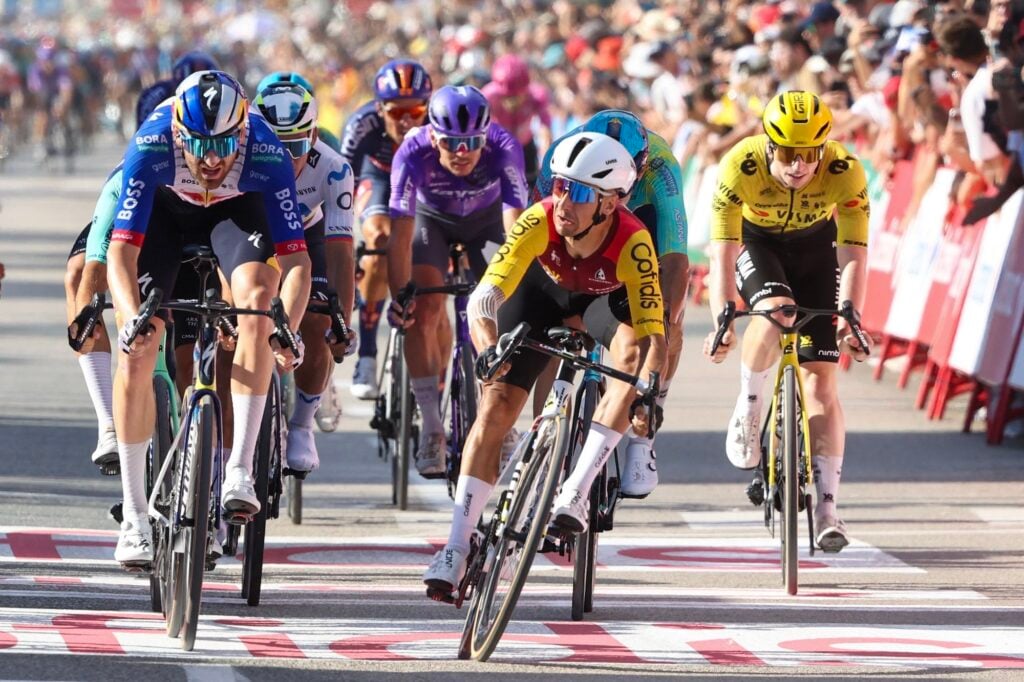 Photo Credit: Getty
Bryan Coquard has already beaten this sprint field
Bryan Coquard has something several of Brennan’s rivals still lack at this Vuelta: a stage victory.
The Frenchman won Stage 8 in Xeraco, beating Mads Pedersen and Meeus in a finish overshadowed by Tadej Pogačar’s race-ending crash. Coquard should also have no difficulty with Aledo, with moderate climbing traditionally helping rather than harming his prospects by removing faster but less resilient rivals.
The problem on Wednesday is that the climb may not be hard enough to narrow the field in his favour. If Brennan, Meeus and the other principal sprinters all reach Lorca, Coquard needs to beat them on outright speed rather than use his climbing durability to reshape the contest.
Stage 8 showed that he can do it, but it will require another very good final kilometre.
Wout van Aert gives Visma a second route
Van Aert is unlikely to be Visma’s first sprint option on Wednesday, and there is little reason he should be after Stage 10 suited him considerably better. Lorca points much more clearly towards Brennan.
His role remains crucial because he can contest the intermediate sprint, help Brennan through Aledo and become one of the most powerful lead-out riders in the race. There is also the insurance factor. If Brennan punctures, crashes, becomes trapped behind a split or unexpectedly struggles on Aledo, Visma do not have to abandon the stage.
They simply switch to Van Aert. Most teams have one realistic route towards a sprint victory. Visma have two, and that flexibility becomes especially valuable during a Grand Tour where crashes and poor positioning can overturn a stage plan within seconds.
Mads Pedersen needs a response after Stage 10
Under normal circumstances, Mads Pedersen would sit very close to Brennan among the favourites because the route should suit him almost perfectly. Pedersen can comfortably manage Aledo and possesses enough raw speed to win in Lorca.
His Stage 10 performance creates some uncertainty after the Lidl-Trek rider finished well down once he had become detached from the front of the race. That does not automatically indicate a physical problem, because once Tuesday’s stage was no longer winnable there was little reason to spend additional energy chasing back.
Wednesday should provide a clearer answer. If Pedersen crosses Aledo comfortably near the front, he immediately becomes one of the biggest threats to Brennan. Lidl-Trek also have Thibau Nys, third on Tuesday, but the flatter Lorca finish moves the emphasis much more naturally towards Pedersen.
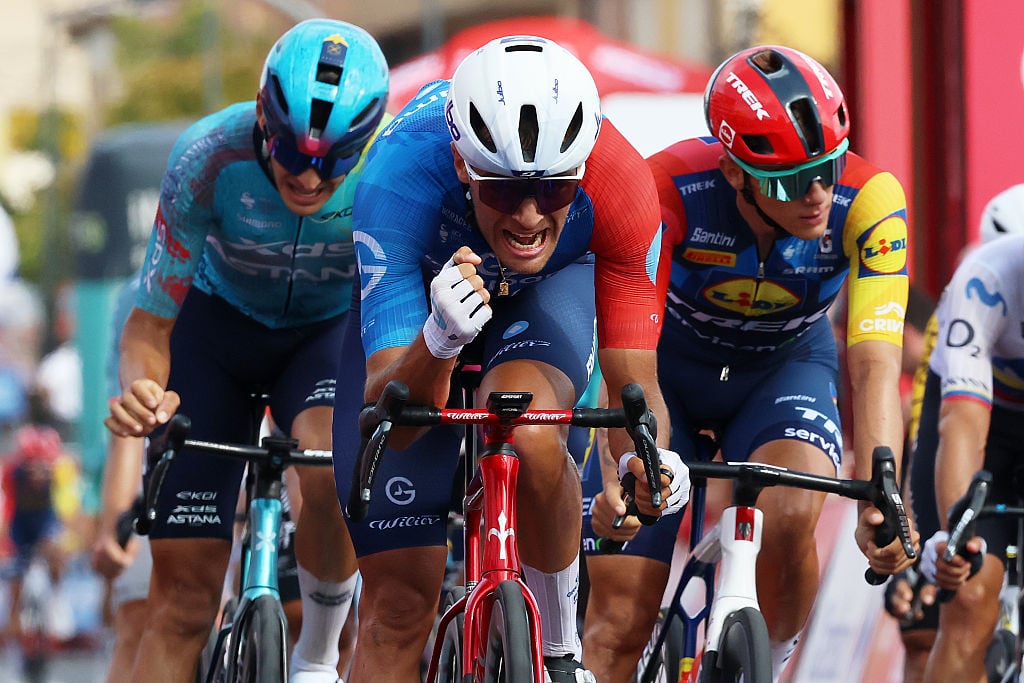 Photo Credit: Getty
Tronchon and Romele add depth behind the favourites
Stage 10 changed how Bastien Tronchon should be viewed for the remainder of this Vuelta. The Groupama-FDJ United rider did not simply place well in Elche de la Sierra; he won, beating Cort, Nys and Van Aert after one of the most chaotic finales of the race.
Lorca is less naturally suited to him because a flatter and more organised sprint increases the advantage held by Brennan and Meeus. Tronchon nevertheless enters Wednesday with confidence and no pressure, while Groupama-FDJ United can leave responsibility for controlling the race to teams with specialist sprinters.
Alessandro Romele also deserves attention after finishing fifth on Stage 10 and quietly becoming one of the more consistent fast riders in the race. He should comfortably survive Aledo and another top-five result is entirely plausible, although winning would require both excellent positioning and one of the leading sprint trains getting the finale wrong.
The heat could make a simple stage harder
The forecast for Lorca on Wednesday is around 35°C, with dry conditions and an easterly wind of roughly 15km/h. There is currently no significant rain threat, making the heat the main environmental concern rather than wind or technical road conditions.
That still matters. Stage 10 was fast and physically demanding despite coming immediately after the rest day, and riders now move directly into another afternoon where temperatures should rise well above 30°C. Dehydration increases fatigue, teams need to manage bottles carefully and riders who struggled with Tuesday’s combination of climbing and heat have relatively little recovery before another hot stage.
The easterly wind could expose parts of the more open middle section depending on the exact direction, but the current forecast does not make this an obvious echelon day. Teams will remain alert because one short crosswind section is enough to complicate a supposedly straightforward sprint stage, but it would be a surprise if wind became the defining feature.
Enric Mas should want the quietest day possible
Nothing changed at the top of the general classification on Stage 10. Enric Mas remains in red with 1:18 over Primož Roglič, while Felix Gall is third at 1:39, Oscar Onley fourth at 2:20 and Richard Carapaz fifth at 3:26.
Those gaps were established after Mas won on Alto de Aitana, and Tuesday gave the main contenders another opportunity to reach the finish without changing the hierarchy. Wednesday should be even less attractive for GC attacks because there are no meaningful bonus opportunities capable of transforming the standings and no climb difficult enough to justify spending substantial energy.
More importantly, Calar Alto comes the following day. The GC battle after Stage 9 already established the central question of the second week: whether Roglič, Gall, Onley or Carapaz can turn the remaining mountain stages into enough time to overhaul Mas. Lorca is not the place to answer it.
Movistar’s priorities should therefore be straightforward: keep Mas safe, make sure no remotely dangerous GC rider disappears into an unexpected move and reach the finish without incident.
-
 Photo Credit: Getty

Calar Alto changes the incentives for the GC teams
Stage 12 is one of the days Roglič, Gall and the other contenders have been waiting for, with the race travelling from Vera to the summit of Calar Alto for another major mountain finish only four days after Aitana.
That influences Stage 11 before the riders even leave Cartagena. Movistar have no reason to control the race for a stage win, Red Bull-Bora-Hansgrohe will not want to exhaust Roglič’s support squad simply to improve Meeus’ sprint chances, while the teams around Gall, Onley and Carapaz should all be thinking primarily about Thursday.
Responsibility therefore falls overwhelmingly onto the sprint teams. Visma know this is a major Brennan opportunity, Cofidis have a realistic chance with Coquard and Lidl-Trek should have an interested Pedersen if his condition is good. If those teams cooperate through the long flatter middle section, the breakaway has very little chance of turning Stage 11 into another surprise result.
How Stage 11 is likely to unfold
The most straightforward scenario remains the most convincing. A small breakaway should form after the opening rises around Cartagena, with Visma allowing it a manageable advantage while several other sprint teams contribute enough to stop the gap becoming dangerous. The peloton can then steadily reduce the advantage through the long flatter section before Van Aert monitors the intermediate sprint in Totana.
The break should be caught either before or during the Alto de Aledo, where one or two teams are likely to increase the pace in an attempt to weaken Brennan and the other fast finishers. Some pure sprinters and domestiques may disappear, but the strongest options should survive and anything temporarily split over the summit has 32km in which to come back together.
From there, the race should turn into a battle of lead-outs and positioning on the roads into Lorca. That outcome is not guaranteed because this Vuelta has already spent ten stages demonstrating how quickly sensible expectations can fall apart, from the hailstorm and Pogačar’s Andorra raid to his subsequent crash out of the race, Mas taking control on Aitana and Tronchon emerging from Tuesday’s chaos.
For once, however, the obvious scenario is also the strongest one.
If Stage 11 reaches Lorca together, Matthew Brennan starts as the rider everyone else has to beat, with Visma holding both the fastest young sprinter in the race and arguably the strongest support structure around him.
For UK viewers following the race live, ProCyclingUK’s Vuelta a España 2026 UK viewing guide covers the TNT Sports, HBO Max and free highlights options across the remainder of the race.

