
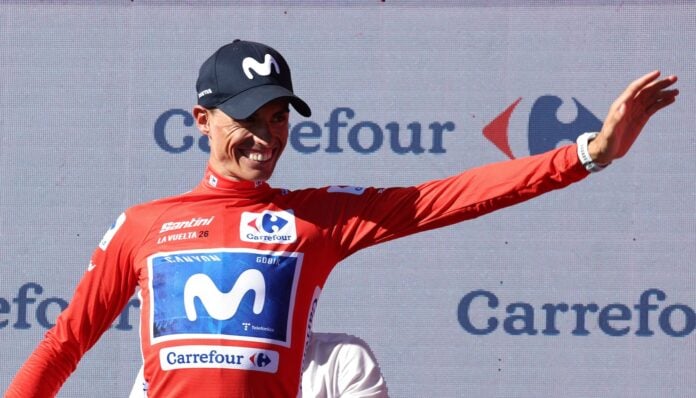
Primož Roglič finally reaches the stage he has been waiting for at the 2026 Vuelta a España, with Thursday’s 32.1km individual time trial from El Puerto de Santa María to Jerez de la Frontera offering his clearest opportunity to put Enric Mas under sustained pressure.
Mas takes a substantial advantage into the race against the clock. The Movistar leader is 2:06 ahead of Felix Gall and 2:10 clear of Roglič, with Richard Carapaz fourth at 4:24 and Oscar Onley fifth at 5:44. Stage 17 into Sevilla produced no change among the leading GC riders, leaving the hierarchy intact before three days that should decide the race.
The Vuelta a España 2026 route was designed to make this time trial important. Stage 18 is immediately followed by the uphill finish at Peñas Blancas and Saturday’s major mountain stage to Collado del Alguacil, so Roglič does not necessarily need to take the red jersey in Jerez. He does, however, need to reduce the gap enough to make those final climbs matter.
There is a separate battle for the stage victory. Ethan Hayter came within 0.09 seconds of winning the opening Monaco time trial, while Stefan Küng should be much better suited to a long, predominantly flat effort. Wout van Aert and Iván Romeo are among the other riders with realistic ambitions.
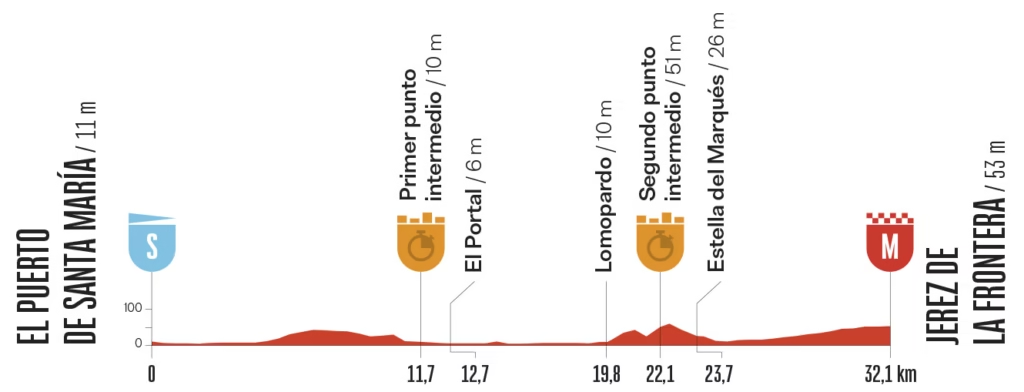
Vuelta a España Stage 18 at a glance
- Date: Thursday 10 September 2026
- Start: El Puerto de Santa María
- Finish: Jerez de la Frontera
- Distance: 32.1km
- Stage type: Individual time trial
- First rider starts: 14:06 CEST / 13:06 BST
- Final rider expected to finish: 17:30 CEST / 16:30 BST
- Intermediate checks: 11.7km and 22.1km
- GC leader: Enric Mas
For UK viewers, the wider Vuelta a España TV and streaming guide covers the TNT Sports and HBO Max options for following the final week.
A time trial built around sustained power
This is a very different test from the 9.4km Monaco time trial that opened the Vuelta.
There is little meaningful climbing between El Puerto de Santa María and Jerez. The riders leave the Cádiz coastline and head inland, passing the first intermediate check after 11.7km before continuing through El Portal. The second checkpoint comes at 22.1km, leaving exactly 10 kilometres to the finish.
The final section into Jerez becomes more technical. A succession of roundabouts and direction changes appears inside the last five kilometres, so riders cannot simply settle into one uninterrupted aerodynamic effort all the way to the line. Even so, the overwhelming characteristic of the route is its flatness. This is a stage for riders capable of sitting close to threshold for more than half an hour without losing speed.
Wind is the other complication. The race organisers identified it as a factor from the moment the route was announced, particularly with the opening kilometres close to the Cádiz coast. Even moderate changes in strength or direction could affect pacing and make the conditions slightly different for riders separated by several hours in the starting order.
For the GC contenders, none of that changes the basic equation. Mas has time. Roglič needs to take it from him.
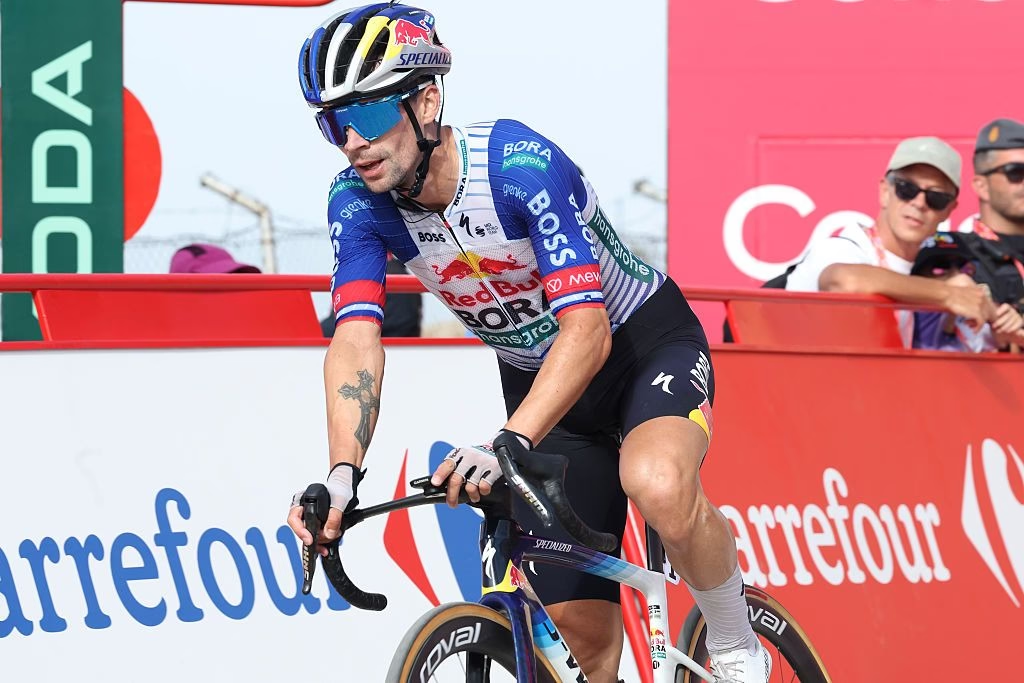 Photo Credit: Getty
Roglič needs much more than an ordinary good time trial
A 2:10 deficit sounds manageable when the rider chasing is Primož Roglič and the stage is a flat individual time trial. Over 32 kilometres, however, taking more than two minutes from the race leader is a substantial task.
Roglič’s opening Monaco time trial was not particularly convincing. He finished 24th, 22 seconds behind Tadej Pogačar, while Mas conceded 29 seconds. Roglič therefore gained only seven seconds on Mas.
Thursday should suit him considerably better. Monaco was short and technical, with constant accelerations and little opportunity to settle into a prolonged rhythm. Jerez is three times as long and much closer to the type of time trial on which Roglič has traditionally been able to separate himself from pure climbers.
The question is how much of that traditional advantage remains after nearly three weeks of racing.
Mas does not need to produce the best time trial of his career. A loss of 45 seconds would still leave him comfortably ahead. Even a minute would send him into Stage 19 with more than a minute in hand and two difficult climbing days where he has every reason to back his current form.
Once Roglič starts moving towards a gain of 90 seconds or more, the race changes.
If Mas reaches Jerez with roughly a minute of his advantage intact, Movistar still control the Vuelta. If Roglič reduces the gap to 30 or 40 seconds, Friday and Saturday become very different races.
The first checkpoint could tell Mas exactly how much trouble he is in
The first timing point after 11.7km should provide an immediate indication of how aggressively Roglič is changing the GC.
Mas will start after his closest rivals and therefore have access to their times throughout his ride. That matters. He does not have to judge the effort blindly or chase the fastest specialist on the course. His race is against Roglič, Gall and, to a lesser extent, Carapaz.
If Roglič is only 15 or 20 seconds ahead at the opening check, Mas can continue riding his own pace without taking unnecessary risks.
A deficit approaching 30 or 40 seconds would be more concerning. The second section is long enough for a superior time triallist to continue increasing the difference, particularly if Mas has started too aggressively in an attempt to limit the early loss.
That creates an interesting pacing problem for the race leader. The quickest way to lose two minutes would be to panic after the first checkpoint, push beyond a sustainable effort and pay heavily over the final 10 kilometres.
Mas has spent much of this Vuelta racing with patience. Thursday requires the same approach in a completely different discipline.
 Photo Credit: Getty
Felix Gall is likely to lose second place
Roglič begins the stage only four seconds behind Felix Gall, making the fight for second overall considerably simpler.
Gall has built his position through the mountains and produced some of his best climbing of the race around Sierra de la Pandera. A flat 32.1km time trial offers very little of what has put him second overall.
Roglič should pass him in the classification unless something goes badly wrong.
The more important question for Gall is the size of the loss. There are still two uphill finishes available after the time trial, so conceding 45 seconds or a minute does not remove him from the podium battle. Losing substantially more would force Decathlon CMA CGM into a much more aggressive approach at Peñas Blancas and Collado del Alguacil.
Gall does not need to defend second place on Thursday. He needs to stay close enough to take it back.
Carapaz needs to keep the podium within reach
Richard Carapaz starts fourth at 4:24, already 2:14 behind Roglič and 2:18 behind Gall.
The time trial is unlikely to move him directly onto the podium. His objective is making sure it does not move beyond reach.
Carapaz has enough experience against the clock to avoid the sort of catastrophic losses sometimes associated with pure climbers, but the course offers few places to hide. If Roglič produces one of the fastest GC rides, the Ecuadorian could begin Friday more than three minutes away from third.
That would leave attacking as the only realistic option.
Given Carapaz’s racing style, that may not be an entirely unwelcome position. Peñas Blancas and Collado del Alguacil provide much better terrain for him to change the race than the flat roads towards Jerez.
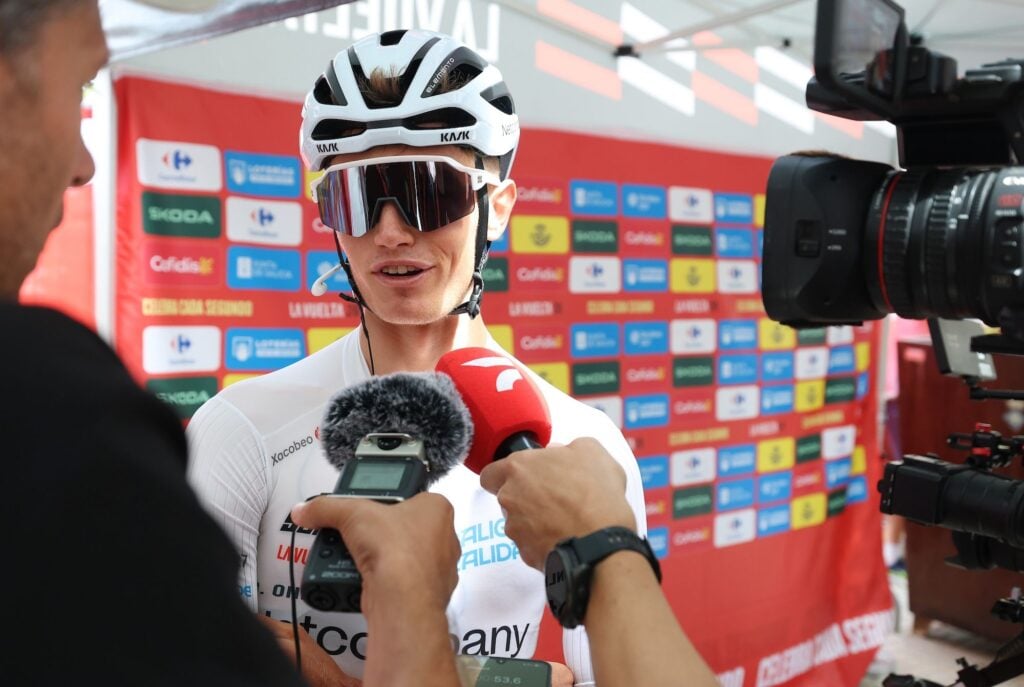
Oscar Onley has a white jersey to protect
Oscar Onley’s priorities are slightly different.
The British rider sits fifth overall at 5:44 and leads the young rider classification, turning what was already a strong Vuelta into a potentially significant Grand Tour result. He has less incentive than Carapaz to gamble everything on chasing the podium.
The time trial is nevertheless one of the more vulnerable points in his final week. Onley conceded heavily to the best riders against the clock in Monaco, and Thursday magnifies that discipline over a considerably longer distance.
Jakob Omrzel, Mattias Skjelmose and the riders immediately behind remain close enough that Onley cannot afford a poor afternoon. Protecting fifth and limiting the damage around him should take priority over trying to follow Roglič’s numbers.
Ethan Hayter has another chance after losing Monaco by 0.09 seconds
For the stage victory itself, Ethan Hayter is an obvious place to start.
Hayter came extraordinarily close to winning Stage 1. He beat Joshua Tarling’s benchmark by four seconds in Monaco and looked set to take the first red jersey until Pogačar edged him by just 0.09 seconds.
The circumstances are very different this time. Pogačar and Tarling are both among the riders who have left the 2026 Vuelta, removing two of the strongest obvious time-trial threats from the field.
That leaves Hayter with a genuine opportunity.
The longer course should suit his engine, although the third-week context makes predicting his level more difficult. Hayter has spent energy attacking and contesting other stages during the race rather than protecting himself exclusively for the time trials.
If he still has the same power he showed in Monaco, he should be competing for the win.
Stefan Küng gets a course that suits him far better than Monaco
Stefan Küng may have the best pure time-trial profile among the remaining riders.
Monaco was never ideal for him. The repeated accelerations, short duration and technical nature of the course reduced the value of the huge sustained power that normally makes Küng dangerous against the clock.
Stage 18 removes much of that problem.
There are enough turns to require concentration, particularly approaching Jerez, but most of the course rewards exactly what Küng does well. He can settle into the aerodynamic position, hold a high speed and make the difference gradually rather than needing to accelerate repeatedly out of corners.
The major unknown is fatigue. Küng has had to survive a mountainous Vuelta to reach this point, and performances in third-week time trials can look very different from those produced when everyone is fresh.
On course characteristics alone, though, he is one of the strongest candidates.
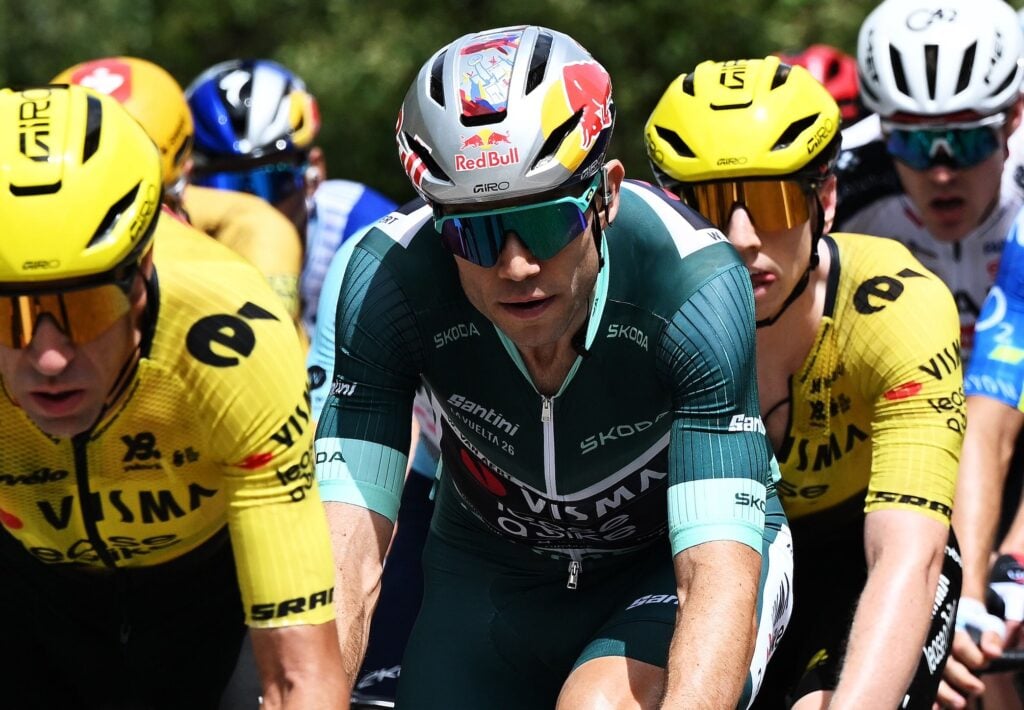
Van Aert has another route to a third stage win
Wout van Aert has already had an enormously productive Vuelta.
He won from an attacking race in Loja, followed it with another victory in Córdoba and has repeatedly been central to Matthew Brennan’s sprint successes. Brennan’s fifth win in Sevilla on Stage 17 took Visma’s stage tally to seven.
Thursday finally removes the need for Van Aert to ride for somebody else.
He was seventh in the Monaco time trial and has looked exceptionally durable during the second half of the race. A 32km flat test should suit him well enough to challenge for another stage, particularly if some of the more specialised riders have lost their top-end power after the mountain stages.
The question is whether Van Aert has been able to recover from everything he has already done.
Few riders remaining in the Vuelta start list have been asked to contribute so much across so many different types of stage.
Iván Romeo gives Movistar a useful early reference
Iván Romeo is a genuine stage contender in his own right, but his ride could also have value for Mas.
Romeo should start well before the race leader and can provide Movistar with information about the wind, road surface, pacing and fastest lines through the more complicated final kilometres. On a course where relatively small details can accumulate into significant time, that information is useful.
He also has the power to turn that reconnaissance role into a result.
Romeo has developed into one of Spain’s strongest young rouleurs and a long, flat time trial should suit him considerably better than most of the mountainous stages that have dominated this Vuelta.
Ivo Oliveira is another rider worth watching. UAE Team Emirates-XRG no longer have Pogačar or Jay Vine in the race, leaving more freedom for the remaining riders to pursue individual results, and Oliveira has the sustained power needed to make use of the opportunity.
-
 Photo Credit: A.S.O./Billy Ceusters
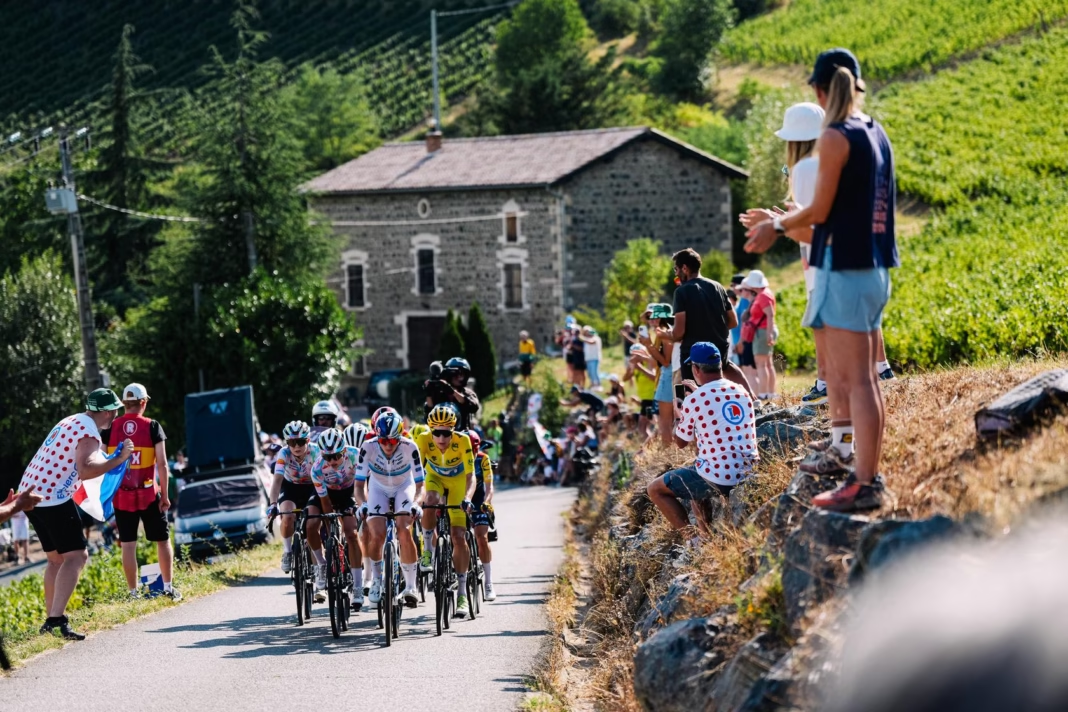
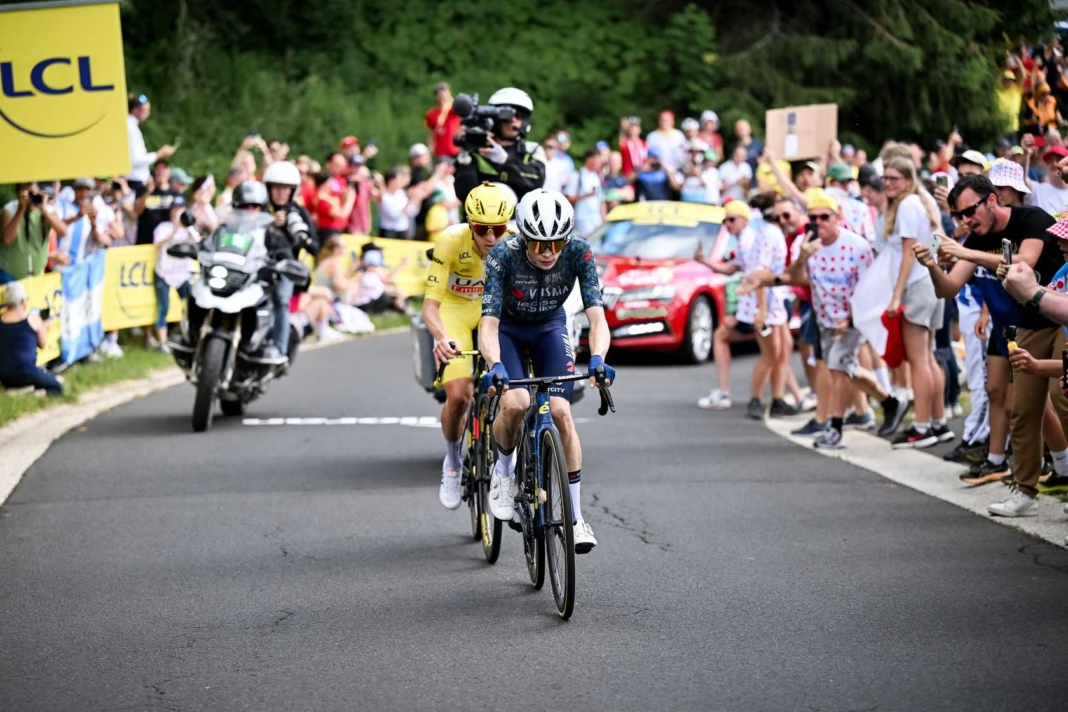
Stage 18 leading contenders
Ethan Hayter
Second by 0.09 seconds in Monaco and now without Pogačar or Tarling in the field. His condition after 17 stages is the main uncertainty.
Stefan Küng
Possibly the rider best matched to the course. The longer and flatter the effort, the better his chances become.
Wout van Aert
Already twice a stage winner and still producing huge efforts deep into the third week. He can realistically win again.
Iván Romeo
Strong against the clock and particularly well suited to a high-speed course. Movistar will also value the information from his ride before Mas starts.
Primož Roglič
The stage victory may be secondary to the GC battle, but a ride strong enough to threaten Mas could also put Roglič close to the fastest time.
Ivo Oliveira
An outsider with the right physical profile and much more freedom following UAE’s losses during the race.
Stage 18 prediction
Prediction: Stefan Küng
Hayter has already produced the best time-trial performance among the obvious remaining contenders during this Vuelta, but Stage 18 is much closer to Küng’s ideal terrain than the Monaco opener was. More than 30 kilometres of predominantly flat road gives the Swiss rider enough time to build his advantage through sustained speed.
Hayter and Van Aert should be close, while Roglič is the most interesting rider in the race regardless of where he finishes on the stage.
For the general classification, Roglič should take substantial time from Mas. Taking the full 2:10 is a different proposition.
A gain somewhere around a minute to 90 seconds would leave Mas in red but change the final weekend completely. Roglič would reach Peñas Blancas close enough to attack the jersey rather than simply chase a podium place, while Mas would have to return to the climbing strength that built his advantage in the first place.
That is the balance Stage 18 is likely to leave behind: Mas still leading, but with far less room for error.

