
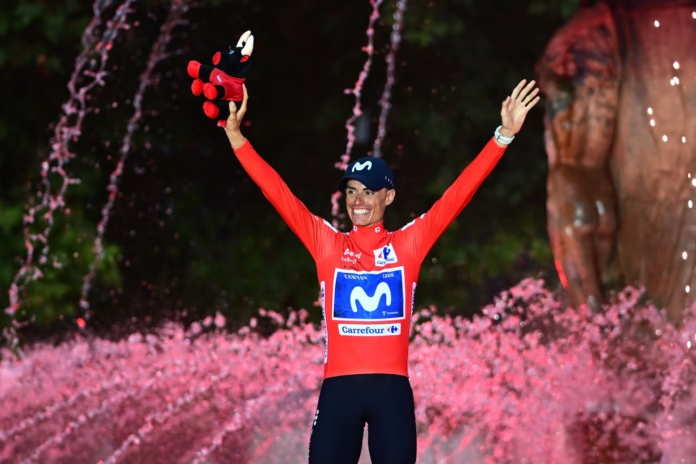
Enric Mas winning the 2026 Vuelta a España changes the shape of his career and gives Spanish cycling a home Grand Tour winner for the first time since Alberto Contador in 2014. After three previous second places at the Vuelta, Mas finally converted years of consistency into the result that had remained missing from his palmarès, finishing ahead of Primož Roglič and Felix Gall after three weeks in which the race changed dramatically when Tadej Pogačar crashed out on stage 8.
The final classification matters beyond the red jersey. Movistar have a Grand Tour victory around which to build, Roglič leaves another three-week race with a podium but without the record fifth Vuelta he was chasing, Gall has strengthened his status among the best pure climbers, and the points, mountains and young-rider classifications all produced riders whose 2026 seasons now look different from how they began.

Mas has finally changed the first sentence of his career
For years, the simplest description of Mas was built around what he had nearly won. Three runner-up finishes at the Vuelta made him one of the most consistent Grand Tour riders of his generation, but also made every new challenge feel like another attempt to escape the same label.
Winning in 2026 removes that qualification. The story of how Mas won the Vuelta is not a tale of one explosive mountain attack. He took the jersey after Pogačar’s withdrawal and then spent the rest of the race defending it intelligently, absorbing Roglič’s gains in the Jerez time trial and protecting himself through the decisive mountain stages.
Stage 20 at Collado del Alguacil was the final proof. With more than 5,000 metres of climbing in the stage, Mas did not crack under the last major pressure and actually finished the day with a 2:15 advantage over Roglič. That was the performance that turned a lead created by circumstance into a Grand Tour victory earned across the full race.
The distinction matters. Pogačar’s crash changed the Vuelta, but Mas still had to beat everybody who remained. A three-week race does not award the final jersey for being in the right place on stage 8. It rewards the rider who can defend the position through the following thirteen stages.
Movistar have the result their entire project needed
Mas’s victory is equally significant for Movistar. The team has spent years carrying enormous Spanish expectations while competing against squads with greater budgets and deeper Grand Tour rosters. A home Vuelta victory gives that strategy a tangible return.
The team’s work after Mas took red was rarely spectacular, but it was effective. They controlled dangerous moves when necessary, protected him through crosswind and mountain stages and avoided the tactical panic that can consume a team defending a Grand Tour lead for the first time in years.
That matters for 2027 planning. Movistar no longer need to discuss Mas purely in terms of whether he can finally win a Grand Tour. They can build a programme around a rider who has done it. The psychological difference is difficult to measure, but the sporting difference is obvious.
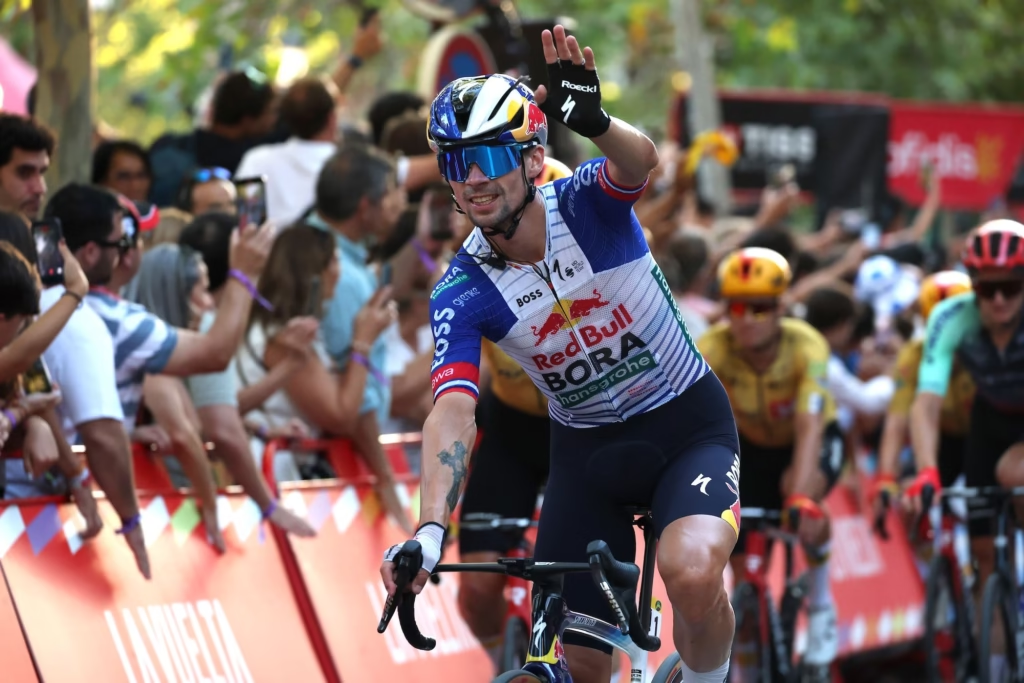 Photo Credit: Getty
Roglič remains extraordinarily consistent, but the margin for error is smaller
Primož Roglič finished second after entering the race with the possibility of becoming the first five-time Vuelta winner. He took time from Mas in the stage 18 individual time trial, but the 33 seconds gained were not enough to overturn the larger deficit created in the mountains.
Second place should not be dismissed. Roglič remains capable of reaching a Grand Tour podium deep into his career and was the closest rider to Mas when the race reached Granada. The issue is that the old formula of limiting losses in the mountains and taking decisive time against the clock no longer gives him the same margin it once did.
Mas rode the Jerez time trial well enough to contain the damage and then had enough climbing form to protect himself on stage 20. Roglič therefore needed a larger advantage from the discipline that has so often separated him from his rivals. The race showed that he can still contend for Grand Tours, but also that he needs the course and the mountain balance to work more precisely in his favour.
Gall’s podium confirms he belongs in the front rank of Grand Tour climbers
Felix Gall finishing third is another important outcome. The Austrian has produced major mountain performances before, but a Vuelta podium strengthens the case that he should now be judged as a genuine Grand Tour leader rather than a climber capable of occasional high general-classification finishes.
His limitation remains the same. Against riders such as Mas and Roglič, time trials can make the route to overall victory extremely narrow. Gall was one of the strongest climbers in the race and gained time on Roglič in the final mountain stage, yet still finished behind him overall.
For Decathlon CMA CGM, the result fits a season in which the team has continued to build greater depth around stage racing. Gall does not need to become an elite time triallist, but every improvement against the clock increases the number of Grand Tour routes on which he can realistically challenge for victory.
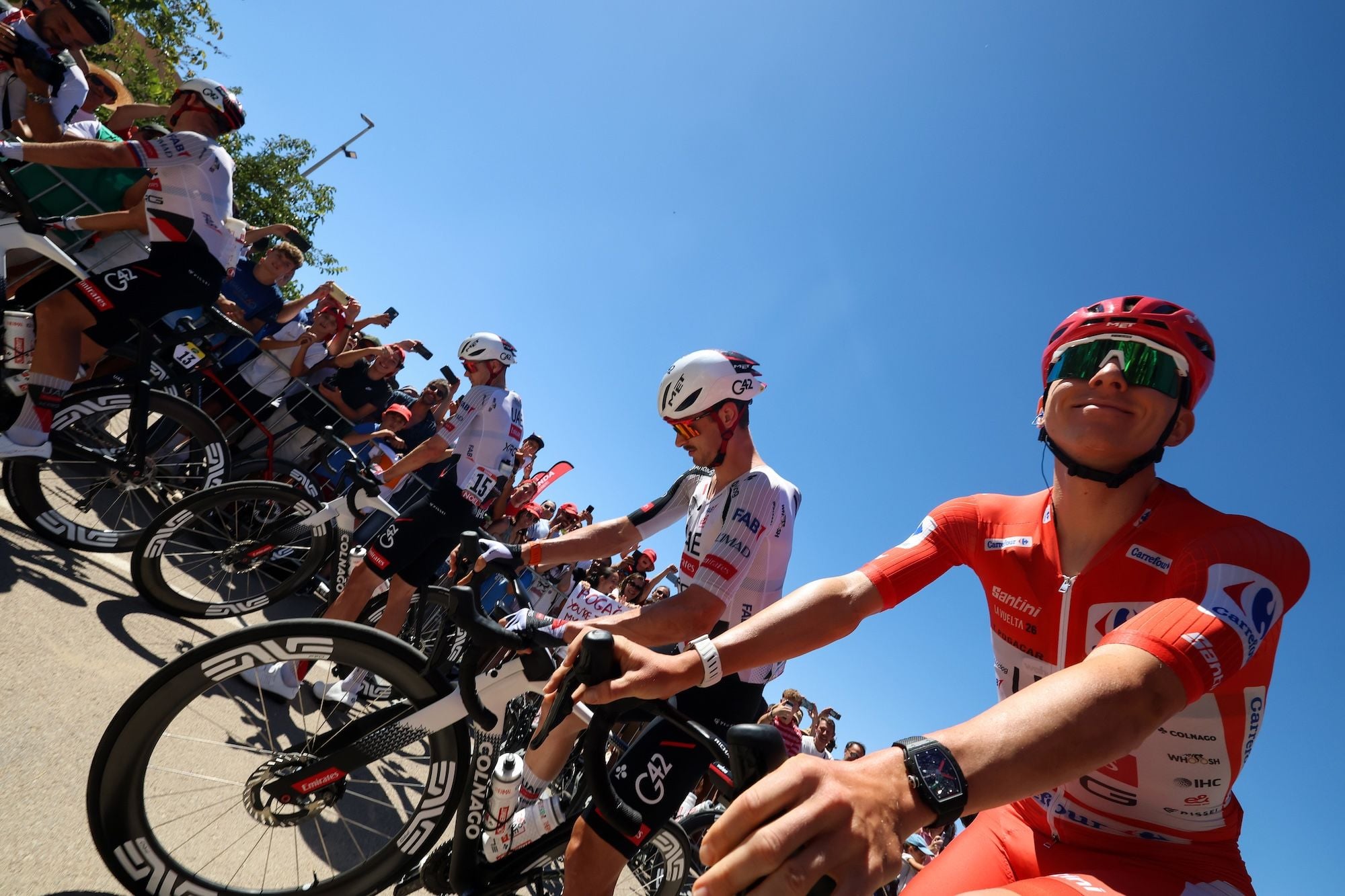 Photo Credit: Getty
Pogačar’s withdrawal changed the race without invalidating it
No analysis of the 2026 Vuelta can avoid Pogačar’s stage 8 crash and subsequent withdrawal. He began the race as the central favourite and his departure removed the rider most likely to control the general classification through raw superiority.
What followed was a different race, not an illegitimate one. Grand Tours have always been shaped by crashes, illness, weather and tactical mistakes. The riders who remain still have to complete the course and beat one another. Mas’s responsibility was not to prove he would have beaten Pogačar in an imaginary uninterrupted race; it was to win the race that actually existed after stage 8.
The wider consequence is that Pogačar’s season ended early and the World Championships picture changed with it. His absence from Montréal opens the men’s road race substantially, while Mas’s Vuelta victory ensures the season is not remembered only through the rider who left it injured.
-
 Photo Credit: Luc Claessen/ISPA

Van Aert, Buitrago and Onley leave with classifications that matter
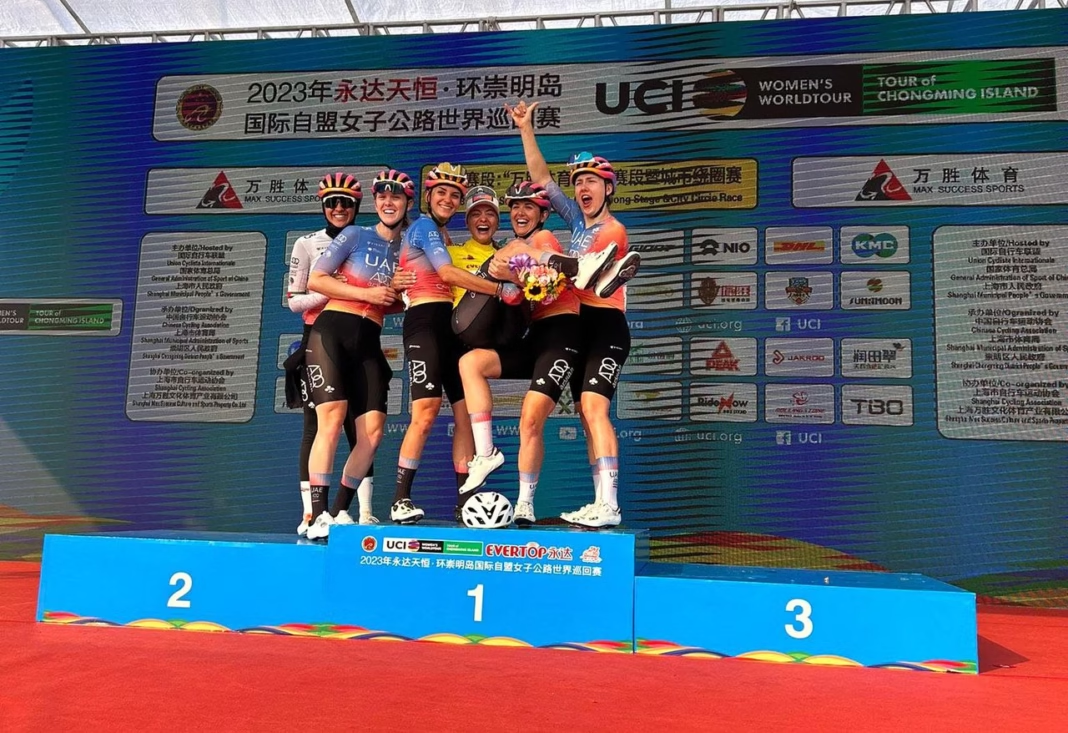
The final Vuelta classifications also gave Wout van Aert the points jersey and supercombativity award, Santiago Buitrago the mountains classification and Oscar Onley the white jersey.
Van Aert’s green jersey reinforces his value across the whole structure of a Grand Tour. He did not need to be the fastest pure sprinter every day because he could collect points on terrain that removed heavier specialists. That versatility remains one of Visma | Lease a Bike’s most useful weapons.
Buitrago’s mountains jersey rewards a race built around repeated climbing ambition, while Onley’s young-rider victory adds another substantial stage-race result to the British rider’s development. Neither classification carries the prestige of red, but both can shape leadership opportunities and race programmes next season.
Spain’s 12-year wait changes the emotional weight of the result
Spain had not produced a Vuelta winner since Contador in 2014. That drought had become increasingly awkward for a country with such a deep road-racing culture and such a central role in the WorldTour calendar.
Mas ending it matters because he has carried much of that pressure himself. He was repeatedly the highest-placed Spanish Grand Tour rider, repeatedly close to winning the Vuelta and repeatedly measured against champions from an earlier generation. Granada finally gave him the result that makes those comparisons less important.
The final stage itself, won by Tobias Halland Johannessen, was largely ceremonial for the general classification. The significance had been built over the previous three weeks. Mas leaves the 2026 Vuelta as a Grand Tour winner, Movistar leave with their biggest stage-race result in years and Spanish cycling no longer has to count backwards to 2014 when discussing its most recent home champion.

