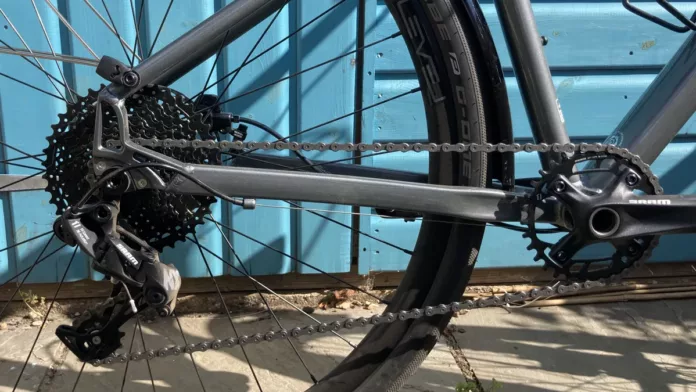
A hybrid bike is the sensible middle ground for riders who want one bike to handle commuting, leisure rides, cycle paths and light off-road use without the low position of a road bike or the weight and complexity of a mountain bike. Most use flat handlebars, reasonably wide tyres, straightforward gearing and mounting points for practical accessories such as mudguards and racks.
That makes a hybrid particularly useful if your riding is mixed rather than specialised. A weekday journey to work, a towpath ride at the weekend and a trip to the shops can all be done on the same bike without feeling as though the bike is badly suited to any of them.
The trade-off is equally simple: a hybrid is rarely the fastest bike on the road, the best choice for technical trails or the most efficient option for very long gravel rides. Its strength is that it does a lot of everyday riding well.

Hybrid bikes at a glance
| Best for | Commuting, leisure riding, cycle paths, towpaths and light gravel |
| Handlebars | Usually flat or slightly swept back |
| Typical tyres | Roughly 32–50mm depending on the type of hybrid |
| Brakes | Disc brakes increasingly common; hydraulic discs are preferable for regular all-weather use |
| Gearing | Usually wide enough for urban hills and relaxed riding |
| Practicality | Often includes rack and mudguard mounts |
| Off-road ability | Good on firm gravel and paths, limited on technical trails |
| Main drawback | Less efficient than a road bike and less capable off-road than a mountain bike |
What actually makes a bike a hybrid?
There is no single technical definition. “Hybrid” is a broad category covering flat-bar bikes designed to mix the efficiency of a road or fitness bike with some of the stability and practicality associated with mountain bikes.
The common ingredients are a relatively upright riding position, 700c wheels on many models, tyres wider than a traditional road bike and gearing that gives you enough range to ride comfortably on hills. Frames are usually aluminium, although higher-end hybrids can use carbon forks or full carbon frames.
Most also provide mounting points for mudguards, bottle cages and a rear rack. Those details matter more than they sound if the bike is going to be used for work or shopping rather than just Sunday rides.
The main types of hybrid bike
Fitness hybrids
A fitness hybrid is the closest relative to a road bike. It normally has a rigid fork, relatively narrow fast-rolling tyres and a lighter frame, but keeps flat handlebars. These suit riders who mainly use tarmac and want speed without adopting drop bars.
Commuter hybrids
Commuter hybrids put practicality first. Rack and mudguard mounts are important, while some models come with lights, full-length mudguards, a kickstand or a rack already fitted. Tyres are usually wide enough to deal with potholes and poor surfaces without making the bike feel sluggish.
Comfort hybrids
Comfort-oriented models use a more upright position, wider saddle and often a shorter reach to the handlebars. They are easy to ride at modest speeds but sacrifice some efficiency into a headwind or over longer distances.
Dual-sport hybrids
Dual-sport or adventure hybrids sit closer to gravel and mountain bikes. They use wider tyres, more tyre clearance and sometimes a suspension fork. They work well when a route mixes roads with forest tracks, canal paths and rougher gravel, but still stop short of being proper trail bikes.
Electric hybrids
An electric hybrid adds motor assistance to the same basic formula. For a hilly commute, a longer daily journey or regular use with panniers, that assistance can make a hybrid significantly more useful. The disadvantages are higher cost, extra weight and the need to manage battery charging and eventual battery replacement.
Hybrid bike vs road bike, gravel bike and mountain bike
| Bike type | Best at | Where a hybrid differs |
|---|---|---|
| Road bike | Fast tarmac riding and longer distances | A hybrid is slower but more upright and practical |
| Gravel bike | Long mixed-surface rides and rough gravel | A hybrid is easier for casual riding but less efficient over distance |
| Mountain bike | Technical trails and rough ground | A hybrid is lighter and faster on roads but much less capable on trails |
| City bike | Short urban transport | A hybrid usually offers wider gearing and more versatility |
If those distinctions are the main thing you are trying to work out, our separate road bike vs gravel bike vs hybrid guide goes deeper into the comparison. This guide is focused on deciding which kind of hybrid to buy once you know the category suits you.
What tyre width should a hybrid bike have?
Tyre width changes a hybrid more than many component upgrades. A bike on 32–35mm slick tyres feels noticeably quicker on tarmac than one on heavily treaded 45–50mm tyres, while the wider setup offers more comfort and confidence on broken roads and gravel paths.
For mainly road and commuting use, somewhere around 32–40mm is a useful place to be. Mixed-surface riders may prefer 40–50mm, particularly if the frame has enough clearance to run those tyres without squeezing them against mudguards.
Aggressive tread is rarely necessary for a normal commute. On tarmac, a smoother centre section rolls more easily and still gives enough grip for cycle paths and firm gravel.
Do you need suspension on a hybrid bike?
For most road, commuting and leisure use, no. A rigid fork is lighter, simpler and requires less maintenance. Wider tyres at sensible pressures absorb a surprising amount of poor road surface without adding the weight of an inexpensive suspension fork.
Suspension begins to make more sense if much of your riding is on rough tracks, badly surfaced towpaths or forest roads. Even then, a short-travel hybrid fork is designed to take the edge off bumps rather than turn the bike into a mountain bike.

What gearing should you look for?
You need gears that match your local terrain rather than the largest possible number of sprockets. A modern 1x drivetrain is simple to use because there is only one shifter controlling the gears, while a 2x system can provide closer steps and a wider overall range.
For a flat urban commute, almost any modern hybrid drivetrain will have enough range. If the bike will carry loaded panniers or regularly tackle steep hills, pay more attention to the easiest gear. A small chainring or large rear sprocket is much more useful at walking pace on a climb than a huge top gear you will rarely use.
Are disc brakes worth having?
Disc brakes are now common on hybrids and make particular sense on an all-weather bike. They keep braking performance more consistent in wet conditions and avoid using the wheel rim as the braking surface.
Hydraulic discs generally offer better power and modulation than basic mechanical systems. That does not mean a sound rim-brake hybrid suddenly becomes unsuitable for commuting, but if you are buying new and expect regular wet-weather use, hydraulic discs are worth prioritising once the budget allows.
Rack and mudguard mounts matter more than flashy components
A hybrid intended for everyday transport becomes much more useful once you can fit proper full-length mudguards and a rear rack. Panniers remove weight from your back, while full mudguards make wet roads far more tolerable than a tiny clip-on guard.
Check the frame and fork before buying. Some sporty hybrids have fewer mounting points in the pursuit of a cleaner appearance. If you already know the bike will carry a laptop, shopping or work clothes, practical fittings should take priority over a slightly lighter wheelset.
Our bike commuting packing guide covers what is actually worth carrying once you start using the bike regularly.
How much should you spend on a hybrid bike?
The UK market in 2026 stretches from basic but capable hybrids at around £350 to lightweight premium models costing well over £1,000. You do not need to spend four figures to get a good everyday bike.
| Budget | What to expect |
|---|---|
| About £350–£600 | Aluminium frame, straightforward gearing and functional components. Good for leisure and lighter commuting. |
| About £600–£1,000 | Better brakes and drivetrain, lighter components, wider tyre clearance and stronger everyday specification. |
| £1,000+ | Premium frames, carbon forks or frames, higher-end gearing and lower weight. Useful for keen fitness riders but not essential for normal commuting. |
| Electric hybrids | Usually considerably more expensive because the motor, battery and electronics add cost as well as weight. |
Current mainstream examples show how broad the category has become. Budget hybrids can still be found below £400, while established fitness-bike ranges extend well beyond £1,000. The sweet spot for most riders is the point where you get the brakes, gearing and practical fittings you need without paying for weight savings you will barely notice on a commute.
How should a hybrid bike fit?
A hybrid should feel controlled and relaxed, but that does not mean buying a frame that is too small so you can sit bolt upright. You still need enough room to pedal normally without your knees feeling cramped or too much weight sitting on the saddle.
Most manufacturers offer several frame sizes and often both standard and step-through versions. Do not choose purely from your height if you sit between sizes. Reach to the handlebar, stand-over clearance and the ability to set saddle height correctly are all worth checking. Our guide to choosing the right bike size covers those basics.
Is a hybrid bike good for commuting?
For many riders, commuting is exactly where a hybrid makes most sense. Flat handlebars give good control in traffic, medium-width tyres cope with poor surfaces and the frame usually accepts the practical kit needed for year-round use.
The ideal commuter hybrid is not necessarily the lightest one in the shop. A rack, mudguards, dependable tyres and brakes you trust in the wet often matter more than saving a kilogram. Security matters too, especially if the bike will be left in public. Our guide to the best bike locks for commuting is the next place to look once the bike itself is sorted.
If you are new to riding to work, the beginner’s guide to commuting by bike covers route choice, clothing, storage and the practical side of making it a routine.
Can you ride a hybrid bike on gravel?
Yes, within reason. Canal towpaths, compacted forest tracks, old railway paths and firm gravel are all well within the scope of a suitable hybrid, particularly on tyres around 38mm or wider.
Where the limit appears is on loose, rocky or technical ground. A hybrid has less tyre volume, less aggressive geometry and usually little or no suspension compared with a mountain bike. It can get down an easy trail; that does not make it the right tool for repeated trail riding.
Can you do long rides on a hybrid?
Absolutely. Plenty of riders cover substantial distances on hybrids, and comfort matters more than whether the bike has drop bars. The disadvantage begins to show as speed and distance increase because the upright position creates more aerodynamic drag and flat handlebars provide fewer hand positions.
If you expect regular rides of 100km or more, a gravel or endurance road bike may eventually feel more efficient. For occasional long days mixed with commuting and everyday riding, a well-fitted hybrid can still work perfectly well.
When a hybrid bike is the wrong choice
- You want to ride fast club runs or road events: a road bike will be noticeably more efficient.
- You mainly ride technical trails: buy a mountain bike rather than trying to turn a hybrid into one.
- You expect long gravel rides every weekend: a gravel bike gives more hand positions and is better suited to sustained mixed-surface riding.
- You regularly carry heavy loads or children: a cargo bike or purpose-built utility e-bike may be more suitable.
- You only ride short flat journeys around town: a simpler city bike may do everything you need for less money and maintenance.
Common mistakes when buying a hybrid bike
The first is buying suspension because it looks more capable. If most of your riding is on roads, a rigid fork and better tyres are often the better combination. The second is focusing on the number of gears instead of whether the easiest gear is low enough for your local hills.
Another common mistake is forgetting the practical setup. A cheap bike that accepts a proper rack and mudguards may serve a commuter better than a more expensive fitness bike with no useful mounting points. Finally, leave some budget for a lock, lights, pump and basic spares rather than spending every pound on the bike itself. Our tools and spares guide covers the essentials.
Is a hybrid bike right for you?
A hybrid is a strong choice if you want one bike for ordinary life: commuting, fitness rides, cycle paths, shopping and occasional gravel. It is particularly useful for riders who value an upright position and simple flat-bar control more than maximum speed.
The key is buying the right kind of hybrid. A quick fitness model, a practical commuter and a wide-tyred dual-sport bike may all sit under the same label but feel very different on the road. Start with where you will actually ride, how much you need to carry and whether speed or comfort matters more. Once those three things are clear, the right specification becomes much easier to identify.