Tom Pidcock is not the headline rider of the 2026 Tour de France. That is Tadej Pogačar, who reaches the first rest day in yellow with the race already tilted in his direction.
But Pidcock’s Tour is becoming more interesting by the day because he is refusing to become background noise.
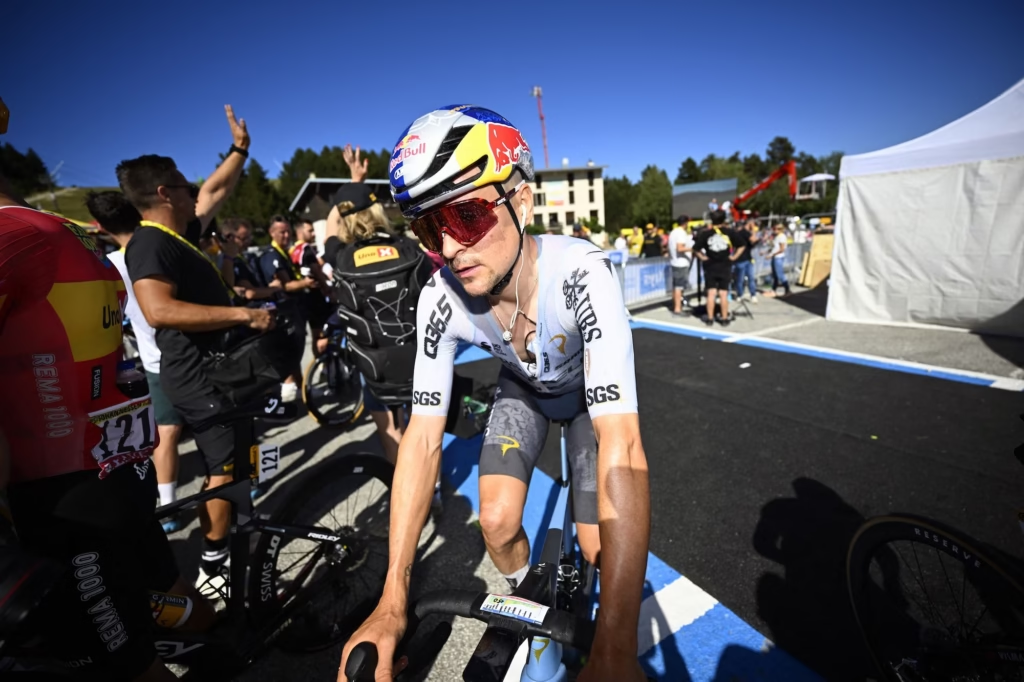
Stage 9 to Ussel was the clearest example so far. Pidcock finished third behind Mathieu van der Poel and Tobias Halland Johannessen after making the decisive breakaway on a heat-shortened, hilly day in the Massif Central. A mechanical issue affected his sprint, which matters because third place was not simply a neat result from the break. It was a reminder that Pidcock had put himself in position to win a Tour stage on difficult terrain.
That is what makes his first week worth analysing. Pidcock is not invisible in a Pogačar-dominated Tour. He is not drifting through the race waiting for a perfect day. He is attacking, joining the right moves and giving British viewers a reason to stay invested beyond the yellow jersey battle.
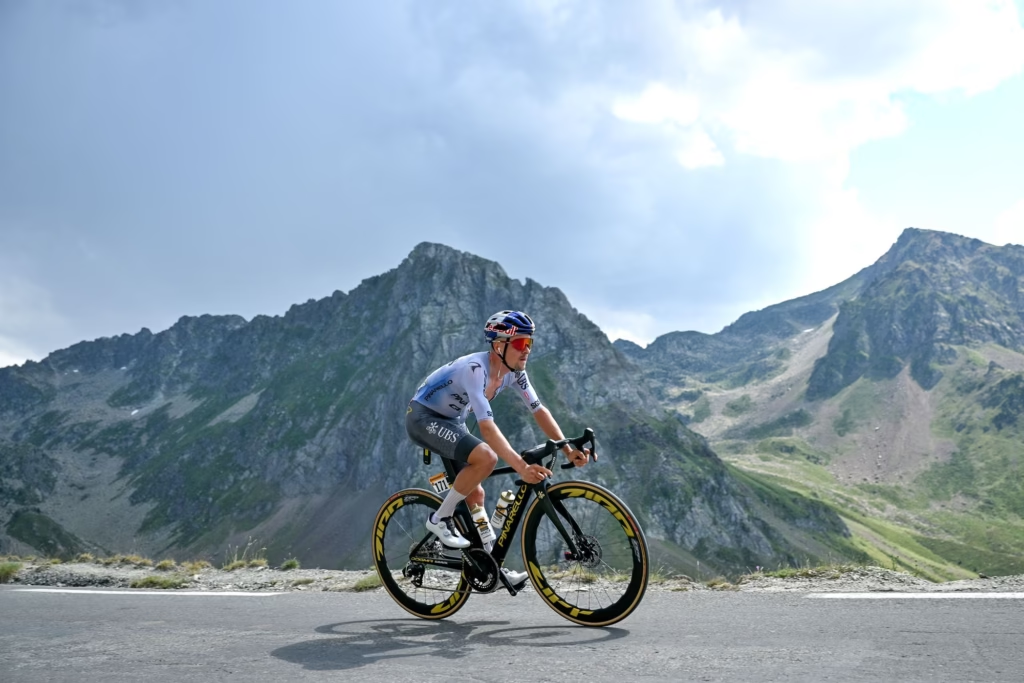 Photo Credit: Getty
Pidcock is racing like a rider with freedom
The most important thing about Pidcock’s first week is not where he sits in the general classification. It is how he is racing.
He looks like a rider with freedom. That matters. The Tour can trap talented riders into half-roles: close enough to GC to be controlled, not strong enough to win it, too valuable to attack, too marked to get away. Pidcock’s race looks more useful than that. He is being given room to hunt stages, follow dangerous moves and use the kind of terrain that suits his skill set.
Stage 9 was exactly that kind of opportunity. The shortened Malemort to Ussel route kept its hilly profile and still gave the breakaway enough difficulty to survive. Van der Poel won the stage, Johannessen finished second and Pidcock third, with the peloton coming in just behind.
For Pidcock, the result was valuable because it showed intent. He was not just present. He was in the front group on a day when the stage winner came from a high-quality break.
Our GC and jerseys after stage 9 shows how the race looked at the first rest day, but Pidcock’s story is not really about the top of that table. It is about what he can still do with the freedom he appears to have.
Stage hunting looks more realistic than GC
There will always be a temptation, especially from a British perspective, to measure Pidcock against the general classification.
That is understandable, but it is probably not the best way to read his Tour. In a race where Pogačar is already in yellow, Vingegaard is chasing at 2:42, and riders such as Isaac del Toro, Remco Evenepoel, Juan Ayuso, Paul Seixas, Florian Lipowitz and Lenny Martinez are packed inside the top 10 picture, the GC route is narrow. It demands consistency every day, not just brilliance on the right day.
Pidcock’s more realistic path is stage hunting.
That does not make his Tour smaller. It may make it better. Stage hunting lets him use his explosiveness, descending, technical handling and one-day instincts. It lets him target terrain where the race becomes chaotic, rather than trying to match Pogačar and Vingegaard across every major mountain stage.
Our Tour de France 2026 stage hunters to watch guide is built around that kind of rider: someone who can turn a selective day into a winning chance without needing to pretend they are racing the whole Tour on GC terms.
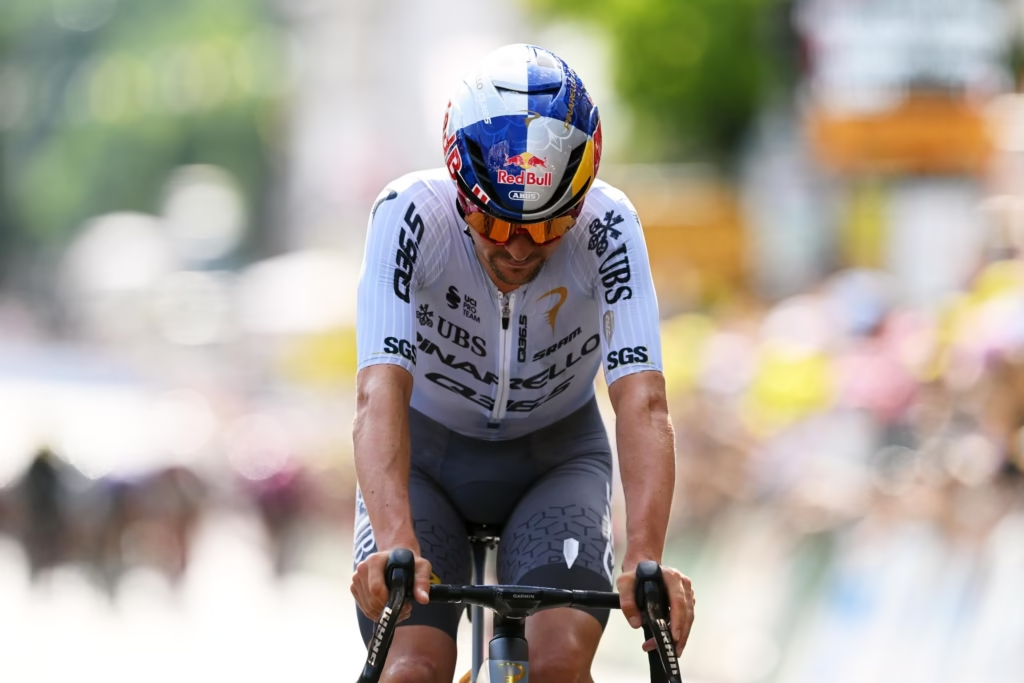
He is not being swallowed by a Pogačar Tour
This is the danger for everyone else.
When Pogačar takes yellow with a major mountain statement, the Tour’s oxygen can disappear. Every stage becomes read through his lead, his team, his rivals and whether Vingegaard can do anything about it. That is fair, because the yellow jersey is the centre of the race. But it can flatten the stories around it.
Pidcock has avoided that so far.
His stage 9 ride gave the Tour a different British storyline. Not “can he win the Tour?” but “can he win a stage in a Tour that is still alive outside the GC?” That is a much more useful question. It keeps the expectations grounded while still allowing space for ambition.
For British readers, that matters. The Tour is always more engaging when there is a rider to follow in the breaks, not just a GC battle to observe from a distance. Pidcock is giving the race that thread.
Our guide to the best British riders to watch at the Tour de France 2026 set out why Pidcock mattered before the race. After stage 9, there is now a clearer reason to keep watching him.
The Massif Central suits the idea of Pidcock
The Massif Central is not always about pure climbing. It is often about rhythm, repeated effort, roads that do not settle, descents, positioning and choosing the right move before the obvious moment.
That suits Pidcock better than a straightforward high-altitude power test.
Stage 9 showed why. It was hilly, hot, shortened and chaotic. The breakaway had to keep working when the bunch was closing. Van der Poel repeatedly drove the move, while Pidcock stayed alive in the decisive group. Even with the mechanical issue affecting the sprint, third place was a strong return from a day that needed more than simple climbing strength.
That is why the next block is interesting. Stage 10 to Le Lioran has the sort of terrain that can reward aggressive racing: seven categorised climbs, repeated changes in rhythm and a finale where the breakaway may still have a chance if the GC teams hesitate.
Pidcock does not need every mountain stage to be a stage-hunting day. He needs enough days where the route is awkward and the race is allowed to breathe.
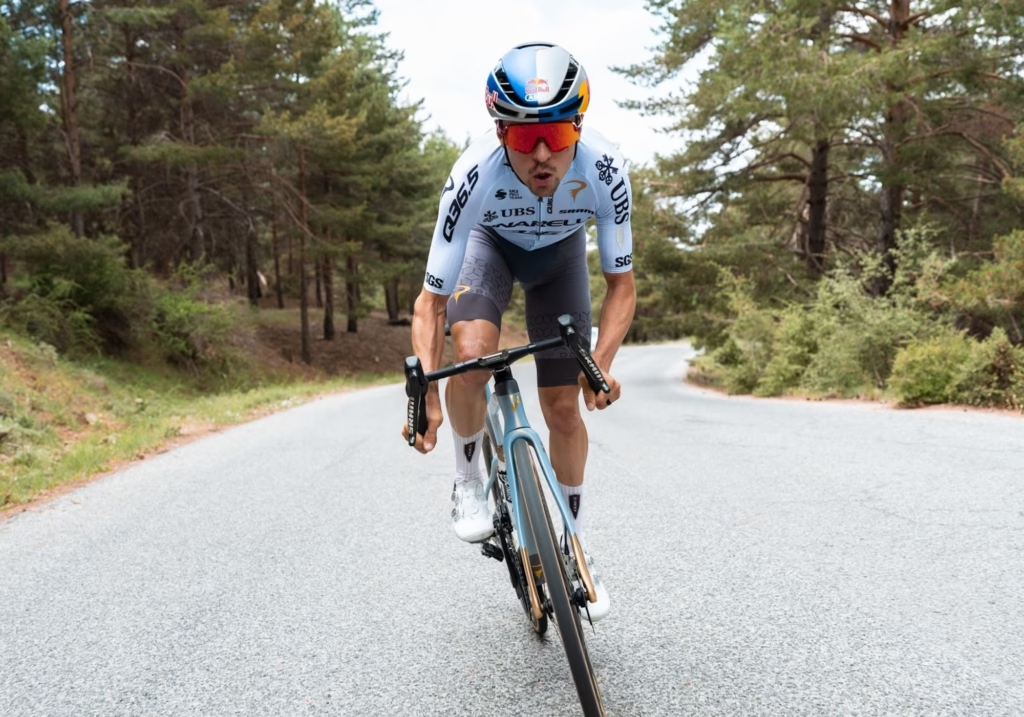 Photo Credit: Getty
The high mountains are not closed to him, but they need the right race
Pidcock is not likely to beat the pure GC climbers in a controlled high-mountain battle. That is not a criticism. Very few riders are.
His chance comes when the race is less controlled. A hard breakaway day. A satellite move. A stage after the GC favourites have looked at each other too long. A descent or technical finale where bike handling becomes part of the outcome. A climb that is hard enough to reduce the group, but not so brutally long that it becomes a pure watts-per-kilo selection.
That is the Pidcock window.
The Tour still has days where that matters. The mountains classification and stage-hunting race are not fully settled, and the Tour de France 2026 breakaway stages ranked shows why the route still gives non-GC riders a way into the story.
Pidcock’s challenge is choosing the right targets. He cannot chase every break. He cannot burn energy on days where UAE or Visma want full control. He needs precision, not just aggression.
Third on stage 9 is useful, but also frustrating
There is a double edge to Pidcock’s Ussel result.
Third is good. It confirms form, confidence and tactical presence. It also moves him into the conversation for future stage wins. But the mechanical issue leaves a sense that the result might have been better.
That frustration can be useful.
Tour stage wins are hard to get. Riders do not get unlimited chances. A day where everything almost works can either become a missed opportunity or a signpost towards the next one. Pidcock needs to make it the second.
If he keeps reaching finales in the front group, one of these days can fall his way. If he waits for perfect legs and perfect luck, the Tour may move past him.
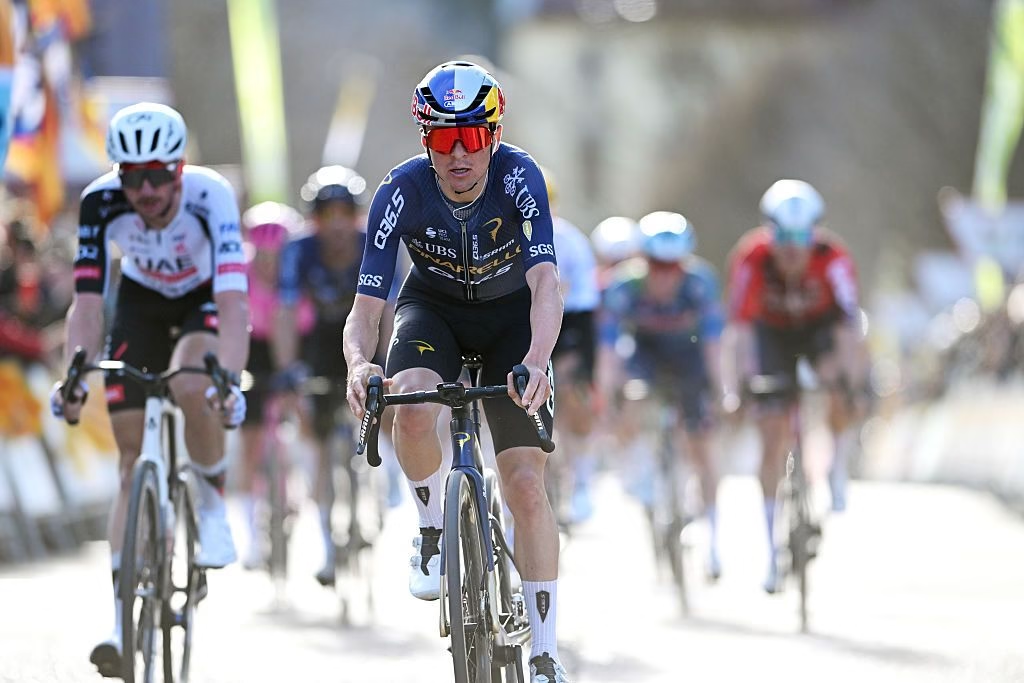
His race gives Pinarello-Q36.5 a clear identity
For Pinarello-Q36.5, Pidcock’s Tour is also important in team terms.
A squad outside the deepest GC structures needs visibility and purpose. Pidcock gives them both. He can animate stages, follow elite breakaway moves and bring the team into conversations that might otherwise be dominated by UAE, Visma, Lidl-Trek, Soudal Quick-Step and Alpecin-Premier Tech.
Stage 9 was the kind of day that does a team’s Tour good even without a win. It put the jersey on screen deep into the finale. It showed Pidcock could compete in the sharp end of a selective stage. It made future breakaways more credible.
That does create one complication: he may now be marked more heavily. Riders and teams will not give him freedom as easily if they believe he can win from that sort of group. But that is also the price of being relevant.
The British angle is bigger than a flag
This is an obvious UK traffic piece, but the reason it works is not just that Pidcock is British.
It works because his Tour has a clear live question. What can he turn this into?
That is more compelling than nationality alone. British readers are not just looking for a flag in the results sheet. They are looking for a reason to follow the next stage with some personal stake. Pidcock provides that because his race is unresolved. He has shown enough to suggest a stage win is possible, but not enough to make it feel inevitable.
That tension is useful. It gives readers something to watch for in the breakaway formation, the Massif Central stages, the later mountain terrain and any day where the GC teams leave space.
The best British Tour stories are often not built around GC certainty. They are built around possibility. Pidcock has that.
Why his Tour is becoming more interesting, not less
The reason Pidcock’s Tour is gaining shape is that his role is becoming clearer.
Before the race, there were always questions about how to frame him. GC outsider? Stage hunter? Free attacker? British headline rider? After one week, the answer looks more grounded. He is most interesting as an aggressive stage hunter with enough climbing, handling and instinct to win on difficult terrain.
That is a strong role in this Tour.
Pogačar may dominate the GC conversation, but he cannot occupy every stage. Vingegaard’s tactical roadmap matters, Pedersen’s green jersey campaign matters, and the breakaway race matters too. Pidcock belongs in that third lane, where a rider can make the Tour feel alive on days that are not purely about yellow.
Our Tour de France 2026 first week analysis argued that this Tour has already split into several different races. Pidcock’s race is one of the reasons that matters.
-
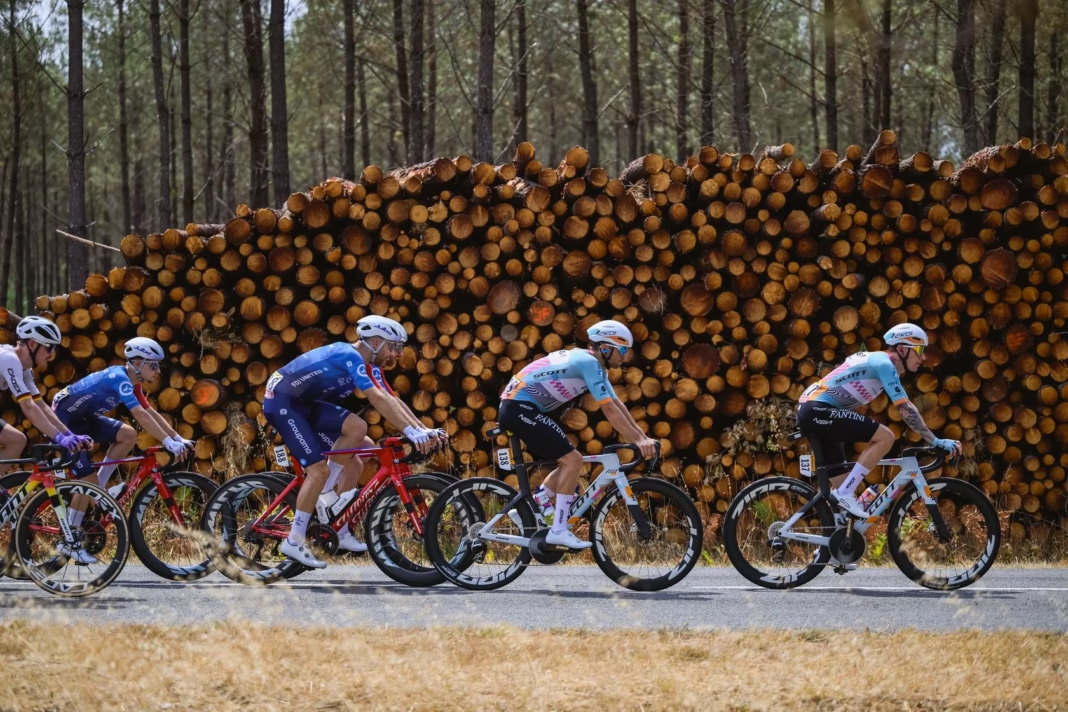 Photo Credit: A.S.O./Charly López
What comes next?
The immediate question is whether Pidcock goes again quickly or waits.
Stage 10 to Le Lioran is tempting, but also dangerous. It comes after the rest day, has serious climbing and may attract too many strong riders. If the GC teams make it hard, the breakaway may not survive. If they hesitate, it could become another opportunity.
The later mountain terrain may be even better if Pidcock can conserve energy and pick the right move. He does not need to chase the GC every day. He needs to keep enough freshness to be dangerous when the race opens.
That is the difference between an active Tour and a successful one. Activity gets you noticed. Precision gets you a stage win.
Pidcock’s Tour verdict after stage 9
Tom Pidcock’s Tour de France is becoming more interesting because it is becoming easier to understand.
He is not a passive presence. He is not just a British name in the start list. He is racing aggressively, finding the right terrain and beginning to look like a rider who can turn one of these selective days into a stage win.
Stage 9 did not give him victory, but it gave him something important: proof that he can be in the decisive move at the Tour when the race gets hard, hot and chaotic.
That is enough to make his next week worth watching. In a Tour increasingly defined by Pogačar’s control, Pidcock gives British readers a different reason to stay with the race: not the yellow jersey, but the possibility that one well-timed attack could still become a Tour stage win.