
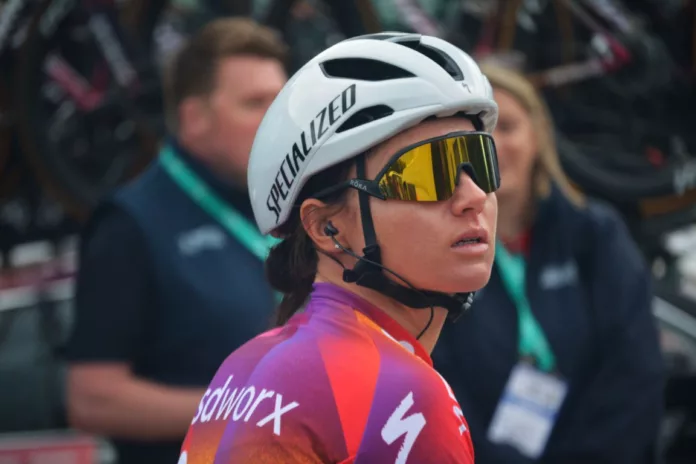
Chantal van den Broek-Blaak built the sort of career that now feels central to the modern history of women’s cycling. She was a world champion, a winner of the Tour of Flanders, Strade Bianche, Omloop Het Nieuwsblad, Gent-Wevelgem and Amstel Gold Race, and one of the defining Dutch Classics riders of her era. By the time she retired in February 2025, she had spent years as both a race-winner in her own right and a crucial part of the dominant Dutch and SD Worx structures that shaped the sport in the late 2010s and early 2020s.
What made Van den Broek-Blaak especially interesting was that she was never only one thing. Early in her career she looked like a rider on the edge of a breakthrough in the Classics. Then she became a reliable winner. Then she became world champion. Later still, she evolved into one of the most valuable experienced road captains in the peloton, a rider who could still win major races but was just as important for the way she read races and controlled them for others. Within the wider women’s cycling history hub, she belongs to the generation after Marianne Vos and alongside riders such as Ellen van Dijk and Annemiek van Vleuten, the Dutch cohort that helped define the sport’s most successful period of one-day racing.
Before the biggest wins, Chantal van den Broek-Blaak was already a strong prospect
Van den Broek-Blaak, born Chantal Blaak on the 22nd October 1989 in Zuidland, came into the elite peloton with a strong youth background. She was Dutch junior national time trial champion in 2006 and 2007 and won the European Under-23 road race title in 2009. Those results mattered because they showed the two qualities that would carry through her whole career: she had enough engine for hard races and enough finishing speed to turn strength into results.
She turned professional in 2008 with the AA-Drink team. The first year was relatively quiet, but by 2009 she was already showing what sort of rider she would become, with fourth in Omloop Het Nieuwsblad, third in Ronde van Drenthe and eighth in Trofeo Alfredo Binda. Those are not the results of a rider who simply needed time to learn the road. They are the results of a rider already suited to the hardest and most tactical races of the spring.
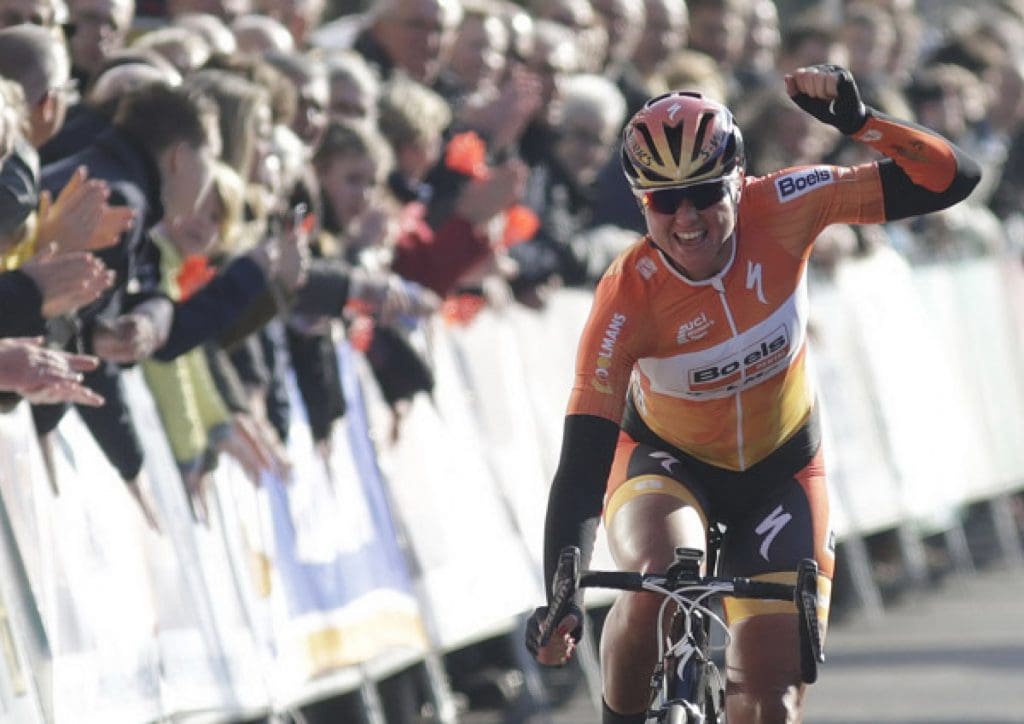
The years before the breakthrough
The period from 2009 to 2013 is important because it explains why Van den Broek-Blaak’s later breakthrough never felt accidental. She kept appearing near the front in major Classics and selective one-day races, but without yet converting that level into the very biggest wins. In 2010 she was fifth in Ronde van Drenthe and sixth in the Tour of Flanders. In 2011 she was third in Omloop Het Nieuwsblad and fourth in GP de Plouay. In 2013, after moving to Team TIBCO, she was seventh in Omloop Het Nieuwsblad and fifth in Trofeo Alfredo Binda.
That run gave her an interesting profile. She was not a rider arriving suddenly from nowhere. She was one of those Classics riders who seemed to be circling the biggest wins for several seasons, building up a body of results that said she belonged there before she fully broke through. It also showed how well suited she was to the sort of races covered in Omloop Het Nieuwsblad Women history, previous winners and greatest moments, Trofeo Alfredo Binda history, previous winners and greatest moments and Women’s Tour of Flanders history, previous winners and greatest moments.
The breakthrough came in stages, not all at once
Her move to Specialized-lululemon in 2014 finally brought the first big one-day breakthrough when she won Open de Suède Vårgårda. That mattered because it showed she could win a top-level race rather than just finish around the podium. She also won Drentse 8 that year and remained highly competitive through the northern calendar.
Then came the move that really changed her career: Boels-Dolmans in 2015. That team environment gave her both opportunity and structure. She won Le Samyn des Dames history, previous winners and greatest moments for the first time in 2015 and backed it up with a much bigger 2016 season that included victories at Le Samyn, Ronde van Drenthe and Gent-Wevelgem, as well as second in Omloop Het Nieuwsblad and third in the Tour of Flanders. She also won the Holland Ladies Tour overall that season. By the end of 2016, she was no longer a perennial outsider. She was one of the core Classics riders in the world.
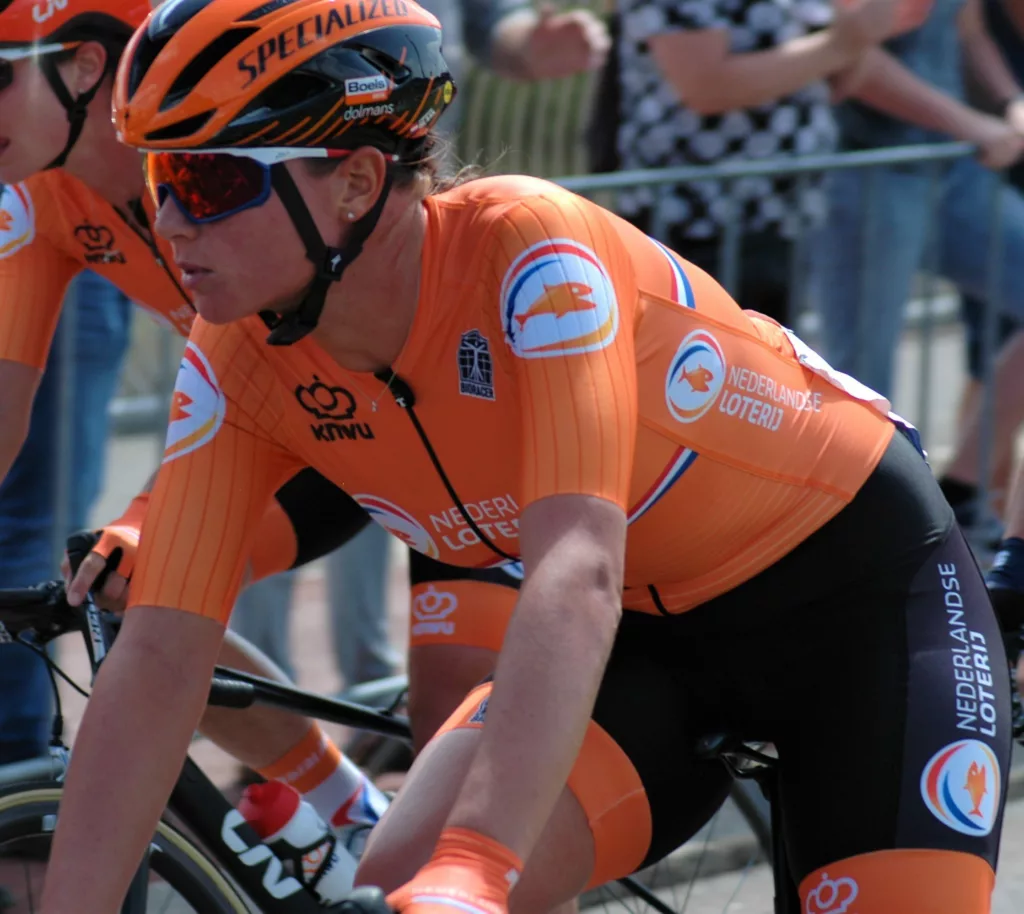
What kind of rider was Chantal van den Broek-Blaak?
Van den Broek-Blaak is best understood as a cobbled and hard-race Classics specialist, but that label still needs unpacking. She was not built like a pure time trial rider such as Ellen van Dijk, even if she could sustain a solo effort for a long time. She was not a pure sprinter either. What made her so good was that she could survive hard races, read the tactical moment and then either attack or finish from a reduced group depending on what the race demanded.
That made her especially dangerous in races where the peloton was reduced but not completely shattered. She was strong enough to go solo over climbs or into crosswinds, but she also had enough finish to beat small groups. It is why she became such a natural fit for races like Gent-Wevelgem Women history, previous winners and greatest moments, Omloop Het Nieuwsblad Women history, previous winners and greatest moments, Ronde van Drenthe and Strade Bianche Women history, previous winners and greatest moments.
2017 and the rainbow jersey
The defining single-day result of Van den Broek-Blaak’s career came at the 2017 World Championships in Bergen. She attacked late, built a meaningful gap and held off the chase to become world road race champion. For a rider who had spent years proving herself in Classics and one-day races, that rainbow jersey felt like the moment when all the near-misses and steady progress were finally distilled into one clear statement: she was the best in the world on that day, and deservedly so.
It also changed how her career should be read. Before Bergen, she was one of the best Classics specialists of her generation. After Bergen, she was that plus a world champion, which immediately moved her into a different historical bracket. She became part of the longer story told in A brief history of the road cycling world championships, and that title remains the cleanest shorthand for her peak level.
The great Classics run from 2018 to 2021
If 2017 gave Van den Broek-Blaak the rainbow jersey, the period that followed gave her the most complete run of major one-day victories in her career.
She won Amstel Gold Race in 2018, then Omloop Het Nieuwsblad in 2019 with a solo attack over the Muur and all the way to Ninove. In 2020 she won the Tour of Flanders, and in 2021 she added Strade Bianche and Dwars door het Hageland. That sequence is what really defines her place in spring history. It means she did not simply win a few big races. She won across the full spectrum of what modern women’s one-day racing asks for – cobbles, climbs, gravel and tactical intelligence.
Those victories also tie her directly into several of the race histories you are building. Her Omloop win belongs in Omloop Het Nieuwsblad Women history, previous winners and greatest moments. Her Flanders win belongs in Women’s Tour of Flanders history, previous winners and greatest moments. Her Strade Bianche victory belongs in Strade Bianche Women history, previous winners and greatest moments. She was not a rider who only fitted one race. She could solve several of the sport’s hardest one-day problems.
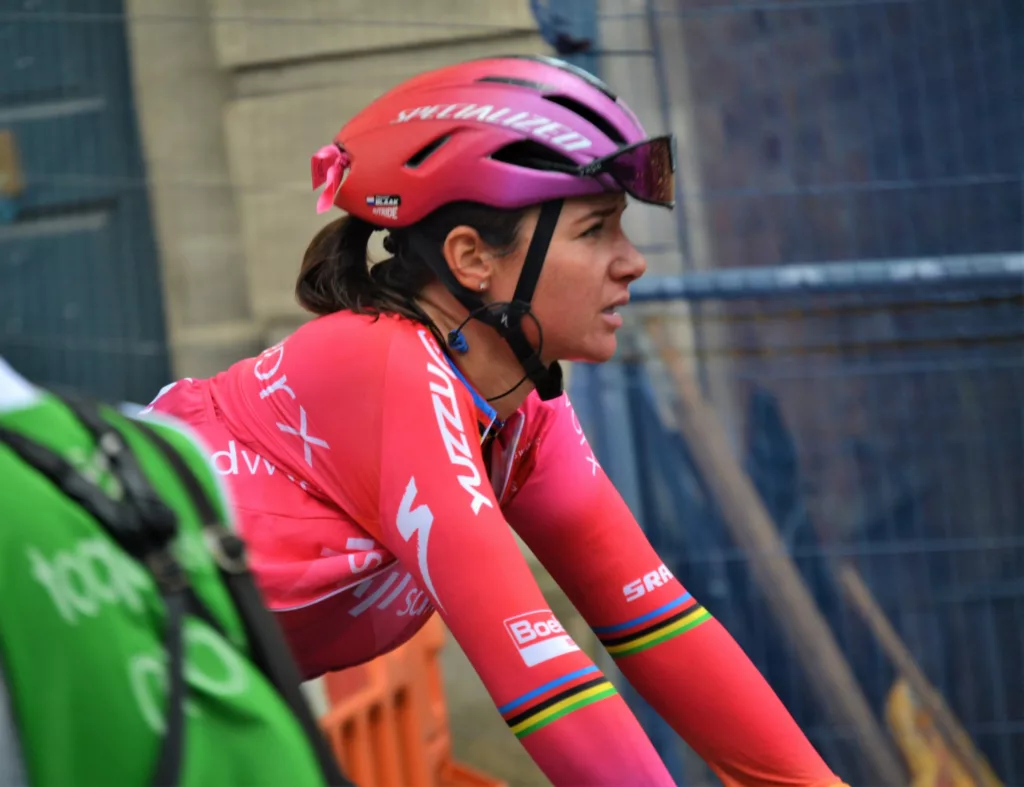
The rider who became a road captain
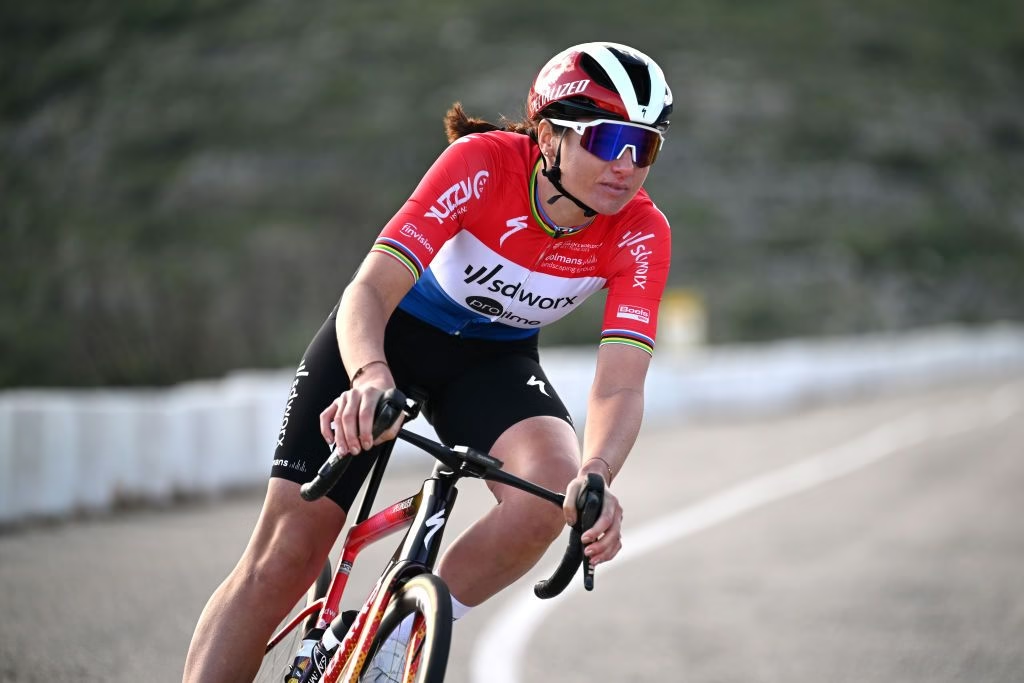
One of the most interesting things about Van den Broek-Blaak’s later career is that her status within the peloton shifted. Compared with someone like Ellen van Dijk, Van den Broek-Blaak moved more clearly into a team role later in her career. That does not mean the wins disappeared completely, far from it. She still won Drentse 8 and the Holland Ladies Tour in 2021, and she returned in 2024 to win the Dutch national road race title after maternity leave. But it does mean that her importance increasingly included how she directed races for others and how she functioned inside a dominant team environment.
That part of her story matters because it broadens her legacy. Van den Broek-Blaak was not only a race-winner. She became one of those senior riders whose intelligence and calm made the whole team stronger. In a squad like SD Worx, packed with stars, that role was not glamorous but it was hugely valuable. It also helps explain why her later career is remembered with such warmth even when the biggest victories became less frequent.
Marriage, motherhood and the late-career comeback
In the 2019 off-season, Chantal Blaak married former cyclist Lars van den Broek and from 2020 raced as Chantal van den Broek-Blaak. She later stepped away from the 2023 season for the birth of her first child and returned in 2024, when she won the Dutch national road title for the third time.
That comeback gave her career a slightly different sort of dignity. It was not just about adding another result to the palmarès. It showed that she could still return after maternity leave and win a national title, which matters in a sport that is still redefining how careers and family life can sit together. That 2024 title also gave her final competitive chapter a proper highlight before retirement came earlier than she had intended.
Why Chantal van den Broek-Blaak retired
Van den Broek-Blaak announced her retirement in February 2025 because she was expecting her second child. She had originally wanted to continue racing for another season, but the pregnancy meant she stepped away earlier than planned. That makes her retirement different in tone from some others. It was not a rider being pushed out by a lack of level. It was a life decision that brought the end of a long and successful career sooner than expected.
She later received a public farewell at the Dutch national championships, which feels telling. Riders do not get that sort of send-off unless the peloton and the wider community understand how much they meant to the sport. In Van den Broek-Blaak’s case, it reflected both the victories and the less obvious work she did inside teams for years.
What comes after racing
Unlike some former riders, Van den Broek-Blaak did not immediately announce a high-profile second career in management or commentary. As things stand, the clearest post-racing picture is still centred on family life after retiring during her second pregnancy.
That is worth stating plainly because it would be easy to overreach here. What can already be said is that her influence will not depend only on what she does next. Her racing career already secured her place. Any later role in the sport would add to that, but it is not needed to justify it.
Why Chantal van den Broek-Blaak still matters in women’s cycling history
Van den Broek-Blaak matters because she represents a very specific and very important type of champion. She was not only a world champion or only a Monument winner. She was a rider who understood how to win hard one-day races, then later understood how to help others win them too. That combination is one reason she feels so central to the Dutch and SD Worx era of dominance.
She also matters because her palmarès touches so many of the sport’s defining races. She belongs in the histories of Omloop Het Nieuwsblad Women history, previous winners and greatest moments, Women’s Tour of Flanders history, previous winners and greatest moments, Gent-Wevelgem Women history, previous winners and greatest moments, Le Samyn des Dames history, previous winners and greatest moments and Strade Bianche Women history, previous winners and greatest moments. That sort of spread is the mark of a rider who genuinely shaped the modern Classics landscape.
Chantal van den Broek-Blaak career highlights
- World road race champion in Bergen in 2017
- Winner of the Tour of Flanders in 2020
- Winner of Strade Bianche in 2021
- Winner of Omloop Het Nieuwsblad in 2019, Gent-Wevelgem in 2016, Ronde van Drenthe in 2016 and Amstel Gold Race in 2018
- Three-time winner of Le Samyn des Dames, in 2015, 2016 and 2020
- Winner of the Holland Ladies Tour in 2016 and 2021, and Drentse 8 in 2014 and 2021
- Dutch national road race champion in 2017, 2018 and 2024
- Retired in February 2025 after becoming pregnant with her second child

