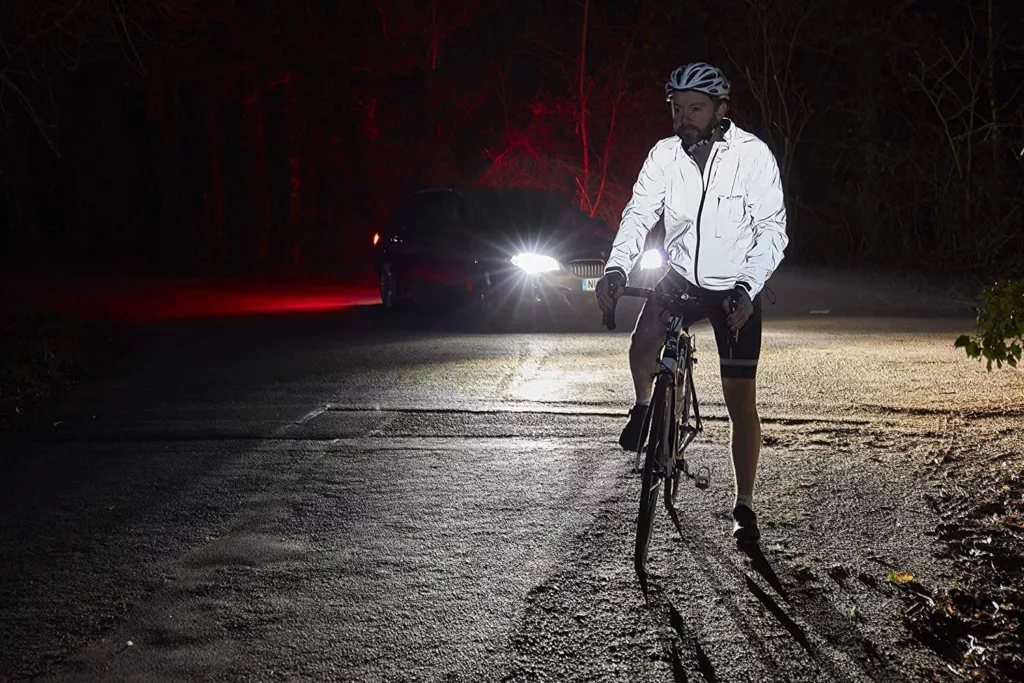
Reflective cycling jackets are most useful when the ride combines darkness, traffic and poor weather. They do two different jobs: the jacket itself can keep wind and rain off, while reflective material returns light from vehicle headlights back towards the source, making the rider much easier to pick out at night.
The key distinction is between reflective and high-visibility. Fluorescent colours are designed to stand out in daylight, while retroreflective material becomes especially noticeable when headlights hit it after dark. The best commuting jackets often combine both approaches.
How reflective cycling jackets work
Most reflective fabrics use tiny glass beads or micro-prismatic surfaces to return incoming light towards its source. That is why a jacket can look relatively ordinary in ambient light but become extremely bright in a car’s headlights.
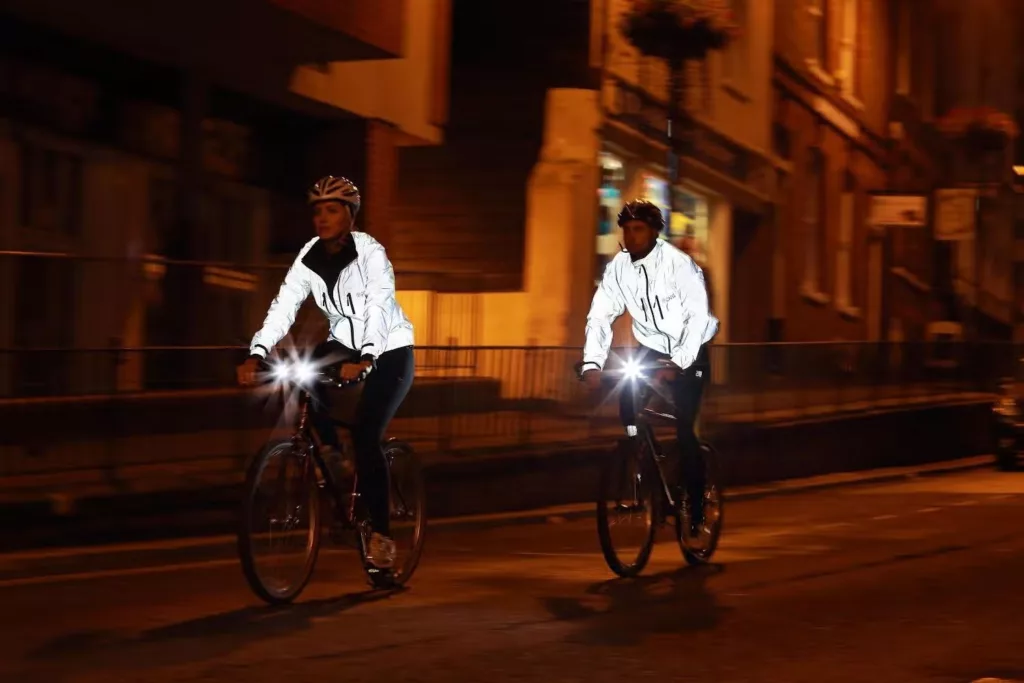
Reflectivity does not replace bike lights. A driver approaching from an angle may not illuminate every part of the jacket, while front and rear lights provide their own visible signal regardless of whether a headlight is pointing directly at you.
What to look for in a reflective cycling jacket
- Reflective coverage: larger panels provide more night-time visibility than small logos
- Waterproofing: important if the jacket is primarily for commuting
- Breathability: a highly waterproof shell can become uncomfortable if heat cannot escape
- Fit: enough room for layers without excessive flapping
- Rear length: extra coverage helps when riding in a forward position
- Ventilation: useful for longer or harder rides
- Pockets: convenient on a commuter jacket, less essential on a packable shell
Fully reflective vs reflective detailing
A fully reflective jacket maximises visibility when illuminated but can use heavier or less breathable fabrics. Jackets with reflective strips and logos usually feel more like conventional cycling clothing but offer a smaller reflective area.
For a short urban commute, maximum reflective coverage makes plenty of sense. For a fast winter training ride, breathability, fit and weather protection may matter more, with reflective details supplementing good lights.
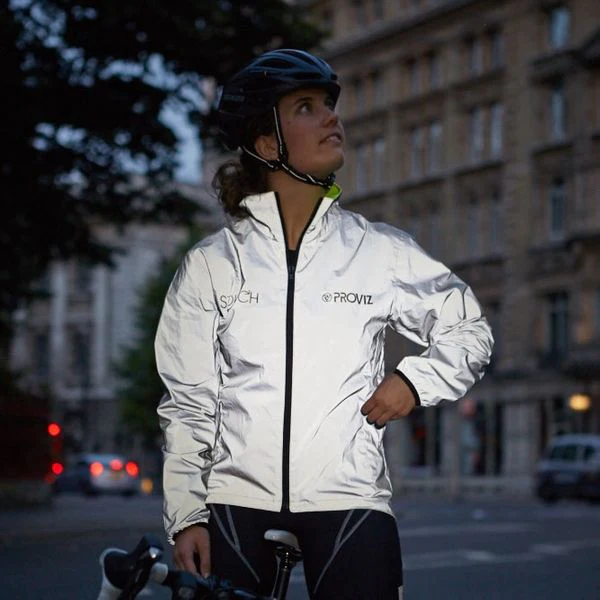
Proviz REFLECT360 remains the obvious full-reflective option
Proviz still builds much of its cycling range around full-surface reflectivity. The current REFLECT360 collection includes City commuter jackets and the lighter Plus APEX range, with men’s and women’s versions available.
The City jackets are the more commute-focused option, while the Plus APEX is designed to combine full reflectivity with a more cycling-specific cut and waterproof construction.
Check current Proviz REFLECT360 jacket availability on Amazon UK.
For road training, weather protection may matter more
If you are riding quickly for several hours rather than commuting through traffic, a conventional foul-weather cycling jacket with reflective detailing can be the better compromise.
Sportful’s Fiandre range is built around wet and cold road riding rather than maximum reflectivity, making it more suitable for riders who prioritise fit, breathability and weather protection but still want visible detailing.
Browse Sportful’s current wet-weather cycling range.
Are reflective jackets waterproof?
Not automatically. Reflective treatment describes visibility, not weather protection. Some jackets are fully waterproof, some are only water-resistant and others are essentially visibility layers.
Check the jacket’s actual waterproof construction, seam taping and ventilation rather than assuming a shiny reflective fabric will keep persistent rain out.
For more weather-focused options, ProCyclingUK’s waterproof cycling jacket guide covers current shells for road, gravel and commuting.
Reflective jackets for women
Most major cycling and visibility brands now offer women’s-specific cuts rather than simply smaller men’s jackets. Fit still varies widely, so chest, waist and arm measurements are more useful than relying on a normal clothing size.
A commuter jacket can afford a slightly roomier shape for winter layers. A road-training jacket should sit closer to the body to reduce flapping and keep the rear hem in place while riding.
How to wash reflective cycling clothing
Follow the specific care label because reflective coatings and waterproof membranes do not all tolerate the same treatment. Avoid fabric softener on technical waterproof clothing unless the manufacturer explicitly permits it.
Road spray gradually coats reflective surfaces, so cleaning matters for visibility as well as appearance. A dirty reflective panel cannot return light as effectively as a clean one.
Do you still need reflective clothing if you use good lights?
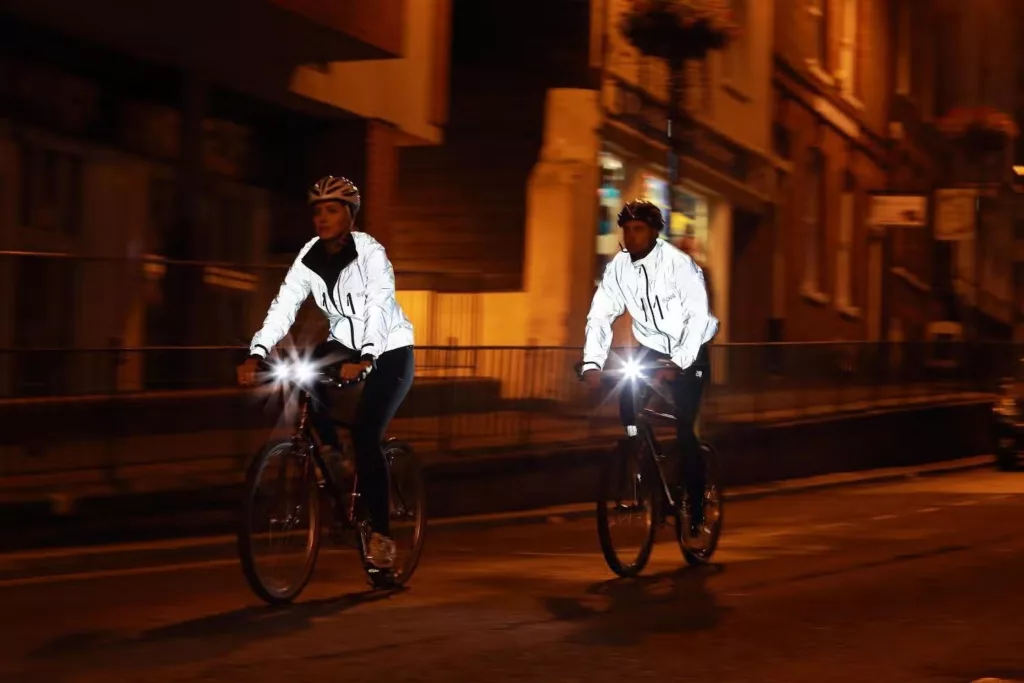
Lights should be the foundation of night-time visibility, but reflective material adds another visual cue when vehicle headlights hit the rider. The two systems work differently and complement each other.
Our guide to reflective cycling clothing for dark commutes covers jackets alongside gilets, ankle bands and other visible kit, while the bike-light guide covers active lighting.
Which type should you buy?
For regular dark commuting, a fully reflective waterproof jacket is the strongest all-in-one option. For training, choose the jacket primarily for weather protection and breathability, then make sure it has useful reflective details and pair it with good lights.
The best reflective jacket is therefore not simply the brightest one in a photograph. It is the one that matches how hard you ride, how long you are outside and how much rain you expect it to handle.