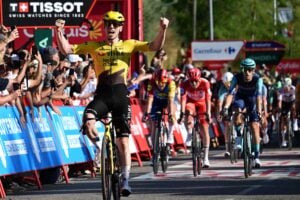
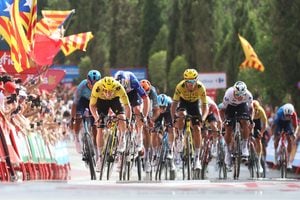
A flat stage after the mountains looks simple from the outside. The climbers have had their day, the road levels out, and the sprinters get another chance. Stage 7 of the Tour de France 2026, from Hagetmau to Bordeaux, appears to fit that pattern.
But for the sprinters, the day after a mountain stage is not a fresh start.
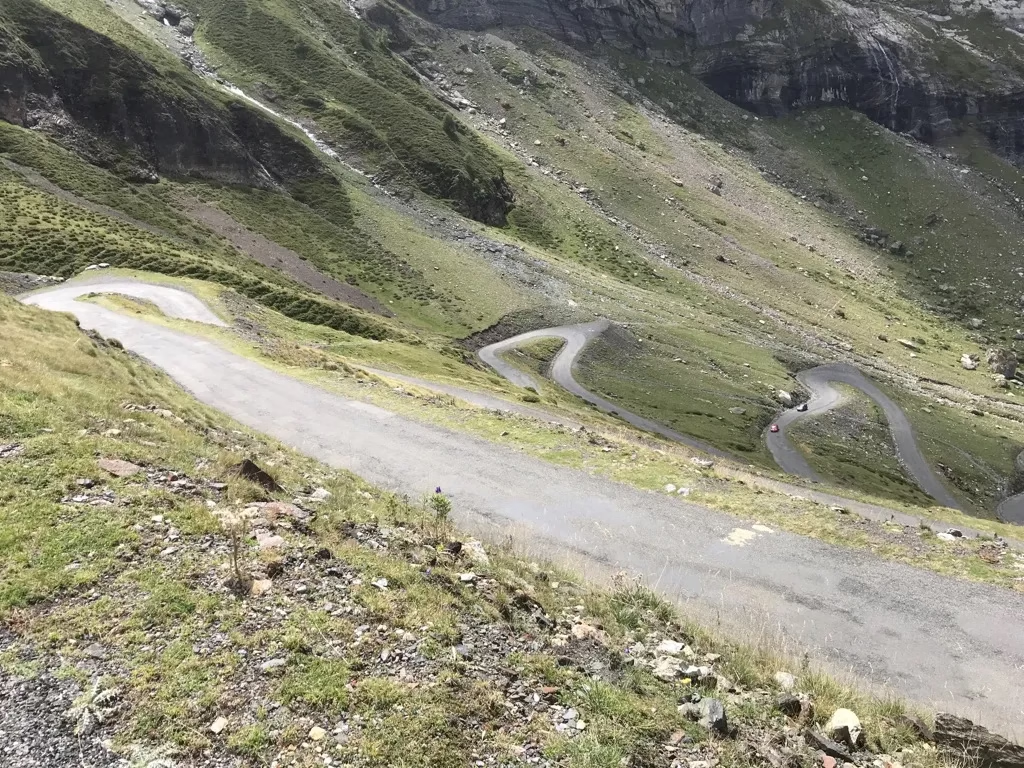
Stage 6 to Gavarnie-Gèdre was a full Pyrenean test: 186.2km, 4,100m of climbing, the Col d’Aspin, the Col du Tourmalet and a summit finish after a punishing final climb. UAE Team Emirates-XRG’s early pacing damaged the race before Tadej Pogačar attacked on the Tourmalet, distanced Jonas Vingegaard and took the yellow jersey.
Stage 7 is officially flat, 175.1km from Hagetmau to Bordeaux, with only 850m of elevation gain. On paper, that is exactly what the sprinters want. In reality, it comes after one of the hardest days of the race so far, and that matters.
Our Tour de France 2026 stage 6 preview set up the scale of the mountain test, while the full damage is covered in our stage 6 report from Gavarnie-Gèdre.
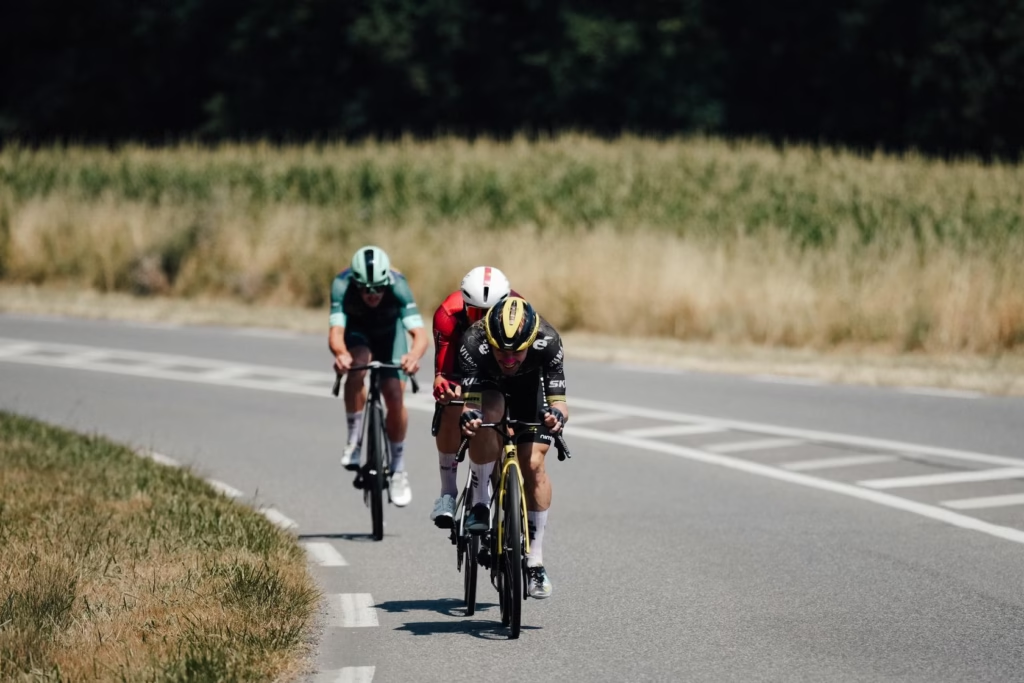 Photo Credit: A.S.O./Thomas Maheux
Quick answer: why do sprinters struggle after a mountain stage?
Sprinters struggle the day after a mountain stage because they are still carrying fatigue from the climbs. Their glycogen stores may not be fully restored, their sleep can be worse, heat load builds up, muscles are damaged, and the time-cut stress of surviving the previous stage can leave them mentally and physically flat. Lead-out riders can suffer even more because they spend the next flat stage working long before the headline sprinter launches.
| Factor | Why it hurts sprinters |
|---|---|
| Glycogen depletion | They burn through carbohydrate stores just to survive the climbs |
| Poor sleep | Pain, heat, late meals and race stress can reduce recovery |
| Heat load | High temperatures increase dehydration and recovery demands |
| Muscle damage | Long climbs, descents and repeated accelerations leave fatigue |
| Time-cut stress | Sprinters often ride all day calculating survival |
| Lead-out fatigue | Domestiques must work hard again before the sprinter even launches |
| Mental load | The next “easy” day still carries crash, positioning and points pressure |
A flat stage is not the same as a rest day
This is the first mistake casual viewers often make.
A flat stage can look like relief after the Tourmalet, but it is still a 175.1km race at WorldTour speed. The peloton may spend hours chasing a breakaway. Teams have to manage wind, road furniture, feeding, positioning and the constant risk of crashes.
For the sprinters, the day after a mountain stage is not passive recovery. It is active damage limitation followed by one of the most explosive efforts in cycling.
A sprinter might spend most of a mountain stage trying not to be dropped too early. The next day, he is expected to hit 65-70km/h in the final metres and beat the fastest riders in the world. That change is brutal. The body does not reset overnight just because the profile changes colour on the race map.
The full stage 7 route and timing context is in our Tour de France 2026 stage 7 preview and stage 7 live viewing update.
Stage 6 did not only hurt the GC riders
Pogačar and Vingegaard were the headline names on stage 6, but the suffering went much deeper.
When UAE Team Emirates-XRG lift the pace early on a mountain stage, the effect is not limited to the front group. It stretches the entire race. Riders behind are forced into a harder survival effort, the gruppetto forms under pressure, and sprinters have to manage their energy while still staying safely inside the time cut.
That is where the hidden cost sits.
The front of the race may be about yellow, but the back of the race is about survival. Sprinters, lead-out men and heavier rouleurs are often riding at a level that feels close to their climbing limit for long periods. They are not attacking for the stage, but they are still emptying the tank.
By the time they reach the finish, they may have avoided disaster. They have not avoided fatigue.
The effect on the standings was immediate, with Pogačar taking yellow and the whole race reshaping around him. Our GC and jerseys after Tour de France 2026 stage 6 update explains how much changed in one day.
Glycogen stores do not refill instantly
Mountain stages are expensive.
Climbing at threshold, repeatedly accelerating out of corners, fighting to stay with a group and then riding hard enough to make the time cut all burn through fuel. For sprinters, that matters because their winning effort the next day depends heavily on high-intensity power.
Teams are very good at recovery now. Riders will take recovery drinks, rice, pasta, electrolytes, protein, sleep support and carefully planned meals. But the problem is time. A rider finishes the stage, warms down, goes through media, travels to the hotel, eats, receives treatment, eats again and tries to sleep. Then he wakes up and does it all again.
That is not a normal recovery window. It is a race-to-race turnaround.
Our explainer on how Tour de France riders recover between stages goes deeper into why the hours after the finish are already part of the next day’s race.
Heat makes recovery harder
Heat adds another layer.
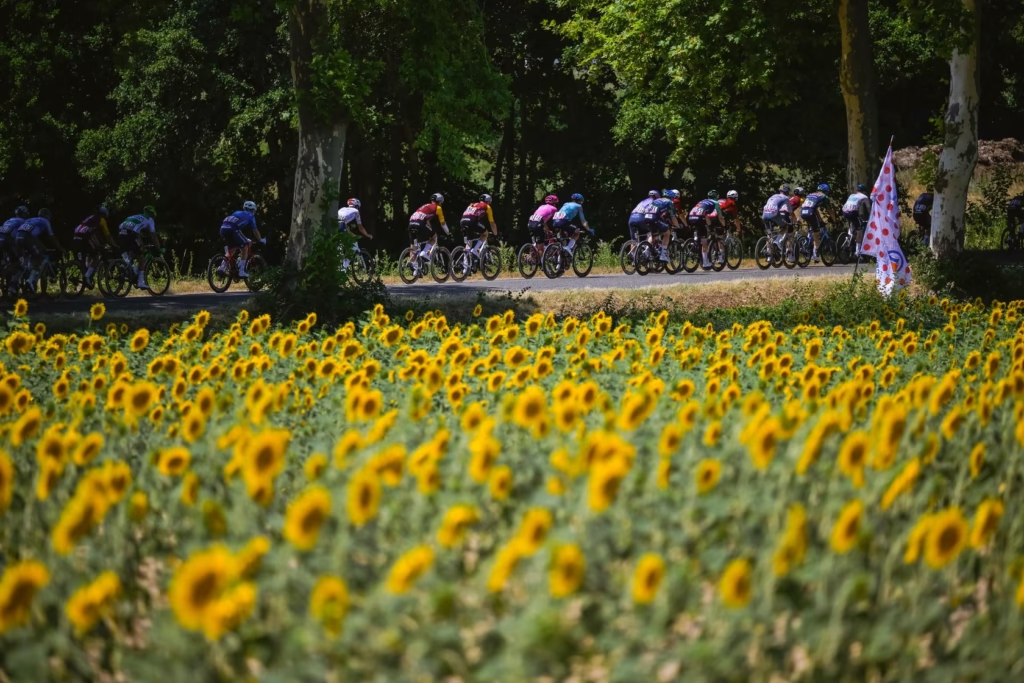
The 2026 Tour has already been raced under serious summer heat, and stage 6 combined climbing stress with heat load. Even if a rider avoids cracking, his body still has to manage fluid loss, rising core temperature, higher cardiovascular strain and the cooling demands that come with long hours in the sun.
For sprinters, this can show up late. They may feel fine in the neutral zone. They may sit comfortably in the bunch for the first few hours. Then, when the final 20km begin and the race jumps from steady to frantic, the missing freshness becomes obvious.
That is when heat debt becomes sprint debt.
It is also why a flat stage can become harder than expected. The route may be straightforward, but if the body has not cooled, refuelled and recovered properly, the final acceleration simply costs more.
Sleep is part of the sprint
Sleep rarely appears in a stage preview, but it can decide how a sprinter feels the next day.
After a mountain stage, riders can be wired from adrenaline, sore from the effort, hot from the day and late getting through all the post-stage routines. A sprinter who has spent five hours fighting the climbs may not simply switch off when he reaches the hotel.
Poor sleep does not only make a rider tired. It can affect mood, reaction time, pain tolerance and the ability to produce repeated high-intensity efforts.
This matters in a sprint because the decisive work is not only physical. A rider must read the road, choose wheels, react to movement, hold position, avoid danger and launch at exactly the right time. If he is half a beat slow, the sprint is gone.
Muscle damage is not just for climbers
Cycling is not as damaging as running in the same way, but a mountain stage still leaves marks.
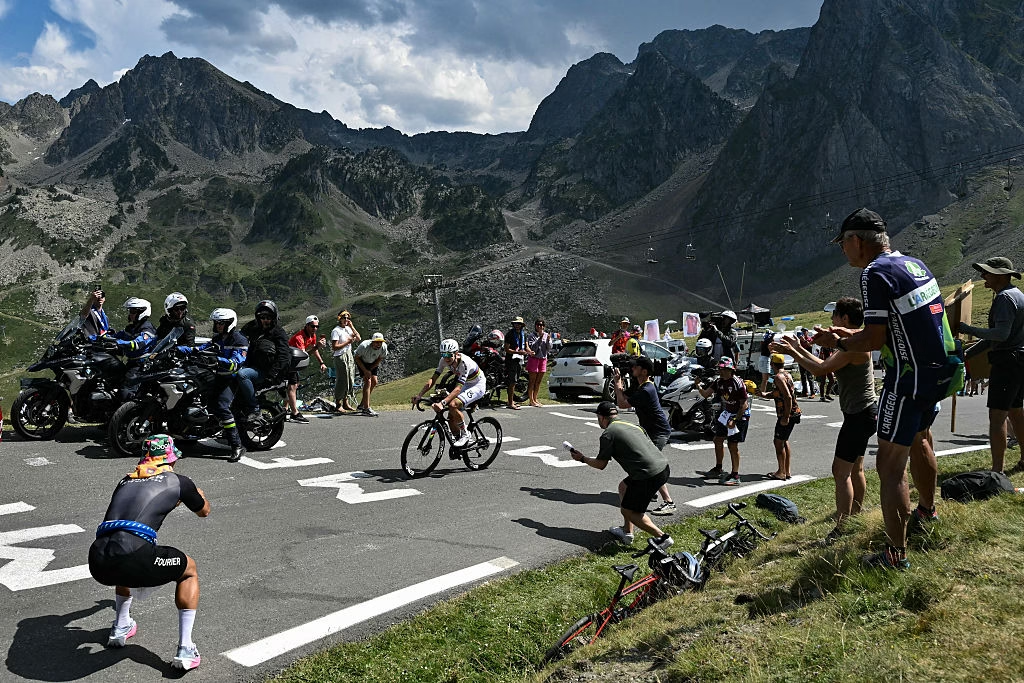
Long climbs put repeated load through the same muscle groups. Descents require braking, cornering, tension through the upper body and constant micro-adjustments. Riders who are not natural climbers often grind more, fight the bike more and spend longer at a high relative effort.
The next day, that shows up in small ways. The legs feel heavy. The jump is less sharp. The ability to make three positioning efforts in a row is reduced. The rider can still sprint, but the road to the sprint costs more.
That is especially important because bunch finishes are not one effort. They are a series of efforts. Move up at 15km to go. Hold position at 10km. Fight through a roundabout at 6km. Accelerate out of a corner at 3km. Launch at 200 metres.
A sprinter who is missing five per cent may not lose because his final sprint is slow. He may lose because he never reaches the right place to use it.
The time cut creates hidden stress
The time cut is one of the least understood parts of the Tour.
On a hard mountain day, sprinters are not just trying to finish. They are trying to finish inside a calculated limit based on the stage winner’s time and the stage difficulty. That shapes the whole day for the gruppetto.
The best mountain domestiques and sprinters know how to manage it. They do not panic too early. They do not waste energy chasing impossible groups. They ride together, measure the gap and keep just enough in reserve to stay safe.
But it is still stressful. If the pace at the front is faster than expected, the cut can become tighter. If a rider has a mechanical, a bad patch, stomach trouble or heat problems, there may be no margin left.
That kind of day drains the mind as well as the legs. The next morning, a sprinter can be physically present on the flat stage but mentally dulled by the effort of survival.
Our guide to how Tour de France time cuts work explains why mountain stages can still be dangerous for sprinters even when they are nowhere near the fight for the stage win.
Lead-out riders may suffer more than the star sprinter
The headline sprinter often gets the attention, but the lead-out riders may carry the biggest post-mountain burden.
A protected sprinter can hide more. He can sit in the bunch, conserve energy and wait for the final. His lead-out riders do not always have that luxury. They may be asked to chase the break, fetch bottles, protect position, close gaps and then still deliver the sprint.
That is why the day after a mountain stage can expose teams rather than individuals.
A sprinter might have the speed to win, but if his final two lead-out men are blunted by the Tourmalet, he may arrive too far back. If the rider who normally controls the final kilometre is missing ten watts at the wrong time, the whole train breaks down.
This is why a flat stage after the mountains can produce surprise results. The fastest rider does not always win. The freshest functioning sprint unit often does.
For a simple breakdown of sprint trains and team roles, see our guide on how Tour de France teams work.
Why the gruppetto is not easy riding
The gruppetto can look like a survival bus. It is more complicated than that.
Riders in the gruppetto are often managing effort with precision. They know when to climb at their own pace, when to descend hard, when to eat, when to let a gap open and when to close it. The group is built around shared interest, but it is not gentle.
For sprinters, it can still mean several hours near their climbing limit. The power may be lower than the GC group, but relative to their body type and strengths, the effort is serious.
A 70kg climber and an 80kg sprinter do not experience the Tourmalet in the same way. The sprinter may be producing huge absolute power just to lose time at a controlled rate. That cost does not disappear when the road to Bordeaux flattens.
 Photo Credit: A.S.O./Charly López
Why the next sprint can be messy
A post-mountain sprint often becomes messy because teams are tired.
The GC teams want safety. The sprint teams want control. The breakaway teams want freedom. The riders who suffered in the mountains want to hide, but the finale forces them forward. Everyone arrives in the final hour with different levels of freshness.
That can make the race less predictable than the profile suggests.
The lead-out that looked strongest in the previous sprint may not have the same legs. A rider who suffered on the climbs may avoid extra work. A team that already has a stage win may be watched more closely. A sprinter still chasing a first win may take more risks.
Stage 7 to Bordeaux is flat, but it comes with all of that baggage.
Why this matters for Kooij, Merlier and Philipsen
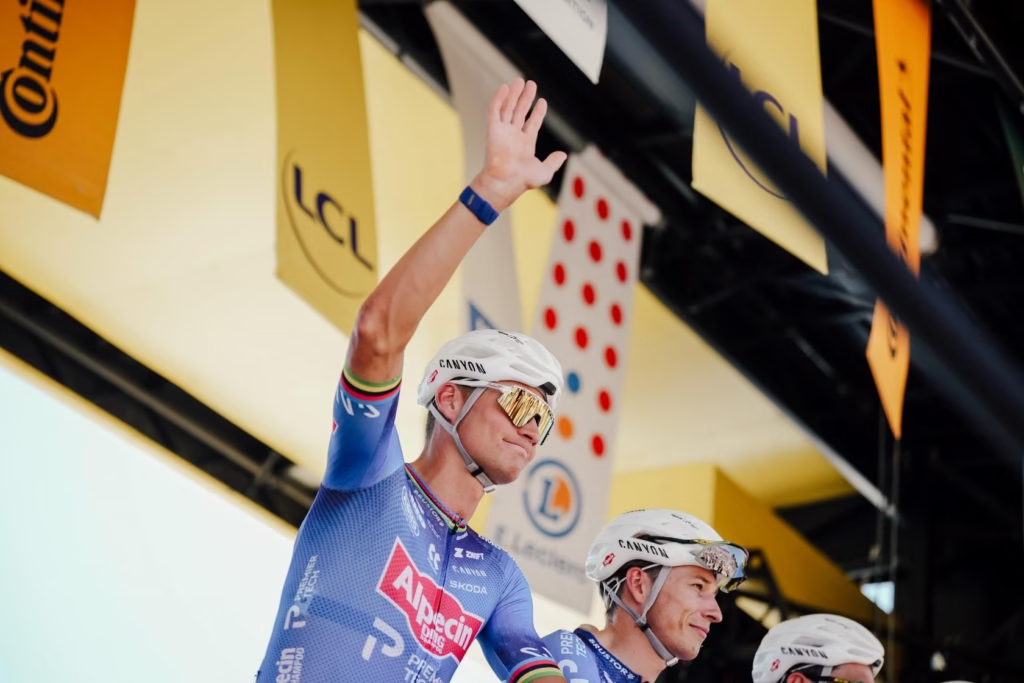
Olav Kooij won in Pau and now has to back it up. Tim Merlier was third and needs a cleaner finish. Jasper Philipsen was fifth and needs Alpecin-Premier Tech to put him back into a winning position.
The day after the Tourmalet, the difference may not be pure top speed. It may be who recovered best, who slept best, whose lead-out survived stage 6 best, and who can still make the right decision at 65km/h in the final kilometre.
That is why Bordeaux is a better test than it first appears.
It is not simply “the sprinters get their turn again”. It is “the sprinters get their turn again after surviving the first major mountain stage of the Tour”.
Our analysis of whether Olav Kooij can win again in Bordeaux looks at the same sprint through the lens of confidence and hierarchy.
Why sprinters still target these days
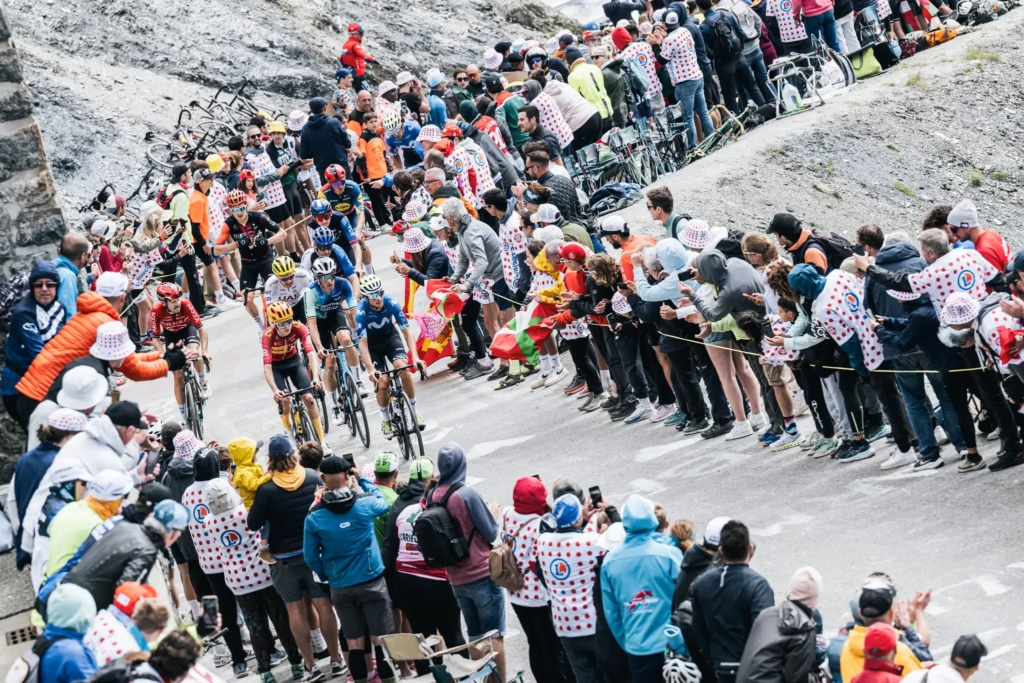
Despite all of this, sprinters still have to target the day after a mountain stage.
They do not get many chances at the Tour. If a flat finish appears, they cannot afford to treat it as recovery. The points classification also forces them to race. Intermediate sprints and finish points can shape the green jersey battle, especially when a rider such as Mads Pedersen is scoring across several different types of terrain.
So the sprinters and their teams have to balance two competing needs: recover from the mountains and race hard enough to win the flat stage.
That balance is what makes these days interesting. The profile says sprint. The bodies say fatigue. The best teams are the ones who manage both.
For the wider points context, see our analysis of whether Mads Pedersen can win green at the Tour de France 2026 and our Tour de France 2026 sprinters guide.
What to watch in Bordeaux
The first clue will be which teams chase.
If Decathlon CMA CGM, Soudal Quick-Step, Alpecin-Premier Tech, Lidl-Trek and Intermarché-Wanty all contribute, the stage should settle into a controlled sprint pattern. If only one or two teams work, that may suggest deeper fatigue or reluctance after stage 6.
The second clue will be the intermediate sprint. Riders who contest it hard are showing confidence. Riders who sit out may be saving everything or admitting they are not fully recovered.
The third clue will come inside the final 10km. That is where lead-outs reveal the truth. A team can talk about confidence all morning. If its train disappears before the final 3km, the mountains have already spoken.
-
 Photo Credit: Getty
Verdict: flat does not mean fresh
Stage 7 is a sprint stage, but it is not a blank page.
The sprinters have carried the Tourmalet in their legs overnight. They have carried heat, recovery pressure, time-cut stress and the mental load of surviving a brutal mountain day. Their teams have carried the same thing.
That is what makes Bordeaux interesting. It should end in a bunch sprint, but the winner may not simply be the fastest rider in a perfect world. It may be the sprinter whose body, team and timing have recovered best from the day before.
At the Tour de France, the mountains do not stop affecting the race when the road flattens out.
FAQs
Why do sprinters struggle after mountain stages?
Sprinters struggle after mountain stages because they use a lot of energy just to survive the climbs, often lose sleep, face heat and dehydration, and may still be carrying muscle fatigue into the next flat stage.
Does a flat stage after the mountains help sprinters?
It helps in terms of route profile, but not necessarily in terms of freshness. The stage may be flat, but the riders are still recovering from the previous mountain effort.
What is glycogen and why does it matter?
Glycogen is stored carbohydrate in the muscles and liver. It is a key fuel for hard efforts, including climbing and sprinting. If stores are low after a mountain stage, repeated high-intensity efforts the next day can feel harder.
Why are lead-out riders important after mountain stages?
Lead-out riders often work harder than the headline sprinter on the next flat stage. They may chase, position, protect and launch the sprint. If they are tired from the mountains, the sprinter may never get into the right place.
What is the time cut at the Tour de France?
The time cut is the maximum allowed time behind the stage winner. It changes depending on stage difficulty and speed. Sprinters must manage mountain stages carefully to finish inside the limit.
Can a sprinter win the day after surviving the Tourmalet?
Yes. Elite sprinters are trained for repeated efforts across a Grand Tour. But the day after a mountain stage is rarely simple, and recovery can decide whether a sprinter has the sharpness to win.