
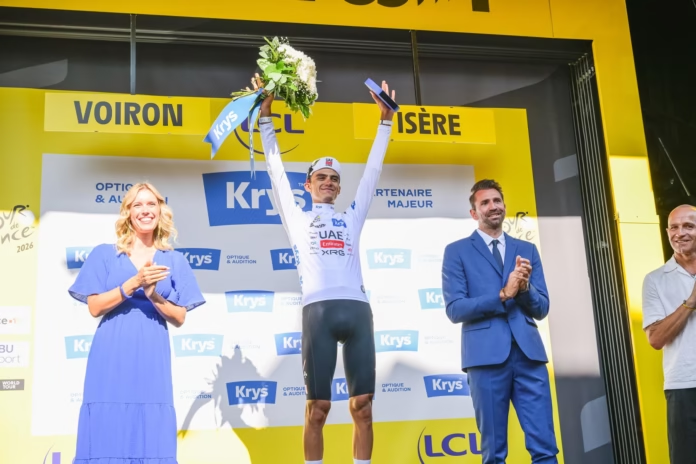
Isaac del Toro and Paul Seixas begin the final Alpine block separated by only 20 seconds in both the Tour de France general classification and young rider competition.
Del Toro holds third overall at 6:51 behind Tadej Pogačar. Seixas is fourth at 7:11, close enough to take the provisional podium and white jersey through one attack, one weak moment or a combination of road time and finish bonuses.
With Pogačar leading by 4:32, this has become the most finely balanced classification battle left in the race.
Del Toro has the advantage, a faster finish and Pogačar’s controlling presence around him. Seixas has greater tactical freedom, a team able to focus directly on his podium bid and three Alpine stages on which 20 seconds can disappear very quickly.
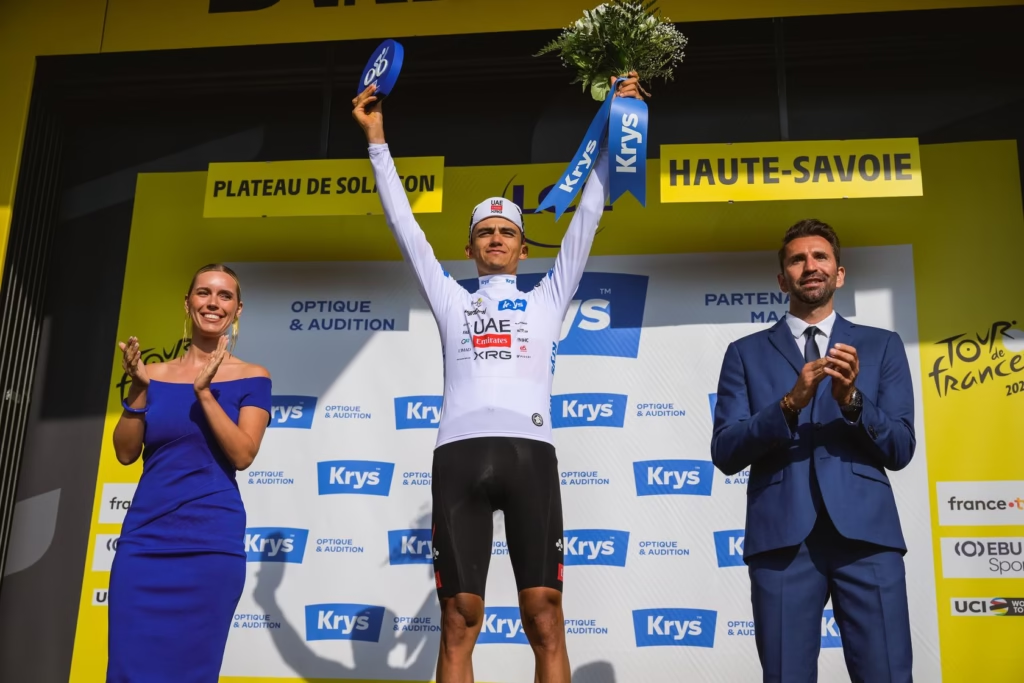 Photo Credit: A.S.O./Charly López
Tour de France white jersey standings before stage 18
| Position | Rider | Team | Time or gap |
|---|---|---|---|
| 1 | Isaac del Toro | UAE Team Emirates-XRG | 60h11m08s |
| 2 | Paul Seixas | Decathlon CMA CGM | +0:20 |
| 3 | Juan Ayuso | Lidl-Trek | +2:31 |
| 4 | Lenny Martinez | Bahrain Victorious | +5:59 |
| 5 | Davide Piganzoli | Team Visma | Lease a Bike | +20:37 |
The young rider classification mirrors the overall positions of the eligible riders.
Del Toro is third overall and Seixas fourth. The winner of their head-to-head is therefore also likely to complete the final podium unless Remco Evenepoel begins losing substantial time from second.
The standings remained unchanged during stage 17, when the main GC group finished together behind Jasper Philipsen’s victorious front selection. The full picture is covered in GC and jerseys after Tour de France 2026 stage 17.
The current 20-second margin was established after the stage 16 individual time trial.
Can Paul Seixas take the white jersey from Isaac del Toro?
Yes. Seixas needs 21 seconds to move ahead outright, while a gain of exactly 20 seconds would leave the riders level on time and require the Tour’s tie-break rules.
The gap can disappear through several scenarios:
- Seixas attacks and creates a road gap
- Del Toro struggles in the final kilometres
- Seixas earns finish bonuses
- Del Toro becomes isolated during an earlier acceleration
- Seixas follows another contender’s attack that UAE cannot immediately control
The next three stages all finish uphill.
Stage 18 ends at Orcières-Merlette after 185.2km and approximately 3,900 metres of climbing. Stage 19 finishes on Alpe d’Huez, while stage 20 is the Tour de France 2026 queen stage, crossing the Croix de Fer, Télégraphe, Galibier and Sarenne before returning to Alpe d’Huez.
Seixas does not need a major Del Toro collapse. He needs one successful move.
How the white jersey battle developed
The competition has already shifted several times.
Del Toro led the young rider classification early in the Tour after winning stage 2. Seixas then moved into fourth overall and took white during stage 14 at Le Markstein, establishing himself as a genuine podium contender.
Del Toro responded on stage 15, retaking the jersey as the classification changed around Jonas Vingegaard’s abandonment and the Plateau de Solaison summit finish.
Seixas gained five seconds during the stage 16 time trial, reducing the margin to 20 seconds.
Neither rider has established clear control. Their contrasting strengths should now determine the outcome.
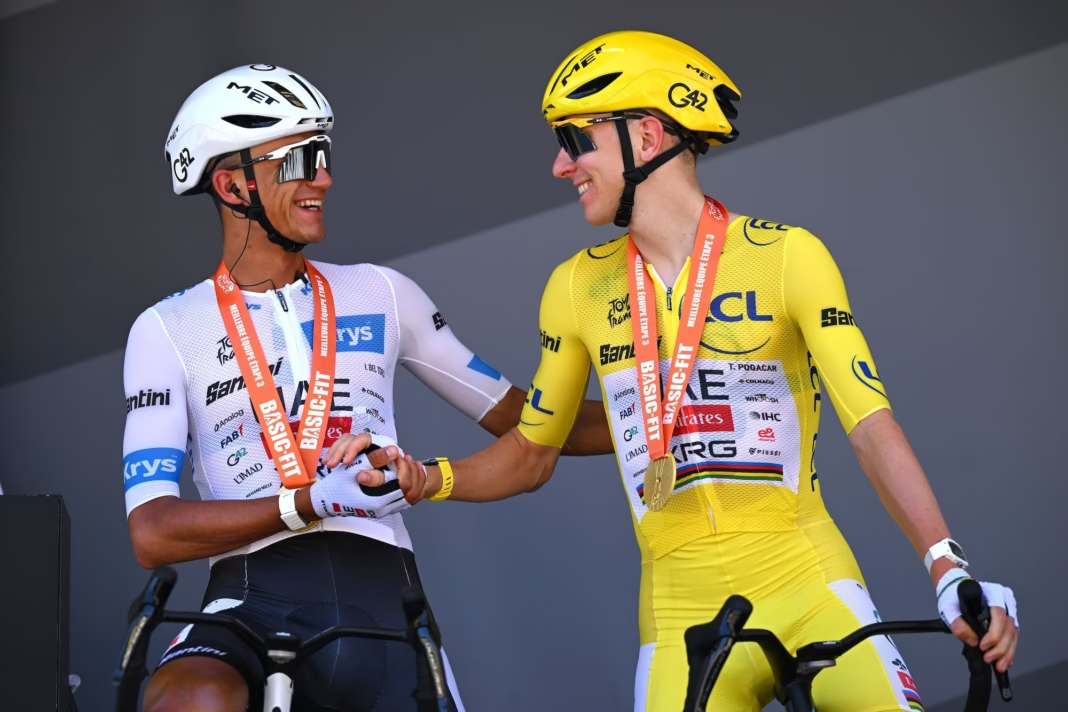
Why Del Toro starts as favourite
Del Toro’s biggest advantage is simple: he already leads.
He can follow Seixas, match his accelerations and force the French rider to take the risks. If they finish together on all three mountain stages, Del Toro reaches Paris in white and on the podium.
His primary reference point is the Decathlon jersey.
Pogačar helps control the race
Del Toro also benefits from racing alongside the yellow jersey.
UAE Team Emirates-XRG must control dangerous attacks to protect Pogačar. That same work reduces the number of tactical situations Seixas can exploit.
A hard but steady UAE pace makes attacks more difficult and turns the contest into a direct climbing battle. Pogačar may also close moves himself, even if his intention is to protect yellow rather than Del Toro’s white jersey.
Del Toro has the faster finish
Finish bonuses could be decisive.
The first three riders receive 10, six and four seconds. A 20-second lead can therefore change quickly if Seixas repeatedly finishes ahead.
Del Toro’s acceleration gives him an important defensive weapon. If the leading riders reach Orcières-Merlette together, he can finish ahead of Seixas, prevent him collecting a bonus or even extend the gap.
Waiting for the final kilometre may therefore favour the Mexican.

Why Seixas can overturn the deficit
Seixas begins behind, but that also gives Decathlon CMA CGM clarity.
Their main GC objective is moving him onto the podium. Teammates can enter breakaways, raise the pace before the final climbs or attack to weaken UAE without protecting another rider near the top of the standings.
Seixas has more tactical freedom
Del Toro is connected to Pogačar’s race. Seixas can move more independently.
He can follow attacks from Juan Ayuso or Mattias Skjelmose, wait for Evenepoel to accelerate or use a Decathlon teammate already up the road.
He does not need to initiate every move. He needs to recognise the one that leaves Del Toro under pressure.
The more complicated the stage becomes, the less valuable Del Toro’s simple 20-second buffer becomes.
The hardest climbing may suit Seixas
Seixas has looked strongest when the race becomes a sustained climbing test.
Del Toro is more explosive and may be better suited to Orcières-Merlette. Stages 19 and 20 place greater emphasis on endurance, altitude and recovery.
Stage 20 contains approximately 5,450 metres of climbing and repeatedly takes the riders above 2,000 metres. Twenty seconds means little if one rider begins fading after five hours in the high mountains.
The complete final mountain sequence is covered in the Tour de France 2026 Alps guide.
Seixas can accept more risk
Fourth overall would already be an outstanding result for Seixas.
That may encourage him to gamble in a way Del Toro cannot. The Mexican is protecting a podium place, white jersey and UAE’s second rider inside the top three.
A failed attack could cost Del Toro all three. Seixas can accept a greater chance of losing fourth if the alternative is waiting behind him until Paris.
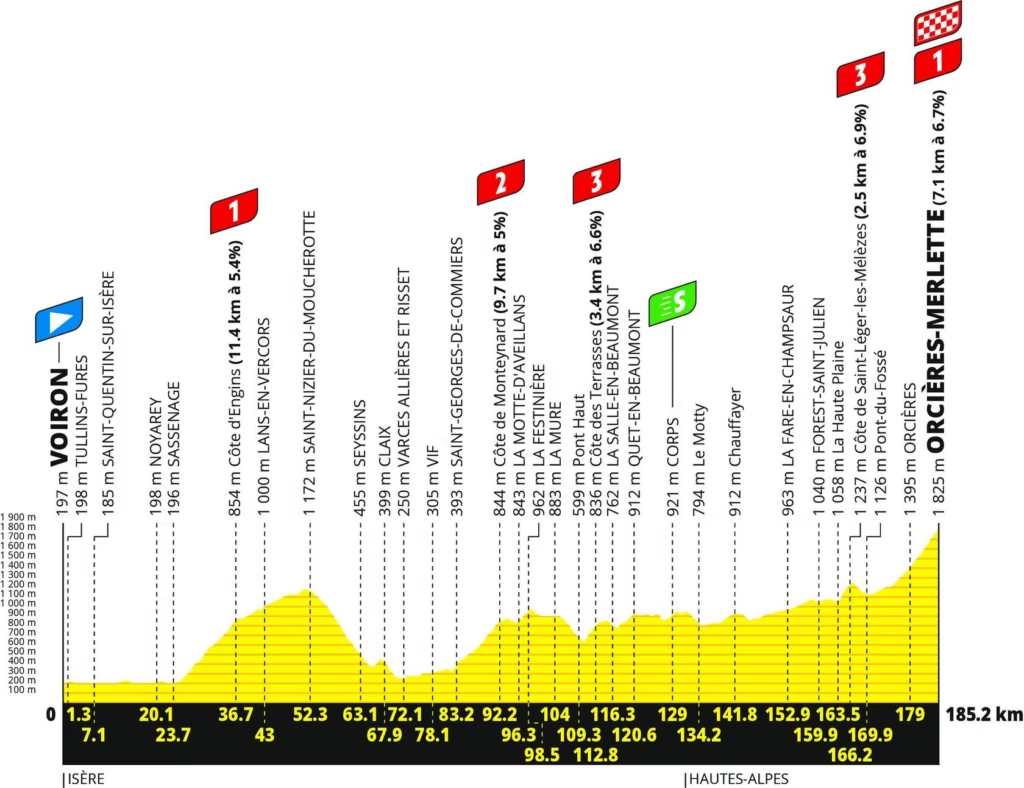
Stage 18: Orcières-Merlette may favour Del Toro
Stage 18 is the first chance to change the jersey, but probably the least favourable Alpine stage for Seixas.
The route from Voiron contains five categorised climbs and approximately 3,900 metres of elevation. The final ascent to Orcières-Merlette is 7.1km at 6.7%.
The gradients should allow teams to control the race deep into the finale. Drafting remains useful, and the leading GC riders may stay together until the final two or three kilometres.
That scenario suits Del Toro.
He can stay close to Pogačar, monitor Seixas and use his acceleration if the stage becomes a reduced uphill sprint.
Seixas’ better opportunity may come on the Côte de Saint-Léger-les-Mélèzes, a 2.5km climb at 6.9% that tops out with 19km remaining. Decathlon could increase the pace there or launch an attack before UAE organise for the final ascent.
The full route and likely race pattern are covered in the Tour de France 2026 stage 18 preview.
What Seixas needs from stage 18
Seixas does not necessarily need to take white immediately.
Reducing the gap by five or 10 seconds would make the Alpe d’Huez bonuses more dangerous for Del Toro and increase the pressure on UAE.
Finishing together would represent a small tactical win for Del Toro. Extending the margin beyond 30 or 40 seconds would give him meaningful protection before the harder stages.
Stage 19: Alpe d’Huez changes the balance
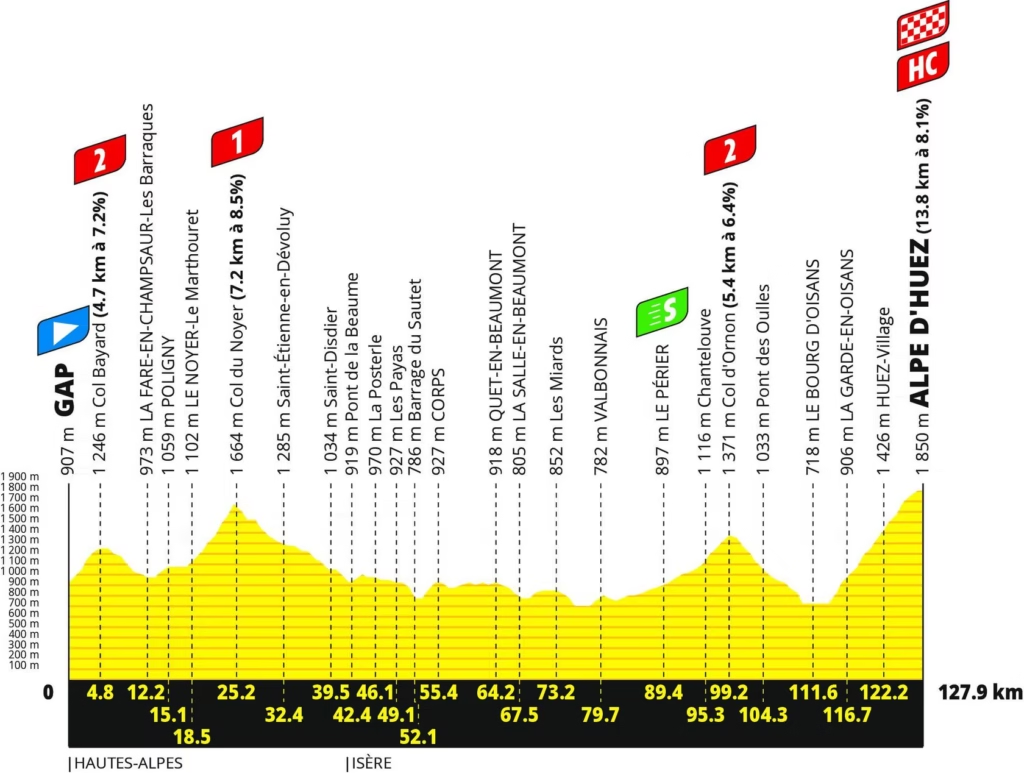
Stage 19 is shorter but includes around 3,500 metres of climbing before the ascent of Alpe d’Huez.
This should suit Seixas more than Orcières-Merlette.
The short distance encourages aggressive racing, while the final climb is long and steep enough for small differences in condition to become significant. Twenty seconds can disappear inside the final few kilometres.
How Seixas can expose Del Toro
Alpe d’Huez reduces the value of Del Toro’s faster finish if Seixas can establish a sustained gap.
Its steep opening section and repeated changes in rhythm make it difficult to hide a weak moment. Decathlon can raise the pace on the lower slopes, reduce the group and force Del Toro into a direct climbing test.
Seixas may not need to attack first. He can use an acceleration from Pogačar or Evenepoel as the platform for creating separation.
Del Toro can still defend
Del Toro has already shown that he can remain with the Tour’s strongest climbers.
His position beside Pogačar gives him an ideal pacing reference. If he survives the steep lower section with Seixas, the upper kilometres may suit his ability to change pace and finish quickly.
Stage 19 should provide the clearest direct comparison between the two.
Stage 20: the queen stage can overturn everything
Stage 20 removes most of Del Toro’s tactical safety net.
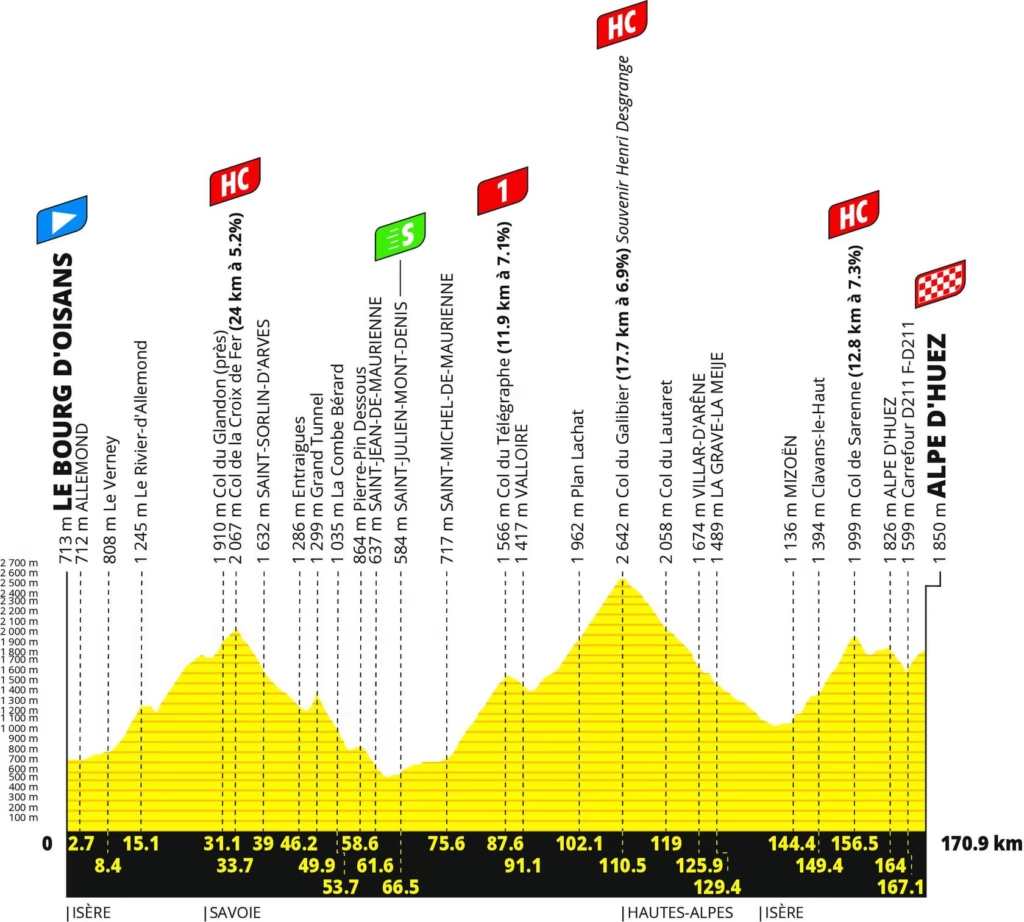
The route crosses the Croix de Fer, Télégraphe, Galibier and Sarenne before returning towards Alpe d’Huez. The Galibier reaches 2,642 metres, while the stage repeatedly climbs above 2,000 metres.
This is no longer a simple seven-kilometre head-to-head.
Both riders must survive a full day of repeated climbing, altitude, descents and tactical pressure.
Seixas needs an attritional race
Seixas may be better suited to a long war of endurance than a short, explosive finish.
If he remains with Pogačar and Evenepoel across the Galibier while Del Toro begins weakening, the jersey could change hands long before the final ascent.
Decathlon should want the race made difficult before Sarenne. A controlled approach to the finish gives Del Toro another chance to use his speed. A fragmented race increases Seixas’ opportunity.
Pogačar remains Del Toro’s best protection
If UAE successfully control stage 20, Del Toro benefits from the same work protecting yellow.
He does not need a teammate beside him at every moment if he can stay in Pogačar’s group.
The complication comes when Pogačar attacks. Del Toro must decide whether to follow his leader, ride his own pace or mark Seixas. Following too aggressively could produce a later collapse, but allowing Pogačar to go may give Seixas freedom to establish his own rhythm.
The tactical consequences of the repeated finish are explored in why back-to-back Alpe d’Huez stages could define the Tour de France 2026.
Finish bonuses could decide the jersey
At each summit finish, the first three riders receive:
| Finish position | Bonus seconds |
|---|---|
| 1st | 10 seconds |
| 2nd | Six seconds |
| 3rd | Four seconds |
Seixas does not need to gain 21 seconds entirely on the road.
A 15-second gap combined with a six-second bonus would be enough if Del Toro finished outside the top three.
Del Toro can use the same system defensively. Finishing ahead of Seixas and collecting four or six seconds would increase his lead even if both receive the same finishing time.
That makes the final kilometre at Orcières-Merlette particularly important.
 Photo Credit: A.S.O./Charly López
Could Juan Ayuso still win white?
Ayuso is 2:31 behind Del Toro and 2:11 behind Seixas.
That gap is significant but not decisive with three summit finishes remaining. Lidl-Trek also have Skjelmose sixth overall, giving the team two riders capable of attacking.
Ayuso needs to do more than follow. He must create a move that forces Del Toro and Seixas to watch one another while Lidl-Trek ride offensively.
His presence complicates the duel.
Del Toro cannot focus only on Seixas if Ayuso moves up the road. Seixas may also hesitate to follow an attack that brings another rider into the podium battle.
Ayuso remains an outsider rather than an equal favourite, but he is close enough to punish hesitation.
Team strength could decide the battle
The jersey may ultimately depend on how UAE and Decathlon use their remaining riders.
UAE Team Emirates-XRG
UAE control the race through Pogačar, but yellow always comes first.
Del Toro benefits when protecting Pogačar also protects him. He may be left to defend himself if several podium rivals attack at once.
Adam Yates’ condition is an uncertainty after his difficult stage 17. A reduced Yates leaves UAE more reliant on Felix Großschartner and the remaining climbing support.
Decathlon CMA CGM
Decathlon do not need to control the entire stage.
They need to create one moment when Seixas can gain 20 seconds.
They can place riders in breakaways, attack before the final climbs and raise the pace whenever Del Toro becomes isolated.
Stage 18 allows a measured test. Stage 19 should produce a direct challenge. If Del Toro still leads before stage 20, Decathlon have little reason to preserve resources for Paris.
Who do the Alps suit more?
| Stage or factor | Slight advantage | Why |
|---|---|---|
| Stage 18, Orcières-Merlette | Isaac del Toro | Shorter climb, controlled racing and faster finish |
| Stage 19, Alpe d’Huez | Paul Seixas | Longer ascent offers more chance to create a gap |
| Stage 20, queen stage | Paul Seixas | Endurance, altitude and tactical freedom |
| Finish bonuses | Isaac del Toro | More explosive if both arrive together |
| Team control | Isaac del Toro | Benefits from Pogačar and UAE |
| Tactical freedom | Paul Seixas | Decathlon can build the race around attacking |
Del Toro holds the immediate advantage. Seixas may have the better terrain.
The French rider must still convert that terrain into time. Del Toro can win the contest simply by remaining close.
White jersey prediction
Del Toro begins as the narrow favourite because he already leads.
He can follow Seixas, benefit from UAE’s control and use his faster finish at Orcières-Merlette. Twenty seconds is not comfortable, but it forces Seixas to act first.
Seixas has the more promising route across stages 19 and 20.
The long Alpe d’Huez climb and enormous queen stage provide opportunities to turn a small deficit into minutes. Decathlon can also race aggressively because fourth place remains an outstanding result even if the strategy fails.
Stage 18 should favour Del Toro or leave the contest largely unchanged.
Stage 19 is where Seixas can take white.
Stage 20 is where either rider can lose far more than the jersey.
Prediction: Del Toro retains white at Orcières-Merlette, but Seixas takes it during the two-stage Alpe d’Huez sequence and finishes the Tour in third overall.

