
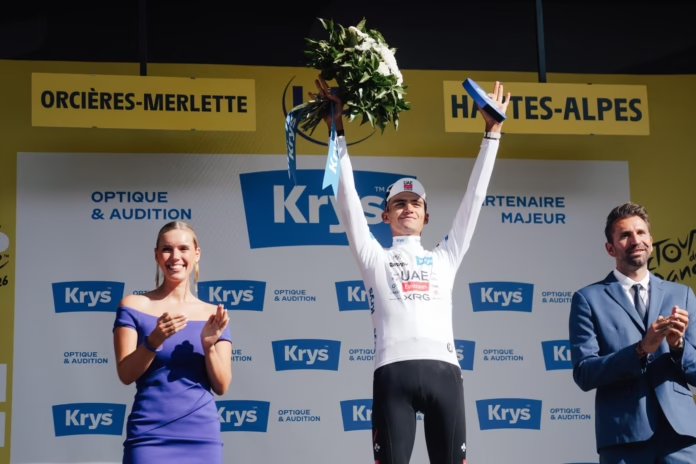
Isaac del Toro and Paul Seixas reach Alpe d’Huez separated by only 20 seconds in the Tour de France general classification and young rider competition.
Stage 18 changed nothing between them. Both finished safely in the leading group at Orcières-Merlette, leaving Del Toro third overall and in white, with Seixas immediately behind him in fourth.
Juan Ayuso remains close enough to matter at 2:31 in the young rider classification, but the most immediate contest is now a direct duel between two riders attempting to secure both a Tour podium and the white jersey.
Alpe d’Huez is where that balance should finally become difficult to maintain.
The 13.7km ascent averages 8.1%, with the hardest sustained gradients arriving near the bottom. Seixas needs only one successful acceleration to overturn the gap. Del Toro must defend while also remaining part of UAE Team Emirates-XRG’s protection around Tadej Pogačar.
If they finish together again, the advantage remains with Del Toro. If Seixas gains 21 seconds, he moves into third and takes white. If the Frenchman recovers exactly 20 seconds, the Tour’s tie-break rules will decide who leads.
After two days of waiting, there is little room left for caution.
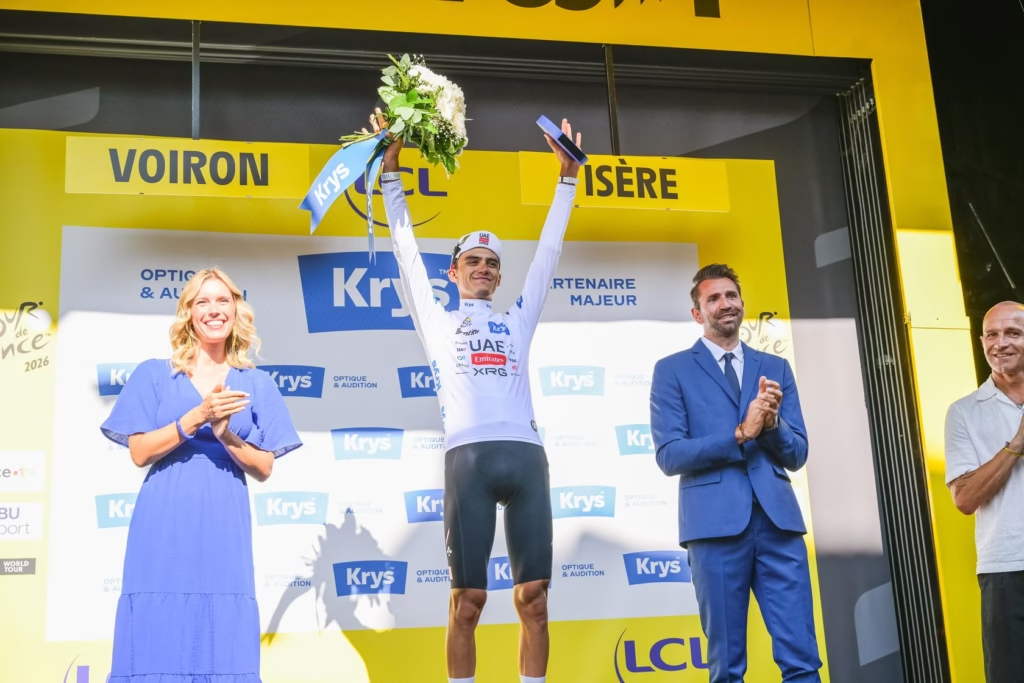 Photo Credit: A.S.O./Charly López
Tour de France white jersey standings before stage 19
| Position | Rider | Team | Gap |
|---|---|---|---|
| 1 | Isaac del Toro | UAE Team Emirates-XRG | Leader |
| 2 | Paul Seixas | Decathlon CMA CGM | +0:20 |
| 3 | Juan Ayuso | Lidl-Trek | +2:31 |
| 4 | Lenny Martinez | Bahrain Victorious | +5:59 |
The young rider classification mirrors their positions in the general classification.
Del Toro is third overall at 6:51 behind Pogačar. Seixas is fourth at 7:11, while Ayuso sits fifth at 9:22.
This means the white jersey cannot be separated from the fight for the Tour podium.
A gain of 21 seconds would give Seixas both. A difficult day could cost Del Toro both. Ayuso remains close enough to benefit if either rider suffers a major collapse.
The full standings are available in GC and jerseys after Tour de France 2026 stage 18.
Why stage 18 changed nothing
Orcières-Merlette appeared capable of creating a gap, but the 7.1km final ascent averaged only 6.7%.
Red Bull-Bora-Hansgrohe set much of the pace for Remco Evenepoel without producing a decisive selection. The speed remained high enough for the leading riders to benefit from drafting, while nobody wanted to spend unnecessarily before the two Alpe d’Huez stages.
Seixas did not attack.
Del Toro did not need to.
Both crossed the line in the same group, preserving the 20-second margin that existed before the stage.
That outcome placed even greater importance on stage 19. There are now only two serious mountain opportunities left, and the first uses terrain far better suited to creating immediate separation.
The lower slopes of Alpe d’Huez are steeper, less forgiving and much harder to ride defensively.
The complete route is examined in the Tour de France 2026 stage 19 preview.
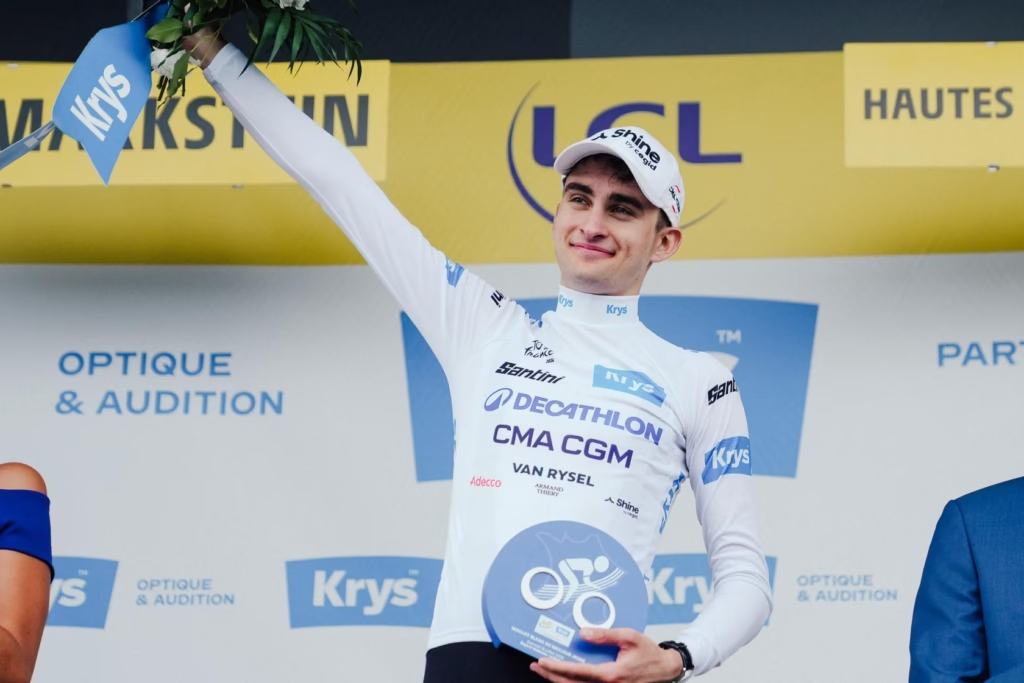
What does Paul Seixas need to take the white jersey?
Seixas needs to gain at least 21 seconds on Del Toro to take the outright lead.
There are several ways that can happen:
- Finish 21 seconds ahead on the road
- Gain time through an attack and add finish bonuses
- Finish ahead by a smaller road margin while collecting more bonus seconds
- Force Del Toro into a split created by another general classification move
- Benefit from a badly timed weakness or mechanical problem
Time bonuses of 10, six and four seconds are available to the first three riders on the stage.
That could matter if the breakaway is caught.
For example, Seixas could finish second and Del Toro fourth, collecting six bonus seconds before any road gap is considered. A 15-second difference on the climb would then be enough to overturn the classification.
If a breakaway takes the first three places, the equation becomes simpler. Seixas needs 21 seconds on the road.
He does not require a spectacular collapse from Del Toro. One well-timed move on the steepest part of Alpe d’Huez could be enough.
What happens if Seixas gains exactly 20 seconds?
A gain of exactly 20 seconds would leave Del Toro and Seixas level on the published general classification time.
The Tour does not allow a dead heat.
Officials first include the fractions of seconds recorded during the time trials. These are normally hidden from the daily general classification but retained for tie-break purposes.
If the riders remained equal after those fractions were applied, their finishing positions across every stage would be added together. The rider with the lower cumulative placing total would lead.
That makes 20 seconds a dangerous target for Seixas.
He cannot simply ride until the television graphic shows a 20-second gap and assume he has taken white. He needs either a clear 21-second road advantage or enough bonus seconds to remove the uncertainty.
Del Toro, conversely, can lose 19 seconds and retain the jersey outright.
That small distinction may influence how both riders judge the closing kilometre.
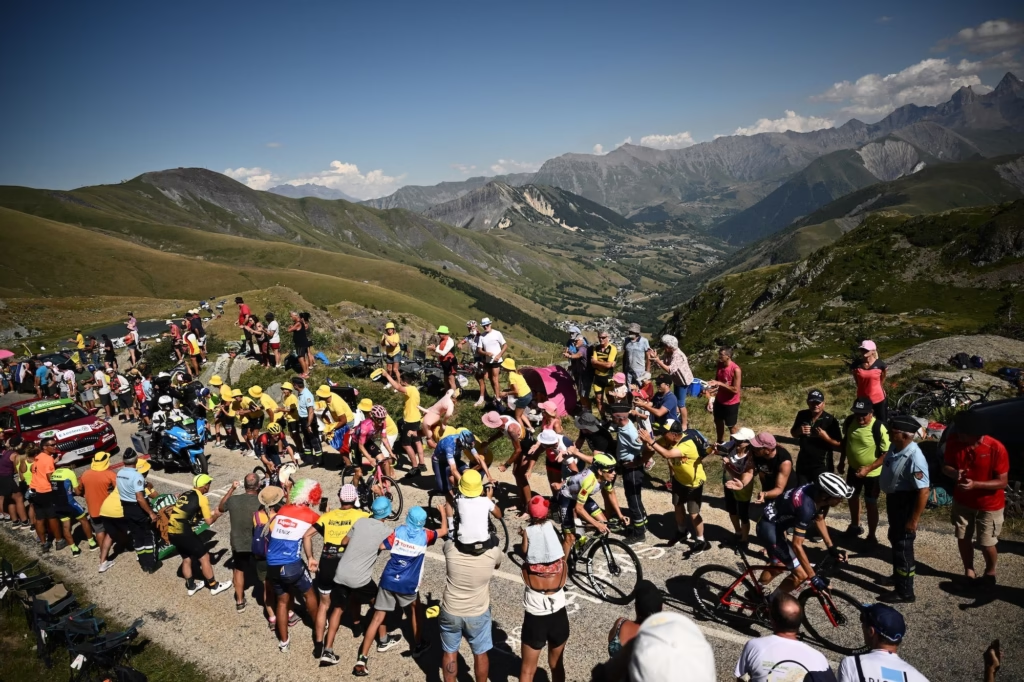
Who does Alpe d’Huez suit more?
The answer depends on how the climb is raced.
Seixas may be better suited to a long, sustained climbing contest in which the pace becomes progressively harder. Del Toro has shown more acceleration and appears more dangerous if the pair arrive together near the finish.
Alpe d’Huez contains opportunities for both.
The lower section favours Seixas because it is consistently steep and reduces the benefit of following a wheel. The middle and upper slopes contain more gradient changes, giving Del Toro opportunities to respond, recover and use his sharper finish.
The decisive question is whether Seixas can turn the climb into a test of endurance before Del Toro can turn it into a tactical contest.
Why the lower slopes favour Seixas
The traditional ascent begins brutally from Bourg-d’Oisans.
The first kilometres towards La Garde include sustained gradients around 10%. Riders reach them immediately after descending the Col d’Ornon, without a long valley in which to settle.
This is where Seixas should attack.
A high pace from Decathlon CMA CGM can remove UAE domestiques and prevent Del Toro using teammates to close small gaps. Once the climb reaches its steepest section, drafting offers less protection.
Seixas does not need to produce one explosive acceleration.
A sustained increase in pace may be more effective. He can ride at a level Del Toro finds uncomfortable, then attack once the Mexican has already spent several minutes close to his limit.
The aim should be to create separation before the climb begins easing higher up.
Waiting until the final kilometre would play more naturally to Del Toro’s strengths.
The climb’s full character is covered in Alpe d’Huez: why the Tour still fears the 21 bends.
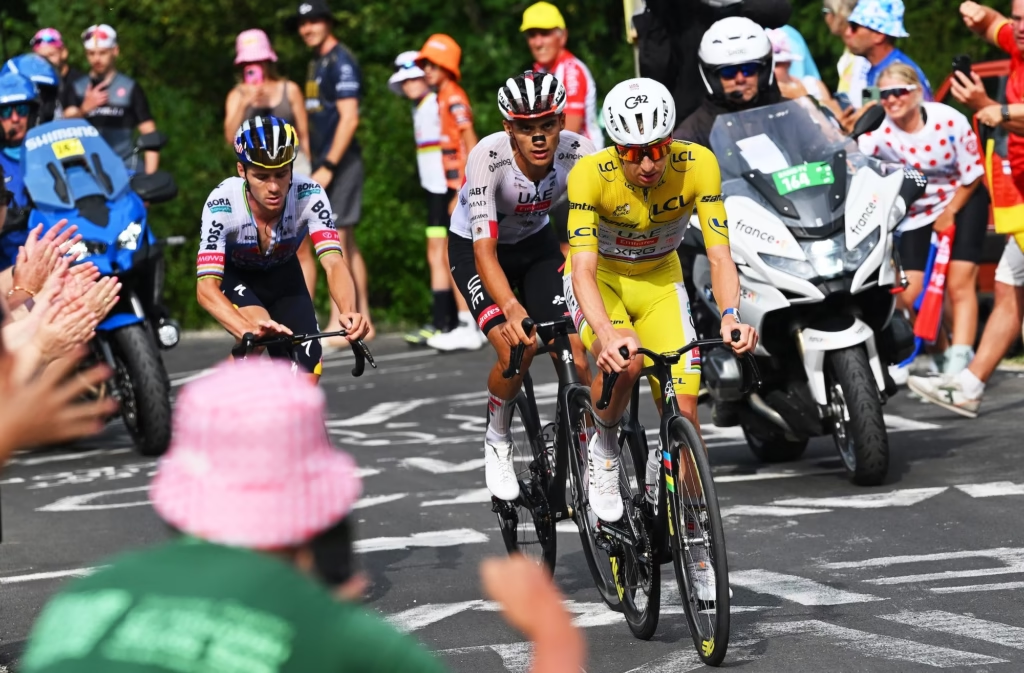 Photo Credit: Getty
Why Del Toro can defend through patience
Del Toro does not need to win the stage or beat Seixas.
He needs to avoid losing 21 seconds.
That allows him to ride a controlled climb.
If Seixas attacks near the bottom, Del Toro does not necessarily need to close immediately. He can settle into his own rhythm and prevent a manageable gap becoming a full collapse.
The television picture may make a 10-second advantage look dramatic, but it would still leave Del Toro in white.
His task is to avoid panic.
Repeatedly matching every acceleration could push him beyond his sustainable effort and produce the larger gap Seixas needs. Allowing a few metres and returning gradually may be the safer response.
Del Toro also has Pogačar ahead or nearby. The yellow jersey’s presence can stabilise the race and give UAE a reference point, even if the team cannot devote every rider to protecting white.
UAE’s competing priorities could expose Del Toro
Del Toro’s greatest disadvantage is not the 20-second margin.
It is his role inside UAE Team Emirates-XRG.
Pogačar remains the overwhelming priority. Brandon McNulty has abandoned, while Adam Yates and Tim Wellens have been managing illness. UAE reach Alpe d’Huez with less mountain depth than originally planned.
That may force Del Toro to serve two objectives.
He must monitor Seixas for his own podium and white jersey. He may also need to respond if Evenepoel attacks Pogačar or if the yellow jersey becomes isolated.
Those responsibilities will normally overlap, but not always.
If Seixas attacks while Pogačar is comfortable, Del Toro can follow freely.
If Evenepoel attacks and Seixas follows, Del Toro has every reason to respond.
The difficult scenario comes if Evenepoel moves without Seixas. Del Toro must decide whether to help Pogačar or preserve energy for the rider who directly threatens his classification.
UAE should avoid asking him to perform unnecessary work. A Tour podium and white jersey are too valuable to sacrifice while Pogačar still holds a 4:32 advantage.
The team’s reduced options are examined in how UAE can protect Pogačar on Alpe d’Huez after McNulty’s abandonment.
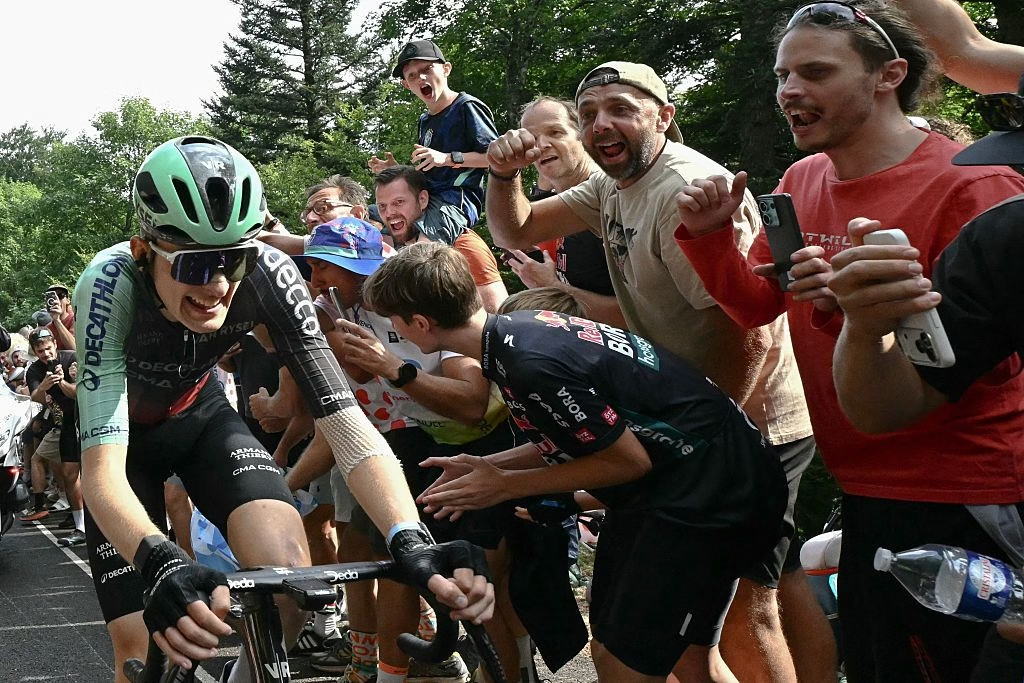
Seixas has more tactical freedom
Seixas has one clear job.
He needs to gain time on Del Toro.
He does not have a teammate defending yellow and does not need to help another rider protect a podium position. Decathlon CMA CGM can organise its mountain support entirely around creating one opportunity for him.
That freedom is important.
Seixas can attack even if the move also benefits Evenepoel, Ayuso or another rival. Del Toro must consider how every response affects both himself and Pogačar.
Decathlon can also use its riders earlier on the climb.
A hard pace does not need to deliver Seixas to the final kilometre. It needs to strip away UAE’s protection and make Del Toro responsible for his own defence.
The Frenchman’s position makes aggression relatively low risk. Finishing fourth rather than third would change little if he never attempts to overturn the gap.
Why Seixas cannot simply wait for stage 20
Stage 20 is considerably harder than stage 19.
That might appear to favour waiting for the queen stage, where more than 5,000 metres of climbing should create larger gaps.
It would be a mistake to rely on it entirely.
Del Toro may prove stronger over the Croix de Fer, Télégraphe, Galibier and Sarenne. UAE may also have a clearer tactical plan after seeing how its reduced squad handles the first Alpe d’Huez stage.
Stage 19 offers a simpler contest.
The route is short, the final climb is familiar and the steepest section arrives early. Seixas can test Del Toro directly without needing to construct a long-range tactical move.
He should not treat Friday as reconnaissance.
Even gaining 10 or 15 seconds would change the balance before stage 20. Del Toro would lose most of his margin and become more vulnerable to bonus seconds or a small split on Saturday.
Seixas needs to make the first Alpe d’Huez finish count.
The next day’s challenge is broken down in the Tour de France 2026 queen stage guide.
Why Del Toro may prefer a controlled GC race
A chaotic stage increases the number of decisions Del Toro must make.
Lidl-Trek can attack with Ayuso and Mattias Skjelmose. Evenepoel may attempt to isolate Pogačar. Decathlon will try to create an opening for Seixas.
A controlled ascent reduces those variables.
Del Toro would prefer UAE or another team to maintain a strong but even pace through the lower half of Alpe d’Huez. That would discourage speculative attacks and allow him to judge Seixas directly.
The problem is that UAE have little reason to control for his benefit.
Pogačar can afford to follow Evenepoel and let other riders attack. The team may also want to conserve Yates and Felix Großschartner for stage 20.
Del Toro may therefore need to defend without the full mountain train normally associated with UAE.
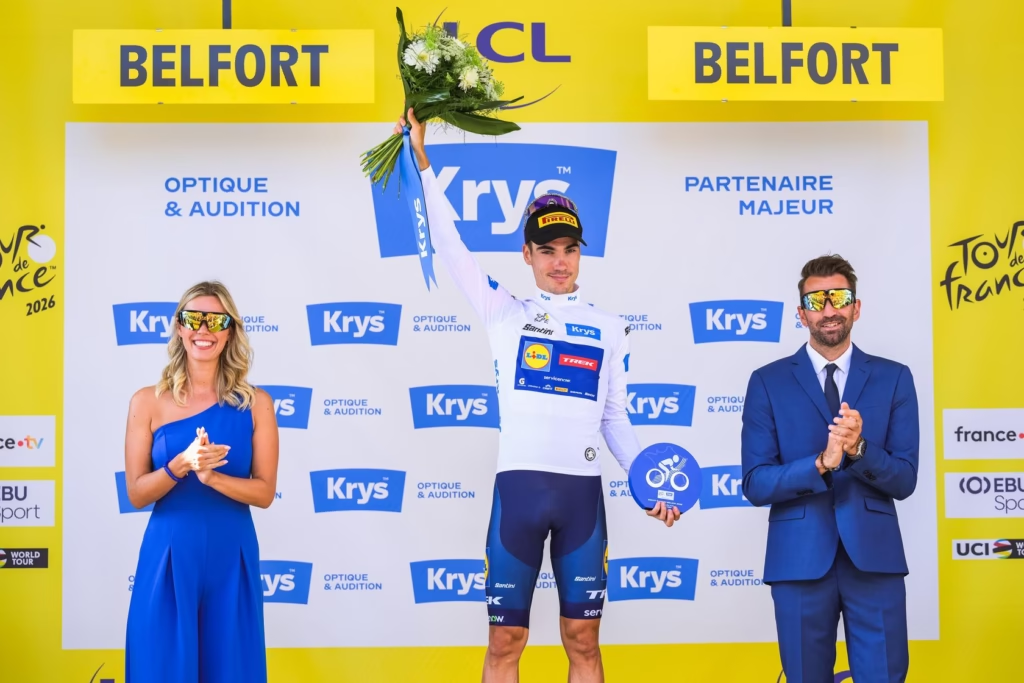 Photo Credit: A.S.O./Charly López
Can Juan Ayuso still win the white jersey?
Yes, but Ayuso needs more than one small attack.
He trails Del Toro by 2:31 and Seixas by 2:11.
That gap is too large to recover through finish bonuses or a late acceleration alone. Ayuso needs one of the two leaders to suffer badly, or Lidl-Trek must create a tactical move before the final climb.
The team have an important advantage through Skjelmose.
With two riders inside the top six overall, Lidl-Trek can attack in sequence. If Skjelmose moves first, UAE and Decathlon must decide whether to chase. Ayuso can then counter after Del Toro or Seixas have already spent energy.
Ayuso’s best opportunity may begin on the Col d’Ornon.
An attack there could give him a head start into Bourg-d’Oisans or force the white jersey contenders to use teammates before Alpe d’Huez.
He remains an outsider rather than a direct co-favourite. A 2:31 deficit can disappear on a climb like Alpe d’Huez, but usually only through a genuine bad day rather than a tactical detail.
Could finish bonuses decide the white jersey?
Yes, although the breakaway must first be caught.
Stage 19 awards 10, six and four seconds to the first three riders.
The most significant scenarios include:
| Scenario | Time gained through bonuses |
|---|---|
| Seixas wins, Del Toro outside the top three | 10 seconds |
| Seixas second, Del Toro outside the top three | 6 seconds |
| Seixas third, Del Toro outside the top three | 4 seconds |
| Seixas wins, Del Toro second | 4 seconds |
| Seixas second, Del Toro third | 2 seconds |
A Seixas stage victory would reduce the required road gap to 11 seconds if Del Toro finishes outside the first three.
Even a two-second bonus difference could matter if the riders become separated near the finish.
Del Toro’s faster finish may protect him from this scenario. If he remains on Seixas’s wheel into the final kilometre, he has a realistic chance of finishing ahead and taking any available bonus himself.
That is another reason Seixas needs to create distance earlier.
What if Del Toro and Seixas finish together?
Del Toro retains the white jersey and third overall.
The gap remains 20 seconds before stage 20, leaving Seixas with one final major opportunity.
Finishing together would be a better outcome for Del Toro than the unchanged number initially suggests.
Stage 19 is the more direct of the two Alpe d’Huez tests. Surviving it would show that he can respond to Seixas on steep gradients after nearly three weeks of racing.
It would also increase the pressure on Decathlon.
Seixas would then need to attack during a far more complicated queen stage, where UAE can use the yellow jersey race and Del Toro’s support role to influence the contest.
For Seixas, another shared finish would represent a missed opportunity rather than a neutral result.
 Photo Credit: Getty
What if Seixas takes only a few seconds?
Any gain changes the psychological balance.
If Seixas takes five seconds, the official margin falls to 15. If he takes 10, Del Toro enters stage 20 with almost no protection against a late split or finish bonuses.
A small gain would also demonstrate that Seixas can distance him.
Del Toro would no longer be defending an abstract advantage. He would know the Frenchman had found a repeatable way to create separation.
The reverse is also true.
If Del Toro gains time, even without taking the stage, he turns a vulnerable 20-second lead into a more useful buffer before the queen stage.
A difference of 40 or 50 seconds would allow him to respond more patiently on Saturday rather than matching every Seixas move.
Stage 19 does not need to settle the classification completely to redefine it.
Could Del Toro attack Seixas?
Yes, and it may be the best form of defence.
Del Toro has spent the build-up being discussed as the rider under pressure, but he is third overall because he has consistently climbed with the strongest riders.
If he feels better than Seixas on the lower slopes, he should not simply follow.
An attack could extend the white jersey lead, strengthen his podium position and remove the tactical conflict before stage 20.
It could also benefit Pogačar.
Seixas would be forced to chase, while Evenepoel and the other general classification riders might hesitate to help. Del Toro could become a satellite rider ahead of the yellow jersey or even contest the stage himself.
The risk is obvious.
Attacking and then fading would expose him to a counter from Seixas. Del Toro should only move if the Frenchman has already shown weakness or if Pogačar is completely secure.
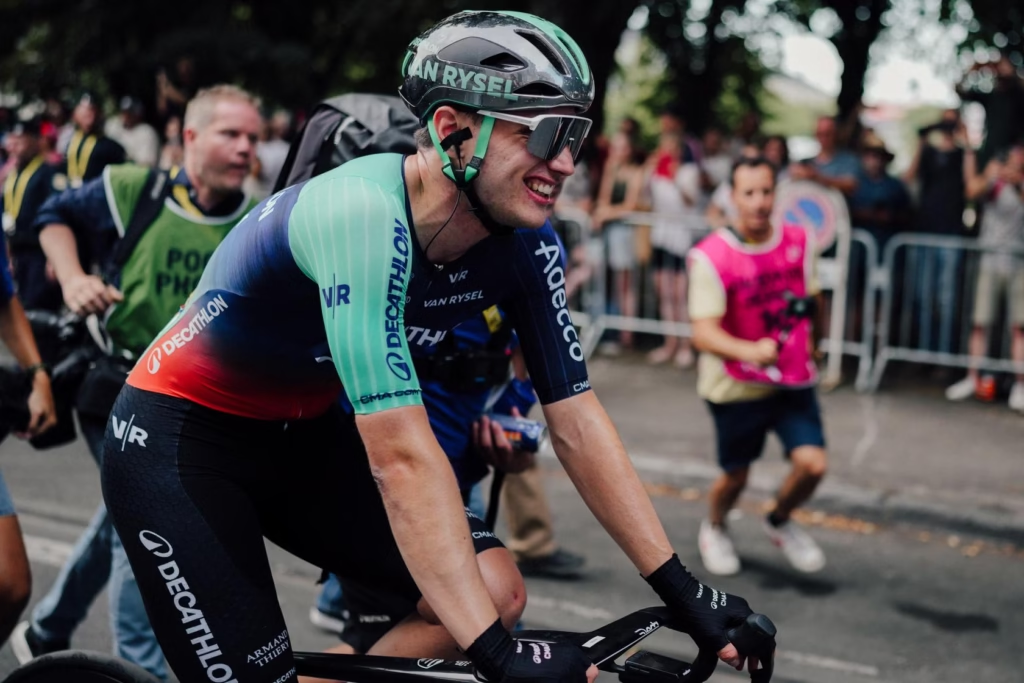
How Decathlon should race Alpe d’Huez
Decathlon CMA CGM need to make the climb difficult before asking Seixas to attack.
The ideal plan would be:
- Keep Seixas protected through the Col Bayard and Col du Noyer.
- Avoid wasting key domestiques in the early breakaway.
- Increase the pace on the Col d’Ornon to reduce UAE’s support.
- Enter Alpe d’Huez near the front and prevent Seixas losing position.
- Set a sustained tempo through the steep opening kilometres.
- Attack before the gradient becomes less consistent.
- Continue riding rather than waiting for Del Toro to return.
The team should avoid one dramatic acceleration followed by hesitation.
A 20-second gap can be lost quickly if Seixas begins watching behind or waiting for assistance. Once he creates separation, he must commit.
The objective is not simply to drop Del Toro for one minute. It is to take at least 21 seconds at the finish.
How UAE should defend Del Toro’s lead
UAE’s first priority remains Pogačar, but protecting Del Toro does not necessarily require a separate strategy.
The team should:
- Prevent Seixas’s domestiques gaining easy positions ahead.
- Preserve Großschartner or Yates until the final climb where possible.
- Allow Del Toro to follow Seixas without working unnecessarily for Pogačar.
- Avoid asking him to chase riders who do not threaten his position.
- Encourage him to ride his own pace if Seixas attacks.
- Use Pogačar’s presence to discourage other teams helping Seixas.
- Let Del Toro contest finish bonuses if the group stays together.
The crucial instruction should be clarity.
Del Toro needs to know when he is a protected podium rider and when UAE expect him to work for yellow. Uncertainty during an attack could cost more than the 20 seconds he holds.
The French crowd changes the atmosphere
Seixas will race Alpe d’Huez with overwhelming roadside support.
The climb traditionally attracts huge French crowds, and the prospect of a home rider moving onto the Tour podium should make the response even louder.
That can help him.
The noise reinforces an attack and makes a small advantage feel more significant. It may also place additional pressure on Del Toro when he is riding alone behind.
The danger is allowing the occasion to dictate the timing.
Seixas cannot attack simply because the crowd demands it on the first steep ramp. He needs Decathlon to complete its work and Del Toro to reach a point of genuine discomfort.
Emotion can produce the move.
Pacing must sustain it.
Which rider has looked stronger?
There is no decisive answer.
Del Toro has held the advantage through consistency, recovered the white jersey after losing it earlier in the Tour and demonstrated the faster finish of the two.
Seixas has often looked more comfortable during sustained mountain efforts and has shown unusual composure for a rider contesting the largest stage race of his young career.
Stage 18 offered little evidence because neither was pushed into a direct confrontation.
That makes stage 19 valuable.
Alpe d’Huez reduces the ability to conceal form. The steep opening section should expose whether one rider is preserving energy while the other is already close to the limit.
The first serious Seixas acceleration may tell more than the previous several stages combined.
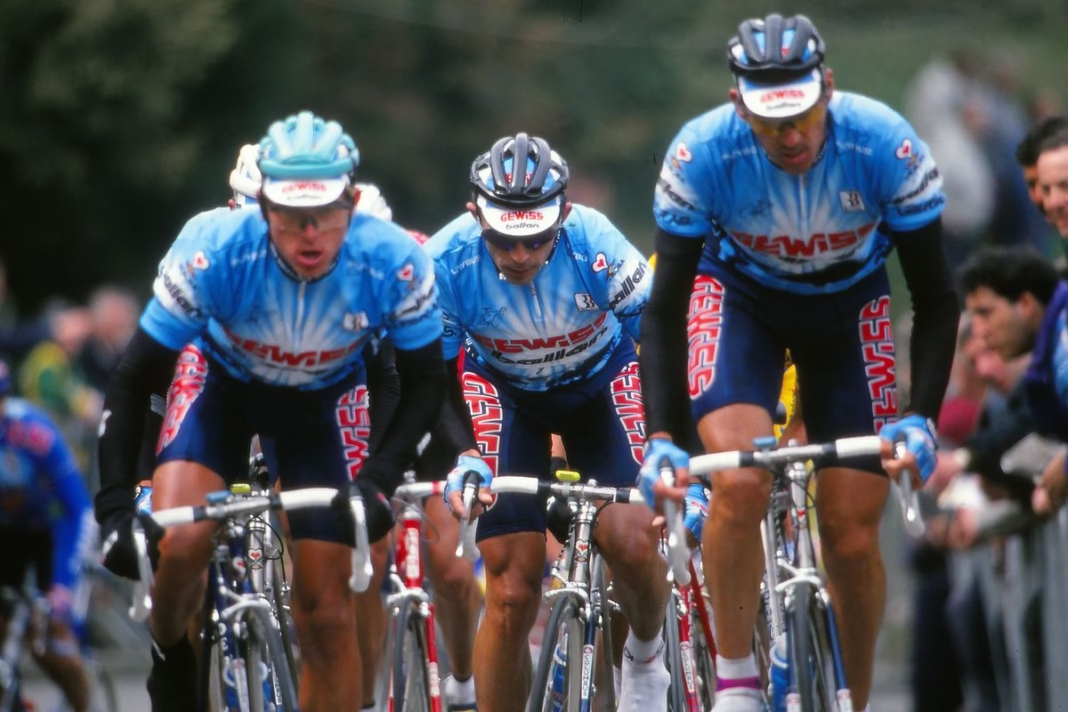
Del Toro starts with the lead, Seixas has the route
Del Toro remains the favourite to win the white jersey because he already leads.
He can afford to finish alongside Seixas on stage 19 and still carry the advantage into the queen stage. He also benefits from Pogačar controlling the yellow jersey battle and has shown the better finishing speed.
Seixas has the route.
Alpe d’Huez gives him sustained steep gradients, a partisan crowd and a clear tactical objective. He does not need to consider team leadership politics or protect another classification.
The difference between them is small enough that neither can rely on reputation or previous results.
Twenty seconds is less than the time required to recover from one poor response on the lower hairpins.
Tour de France 2026 white jersey prediction after stage 19
Seixas should attack and is capable of taking time, but Del Toro has more ways to defend the jersey than the raw gap suggests.
The Mexican can allow a small advantage, ride at his own pace and use his faster finish if the pair come back together. Seixas must create a clean separation and sustain it all the way to the line.
The most likely outcome is a reduced gap rather than a complete change of leader.
Prediction: Seixas gains between five and 15 seconds, but Del Toro retains the white jersey and third overall before stage 20.
That would leave the classification even more finely balanced for the queen stage.
If Seixas takes 21 seconds, Alpe d’Huez delivers France a Tour podium position and white jersey in one move.
If Del Toro follows, he turns the most dangerous day of his race into evidence that he may be strong enough to keep both.

