
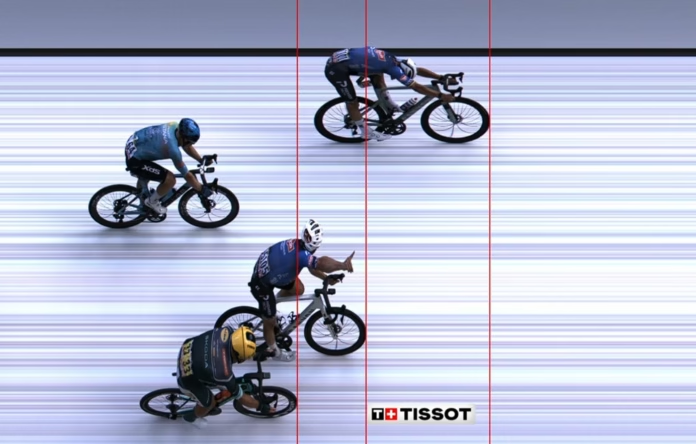
There are not many obvious gaps left on Mathieu van der Poel’s palmarès, but the Champs-Élysées was one of them.
Now it belongs to him too.
Van der Poel won Stage 21 of the 2026 Tour de France in Paris in a way that somehow managed to feel both completely outrageous and entirely predictable for him. He attacked over Montmartre, went clear with Tadej Pogačar, kept committing when the peloton had them almost within reach and then, after the five-time Tour winner was finally caught, found enough for one last acceleration towards the line.
The sprint was coming. His Alpecin-Premier Tech teammate Jasper Philipsen was among the riders bearing down on him. The gap had disappeared to almost nothing.
Van der Poel still made it.
A bike length was enough to give him a fourth Tour de France stage victory and his first on the Champs-Élysées, on a road where his father Adrie had finished second 44 years earlier but never managed to win.
For most riders, that sort of victory would become the defining result of a career. For Van der Poel, it somehow becomes another entry in a collection already filled with races that should each have been career-defining on their own.
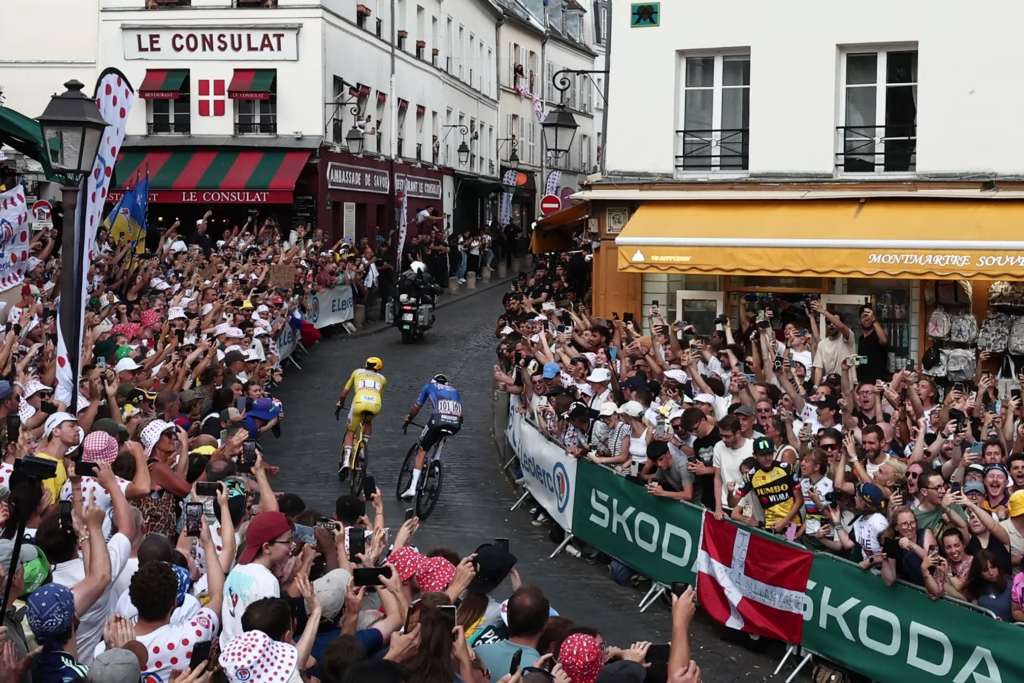 Photo Credit: Getty
Paris became exactly the sort of race Van der Poel wants
The revised Stage 21 route played directly into Van der Poel’s strengths.
The wildfires affecting France forced organisers to remove the original approach into Paris and shorten the stage, concentrating almost all of the competitive racing inside the capital. The GC times were then taken before the first passage of Montmartre, meaning the riders could attack the final circuits without worrying about damaging the overall standings.
What remained was less a traditional final stage of the Tour de France and more an 89km Classic.
That was always going to suit Van der Poel.
The revised Tour de France 2026 Stage 21 route retained three passages over Rue Lepic and the Butte Montmartre, ensuring the finale could not simply settle into the old Champs-Élysées rhythm of lead-out trains waiting for the last lap.
Instead, the climbs created selections, attacks and repeated attempts to break the sprint teams.
Van der Poel did not need inviting.
Pogačar and Van der Poel turned the final stage into their own race
The first Montmartre passage had already shown how selective the new final stage could be, but the race changed properly when Pogačar accelerated on the second climb.
Van der Poel was the only rider immediately capable of following.
Mads Pedersen and Remco Evenepoel eventually returned on the descent, creating a four-rider group containing the yellow jersey, the green jersey winner, one of the best time triallists in the world and the outstanding Classics rider of this generation.
It was almost absurdly strong, but the sprinters still had enough support behind to bring it back.
Decathlon CMA CGM worked for Olav Kooij and the groups came together before the final passage of Montmartre. That could have been the end of Van der Poel’s attacking ambitions.
Instead, he attacked again.
This time it was Pogačar who followed him.
The pair effectively began a two-man time trial from Montmartre towards the Champs-Élysées, with one rider having already secured his fifth Tour de France and the other apparently uninterested in accepting that the final stage was supposed to end in a sprint.
The wider significance of Pogačar reaching Paris with five yellow jerseys is covered in our look at whether Tadej Pogačar is becoming the greatest Tour de France rider of all time. On Stage 21, though, his final contribution to the 2026 race was helping create the platform for another extraordinary Van der Poel victory.
The sprint caught Pogačar, but not Van der Poel
With two kilometres remaining, the gap was down to around ten seconds.
That is usually the point where a two-rider move on the final stage of the Tour is finished. The peloton has more riders, more horsepower and sprinters who have spent the entire finale waiting for precisely that moment.
Pogačar had emptied himself and was eventually absorbed.
Van der Poel carried on.
That is the part of the victory worth dwelling on because it would have been entirely reasonable for him to sit up. He had already attacked repeatedly over Montmartre, spent kilometres riding with Pogačar and reached the final straight with the sprint trains almost on top of him.
Instead he produced another effort.
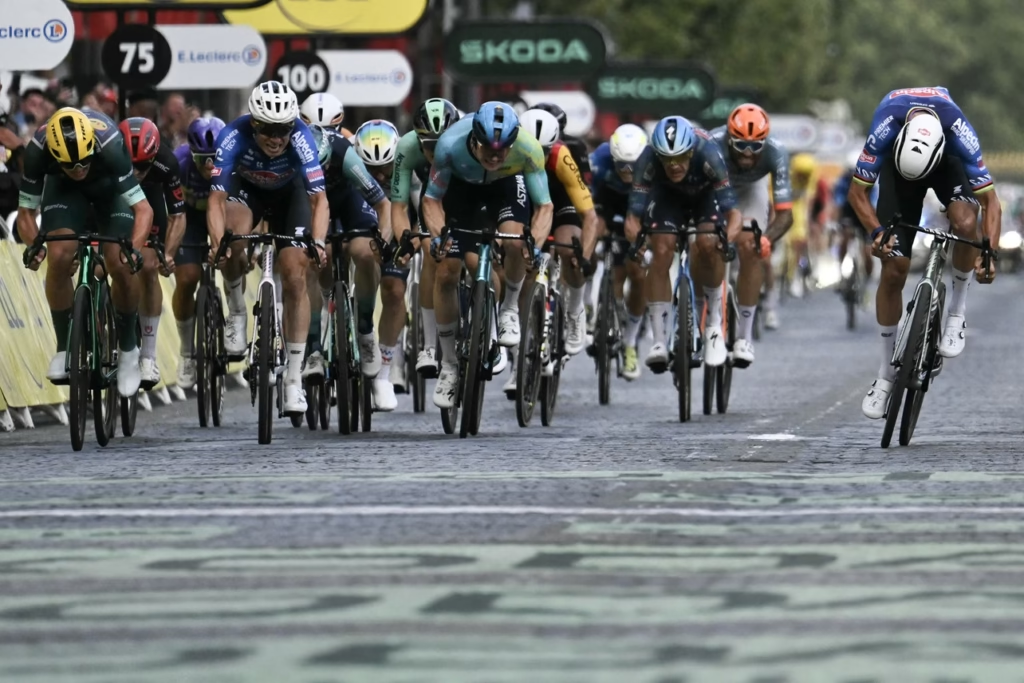
Philipsen was closing fast behind, helping give Alpecin-Premier Tech an extraordinary position in which the team could win whether Van der Poel stayed away or the peloton caught him.
It never quite did.
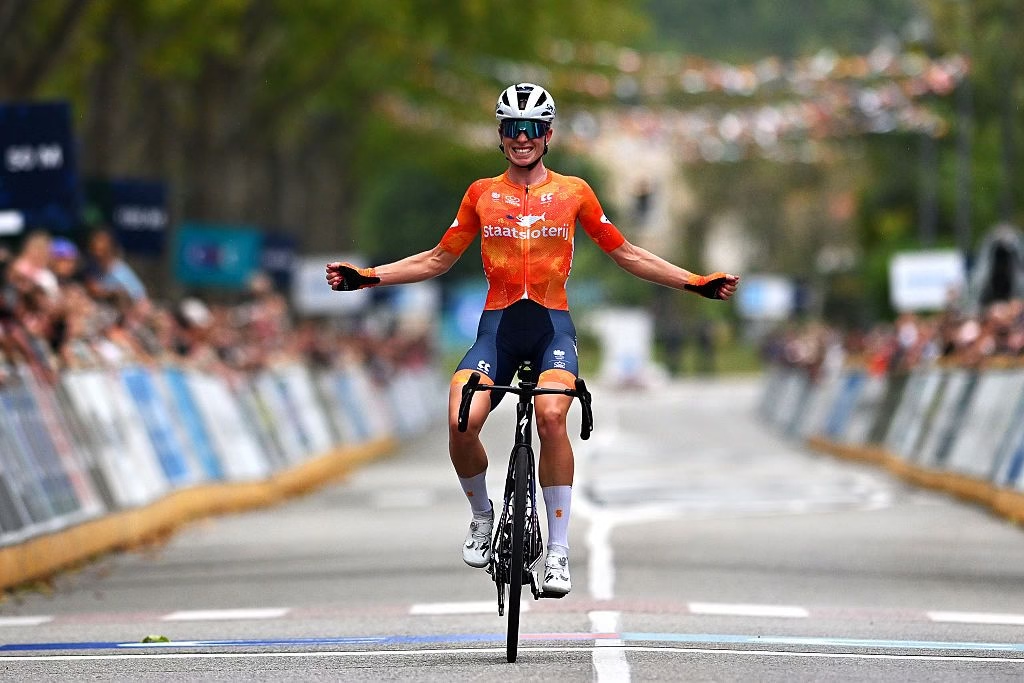
Van der Poel reached the line with roughly a bike length to spare, too exhausted to offer much of a celebration but with another of cycling’s most recognisable finishes added to his career.
Adrie van der Poel was second on the same road in 1982
There is an extra layer to the victory because the Champs-Élysées already had a place in the Van der Poel family history.
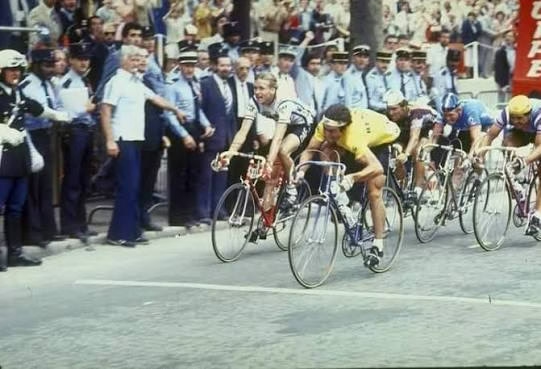
In 1982, Adrie van der Poel was 23 years old and riding his first Tour de France when he reached the final sprint in Paris.
He finished second.
The rider who beat him was Bernard Hinault, wearing the yellow jersey and producing one of the rare examples of the Tour winner also winning the final Champs-Élysées stage.
Adrie never returned to win there.
That hardly made his career unsuccessful. He won the Tour of Flanders, Liège-Bastogne-Liège, stages of the Tour de France, Amstel Gold Race and eventually the cyclocross world title. He was one of the strongest Classics riders of his generation long before Mathieu began producing the same description on an even larger scale.
Yet Paris remained a second place.
Forty-four years later, his son went one better.
Father second, son first is almost too neat
Cycling produces plenty of family connections, but Van der Poel’s career keeps creating unusually tidy links with his own.
The most obvious came at Mûr-de-Bretagne in 2021. His grandfather Raymond Poulidor became one of the most beloved riders in Tour history without ever wearing the yellow jersey. Mathieu attacked twice on the climb, won Stage 2 and finally put yellow into the family.
The Champs-Élysées now offers another version.
Adrie reached the final stage in Paris and finished second.
Mathieu reached the same road 44 years later and won.
There is even a strange symmetry in the riders around them. Adrie was beaten by Hinault in yellow. Mathieu rode the decisive part of his winning move alongside Pogačar in yellow.
The historical parallel is not what makes Van der Poel great, but his career seems unusually good at producing moments where the present suddenly connects with the past.
His Tour stage victories tell the story better than the number
Van der Poel now has four Tour de France stage wins.
That number on its own is not remarkable by the standards of the greatest Tour stage winners. The important part is how little the four victories resemble each other.
His first came at Mûr-de-Bretagne in 2021, where he attacked twice on the final climb, won the stage and took yellow.
His later Tour victories have come on terrain requiring combinations of climbing power, tactical aggression and finishing speed rather than one repeatable sprint formula.
Paris now adds another completely different type of victory.
He did not win on the Champs-Élysées by waiting for Philipsen’s lead-out and trying to beat the pure sprinters at their own game. He won by attacking the climb that had been inserted specifically to stop the final stage becoming predictable and then trying to hold off the peloton from there.
That feels much more representative of Van der Poel than a conventional bunch sprint ever could.
The Champs-Élysées was one of the few places that still felt missing
The scale of Van der Poel’s road career can sometimes become difficult to appreciate because the victories have accumulated so quickly.
He has won the road world championship.
He has won Milan-San Remo.
He has won the Tour of Flanders repeatedly.
He has won Paris-Roubaix repeatedly.
He has worn yellow at the Tour.
He has won Tour stages.
Alongside all of that is a cyclocross career that would itself be enough to make him one of the defining riders of a generation.
Paris does not suddenly elevate him into that company. He was already there.
What it does is add another iconic location to the list.
The Mûr-de-Bretagne.
The Via Roma.
The Oude Kwaremont.
The Roubaix velodrome.
Now the Champs-Élysées.
Few riders have careers that spread across so many of cycling’s most recognisable settings.
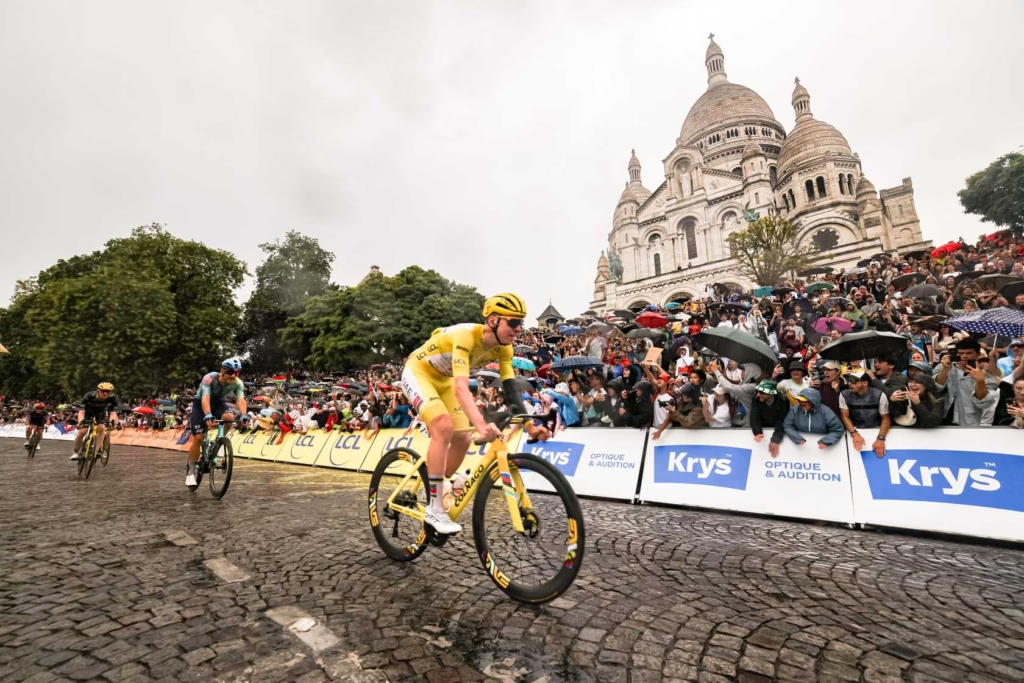
Montmartre has transformed what winning in Paris means
For decades, the Champs-Élysées belonged overwhelmingly to the sprinters.
Survive the mountains, arrive in Paris and the final prize was theirs to contest. The racing before the sprint was often secondary to the spectacle of the Tour reaching the capital.
The introduction of Montmartre has changed that equation.
Our Stage 21 preview focused on exactly that possibility: Pogačar and Van der Poel could use Rue Lepic to attack rather than accept a conventional sprint.
That is exactly what happened.
For Van der Poel, it transformed the Champs-Élysées from a finish where Philipsen would normally give Alpecin-Premier Tech its best chance into one of the most suitable stages of his Tour.
The repeated climb required power.
The cobbles rewarded positioning.
The short circuit rewarded aggression.
The descent and flat run back towards the Champs demanded the ability to sustain an attack.
It became much closer to a one-day race, which meant Van der Poel suddenly looked like one of the obvious favourites.
This is what happens when the Tour gives Van der Poel a Classic
The final 40 kilometres had more in common with the closing stages of a Monument than the traditional Tour procession.
Selections formed and came back together. Strong riders attacked each other over the cobbles. Sprint teams chased. Riders who appeared to have lost their chance returned, only for another acceleration to break the race apart again.
Van der Poel thrives in that sort of uncertainty.
A controlled Tour stage can sometimes work against him because teams with specific objectives are willing to spend riders simply keeping the race together.
A Classic rarely offers that stability.
Paris did not either.
Once the GC times were neutralised, everyone could race without worrying about the consequences for the overall classification. Pogačar attacked despite already having the Tour won. Van der Poel attacked despite having Philipsen as one of the favourites if the race ended in a sprint.
The strongest riders simply started racing each other.
Van der Poel was the one left ahead at the finish.
Pogačar’s presence makes the victory bigger
This was not Van der Poel taking advantage of a final stage where the biggest riders were already mentally in Paris.
Pogačar was attacking.
He had just completed another dominant Tour and secured his fifth overall victory, yet he was still accelerating on Montmartre and committing to a move towards the finish.
That matters because Pogačar and Van der Poel increasingly represent the two sides of modern cycling that have begun to overlap.
Pogačar has taken Grand Tour superiority into the Monuments.
Van der Poel has taken Classics dominance into races and situations where riders of his type were previously expected to disappear.
When the terrain puts them together, they tend to create races that look different from what everyone else had planned.
Paris was another example.
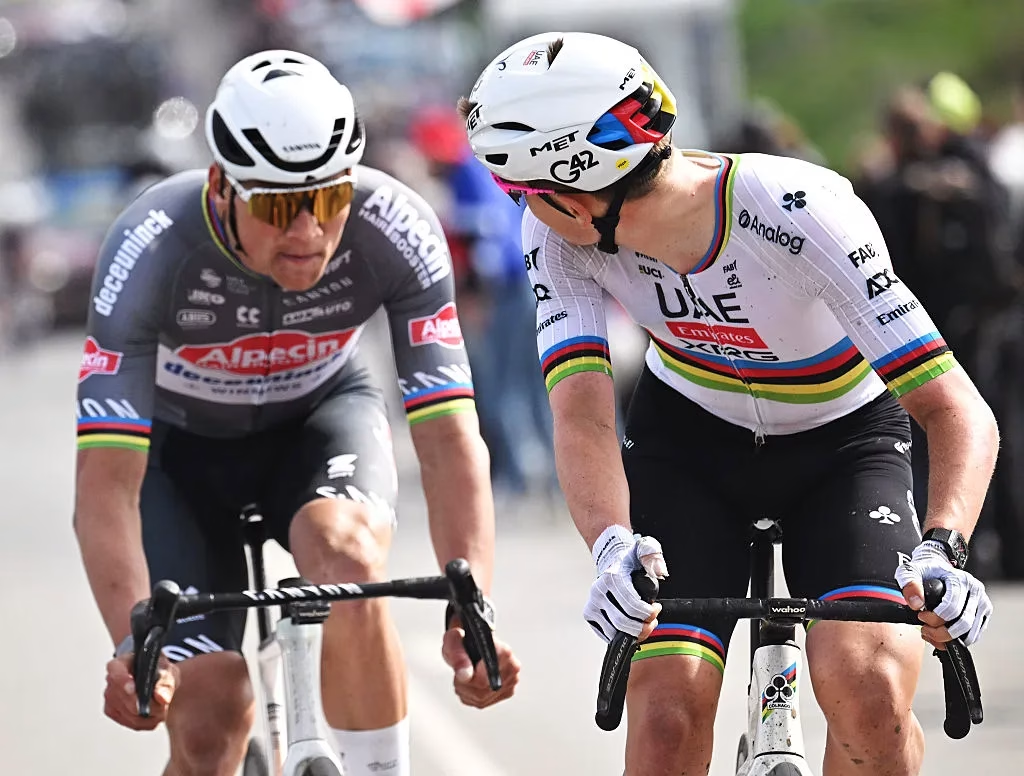
Van der Poel and Pogačar are changing the rules of where stars attack
There was a time when the winner of the Tour attacking on Stage 21 would have seemed unnecessary.
There was also a time when the outstanding cobbled Classics specialist would have been expected to save everything for a possible sprint or work for his faster teammate.
Neither assumption survived Montmartre.
That willingness to race when there is apparently little strategic reason to do so is part of why Van der Poel and Pogačar have become such compelling rivals whenever their seasons overlap.
They can make important races more aggressive.
They can also make supposedly unimportant parts of races important.
Stage 21 was not going to change Pogačar’s yellow jersey. It was not going to change Van der Poel’s career status.
They attacked anyway.
The result was one of the best finales the Champs-Élysées has produced.
Even Van der Poel’s exhaustion added to the moment
There was no elaborate celebration when Van der Poel crossed the line.
He had almost nothing left.
That suited the victory.
He had not won through a piece of tactical hesitation behind or because the sprinters gave the breakaway too much space. The peloton had almost completed the chase.
Van der Poel knew it was coming.
He kept riding.
When Pogačar could no longer stay clear, Van der Poel still had to find enough to make the final straight.
When Philipsen and the other sprinters arrived behind, the line came just early enough.
The physical emptiness after the finish told the story better than any celebration could have done.
Another iconic image joins the collection
Van der Poel increasingly does more than accumulate victories. He accumulates images that become shorthand for parts of his career.
The rainbow jersey after Glasgow.
The attacks on the Oude Kwaremont.
The solo rides towards the Roubaix velodrome.
The emotional Mûr-de-Bretagne win that put him in yellow.
Now there is Paris, with the peloton filling the road behind him and the Champs-Élysées disappearing beneath his wheels as he tries to survive for a few seconds longer.
That is one reason his achievements can feel larger than the raw numbers.
Many riders have won more Tour stages.
Very few have built a collection of victories this varied, this prestigious and this visually memorable.
The family history only makes it better
Adrie van der Poel did not need his son to win on the Champs-Élysées to validate his own career.
Mathieu did not need to finish a story that began in 1982.
But sport is better when these connections exist.
The father came to Paris as a 23-year-old and finished behind the yellow jersey.
The son came back 44 years later, rode away with another yellow jersey and finished first.
Like the Poulidor connection at Mûr-de-Bretagne, it gives the result an extra dimension without needing to define it.
Mathieu van der Poel would have won a huge stage regardless of his surname.
Knowing the history makes it feel bigger.
Paris does not change his status, it strengthens the historical argument
Van der Poel was already one of the defining riders of his era before Sunday.
The question is increasingly not whether he belongs among the great riders of modern cycling, but where his eventual career will sit among the greatest Classics and all-round riders the sport has produced.
The Champs-Élysées is unlikely to rank above his biggest Roubaix, Flanders or world championship victories when his career is eventually assessed.
It does not need to.
Great careers are not built only from their five biggest results. They are also built from the depth underneath them, the days where a rider finds another famous race, another famous road or another seemingly impossible way to win.
Paris adds to that depth.
It shows that even after everything Van der Poel has already done, there are still new versions of the same rider waiting to appear.
One bike length carried 44 years of history
The margin was tiny.
Behind Van der Poel was an entire peloton moving at sprint speed, with Philipsen almost close enough to turn the result into an Alpecin-Premier Tech victory of a completely different kind.
Ahead was the line.
Van der Poel reached it first.
One bike length was enough to give him the Champs-Élysées stage that his father had come so close to winning in 1982. It was enough to add a fourth Tour victory to a career already containing almost everything worth winning on a road bike.
Most importantly, it was another reminder of what makes Van der Poel different.
He did not need to attack Pogačar on Montmartre. He did not need to keep riding when the peloton was almost on him. He did not need another iconic victory to prove anything about his place in cycling.
He did it anyway.
That is why Mathieu van der Poel keeps producing moments that feel bigger than the result itself.

