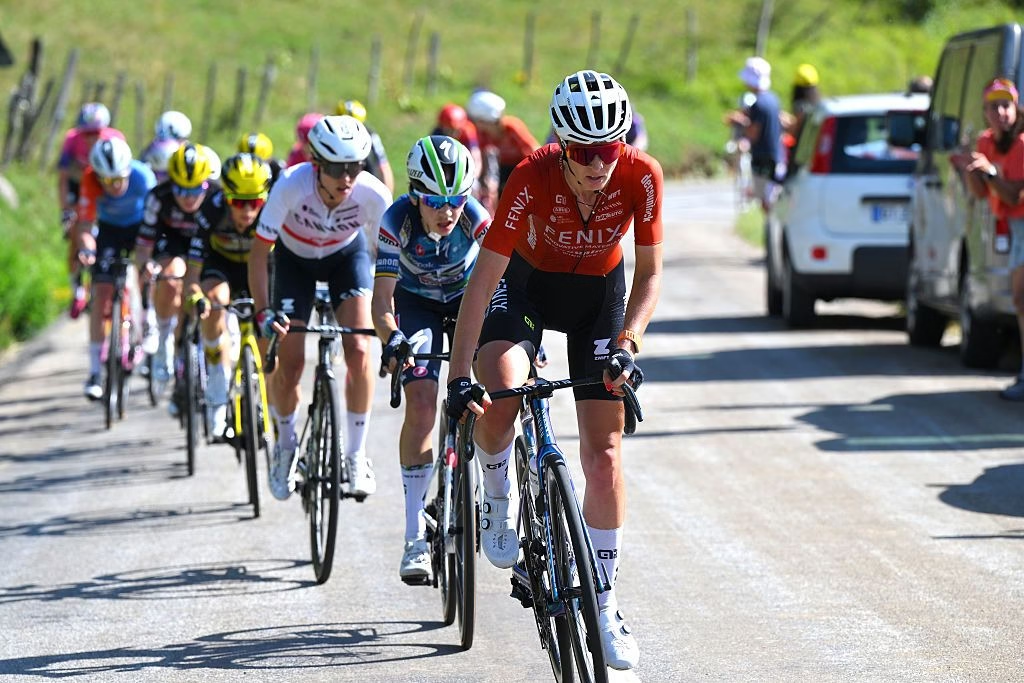
Tour de France Femmes riders eat a lot, but the important part is not simply how many calories they consume over nine days. It is how carefully those calories are timed around racing, recovery and the demands of the next stage.
Professional riders are trying to solve two problems at once. They need enough carbohydrate to fuel hours of racing, including repeated attacks and high-intensity climbing, while also restoring enough energy afterwards to do the same thing again the following morning. Everything has to be digestible, practical and individual enough that the rider can actually follow the plan under race pressure.
That means the food inside a Tour de France Femmes team is rarely random. Breakfast is built around carbohydrate, on-bike nutrition is planned around the expected stage demands, and recovery begins almost immediately after the finish. Riders may eat rice, porridge, pancakes, bread, pasta and potatoes alongside rice cakes, bars, gels, drink mix and simple sugary foods.
It is far removed from the old idea that professional cyclists spend Grand Tours surviving on tiny portions because they need to remain light. At this level, under-fuelling is much more likely to damage performance than eating too much.
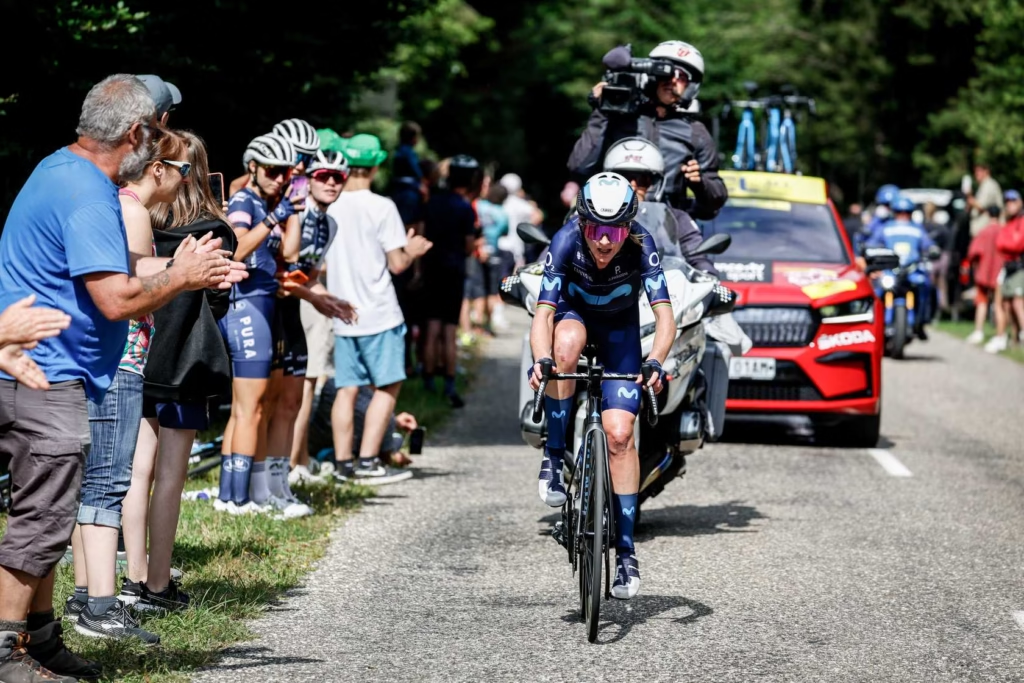 Photo Credit: A.S.O./Fabien Boukla
Carbohydrate is the main race fuel
Carbohydrate sits at the centre of modern professional cycling nutrition because it provides the energy needed for the hardest parts of racing.
Riders can use fat as fuel during lower-intensity riding, but climbs, attacks, accelerations and prolonged high power rely heavily on carbohydrate. The body can only store a limited amount as glycogen, so those stores have to be topped up continually.
That is why riders eat before the stage, during it, immediately afterwards and again at dinner. On hard race days, elite cyclists may target very high carbohydrate intakes during the stage, sometimes approaching or exceeding 100g per hour when they have trained their digestive system to tolerate it.
Those numbers are much higher than most recreational riders need, but the principle is the same. The harder and longer the riding, the more important it becomes to eat early and consistently rather than waiting until the legs begin to empty.
For recreational riders, our guide to how to fuel your rides applies the same ideas at a much more realistic scale.
What do riders eat for breakfast?
Breakfast is usually carbohydrate-heavy and relatively easy to digest.
That can mean porridge, rice, pancakes, bread, cereal or similar foods, often with smaller amounts of protein from eggs, yoghurt or another familiar source. The aim is not to produce the healthiest-looking breakfast possible. It is to begin the stage with high glycogen availability without leaving the rider feeling heavy or uncomfortable.
Rice can look unusual to British riders as a breakfast food, but it makes sense in a stage race. It is easy to digest, rich in carbohydrate and can be eaten in large enough quantities without bringing a huge amount of fat or fibre with it.
Pancakes work for similar reasons.
The exact meal will also change according to the stage. The Tour de France Femmes 2026 route includes flat stages, hilly stages, a 21km individual time trial and two mountain days, so there is no reason every breakfast should be identical.
A rider preparing for Mont Ventoux has a different day ahead from someone facing a shorter time trial in Dijon.
Riders do not eat the same amount every day
A flat sprint stage and a mountain stage are not nutritionally identical.
The rider sitting protected in the peloton for much of a relatively controlled day may use less energy than a domestique spending hours in the wind or a GC contender attacking on a summit finish. Teams therefore adjust nutrition according to expected workload rather than treating every stage as the same problem.
That can begin the evening before.
If the following stage contains a lot of climbing and several hours of hard racing, carbohydrate intake can be increased to maximise glycogen availability. If the next day is shorter or less demanding, the amount can be adjusted without deliberately under-fuelling the rider.
The principle is sometimes described as fuelling for the work required.
That does not mean eating as little as possible on easier days. It means matching intake to the demands of the race.
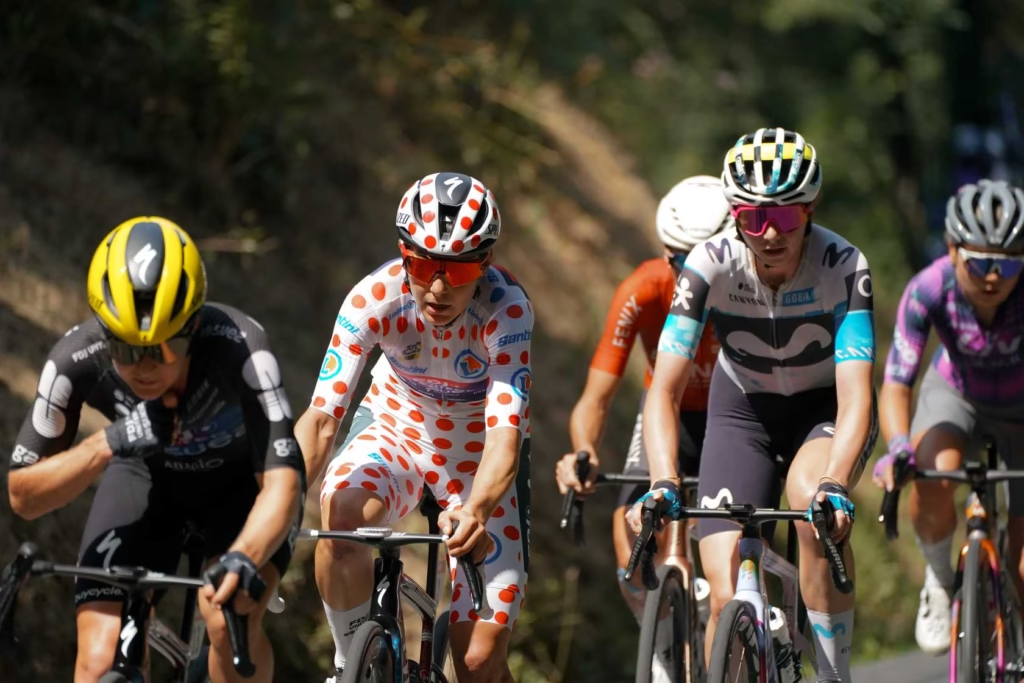 Photo Credit: A.S.O/Thomas Maheux
What do riders eat on the bike?
Once the stage starts, the food becomes progressively simpler.
Early in a long stage, riders may eat rice cakes, small sandwiches, bars or other solid foods that provide carbohydrate without being difficult to digest. Later, as the race becomes faster and more tactical, gels and carbohydrate drinks become more useful because they can be consumed quickly.
A rider will normally combine several sources.
A bottle may contain carbohydrate.
A gel might provide another concentrated serving.
A rice cake or bar adds more.
The aim is to reach the planned hourly intake while keeping the stomach comfortable enough to race.
That last part is crucial. Eating 100g of carbohydrate per hour is only useful if the rider can absorb it without gastrointestinal problems. Professional cyclists therefore train their fuelling strategies in the same way they train climbing or time trialling.
Race day is not the moment to discover which food the stomach can tolerate.
Rice cakes are popular for a reason
Rice cakes have become one of the most recognisable foods in professional road cycling.
They are normally made from sticky rice and can be turned into sweet or savoury versions depending on what the rider prefers. Teams might add syrup, fruit, egg, cream cheese or other ingredients while keeping the food compact and easy to eat on the bike.
Their appeal is practical.
Rice provides carbohydrate without excessive fibre, while a small cake can be wrapped individually and eaten in several bites. It also gives riders something different from gels and sports bars during a race where they may be consuming similar products every day.
That variety becomes important across nine stages.
Nutrition can be physiologically perfect and still fail if the rider becomes so tired of the food that she stops eating enough of it.
Gels become more valuable as the race gets harder
A rider may have time to eat a rice cake during a quiet first hour.
She is much less likely to want one while the peloton is racing towards a decisive climb.
This is where gels become particularly useful.
They provide carbohydrate quickly, require almost no chewing and can be consumed while the rider is still concentrating on positioning. Modern gels often use combinations of glucose and fructose, helping riders reach higher total carbohydrate intakes than were traditionally considered practical.
The timing matters as much as the product.
Teams increasingly plan fuelling around the course itself. If a climb begins with 30km remaining and the race is expected to explode there, the rider needs to eat before reaching it.
Once the attacks start, there may be no realistic opportunity.
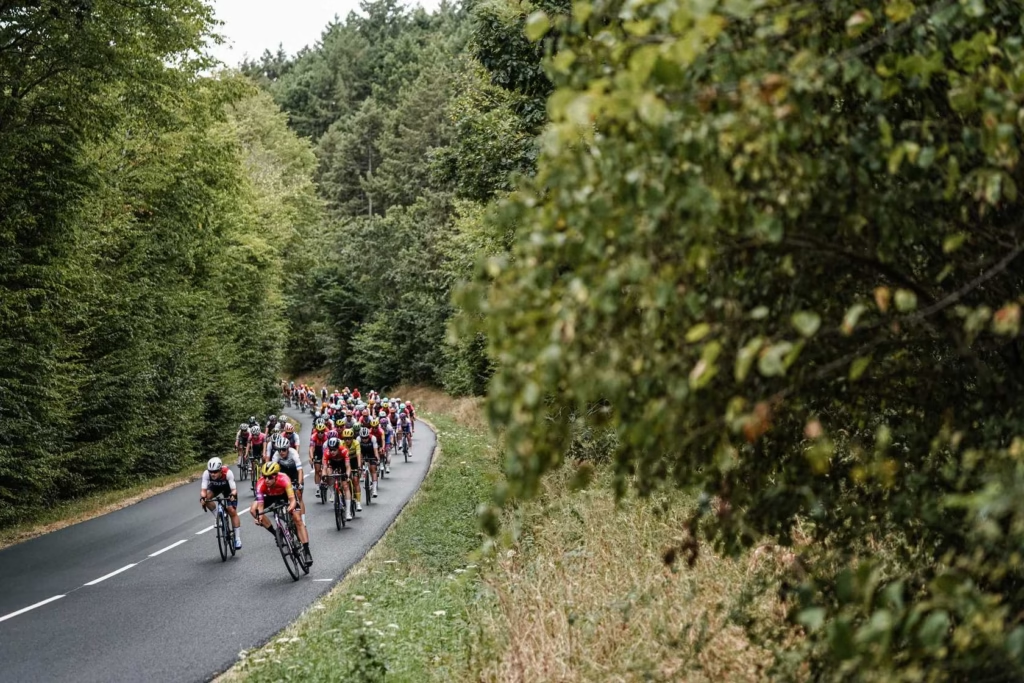
Carbohydrate can come through the bottle as well
A bidon is not necessarily just water and electrolytes.
Carbohydrate drink mixes allow riders to add fuel while they hydrate, which is particularly useful on fast stages where eating solid food becomes difficult.
This gives teams another way to customise the plan.
A rider can combine food, gels and carbohydrate drinks to reach the required intake rather than trying to consume everything through one source.
The balance may also change with the weather.
On a hot stage, riders need more fluid, but increasing the amount of carbohydrate at the same rate could produce a drink that becomes too concentrated. Teams can therefore alter bottle contents depending on temperature, sweat rate and what the rider is already eating.
Hydration and fuelling are planned together rather than as separate jobs.
How much do Tour de France Femmes riders drink?
There is no fixed bottle-per-hour rule that works for everyone.
Sweat rate varies with temperature, humidity, body size, intensity and individual physiology. Professional teams can test riders and build an estimate of how much fluid they are likely to lose under different conditions.
That matters during a race such as the Tour de France Femmes because the 2026 route moves from Switzerland through several different types of terrain before reaching the hotter Alpine and Mediterranean stages around Mont Ventoux and Nice.
A cool day in the Jura does not create the same hydration demand as a hot afternoon in southern France.
The objective is not necessarily to replace every drop of sweat while racing. It is to prevent dehydration becoming large enough to damage performance while keeping fluid intake practical.
Sodium is part of hydration, not a magic shortcut
Sweat contains sodium, so a rider who loses a lot of fluid will also lose electrolytes.
Teams can use electrolyte mixes to replace some of that loss, particularly on hot stages and for riders known to be heavy or salty sweaters.
The key is individualisation.
Some riders lose significantly more sodium than others, so there is little value in giving every member of a team exactly the same bottle plan.
Sodium supports hydration strategy.
It does not replace carbohydrate, fitness or appropriate fluid intake.
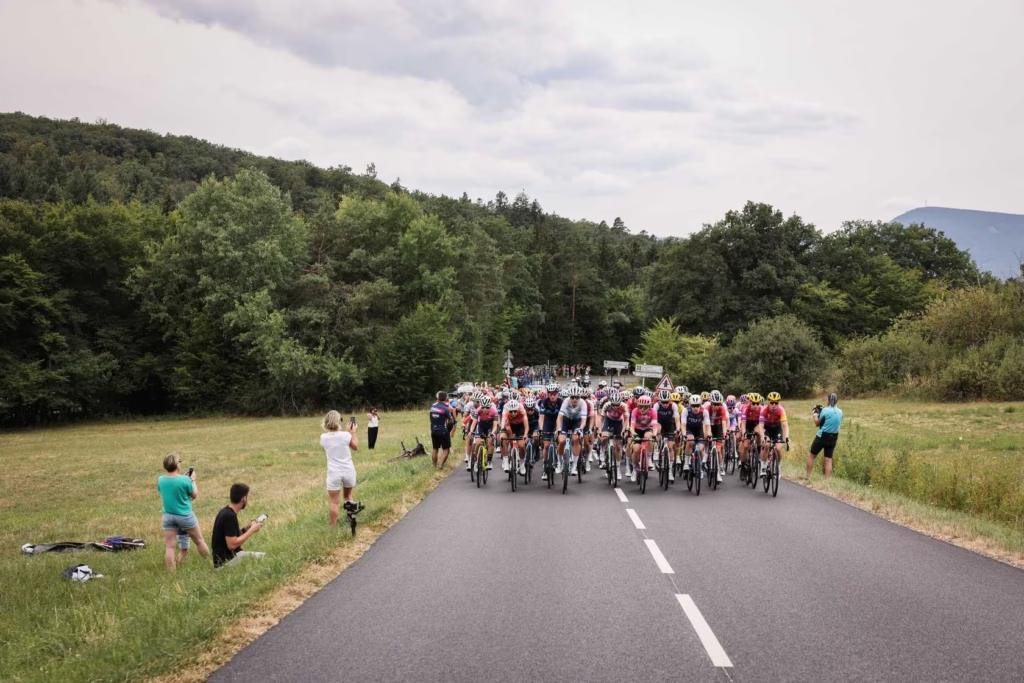
How do riders get food during the stage?
Riders start with food in their jersey pockets and bottles on the bike, but that is nowhere near enough for a long Tour stage.
Further supplies come from team staff positioned on the route and from the team car. A traditional musette can contain food, gels and bottles, while domestiques may repeatedly drop back to the car to collect supplies for the rest of the team.
That means a rider can return to the bunch carrying several bottles inside her jersey before distributing them to teammates.
It looks like a mundane part of the race.
It is one of the jobs that makes the whole team function.
The protected GC leader does not want to lose position every time she needs another bottle. A teammate does that work instead.
Riders still need reminding to eat
Knowing that you need carbohydrate every hour does not guarantee that you consume it.
Hard racing suppresses appetite, and tactical moments can remove opportunities to eat for long periods. A rider may be fighting for position, responding to attacks or preparing for a climb when the nutrition plan says she should be taking another gel.
Teams can use race radio to remind riders to fuel, while nutrition staff can identify easier sections of the route where eating should be prioritised.
This becomes particularly important before decisive finales.
Arriving at Mont Ventoux with depleted glycogen because the rider forgot to eat while fighting for position earlier in the stage can end a GC challenge even if the legs were otherwise good enough.
Feeding is therefore part of race tactics.
The final hour often becomes mostly gels and drink
As the stage becomes more intense, solid food becomes less practical.
The final hour of a mountain or hilly stage can involve repeated accelerations, attacks and high-speed positioning before the decisive climb. Riders may be breathing too hard or concentrating too intensely to comfortably chew.
That is where gels, chews and carbohydrate drinks become increasingly important.
The rider ideally begins the decisive section already well fuelled, with the final intake used to maintain rather than rescue the situation.
This is especially relevant on stages such as the Mont Ventoux summit finish, where the final climb is long enough that arriving under-fuelled will be exposed very quickly.
Once the race is already on the mountain, the nutritional mistake has usually happened earlier.
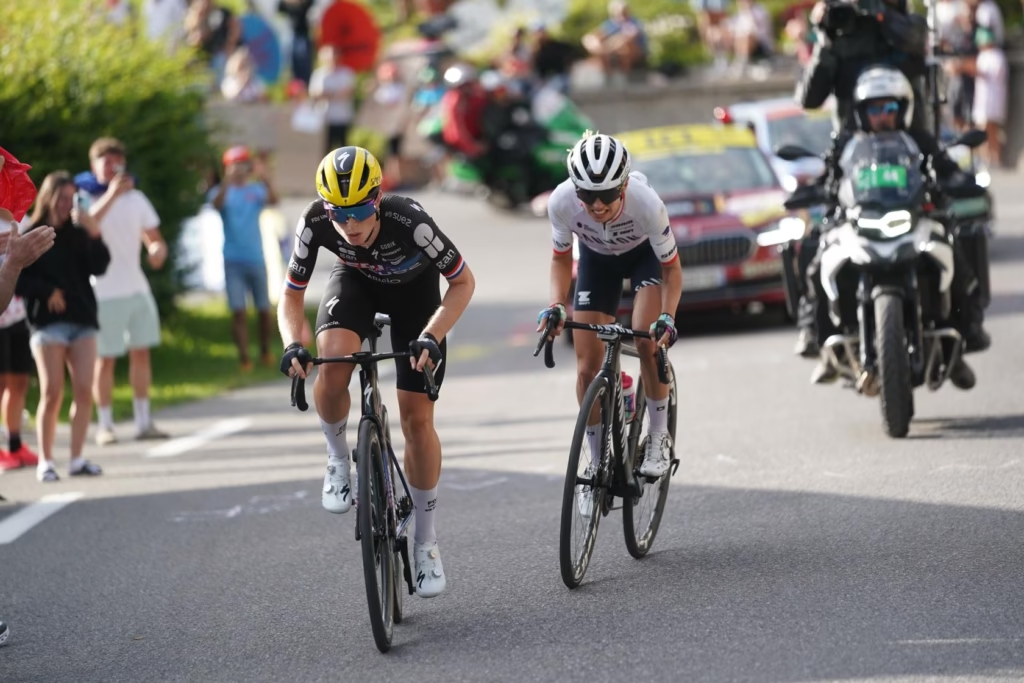
What happens immediately after the finish?
Recovery starts almost immediately.
The priorities are replacing carbohydrate, getting protein into the recovery process and beginning to restore fluid and electrolytes.
A rider may be handed a recovery drink before she has even reached the team bus, followed by more substantial food shortly afterwards. Rice, sandwiches or another carbohydrate-rich meal can appear before the rider reaches the hotel.
The speed matters because this is a stage race.
A rider is not trying to recover for another hard session three days later.
She may have less than 24 hours before racing again.
The faster recovery begins, the more time the body has to prepare.
Why do riders sometimes eat sweets after racing?
Because sugar is useful when the body needs carbohydrate quickly.
A packet of sweets or a sugary drink might look completely incompatible with elite sports nutrition when viewed without context.
Immediately after several hours of racing, the context is different.
The rider is trying to begin replacing glycogen as quickly as possible. Simple carbohydrates can do that efficiently, particularly while appetite is still limited and before a full meal is available.
That does not mean the rider’s normal diet consists primarily of sweets.
It means food has a job.
The same food can be useful in one situation and unnecessary in another.
Protein matters, but carbohydrate still dominates recovery
Repeated racing causes muscle damage and puts substantial stress on the body, so protein is an important part of recovery.
Recovery drinks may combine carbohydrate and protein, while later meals can include eggs, dairy, fish, meat, tofu or another protein source depending on the rider and team.
Carbohydrate remains the dominant challenge because glycogen has to be rebuilt quickly enough for another stage.
A rider can recover muscle perfectly and still race badly tomorrow if she has not restored enough carbohydrate.
Protein supports the process.
It does not replace the main fuel.
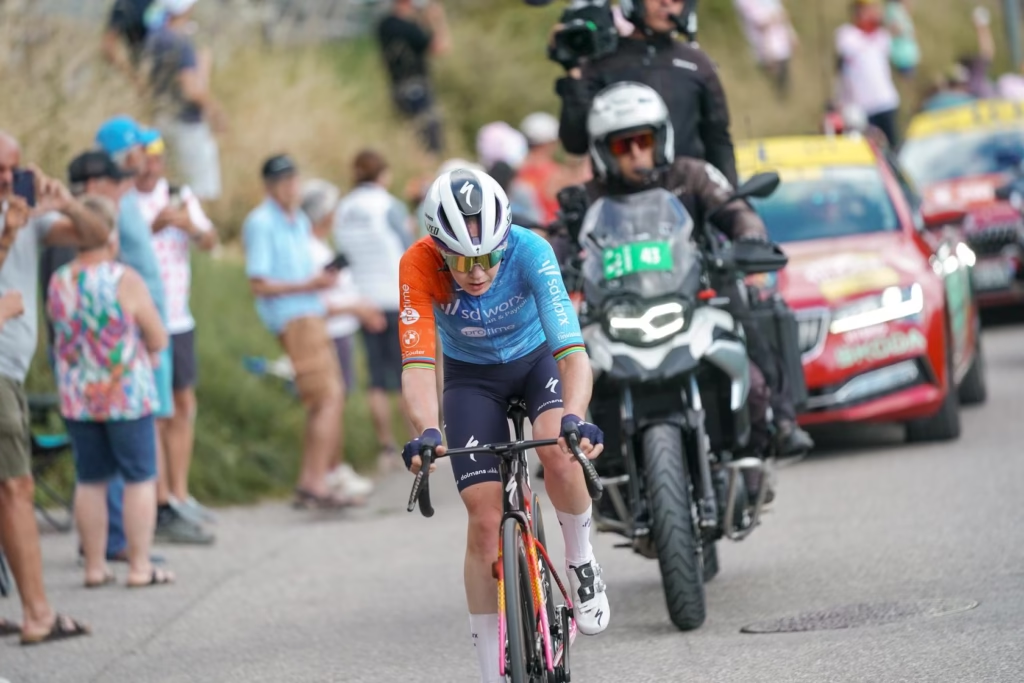 Photo Credit: A.S.O./Thomas Maheux
Dinner is preparation for tomorrow
The evening meal is not simply the moment riders finally get to eat normally.
It is another recovery session.
Dinner will generally contain a substantial carbohydrate source such as rice, pasta or potatoes alongside protein, vegetables and enough total energy to continue replacing what the rider used during the stage.
This can add up to a very large amount of food over a hard race day.
That is why teams use chefs.
Eating plain pasta every night might technically deliver carbohydrate, but a rider who becomes tired of the food and begins leaving half of it on the plate is not following an effective nutrition strategy.
Food needs to meet the physiological requirement and remain appealing enough to eat.
Why professional teams bring their own chefs
Control and consistency matter across a stage race.
Hotels may provide perfectly good food, but teams want meals prepared around their own timing, ingredients and nutritional requirements.
A team chef can adapt meals to individual preferences, make sure enough carbohydrate is available, work around allergies or intolerances and provide variety across the race.
There is also an important psychological benefit.
Riders are tired.
They may have little appetite after another hard stage.
Food that looks and tastes appealing makes it easier to consume the quantity required for recovery.
At Grand Tour level, the chef is part of the performance staff.
Under-fuelling is a performance problem, not a shortcut to being lighter
Cycling has historically had an unhealthy relationship with body weight.
Being lighter can improve climbing performance if power is preserved, which created decades of pressure around eating less. The problem is that chronic energy restriction eventually damages the very performance the rider is trying to improve.
Insufficient energy availability can impair recovery, reduce training quality, affect bone health and disrupt normal hormonal function. The broader condition is known as Relative Energy Deficiency in Sport, or RED-S.
This issue has particular relevance in women’s cycling because awareness of the consequences of chronic under-fuelling has grown considerably alongside the professionalisation of the sport.
A lighter rider is not automatically a better climber if the process of becoming lighter leaves her unable to train, recover or produce power.
Modern race nutrition is increasingly built around supplying enough energy to perform.
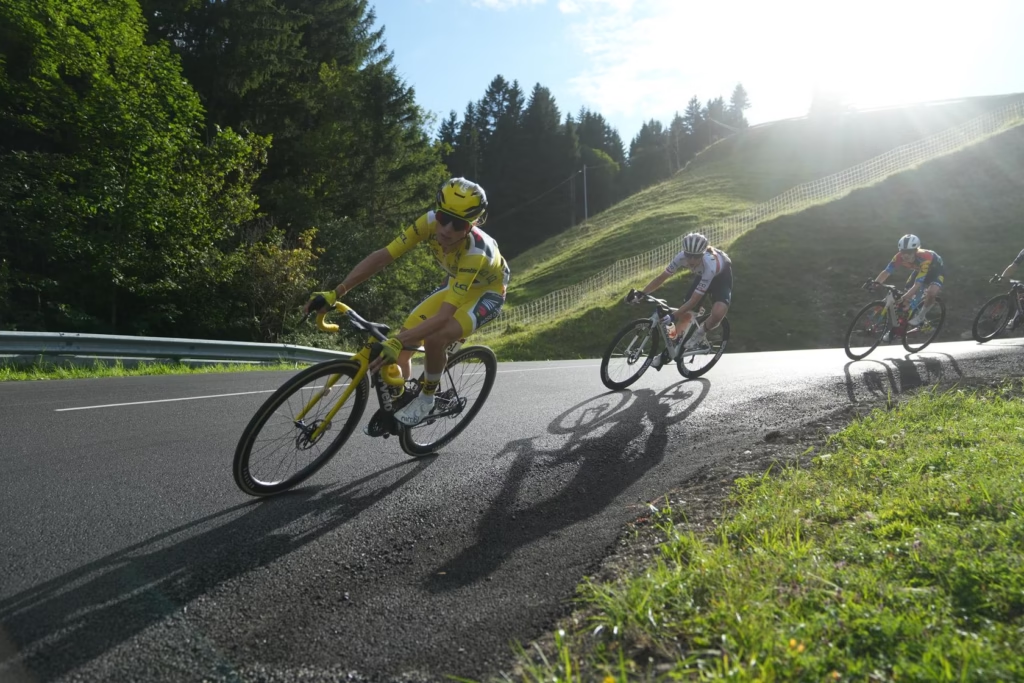 Photo Credit: A.S.O./Thomas Maheux
Female cyclists are not simply smaller versions of male riders
The basic requirements are similar.
Riders need carbohydrate for performance, protein for repair, fluid for hydration and enough overall energy to support the workload.
But an individual women’s nutrition plan should not simply take a men’s Tour plan and reduce every quantity.
Body mass matters, but so do sweat rate, gastrointestinal tolerance, training history, energy availability and individual health.
Female endurance athletes also have specific considerations around iron status and menstrual function, particularly when training and racing volumes become very high.
The improvement in women’s cycling is not that riders need completely different race foods.
It is that they increasingly have access to nutrition plans built specifically around their own requirements rather than receiving whatever worked for the men’s team.
Iron deserves particular attention
Iron contributes to oxygen transport through haemoglobin and is therefore especially important for endurance athletes.
Female athletes can face a greater risk of low iron stores because heavy training demands can combine with menstrual blood loss and other individual factors.
That does not mean every rider needs iron supplements.
Professional teams can use blood testing to identify problems and respond appropriately through diet or medical supplementation where required.
The important word is individual.
Taking iron unnecessarily is not a performance strategy.
Monitoring the rider properly is.
Riders still eat vegetables and normal meals
The heavy emphasis on carbohydrate can make Grand Tour nutrition sound as though riders live entirely on white rice, gels and sugar.
They do not.
A varied diet still matters across the race, providing micronutrients, protein, fats, fibre and the wider nutritional support required for health and recovery.
The difference is when certain foods are eaten.
High-fibre or particularly fatty meals may be reduced close to the start because they take longer to digest and can increase the risk of stomach problems. Vegetables, protein and more complex meals can feature more heavily later in the day when the rider is not about to start racing.
Race nutrition looks unusual because it has a very specific purpose.
A gel is excellent food for the final hour of a stage.
Nobody is suggesting it should replace dinner.
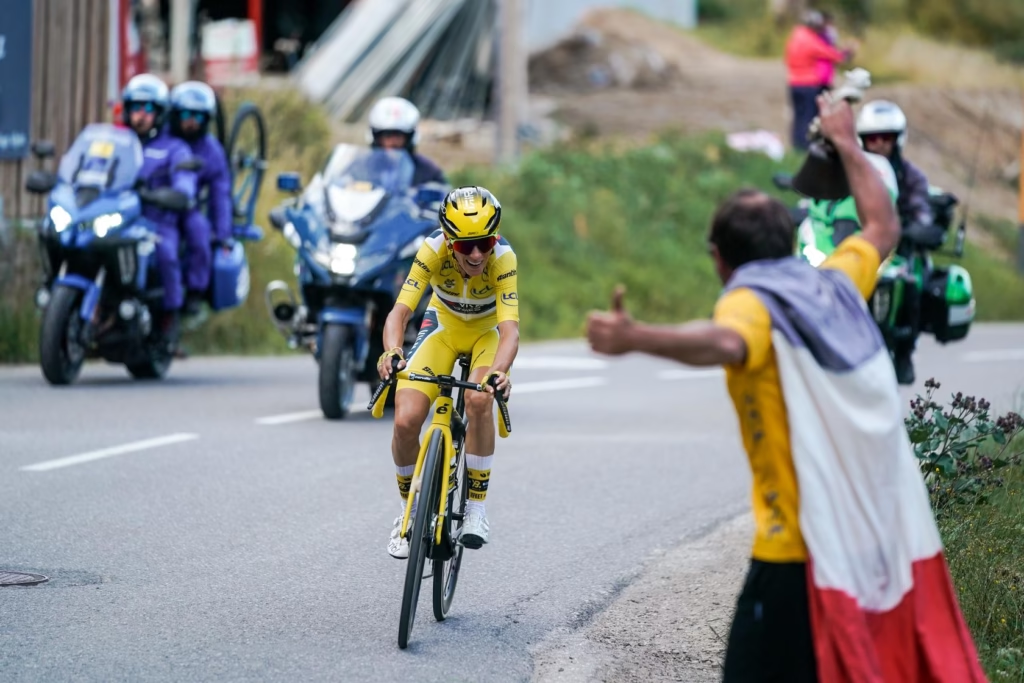 Photo Credit: A.S.O./Thomas Maheux
What changes on mountain stages?
Mountain stages create some of the highest energy demands of the race while also making eating increasingly difficult as the day progresses.
The solution is to fuel before the decisive climbing begins.
Breakfast can be substantial, while the opening part of the stage offers the best opportunity for solid foods. As the race becomes harder, riders transition towards easier carbohydrates through gels, drinks and smaller snacks.
By the final climb, the GC rider ideally arrives with glycogen availability as high as practically possible and with recent carbohydrate intake supporting the effort ahead.
Waiting until the gradient reaches 10% before thinking about food is too late.
The energy required for the attack has to be available before the attack happens.
Sprint stages still need serious fuelling
A flat stage may be less demanding for a protected rider sitting in the bunch, but it can still require significant carbohydrate intake.
The final hour of a sprint stage is anything but easy.
Teams fight for position, the speed rises, riders repeatedly accelerate out of corners and lead-out trains begin producing near-maximal efforts.
Sprinters need enough carbohydrate available to produce their best power at the finish.
That is why the mechanics described in our guide to how a bunch sprint works are also a nutrition problem. A rider may have spent most of the day protected, but the final kilometres require explosive power after several hours of racing.
Fuel saved or consumed earlier is what makes that possible.
Time trials require a different timing strategy
An individual time trial is shorter, but that does not make nutrition irrelevant.
The challenge becomes timing rather than volume during the stage itself.
A GC rider preparing for the 21km Dijon time trial does not want to begin a maximal effort with a heavy stomach. At the same time, she cannot arrive under-fuelled simply because the race distance is short.
Pre-race meals and snacks therefore become particularly important.
The warm-up also has to be considered.
A rider may spend a meaningful amount of time on the turbo trainer before the official stage begins, which means the actual energy demand of the day is larger than the 21km result sheet suggests.
 Photo Credit: A.S.O./Pauline Ballet
Caffeine can be useful, but recovery still matters
Caffeine is widely used in endurance sport because it can improve alertness and performance.
It can come through coffee, gels or sports products, with timing depending on the rider and the stage.
A stage race introduces another consideration.
Sleep.
A large caffeine dose late in the afternoon might help during a final climb, but anything that significantly affects sleep can harm the following day’s recovery and performance.
That is the recurring theme of Grand Tour nutrition.
Nothing is judged only by what it does today.
Riders can become tired of eating
This is one of the least appreciated parts of stage racing.
A rider can finish a stage physically exhausted and with little appetite, yet still need to begin taking in carbohydrate almost immediately.
Then she eats again on the bus.
Then dinner.
Then breakfast.
Then hours of on-bike food.
Repeat for nine stages.
Eventually eating becomes another part of the job rather than something driven entirely by hunger.
That is one reason variety matters so much. Team chefs and nutritionists can change flavours, textures and food formats while still delivering the same nutritional requirements.
The problem is not always finding enough food.
Sometimes it is persuading an exhausted rider to keep eating it.
Does every rider follow the same nutrition plan?
No.
A lightweight climber and a more powerful Classics rider do not have identical energy requirements.
Neither do a protected GC leader and a domestique spending long sections controlling the peloton.
Teams can use power data, stage profiles, weather forecasts and previous testing to estimate individual needs.
Personal preference matters as well.
Some riders tolerate large numbers of gels.
Others prefer more solid food.
One rider may lose huge amounts of fluid in the heat while another sweats much less under the same conditions.
The best plan is not the one with the biggest carbohydrate number written beside it.
It is the one the rider can consistently execute while racing.
Can ordinary cyclists copy Tour de France Femmes nutrition?
The principles are useful.
The quantities often are not.
A professional consuming close to 100g of carbohydrate per hour is racing at an intensity and energy expenditure far beyond most recreational riding. Trying to copy that intake on a relaxed two-hour Sunday ride may simply create stomach problems.
What recreational riders can copy is the structure.
Start properly fuelled.
Eat before you become hungry.
Use carbohydrate during longer and harder rides.
Drink according to the conditions.
Eat after finishing if you need to recover.
Our beginner’s guide to cycling nutrition covers those principles without requiring Grand Tour quantities.
A typical Tour de France Femmes race day
There is no universal menu, but a Tour rider’s day could look broadly like this:
| Part of day | Typical food |
|---|---|
| Breakfast | Rice, porridge, pancakes, bread, cereal, eggs, yoghurt |
| Before the start | Small carbohydrate snack, drink mix, coffee |
| Early stage | Rice cakes, bars, small sandwiches, bananas |
| Harder racing | Gels, chews, carbohydrate drink |
| Immediately after finish | Recovery drink, simple carbohydrates, fluids |
| Team bus | Rice or another carbohydrate-rich recovery meal |
| Dinner | Rice, pasta or potatoes with protein and vegetables |
| Evening | Additional snack if needed for recovery |
The quantities change dramatically from rider to rider and stage to stage.
The overall structure is remarkably consistent.
Carbohydrate before racing.
Carbohydrate during racing.
Carbohydrate plus protein afterwards.
Then repeat.
Race nutrition is really about being ready tomorrow
The obvious reason for eating during a stage is to produce energy today.
At the Tour de France Femmes, the bigger challenge is making sure today’s stage does not destroy tomorrow.
Carbohydrate consumed during the race reduces how depleted the rider becomes. Recovery food begins rebuilding glycogen immediately afterwards. Dinner continues the process, while breakfast prepares the rider to start again.
That cycle repeats from the Grand Départ in Switzerland through the time trial, Mont Ventoux and the final weekend in Nice.
The food is not separate from the racing.
It is part of what makes nine consecutive stages possible.
Tour de France Femmes riders do not eat simply because cycling burns a lot of calories. They eat so that the effort required today does not prevent them producing another one tomorrow.