
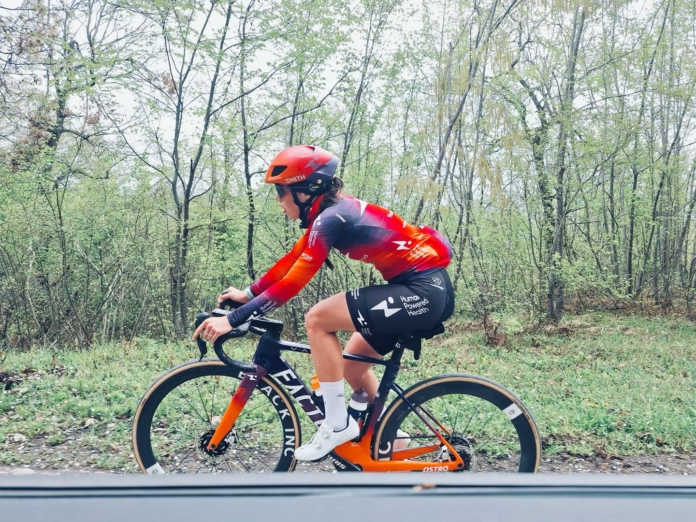
Carlotta Cipressi has forced her way into the television coverage again at the 2026 Tour de France Femmes, establishing herself in the Stage 5 breakaway with around 100 kilometres still to race.
The 23-year-old Italian represents Human Powered Health and is riding her first Tour de France Femmes. She has not arrived as one of the team’s protected contenders, but her willingness to attack has already made her one of its most visible riders during the opening half of the race.
The 140-kilometre Stage 5 route from Mâcon to Belleville-en-Beaujolais is exactly the sort of day on which Cipressi can justify that aggressive approach. Eight categorised climbs and approximately 2,900 metres of elevation leave little genuinely flat road between the start and finish.
It is difficult enough to reward a strong climber, but complicated enough for the general classification teams to hesitate before committing themselves to a full-day chase.
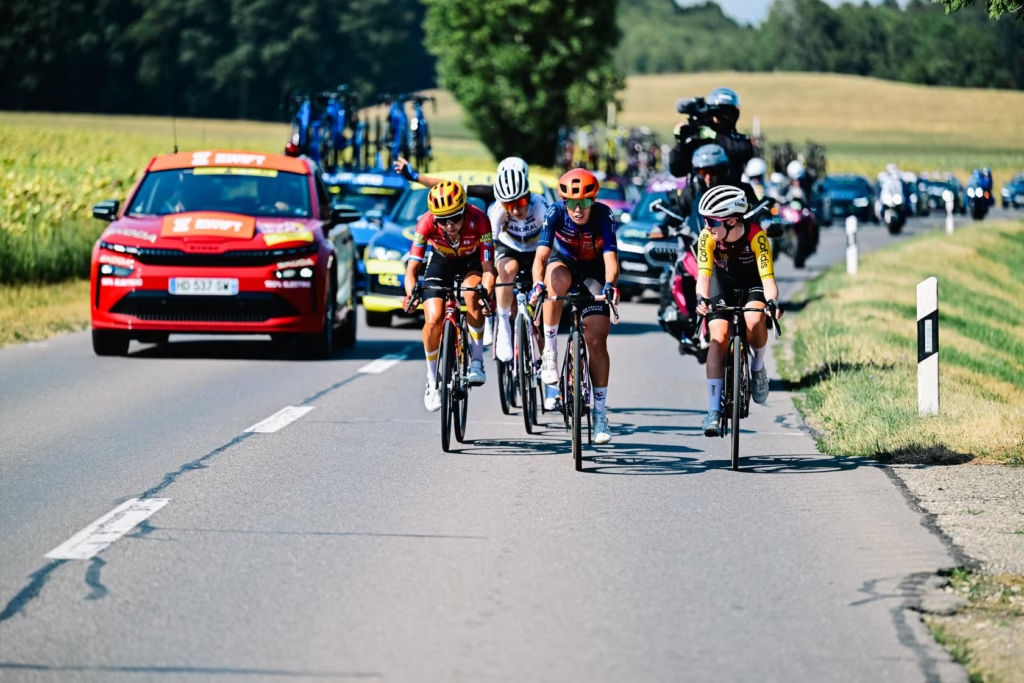 Photo Credit: A.S.O./Billy Ceusters
Cipressi attacks again after her Stage 2 move
This is not Cipressi’s first appearance at the front of the 2026 Tour.
She also joined the five-rider breakaway on Stage 2 between Aigle and Geneva, spending much of the stage ahead of the peloton. The group built an advantage approaching three minutes before the rolling terrain and the sprinters’ teams gradually brought the move under control.
The attack demonstrated the type of race Cipressi and Human Powered Health are prepared to ride. Rather than waiting anonymously inside the bunch, the Italian is actively looking for opportunities to give herself a role in the stage.
Stage 5 is a considerably more promising proposition. The succession of climbs makes it harder for one team to maintain an organised chase, while the demanding finale means many squads will want to protect their strongest rider rather than spend domestiques controlling an early escape.
Cipressi still faces a difficult task. This is not a gentle transition stage on which a break can be handed ten minutes. The GC battle remains close, and the presence of eight classified climbs gives teams several possible launch points.
However, reaching the front with around 100 kilometres remaining at least places her in the tactical contest rather than leaving her to react from the peloton.

From Forlì to the Women’s WorldTour
Cipressi was born in Forlì, in the Emilia-Romagna region of northern Italy, on 11 June 2003.
She began cycling at the age of six after deciding tennis was not for her. Her interest had already been encouraged by watching the Giro d’Italia and Tour de France, with the polka-dot mountains jersey becoming a particular favourite.
That background helps explain why Cipressi has developed into a rider most comfortable when the road begins to rise. She is not yet an elite pure climber capable of following the strongest GC riders on the Tour’s hardest mountain finishes, but she has the endurance and climbing ability required to survive rolling races and contribute from breakaways.
Her potential was visible at junior level when she won bronze in the individual time trial at the 2020 European Championships. The result suggested a rider with more than simply climbing ability. Cipressi could sustain a hard effort, manage her pace and perform against the clock, qualities that remain valuable when trying to keep an escape moving.
She stepped into the senior ranks with Valcar-Travel & Service in 2022 before spending the following two seasons with the UAE Development Team. Her time within that structure included racing opportunities with the senior UAE Team ADQ squad.
Cipressi also rode the Tour de l’Avenir Femmes, where rolling roads, mountain finishes and the gravel-covered Colle delle Finestre gave her valuable experience in the type of selective stage racing she is now encountering at the Tour.
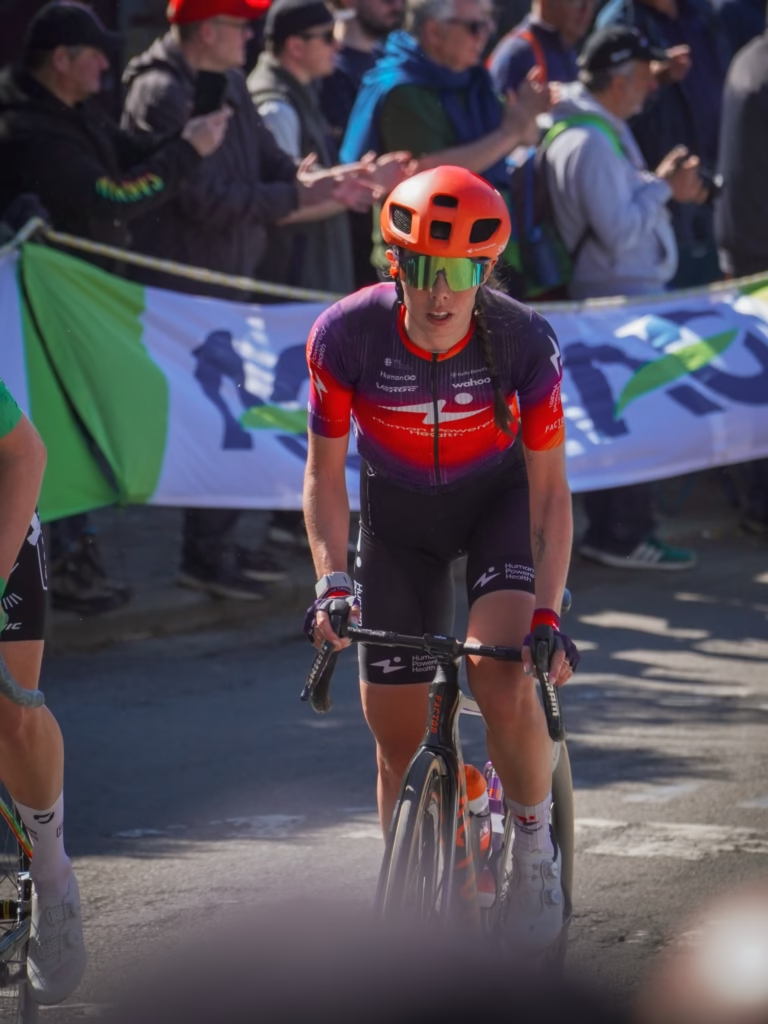
Human Powered Health offered the next step
Human Powered Health signed Cipressi ahead of the 2025 season, taking her directly from a development environment into the Women’s WorldTour.
Her first year included eighth place at the Gran Premio Ciudad de Eibar, a result well suited to her profile. The Spanish one-day race is difficult and climbing-heavy, requiring riders to survive repeated changes in gradient rather than relying on one explosive effort.
She has continued to be used as an attacking option in 2026. During Stage 2 of the Tour de Suisse Women, Cipressi formed a two-rider break with Margot Vanpachtenbeke and remained ahead for more than 50 kilometres.
Those efforts have not yet delivered a major professional victory, but they show a rider beginning to understand how she can influence races at the highest level.
Cipressi is unlikely to win by waiting for a reduced group containing the best climbers and fastest finishers. Her opportunities are more likely to come through anticipation, endurance and choosing a day when the peloton is willing to lose control.

What can Cipressi achieve on Stage 5?
The immediate objective is to make the breakaway stick.
Cipressi is well outside the general classification battle following the Stage 4 time trial in Dijon, so she poses no direct threat to Marlen Reusser’s yellow jersey. That gives Movistar little reason to chase her specifically.
Her danger depends instead on the composition of the group around her and whether another rider is close enough on GC to concern the leading teams.
Human Powered Health also have reasons beyond a possible stage victory to send Cipressi forward. A breakaway presence secures television exposure, provides access to intermediate points and gives the team a tactical option if the peloton fragments across the relentless Beaujolais terrain.
The difficulty will be preserving enough energy for the final 40 kilometres. Stage 5 is not simply hard at the beginning. The Côte de Chiroubles and Col du Fût d’Avenas arrive late enough to expose anyone who has spent too much energy driving the break, while the approach to Belleville-en-Beaujolais still offers opportunities for stronger riders to attack.
Cipressi’s best strategy is therefore not necessarily to accumulate the largest possible advantage. She needs cooperation, measured pacing and a group strong enough to discourage the peloton without containing a rider whom the GC teams cannot afford to release.
Whatever the eventual outcome, her latest attack fits the wider pattern of her debut Tour. Cipressi is not waiting for the race to notice her. She is repeatedly putting herself in the position where it has no choice.

