
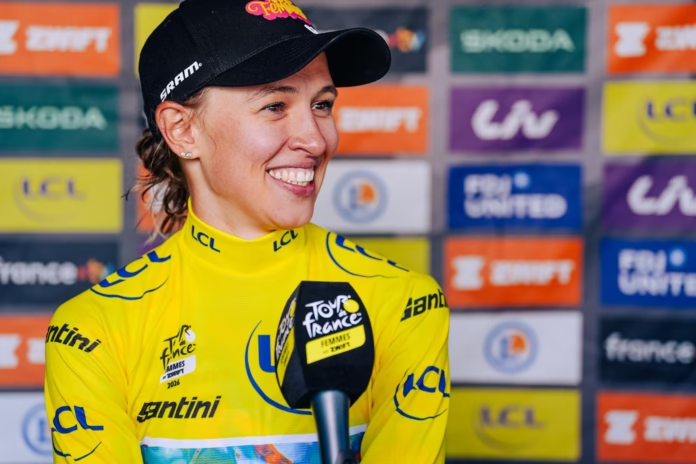
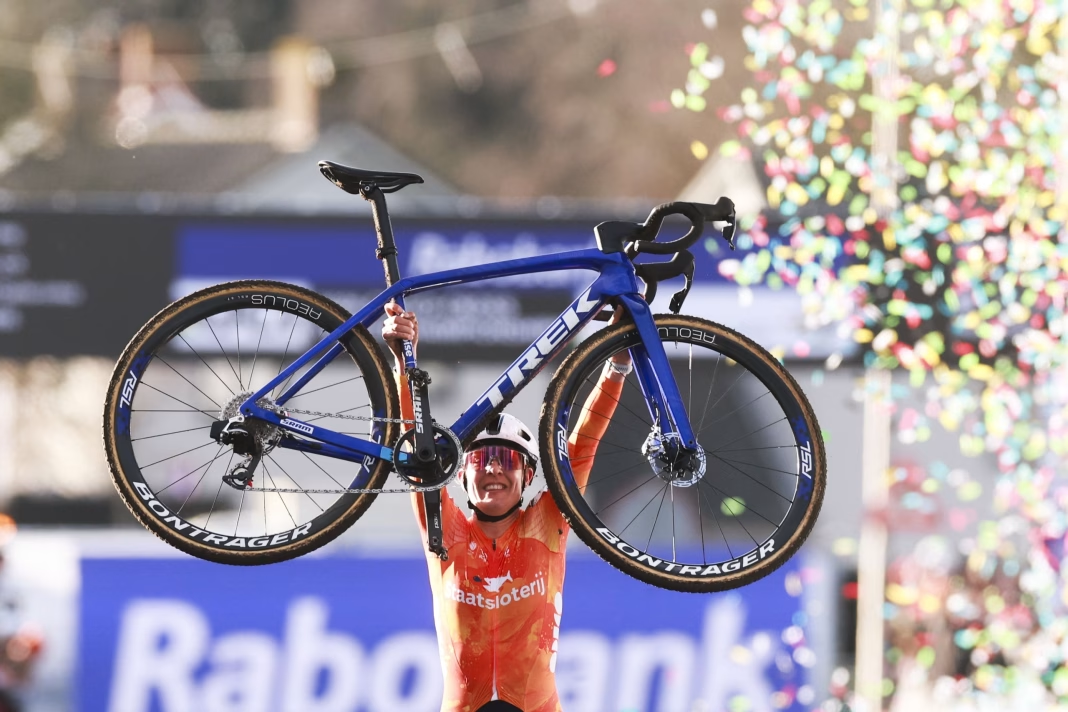
Yes. Kasia Niewiadoma-Phinney can win the 2026 Tour de France Femmes.
But 15 seconds is nowhere near enough to defend passively for two more days.
After her superb solo victory on Mont Ventoux, Niewiadoma-Phinney leads Demi Vollering by 15 seconds, Marlen Reusser by 39 seconds and Elisa Longo Borghini by 2:59.
That is a transformed race, but not a decided one.
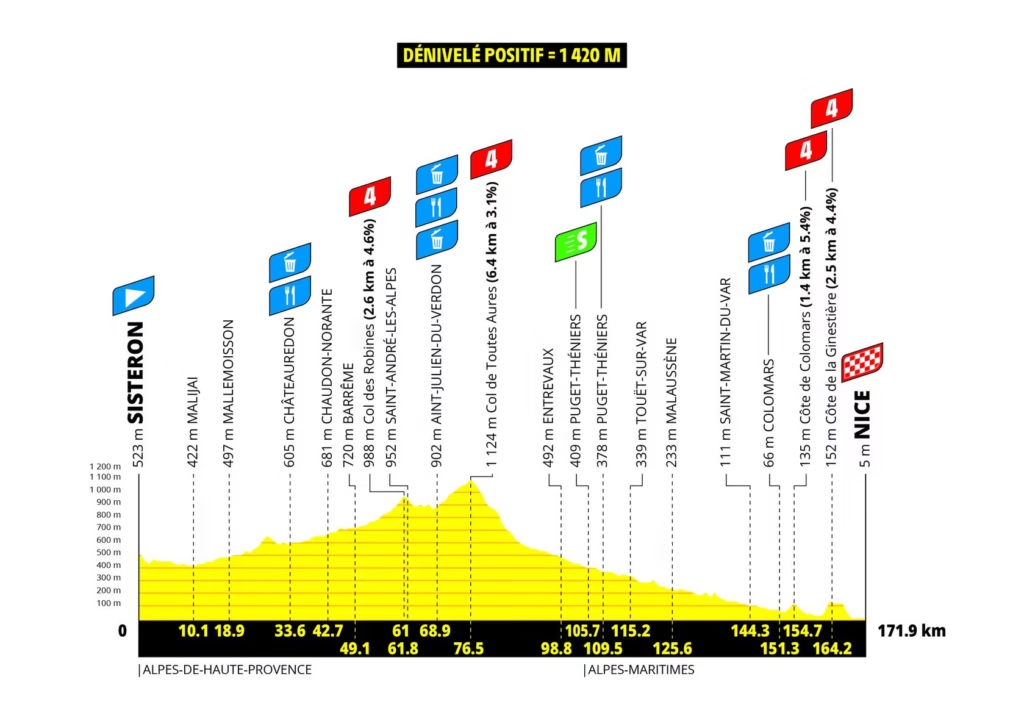
Stage 8 from Sisteron to Nice is officially classified as flat, yet it still contains 1,420 metres of climbing and two short ascents inside the final 20 kilometres. Then comes Sunday’s 99.2-kilometre finale around Nice, featuring four ascents of the Col d’Èze and repeated opportunities to attack.
Niewiadoma-Phinney has earned the strongest position in the Tour.
Now she has to defend it against a rider who needs only seconds.
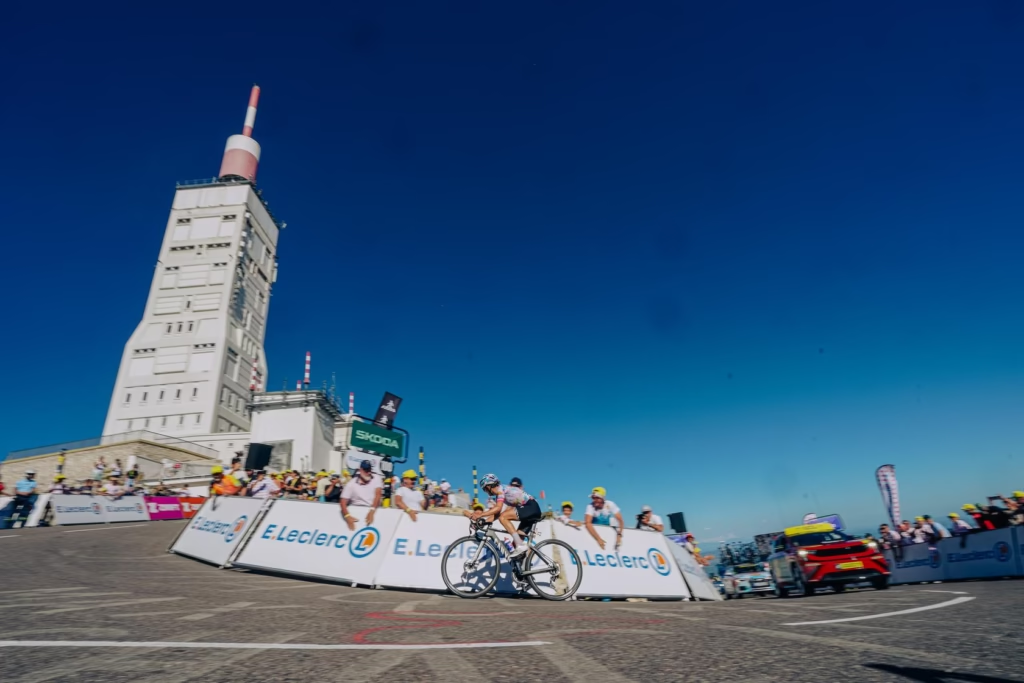 Photo Credit: A.S.O./Gaëtan Flamme
The GC after Mont Ventoux
| Position | Rider | Team | Gap |
|---|---|---|---|
| 1 | Kasia Niewiadoma-Phinney | Canyon SRAM | Leader |
| 2 | Demi Vollering | FDJ United-Suez | +0:15 |
| 3 | Marlen Reusser | Movistar | +0:39 |
| 4 | Elisa Longo Borghini | UAE Team L’IMAD | +2:59 |
The immediate yellow jersey battle is therefore between three riders.
Longo Borghini remains important to the podium race, but almost three minutes is a very different problem from 15 or 39 seconds.
Niewiadoma-Phinney has the advantage.
Vollering has the smallest deficit.
Reusser remains close enough that neither can afford to ignore her.
That is the shape of the final weekend.
Why 15 seconds is both a lead and a warning
Fifteen seconds sounds meaningful until the remaining route is considered.
There are still two stages to race.
Stage 8 awards the normal finish bonuses of:
- 10 seconds for first
- 6 seconds for second
- 4 seconds for third
Stage 9 does the same.
That means Vollering does not necessarily need to take 16 seconds physically on the road.
If she wins a stage and Niewiadoma-Phinney finishes second on the same time, she gains four seconds through bonuses alone.
If she wins and Niewiadoma-Phinney is third, she gains six.
A small physical split combined with bonuses can therefore transform the GC very quickly.
The arithmetic is exactly why Niewiadoma-Phinney cannot simply follow wheels and hope the Tour finishes around her.
Stage 8 looks safer than it actually is
Saturday should be the easier of the two remaining days.
The Stage 8 route from Sisteron to Nice covers 171.9 kilometres and is officially classified as flat.
That description is slightly misleading.
The stage includes four categorised climbs, with the Côte de Colomars and Côte de la Ginestière both arriving inside the final 20 kilometres.
The Ginestière tops out only 7.7 kilometres from the finish.
That is not enough climbing to create a major GC gap under normal circumstances, but it is enough to create a split, force Canyon SRAM to chase or tempt Vollering into a late acceleration.
Niewiadoma-Phinney’s ideal outcome is straightforward.
Let the sprint teams control the race.
Stay near Vollering.
Avoid crashes.
Avoid splits.
Finish in the same group.
Then take 15 seconds into Sunday.
Vollering has every reason to make Saturday uncomfortable
FDJ United-Suez do not need to turn Stage 8 into a full GC battle.
They only need to make Canyon SRAM work.
A late acceleration on Colomars costs relatively little.
An attack on Ginestière costs slightly more.
Even if neither creates a meaningful gap, they force Niewiadoma-Phinney to respond less than 24 hours after the biggest effort of her Tour.
She spent more than nine kilometres alone on Ventoux.
Vollering did not.
The difference in recovery could become important over the weekend.
FDJ can therefore treat Saturday as preparation for Sunday.
Make Canyon defend.
Make Niewiadoma-Phinney accelerate.
Make Antonia Niedermaier and the rest of the team spend energy.
Then attack properly on the Col d’Èze.
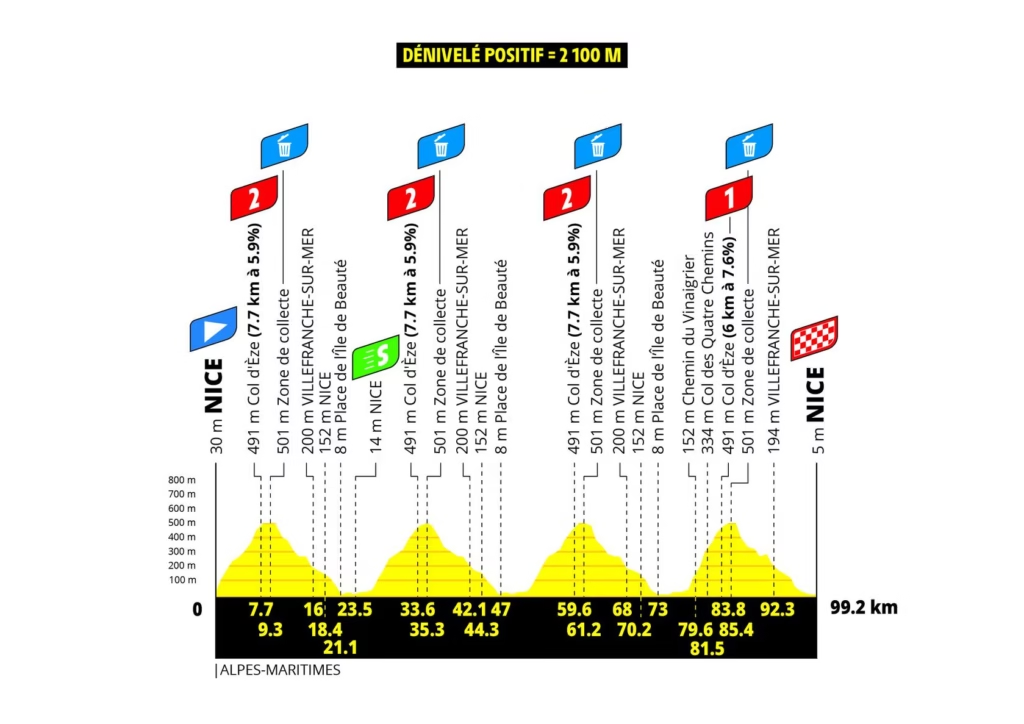 Photo Credit: Getty
Sunday is where yellow will probably be decided
Stage 9 is only 99.2 kilometres long.
That makes it potentially more explosive rather than less difficult.
The final stage around Nice contains four ascents of the Col d’Èze and repeated opportunities to attack, descend, regroup and attack again.
It is exactly the kind of route that becomes dangerous when the race leader starts with only 15 seconds.
There is no need for Vollering to produce another hour-long mountain effort.
She needs one successful move.
That could come on the final ascent.
It could come earlier if Canyon SRAM become isolated.
And because the stage is so short, the attacks can begin almost immediately without riders having to preserve themselves for another 150 kilometres.
The 2026 Tour de France Femmes route was designed so that Ventoux would not necessarily settle the race. The small gaps produced by Stage 7 have made that final-day trap even more important.
Niewiadoma-Phinney cannot simply wait for the final Col d’Èze
That would be the obvious defensive strategy.
Follow Vollering for three laps.
Save energy.
Then respond when the decisive attack arrives.
The problem is that 15 seconds gives Vollering no reason to wait.
FDJ United-Suez can begin applying pressure much earlier.
An attack on the second or third ascent may not be intended to survive to the finish. It can isolate Niewiadoma-Phinney, reduce Canyon SRAM’s support and force the yellow jersey to make decisions.
That is the danger.
Niewiadoma-Phinney is at her best when she races aggressively.
She is much less naturally suited to sitting behind one rival for an entire stage while calculating every second.
The safest way to defend yellow may therefore involve attacking herself.
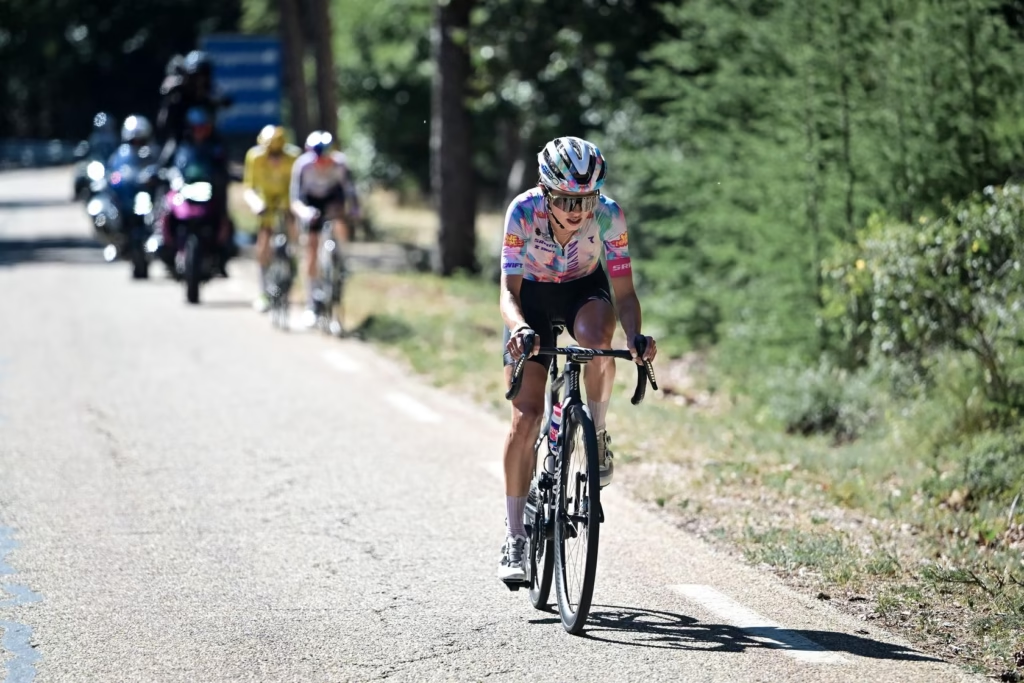 Photo Credit: A.S.O./Billy Ceusters
That is exactly why Niewiadoma-Phinney can win
The final stage suits her personality as much as it suits Vollering’s climbing strength.
Niewiadoma-Phinney won on Ventoux because she did not wait for the obvious moment.
She attacked while Reusser and Vollering were still watching one another and forced both into a tactical problem they never really solved.
Her wider Tour de France Femmes 2026 profile identified that unpredictability as one of her most useful weapons on a route where the obvious GC stages did not necessarily favour her.
Ventoux proved the point.
The same principle applies on Sunday.
She does not need to treat the yellow jersey as something fragile.
She can use it aggressively.
If Vollering is waiting for the last climb, Niewiadoma-Phinney can attack earlier.
If FDJ are controlling, Canyon SRAM can use Niedermaier as another card.
If Reusser attacks, Niewiadoma-Phinney can decide whether Vollering should be forced to chase.
The jersey gives her responsibility, but it also gives her options.
Vollering may still be the strongest pure climbing threat
That has not changed.
Vollering finished Ventoux strongly enough to create the biggest tactical question of the stage.
She took around half a minute out of Reusser in the final kilometre and substantially reduced Niewiadoma-Phinney’s advantage once she finally committed to the chase.
That is why the key post-stage question became why Vollering waited so long to attack on Mont Ventoux.
If Vollering reproduces that final-kilometre strength on Sunday, 15 seconds is vulnerable.
But Ventoux also showed the problem with treating physical strength as the only variable.
Niewiadoma-Phinney raced better tactically.
She began Stage 7 1:05 behind Vollering.
She finished it 15 seconds ahead.
That is an 80-second swing between two riders who may still be very closely matched physically.
Sunday will probably demand both strength and judgement.
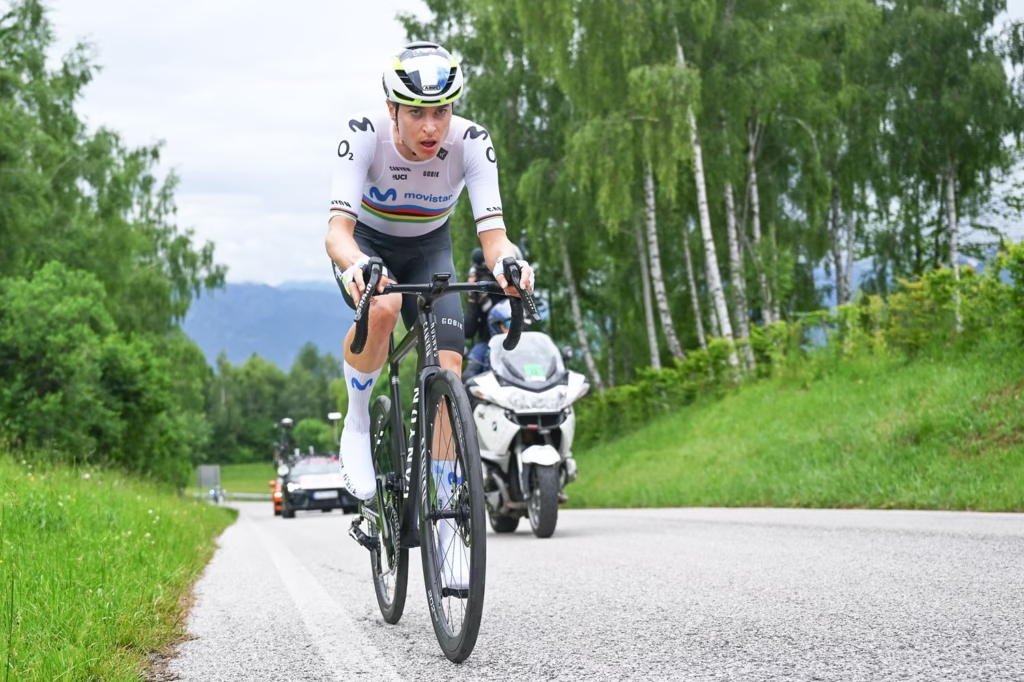
What about Reusser at 39 seconds?
Reusser is still in the Tour.
Her Ventoux result was damaging, but 39 seconds is not an impossible deficit.
Sunday is also different from Ventoux.
There is no single uninterrupted 45-minute climb.
Instead there are repeated medium-length efforts, descents and opportunities for tactical regrouping.
That could suit Reusser better.
Her time-trial strength means she can be particularly dangerous if she escapes with even a small gap and turns part of the stage into a sustained pursuit effort.
The problem is that she now has two riders ahead rather than one.
To win the Tour, Reusser must gain 40 seconds on Niewiadoma-Phinney and 25 on Vollering.
That probably requires the race to become chaotic rather than controlled.
Longo Borghini is probably racing for the podium
Longo Borghini starts the final weekend 2:59 from yellow.
That is too much to treat as a realistic Tour-winning deficit unless something extraordinary happens.
Her more immediate target is the podium.
Reusser is 2:20 ahead.
That is substantial, but the repeated Col d’Èze circuit gives UAE Team L’IMAD several opportunities to attack rather than simply wait for the final climb.
Longo Borghini can also benefit if the three riders ahead become obsessed with one another.
A move involving the Italian may initially appear less urgent than one containing Vollering.
That freedom could become useful.
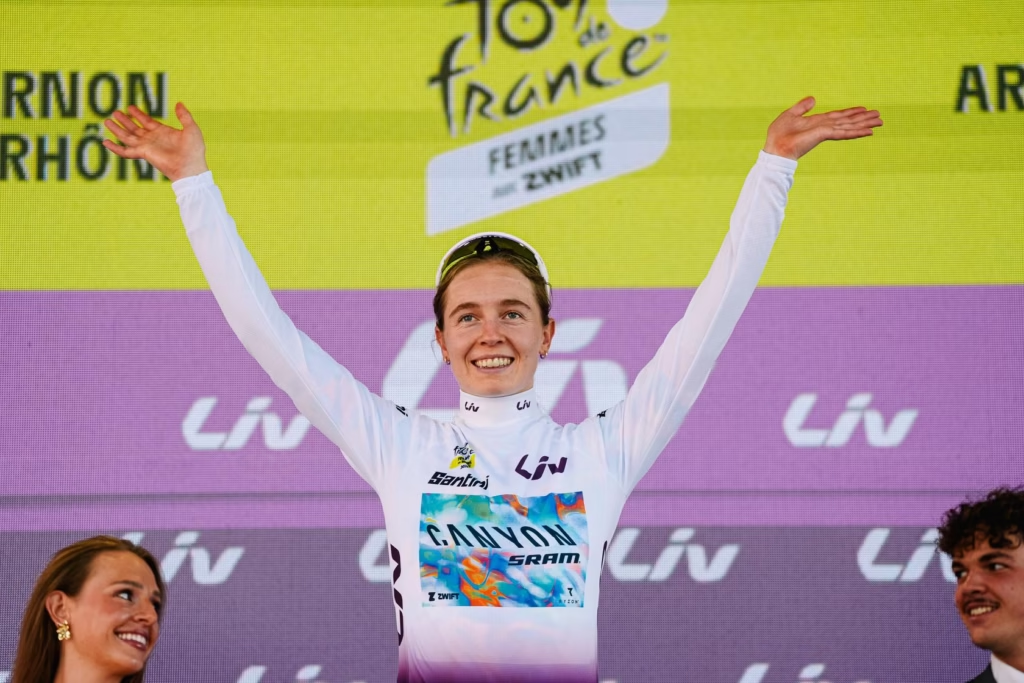 Photo Credit: A.S.O./Gaëtan Flamme
Niedermaier gives Canyon SRAM an important second card
Niewiadoma-Phinney is not defending yellow alone.
Niedermaier remains one of the strongest young GC riders in the race and gives Canyon SRAM something FDJ United-Suez cannot completely ignore.
That is valuable tactically.
If Niedermaier attacks on Sunday, Vollering has to decide whether to chase.
If FDJ chase, Niewiadoma-Phinney saves energy.
If they do not, Canyon SRAM gain a rider ahead who could later become a satellite teammate for the yellow jersey.
That kind of tactic is particularly valuable on a circuit with repeated climbs and descents.
Canyon SRAM’s biggest weakness is obvious: everyone knows what they are protecting.
Their biggest strength is that they have more than one rider capable of shaping how the race develops.
What does Niewiadoma-Phinney need to do on Stage 8?
Almost nothing spectacular.
That is important.
Saturday is not the day to prove she is the strongest rider in the Tour.
It is the day to keep the race simple.
Stay near the front through the final climbs.
Do not allow Vollering to ride away.
Do not chase harmless stage hunters unnecessarily.
Let the sprint teams spend their riders.
Avoid bonus-second situations if Vollering unexpectedly reaches the finish in a very small group.
A same-time finish with Vollering would be a good result.
Anything better is a bonus.
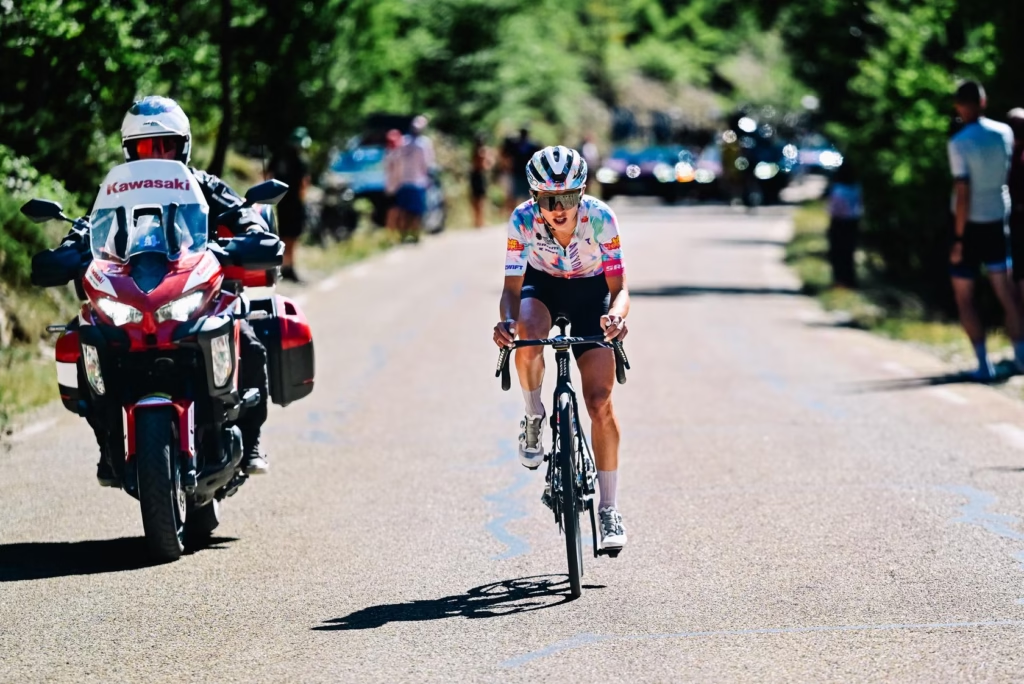 Photo Credit: A.S.O./Billy Ceusters
What does she need to do on Stage 9?
Race rather than defend.
That is the more difficult instruction.
Fifteen seconds is not enough to spend 99.2 kilometres waiting for Vollering to attack.
Niewiadoma-Phinney needs to recognise moments where taking the initiative reduces the pressure on herself.
That could mean forcing FDJ to chase Niedermaier.
It could mean following Reusser rather than immediately closing every move personally.
It could mean attacking Vollering before the final climb.
The worst scenario is reaching the decisive final ascent with the race completely controlled and Vollering still surrounded by support.
That turns the Tour into a climbing test decided by one acceleration.
Niewiadoma-Phinney needs more complexity than that.
Fortunately for her, creating complexity is one of the things she does best.
-
 Photo Credit: Getty

Niewiadoma-Phinney has already defended a Tour measured in seconds
There is another reason not to underestimate the value of yellow.
Niewiadoma-Phinney has already won this race.
Her 2024 victory came by just four seconds after an extraordinary final stage on Alpe d’Huez.
That remains one of the closest finishes in the history of the modern race and is covered in our Tour de France Femmes winners guide.
That experience does not make a 15-second advantage comfortable.
It does mean this kind of pressure is familiar.
Niewiadoma-Phinney knows what it feels like to ride the final kilometres of the Tour with every attack, bonus second and small gap potentially deciding the overall victory.
So can Kasia Niewiadoma-Phinney win the 2026 Tour?
Absolutely.
She is in yellow because she produced the best combination of strength and tactics on Mont Ventoux.
She now has the advantage in time, the advantage of forcing Vollering to attack and a strong Canyon SRAM team around her.
But 15 seconds is nowhere near enough to defend passively.
Stage 8 still contains enough late terrain to create problems.
Stage 9 is built almost perfectly for Vollering and Reusser to try to overturn small deficits.
The Tour therefore reaches its final weekend with Niewiadoma-Phinney in the strongest position, but without genuine security.
She does not necessarily need another Ventoux performance.
She may need another Ventoux decision.
At some point over the next two days, Niewiadoma-Phinney will probably have to choose between protecting yellow and attacking to keep it.

