

Kasia Niewiadoma-Phinney returns to the Tour de France Femmes in 2026 as a former winner, a four-time podium finisher and one of the riders best equipped to exploit its unusually varied route.
The Canyon SRAM leader won the Tour by four seconds in 2024 before finishing third in 2025. She has approached this year’s race with another sequence of high-level performances, including second at Strade Bianche, Omloop Het Nieuwsblad and Amstel Gold Race, third at Liège-Bastogne-Liège and third overall at the Tour de Suisse Women.
The important question is whether consistency will be enough to beat Demi Vollering, Pauline Ferrand-Prévot and the other leading general classification contenders.
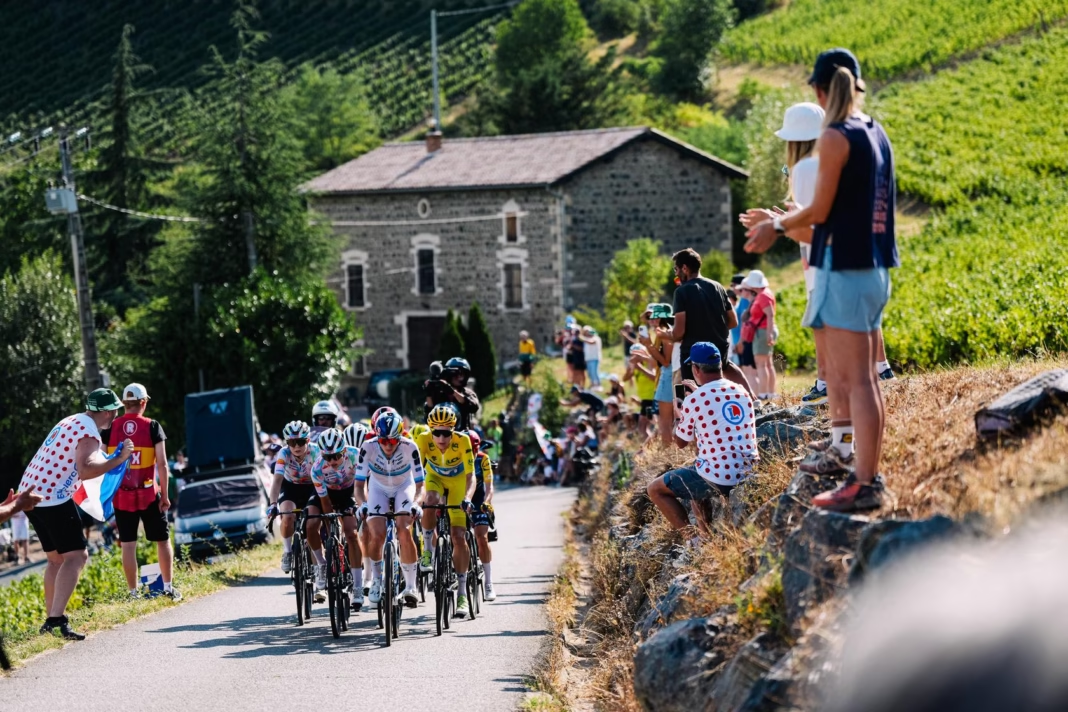
The Tour de France Femmes 2026 route contains almost everything Niewiadoma wants: repeated hilly stages, opportunities to attack away from conventional summit finishes and a final day around Nice that remains difficult enough to overturn the classification.
It also includes two obvious threats to her campaign: a 21km individual time trial into Dijon and the exceptionally long climb to Mont Ventoux.
Niewiadoma can win the Tour, but she may need to create time somewhere less predictable than its two most obvious GC stages.
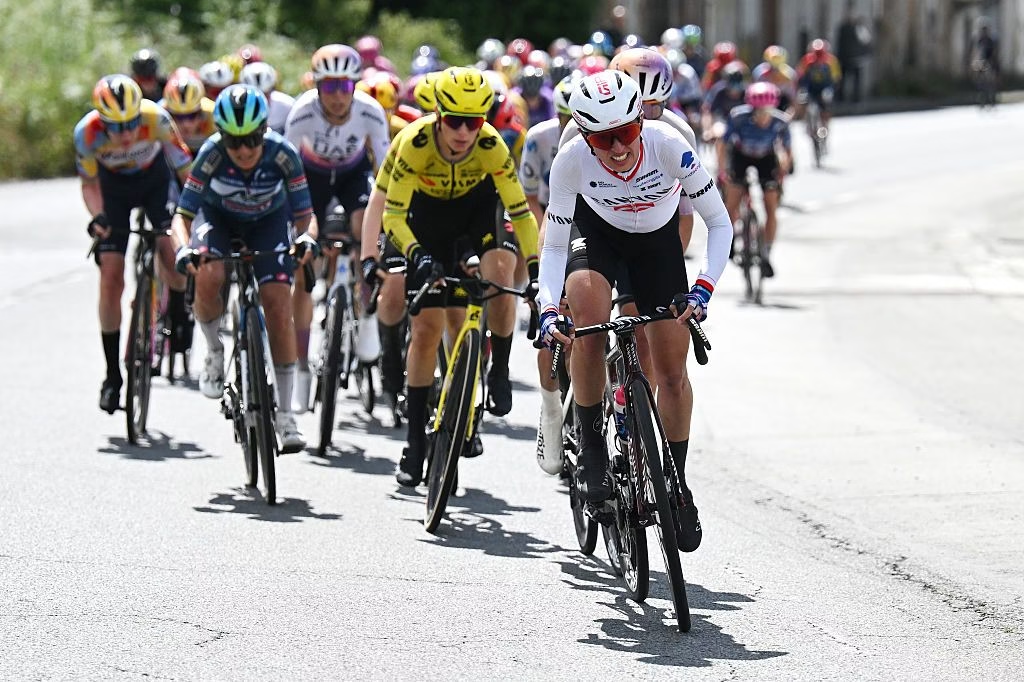 Photo Credit: Getty
Kasia Niewiadoma’s Tour de France Femmes record
| Year | Overall result | Key achievement |
|---|---|---|
| 2022 | 3rd | First Tour podium |
| 2023 | 3rd | Won mountains classification |
| 2024 | 1st | Won yellow by four seconds |
| 2025 | 3rd | Returned to the final podium |
| 2026 | To be decided | Former winner and GC contender |
No rider has been more consistently involved in the modern Tour de France Femmes general classification.
Niewiadoma has finished on the podium in all four editions since the race was relaunched in 2022. Her victory in 2024 was built around resilience rather than outright domination. She took yellow after Vollering lost time on a crash-affected stage, then defended it through the final weekend and survived the decisive Alpe d’Huez stage with only four seconds remaining.
That result demonstrated the defining strength of Niewiadoma’s stage-racing style.
She does not need to be the fastest climber or time triallist every day. She remains competitive across almost every type of terrain, races attentively and takes opportunities that other contenders miss.
The 2026 route gives her several chances to use those qualities again.
How good is Niewiadoma’s form before the Tour?
Niewiadoma’s 2026 results show that she remains one of the most reliable riders in the women’s peloton.
She finished second at Omloop Het Nieuwsblad, Strade Bianche and Amstel Gold Race before taking third at Liège-Bastogne-Liège. Those performances confirmed that her acceleration, positioning and ability to survive repeated climbing remain at an elite level.
Her stage-race form has been less straightforward.
Niewiadoma finished fifth overall at the UAE Tour Women and eighth at La Vuelta Femenina. The Spanish race included a difficult day on the steep Les Praeres finish, where she initially followed the leaders before fading and losing more than a minute.
That performance matters because Mont Ventoux is the central climb of the 2026 Tour.
Ventoux is not as brutally steep as Les Praeres, but it is much longer. A rider who goes beyond her sustainable level too early can lose minutes rather than seconds.
The more encouraging evidence came at the Tour de Suisse Women.
Niewiadoma raced aggressively, repeatedly helped split the favourites and finished third on the final mountain stage and third overall behind Marlen Reusser and Cédrine Kerbaol.
That performance suggested she was moving towards the Tour in stronger climbing condition than she had shown at La Vuelta.
Her broader season and the changing expectations around her are covered in the Kasia Niewiadoma 2026 season guide.
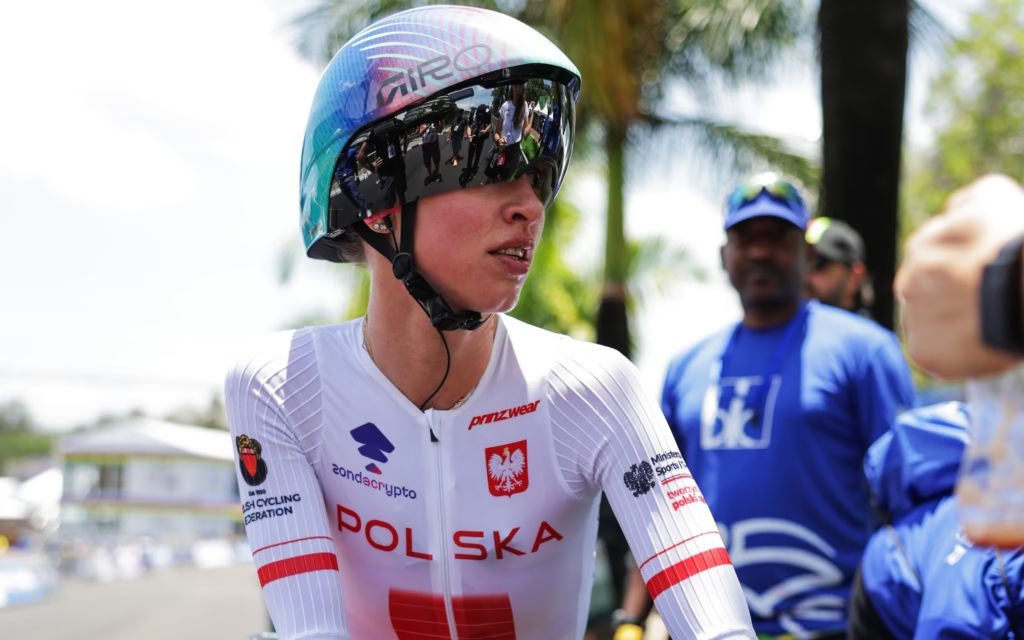
Kasia Niewiadoma’s main 2026 results
| Race | Result |
|---|---|
| Omloop Het Nieuwsblad | 2nd |
| Strade Bianche | 2nd |
| Amstel Gold Race | 2nd |
| Liège-Bastogne-Liège | 3rd |
| UAE Tour Women | 5th overall |
| La Vuelta Femenina | 8th overall |
| Tour de Suisse Women | 3rd overall |
| Tour de Suisse final mountain stage | 3rd |
The missing result is a victory.
Niewiadoma has spent much of the season close to winning without converting. That is familiar territory for a rider whose career contains a remarkable number of second and third places alongside relatively few victories.
It does not necessarily weaken her Tour chances.
General classifications reward consistency more than one-day races. A rider who finishes near the front every day, avoids crashes and limits losses in her weaker discipline can beat someone who wins a stage but suffers one major failure.
The problem is that the 2026 Tour contains several rivals capable of matching that consistency while also gaining time in Dijon or distancing her on Ventoux.
How the 2026 route shapes her challenge
The fifth edition runs from 1 to 9 August 2026 and covers 1,175km across nine stages.
The race begins in Switzerland before moving through the Jura, Burgundy, Beaujolais and the Rhône valley. Its decisive final section includes Mont Ventoux, a long stage into Nice and a short final circuit featuring four ascents of the Col d’Èze.
| Stage | Route | Distance | Type |
|---|---|---|---|
| 1 | Lausanne to Lausanne | 138km | Hilly finale |
| 2 | Aigle to Geneva | 147.9km | Flat |
| 3 | Geneva to Poligny | 156.5km | Hilly |
| 4 | Gevrey-Chambertin to Dijon | 21km | Individual time trial |
| 5 | Mâcon to Belleville-en-Beaujolais | Around 140km | Hilly |
| 6 | Montbrison to Tournon-sur-Rhône | 153.4km | Hilly |
| 7 | La Voulte-sur-Rhône to Mont Ventoux | 146.8km | Mountain |
| 8 | Sisteron to Nice | 175km | Rolling |
| 9 | Nice to Nice | 99km | Mountain circuit |
The route provides more than one decisive day.
Mont Ventoux is the obvious centrepiece, but the Dijon time trial and final Col d’Èze circuit could be equally important to Niewiadoma’s chances. This is not a race designed around one symbolic mountain finish while every other stage waits for the sprinters.
That complexity helps her.
The wider field is assessed in our guide to the Tour de France Femmes 2026 riders to watch.
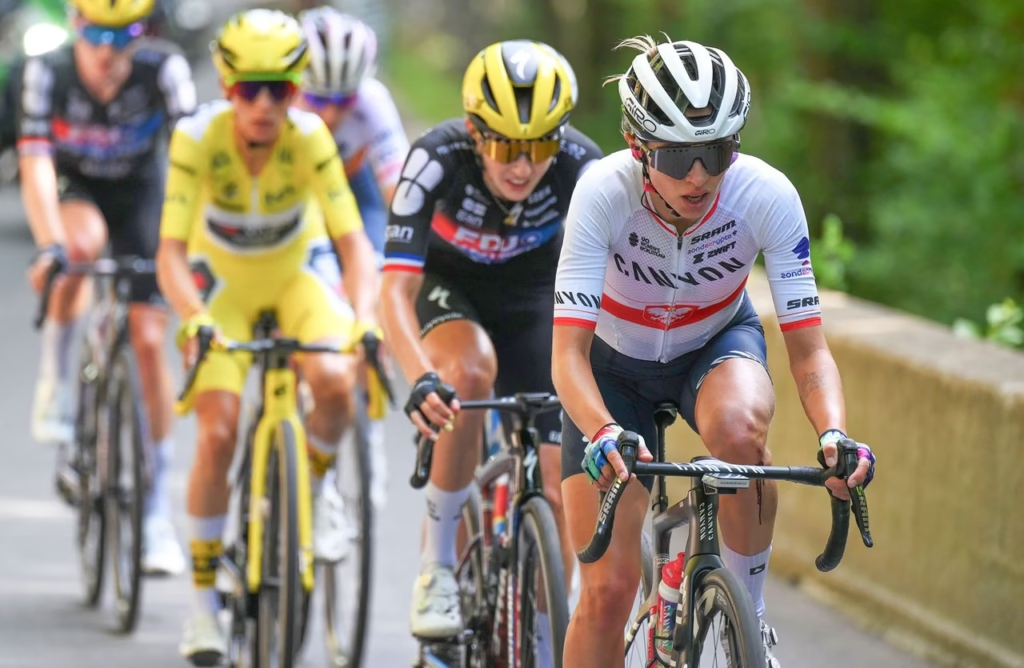
Stage 1 in Lausanne gives Niewiadoma an immediate opportunity
The opening stage begins and finishes in Lausanne and has been designed to favour the more explosive riders.
Niewiadoma may not be the fastest finisher in the field, but she is one of the GC contenders most capable of contesting a hilly opening stage. The repeated accelerations, positioning battle and uphill sections should suit her better than a conventional sprint.
The objective does not have to be the stage win.
Time bonuses and small splits can matter enormously across a nine-stage race. Taking four or six seconds from a rival in Lausanne would give Niewiadoma useful protection before the Dijon time trial.
It also provides an opportunity to gain time on pure climbers who are less comfortable in an aggressive one-day-style finale.
The danger is becoming too ambitious too early.
An opening-stage crash or poorly judged attack could cost far more than the available bonus. Canyon SRAM must keep her near the front without turning every acceleration into a major commitment.
The local roads, finish and spectator options are covered in the Tour de France Femmes 2026 Lausanne stage guide.
Stages 2 and 3 are more dangerous than they appear
Stage 2 from Aigle to Geneva is the clearest sprint opportunity and should not produce deliberate GC attacks.
It can still alter the classification through crosswinds, crashes or poor positioning.
Niewiadoma’s attentiveness is normally an advantage on this type of day. She is comfortable racing aggressively and rarely relies on being guided through every difficult section.
Stage 3 from Geneva to Poligny is more naturally suited to her.
The hilly 156.5km route crosses into France and should create opportunities for puncheurs and aggressive all-rounders. This is the type of stage where Niewiadoma can attack without appearing to launch a conventional GC move.
If the strongest time triallists begin marking one another before Dijon, she can use the terrain to take seconds through a small group.
That may be essential rather than optional.
The opening Swiss section of the race is explained in the Tour de France Femmes 2026 Grand Départ guide.
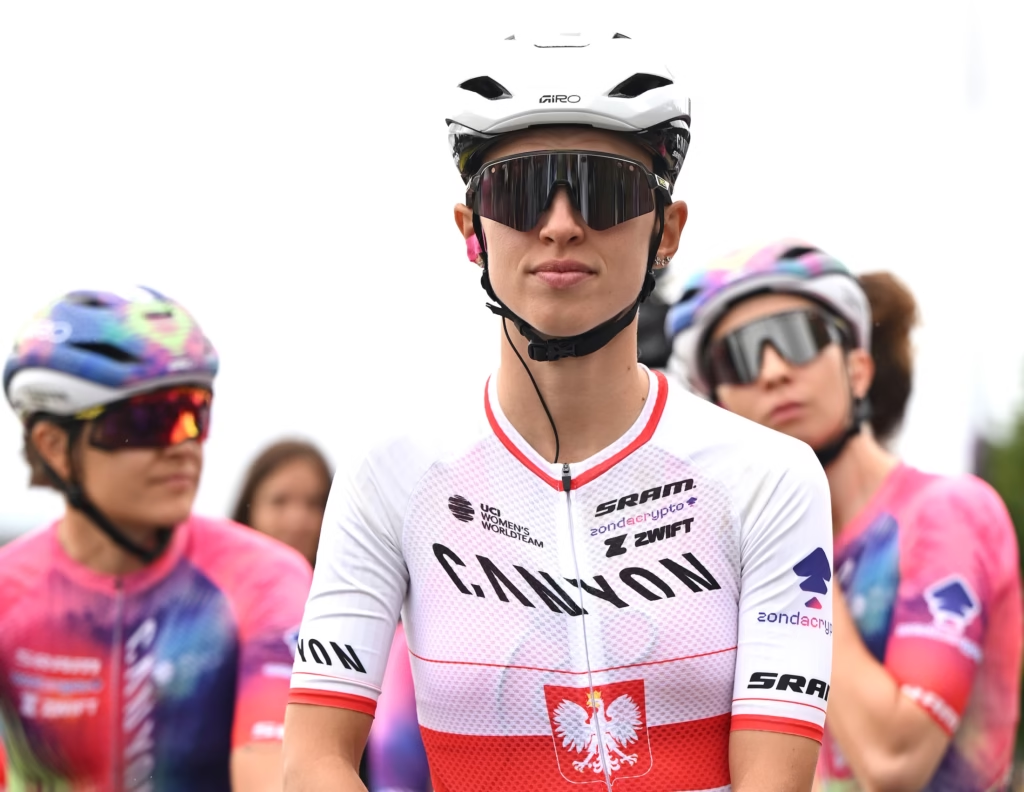 Photo Credit: Getty
The Dijon time trial is her biggest early test
Stage 4 is a 21km individual time trial from Gevrey-Chambertin to Dijon.
It will establish the first clear GC hierarchy and presents an obvious problem for Niewiadoma.
Marlen Reusser is one of the strongest time triallists in the world. Vollering has also improved significantly against the clock, while several younger contenders can gain time through sustained aerodynamic power.
Niewiadoma does not need to win the stage. She must prevent her losses becoming large enough to dictate the rest of the race.
A deficit of 20 to 40 seconds would be manageable. Losing more than a minute to several contenders would force Canyon SRAM into increasingly aggressive tactics before Ventoux.
The relatively short distance limits the potential damage. This is not a 35km Grand Tour time trial where specialists can construct enormous gaps.
However, 21km is still long enough to separate riders who are evenly matched in the mountains.
Niewiadoma’s 2024 victory did not require her to overcome a major mid-race individual time trial. Dijon therefore asks a different question of her title challenge.
The Beaujolais and Rhône stages may suit her best
Stages 5 and 6 are the least obvious GC days and potentially the most useful for Niewiadoma.
The race moves through the hills of Beaujolais before a longer stage from Montbrison to Tournon-sur-Rhône. Both routes contain enough climbing to reduce the bunch without creating the clear structure of a summit finish.
This is where Niewiadoma’s racing instincts can matter.
She is at her most dangerous when rivals must decide whether an attack is aimed at the stage or the general classification. A short climb followed by technical roads gives her a chance to create separation without confronting Vollering directly on a long ascent.
Canyon SRAM can also use team strength more effectively on these stages.
A rider placed in the breakaway gives Niewiadoma a bridge for a later attack. A strong secondary leader can force rival teams to chase, while faster riders can contest the stage if the GC battle remains quiet.
Niewiadoma should not wait passively for Ventoux if she loses time in Dijon.
Her route towards yellow may depend on gaining 10 or 20 seconds across stages that other favourites treat as transitional.
Those stages should also attract several of the riders identified in our guide to the Tour de France Femmes 2026 breakaway specialists.
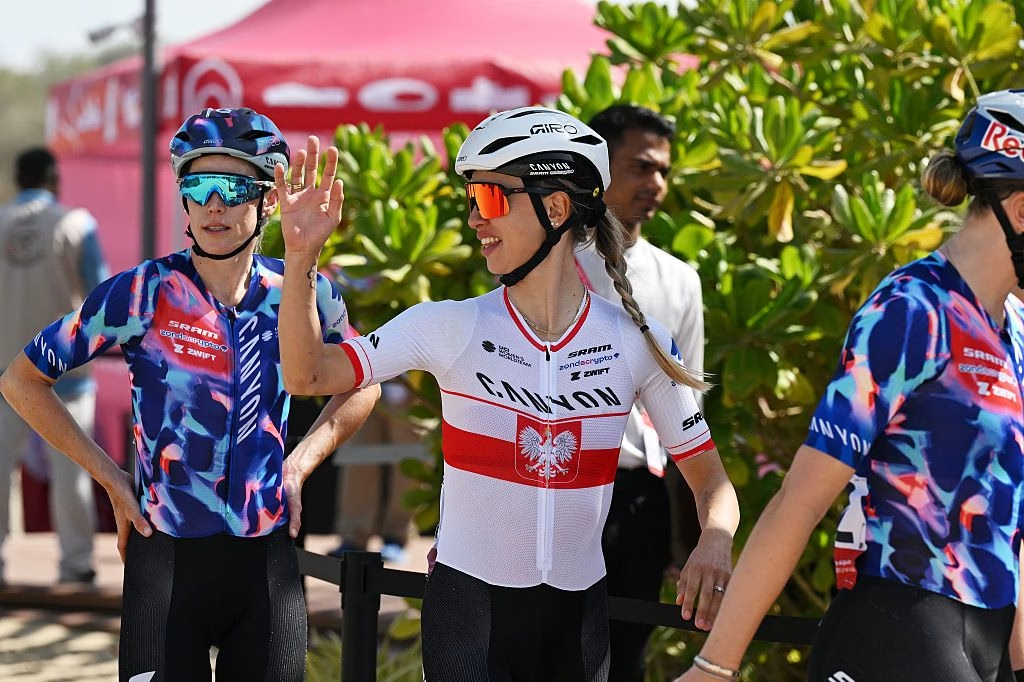
Mont Ventoux is the decisive climbing test
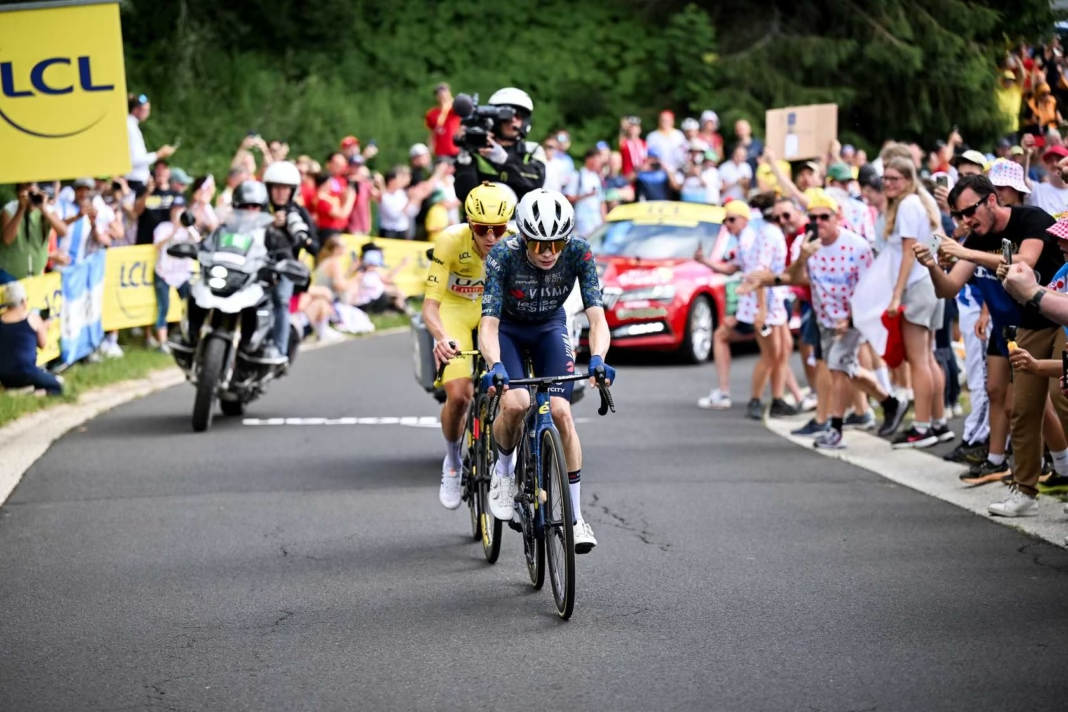
Stage 7 travels 146.8km from La Voulte-sur-Rhône to the summit of Mont Ventoux.
The stage contains 3,565 metres of climbing and finishes at 1,910 metres, the highest point of the race. The final ascent from Bédoin measures 15.7km at approximately 8.8%.
Ventoux is the stage most likely to expose the difference between a podium contender and the overall winner.
Niewiadoma has several qualities that suit it. She is light, resilient and experienced in pacing long summit finishes. She is also willing to attack before the final kilometre rather than relying on a sprint.
The climb’s length is the concern.
Niewiadoma often performs best on irregular mountain stages containing repeated climbs, changes of rhythm and tactical movement. Ventoux from Bédoin is more relentless. Once the race enters the forest, there are few opportunities to recover or disguise a bad moment.
Vollering is likely to be stronger if the final climb becomes a direct threshold test. Reusser may also remain dangerous if she has built a time-trial advantage, while Ferrand-Prévot has already shown that she can deliver an exceptional performance on a major Tour summit finish.
The full ascent and its likely influence on the race are covered in the Tour de France Femmes 2026 Mont Ventoux guide.
Can Niewiadoma win on Mont Ventoux?
She can, but she is not the automatic favourite for the stage.
Her best scenario involves a selective approach, a reduced group and uncertainty among the strongest teams. She can then attack before the race settles into a predictable climbing order.
Her worst scenario is one dominant team controlling the stage until the base and setting a consistent high pace all the way towards Chalet Reynard.
That would reduce the race to pure climbing output.
Niewiadoma can limit her losses in that type of contest, as she demonstrated when defending yellow on Alpe d’Huez in 2024. The more difficult question is whether she can gain time.
A top-three finish on Ventoux may be enough if she has already built an advantage. If she starts stage 7 behind after the Dijon time trial, she may need to race more aggressively.
Waiting until the final few kilometres would risk allowing Vollering or another stronger sustained climber to set the terms of the contest.
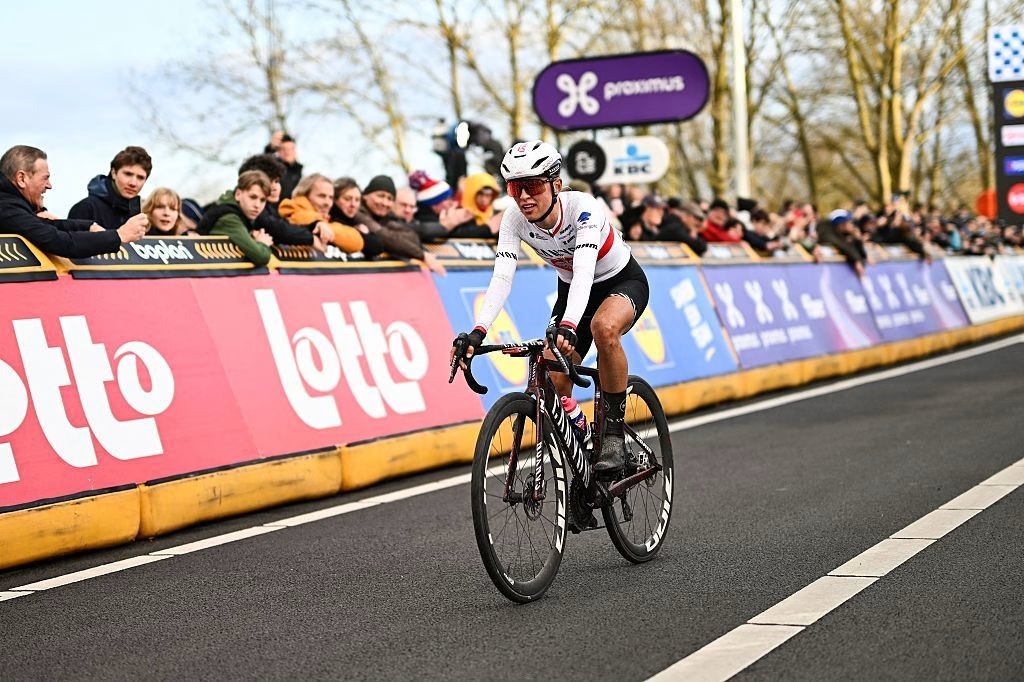 Photo Credit: Getty
Stage 8 offers no proper recovery
The 175km route from Sisteron to Nice is the longest stage of the race.
Although less mountainous than Ventoux or the final stage, it comes immediately after the summit finish and before the Col d’Èze circuit. Fatigue, wind and the long distance can create differences even without a major final climb.
Niewiadoma’s recovery should be an advantage.
She has built her Tour record around avoiding major collapses and remaining competitive throughout the race. Riders who go too deeply on Ventoux may struggle to control a long transitional stage the following day.
Canyon SRAM must judge whether to race offensively or conserve resources for stage 9.
If Niewiadoma is close to yellow, protecting her position may be sensible. If she trails by a meaningful margin, stage 8 offers another chance to create an unconventional move before the final showdown.
The Col d’Èze finale should suit Niewiadoma
Stage 9 covers only 99km around Nice but includes four ascents of the Col d’Èze before the finish on the Promenade des Anglais.
This may provide Niewiadoma with her strongest tactical opportunity.
The repeated climbing favours endurance, aggression and recovery rather than one isolated effort. The short distance should produce attacks early, while four ascents make it difficult for one team to control every move.
Niewiadoma does not need to wait for the final climb.
She can attack on an earlier passage, use teammates in front or follow another contender willing to destabilise the race. Descending ability and positioning will also matter between the climbs.
The finish itself may reward a faster rider, but the more important question is which group reaches Nice.
The route leaves the GC exposed after Ventoux. Yellow may still change hands on the final day if the gaps remain within a minute.
For Niewiadoma, that is much better than a ceremonial final stage.
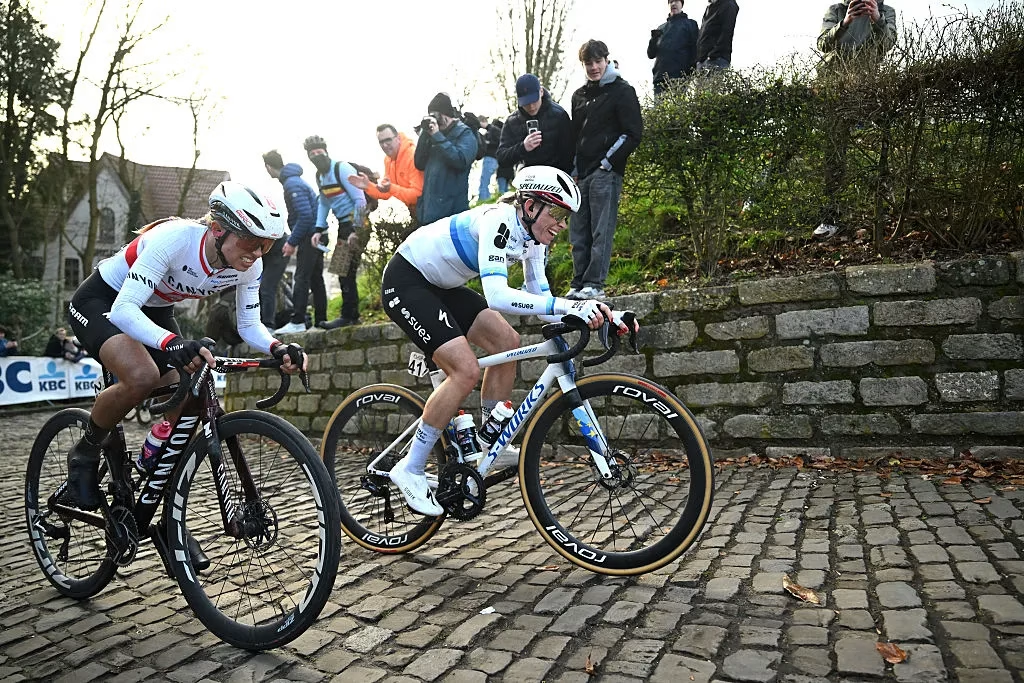
Who are Niewiadoma’s main GC rivals?
Demi Vollering
Vollering is the most complete rival.
She can gain time in Dijon, climb with the best on Ventoux and collect bonuses through stage victories. Niewiadoma’s route to beating her is tactical rather than purely physical.
She must exploit stages where Vollering’s team cannot control every attack and prevent the Tour becoming a simple comparison of time trialling and summit climbing.
Pauline Ferrand-Prévot
The defending champion has already demonstrated that she can produce a dominant performance on the Tour’s hardest mountain stage.
Her ability across technical, rolling and mountainous terrain also makes the Nice finale suitable.
The uncertainty is whether her 2026 preparation has brought her to the same level. Niewiadoma has greater evidence of consistent form throughout the season, but Ferrand-Prévot’s best Tour performance may still be stronger than anyone else’s.
The defending champion’s prospects are examined in Pauline Ferrand-Prévot at the Tour de France Femmes 2026.
Marlen Reusser
The Dijon time trial gives Reusser a direct route into yellow.
She won the Tour de Suisse Women by combining her time-trial strength with a decisive performance on the final mountain stage. Niewiadoma could not drop her and eventually finished third overall behind the Swiss rider.
Ventoux remains the central question.
If Reusser limits her losses there, she may begin the Nice stages with enough of an advantage to defend. Niewiadoma must avoid allowing her to build an uncontested lead in Dijon.
Elisa Longo Borghini
Longo Borghini remains one of the most tactically intelligent riders in the peloton and can gain time on stages that do not initially appear decisive.
She may not be the favourite to win on Ventoux, but her strength across hilly terrain and ability against the clock make her a major threat.
Niewiadoma cannot afford to focus only on Vollering and Ferrand-Prévot while allowing Longo Borghini to create a move elsewhere.
Antonia Niedermaier
Niedermaier has developed into a serious Grand Tour contender and gives Canyon SRAM another tactical option.
A strong secondary GC rider can support Niewiadoma, attack before the decisive climbs or pursue her own result if the race develops differently.
A two-leader structure becomes an advantage when managed clearly. It becomes a problem if both riders require protection at the same moment.
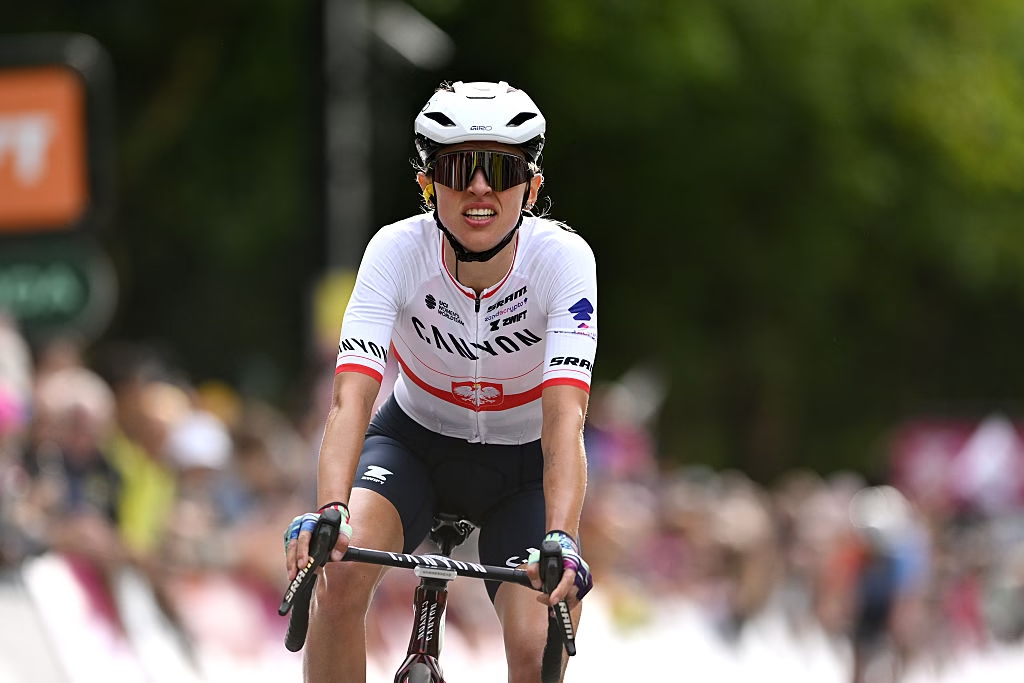
How Canyon SRAM can help Niewiadoma win
Niewiadoma cannot beat the strongest teams through isolated attacks alone.
Canyon SRAM must give her options.
Niedermaier can create pressure in the mountains, while riders such as Zoe Bäckstedt and Chloé Dygert provide power on flatter roads and around the time trial. Cecilie Uttrup Ludwig offers experience and climbing support if selected.
The final squad will determine how aggressively the team can race stages 3, 5, 6 and 9.
Their strongest approach would involve:
- Keeping Niewiadoma protected through the Swiss stages
- Limiting her losses in Dijon
- Using secondary riders to attack before Ventoux
- Avoiding an isolated leader on the lower slopes of the final climb
- Preserving enough strength for an aggressive final stage in Nice
The team should not attempt to imitate a rival squad by controlling every kilometre.
Niewiadoma is more dangerous when the race becomes difficult to organise. Canyon SRAM should embrace that rather than trying to produce a predictable summit showdown.
What does she need to improve from La Vuelta?
The difficult Les Praeres stage was not necessarily evidence that Niewiadoma cannot win the Tour.
The two climbs demand different efforts.
Les Praeres is short, extremely steep and difficult to ride at a consistent cadence. Ventoux is longer and more regular, allowing greater emphasis on pacing.
The warning remains relevant.
Niewiadoma cannot afford to follow every acceleration if doing so takes her beyond a sustainable effort. On Ventoux, briefly losing contact while maintaining a controlled pace may be better than matching Vollering for 30 seconds and collapsing later.
Her Tour de Suisse performance suggested improvement. She attacked during the final mountain stage, helped create the decisive selection and remained close enough to finish third.
The next step is converting aggressive climbing into a result rather than simply helping shape the race.
Where can Niewiadoma gain time?
| Stage | Opportunity | Risk |
|---|---|---|
| Stage 1, Lausanne | Bonuses and small uphill gaps | Early crash or wasted effort |
| Stage 3, Poligny | Puncheur attack or reduced group | Time-trial rivals may cooperate behind |
| Stage 4, Dijon | Limit losses rather than gain | Reusser and Vollering could take significant time |
| Stage 5, Beaujolais | Tactical attack on rolling climbs | Rival teams may neutralise every move |
| Stage 6, Tournon-sur-Rhône | Long-range move before Ventoux | Energy cost before queen stage |
| Stage 7, Mont Ventoux | Direct GC separation | Long climb may favour Vollering |
| Stage 8, Nice | Fatigue-based attack after Ventoux | Faster teams may control |
| Stage 9, Nice circuit | Repeated Col d’Èze attacks | Short stage may be difficult to organise |
Her best route is cumulative.
Niewiadoma may not gain a minute anywhere. She can build a winning position through bonuses, small splits and repeated pressure before defending or attacking again on the final two stages.
That is closer to how she won in 2024 than a single dominant summit performance.
The importance of those small gains is explained in the Tour de France Femmes 2026 time bonuses guide.
-
 Photo Credit: A.S.O./Billy Ceusters
Can Niewiadoma win the 2026 Tour de France Femmes?
Yes, but she begins as a leading contender rather than the clear favourite.
Her consistency, Tour record and Tour de Suisse podium all support another challenge for yellow. The route also gives her more tactical opportunities than a race decided only by a time trial and one summit finish.
The Dijon time trial and Mont Ventoux prevent the course from being ideal.
Both stages favour rivals capable of producing higher sustained power in controlled conditions. Niewiadoma must limit her losses there and gain time on the less predictable hilly stages.
Her final position may depend on the gap after Ventoux.
If she begins stage 8 within 30 seconds of yellow, the Nice finale gives her a realistic chance of overturning the race. If the deficit is closer to two minutes, even four ascents of the Col d’Èze may not be enough.
Niewiadoma’s likely Tour outcome
A fifth consecutive podium is a realistic expectation.
Her record suggests she will remain close even when she is not the strongest rider on an individual stage. She is unlikely to lose concentration on the flatter days and should gain rather than lose from a chaotic final stage.
Winning requires more.
She must produce one of the best time trials of her recent career, climb close to Vollering and Ferrand-Prévot on Ventoux and use the hilly stages to create time rather than simply following.
The most likely scenario is that she loses ground in Dijon, recovers some through the middle stages and reaches Ventoux still within contention. Her ability to survive the summit finish will then determine whether Nice becomes a fight for yellow or another battle for the podium.
Prediction: Kasia Niewiadoma finishes third overall, with a genuine chance of winning until the final weekend. Her strongest opportunity to improve on that prediction comes through an aggressive stage 9 rather than attempting to beat Vollering in a direct Mont Ventoux climbing contest.

