

The men’s Bretagne Classic 2026 takes place on Sunday 30 August, with the WorldTour returning to Plouay for one of the most demanding one-day races of the late summer.
This year’s route is noticeably different from 2025. The men’s race has been shortened to 228.3 kilometres, down from 261.7km last year, but still contains approximately 3,663 metres of climbing. The biggest change comes at the end, where the organisers have introduced three laps of a 16.6-kilometre finishing circuit and brought the Côte de Ty-Marrec back into the Bretagne Classic finale.
That combination should produce a different style of race from the marathon edition won by Arnaud De Lie in 2025. There is less overall distance and climbing, but the repeated final circuit concentrates the difficulty much closer to the finish and gives the strongest Classics riders several opportunities to attack before Plouay.
For a wider introduction to how the men’s race works, ProCyclingUK’s beginner’s guide to Bretagne Classic 2026 covers the race format, terrain and place on the WorldTour calendar, while a brief history of Bretagne Classic looks back at the event’s evolution from the Grand Prix de Plouay.

Men’s Bretagne Classic 2026 route at a glance
Date: Sunday 30 August 2026
Start: Plouay
Finish: Plouay
Distance: 228.3km
Elevation gain: Approximately 3,663m
Race classification: UCI WorldTour, 1.UWT
Opening section: Approximately 178.5km through Morbihan
Final circuit: 16.6km
Final circuit laps: Three
Key late climb: Côte de Ty-Marrec
2025 winner: Arnaud De Lie
The men’s Bretagne Classic remains one of the most climbing-heavy one-day races on the late-summer WorldTour calendar, even after the reduction in distance for 2026.
It is also one of the key route guides collected in ProCyclingUK’s men’s cycling route guide hub.
A shorter men’s Bretagne Classic for 2026
The clearest change is the distance.
The 2025 men’s Bretagne Classic covered 261.7 kilometres and accumulated around 4,750 metres of elevation before Arnaud De Lie eventually won from a reduced bunch in Plouay. The 2026 race removes more than 30 kilometres and roughly 1,000 metres of climbing from that equation.
That should not be confused with making the race easy. At 228.3km with 3,663m of climbing, the men’s Bretagne Classic remains a very substantial WorldTour one-day race. What changes is the way fatigue is likely to develop.
Riders will have fewer kilometres in their legs when the decisive circuits begin, meaning more of the strongest contenders should reach the final hour with enough energy to attack. That could make the finish more aggressive rather than less selective.
The 2025 race gradually exhausted riders over more than six hours. In 2026, the organisers are putting greater emphasis on repeated climbing and tactical pressure during the closing laps.
The first 178 kilometres: constant Breton climbing
Before the riders reach the final circuit, they complete a long opening loop of approximately 178.5 kilometres through the roads around Plouay and the wider Morbihan area.
There is no major mountain, but that is rarely the point at the men’s Bretagne Classic. The difficulty comes from constant changes of gradient. Brittany’s roads rise and fall almost continuously, with short climbs followed by descents, narrow lanes and relatively little opportunity for the peloton to settle into one rhythm.
That is why the elevation figure matters more than the absence of famous categorised climbs. Accumulating more than 3,600 metres of climbing without one obvious mountain means riders repeatedly have to accelerate out of bends and over short rises rather than finding a comfortable tempo.
It is a particularly punishing form of climbing for heavier riders. A conventional mountain stage allows someone to settle into a sustained effort. The Bretagne Classic instead asks for dozens of shorter efforts across more than five hours.
By the time the race returns towards Plouay, the strongest riders may still be together, but very few will be fresh.

Why 3,663 metres of climbing is harder than it sounds
The headline elevation total does not make the men’s Bretagne Classic look especially extreme compared with a mountain stage in a Grand Tour, but the way those metres are accumulated changes everything.
There are few long stretches where the peloton can simply settle into a steady rhythm. Instead, the course repeatedly rises and falls, producing constant changes in speed. Teams need to position before short climbs, accelerate over the top and then fight for the next section almost immediately.
That process gradually removes riders without necessarily producing dramatic visible gaps. Someone can appear comfortable in the bunch for four hours while burning significantly more energy than the riders around them. Once the attacks begin during the final circuits, that accumulated cost becomes obvious very quickly.
It is one of the reasons the Bretagne Classic can suit such a broad range of riders. Strong sprinters can survive if the race is relatively controlled, while climbers and puncheurs have enough climbing to make the finish genuinely selective.
The biggest change: three laps of the Plouay circuit
The defining feature of the men’s Bretagne Classic 2026 route comes after the long opening loop.
Instead of returning to Plouay for one extended final passage, the riders will complete three laps of a 16.6-kilometre finishing circuit.
Three laps changes the tactical calculation substantially. On the first passage, teams can begin testing rivals without committing completely. On the second, serious selections can develop. By the final lap, everyone knows exactly where attacks are likely to come and how much road remains to close them.
It also makes the race much easier to understand tactically. Rather than one unfamiliar sequence of late climbs, riders repeatedly encounter the same roads. Anyone who struggles on a climb the first time knows they will have to survive it twice more.
For the strongest Classics teams, that creates opportunities to increase the pace progressively rather than attempting one enormous attack.
The structure also mirrors the redesigned finale of the women’s Classic Lorient Agglomération 2026 route, with both elite races using the return of Ty-Marrec to sharpen the Plouay finish.
Côte de Ty-Marrec returns
The most important feature of the new finishing circuit is the return of the Côte de Ty-Marrec.
Ty-Marrec is one of the roads most closely associated with professional racing in Plouay, and its return gives the final circuit a much sharper climbing identity. It is not long enough for a pure climber to ride away through sustained power alone, but it is exactly the kind of rise where a rider can create separation with a hard acceleration.
That matters enormously after more than 200 kilometres.
A short climb that would barely register early in the race becomes much more dangerous when the peloton is already reduced and riders have repeated the circuit several times.
The first ascent should expose who is struggling. The second should encourage attacks. The final passage could decide the race.
The climb’s historical importance to racing around Plouay is also covered in ProCyclingUK’s history of Bretagne Classic.
Why Ty-Marrec changes the tactical race
Bringing Ty-Marrec back does more than simply add another climb.
It gives attackers a clearly defined launch point during every finishing lap. A rider who attacks there does not necessarily need to ride alone all the way to Plouay. The objective may simply be to force a smaller selection, isolate the fastest riders or make rival teams use domestiques earlier than planned.
That repeated pressure is particularly useful against strong sprinters.
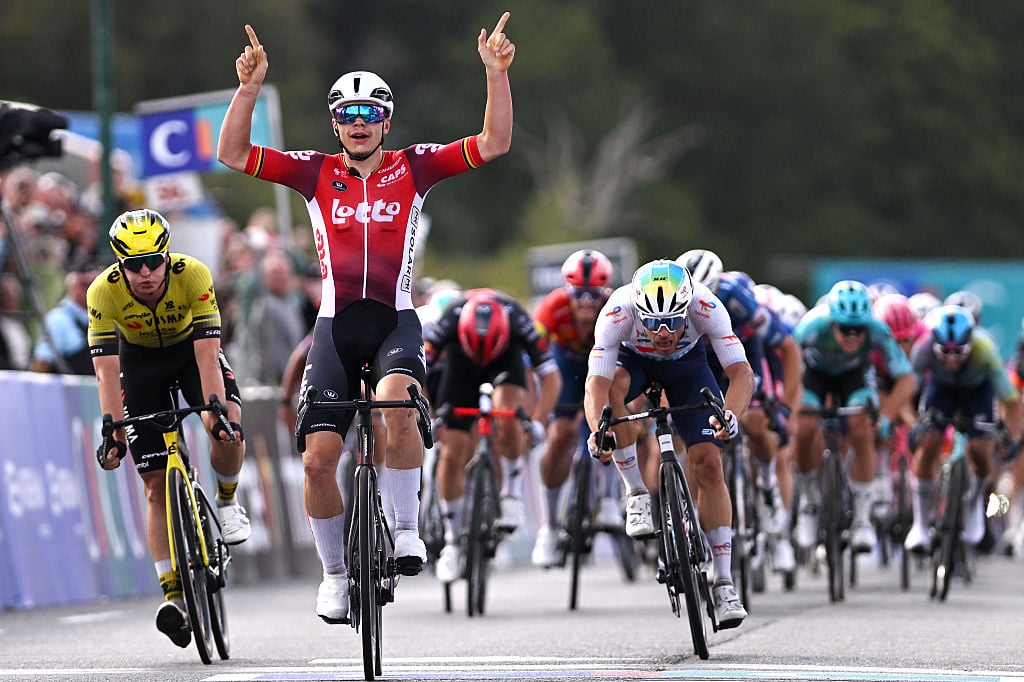
A rider such as Arnaud De Lie can survive considerable climbing and still sprint, as he demonstrated in 2025. Simply riding one climb hard may not be enough to remove someone of that profile.
Three hard passages can be different.
Teams trying to avoid another sprint have multiple opportunities to attack, recover and attack again. The cumulative effect may be more important than any individual acceleration.
The final circuit should reward Classics riders
The revised finale looks particularly attractive for riders who sit between pure climbers and pure sprinters.
A lightweight mountain specialist may have enough climbing ability to attack, but they still need the explosive power to create separation on relatively short gradients. A pure sprinter may have the quickest finish, but surviving three aggressive laps could become increasingly difficult.
That leaves traditional Classics specialists in an excellent position. Riders who can repeatedly produce short high-power efforts, recover quickly and still sprint from a reduced group have several possible ways to win.
They can attack on Ty-Marrec, follow another rider’s move or wait for a reduced sprint.
That tactical flexibility has always been important in the men’s Bretagne Classic, but the 2026 circuit should amplify it.
Will the shorter route help the sprinters?
Potentially.
Removing more than 30 kilometres compared with 2025 means the strongest fast finishers should arrive at the final circuit with more energy than they would have after a 260km race. The total elevation has also fallen substantially.
Those two changes clearly help riders hoping for a sprint.
But the new finale pulls in the opposite direction. Three circuits containing Ty-Marrec give attacking teams more opportunities to make those sprinters suffer at precisely the point when the race becomes hardest to control.
That creates an interesting balance.
The men’s race is objectively shorter and contains less climbing than in 2025, but the final 50 kilometres may actually be raced more aggressively. Whether that ultimately helps the sprinters will depend less on the raw route statistics and more on how teams use the circuit.
Why the first final lap matters
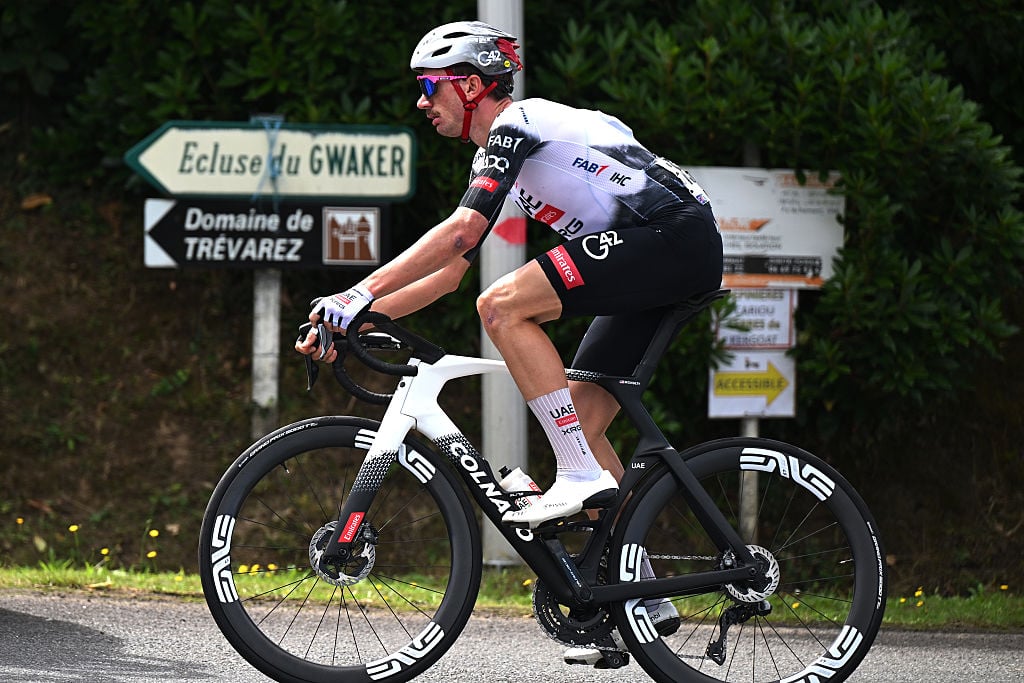
The first passage of the 16.6km circuit should not decide the winner, but it could decide which teams still have enough support later.
This is where stronger squads can begin using domestiques to increase the pace and force weaker teams into survival mode. An attack here may have little chance of reaching the finish, but that does not make it pointless. Forcing another team to chase can remove one of their final helpers before the real attacks begin.
The riders themselves will also be collecting information. Who struggled on Ty-Marrec? Which sprinter lost positions? Which team had to use several riders to close a small gap?
Those details shape what happens when the race comes back to the same roads on the second lap.
The second lap could be the most important
The middle circuit may be the most interesting tactical section of the men’s Bretagne Classic.
There is still enough distance remaining for a small group to establish a meaningful advantage, but not enough road for teams to comfortably give dangerous riders 30 or 40 seconds.
That is exactly the situation where Classics racing becomes difficult to control.
A move containing riders from several major teams can immediately create hesitation behind. Nobody wants to chase a teammate, while teams with strong sprinters may be reluctant to do all the work themselves.
A 15-second advantage can suddenly become 30 seconds.
For that reason, the strongest move of the race may come during the second circuit rather than everyone waiting until the final passage of Ty-Marrec.
The final lap: 16.6km to settle the men’s Bretagne Classic
By the time the bell rings for the final lap, the race should be significantly reduced.
The tactical options then depend on what happened during the previous circuit. If a strong break is already ahead, the chase becomes the central battle. If a reduced peloton remains together, Ty-Marrec becomes the obvious launchpad. If the strongest sprinters have survived, teams without a fast finisher have almost no reason to wait.
That should produce a very aggressive final 16 kilometres.
A rider who reaches the summit of the final major climb with even a small advantage could become extremely difficult to catch, particularly if the group behind contains several competing teams unwilling to cooperate completely.

What is the finish in Plouay like?
After the final climbing, the men’s race returns towards the traditional finish in Plouay.
The finishing section itself is considerably less severe than the climbs preceding it, which is why a reduced group can still produce a proper sprint.
That places extra importance on timing.
An attacker cannot simply gain five seconds on Ty-Marrec and assume the race is won. They still need enough power to maintain that advantage through the faster final roads.
Conversely, a strong sprinter cannot sit at the back and rely entirely on their finish. They need to survive every acceleration close enough to the front that they can benefit if the race comes back together.
That balance between attacking and sprinting is one of the reasons the men’s Bretagne Classic is so difficult to predict.
Why the men’s Bretagne Classic can still end in a sprint
It is tempting to look at 3,663 metres of climbing and Ty-Marrec and assume the race must finish with a tiny group.
History suggests otherwise.
The Bretagne Classic has rewarded an unusually wide range of riders. Climbers, puncheurs, Classics specialists and powerful sprinters have all won in Plouay.
That variety is central to the race’s long history, explored in more detail in a brief history of Bretagne Classic.
The reason is the route’s unusual balance. There is enough climbing to encourage attacks, but rarely one ascent decisive enough to make the outcome inevitable. A team willing and able to chase can still bring the race back together.
The final kilometre therefore always matters, even after a difficult day.
Where can attackers make the difference?
The obvious answer is Ty-Marrec, but waiting exclusively for the named climb may be too predictable.
The best attacking races at Plouay tend to develop through combinations of efforts. One rider attacks on a climb, another counters over the top and a third moves when the chase begins to stall.
The rolling roads between the climbs are therefore just as important.
A 10-second gap can be difficult to close when everyone behind is already tired and no team has several domestiques remaining.
The three-lap format should make those tactical situations more common. On the first circuit, teams can place riders ahead. On the second, leaders can begin bridging. On the third, the remaining favourites may have to race almost entirely for themselves.
How does the 2026 men’s route compare with 2025?
The contrast is substantial.
2025: 261.7km and roughly 4,750m of climbing
2026: 228.3km and roughly 3,663m of climbing
The 2026 men’s race is therefore around 33 kilometres shorter and contains approximately 1,100 metres less climbing.
On raw numbers alone, that makes it easier.
Tactically, however, the answer is more complicated.
Three laps of the new 16.6km circuit give the race a much more concentrated finale. Ty-Marrec returns, riders repeatedly see the decisive roads and teams can build pressure over several laps.
The 2025 men’s Bretagne Classic was an endurance contest first and an attacking Classic second.
The 2026 route should bring the Classic-style tactical battle forward.
Why Plouay produces unpredictable racing
The defining characteristic of the men’s Bretagne Classic is not one particular climb.
It is the absence of flat, predictable racing.
Roads constantly change direction and gradient, meaning teams rarely enjoy long periods where they can simply organise a conventional chase. Weather can make that even more difficult, with Brittany capable of producing wind and rain even in late August.
When conditions turn, the same rolling roads become substantially harder and positioning becomes even more important.
That helps explain the variety of riders who have won here. Sometimes the attackers stay away, sometimes the strongest puncheur creates separation and sometimes everything comes back together for a resilient sprinter.
The race’s unusual identity is also what makes it one of the key events featured in ProCyclingUK’s men’s cycling race hub.
-
 Photo Credit: Getty



Bretagne Classic 2026 start and finish times
The men’s Bretagne Classic is scheduled for Sunday 30 August 2026.
The current timetable has the race beginning at approximately 11:45 CEST, which is 10:45 BST in the UK.
The finish is expected between roughly 16:46 and 17:14 CEST, corresponding to approximately 15:46 to 16:14 BST.
The precise finishing time will depend on the speed of the race.
For viewers only able to watch the decisive section, the arrival onto the three-lap Plouay circuit should be the point where the character of the race changes significantly.
What to expect from the men’s Bretagne Classic 2026 route
The organisers have effectively traded some of the extreme distance of recent editions for a more concentrated finale.
At 228.3 kilometres, the men’s race is still long enough for endurance to matter. At 3,663 metres of climbing, there is still enough vertical gain to remove riders throughout the day.
But the defining feature should be the final three laps around Plouay.
The first allows teams to begin applying pressure. The second provides the perfect distance for major attacks. The last becomes a direct fight between whoever has survived.
At the centre of that tactical battle is the returning Côte de Ty-Marrec.
The 2025 men’s Bretagne Classic showed that even an exceptionally hard route could still finish with a fast rider taking the sprint. The 2026 course asks a slightly different question: will three repeated passes through the Plouay finale give the attackers enough opportunities to stop the sprinters before they reach the line?

