
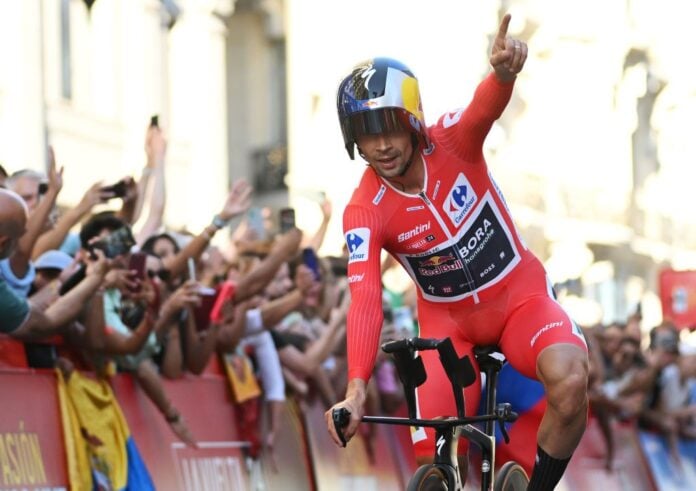
The Vuelta a España 2026 begins in Monaco on Saturday 22 August, and the balance between the strongest teams is considerably more complicated than simply Tadej Pogačar against the rest of the peloton.
UAE Team Emirates-XRG have built their race around winning the red jersey with Pogačar, but several rivals arrive with very different objectives. Decathlon CMA CGM have a climbing-heavy structure around Felix Gall, Movistar bring two genuine GC options in Enric Mas and Cian Uijtdebroeks, Lidl-Trek combine Mattias Skjelmose’s overall ambitions with Mads Pedersen and Thibau Nys hunting stages, while Team Visma | Lease a Bike have the freedom to approach the race much more aggressively around Wout van Aert, Matthew Brennan and their young climbers.
Red Bull-BORA-hansgrohe are more difficult to read. Primož Roglič will start despite the disruption to his preparation, but the more realistic approach is to judge his condition as the race develops rather than assume the four-time winner will immediately become Pogačar’s principal challenger.
The full Vuelta a España 2026 start list contains the latest selections for all 23 teams, while ProCyclingUK’s Vuelta a España 2026 contenders preview looks specifically at the fight for the red jersey. For anyone coming to the race fresh, the beginner’s guide to the Vuelta a España 2026 explains how the race works and where the major classification battles will develop.
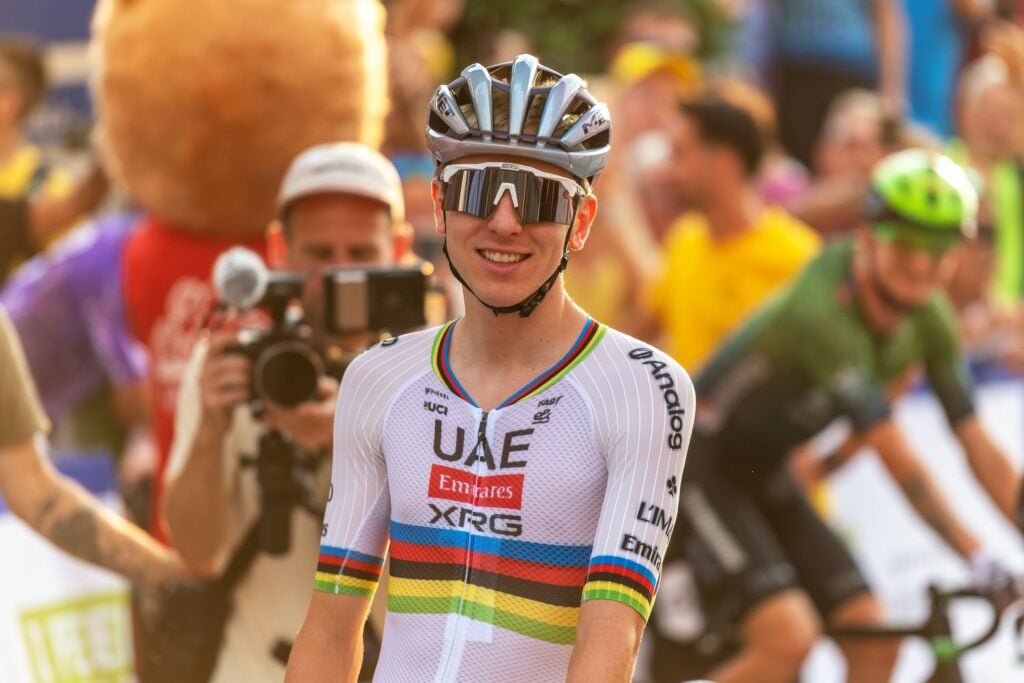
UAE Team Emirates-XRG: everything built around Pogačar
Main objective: Win the Vuelta with Tadej Pogačar
Secondary objectives: Stage wins and support options through João Almeida and Jay Vine
Key riders: Pogačar, Almeida, Vine, Pavel Sivakov
No team arrives with a clearer objective.
Tadej Pogačar is here to win the Vuelta a España, the one men’s Grand Tour still missing from his palmarès. Seven years after finishing third and winning three stages on his Grand Tour debut, he returns after winning a fifth Tour de France and with the chance to complete the career set.
That broader historical context is covered in ProCyclingUK’s look at whether Pogačar can win all three Grand Tours across his career.
UAE have consequently avoided overcomplicating the squad. Almost everyone around Pogačar can either climb, protect him across difficult terrain or contribute to controlling the race.
João Almeida is the most important lieutenant and also the rider who gives UAE a second GC card if anything goes wrong. Calling him simply a domestique understates his quality. On most teams he would arrive as a podium candidate in his own right, and his ability to climb at a sustained pace could become particularly valuable on the longer Spanish ascents.
Jay Vine brings another layer. He can be devastating on mountain stages and already has a strong relationship with the Vuelta through previous stage victories. Pavel Sivakov offers further high-mountain support, while the rest of the squad gives UAE enough depth to control both transitional stages and the decisive climbs.
The danger for everyone else is obvious. Pogačar does not merely have the strongest individual case in the race. He also has arguably the deepest climbing team.
Team verdict: The benchmark squad. Everything is designed around winning red.
 Photo Credit: Getty
Red Bull-BORA-hansgrohe: Roglič starts, but his condition defines the race
Main objective: Assess Roglič’s GC level and take stage opportunities
Key rider: Primož Roglič
Big question: How close is he to his best?
The entire Red Bull-BORA-hansgrohe Vuelta revolves around one uncertainty: how good is Primož Roglič after the disruption to his preparation?
His season had been built around another attempt at the race he has already won four times. In normal circumstances, that history alone would place him very high among the GC favourites.
This time, the sensible approach is more cautious.
If Roglič is close to his best, he immediately becomes one of the few riders in the race with the experience, finishing speed and time-trial ability to make Pogačar work across three weeks. If he is not, Red Bull should not spend the race defending a position that prevents them from using him or others aggressively.
That creates one of the most interesting tactical possibilities in the race. A Roglič who loses meaningful GC time but recovers physically could become an exceptional stage hunter during the second half of the Vuelta.
The Vuelta a España 2026 contenders preview looks more closely at where Roglič belongs in the overall hierarchy before the race begins.
Team verdict: The biggest unknown among the major squads. Roglič’s actual condition matters far more than his reputation.
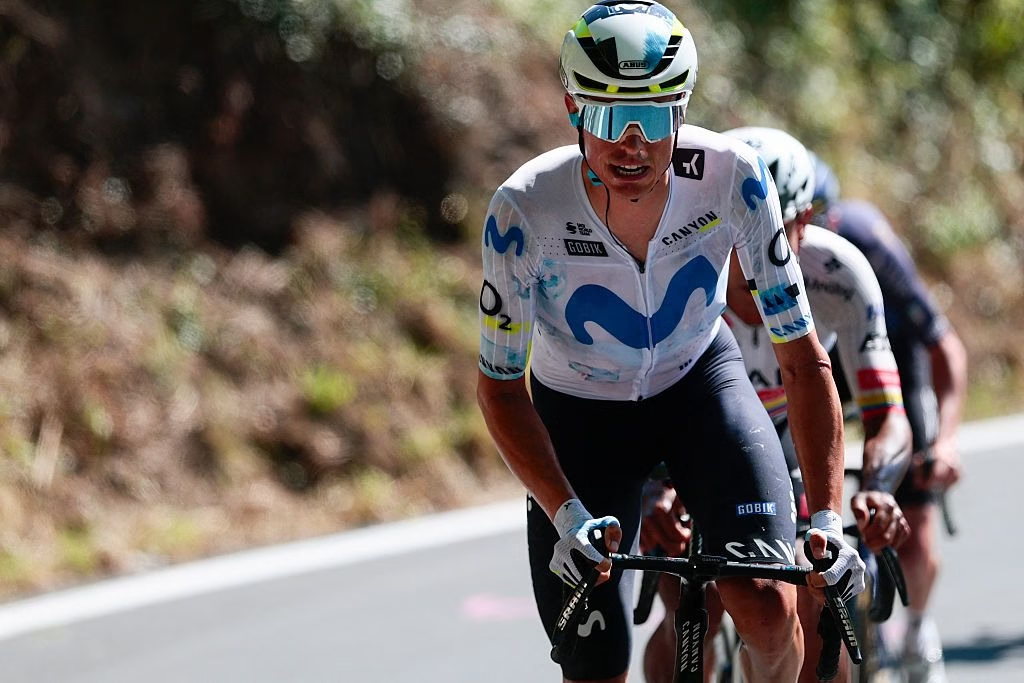 Photo Credit: Getty
Movistar: Mas for the podium, Uijtdebroeks as the second card
Main objective: GC podium with Enric Mas
Secondary objective: Keep Cian Uijtdebroeks relevant overall
Stage options: Iván Romeo, Pablo Castrillo, Orluis Aular
Movistar have one of the more interesting team structures because they are not entirely dependent on one leader.
Enric Mas remains the obvious number one. Few riders understand how to build a three-week Vuelta result better, and he has repeatedly finished high overall without quite finding the final step required to win.
The route gives him plenty of mountain opportunities, but his recurring problem against a rider such as Pogačar is obvious: any time lost against the clock has to be recovered uphill.
Behind him is Cian Uijtdebroeks, who still gives Movistar a second genuine GC card. The best strategy is not to force a leadership decision immediately. Mas has earned protection through his Vuelta record, while Uijtdebroeks has enough climbing ability to remain useful if his form comes together.
That dual structure could matter later in the race. If both remain close enough overall, Movistar can attack rather than simply follow UAE.
The team also has genuine stage-winning depth. Iván Romeo is suited to rolling and medium-mountain days, while Pablo Castrillo is exactly the type of rider capable of converting a difficult breakaway into a victory. Orluis Aular gives Movistar an option on faster finishes where the terrain is too difficult for the heaviest sprinters.
Team verdict: One of the best-balanced teams behind UAE. Mas is the podium leader, but Uijtdebroeks gives Movistar tactical flexibility.
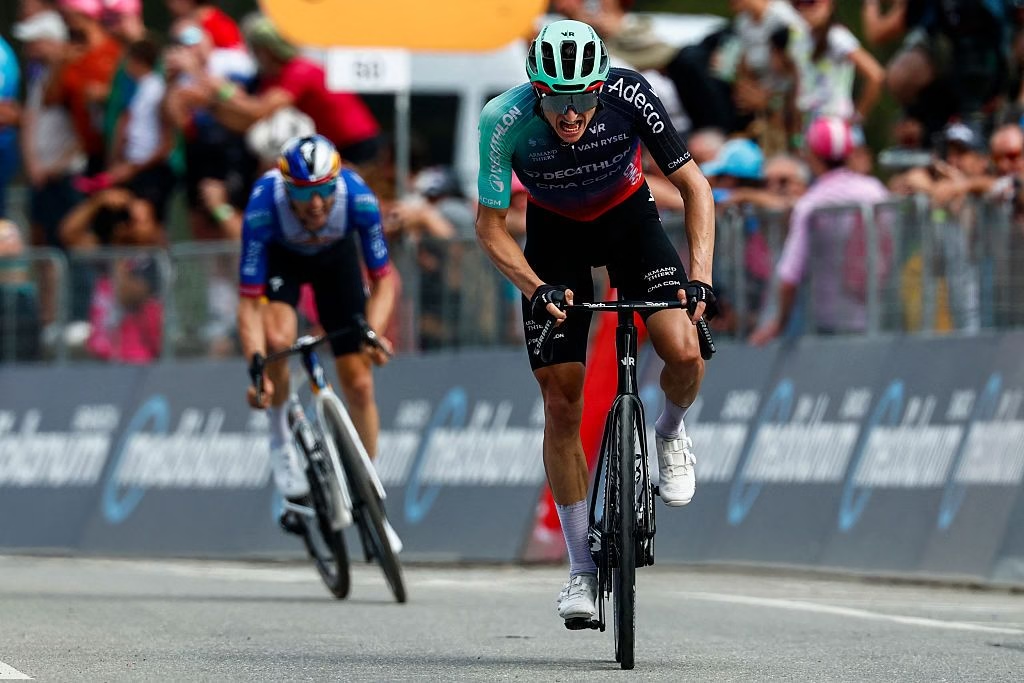 Photo Credit: Getty
Decathlon CMA CGM: Felix Gall gets a mountain-heavy structure
Main objective: Podium with Felix Gall
Secondary objective: Strong GC and mountain opportunities through Matthew Riccitello
Team character: Built for climbing
Decathlon CMA CGM have one of the clearest plans among the challengers: make the Vuelta difficult enough for Felix Gall’s climbing to matter.
Gall is one of the riders most capable of staying with the strongest GC group on severe mountain stages, but his challenge is equally obvious. A conservative race that produces small gaps on summit finishes does not maximise his strengths, particularly against stronger time triallists.
Decathlon therefore need to use their climbing depth aggressively.
The harder and more attritional the mountain stages become, the more useful Gall’s profile becomes. Repeated attacks, long climbs ridden at sustained pressure and stages where domestiques disappear early all increase his chances of making larger differences.
Matthew Riccitello gives the team another important card. He has progressed beyond being simply a development rider and can remain high enough overall to complicate the race tactically.
Keeping both Gall and Riccitello relevant gives Decathlon more options than simply riding behind UAE until Pogačar attacks.
Team verdict: One of the strongest pure mountain structures. Gall’s best chance comes from making the race harder, not safer.
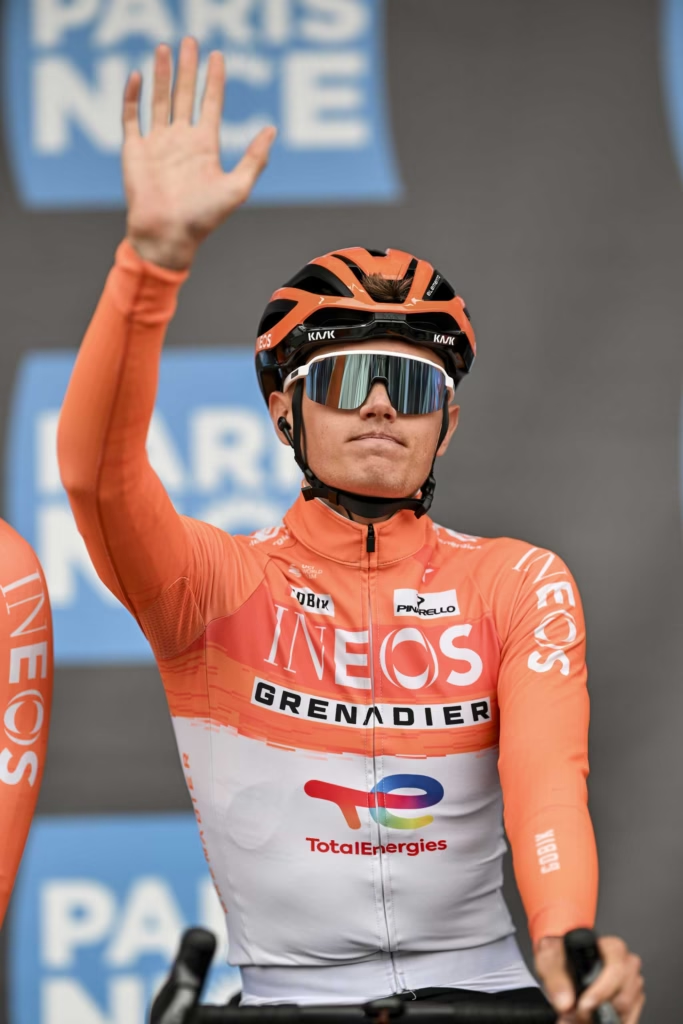 Photo Credit: A.S.O./Billy Ceusters
Netcompany INEOS: Oscar Onley gets another major leadership test
Main objective: GC with Oscar Onley
Secondary GC option: Carlos Rodríguez
Pressure level: High
Netcompany INEOS arrive needing a meaningful Grand Tour result.
The main rider is Oscar Onley, who has increasingly moved from promising young stage racer towards genuine Grand Tour leadership. The Vuelta gives him another opportunity to prove that progression across three weeks.
The route suits him well. Repeated steep finishes and selective medium-mountain stages reward his punch and climbing ability, while the time trials should reveal whether he can stay close enough to the more complete GC riders.
Carlos Rodríguez gives INEOS a second high-level option and a different type of stage racer. Rodríguez tends to be difficult to eliminate completely and can accumulate a strong overall result without needing one specific kind of mountain stage.
That gives INEOS some useful flexibility. If both remain high on GC, they do not have to spend every decisive climb simply following UAE.
The wider GC picture, including where Onley and Rodríguez sit among the leading challengers, is covered in the Vuelta a España 2026 contenders preview.
Team verdict: Onley is becoming increasingly important to INEOS’ Grand Tour future. A podium would be a major statement.
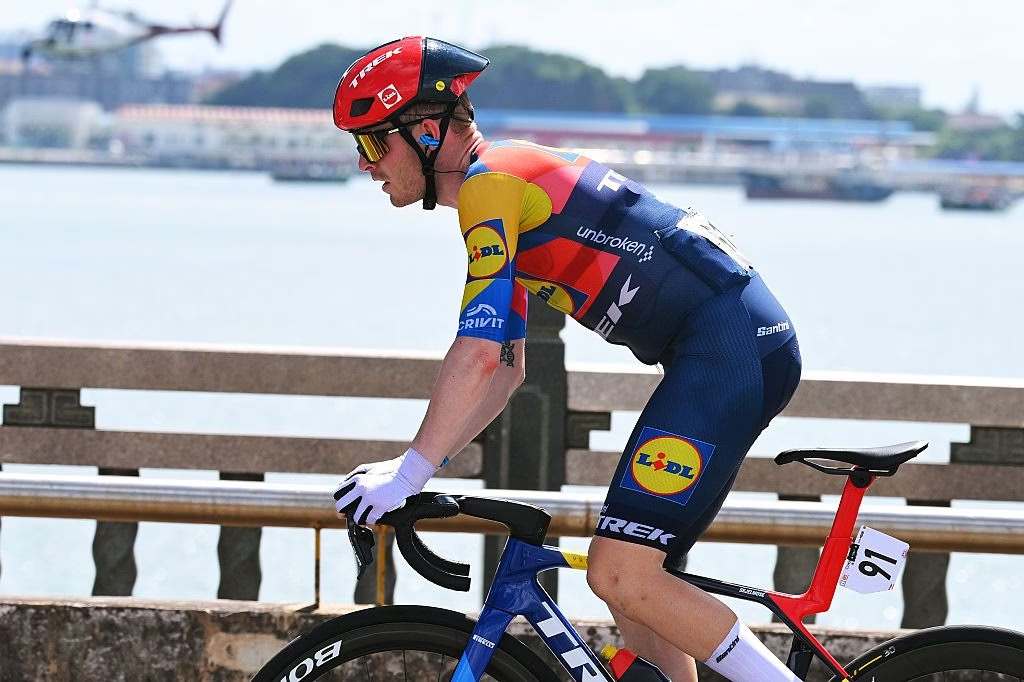 Photo Credit: Getty
Lidl-Trek: Skjelmose for GC, Pedersen for points, Nys for stages
Main objective: GC with Mattias Skjelmose
Points objective: Mads Pedersen
Stage hunter: Thibau Nys
Few teams arrive with three objectives as clearly separated as Lidl-Trek.
Mattias Skjelmose is the GC rider. His appeal comes from being more complete than many pure climbers. He can handle the mountains, time trial well enough to remain competitive and also take bonus seconds on punchier finishes.
Then there is Mads Pedersen, who gives Lidl-Trek a completely different route to success.
Pedersen should have a large number of opportunities because the Vuelta regularly produces stages that are too difficult for pure sprinters but not hard enough for the GC riders to dominate. Rolling transition stages, reduced bunch sprints and breakaways can all become realistic targets.
Thibau Nys adds another distinct profile. Uphill finishes that are too explosive for Pedersen but not important enough for Skjelmose to treat as a major GC day could be almost perfect for him.
The only difficulty is resource allocation. Skjelmose needs climbing support, while Pedersen’s ambitions sometimes require teammates to control stages.
If Lidl-Trek manage that balance properly, they can leave Spain with a high GC finish, multiple stages and a serious points-classification campaign.
Team verdict: One of the most versatile teams in the race.
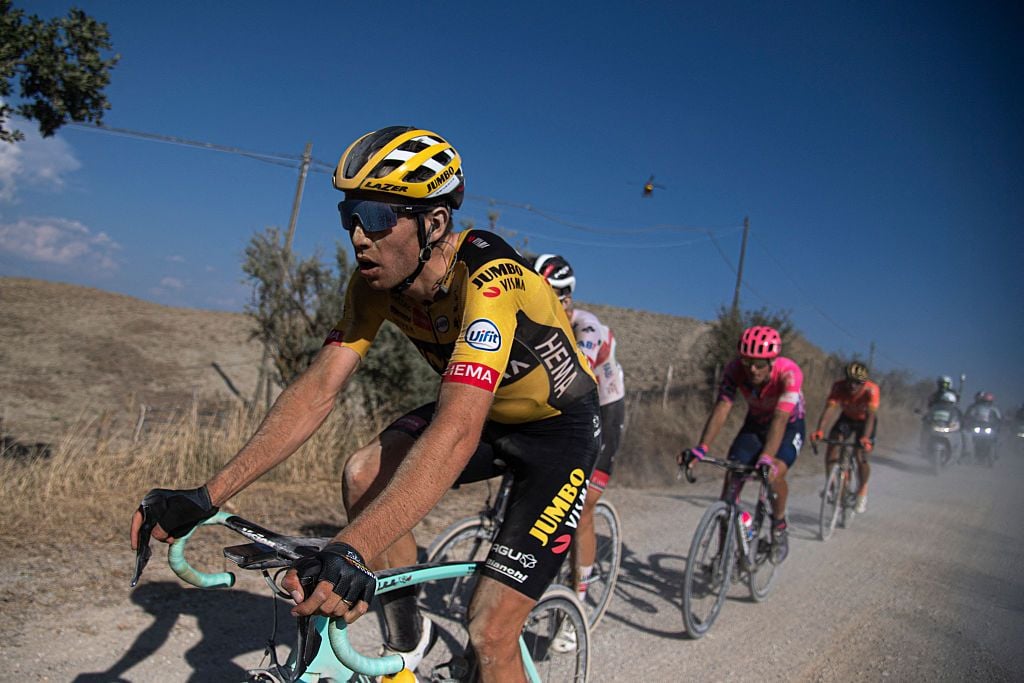 Photo Credit: Getty
Team Visma | Lease a Bike: a Grand Tour built around freedom
Main objective: Stage wins
Points option: Wout van Aert
Sprint option: Matthew Brennan
GC option: Sepp Kuss, without the usual pressure
This is one of the most interesting Visma Grand Tour squads in years because there is no dominant GC leader dictating every tactical decision.
That immediately gives Wout van Aert enormous freedom.
Van Aert can target a wide range of stages, from reduced sprints and rolling finishes to breakaways and potentially the time trial. His presence alone makes the team difficult to read because rivals cannot assume whether Visma are preparing a sprint, an attack or a move from distance.
Then there is Matthew Brennan, making his Grand Tour debut and giving the team another serious fast-finishing option. Brennan can handle enough climbing that he does not need the race to stay completely flat, which means his opportunities overlap with Van Aert’s without being identical.
The pair could become one of the most entertaining tactical combinations of the entire race.
Sepp Kuss provides the nominal GC option, but there is little need for Visma to force the race around protecting his position if a more aggressive strategy produces stage wins. Jørgen Nordhagen and Ben Tulett give the team additional climbing depth and development opportunities.
Steven Kruijswijk also brings experience into his final season before retirement.
Team verdict: Potentially the most entertaining team in the Vuelta. They can win on a huge range of stages without ever needing to organise the entire race around red.
Soudal Quick-Step: Mikel Landa leads, but stage hunting may become equally important
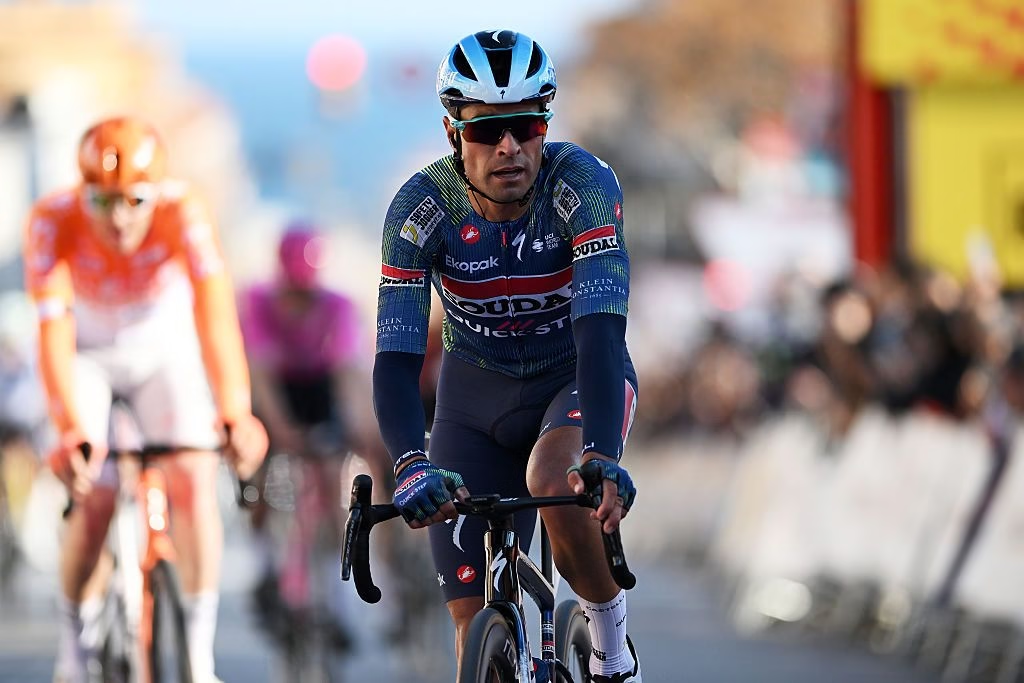
Main objective: GC with Mikel Landa
Secondary objective: Mountain stage victories
Other options: Mauri Vansevenant and the team’s climbing support
Soudal Quick-Step’s Vuelta revolves around Mikel Landa, but this is not a straightforward podium-or-bust project.
The route gives him plenty of terrain to use his climbing ability, and the Vuelta has always suited riders willing to race aggressively in the mountains. The problem is that stronger time triallists can undo a large amount of work elsewhere.
That means Soudal should be prepared to change strategy if necessary.
If Landa remains close enough to the podium, protecting him makes sense. If his GC position begins drifting towards the lower reaches of the top 10, there are too many mountain stages available to waste the race defending a minor placing.
Mauri Vansevenant provides an especially useful attacking option on medium-mountain days and stages where the breakaway has a realistic chance.
There is also a wider end-of-season context around Landa after his confirmed return to Euskaltel-Euskadi from 2027.
Team verdict: Landa starts as the GC leader, but Soudal should not be afraid to become increasingly aggressive if the overall challenge fades.
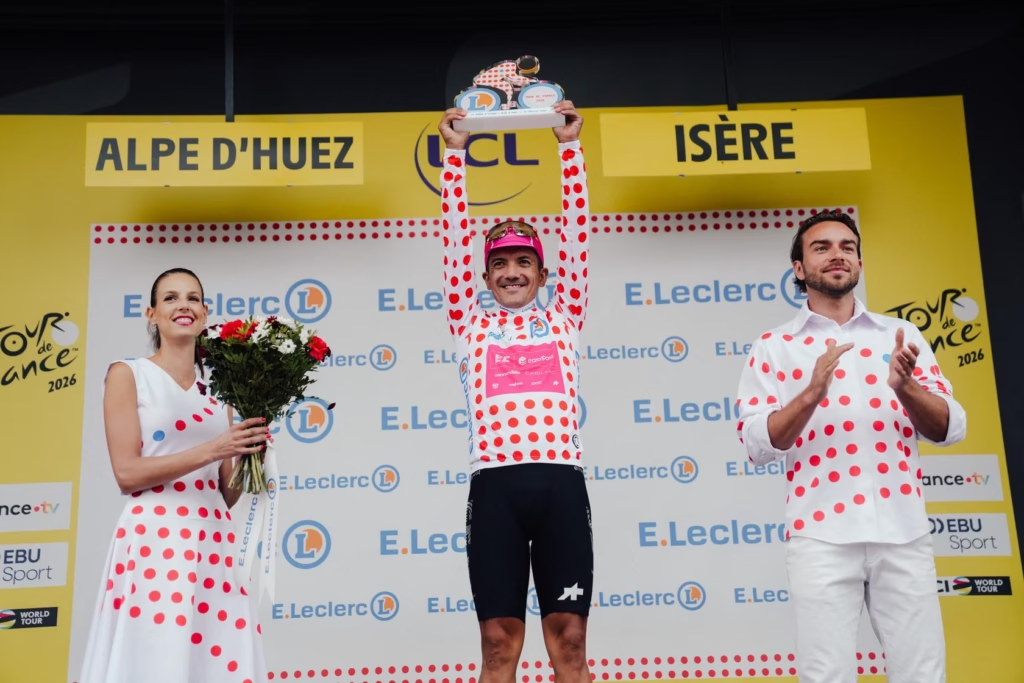 Photo Credit: A.S.O./Thomas Maheux
EF Education-EasyPost: Richard Carapaz needs chaos
Main objective: GC with Richard Carapaz
Best tactical weapon: Attacking before the final climb
Ideal race: Uncontrolled
EF Education-EasyPost’s hopes revolve around Richard Carapaz, whose style of racing is particularly well matched to the Vuelta.
Carapaz becomes more dangerous as races become less organised. If UAE control every mountain stage until Pogačar attacks in the final few kilometres, his chances of winning the race fall sharply.
If stages begin splitting 40 or 50 kilometres from the finish, domestiques disappear and leaders become isolated, the picture changes.
That should shape EF’s entire approach.
Carapaz has the climbing ability to remain high overall but also the tactical instinct to move at moments when more conservative contenders hesitate. The time trials mean he needs to create meaningful differences elsewhere rather than simply limit losses.
Team verdict: EF should be one of the teams most willing to attack UAE from distance.
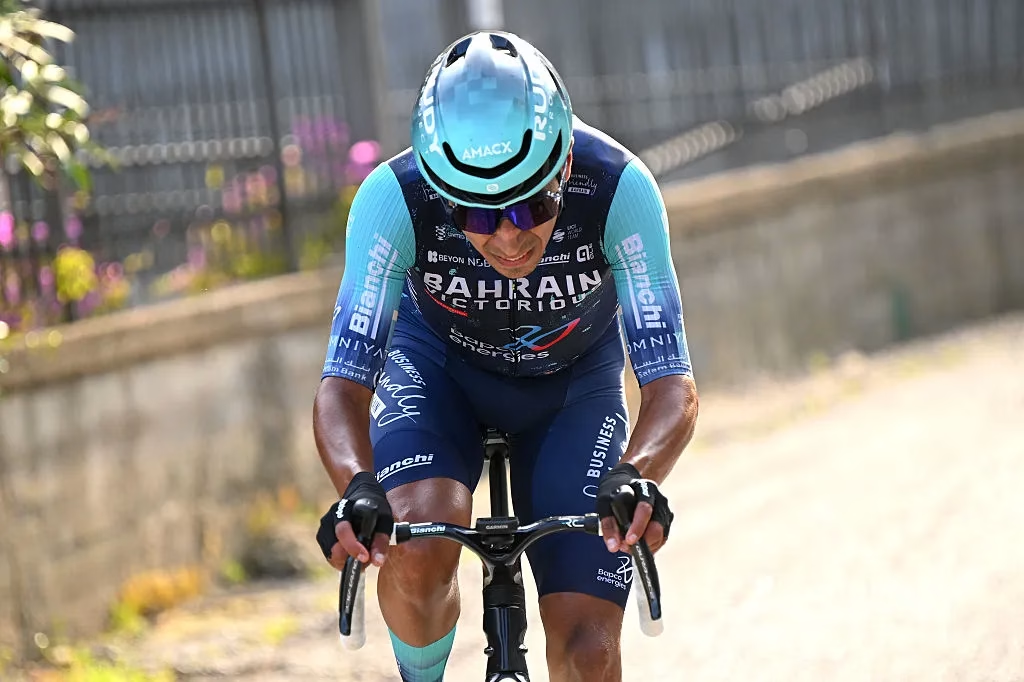
Bahrain Victorious: Santiago Buitrago can choose between GC and stages
Main option: Santiago Buitrago
Best terrain: Mountains and breakaways
Tactical flexibility: High
Bahrain Victorious again have a rider capable of sitting somewhere between serious GC contender and elite mountain stage hunter in Santiago Buitrago.
That ambiguity can become useful.
If Buitrago emerges from the opening week close to the podium places, Bahrain have every reason to protect him. If he loses enough time to fall out of the main classification battle, his climbing strength suddenly makes him one of the strongest potential breakaway riders in the race.
The Vuelta offers enough mountain stages for either plan to work.
There is also a longer-term backdrop to his final season with Bahrain, with Buitrago already confirmed to join NSN Cycling Team on a three-year deal from 2027.
Team verdict: Buitrago gives Bahrain genuine GC potential, but they may become even more dangerous if he gains freedom to hunt stages.
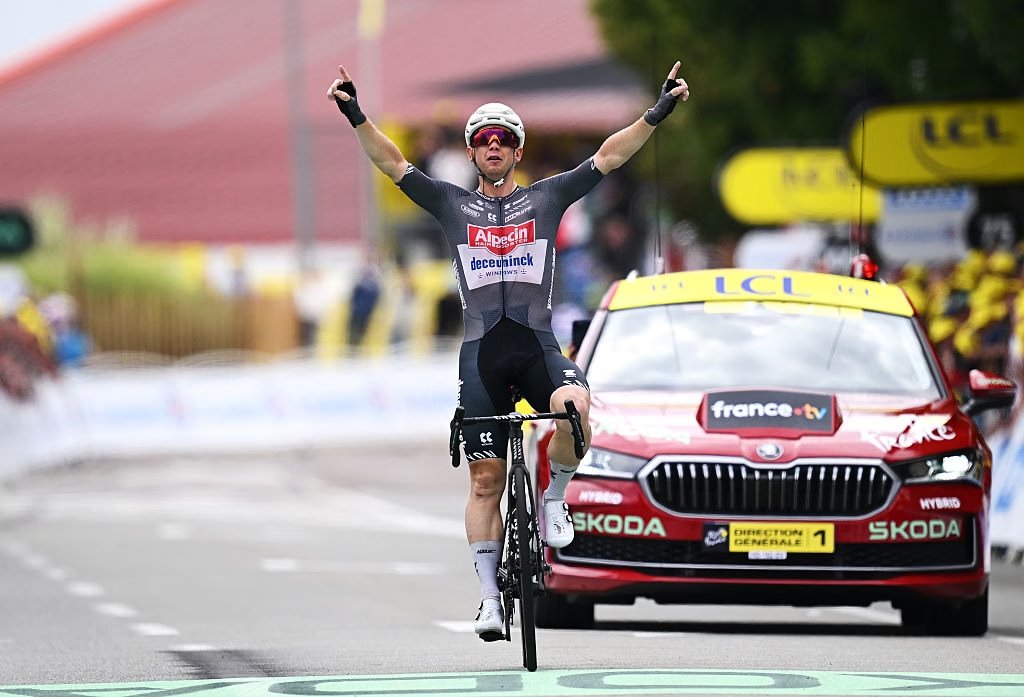 Photo Credit: Getty
Alpecin-Premier Tech: Kaden Groves gets another Vuelta built for difficult sprints
Main objective: Stage wins
Key rider: Kaden Groves
GC ambition: None
Not every important team needs a rider anywhere near the top 10 overall.
Kaden Groves has built a substantial part of his Grand Tour reputation at the Vuelta because the race regularly produces the kind of sprint stages that suit him best.
There are relatively few completely straightforward sprint days, but that can work in his favour. Groves handles climbing better than many pure fast men and can remain involved on stages where heavier sprinters disappear before the finish.
His difficulty in 2026 is the depth of versatile competition.
Pedersen wants many of the same stages. Van Aert can contest almost anything. Brennan gives Visma another fast option, while other teams have riders specifically suited to reduced sprints.
Alpecin therefore need to identify the stages where making the race harder actually improves Groves’ chances rather than protecting him through the easiest possible day.
Team verdict: No GC distraction and no ambiguity. Groves is here to win stages.
Which team has the strongest GC squad?
On paper, UAE Team Emirates-XRG are clearly first.
Pogačar would already start as the favourite with a merely competent support team. Instead, UAE give him Almeida, Vine, Sivakov and enough depth to control the race deep into the mountains.
The more interesting comparison is behind them.
Decathlon CMA CGM may have the most climbing-focused challenge around Gall. Movistar have one of the strongest genuine two-leader structures through Mas and Uijtdebroeks. Lidl-Trek bring perhaps the most complete podium candidate outside the very biggest names in Skjelmose, although they must divide resources between GC and stage hunting.
Netcompany INEOS also become increasingly interesting if Onley carries his best form into the race.
Red Bull-BORA-hansgrohe would normally rank close to the top of this discussion, but Roglič’s interrupted preparation makes them harder to judge before Stage 1.
Which team is most likely to win the most stages?
UAE could do it simply because Pogačar can win so many different kinds of difficult stages, but stage hunting is not their primary purpose.
For variety, Team Visma | Lease a Bike may be the most interesting squad.
Van Aert can win from a sprint, breakaway, time trial or selective hilly finish. Brennan gives them another route on faster days, while Kuss, Tulett and Nordhagen can target the mountains.
Lidl-Trek are similarly dangerous. Pedersen should have numerous opportunities, Nys provides a punchier option and Skjelmose himself can win on GC days.
The battle between those two teams could become one of the defining secondary stories of the Vuelta.
-
 Photo Credit: A.S.O./Billy Ceusters
Which teams need the Vuelta most?
Movistar always face pressure at their home Grand Tour, but Netcompany INEOS arguably have the most to prove.
A podium from Onley or Rodríguez would provide evidence that the team’s next generation of Grand Tour leaders is beginning to produce the level of results required.
Soudal Quick-Step also need something significant from Landa’s final Vuelta with the team, while Red Bull-BORA-hansgrohe have to adapt quickly if their original Roglič plan no longer matches his condition.
For Visma, the definition of success is much broader. Without a dominant GC project, several stage wins could represent an excellent three weeks.
The tactical battle behind Pogačar
The strongest team in the 2026 Vuelta is easy to identify.
The more important question is whether the other squads are prepared to use their strengths differently.
If Movistar, Decathlon, Lidl-Trek and INEOS all ride defensively for second through fifth, UAE have exactly the race they want. Almeida, Vine and the rest of the mountain train can control the hardest stages until Pogačar decides when to attack.
The route to making this Vuelta competitive is tactical disruption.
Gall needs very hard mountain stages. Carapaz needs attacks from distance. Movistar need Mas and Uijtdebroeks to remain relevant simultaneously. Lidl-Trek can use the threat of Skjelmose without sacrificing Pedersen’s opportunities. Visma have almost no reason to help anyone control the race.
That diversity is what could stop the 2026 Vuelta becoming predictable even if Pogačar remains individually stronger than every rival.
The Vuelta a España 2026 route guide contains enough summit finishes, time trials and difficult transition days to reward teams willing to race creatively, while the UK viewing guide has the live television and streaming details for all three weeks.
UAE start with the strongest rider and strongest structure.
The rest of the Vuelta may depend on whether everybody else accepts that structure, or spends three weeks trying to break it.

