The Tour of Guangxi concludes on Sunday 18 October 2026 with 165.6km from Yizhou to the steep summit finish at Nongla. After five stages in which the sprinters have repeatedly survived the hills, the final 3.2km climb provides the first obvious opportunity for a climber to put meaningful time into the race leader.
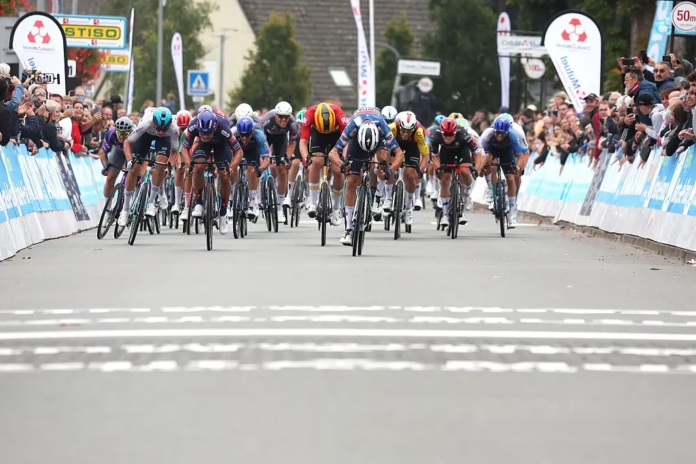
Paul Magnier starts the final day in the red jersey following victories on Stages 1 and 4. His status was preserved despite crashing in the final 500 metres of Saturday’s Stage 5, where Milan Fretin sprinted to his second win of the week ahead of Matteo Moschetti and Erlend Blikra. Magnier escaped a time loss under the race jury’s neutralisation ruling but faces a very different challenge at Nongla.
The official Stage 5 general classification leaves Frits Biesterbos ten seconds behind Magnier, Max Kanter at 16 seconds and Jhonatan Narváez at 19 seconds. Several other riders remain close enough for a strong final climb to change the overall order. Those time gaps make it difficult for the leader’s team to decide exactly which attack should be chased first.
The stage is an especially interesting opportunity for Tom Pidcock, Kévin Vauquelin and the race’s other climbing contenders, although the best individual finisher is not guaranteed to win overall. The rider who takes the stage must still consider the time already lost during the first five days, along with any gaps and bonuses created on Sunday.
Stage 6 route: Yizhou to the Mashan Nongla Scenic Spot
The final stage travels from Yizhou through Xincheng and Shanglin before entering Mashan and the Nongla Scenic Spot, with the entire week’s general classification set to be settled on the last climb. The full distance is approximately 165.6km, with some route sources giving 165.8km because of rounding or small mapping differences.
The approach is largely rolling rather than mountainous, which makes it possible for a breakaway to gain an advantage without the main GC teams immediately committing to a full pursuit. The larger issue is the route’s final section. A relatively straightforward day on paper can become difficult when all the teams are trying to place a protected climber in the first ten or fifteen positions.
Before the final climb, expect the leading teams to keep their riders out of trouble while allowing some freedom to attackers who have no realistic overall-classification chance. That balance changes if a dangerous rider joins the move. A gap that would normally be allowed to grow may have to be contained, using up riders who would otherwise have been saved for the last kilometres.
The finish at Nongla is a known feature of this race. In 2025 Paul Double used the uphill arrival to take the stage win and the overall lead. For the 2026 edition, the organisers have moved the climb to the final day, meaning any new leader at Nongla will not have to defend that position in another stage.
The last 3.2km: how the race could be decided
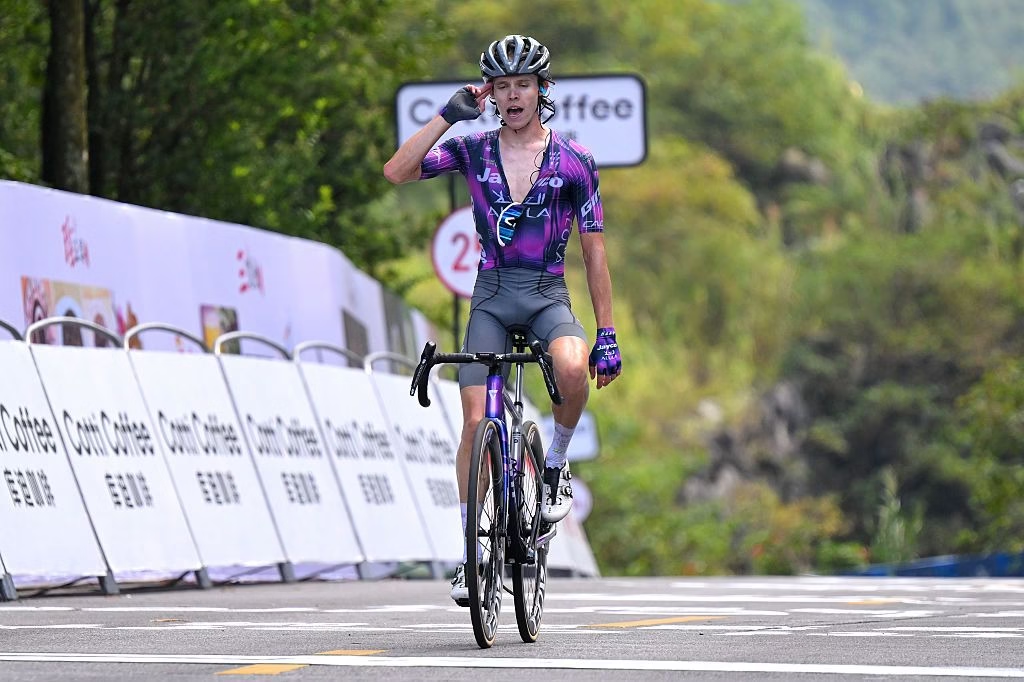
The finishing ascent is approximately 3.2km at 7.3 per cent, with the hardest gradients steepening into double figures. The average disguises where the decisive effort may occur. Riders who attack immediately at the foot risk spending their reserves too soon, while those who wait too long may find a small lead impossible to close.
Positioning will be important because the speed of the peloton is likely to change quickly as the gradient increases. A sprinter trying to defend a narrow overall lead can lose contact with the best climbers even if he rides at his own limit. The more specialised uphill riders can exploit that change in speed by launching a series of short attacks rather than one long, sustained acceleration.
A rider 20 seconds behind overall does not necessarily need to win the stage by 20 seconds if time bonuses are awarded to the leading finishers. Conversely, bonuses cannot rescue a contender who loses a substantial gap on the steepest section. Teams will make their calculations from the published standings and applicable bonus rules.
Magnier has shown throughout the week that he can survive hilly stages and remain competitive. Nongla will test whether that ability extends to a truly selective uphill finish. The leader needs to minimise his losses to the best climbers, and Soudal Quick-Step may decide that chasing every attack on the approach is less important than keeping enough help for the foot of the climb.
The riders best suited to Nongla
Pidcock has the explosive acceleration and bike handling to make the most of a steep, twisting approach. An uphill finish of around three kilometres suits his ability to repeat sharp efforts, especially if other contenders hesitate over who should follow. His problem is that a move which wins the stage may still be insufficient for the overall classification if he begins too far down the standings.
Vauquelin and Jarno Widar have their own reasons to favour a demanding final climb. Vauquelin is comfortable on steep finishes where positioning and a rapid change of pace matter, while Widar’s ability to sustain an intense effort could become valuable if the favourites begin attacking before the steepest part.
Narváez is particularly interesting because he sits only 19 seconds from the lead after Stage 5. That is a small enough gap for a successful attack and the final bonus seconds to change his overall position. His punch on short climbs makes him one of the contenders who could benefit from a race shaped by repeated accelerations rather than a steady mountain tempo.
Ayuso and other riders who have spent the week keeping close to the front will also be watching the first move. When the red jersey is held by a sprinter, a climbing specialist’s biggest problem may not be attacking the leader but persuading the other GC rivals to cooperate once a group has formed.
Biesterbos and Kanter have enjoyed a successful week of fast finishes, but their positions near the top of the overall classification do not automatically make them favourites on a steep ascent. The final climb will reward a different range of strengths, and the day’s finishing order may look very different from the bunch sprints that preceded it.
What changed on Stage 5, and what it means for Sunday
Saturday’s Stage 5 was won by Fretin in Yizhou after the day’s breakaway was brought back. Magnier fell in the final few hundred metres and could not sprint for victory, but the neutralisation decision kept him in the race lead. Fretin was followed by Moschetti and Blikra, reinforcing the strength of the fast finishers across the week.
That result means the general classification heading into Sunday is still tightly packed. Magnier’s ten-second advantage over Biesterbos and his 19-second margin over Narváez are small relative to the possible differences on Nongla. The first serious acceleration among the GC favourites may therefore force the race leader to respond personally.
The crash also leaves a question over the leader’s condition, although it would be premature to assume that he has an injury or has lost form without confirmation. The immediate sporting fact is that he finished the stage and retained the red jersey. Team plans for the climb will depend on how he feels after a night’s recovery.
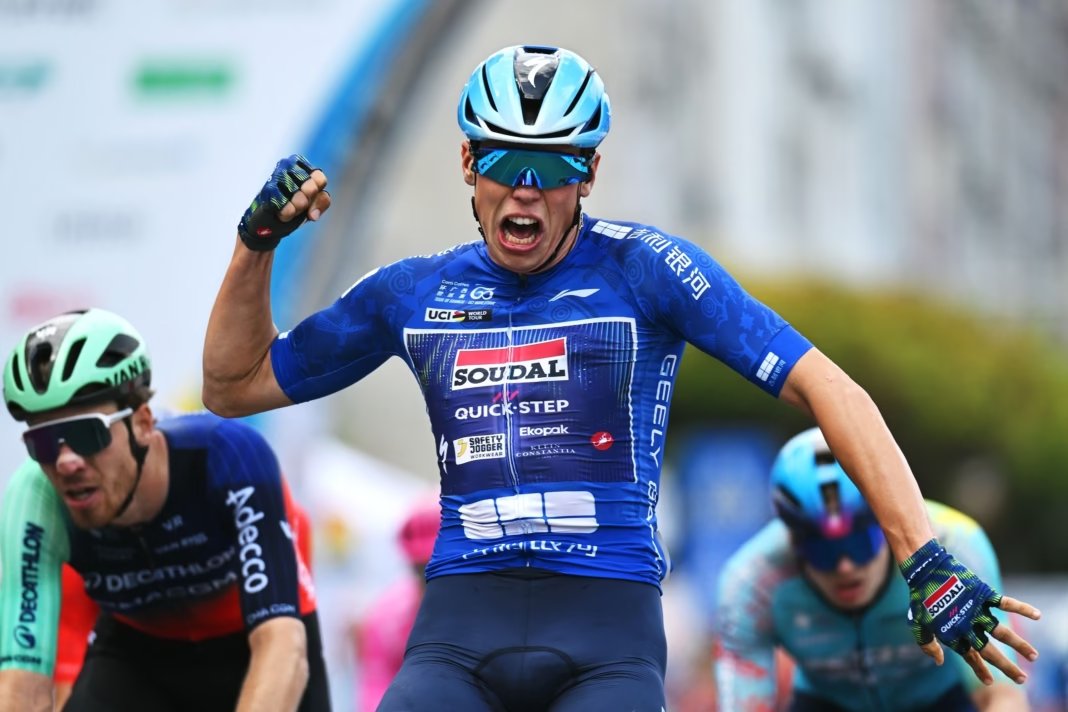 Photo Credit: Getty
Stage 6 tactics and when the decisive move might come
A breakaway containing riders a long way down the classification may be allowed a modest advantage on the rolling roads. The GC teams can then approach Nongla with more resources available rather than spending the entire stage working at the front. That plan is only possible while every team agrees the breakaway is harmless.
On the run towards the climb, the leading contenders need teammates capable of keeping them away from crashes and changes in road width. If the race is split before the ascent, a rider who misses the first group may have already lost the chance to challenge for the overall victory.
Once the gradient rises, the climb is short enough for riders to attack at full effort and hold a small gap to the line. The decisive move might also come after the first attack has been brought back, when the chasers have already used some of their remaining strength. Watch which riders repeatedly respond and which begin to follow from further down the group.
The Tour of Guangxi has repeatedly produced a close overall classification until its main uphill finish. The 2026 route increases that tension by leaving Nongla until the final day. The first rider over the line will win the stage, but the size of the gaps behind could be equally important for the final podium.
For race timings and UK streaming arrangements, see the separate Tour of Guangxi UK broadcast guide, while the full route guide provides an overview of all six stages. The latest Stage 5 report covers Fretin’s second win and the state of the race before Sunday’s finale.