
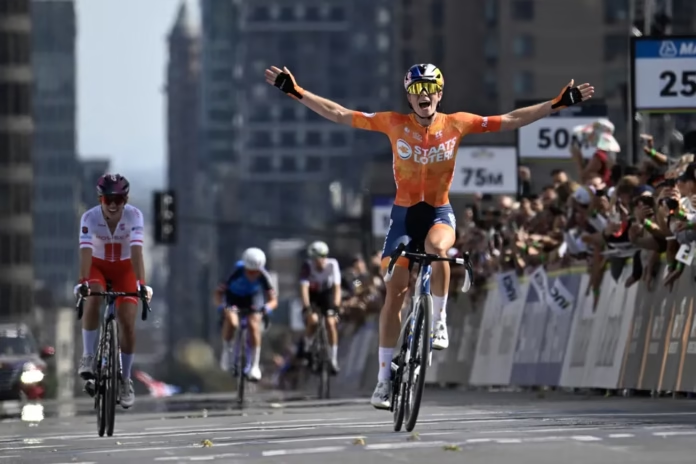
The 2026 women’s road season closed on Sunday with two very different races. Lieke Nooijen completed a week built around time-trial superiority by winning the Eneco Tour Women in Arnhem, while Maeva Squiban ended the French calendar with victory at the Chrono des Nations. By then the Women’s WorldTour had already finished in China, where Lorena Wiebes swept all three stages of the Tour of Chongming Island after the women’s Tour of Guangxi was cancelled.
The rider who defined the year, though, was Demi Vollering. Her season started with victory at Omloop Het Nieuwsblad and expanded into wins at the Tour of Flanders, Flèche Wallonne and Liège-Bastogne-Liège before she added the Giro d’Italia Women, Tour de France Femmes, the road World Championships and the European road title. The range mattered as much as the total: cobbled Classics, Ardennes climbs, two Grand Tours and two championship road races all fell to the same rider.
Yet 2026 was never simply a procession behind Vollering. Paula Blasi became a Grand Tour winner at 22. Franziska Koch beat Marianne Vos in the Roubaix velodrome. Elise Chabbey won Strade Bianche. Marlen Reusser controlled the year’s biggest time trials. Lorena Wiebes kept accumulating sprints at a rate no other fast finisher could match. Anna van der Breggen twice reached the final day of a Grand Tour in the leader’s jersey and twice lost it. Those stories gave each part of the calendar a different shape.
This is how the season unfolded, month by month, from the Australian summer to the final weekend in Europe.
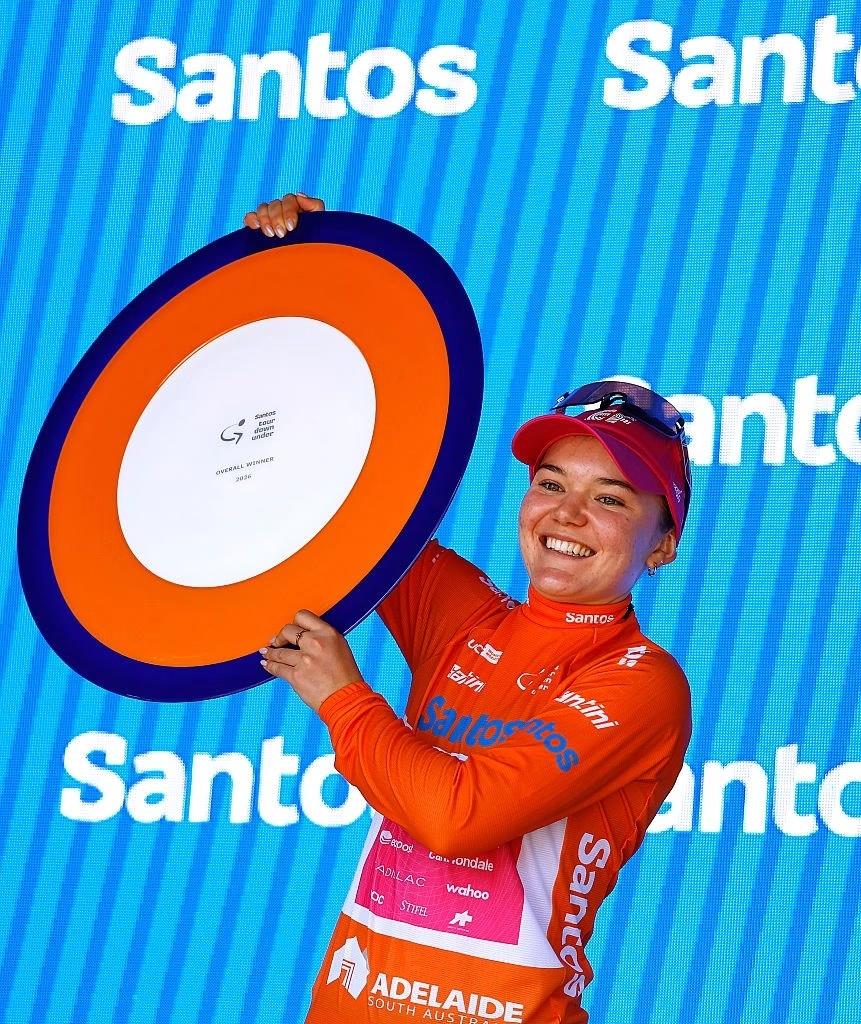 Photo Credit: Getty
January: Rüegg defends in Australia as Wollaston starts fast
The Women’s WorldTour opened in South Australia with a familiar winner and an early reminder that Ally Wollaston had carried her speed into another season. The New Zealander won the first two stages of the Women’s Tour Down Under, first from a sprint and then again as the race moved onto harder terrain.
Noemi Rüegg had arrived as defending champion and spent the opening two days staying close enough to keep the final stage alive. On the decisive day she took the stage and the overall, giving the Swiss rider back-to-back Tour Down Under titles. It was an important early marker for EF Education-Oatly: Rüegg had gone from surprise 2025 winner to a rider capable of absorbing the pressure that came with bib number one.
Wollaston did not have to wait long for another result. At the Cadel Evans Great Ocean Road Race she defended her title, beating Josie Nelson and Mireia Benito. Two WorldTour one-day wins in successive years moved her beyond the label of pure sprinter. She could survive the repeated Geelong climbs and still finish the race herself.
January therefore set up two themes that lasted well beyond Australia. The women’s peloton was increasingly full of riders in their early twenties already capable of winning major races, while the line between sprinter, Classics rider and stage-race rider continued to blur.
February: Longo Borghini owns Jebel Hafeet before Vollering opens the Classics
The UAE Tour Women was built around the final climb to Jebel Hafeet and Elisa Longo Borghini again made the race hers. Lorena Wiebes collected the expected sprint opportunities on the flat stages, but Longo Borghini won the mountain stage and secured a third overall UAE Tour title.
It was the kind of result Longo Borghini had been producing for years: no wasted effort, no need to dominate every day, then a decisive performance when the race reached terrain that separated the general classification. Her climbing win also showed that UAE Team ADQ had a genuine stage-race leader heading into the European spring.
The first major Belgian Classic changed the tone. At Omloop Het Nieuwsblad, Vollering and Kasia Niewiadoma-Phinney got clear after the Muur van Geraardsbergen and turned the race into a two-rider contest. Vollering won the sprint in Ninove, with Wiebes taking third from the chasers.
It was Vollering’s first Omloop victory and the start of a spring in which she repeatedly found different ways to win. This one came from a selective cobbled Classic rather than the long climbs more usually associated with her.
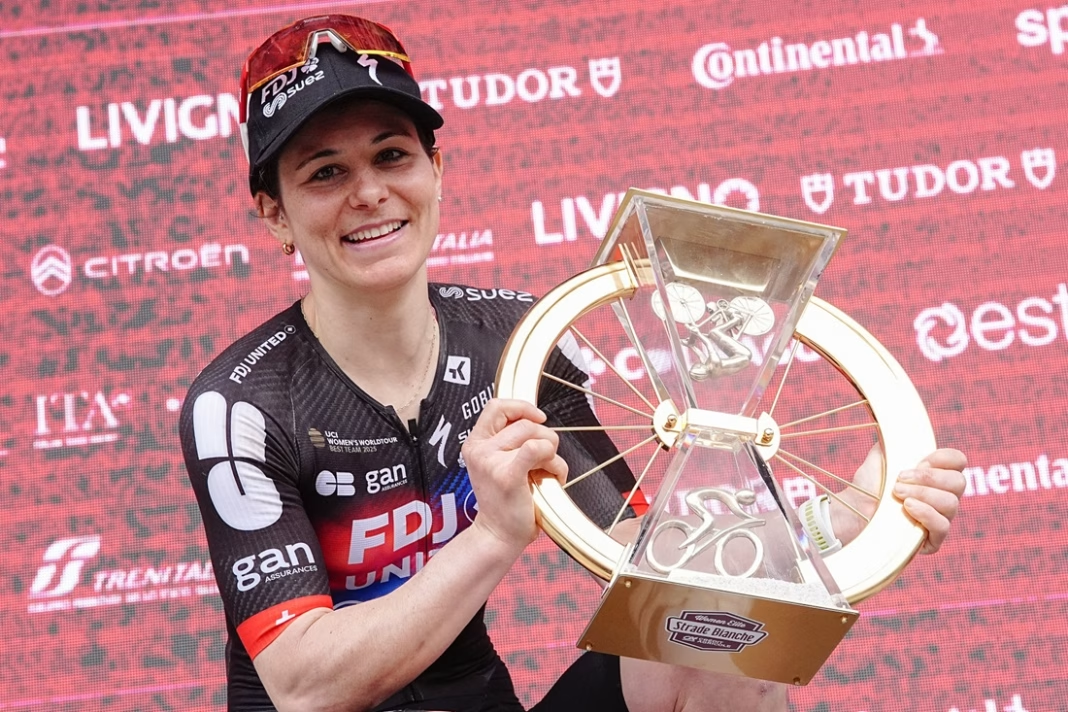 Photo Credit: LaPresse
March: Chabbey, Kopecky and a spring that refused to settle
March was the least predictable month of the spring. Elise Chabbey started it by winning Strade Bianche, beating Niewiadoma-Phinney and Franziska Koch after a race that broke apart across the Tuscan gravel. Chabbey had spent years being valued for aggression and tactical flexibility; in Siena that approach produced the biggest one-day win of her career.
Trofeo Alfredo Binda supplied another first-time WorldTour winner. Karlijn Swinkels took the victory ahead of Anna van der Breggen and Mie Bjørndal Ottestad, a result that continued the early-season spread of winners rather than allowing one team to lock down the calendar.
Lotte Kopecky then found her own rhythm. She took her third Nokere Koerse victory before winning Milano-Sanremo Donne from a late breakaway group. The latter carried more weight. The revived women’s race had quickly become one of the most important one-day targets of the spring, and Kopecky’s ability to combine aggression over the Cipressa and Poggio with a fast finish suited it perfectly.
There was a breakthrough at Ronde van Brugge too. Carys Lloyd, only 19, took her first professional victory by beating Elisa Balsamo and Nienke Veenhoven in difficult weather. It was one of the first signs in 2026 that the next British generation was ready to take results rather than simply collect experience.
Gent-Wevelgem, now raced as In Flanders Fields, returned the advantage to Wiebes. She won for a third consecutive year, strengthening the sense that certain flatter WorldTour one-day races had become hers to lose if SD Worx-Protime could keep the race together.
By the end of March there was still no single spring hierarchy. Kopecky had Sanremo, Wiebes had Gent-Wevelgem, Chabbey had Strade and Swinkels had Binda. That balance changed sharply in April.
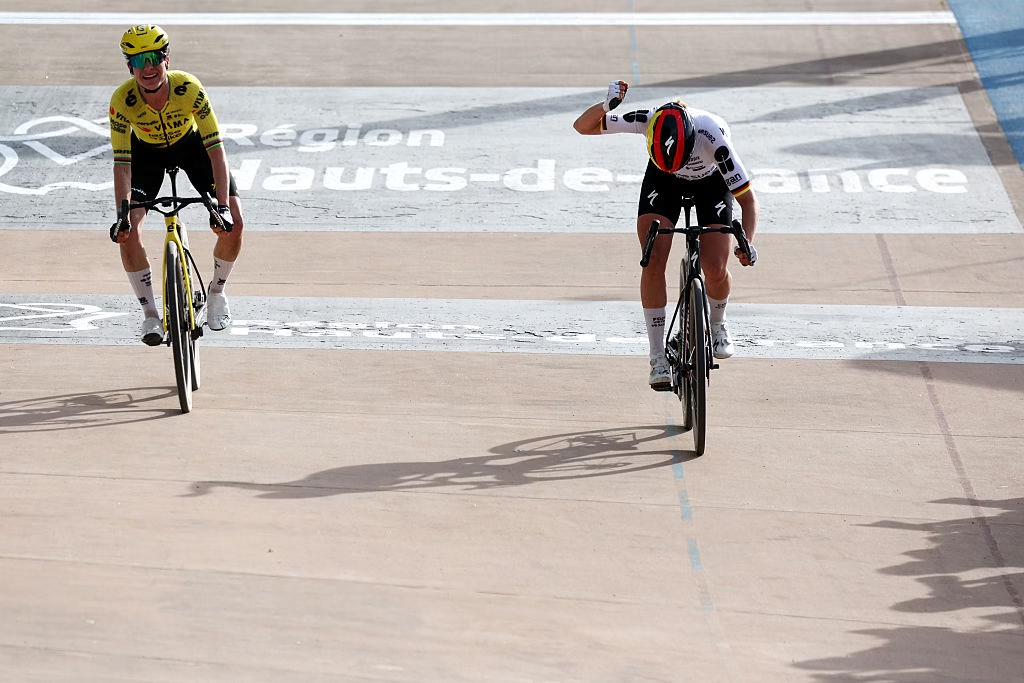 Photo Credit: Getty
April: Vollering takes control, but Koch and Blasi break through
Marlen Reusser opened April with a photo-finish victory over Vollering at Dwars door Vlaanderen, with Lieke Nooijen third. It was an early glimpse of what Reusser would do repeatedly in 2026: turn power and positioning into wins without needing the race to become a conventional time trial.
Four days later, Vollering made the Tour of Flanders much less complicated. She attacked with around 18 kilometres remaining and stayed clear, beating Pauline Ferrand-Prévot and Puck Pieterse. It was her first Flanders win and, alongside Omloop, showed that her spring programme had expanded well beyond the Ardennes.
Paris-Roubaix Femmes then produced one of the year’s best individual breakthroughs. Franziska Koch reached the velodrome in a three-rider move with Marianne Vos and Ferrand-Prévot and beat Vos in the sprint. For a rider who had long been valued as a worker and versatile Classics option, Roubaix changed the scale of her palmarès in one afternoon. ProCyclingUK’s Paris-Roubaix report covered the way Koch handled the final sectors before backing herself against one of the best finishers in the sport.
The Ardennes then introduced another major 2026 story. Paula Blasi attacked from around 20 kilometres out at Amstel Gold Race and held on to become the first Spanish woman to win the race. Niewiadoma-Phinney was second and Vollering third, but the result belonged to a 22-year-old who was about to make an even bigger impact in May.
Vollering responded immediately. She won Flèche Wallonne on the Mur de Huy ahead of Pieterse and Blasi, then took Liège-Bastogne-Liège with a long attack after La Redoute. Her margin in Liège was 1:28, the kind of gap that removed any need for tactical ambiguity.
By the end of April, Vollering had won Omloop, Flanders, Flèche and Liège. Koch had Roubaix and Blasi had Amstel. The spring was therefore simultaneously a demonstration of Vollering’s range and a launchpad for riders who had not previously won races at that level.
 Photo Credit: Naike Erenozaga
May: Blasi wins the Vuelta and a new generation arrives early
La Vuelta Femenina became the race that changed Paula Blasi’s status completely. Anna van der Breggen entered the final stage to the Angliru with an 18-second lead, putting her in position to win another Grand Tour after returning to racing. Instead, the last climb turned the classification over.
Petra Stiasny won the stage, while Blasi finished second and took enough time from Van der Breggen to win the Vuelta by 24 seconds. Marion Bunel completed the podium at 49 seconds. A 23-year-old winner and a 21-year-old in third made the result feel less like a one-off upset and more like a change in the stage-racing hierarchy.
Blasi had already shown the form at Amstel. The Vuelta demonstrated that she could manage a week-long race and still deliver on the decisive mountain. Van der Breggen, meanwhile, had suffered a painful final-day reversal that would acquire even more significance a month later.
The rest of May underlined the depth in women’s stage racing. Mischa Bredewold won Itzulia Women after a race in which Dominika Włodarczyk took the final two stages. Yara Kastelijn then won the Vuelta a Burgos, with Evita Muzic second and Usoa Ostolaza third. Wiebes won the first two stages, Bredewold the third and Kastelijn the final mountain stage.
The Giro d’Italia Women began before May was finished and immediately produced controversy. Wiebes crossed the line first on the opening stage but was removed from the race after her bike was found to be below the UCI minimum weight. The stage went to Elisa Balsamo instead.
That disqualification mattered beyond one result. Wiebes was the quickest road sprinter in the world and one of the Giro’s headline stage hunters, but the race had lost her before the general classification battle had even properly started.
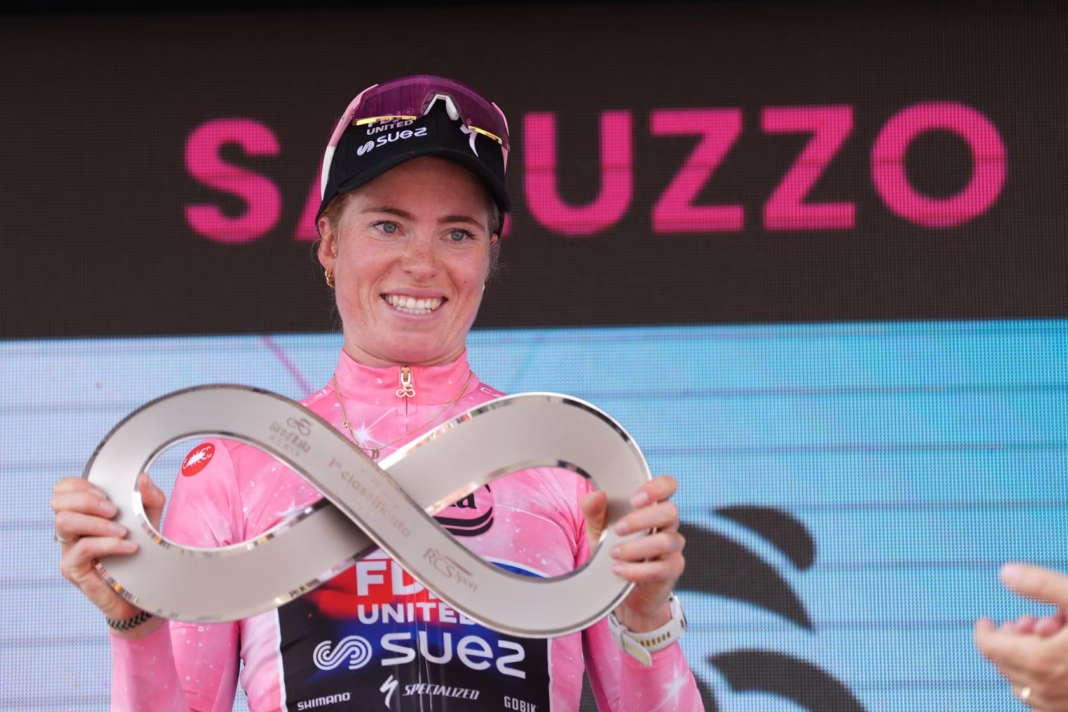
June: Vollering takes the Giro on the final day and Reusser rules at home
The Giro developed into a duel between Vollering and Van der Breggen, with Antonia Niedermaier steadily building one of the best stage-race performances of her career behind them. The mountain programme was complicated by conditions on the Colle delle Finestre, where the queen stage was shortened because of unstable ice near the planned route.
Vollering won that shortened mountain stage but could not take the pink jersey from Van der Breggen. That left the Giro balanced on the final day, with the same rider who had lost the Vuelta in May again starting the last stage as race leader.
It happened again. Vollering attacked the final classification, Longo Borghini won the stage, and Van der Breggen lost enough time to fall from first to third overall. Vollering won the Giro by 30 seconds from Niedermaier, with Van der Breggen another 1:07 back.
The victory completed Vollering’s set of the three current women’s Grand Tours across her career. More immediately, it showed her capacity to rescue a race that had not unfolded according to plan. She had spent much of the Giro trying to dislodge Van der Breggen, failed to do so on the queen stage, then succeeded when only one day remained.
Van der Breggen’s season had now produced two almost identical blows: leader before the final stage at both the Vuelta and Giro, beaten on the last day at both. For a rider whose return had already put her back among the strongest stage racers in the world, those losses made the comeback more complicated than the results alone suggested.
Wiebes answered her Giro disqualification by winning the Copenhagen Sprint on her return to WorldTour racing, ahead of Charlotte Kool and Nienke Veenhoven. There was no visible loss of confidence in the sprint.
Then Reusser took over in Switzerland. She won the Tour de Suisse Women for a third time, using the stage 4 time trial and the final mountain stage to secure the overall ahead of Cédrine Kerbaol and Niewiadoma-Phinney. It was a particularly complete week for a rider often reduced to the label of time-trial specialist.
July: the WorldTour pauses while Bäckstedt keeps progressing
There was no Women’s WorldTour race in July. That gap gave the month a different feel, with national championships behind the riders and the Tour de France Femmes still waiting at the start of August.
The Baloise Ladies Tour became one of the most useful form checks. Zoe Bäckstedt defended her overall title, winning the prologue and the stage 3a time trial. Nienke Veenhoven won three road stages, while Charlotte Kool took the other sprint day.
Bäckstedt’s repeat overall win mattered because she was no longer simply a rider with exceptional junior results and track pedigree. She was beginning to convert her time-trial ability and all-round strength into senior stage-race wins, a trend that would continue at the World Championships in September.
July also gave teams time to reset before the Tour. Elise Chabbey, one of the stars of the spring, was ruled out of the Tour de France Femmes, while the GC contenders increasingly shaped their racing and training around the nine stages that would decide the biggest race of the summer.
 Photo Credit: A.S.O./Billy Ceusters
August: Vollering wins the Tour and Wiebes takes four stages in Britain
The Tour de France Femmes began with Wiebes doing what she had done for most of the year: winning sprints. She took the opening two stages before the race moved towards the terrain that would settle the general classification.
The central contest became Vollering against Niewiadoma-Phinney, with Reusser and Longo Borghini also in the GC picture. The race changed sharply on stage 8, when Vollering attacked late and took the yellow jersey. Niewiadoma-Phinney later criticised FDJ United-SUEZ rider Célia Gery for her positioning and what she viewed as blocking on the decisive climb. No penalty was issued, and the riders later spoke after the race, but the incident became one of the most discussed tactical moments of the Tour.
Vollering removed the uncertainty on the final stage around Nice. She dropped Niewiadoma-Phinney on the Col d’Èze and rode clear to win the stage and overall. Niewiadoma-Phinney finished second in the Tour, with Longo Borghini third after Reusser crashed on the final day.
It was Vollering’s second Tour de France Femmes victory and, coming two months after the Giro, completed a Giro-Tour double. The way she won the two races was different. The Giro required a final-day reversal against Van der Breggen; the Tour ended with Vollering already in yellow and making the gap bigger herself.
The British stage race later in the month belonged to two different riders. Kim Le Court-Pienaar won the Tour of Britain Women overall, while Wiebes won four of the five stages. The split neatly illustrated Wiebes’ 2026 season: she could overwhelm a stage race’s sprint opportunities without necessarily controlling its general classification.
 Photo Credit: Getty
Elisa Balsamo closed the month by winning the Classic Lorient Agglomération, beating three-time defending champion Mischa Bredewold in the sprint, with Koch third. It was a reminder that Balsamo remained one of the few riders able to challenge Wiebes consistently when a hard one-day race still ended with a fast finish. ProCyclingUK’s Plouay report covered the final selection and sprint.
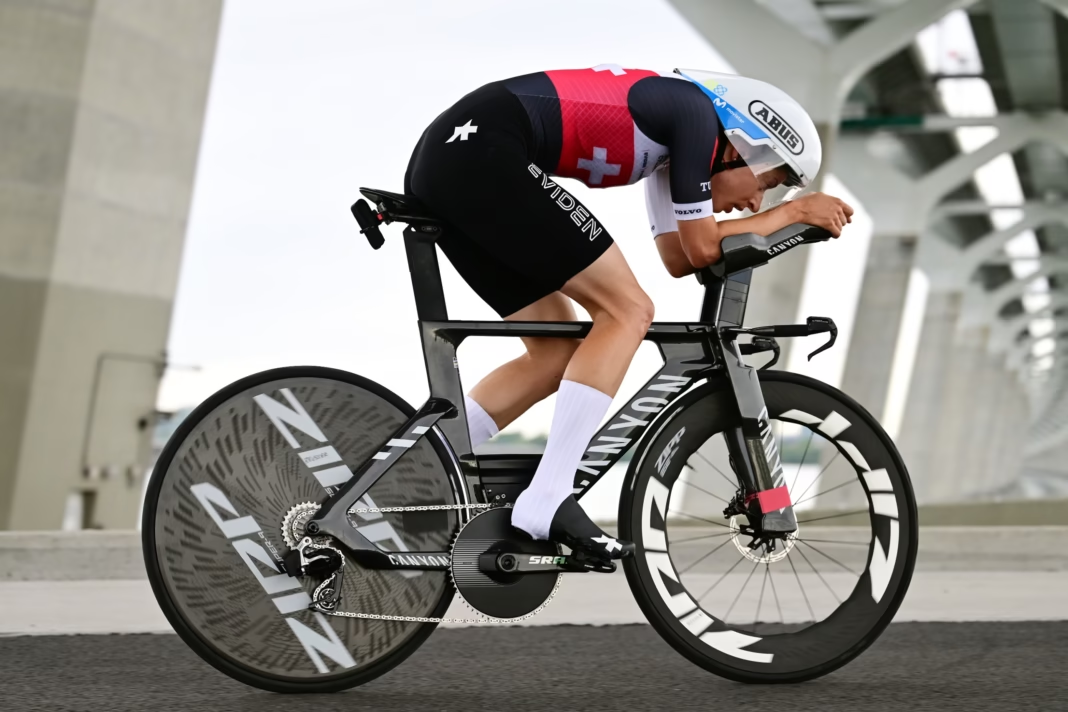
September: Romandie disappears and Montréal crowns Reusser and Vollering
September was supposed to begin with the Tour de Romandie Féminin, but the race was postponed until 2027 because of financial and logistical pressures. The cancellation left an unusual hole in the WorldTour calendar and pushed even more attention onto the World Championships in Montréal. ProCyclingUK covered why the Swiss race was postponed.
Marlen Reusser arrived in Canada as the rider to beat in the individual time trial and delivered. She won a second consecutive world title, beating Zoe Bäckstedt by 40 seconds, with Koch third at 45 seconds. Bäckstedt’s silver was another major step in her senior progression; Koch adding a Worlds medal to her Roubaix win made her spring breakthrough look increasingly like a permanent move into the top tier.
The road race completed Vollering’s transformation of a great season into an exceptional one. The Dutch team used Puck Pieterse aggressively before Vollering made the decisive move. Niewiadoma-Phinney was the only rider able to stay with her into the final, but Vollering won the two-up sprint to take her first elite road world title. Longo Borghini finished third and Reusser fourth.
ProCyclingUK’s World Championships analysis looked at how the Dutch plan evolved during the race rather than relying on Vollering simply riding everyone off her wheel.
Niewiadoma-Phinney’s silver summed up much of her year. She had been second at Omloop, second at Strade Bianche, second at Amstel and second at the Tour before another second place at Worlds. Few riders matched her consistency across terrain and months, even if the biggest wins repeatedly went elsewhere.
October: European titles, Wiebes in China and Nooijen closes the stage-race season
The European Championships kept the same two riders at the top of the championship disciplines. Reusser won a fifth elite European time-trial title, while Vollering added the road race to her rainbow jersey. She won solo in Slovenia ahead of Pieterse and Reusser, leaving the championships with the hierarchy of the season largely intact.
The final Women’s WorldTour race was the Tour of Chongming Island. Wiebes won all three stages and the overall, ending her WorldTour season with a clean sweep. ProCyclingUK’s Stage 3 report covered the final win. With the women’s Tour of Guangxi cancelled, Chongming became the WorldTour finale rather than the penultimate stop it had originally been scheduled to be.
The broader elite road season continued in Europe. Liane Lippert won Veneto Women after Reusser helped force the decisive selection on the Monte Berico circuit. It was also the final professional race for Alena Amialiusik, who ended a 15-year career after years spent as one of the most dependable Belarusian riders in the peloton. ProCyclingUK covered both Lippert’s victory and Amialiusik’s retirement.
The Eneco Tour Women then supplied one last stage-race storyline. Lieke Nooijen won the prologue and the Tilburg time trial, creating a margin that Femke Markus and Letizia Borghesi could reduce but never erase. Markus won at Watersley, Borghesi took the VAMberg stage and Marthe Truyen won the Arnhem finale, but Nooijen finished the week 32 seconds clear of Markus and 37 ahead of Borghesi.
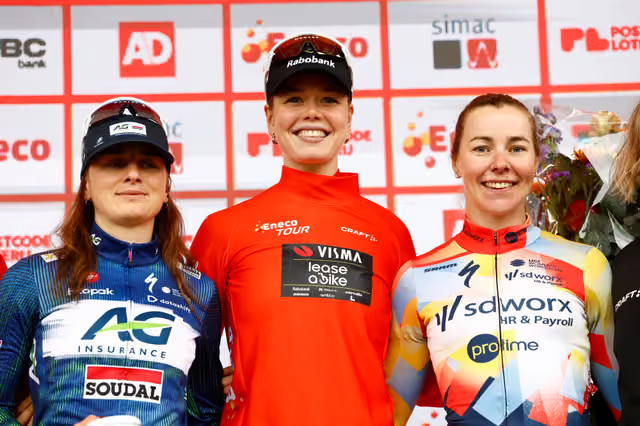 Photo Credit: Cor Vos
The biggest stage-race victory of Nooijen’s career was built almost entirely on what she did against the clock and how well she defended afterwards. The final classification recap details how those two early wins survived the hillier stages.
The race also produced an important off-bike story. Charlotte Kool publicly questioned the gap between the men’s and women’s prize funds, prompting the organisers to move quickly to equalise the purse. It was a small episode compared with the racing itself, but a useful reminder that the sport’s rapid competitive development is still being accompanied by arguments over how events value the women’s field.
Sunday also marked the final race of Elena Cecchini’s career. The Italian finished after 16 professional seasons, three national road titles, two national time-trial titles, a world team time-trial title and years as a road captain at SD Worx-Protime. ProCyclingUK published a career retrospective after her final start.
At the Chrono des Nations, Maeva Squiban won the women’s race in Les Herbiers, providing the last major individual time-trial result of the European road season. Her victory gave 2026 one final reminder of how much the season had rewarded young riders willing to take responsibility early in their careers. ProCyclingUK’s Chrono des Nations report covers her winning ride.
What the 2026 women’s season leaves behind
Vollering ends 2026 with the clearest claim to rider of the season. Omloop, Flanders, Flèche, Liège, the Giro, the Tour, the road World Championships and the European road title is a combination no other rider came close to matching. Her wins were spread across seven months and several different kinds of race, which makes the season difficult to reduce to one peak period.
Wiebes was the other constant. When the race came down to speed, she still won more often than anyone else, from Gent-Wevelgem and Copenhagen through the Tour, Tour of Britain and Chongming. The Giro bike-weight disqualification was a rare self-inflicted interruption, but it did not change the larger picture of her season.
Reusser owned the time-trial story while proving she was capable of much more than that discipline. Dwars door Vlaanderen and a third Tour de Suisse title sat alongside her world and European time-trial championships. Niewiadoma-Phinney was the year’s great near-miss story, present across the Classics, Tour and Worlds without the headline victory that the consistency seemed to merit.
The younger riders may matter most for what comes next. Blasi won the Vuelta and Amstel. Bunel reached a Grand Tour podium. Niedermaier finished second at the Giro. Bäckstedt defended the Baloise Ladies Tour and took world time-trial silver. Lloyd won a WorldTour Classic at 19. Nooijen finished the European season with a major overall win. None of them needed a development year before becoming relevant to the biggest races.
When the road season restarts in Australia in January, Vollering will do so as world and European road champion and the reigning winner of both the Giro and Tour. That is the benchmark. The more interesting question is how quickly the riders who broke through in 2026 can begin taking pieces of it away.

