

The Vuelta a España 2026 begins in Monaco on Saturday 22 August, and the United States has a compact but interesting group of riders spread across the general classification, mountain support, time trials and breakaway opportunities.
Matthew Riccitello carries the clearest American GC ambitions after finishing fifth overall and winning the white jersey at the 2025 Vuelta. Sepp Kuss returns to the race he won in 2023, although his role is much less straightforward after already completing both the Giro d’Italia and Tour de France this season.
Kevin Vermaerke forms part of the powerful UAE Team Emirates-XRG squad built around Tadej Pogačar, while William Barta and Larry Warbasse both ride for Tudor Pro Cycling as part of the Swiss team’s first Vuelta line-up. Tudor qualified for the race through its position among the leading 2025 ProTeams and will start with Barta and Warbasse alongside Marco Brenner, Arthur Kluckers, Stefan Küng, Roland Thalmann, Fabian Weiss and Hannes Wilksch.
That gives the American group a useful spread of responsibilities. Riccitello can challenge high on GC, Kuss can allow his race to develop between the classification and mountain stages, Barta has genuine opportunities against the clock and from breakaways, Warbasse brings enormous Grand Tour experience, while Vermaerke will be part of the team attempting to deliver Pogačar to the red jersey.
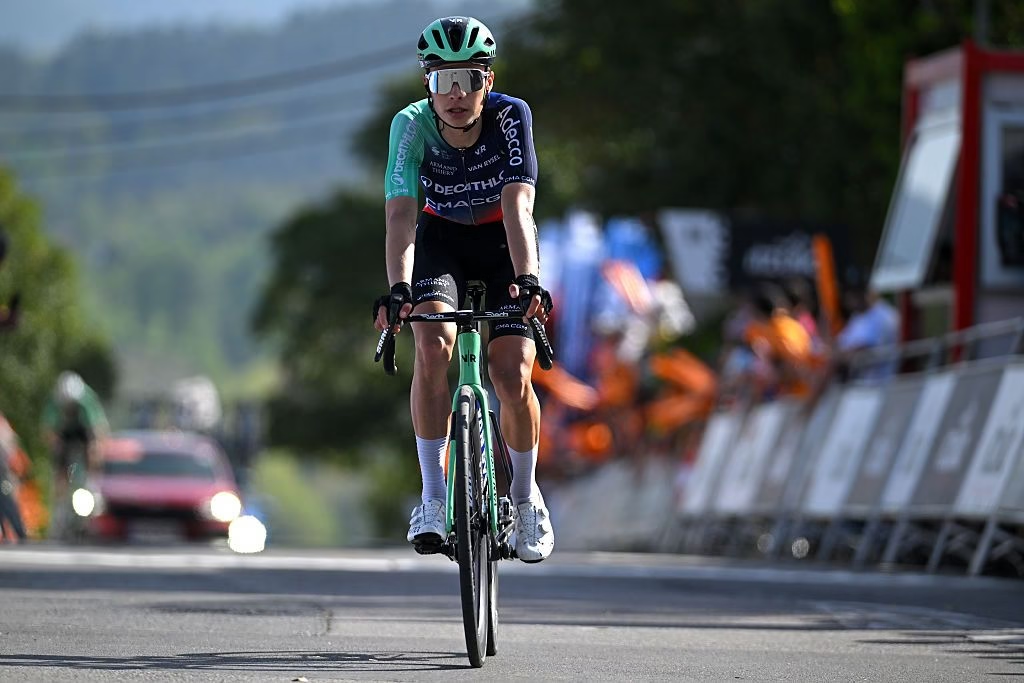
Matthew Riccitello returns with much bigger expectations
Matthew Riccitello begins the 2026 Vuelta in a very different position from twelve months ago.
In 2025, he arrived as an emerging climber still trying to establish exactly where he belonged in the Grand Tour hierarchy. He left Spain fifth overall and winner of the young rider classification, one of the most important performances of his career.
That result also helped earn him a move to Decathlon CMA CGM, with ProCyclingUK covering Matthew Riccitello’s switch to the French team for 2026.
A top 10 would therefore no longer be a surprise. Riccitello has already demonstrated that he can remain competitive for three weeks, recover through repeated mountain stages and keep moving upwards as more experienced riders begin to fade.
His team situation is particularly interesting.
Felix Gall begins as the principal podium contender, but Riccitello is far too strong to be treated simply as another mountain domestique. Keeping both riders high on GC gives Decathlon tactical options and prevents rival teams from concentrating entirely on Gall.
The route strongly rewards his climbing. Six officially classified mountain stages and another four medium-mountain days provide repeated opportunities to make time, while the brutal third week should reward exactly the sort of durability he demonstrated last year.
His weakness is against the clock.
The opening Monaco time trial is short enough that it should not do major damage, but the longer individual test later in the race could cost Riccitello against more complete GC riders. That puts additional pressure on him to build an advantage in the mountains.
American outlook: The leading US GC hope. Another top five is realistic, while a podium would represent the next major step in his development.
 Photo Credit: Getty
Sepp Kuss returns to the Vuelta without the usual GC pressure
No American rider has a stronger relationship with the Vuelta than Sepp Kuss.
He won the race in 2023, becoming the first American man to win a Grand Tour since Chris Horner took the Vuelta a decade earlier. Three years later, however, his return comes in very different circumstances.
Kuss has already completed both the Giro d’Italia and Tour de France in 2026, finishing 13th overall in each. That makes the Vuelta his third Grand Tour of the season, an enormous workload even for a rider whose greatest strength has always been durability across three weeks.
That alone makes another full GC campaign difficult to predict.
Team Visma | Lease a Bike are also approaching the race differently. With Jonas Vingegaard’s season over, the squad is not built around one overwhelming red-jersey project. Wout van Aert and Matthew Brennan provide major stage-winning options, while Ben Tulett and Jørgen Nordhagen give Visma younger climbing cards.
Kuss therefore does not need to spend the opening week defending a predetermined GC target.
That could actually make his race more interesting.
If he naturally remains close to the leading group through the first major mountain stages, Visma can allow the classification to develop. If accumulated fatigue begins to tell and he loses significant time, Kuss instantly becomes one of the strongest possible mountain breakaway riders in the race.
There is little reason to defend eighth or ninth overall simply because he once won the Vuelta.
American outlook: Too accomplished to call a dark horse, but difficult to rank as a conventional GC contender. A top 10 remains possible, while a mountain stage victory may become the more attractive objective if he loses time.
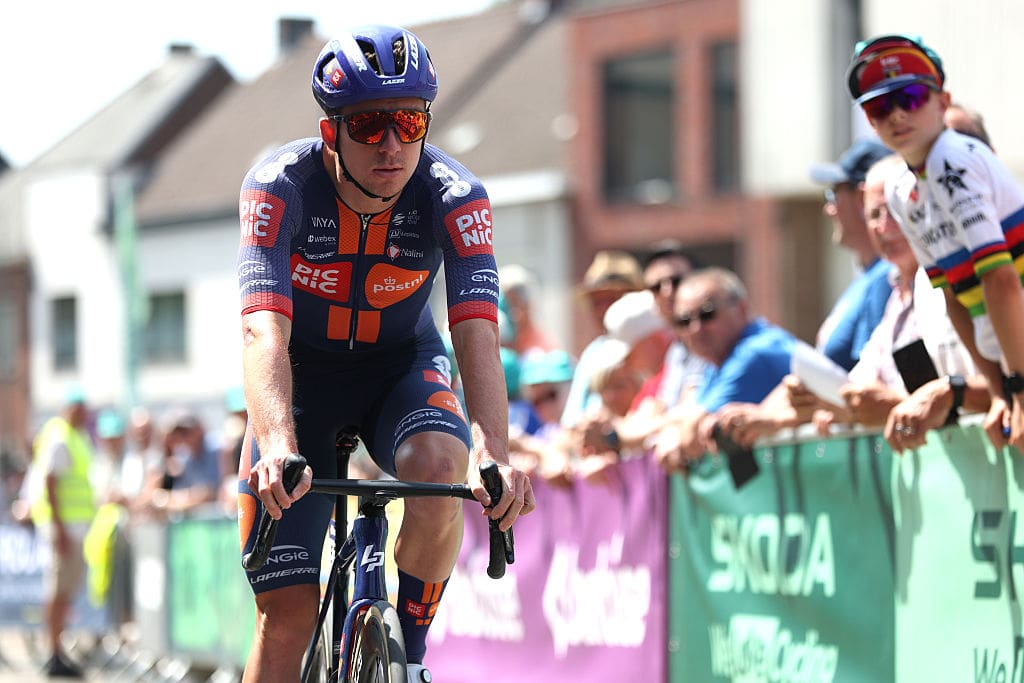
Kevin Vermaerke has one of the hardest support jobs in the race
Kevin Vermaerke may receive far less pre-race attention than Riccitello or Kuss, but his role could make him highly visible once the Vuelta reaches the mountains.
Vermaerke joined UAE Team Emirates-XRG for 2026, a move covered by ProCyclingUK in Kevin Vermaerke’s transfer announcement.
His Vuelta job is straightforward: help Tadej Pogačar win the race.
That means Vermaerke’s personal ambitions will usually come second.
His value lies in the stages before the absolute high mountains. He is strong enough uphill to help control difficult medium-mountain terrain, protect Pogačar through transitional stages and remain useful after many conventional domestiques have already been dropped.
That versatility is important on this Vuelta route.
The race repeatedly moves across rolling or mountainous terrain, and UAE need riders capable of controlling those days without forcing João Almeida, Jay Vine or Pavel Sivakov to work unnecessarily early.
Vermaerke fits that role well.
He has already shown the sort of climbing and Classics strength required to handle demanding terrain, including fourth at the 2024 San Sebastián Klasikoa and repeated strong stage-race performances before joining UAE.
The interesting possibilities arrive later in the race. If Pogačar is securely in control and tactical circumstances allow secondary riders freedom, Vermaerke could potentially move into a breakaway. But those opportunities will depend entirely on the red-jersey situation.
American outlook: Primarily a key support rider in Pogačar’s Vuelta project, with personal stage opportunities dependent on how dominant UAE become.

William Barta gives Tudor a strong American time-trial and breakaway option
William Barta adds a very different dimension to the American presence at the Vuelta.
The 30-year-old moved from Movistar to Tudor Pro Cycling for 2026 and has become part of a squad increasingly capable of competing across the WorldTour rather than simply appearing at the biggest races. Tudor’s progression earned them entry into the Vuelta through their 2025 ProTeam ranking, making this another important step in the development of the Swiss project.
Barta’s most obvious opportunities come against the clock.
He remains one of the stronger American time triallists in the peloton and reinforced that in June by taking third in the US national time trial championship, with Tudor teammate Larry Warbasse finishing second.
That immediately makes both Vuelta time trials relevant.
The short Monaco opener is explosive enough that specialists capable of producing high power immediately should be interested, while the longer test later in the race gives Barta a more conventional opportunity to chase a high stage placing.
His role extends well beyond the time trials.
Barta is a strong climber and rouleur capable of contributing deep into difficult stages. Tudor already used both him and Warbasse as climbing support during the 2026 Giro d’Italia, where the team’s stated GC structure was built around Michael Storer and Mathys Rondel.
The Vuelta selection does not contain Storer or Rondel, which should give Barta more freedom than he might have received in Italy.
That makes breakaways particularly interesting. A rolling or medium-mountain stage containing a strong escape could suit him extremely well, especially if Tudor are not protecting a rider high on GC.
Barta also has the experience to recognise when those opportunities are worth pursuing rather than spending energy simply to appear in the break.
American outlook: One of the stronger US stage outsiders. The time trials provide obvious targets, but a rolling or medium-mountain breakaway may offer his best route to a victory.

Larry Warbasse brings experience to Tudor’s first Vuelta
Larry Warbasse has a very different role from Riccitello or Barta, but few riders in the American group bring more Grand Tour experience.
The 36-year-old has been a professional since 2013 and has built much of his career around exactly the kind of work required across three weeks: climbing support, controlling difficult stages, getting into breakaways and helping younger leaders manage the demands of a Grand Tour.
Tudor value that role highly. Warbasse extended with the team through 2027 and has spoken about how well the team’s environment suits him, while the squad have repeatedly used him around their principal stage-race leaders.
His 2026 season also shows that there is still considerable individual strength behind the domestique role.
Warbasse finished second in the US national time trial championship and third in the road race in June, demonstrating that he remains competitive when given his own opportunity.
He then used the Vuelta a Burgos as part of his final preparation for Spain.
At the Vuelta, his first responsibility is likely to be helping Tudor navigate the race rather than protecting a personal general classification position.
That does not mean he cannot chase a stage.
Warbasse has always been well suited to long breakaways and difficult mountain days where experience can become almost as important as outright climbing numbers. If Tudor place him into the right move, particularly later in the race when GC teams become more selective about what they chase, he has the strength and tactical awareness to make it count.
There is another value that will never appear clearly in the results.
Tudor’s Vuelta squad contains several riders with considerably less Grand Tour experience. Having Warbasse inside that group gives the team somebody who understands how to manage everything from mountain-stage pacing to recovery and positioning during the third week.
American outlook: Primarily a road captain and experienced climbing domestique, but still capable of producing a strong result from the right breakaway.
Riccitello has the clearest route to a major American result
Of the three, Riccitello is the rider whose Vuelta should be judged most directly through the final general classification.
Kuss’ workload changes the expectations around him, while Vermaerke’s team role prevents him from riding purely for himself.
Riccitello has neither complication.
Decathlon want Gall on the podium, but keeping Riccitello high overall benefits that objective rather than undermining it. If both remain close, rival teams have to think about attacks from two riders rather than one.
His fifth place last year also means there is no need to wonder whether he can cope with three weeks.
The question is how much higher he can go.
The field contains Pogačar, Enric Mas, Mattias Skjelmose, Oscar Onley, João Almeida and several other strong GC riders. Simply repeating fifth would therefore be another excellent performance rather than evidence of stagnation.
A podium would change his status completely.
Could Sepp Kuss win another Vuelta stage?
Absolutely.
In fact, that may eventually become the most realistic route to a major result.
A Kuss sitting eighth overall will be closely watched by almost every GC team. A Kuss who loses eight or ten minutes becomes an entirely different tactical problem.
He remains capable of climbing with riders who will be far stronger than the average breakaway participant. Once he is no longer a threat to red, rival teams may have no reason to chase him immediately.
Visma also have enough stage ambitions elsewhere that they do not need Kuss to protect a minor GC placing simply for appearances.
That creates the possibility of a deliberate tactical reset during the second half of the race.
If Kuss discovers that three Grand Tours have taken too much out of him to remain near the overall favourites, switching completely towards mountain stages would make sense.
Few riders in the peloton would become more dangerous with that freedom.
Vermaerke could be crucial before the final mountains
The UAE hierarchy should also determine where Vermaerke is most visible.
On the hardest summit finishes, Almeida, Vine and Sivakov are likely to be the final riders around Pogačar.
Vermaerke’s work may come earlier.
Long rolling stages can be much harder to control than they appear, particularly when rival teams place dangerous riders in breakaways. Having a rider capable of maintaining a strong tempo across repeated climbs can prevent UAE’s elite mountain domestiques from being used too soon.
That makes the rolling and medium-mountain stages particularly important for him.
His performance may rarely appear near the top of the results sheet.
It could still be central to whether Pogačar reaches the decisive climbs with the support he needs.
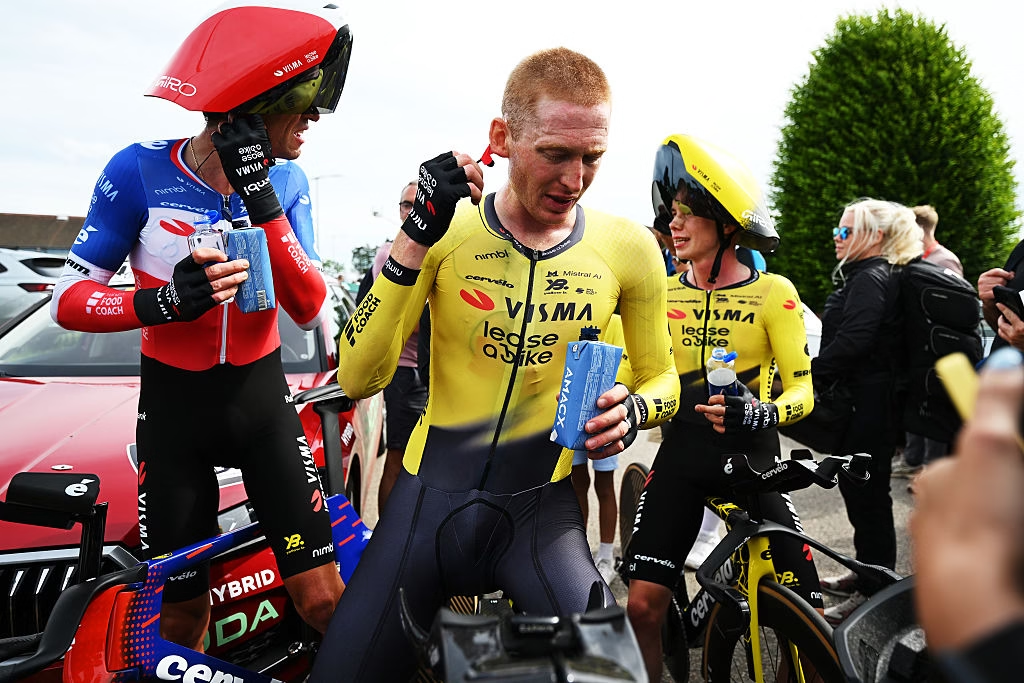 Photo Credit: Getty
Why Matteo Jorgenson is not riding the Vuelta
One notable American absence is Matteo Jorgenson.
Jorgenson rode the Tour de France with Visma earlier in the summer and is not part of the team’s Vuelta structure.
That removes what would otherwise have been another obvious American GC or mountain-stage storyline.
Given Visma’s existing Vuelta plan, the decision is logical. Kuss has already ridden two Grand Tours, while the team are giving opportunities to Tulett, Nordhagen, Brennan and Van Aert rather than simply repeating their Tour structure.
For the United States, however, it means the GC responsibility falls much more clearly towards Riccitello.
Neilson Powless is another notable absence
Neilson Powless is also absent from the Vuelta field.
That removes one of America’s strongest possible breakaway and hilly-stage options.
Powless would have been naturally suited to many of the rolling stages on this route, particularly the days too difficult for the pure sprinters but not severe enough for the GC riders to dominate.
His absence leaves the American stage-hunting group noticeably smaller.

Brandon McNulty is not part of UAE’s Vuelta squad
There is also no Brandon McNulty in UAE Team Emirates-XRG’s final Vuelta structure.
McNulty rode the Tour de France earlier in the summer, but UAE have selected a different support group around Pogačar for Spain.
That means Vermaerke carries the main American interest inside the strongest team in the race.
McNulty’s absence is particularly notable given the two individual time trials, where he would normally have been one of the leading American stage options.
America’s Vuelta history gives Riccitello a high benchmark
American cycling has an unusually strong relationship with the Vuelta compared with the other Grand Tours.
Chris Horner won the race in 2013, becoming the oldest Grand Tour winner in men’s cycling history.
Ten years later, Sepp Kuss won the 2023 edition, adding another American name to the Vuelta roll of honour.
Riccitello’s fifth place in 2025 then provided another indication that the next generation of US stage racers was capable of competing high in this particular race.
That makes his 2026 appearance especially interesting.
He is not trying to recreate Kuss’ victory immediately. But another top-five finish would reinforce the idea that the United States again has a rider capable of becoming a consistent Grand Tour GC contender rather than producing one isolated breakthrough.
-
 Photo Credit: A.S.O./Billy Ceusters
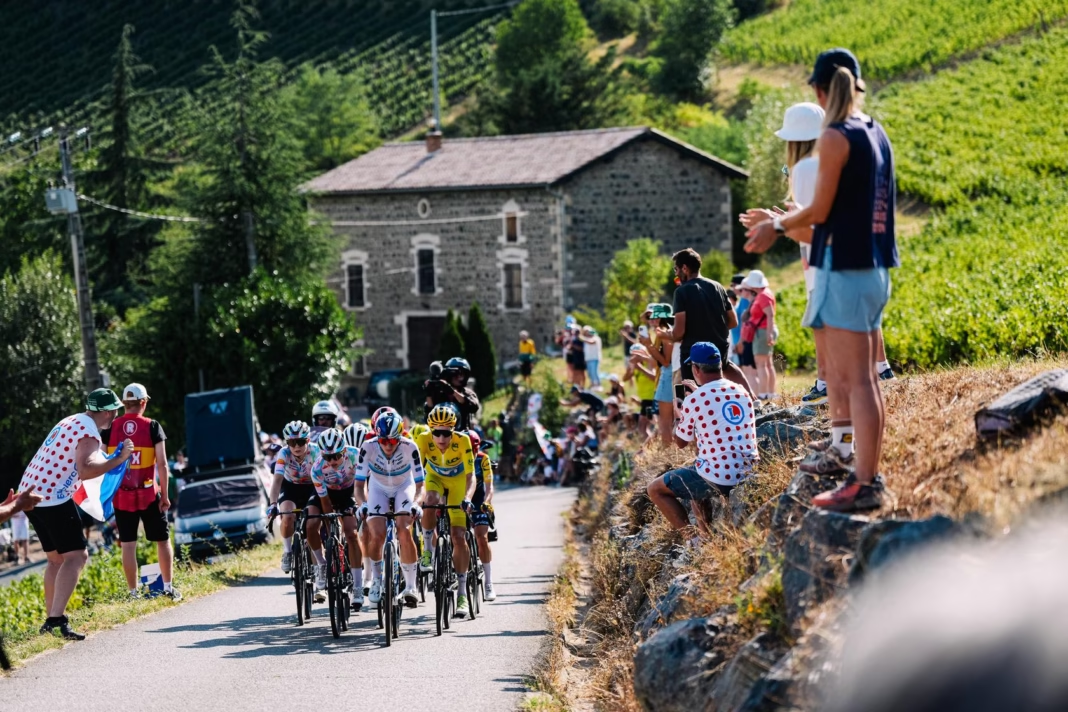
Which stages suit the American riders?
The Vuelta a España 2026 route gives the five Americans very different opportunities.
For Riccitello, the mountain finishes are everything. The harder the stages to Andorra, Aitana, Calar Alto, La Pandera, Peñas Blancas and Collado del Alguacil become, the greater his chance of moving upwards overall. The longer individual time trial is the major defensive test.
For Kuss, those same mountain days can either support a GC position or become breakaway opportunities if he loses enough time to gain freedom.
For Barta, the two individual time trials stand out immediately, but the medium-mountain and rolling stages may ultimately provide better winning opportunities if he can get into the right breakaway.
For Warbasse, the hardest breakaway days are the natural targets. He does not need a finish designed specifically around him. Long stages with repeated climbing and a strong escape suit both his physiology and experience.
For Vermaerke, the rolling and medium-mountain stages may be most important from a team perspective. His job should involve controlling those difficult transitional days before UAE’s specialist mountain support takes over closer to the finish.
The Vuelta a España 2026 team-by-team guide shows why those roles vary so much even among riders from the same country.
What would represent a successful American Vuelta?
For Matthew Riccitello, the expectations are substantial. Another top 10 should be achievable if he stays healthy. Repeating the top five would confirm that his 2025 breakthrough was sustainable, while a podium would establish him firmly among the leading Grand Tour riders of his generation.
For Sepp Kuss, success is harder to define. After already completing the Giro and Tour, simply demanding another major GC campaign ignores the physical reality of his season. A strong top 10 would be impressive, but a mountain stage victory could be equally valuable if his classification disappears.
For William Barta, a high time-trial placing or serious breakaway challenge would make the Vuelta worthwhile. Tudor’s team structure should give him more personal freedom than he had while supporting a defined GC leader at the Giro.
For Larry Warbasse, the value of his race is likely to extend beyond individual results. Helping Tudor successfully navigate three weeks while contributing in the mountains would fulfil his core role, although the right breakaway could still provide a personal opportunity.
For Kevin Vermaerke, everything is tied to Pogačar. If UAE win the Vuelta and Vermaerke plays a meaningful part in controlling the race, his three weeks will have been successful even if his own results barely register.
The full Vuelta a España 2026 start list now gives the United States representation across Decathlon CMA CGM, Visma | Lease a Bike, UAE Team Emirates-XRG and Tudor Pro Cycling.
The American contingent is therefore broader than simply Riccitello versus Kuss.
Riccitello carries the biggest GC expectations. Kuss returns as a former champion. Barta gives Tudor a strong time-trial and breakaway option. Warbasse brings experience and mountain support. Vermaerke rides inside the strongest team in the race.
For US fans, Riccitello’s attempt to reach the Vuelta podium remains the headline story, but there should be American involvement across far more than just the general classification.

