
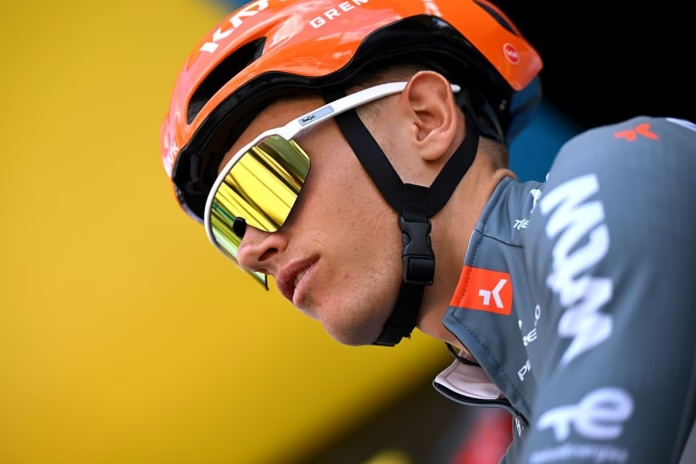
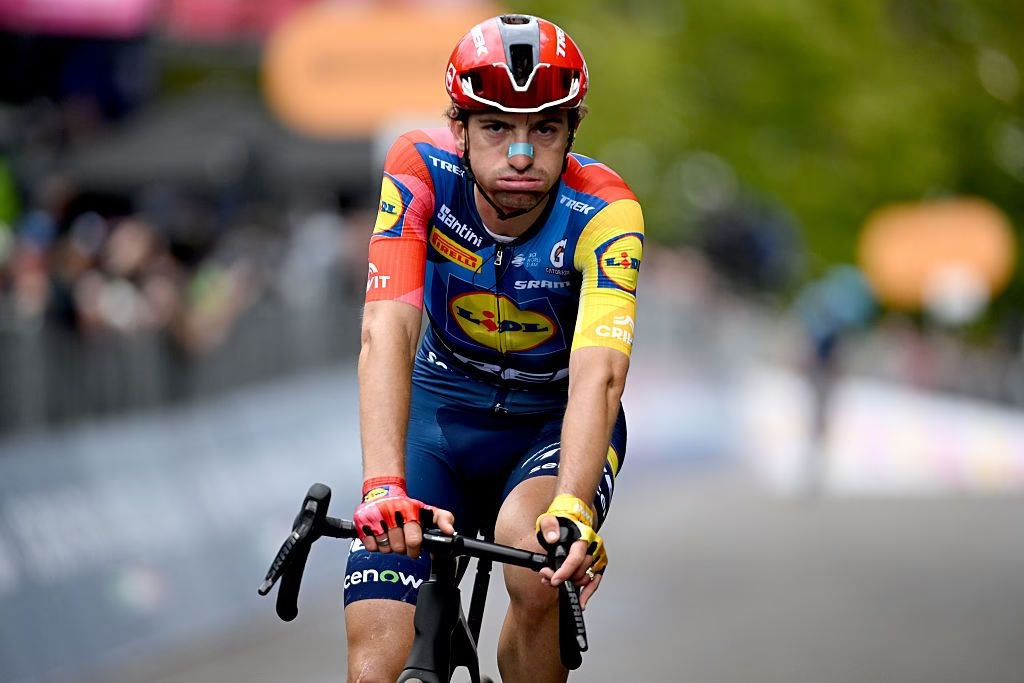
Oscar Onley gets his first proper mountain test of the 2026 Vuelta a España on Stage 3, and for the British rider the objective at Font-Romeu is less about attacking Tadej Pogačar than proving he belongs in the group immediately behind him.
The opening two stages have produced an unusually strong British story. Ethan Hayter came within nine hundredths of a second of taking the first red jersey in Monaco and then attacked for bonus seconds on Stage 2. Joshua Tarling finished third in the opening time trial, while Matthew Brennan followed by winning in Manosque and now leads the young rider classification.
Onley is the rider carrying the more important three-week ambition. Netcompany INEOS arrived at the Vuelta with him as their principal GC leader, and the 174-kilometre stage from Gruissan-Aude to Font-Romeu is the first point where that project can be judged on the terrain that suits him best.
The wider British riders at the Vuelta a España 2026 guide identified Onley as Britain’s main general classification hope before the race began. Stage 3 is where that expectation starts becoming measurable.
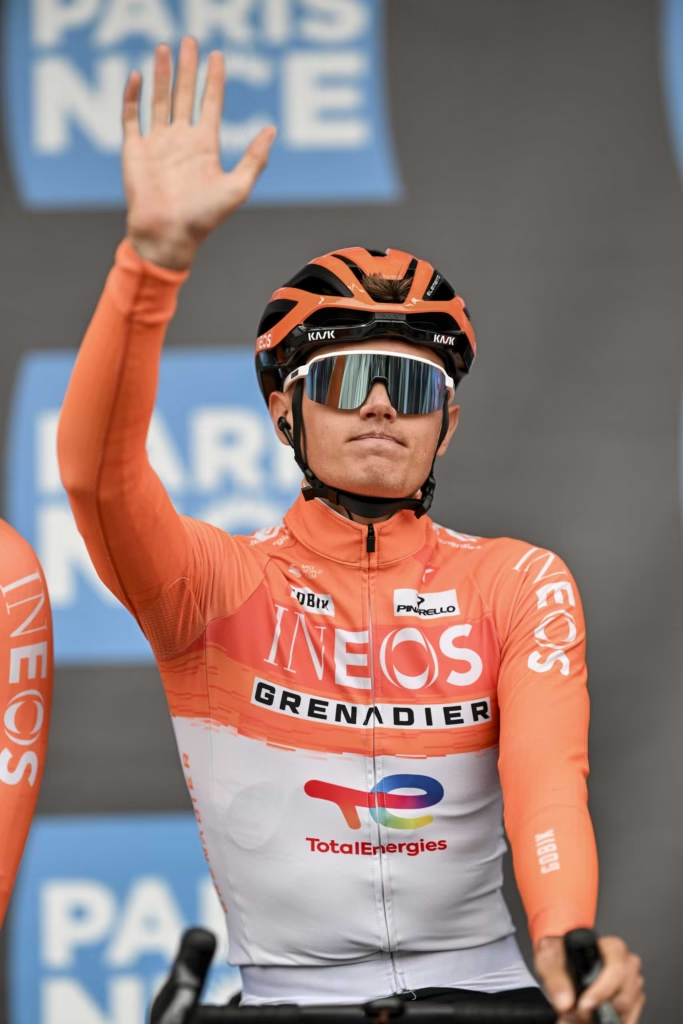 Photo Credit: A.S.O./Billy Ceusters
Onley has ground to recover after Monaco
The first two days have not been disastrous for Onley, but the opening time trial was not what he wanted.
He finished the technical Monaco test well behind Pogačar and several of the other principal GC contenders, losing roughly 40 seconds to the race leader. Stage 2 did not change that because the main field finished together in Manosque, although Onley did produce an encouraging ninth place in the stage result.
The front of the Vuelta remains exceptionally compressed. Pogačar leads Wout van Aert by nine seconds and Brennan by ten, while only 27 seconds separates first from tenth overall.
Onley sits outside that top group because of the Monaco losses, but that is almost secondary on Monday. Van Aert, Brennan, Mads Pedersen and several other riders currently ahead of him are not expected to defend those positions once the road rises for almost 30 kilometres towards Font-Romeu.
The more meaningful comparison is with the genuine GC contenders.
Onley needs to begin taking his place alongside riders such as Primož Roglič, João Almeida, Mattias Skjelmose, Félix Gall, Enric Mas, Richard Carapaz and Ben Tulett rather than worrying about where he sits numerically before the first mountain stage.
Font-Romeu suits Onley much better than Monaco
This is the first stage where the route genuinely begins moving towards Onley’s strengths.
The decisive section starts on the Col de Mont-Louis, 19.4 kilometres at 4.8%, before only a short transition into the final 9.8-kilometre climb to Font-Romeu at around 5%.
Neither climb is brutally steep.
That should suit Onley.
He has increasingly developed into a rider capable of holding a very high climbing tempo on sustained medium gradients, while also possessing enough acceleration to finish strongly when a reduced group reaches the final kilometre.
His recent Vuelta a Burgos form is particularly relevant. Onley won the uphill finish on Stage 2, beating Giulio Ciccone and Enric Mas, then remained one of Félix Gall’s strongest rivals across the harder mountain stages before finishing second overall, only five seconds behind the Austrian.
That was the clearest evidence that his interrupted summer had not destroyed his Vuelta preparation.
ProCyclingUK’s Oscar Onley GC profile looked at the broader progression that has taken him from breakthrough Grand Tour climber to a rider now expected to lead one of cycling’s biggest teams. Font-Romeu is the first major test of whether that level has carried into Spain.
Onley does not need to attack Pogačar
The temptation with the first summit finish is to judge every GC contender against whether they can attack Pogačar.
That would be the wrong benchmark for Onley.
His ideal Stage 3 is probably far less dramatic.
Netcompany INEOS need to keep him protected through the approach to Mont-Louis, maintain a manageable position as UAE increase the pace and then make sure he enters the final Font-Romeu climb with the genuine GC group.
From there, following is enough.
If Pogačar accelerates in the final two kilometres and gains several seconds, Onley does not need to destroy his own race trying to respond immediately. His more important task is staying with the strongest group behind.
A finish alongside Roglič, Skjelmose, Gall, Mas and the other podium contenders would represent a successful first mountain day even if Pogačar rides away.
The Vuelta is three weeks long.
Onley does not need to win it on Stage 3.
He needs to avoid losing it.
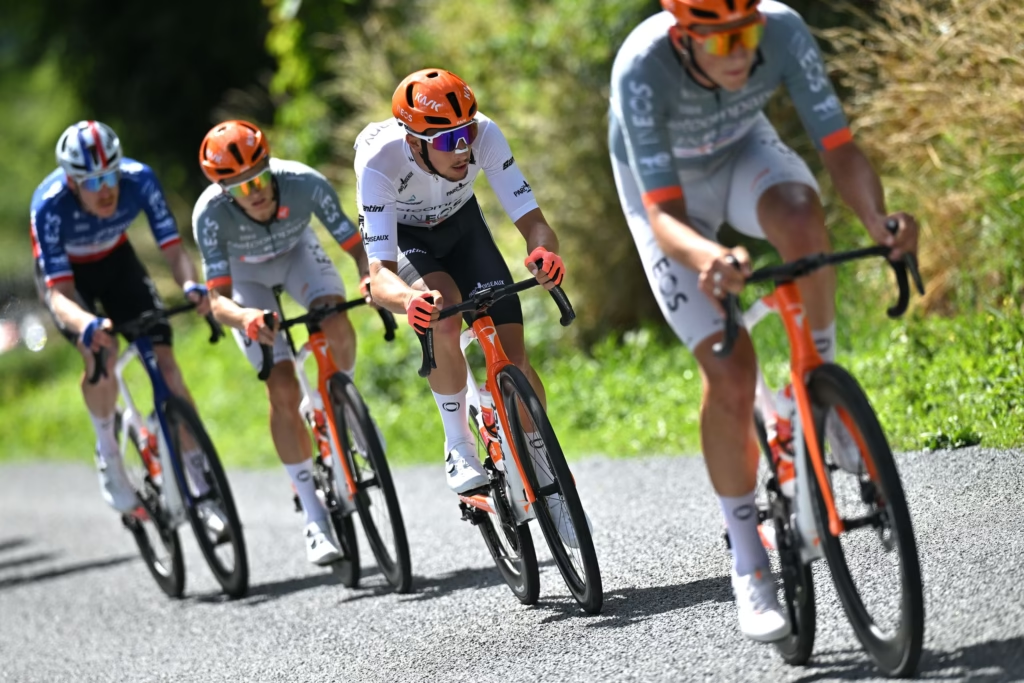
The strongest possible result would be following Pogačar deep into the finish
There is still upside beyond simple damage limitation.
Onley’s recent climbing performances make him one of the riders capable of going very deep into the Font-Romeu finale.
The gradients are moderate enough that Pogačar may not be able to produce the sort of instantaneous separation possible on steeper terrain. If UAE instead ride a sustained tempo and the stage becomes a long threshold effort, Onley should be relatively comfortable.
That creates the possibility of a small group reaching the closing kilometre.
In that scenario, Onley becomes much more interesting.
He has enough punch to contest a reduced uphill finish and demonstrated exactly that at Burgos. If Pogačar does not attack decisively, Onley is one of the riders who can realistically think about a high stage placing rather than simply surviving.
That is why he belongs among the realistic outsiders for the Stage 3 win.
The first target is moving past the riders who are only temporarily ahead
The general classification after two stages still contains several riders whose positions are largely the product of the Monaco time trial, Stage 2 bonus seconds or sprinting strength.
That should change dramatically at Font-Romeu.
Van Aert is second.
Brennan is third.
Several powerful riders who excelled in Monaco remain ahead of many of the pure climbers.
Once Mont-Louis begins, that early hierarchy should unravel.
Onley therefore has an opportunity to make a substantial jump up the standings without needing to take time from Pogačar.
Simply riding with the strongest GC group could move him past a significant number of riders.
That is the first realistic measure of success.
By Monday evening, the classification should begin looking far more like a Grand Tour GC than the aftermath of a short time trial and a reduced sprint.
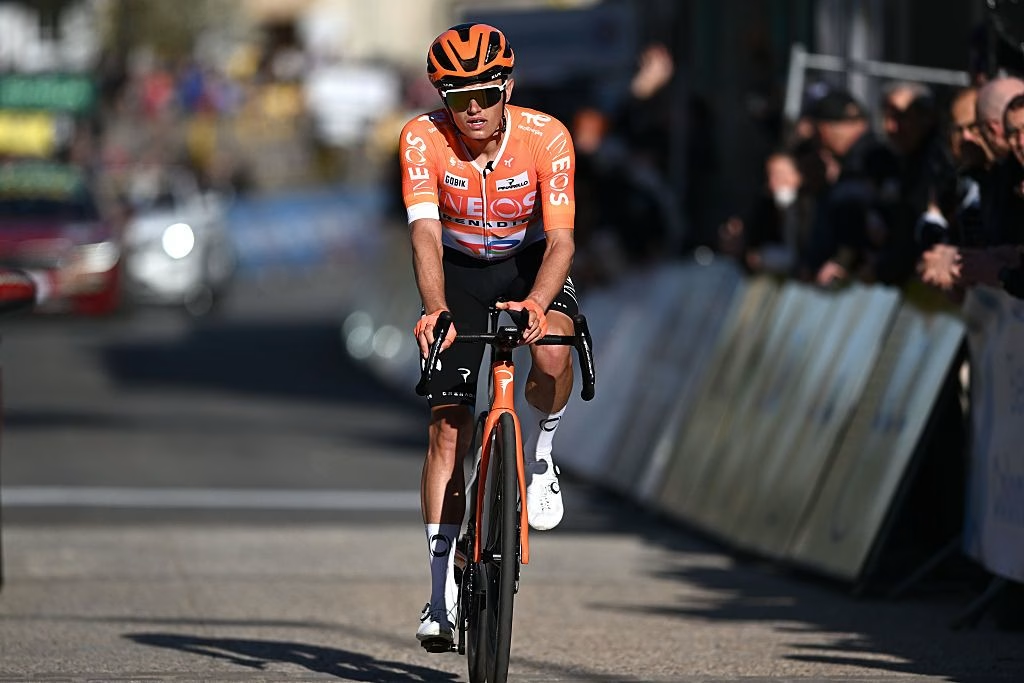
Netcompany INEOS have enough strength to protect him
Onley should not need to navigate the final climbs alone.
Netcompany INEOS also have Carlos Rodríguez, while Axel Laurance has already shown excellent condition by finishing eighth on Stage 2. The team’s priority should be ensuring Onley reaches the bottom of Mont-Louis without unnecessary expenditure.
That matters because the final 35 kilometres leave little room to recover from poor positioning.
If Onley begins Mont-Louis too far back and gaps start opening ahead, he can waste valuable energy simply returning to the leaders.
The team’s role is therefore relatively conventional: control his position, keep him out of trouble and preserve as much energy as possible for the moment UAE begin making the race difficult.
The Vuelta a España 2026 team-by-team guide outlined how important this race is to Netcompany INEOS. Onley is not simply one of several speculative options. He is the rider around whom their principal GC ambition has been built.
Burgos gives Onley a useful comparison with Gall
One of the most revealing direct comparisons comes from Félix Gall.
The pair were separated by only five seconds at the end of the Vuelta a Burgos earlier this month.
Onley beat Gall when the finish rewarded punch on Stage 2. Gall gained time back on the harder mountain stage, before Onley finished only three seconds behind him on the final climb to Lagunas de Neila.
That makes Monday interesting.
Gall is widely considered one of the strongest pure climbers behind Pogačar, particularly after his Giro d’Italia performance earlier this season.
If Onley can remain alongside him at Font-Romeu, that is useful evidence that the Burgos result reflected genuine Grand Tour-level form rather than simply a well-timed preparation race.
If Gall immediately distances him, the hierarchy becomes clearer in the opposite direction.
The bigger British GC story starts now
Britain has already had an extraordinary opening two days.
Hayter nearly took red in Monaco. Tarling finished on the Stage 1 podium. Brennan won Stage 2 and now wears the white jersey.
Those are all major results.
Onley’s challenge is different.
His success cannot be measured through one sprint or one ten-minute time trial. Netcompany INEOS brought him to the Vuelta to see how high he can finish after 21 stages.
Stage 3 is the first examination of that ambition.
There is another British rider worth watching as well. Ben Tulett arrives at Font-Romeu as one of the most intriguing young climbing outsiders in the race, giving Britain two realistic riders capable of remaining with the strongest group when the road turns uphill.
ProCyclingUK’s British riders at the Vuelta a España 2026 looked at precisely that contrast: Britain has riders targeting individual stages, time trials and sprints, but Onley represents the clearest opportunity for a major overall result.
-
 Photo Credit: Getty
 -
 Photo Credit: Cs-wolves / Wikimedia Commons, CC BY-SA 4.0

What would count as a good Stage 3 for Oscar Onley?
The answer is not necessarily a stage victory.
A strong Stage 3 would mean Onley reaches Font-Romeu with the main GC contenders, loses little or nothing to the riders competing for the podium and begins climbing rapidly up the overall classification as the temporary early leaders fall away.
Finishing with Pogačar would be an excellent result.
Finishing a few seconds behind Pogačar but alongside the likes of Roglič, Gall, Skjelmose, Almeida and Mas would still be encouraging.
The danger is a significant loss to that second group.
If Onley gives away 30 or 40 seconds to the other podium contenders on Font-Romeu, the Monaco time-trial deficit suddenly starts compounding rather than simply representing an isolated weak discipline.
That is what Netcompany INEOS need to avoid.
Andorra makes restraint important
There is also a reason not to overcommit.
Tuesday’s Stage 4 takes the Vuelta into Andorra, with a short 104.8-kilometre route and three Category 1 climbs.
That stage is considerably more explosive and potentially more important for the overall classification.
Onley therefore does not need to ride Font-Romeu as though it is the final mountain stage of the race.
If Pogačar attacks and the cost of following becomes too high, riding his own pace can be the smarter decision.
The objective is to emerge from the two-day Font-Romeu-Andorra sequence still firmly in the conversation.
The full Vuelta a España 2026 route guide makes clear just how much harder the race becomes from here. Burning unnecessary matches on the first mountain finish could be punished immediately.
Font-Romeu can reset Onley’s Vuelta
The Monaco time trial put Oscar Onley behind several of the riders he eventually hopes to beat.
Stage 3 gives him the first opportunity to start correcting that.
The numbers at the very top remain unusually tight, with ten seconds covering Pogačar, Van Aert and Brennan and only 27 seconds separating the top ten, but those standings should change substantially once the race reaches Mont-Louis.
Onley does not need to chase the red jersey on Monday.
He needs to make sure that when the sprinters, Classics riders and time-trial specialists begin disappearing from the front of the classification, he is still there with the riders who matter for Granada.
Britain has already had Hayter’s near miss, Tarling’s Monaco podium and Brennan’s breakthrough victory.
At Font-Romeu, Oscar Onley’s Vuelta really begins.

