Stage 7 of the 2026 Vuelta a España takes the peloton from Vall d’Alba to Aramón Valdelinares on Friday 28 August, with 149.8km of climbing-heavy racing before the first summit finish since the race left Andorra.
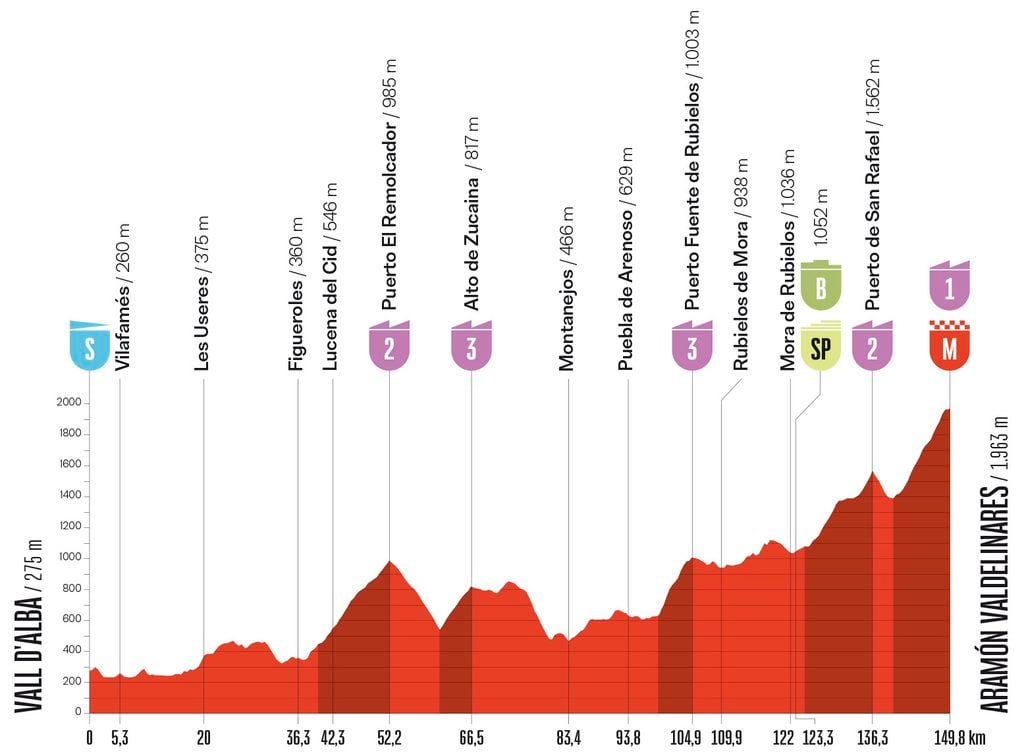
The final ascent itself is not the steepest climb of this Vuelta. Valdelinares measures 9.8km at 5.9%, but it comes immediately after the 11.1km Puerto de San Rafael and at the end of a stage containing five categorised climbs. There is almost no meaningful recovery between San Rafael and the final ascent, turning the closing 25km into one long climbing sequence rather than a single isolated finish.
That should make Stage 7 another important general classification test. Tadej Pogačar already transformed the race with his 50km solo victory through Andorra, while Primož Roglič, Enric Mas, Sepp Kuss, Oscar Onley, Richard Carapaz and Felix Gall remain engaged in a much closer fight behind him.
Friday offers a different challenge from Andorra. There is less outright severity, but considerably less opportunity to hide once the climbing begins. The altitude at Valdelinares and the accumulation of more than 30km of climbing across the final 50km should reward riders capable of maintaining a high aerobic output rather than relying on one short acceleration.
Vuelta a España Stage 7 route
Date: Friday 28 August 2026
Start: Vall d’Alba
Finish: Aramón Valdelinares
Distance: 149.8km
Stage type: Mountain
Neutralised start: 13:40 CEST / 12:40 BST
Expected finish: Around 17:19 CEST / 16:19 BST
Final climb: Aramón Valdelinares
Final climb length: 9.8km
Average gradient: 5.9%
Finish altitude: 1,963 metres
The official route contains five categorised climbs spread across the 149.8km stage, beginning with the Puerto El Remolcador after 39.8km of racing and finishing with the first-category ascent to Aramón Valdelinares.
The wider place of Valdelinares within this exceptionally mountainous opening week can be seen in ProCyclingUK’s Vuelta a España 2026 route guide.
Unlike mountain stages where the peloton spends most of the afternoon waiting for one enormous final climb, Stage 7 contains enough climbing from the middle of the race onwards to create genuine attrition.
That makes the breakaway battle particularly important. Strong climbers who have already lost substantial time on GC will know there is enough terrain to build a serious advantage, while UAE Team Emirates-XRG have to decide whether another Pogačar stage win is worth controlling almost 150km of difficult roads.
Puerto El Remolcador begins the climbing properly
The first categorised ascent is the Puerto El Remolcador, a second-category climb measuring 12.4km at 4.3%.
Its summit comes after 52.2km.
Those numbers are not particularly intimidating for professional climbers, but the climb is long enough to ensure the early breakaway fight cannot remain a purely flat-road contest. Riders hoping to spend the day ahead need enough climbing ability to survive a sustained opening hour.
The Alto de Zucaina follows relatively quickly afterwards, measuring 5.5km at 5%.
Neither should trouble the leading GC riders directly.
Their real importance is cumulative. By the time the race reaches the final hour, the riders will already have spent a significant amount of time climbing rather than simply waiting for Valdelinares.
Fuente de Rubielos starts the decisive final 50km
The race becomes much harder from the third categorised climb.
Fuente de Rubielos is 6km at 6.3% and tops out with 44.9km remaining.
That is steep enough for teams to begin reducing the peloton, particularly if a rival believes another GC rider is showing signs of weakness after the demanding opening week.
There is then only a relatively short transition before the road begins rising again towards the Puerto de San Rafael.
The lack of prolonged recovery matters. Stage 7 is less about one huge gradient and more about gradually removing the ability to recover between efforts.
That is exactly the sort of stage where a rider can appear comfortable for most of the day and then suddenly lose substantial time on the final climb.
Puerto de San Rafael and Valdelinares effectively form one long finale
The crucial point on the route is the Puerto de San Rafael, which begins with 24.6km remaining.
The climb measures 11.1km at 4.3% and reaches its summit only 13.5km from the finish.
Normally, that average gradient might encourage teams to wait.
Here, there is almost nowhere to wait to.
After the summit, the race passes through Virgen de la Vega before the road begins climbing again almost immediately. The final ascent to Valdelinares starts with 9.8km remaining, meaning fewer than four kilometres separate the two categorised climbs.
In practice, riders will be climbing or recovering from climbing for almost the entire final 25km.
That opens the possibility of attacks before Valdelinares itself. A rider who accelerates near the top of San Rafael could force rivals to chase through the short transition rather than allowing everybody to begin the final climb together.
Valdelinares is about altitude and accumulated fatigue
The final climb to Aramón Valdelinares measures 9.8km at an average of 5.9%.
That is relatively moderate by Vuelta summit-finish standards.
The more significant number may be 1,963 metres, the altitude of the finish.
Altitude will not affect every rider equally, and the preceding climbing should ensure the peloton reaches the final ascent already carrying substantial fatigue.
A 6% climb ridden fresh is one thing. The same climb after Puerto El Remolcador, Zucaina, Fuente de Rubielos and San Rafael becomes a much more selective test.
The gradient also encourages sustained high speed rather than repeated attacks followed by hesitation.
If UAE decide to ride hard from the bottom, the final climb could become an extended threshold effort where riders simply disappear from the back one by one.
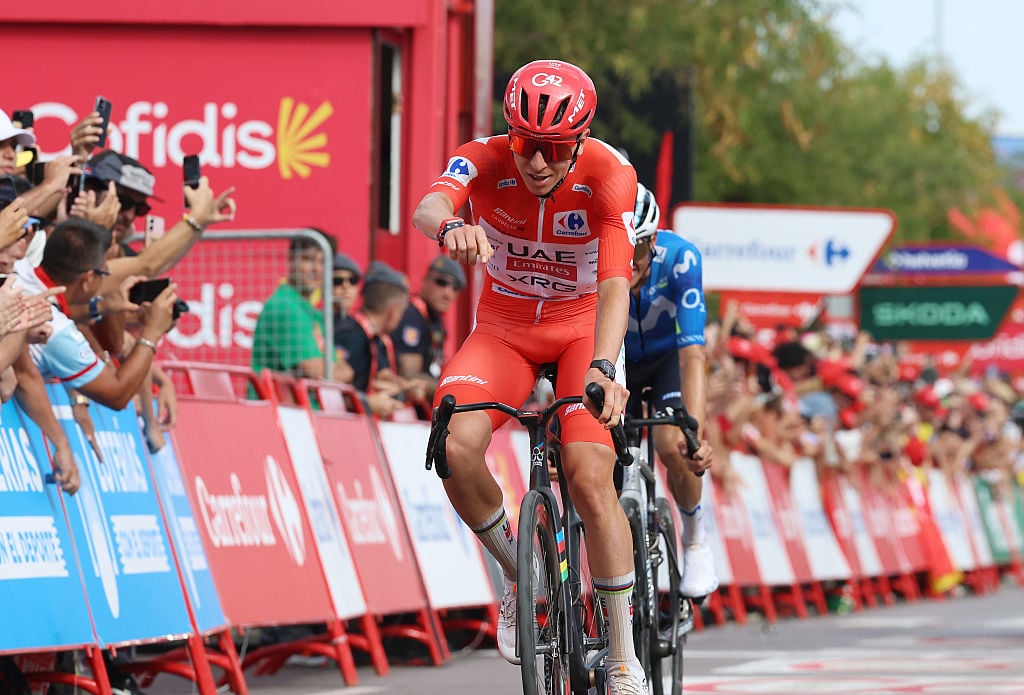 Photo Credit: Getty
Pogačar does not need another attack
The central question remains the same as it has since Andorra: what does Tadej Pogačar actually want from the stage?
His Stage 4 raid gave him a commanding advantage over every established GC rival and changed the tactical shape of the Vuelta. ProCyclingUK looked at the wider significance of that performance in From breakthrough to domination: Tadej Pogačar comes full circle in Andorra.
There is therefore no strategic requirement for UAE Team Emirates-XRG to spend Friday controlling a dangerous breakaway from the opening kilometre.
A rider already several minutes down could take the stage without threatening Pogačar’s red jersey.
But if the break is caught, Valdelinares becomes another finish that suits him extremely well.
The moderate gradient should allow UAE to impose a fast tempo before Pogačar attacks late, while the altitude and accumulation of climbing increase the chances of his rivals reaching their limits before he does.
The difference from Andorra is that a huge long-range raid is unnecessary.
Pogačar can wait.
That may make the final five kilometres more predictable, but not necessarily less damaging.
Roglič needs to stop the gap getting any bigger
Primož Roglič remains the obvious reference point behind Pogačar.
His Andorra performance was encouraging given the uncertainty around his condition before the race. He could not respond to Pogačar, but neither could anybody else, and he emerged from the first major mountain test as the closest established challenger.
Valdelinares should suit him reasonably well.
The climb does not contain the extreme gradients that can expose riders unable to match repeated violent accelerations. Instead, it should become a sustained climbing contest where Roglič can ride at a controlled high output and use his experience to avoid unnecessary effort.
The issue is not whether he can recover the entire deficit.
He cannot realistically do that on one climb of this type.
The immediate target should be preventing Pogačar from adding another significant chunk of time and strengthening his own position against Mas, Kuss, Onley, Carapaz and Gall.
If Roglič reaches the finish alongside Pogačar or within a handful of seconds, it would be a positive day.
Another 30-second loss would make the wider GC picture substantially harder.
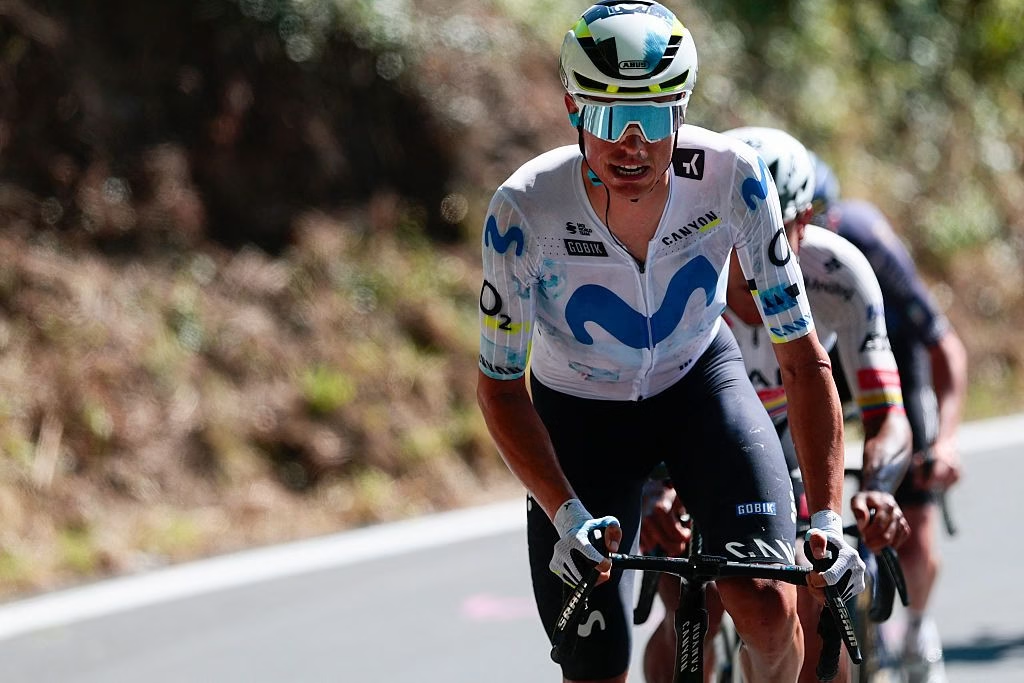 Photo Credit: Getty
Enric Mas gets terrain that should suit him
Enric Mas has started the Vuelta extremely well.
The Movistar leader was among the strongest riders behind Pogačar in Andorra and sits firmly in the podium battle after the opening mountain tests.
Valdelinares may suit him better than some of the more explosive climbs.
Mas is generally strongest when he can settle into a sustained climbing rhythm and maintain a high pace for an extended period. A 9.8km climb at 5.9% after a demanding approach provides exactly that sort of environment.
His challenge is turning good climbing into time gains rather than simply following.
If Mas wants to move above Roglič in the hierarchy, at some point he has to make his strength count.
Stage 7 could provide that opportunity because the Puerto de San Rafael allows Movistar to increase the pressure before the final climb begins.
With Cian Uijtdebroeks already out following the ankle fracture suffered on Stage 2, Movistar’s GC focus is now concentrated entirely on Mas. His withdrawal is being tracked in ProCyclingUK’s running Vuelta abandonments hub.
Oscar Onley has another chance to prove this is his level
Oscar Onley has been one of the strongest British stories of the opening week.
The Netcompany INEOS leader emerged from Andorra firmly among the group immediately behind Pogačar and has shown that his GC ambitions should now be taken seriously rather than treated as an outsider storyline.
That role was already one of the most interesting elements in ProCyclingUK’s Vuelta team-by-team guide, and the opening week has strengthened rather than weakened his case.
Valdelinares is another strong test.
The sustained final gradient suits Onley’s ability to climb at high tempo, while the finish is difficult enough to create gaps without becoming so extreme that only the purest high-altitude specialists can survive.
The bigger challenge may be the entire stage rather than the final 9.8km.
Onley has to manage the cumulative climbing, positioning and repeated efforts through San Rafael before producing his best numbers at the finish.
If he remains with Roglič and Mas again, the podium conversation becomes increasingly legitimate.
Sepp Kuss should welcome the longer climbing sequence
Stage 7 also looks well suited to Sepp Kuss.
The American generally thrives when the climbing becomes sustained rather than explosive, and the long sequence from Fuente de Rubielos through San Rafael to Valdelinares should play more naturally to his strengths than a punchier finale.
His tactical position remains interesting.
Kuss is close enough to the podium that rivals cannot simply ignore an attack, but far enough behind Pogačar that UAE may be less concerned if he moves before the final climb.
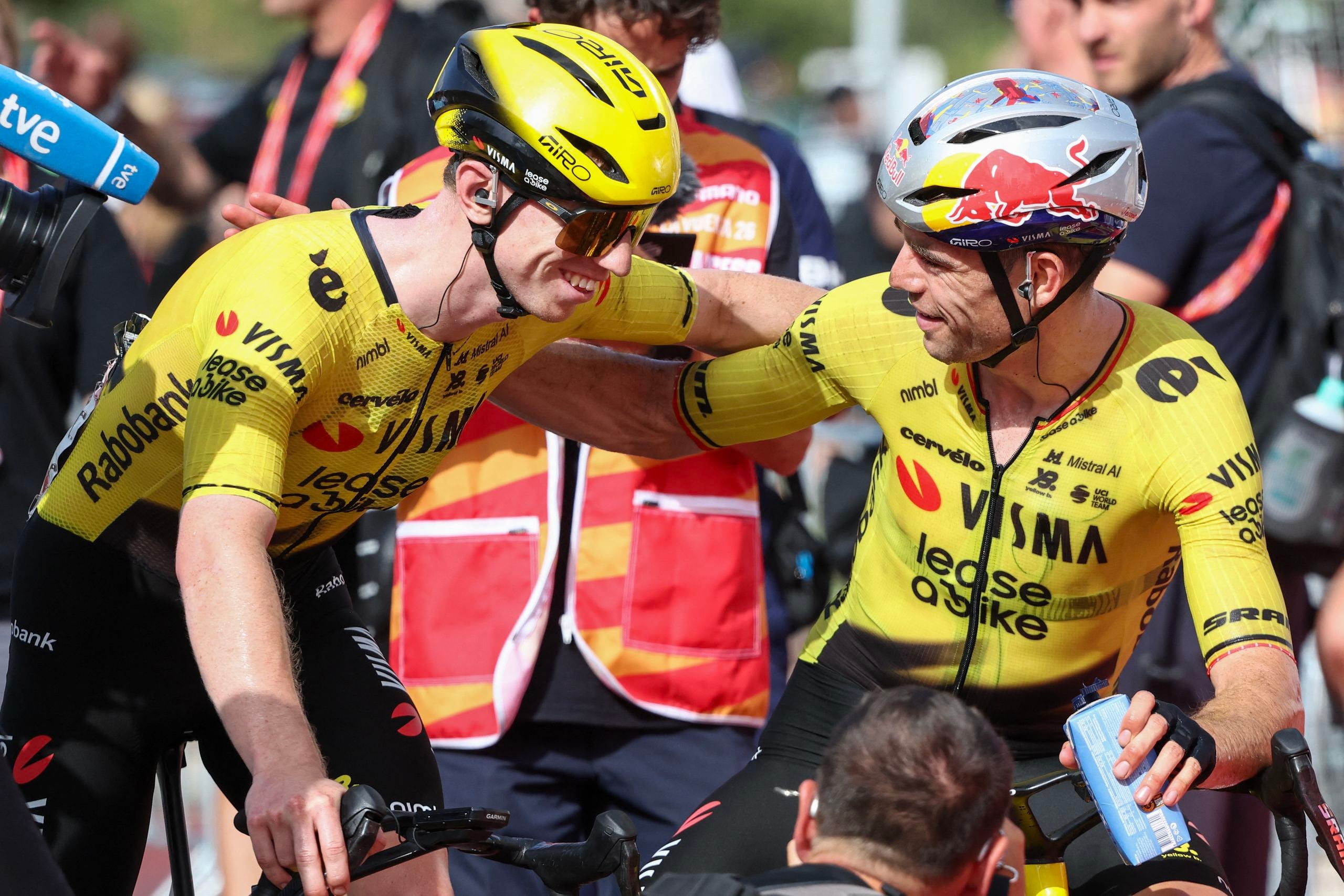
That could create opportunities for Team Visma | Lease a Bike.
A move on San Rafael would force Roglič, Mas and the other podium contenders to decide whether they want to chase before Valdelinares.
Kuss does not need to attack Pogačar to make the stage tactically useful.
He can attack the riders immediately around him.
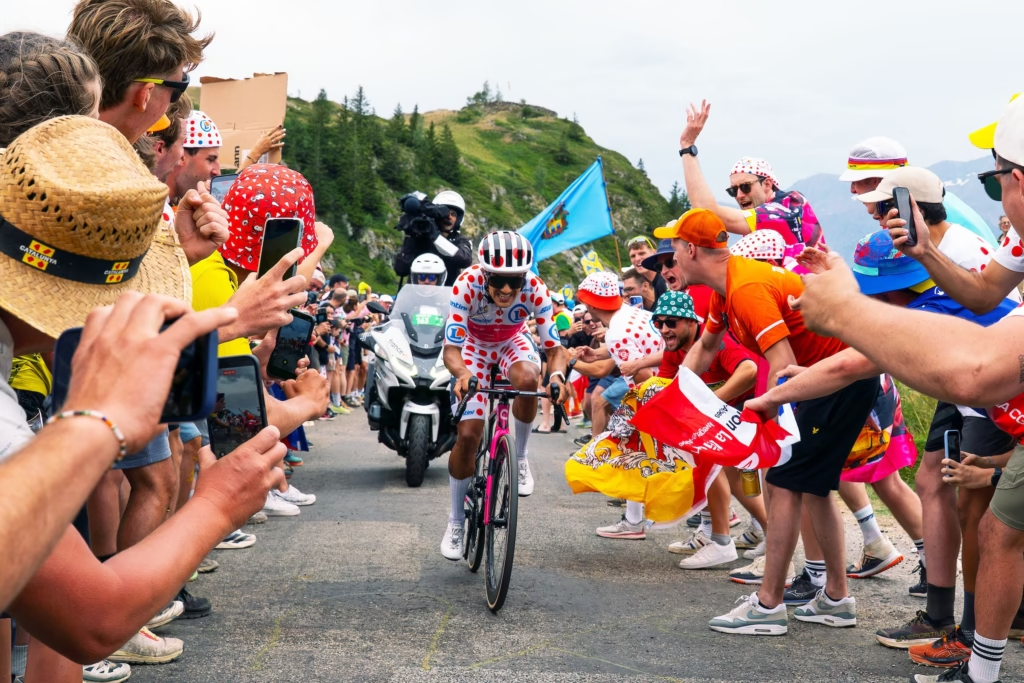 Photo Credit: Getty
Richard Carapaz needs a less controlled race
Richard Carapaz is another rider who should be interested in using the penultimate climb.
A simple UAE tempo all the way to the final three kilometres is probably not his ideal scenario.
Carapaz is at his most dangerous when the race becomes fragmented and tactical, allowing him to attack from positions where rivals hesitate over responsibility.
Puerto de San Rafael provides exactly that possibility.
If EF Education-EasyPost can place riders ahead or increase the pace before the summit, Carapaz has a reason to attack before the final climb rather than waiting to sprint against Pogačar and Roglič uphill.
The risk is obvious.
A failed move could cost energy that becomes very expensive once Valdelinares begins.
But sitting in the group and waiting for Pogačar to dictate the final kilometre offers relatively little upside.
Felix Gall has already shown he is willing to attack
Felix Gall was one of the riders prepared to test the race in Andorra, even if Pogačar’s response ultimately overwhelmed everybody.
That willingness should again be useful on Stage 7.
Gall’s strength is sustained climbing rather than finishing speed, so he has little reason to wait until the final kilometre if he feels good.
San Rafael offers a much more attractive launch point.
An attack there could force stronger sprinting climbers to use energy closing the gap before Valdelinares, while Gall’s high aerobic capacity should allow him to maintain pressure across the short transition.
Whether Decathlon CMA CGM are willing to commit depends partly on what the breakaway looks like.
If a stage win is still available to the GC group, they have more reason to force the race.
Jarno Widar faces another important reality check
Jarno Widar’s second place in Andorra was one of the biggest surprises of the opening week.
Stage 7 offers a useful opportunity to determine whether that performance represented one exceptional day or the beginning of something more sustained.
Valdelinares should suit him.
The climb is not excessively long, while the moderate gradient allows riders with strong acceleration and good climbing efficiency to stay competitive deep into the finale.
The question is how he handles the preceding 140km.
Grand Tour mountain stages become increasingly difficult because riders have to repeat strong performances rather than simply produce one breakthrough ride.
Another finish alongside the major GC names would further change how seriously rivals have to treat Widar during the remaining two weeks.
The breakaway has a real chance despite the summit finish
A summit finish naturally creates the expectation of a Pogačar victory.
The route makes that far from guaranteed.
UAE already have a commanding GC advantage and Stage 9 finishes at the Alto de Aitana before the first rest day. There is little strategic reason to expend an entire team chasing a strong break on Stage 7 simply to create another stage-winning opportunity.
That gives the breakaway a realistic chance.
The ideal escapee needs to be a genuine climber already far enough down the general classification to receive freedom.
Riders such as Valentin Paret-Peintre, Santiago Buitrago, Clément Berthet, Andreas Leknessund, Gianmarco Garofoli, Pello Bilbao and Milan Vader fit the broad profile if their GC positions allow them into the move.
The difficulty is keeping enough advantage.
The final 50km contain three categorised climbs, and the GC group could erase minutes simply by racing hard rather than deliberately chasing the stage.
A break may need four or five minutes before Fuente de Rubielos to feel genuinely comfortable.
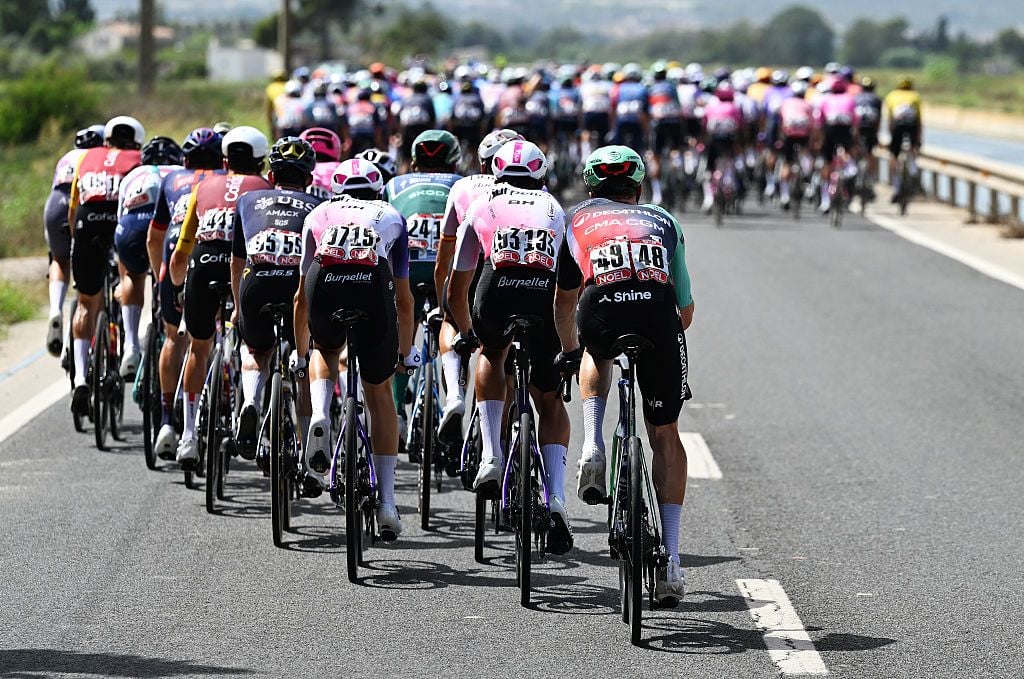 Photo Credit: Getty
A breakaway win and GC battle can happen simultaneously
Stage 7 lends itself to two races happening at once.
A strong breakaway can contest the stage several minutes ahead while the favourites fight over GC time behind.
That is probably the scenario UAE would prefer.
It allows Pogačar’s team to avoid spending resources throughout the day while still racing Valdelinares hard enough to discourage attacks from his rivals.
For Roglič, Mas, Kuss, Onley, Carapaz and Gall, the presence of a break should barely change the approach.
Their real race is against one another.
Pogačar’s Andorra advantage means second place and the final podium positions are already becoming their own classification battle.
Stage 7 is exactly the sort of day where those gaps can begin growing.
Matthew Brennan gets another survival day before Stage 8
Matthew Brennan will disappear from the stage-winning conversation again on Friday.
After taking two victories from his first five Grand Tour stages, the 21-year-old faces a day where the priority is simply reaching Valdelinares inside the time limit without spending more energy than necessary.
His extraordinary opening week has already moved far beyond the normal expectations of a Grand Tour debutant, as explored in Matthew Brennan’s remarkable Vuelta debut is becoming much bigger than two stage wins.
Stage 7 demonstrates the major difficulty in his green jersey challenge.
Pogačar can score heavily on mountain stages where Brennan has no realistic route to points. Brennan therefore needs to maximise every sprint opportunity while surviving days such as Valdelinares efficiently enough to remain competitive later in the race.
The consolation comes immediately afterwards.
Stage 8 from Puçol to Xeraco is classified as flat and should return Brennan and the other fast riders to centre stage.
What time does Vuelta a España Stage 7 start?
The neutralised start from Vall d’Alba is scheduled for 13:40 CEST, or 12:40 BST.
The central race-speed estimate places the finish at Aramón Valdelinares at approximately 17:19 CEST / 16:19 BST, with the slower schedule potentially pushing the finish towards 16:40 BST.
The key UK timings should be approximately:
| Stage 7 point | UK time |
|---|---|
| Neutralised start | 12:40 BST |
| Puerto El Remolcador | 13:55-14:03 BST |
| Alto de Zucaina | 14:13-14:23 BST |
| Fuente de Rubielos | 15:07-15:23 BST |
| Puerto de San Rafael begins | 15:34-15:53 BST |
| Puerto de San Rafael summit | 15:54-16:15 BST |
| Valdelinares begins | 15:58-16:19 BST |
| Expected finish | Around 16:19-16:42 BST |
Anyone primarily interested in the GC battle should aim to be watching no later than 15:30 BST.
That should capture the entire San Rafael-Valdelinares sequence rather than joining after the favourites have already begun attacking.

Stage 7 tactical outlook
The first question is whether UAE allow the breakaway to take a large advantage.
The logical answer is yes.
Pogačar has little reason to ask his team to control every kilometre of another mountain stage when his overall lead is already substantial and there are far harder stages still to come.
That should create an aggressive opening hour as stage hunters try to enter the move before Puerto El Remolcador.
The GC race is likely to remain relatively controlled through the first half of the stage.
Fuente de Rubielos is the first point where the pace may begin rising significantly. From there, teams have enough climbing available to isolate rivals before the final ascent.
San Rafael is the tactical climb.
If nobody attacks there, the favourites should reach Valdelinares together and UAE can impose a sustained tempo before Pogačar decides whether another stage attack is worthwhile.
If Carapaz, Gall, Kuss or another podium contender moves on San Rafael, the entire final 25km changes.
That possibility is what makes Stage 7 more interesting than simply waiting for the final 9.8km.
Vuelta a España Stage 7 prediction
The breakaway has a better chance than the summit-finish profile initially suggests.
UAE Team Emirates-XRG do not need another stage victory and should be happy to let riders without GC significance contest the win.
If the break survives, Santiago Buitrago stands out as the type of climber capable of handling the repeated ascents and still producing a strong final effort at altitude. Valentin Paret-Peintre and Pello Bilbao are similarly dangerous if allowed into the right move.
Behind, Pogačar remains the overwhelming favourite to win the GC battle.
Valdelinares is not steep enough to encourage a long-range attack from the red jersey, but the accumulated climbing and altitude should still provide an opportunity to gain more time if his rivals begin to fade.
The most likely scenario is therefore a breakaway rider winning the stage while Pogačar finishes with, or slightly ahead of, the strongest GC challengers.
The bigger question lies behind him.
Roglič, Mas, Kuss, Onley, Carapaz and Gall are still close enough that one poor final 10km could reshape the podium battle completely.
Pogačar has already created separation between himself and the rest of the Vuelta.
Stage 7 may be where the rest begin creating separation between themselves.