
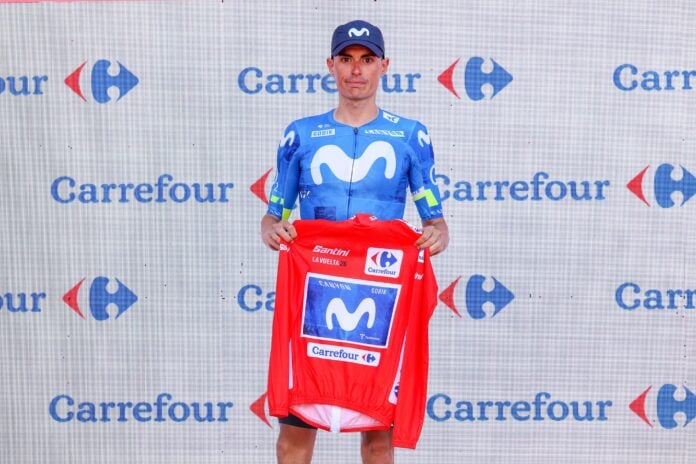
The 2026 Vuelta a España reaches its first rest day with a general classification battle almost completely different from the one that existed when the race left Monaco.
The original Vuelta a España 2026 contenders preview was inevitably built around Tadej Pogačar. He was the overwhelming favourite before Stage 1 and then strengthened that position by winning three stages and opening a 3:50 advantage before his race-ending crash on Stage 8.
Pogačar is gone, but Stage 9 showed that the replacement contest for red is not simply a lottery. Enric Mas has emerged as the rider to beat, winning on Alto de Aitana and extending his advantage over Primož Roglič and Felix Gall. Oscar Onley produced arguably the most important ride of his Grand Tour career by becoming the only rider able to follow Mas’s decisive attack, while Richard Carapaz remains dangerous despite losing time and Sepp Kuss now needs to recover ground.
What looked before the race like a contest to decide who finished behind Pogačar has become a genuine six-rider battle with 12 stages still to race.
Vuelta a España GC after Stage 9
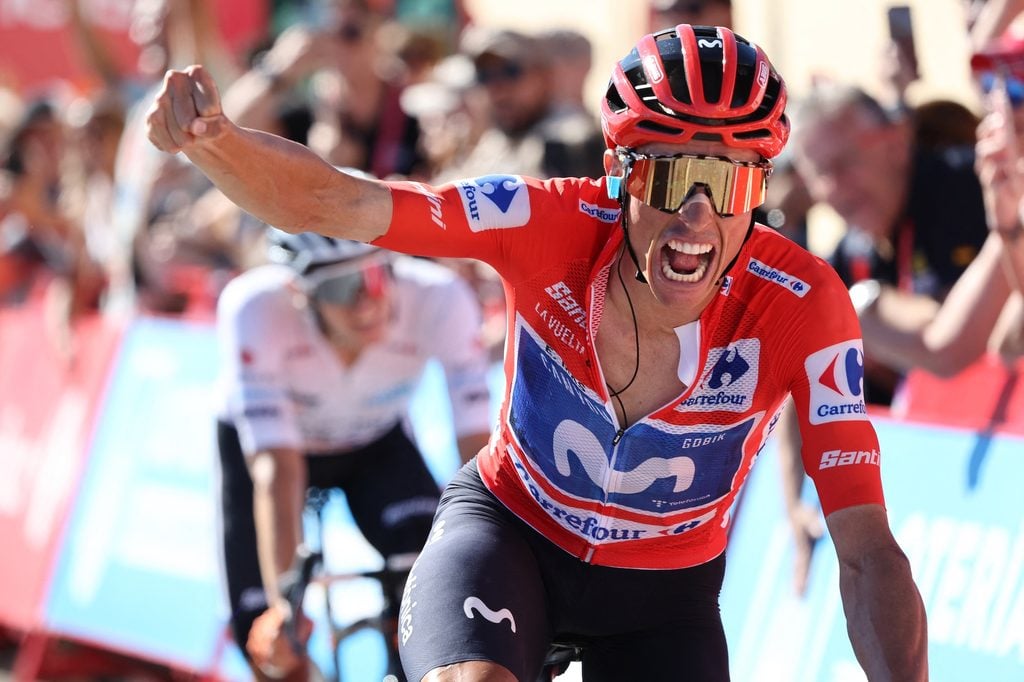
Mas strengthened his lead on Alto de Aitana rather than simply defending the red jersey he inherited following Pogačar’s withdrawal.
He attacked with around three kilometres remaining and only Onley could follow. Roglič limited his losses to 12 seconds on the road and took third, while Gall conceded 18 seconds. Carapaz lost 54 seconds after making an earlier attack, and Kuss was among the riders distanced when Decathlon CMA CGM Team increased the pace further down Aitana.
The resulting general classification heading into Monday’s first rest day is:
| Position | Rider | Team | Gap |
|---|---|---|---|
| 1 | Enric Mas | Movistar Team | Leader |
| 2 | Primož Roglič | Red Bull-BORA-hansgrohe | +1:18 |
| 3 | Felix Gall | Decathlon CMA CGM Team | +1:39 |
| 4 | Oscar Onley | Netcompany INEOS Cycling Team | +2:20 |
| 5 | Richard Carapaz | EF Education-EasyPost | +3:26 |
| 6 | Mattias Skjelmose | Lidl-Trek | +3:55 |
That is the group from which the eventual winner is now most likely to emerge.
Mas has useful breathing room without having anything approaching the margin Pogačar previously held. Roglič and Gall are both within one major mountain attack of red, Onley is only 41 seconds from the podium and Carapaz remains close enough that Movistar cannot afford to give him freedom.
Enric Mas is now the rider everyone has to beat
Mas inherited red in extraordinary circumstances, but Aitana removed any suggestion that he is simply a temporary leader created by Pogačar’s misfortune.
He earned this version of the jersey himself.
Movistar accepted responsibility for much of Stage 9 before Mas delivered the strongest acceleration among the established GC contenders. Only Onley could follow, and Mas then had enough left to win the stage sprint and collect the maximum bonus seconds.
There had already been warning signs for his rivals.
On Stage 6, Mas produced one of the best performances of his season when he rode back to Pogačar on Puerto El Bartolo. Pogačar had attacked on the steep gravel section and initially distanced everyone, only for Mas to bridge across before the summit and stay with him all the way into Castelló.
At the time, that ride mainly strengthened Mas’s position in the battle for second.
It looks much more important now.
Mas has shown twice in four stages that he may currently possess the best climbing form among the riders still in the race. He also has Movistar entirely committed to him after Cian Uijtdebroeks’ early withdrawal.
The problem is that 1:18 is not enough to defend passively for two weeks.
The 2026 Vuelta route still contains major summit finishes at Calar Alto, Sierra de La Pandera, Peñas Blancas and Collado del Alguacil, as well as the 32.1km individual time trial on Stage 18.
That time trial is the obvious vulnerability in Mas’s position.
If Roglič reaches it still within roughly a minute, the entire balance of the race could change.
Mas therefore remains the favourite, but his best strategy may be to continue racing offensively rather than beginning a two-week defence of the gap he already has.
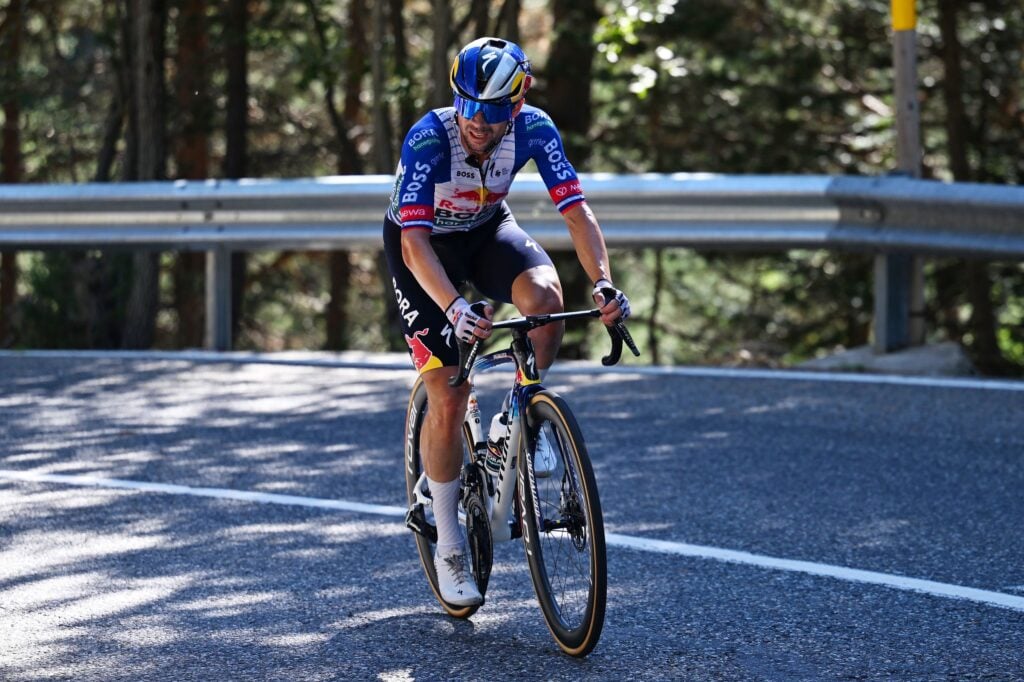 Photo Credit: Getty
Primož Roglič has the clearest route to overturning Mas
Roglič is second at 1:18, and his position may be stronger than his climbing performances alone suggest.
The four-time Vuelta winner has not looked like the strongest rider uphill.
Mas rode away from him on Aitana. Gall’s Decathlon team have repeatedly been able to put him under pressure, and he also lost time when Mas followed Pogačar on Stage 6.
But Roglič has limited the damage.
That distinction is important.
He does not need to beat Mas on every summit finish. He needs to stay close enough that his superior time-trial ability becomes decisive later in the race.
Stage 18 therefore hangs over the entire GC battle.
Mas and Gall both know that allowing Roglič to reach the 32.1km test to Jerez de la Frontera while still within striking distance could be extremely dangerous.
Roglič can approach the second week differently. He does not necessarily need to attack Mas on Calar Alto or La Pandera if the opportunity is not there. Avoiding another significant loss may be enough.
His pre-race position was unusually difficult to judge because his preparation had been disrupted, something reflected in ProCyclingUK’s original contenders assessment. Nine stages later, the situation is much clearer.
He may not yet have shown the highest climbing level, but he remains only 1:18 from a record fifth Vuelta victory with his best individual discipline still to come.
That makes him arguably the most dangerous rider for Mas to leave close.
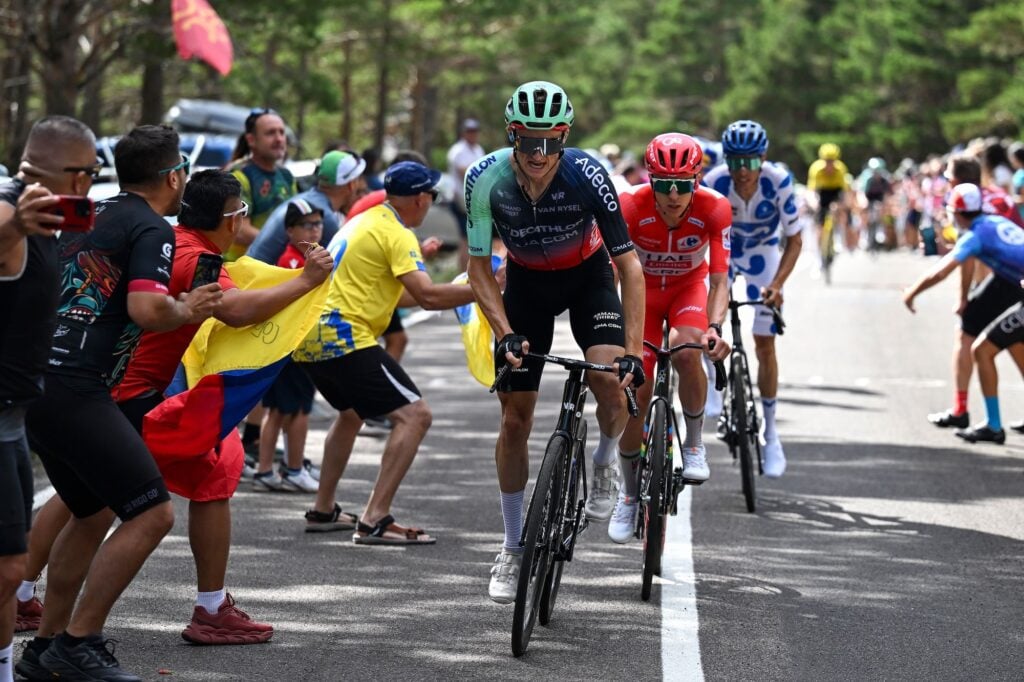 Photo Credit: Getty
Felix Gall needs to turn the mountains into time
Gall reaches the rest day third at 1:39, and his challenge is almost the reverse of Roglič’s.
The mountains are where he has to win this Vuelta.
Decathlon CMA CGM Team made that clear on Stage 9.
They took control before the final climb and then drove the pace on Aitana through a series of domestiques, reducing the GC group and eventually distancing Kuss and several other contenders.
The team rode like they believed Gall could take red.
He did not quite finish it off.
Gall attacked before Mas’s decisive move but was unable to follow when the Spaniard accelerated with three kilometres remaining, eventually conceding another 18 seconds on the road.
That was a setback rather than a serious defeat.
Aitana’s long, sustained ascent still demonstrated how dangerous Gall becomes when Decathlon turn a stage into a prolonged climbing test. The team-by-team guide before the Vuelta identified the mountain strength built around him, and the opening week has shown that Decathlon are prepared to use it aggressively.
The remaining route gives them several more opportunities.
Calar Alto comes on Stage 12, Sierra de La Pandera follows on Stage 14, and the final week contains Peñas Blancas and Collado del Alguacil.
Gall cannot afford to treat those stages simply as opportunities to stay with Mas.
He needs time.
The Stage 18 time trial makes that unavoidable. Even if Gall were to move ahead of Roglič in the mountains, he should want a meaningful buffer before Jerez.
His path to victory is therefore straightforward even if executing it is not: make the mountain stages as hard as possible and force Mas and Roglič into sustained climbing battles.

Oscar Onley is now a genuine podium contender
Onley’s podium ambitions looked plausible before Aitana.
After Aitana, they look real.
The 23-year-old began Stage 9 fifth overall, only one second behind Kuss, but there was still a legitimate question over whether he could maintain that position when the Vuelta finally delivered a mountain stage containing more than 5,000 metres of climbing and a 22km summit finish.
His answer was emphatic.
When Mas attacked with around three kilometres remaining, Onley was the only rider who could follow.
Gall could not.
Roglič could not.
Carapaz had already been caught after his own move.
Onley stayed with Mas all the way to the finish and lost only the sprint, moving into fourth overall at 2:20.
That leaves him just 41 seconds from the podium.
Before the race, Netcompany INEOS had already given Onley clear leadership responsibility. ProCyclingUK’s team-by-team Vuelta guide identified his GC campaign as one of the team’s main objectives, while the British riders preview highlighted how his Vuelta a Burgos form suggested he was ready for a significant Grand Tour opportunity.
Even then, the target looked more like proving he belonged around the top five or six.
That has changed.
His Aitana performance was not about surviving a weakened GC group. He followed the race leader when everybody else was dropped.
The uncertainty is now consistency rather than level.
Onley has never had to defend this sort of position through the second and third weeks of a Grand Tour. Calar Alto, La Pandera and the final mountain block will test recovery as much as outright climbing ability.
The Stage 18 time trial also matters.
But the burden of proof has shifted. Onley no longer needs to show that his GC position is genuine. His rivals now need to find a way to take it from him.
A podium is firmly realistic.
Overall victory is still a much bigger step, but at 2:20 it can no longer be dismissed completely either.
 Photo Credit: Getty
Richard Carapaz has to start taking bigger risks
Carapaz reaches the rest day fifth at 3:26, with Stage 9 illustrating both the attraction and the danger of his racing style.
He attacked with just over five kilometres remaining on Aitana when the pace briefly eased.
For a moment, it looked excellent.
Carapaz opened a gap, began picking off riders from the breakaway and forced the group behind to make a decision.
Then the chase gathered momentum.
He was caught and, when Mas made the decisive move later, Carapaz had already spent too much to respond. He eventually conceded 54 seconds on the stage.
At 3:26, his Vuelta is far from over.
It does mean the conventional approach becomes increasingly unlikely to work.
Carapaz cannot simply follow Mas, Roglič and Gall until the final kilometre and expect to recover more than three minutes through small summit-finish differences.
He needs larger moves.
That may actually make him more dangerous.
His final week at the Tour de France showed again how effective he can be when allowed to race aggressively, eventually securing the mountains jersey. His position in this Vuelta now invites a similar approach.
Carapaz is too close for Movistar to ignore but far enough behind that other contenders may occasionally hesitate before taking responsibility for chasing him.
Those few seconds of indecision are exactly what he needs.
 Photo Credit: Getty
Sepp Kuss needs the rest day more than most
Kuss entered Stage 9 fourth overall at 2:15 and only one second ahead of Onley.
He leaves Aitana in a much more difficult position.
Decathlon’s pacing exposed him before the decisive attacks began and he was unable to return to the main GC group.
That is particularly concerning because Aitana should theoretically suit Kuss.
This was not a short, explosive climb where his lack of punch might explain the gap. It was a long endurance ascent after an enormous climbing day, terrain on which the former Vuelta winner would normally expect to thrive.
His experience still matters.
Kuss returned to the 2026 Vuelta as one of the most important American riders in the field, and nobody needs reminding that he has already won this race once.
But the objective has changed.
Before Aitana, Kuss could defend his position and wait for others to make mistakes.
Now he needs to take time back.
The rest day therefore arrives at an important moment for Team Visma | Lease a Bike. If Kuss recovers strongly, the remaining mountains give him enough terrain to return to the podium battle.
If Aitana represented his genuine current climbing level, the focus may increasingly shift towards stage hunting rather than another overall victory.
Mattias Skjelmose is still close enough to matter
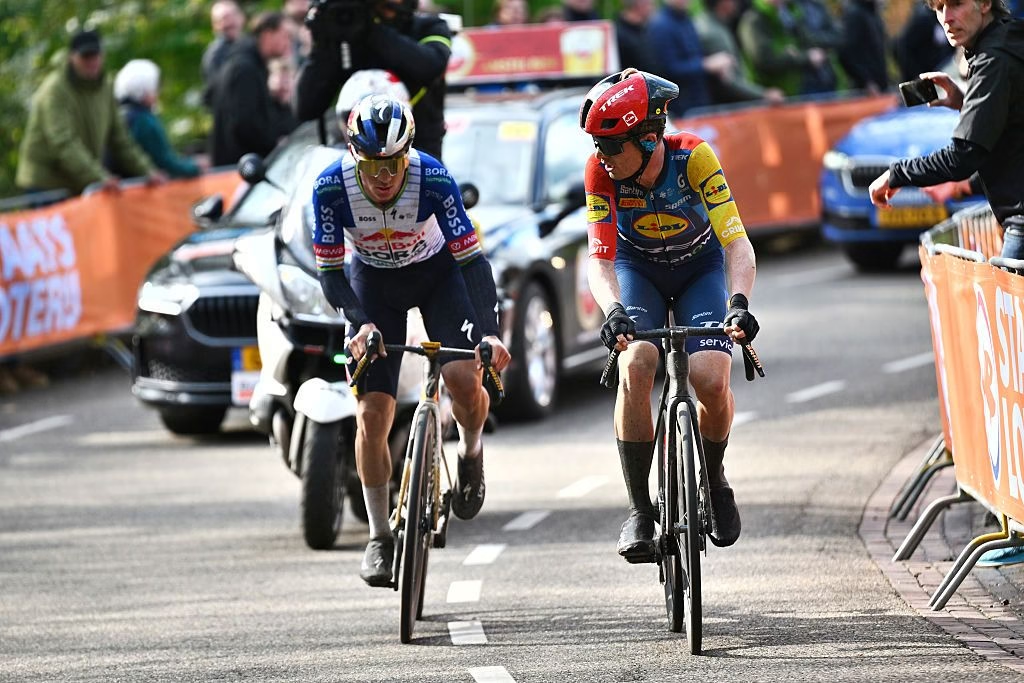
Skjelmose has quietly reached the rest day sixth overall at 3:55.
He did not produce the headline performance on Aitana, but he limited the damage well enough to keep himself inside the GC conversation.
That matters because his route to a high overall finish is different from Gall’s or Carapaz’s.
Skjelmose should be one of the riders looking forward to the Stage 18 time trial.
His challenge is reaching it without losing too much in the mountains.
The original Vuelta GC contenders preview identified precisely that balance. Skjelmose has the time-trial ability to gain positions in the final week, but Aitana, Peñas Blancas and the other long climbs always represented the more difficult part of his race.
At 3:55, victory is becoming a long shot.
A podium remains achievable if he continues limiting mountain losses and then produces a major time trial.
Jay Vine is no longer a realistic GC contender
Pogačar’s withdrawal initially created an obvious question around Jay Vine.
UAE Team Emirates-XRG had spent the opening week organised around Pogačar. Once their leader disappeared, Vine’s climbing ability made him one of the riders who could theoretically receive more freedom.
Before the race, ProCyclingUK’s Vuelta dark horses analysis had already identified Vine as a rider with the physical ability to produce a high overall finish if his team role allowed it.
Stage 9 effectively ended that particular storyline.
Vine was distanced well before the decisive phase of Aitana and is now much better viewed as a stage hunter than a rider capable of joining Mas, Roglič, Gall and Onley in the fight for red.
That may ultimately improve his Vuelta.
Without a GC position to protect, UAE can give him complete freedom to attack mountain stages from the breakaway.
There are plenty of opportunities left for him to win.
They just no longer need to be framed around the overall classification.
The Stage 18 time trial shapes the entire second week
The most important stage remaining that does not finish on a mountain is Stage 18.
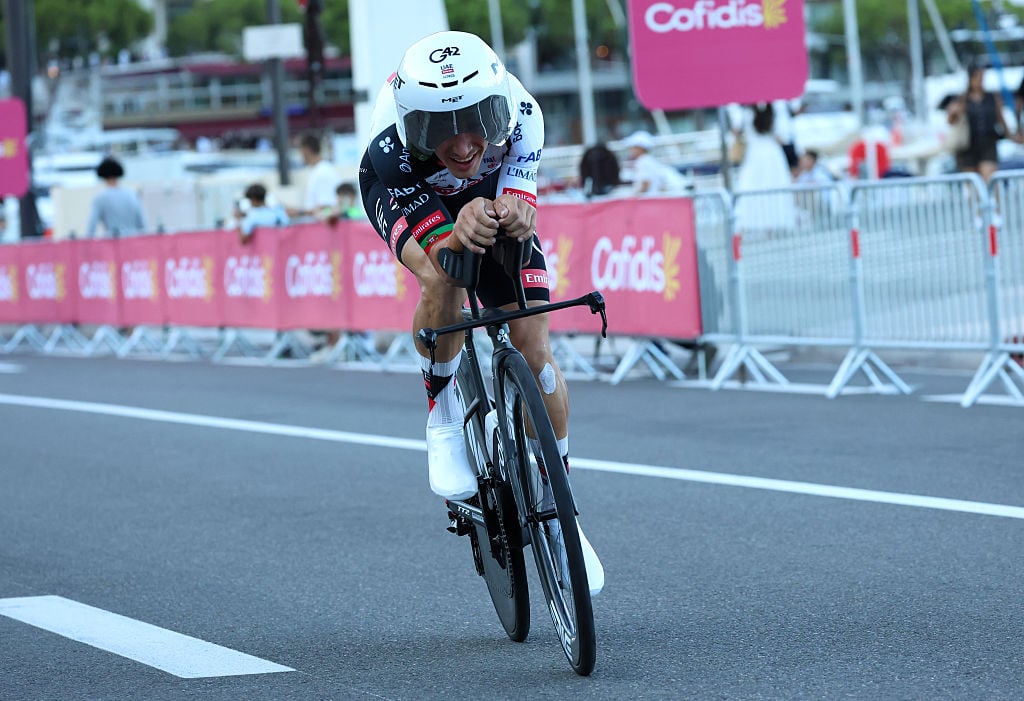
The 32.1km individual time trial from El Puerto de Santa María to Jerez de la Frontera could produce some of the largest GC changes of the final week.
That makes it relevant long before the riders actually reach Jerez.
Roglič knows it is an opportunity.
Mas knows it is a threat.
Gall knows he needs to reach it with time in hand if he wants to beat Roglič overall.
Onley and Skjelmose will also see the stage as an opportunity to alter the podium fight.
That should make the mountains before it more aggressive rather than less.
Pure climbers cannot simply remain within touching distance and assume they can repair the situation later.
Calar Alto is the next chance to change the hierarchy
Stages 10 and 11 should offer some relief for the overall contenders before the Vuelta returns to the major mountains on Thursday.
Stage 12 finishes at Calar Alto after another day containing more than 4,000 metres of climbing.
It will be the first major opportunity after the rest day to discover whether Aitana established a lasting hierarchy or merely captured the form of one afternoon.
Mas will want confirmation.
Gall needs retaliation.
Roglič needs to avoid another loss.
Onley has to show he can repeat his Aitana performance.
Carapaz needs to find a way of gaining time rather than simply attacking.
Kuss needs a response.
The Vuelta then heads towards Sierra de La Pandera on Stage 14, before an even harder final mountain block including Peñas Blancas and Collado del Alguacil.
There is enough terrain left that no current gap can be treated as decisive.

Who is the favourite to win the 2026 Vuelta now?
After Pogačar abandoned on Stage 8, it was reasonable to call the race completely open.
Stage 9 has established more of a hierarchy.
Enric Mas is now the favourite.
He has the jersey, a stage victory, the strongest recent climbing evidence and a Movistar team with no ambiguity over who it is protecting.
That does not make him dominant.
Primož Roglič is only 1:18 behind and has the major advantage of the Stage 18 time trial. If he can continue limiting losses in the mountains, his route towards a fifth Vuelta title becomes increasingly obvious.
Felix Gall may have the greatest ability to transform the race through pure climbing, but he needs to start converting that strength into time before the TT.
Oscar Onley has become the breakthrough contender. Fourth at 2:20 and only 41 seconds from the podium, he has moved from an interesting outsider to a genuine threat after being the only rider capable of following Mas on Aitana.
Richard Carapaz remains capable of destabilising the race but now needs ambitious attacks to recover more than three minutes.
Sepp Kuss needs a significant rebound after a difficult Aitana, while Mattias Skjelmose remains close enough to benefit if he can survive the mountains and exploit the time trial.
The first week of the Vuelta was built around the assumption that everyone else was racing behind Pogačar. His Stage 8 withdrawal destroyed that race in an instant.
Aitana has now shown what replaced it.
Mas has control, but not security. Roglič has patience and the time trial. Gall has the mountains. Onley suddenly has a realistic podium to chase and perhaps permission to think beyond it.
The 2026 Vuelta has effectively started twice.
This second version may be much harder to predict.

