
The Vuelta a España 2026 begins in Monaco on Saturday 22 August, and Britain has a substantial 12-rider contingent spread across general classification ambitions, sprint stages, time trials, mountain breakaways and development roles.
Oscar Onley carries the clearest British GC expectations as Netcompany INEOS’ leader, but the team’s final selection also adds Joshua Tarling and Ben Turner, giving Britain three riders inside one of the most important squads in the race. Tarling immediately becomes one of Britain’s strongest stage-winning prospects because the Vuelta opens with a 9.4-kilometre individual time trial in Monaco, while Turner brings Classics power and an important support role around Onley.
Elsewhere, Matthew Brennan makes his Grand Tour debut with Team Visma | Lease a Bike after an outstanding build-up to the race, with teammate Ben Tulett another potential GC storyline. Ethan Hayter gives Britain a second major time-trial threat with Soudal Quick-Step, while James Shaw, Thomas Gloag and Paul Double add experienced climbing and breakaway strength.
Finlay Pickering returns to the Vuelta after gaining valuable Grand Tour experience in 2025, while Callum Thornley and Oliver Peace are among the younger British riders using the race as a major step in their development.
The result is one of the deepest British groups at any Grand Tour this season. Onley has a genuine GC target, Tarling can challenge immediately for the first red jersey, Brennan can win stages, Tulett can allow his classification to develop naturally and several of the remaining riders have realistic routes into breakaways as the race moves deeper into the mountains.
The Vuelta a España 2026 route guide shows just how many different opportunities that group will have across three weeks.

Oscar Onley carries Britain’s main GC hopes
The most important British rider in the race is Oscar Onley.
His move to Netcompany INEOS created immediate expectations that he could develop into one of the team’s principal Grand Tour leaders, and the Vuelta gives him the clearest opportunity yet to justify that status.
Onley had been expected to play a major role at the Tour de France before a shoulder injury suffered during the Tour Auvergne-Rhône-Alpes ruled him out. ProCyclingUK’s British riders at the 2026 Tour de France looked at how significantly his absence changed the British story in July.
That setback may now work in his favour.
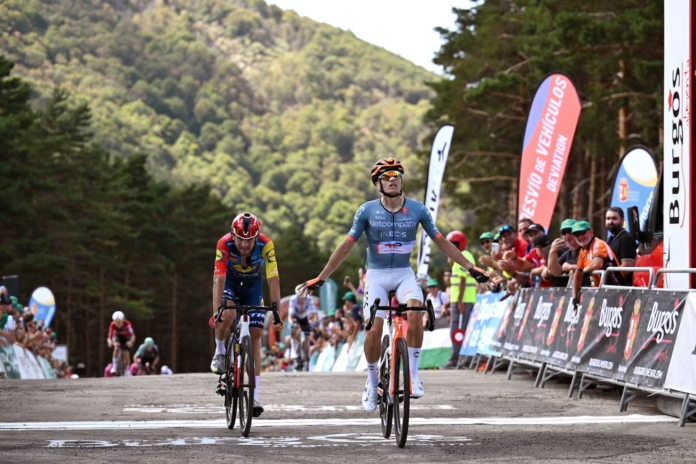
Rather than arriving in Spain after another exhausting Tour, Onley has been able to rebuild specifically towards the Vuelta. The most encouraging evidence came at the Vuelta a Burgos, where he won the uphill second stage and finished second overall.
That performance confirmed that the form is there.
The 2026 Vuelta route should suit him. There are repeated steep finishes where his punch can become an advantage, but enough long climbing to test whether he can sustain a genuine podium-level challenge across three weeks. The two individual time trials also mean Onley cannot rely solely on climbing, but his all-round stage-racing profile gives him a better balance than several pure mountain specialists.
The challenge is now consistency.
Producing one excellent week is very different from staying close to Tadej Pogačar and the strongest GC riders through 21 stages. Onley is no longer arriving as an unknown young rider, though. His previous Grand Tour performances and development have already established the level required to think seriously about the top five.
ProCyclingUK’s earlier Oscar Onley GC profile looked at why his climbing and stage-racing trajectory made him one of Britain’s most important emerging Grand Tour riders.
British outlook: Britain’s strongest overall hope. A top five is a realistic ambition if his Burgos form carries through three weeks, with the podium representing the major upside.
Joshua Tarling can target the first red jersey in Monaco
Joshua Tarling gives Britain one of its clearest chances of an immediate Vuelta stage victory.
The opening 9.4-kilometre individual time trial around Monaco is exactly the kind of short, high-speed test where Tarling can compete with the very best specialists in the world.
His pedigree against the clock is already well established. Tarling became European time trial champion while still a teenager, has won at WorldTour level against the clock and took his first Grand Tour stage victory in the 2025 Giro d’Italia.
That makes Stage 1 much more than a supporting assignment around Onley.
If Tarling wins in Monaco, he also becomes the first red jersey of the 2026 Vuelta.
Netcompany INEOS can therefore begin the race with two completely different British objectives: Tarling targeting the opening stage while Onley concentrates on avoiding unnecessary losses before the mountains.
Tarling’s role after Monaco should become more support-focused, particularly around Onley’s GC campaign, but the longer Stage 18 time trial provides another obvious personal target.
He can also be valuable on transitional stages where INEOS need to control breakaways or keep Onley positioned before difficult finales.
British outlook: One of Britain’s strongest individual stage-win chances and a genuine contender to wear red after Stage 1.
 Photo Credit: Getty
Matthew Brennan makes his Grand Tour debut as a stage-winning threat
At only 21, Matthew Brennan begins his first Grand Tour with considerably greater expectations than most debutants.
His 2026 season has already made it impossible to treat him simply as a rider coming to learn.
Brennan arrives directly from an excellent Vuelta a Burgos, where he won twice and demonstrated exactly why Visma are prepared to give him opportunities at a Grand Tour. He has the speed to win conventional sprints but enough climbing ability to remain competitive on stages where heavier fast men begin to struggle.
That distinction is particularly important at this Vuelta.
The route contains relatively few completely flat days, something covered in ProCyclingUK’s Vuelta a España 2026 sprinters and points jersey guide. Riders who can survive rolling terrain should therefore have a much wider range of opportunities than conventional pure sprinters.
Brennan also has Wout van Aert alongside him.
On some stages that creates competition for opportunities, but on others it gives Visma one of the most tactically difficult combinations in the race. Van Aert can attack, Brennan can sprint, and rival teams may not know which rider Visma are working for until relatively late.
The unknown is three-week durability.
Brennan has never had to recover through a full Grand Tour before, and there is no guarantee that the acceleration he brings into Monaco will still be available deep into the final week.
But he does not need to wait that long to make the race a success.
British outlook: One of Britain’s strongest stage-win chances and arguably the most likely rider to produce a breakthrough result during the opening two weeks.
Ben Turner gives Onley valuable protection and another stage option
Ben Turner completes the British trio inside Netcompany INEOS and provides a very different skill set from Onley and Tarling.
His primary value should come on the stages where GC riders can lose time without a mountain being involved.
Turner is powerful in crosswinds, strong on rolling terrain and comfortable fighting for position in difficult one-day style racing. Those qualities make him particularly useful when INEOS need to keep Onley near the front through exposed roads, technical approaches or chaotic medium-mountain stages.
That support role should not remove his own opportunities.
Turner still has the finishing speed to feature from reduced groups and the strength to turn a rolling breakaway into a serious stage challenge. If Onley’s GC position is secure and INEOS have freedom to send riders up the road, Turner is one of the most obvious British riders to benefit.
His profile fits several Vuelta stages where the terrain is too difficult for the pure sprinters but not hard enough for the specialist climbers to take complete control.
The key is hierarchy.
Whenever Onley is vulnerable, Turner will be working for him. When the GC situation allows more freedom, Turner becomes a legitimate stage hunter.
British outlook: An important part of Onley’s GC protection with genuine winning potential from reduced sprints and rolling breakaways.
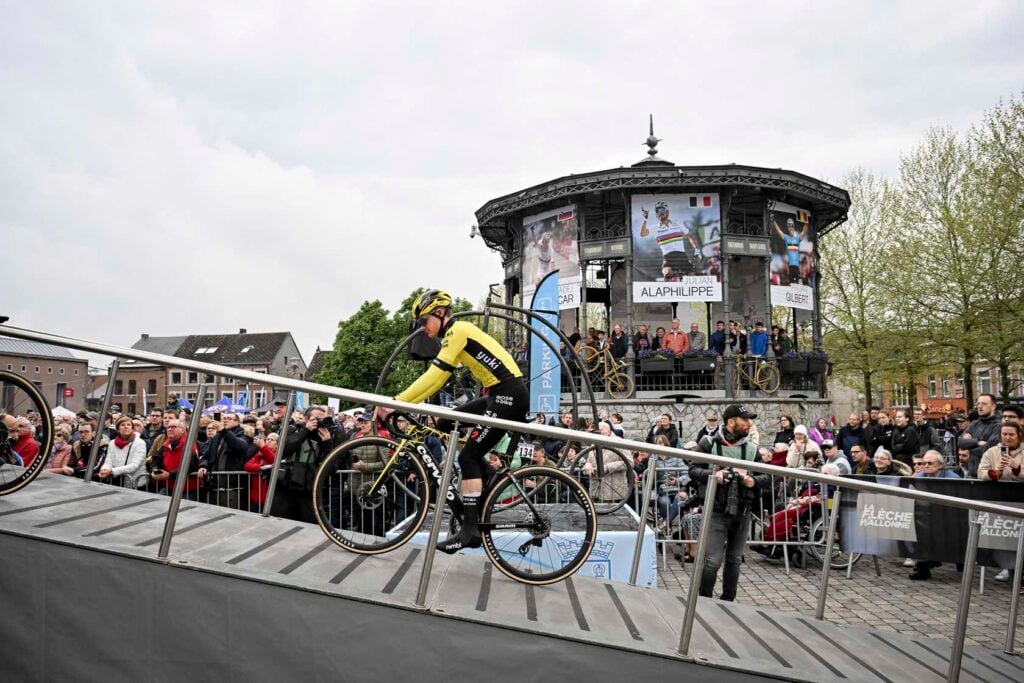 Photo Credit: A.S.O./Billy Ceusters
Ben Tulett could quietly build a top-10 challenge
Ben Tulett begins with much less attention than Onley but could become one of Britain’s most important riders as the Vuelta develops.
His 2026 season has repeatedly shown another step forward.
Tulett finished third at Eschborn-Frankfurt after helping force the decisive move and has been competitive throughout the Ardennes, including another strong performance at La Flèche Wallonne. ProCyclingUK’s Eschborn-Frankfurt 2026 race report showed how naturally he now fits among riders capable of shaping difficult WorldTour races.
More relevant to the Vuelta was his seventh place at the Vuelta a Burgos.
That result reinforced the idea that Tulett can arrive in Spain thinking about more than mountain support.
Visma’s team structure gives him freedom. There is no dominant GC project consuming every tactical decision, while Van Aert and Brennan provide the primary stage-winning focus. Tulett can therefore stay close to the classification without the team announcing a major GC campaign before Stage 1.
If he reaches the first rest day inside or close to the top 10, the objective can change naturally.
That is why he also featured prominently in ProCyclingUK’s Vuelta a España 2026 dark horses for the general classification.
The longer individual time trial should suit him better than several pure climbers around the same part of the standings, while the mountain programme provides enough opportunities to move upwards if others begin to struggle.
British outlook: The strongest British top-10 outsider behind Onley. A good opening week could completely change his status within Visma’s race.
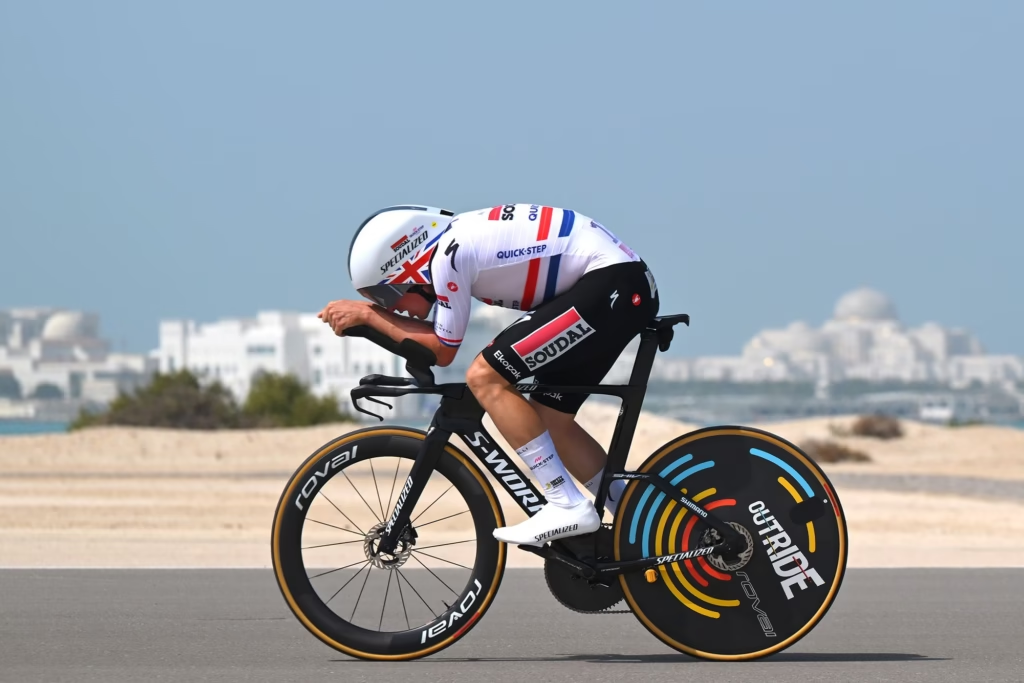 Photo Credit: Getty
Ethan Hayter has time-trial and selective-stage opportunities
Ethan Hayter gives Soudal Quick-Step another British route towards a stage victory.
His most obvious chances come against the clock.
Hayter’s background and power make both individual time trials relevant, particularly the longer Stage 18 test where the specialists should have enough distance to create meaningful gaps.
He should not be reduced to a time triallist, though.
Hayter can sprint from smaller groups, handle rolling terrain and produce the kind of sustained power required on difficult transition stages. That gives Soudal another route to results alongside Mikel Landa’s climbing ambitions and Alberto Dainese’s more conventional sprint role.
The challenge throughout Hayter’s road career has often been converting his broad physical ability into consistently decisive results.
The Vuelta provides several very different opportunities to do that.
British outlook: Britain’s strongest specialist time-trial option and another realistic stage threat if a reduced group reaches the finish.
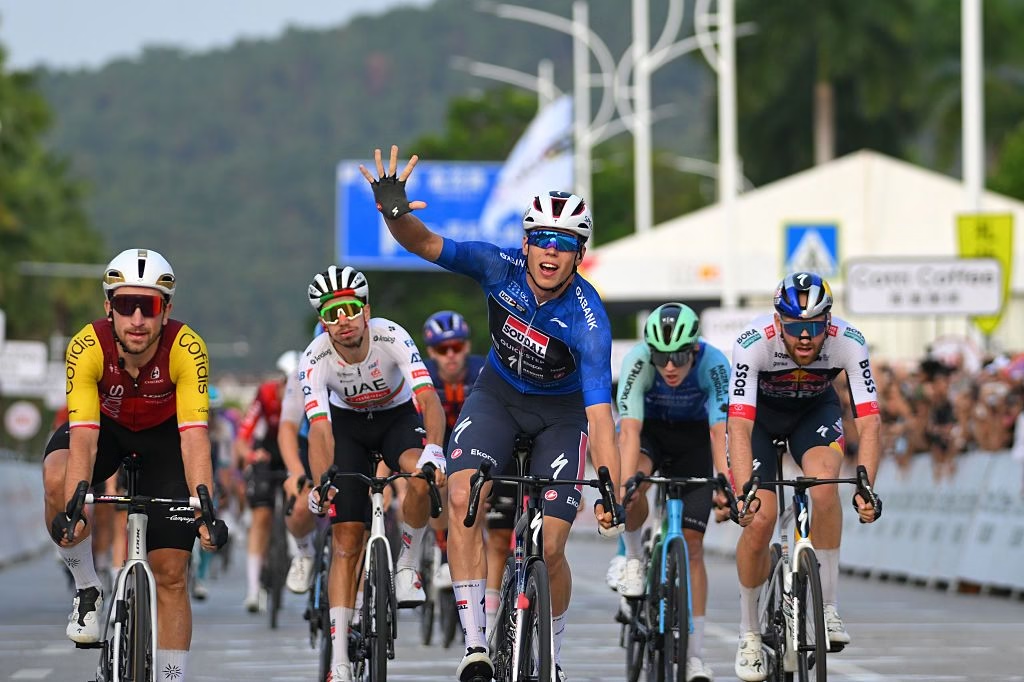 Photo Credit: Getty
Paul Double gets freedom to attack with Jayco AlUla
Paul Double may attract less attention than Britain’s younger riders, but his role with Team Jayco AlUla should give him plenty of opportunities.
The team arrive without one overwhelming red-jersey project, which immediately creates more freedom for their climbers to attack.
Double is well suited to that approach.
He has been consistently competitive in climbing races through 2026 and is unlikely to gain much from spending three weeks trying to protect a minor overall position. The more attractive option is to target the mountain and medium-mountain stages where breakaways are given enough freedom to fight for victory.
The Vuelta offers plenty of them.
That does not mean he needs to deliberately lose time immediately. If Double remains close through the opening week, he can allow the classification to develop naturally before deciding which direction offers the best chance of a major result.
But the stage-hunting route looks particularly appealing.
British outlook: A strong mountain-breakaway option with enough climbing form to turn the right escape into a major stage result.
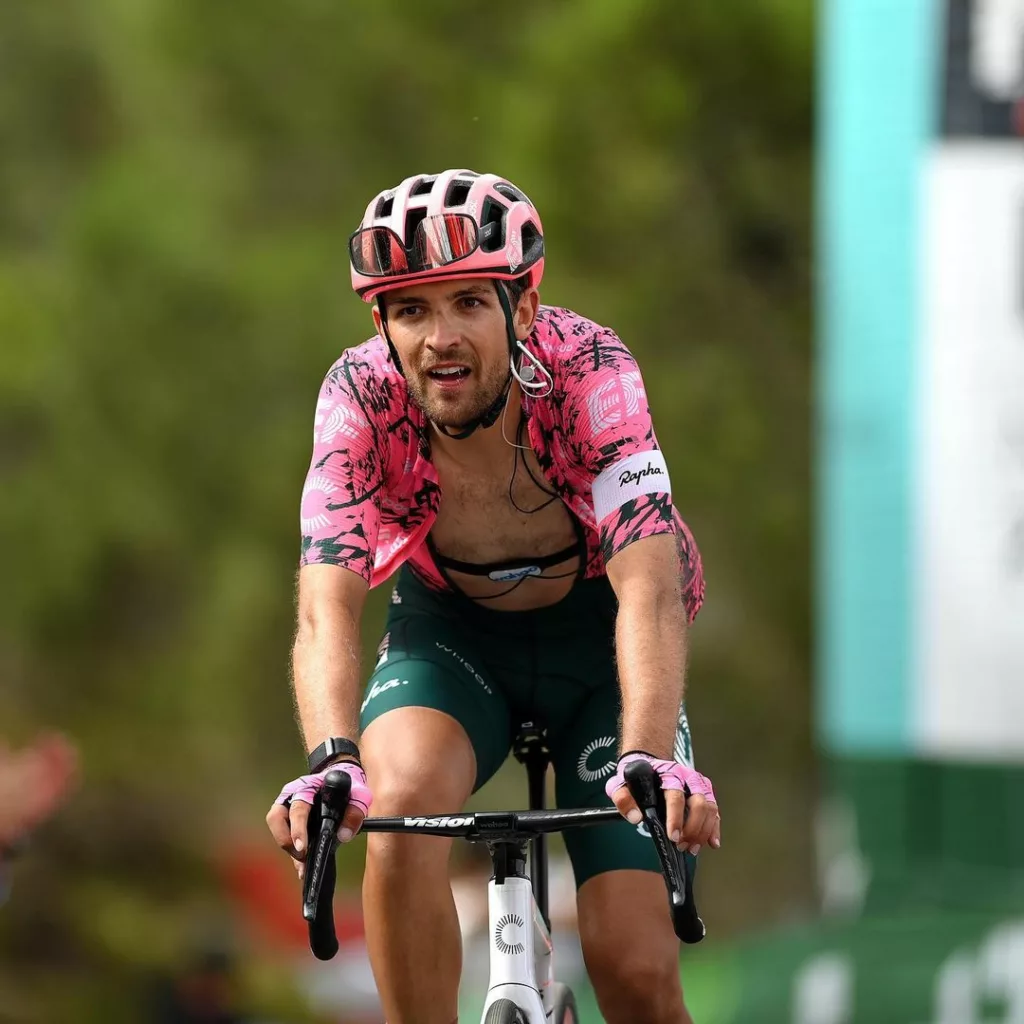
James Shaw brings experience and breakaway strength for EF
James Shaw returns to the Vuelta as one of the most experienced British riders in the field and gives EF Education-EasyPost a reliable option for the medium mountains and breakaways.
Unlike Oscar Onley or Ben Tulett, Shaw does not begin with an obvious general classification target. His value comes from being able to survive difficult terrain, contribute deep into climbing stages and take opportunities when EF are prepared to send riders up the road.
That makes the 2026 Vuelta particularly suitable terrain.
Shaw has already shown that profile repeatedly in Grand Tours. At the 2023 Tour de France, he reached the sharp end of the race on the Grand Colombier stage before Michał Kwiatkowski rode away to victory, with Shaw among the strongest riders left from the break. ProCyclingUK’s Stage 13 report from that Tour highlighted just how effective he can be when a difficult stage is allowed to develop from the breakaway.
He has continued to use that same route towards results. Shaw was again active from the break during the 2026 Giro d’Italia Stage 18, underlining that his value is not tied to one specific type of mountain finish.
At the Vuelta, there should be repeated opportunities once the GC teams begin allowing non-threatening groups more freedom. Shaw has enough climbing ability to remain useful when those moves thin out and enough experience to judge which attacks are worth following.
British outlook: One of Britain’s strongest breakaway options, particularly on medium-mountain and transitional stages where a powerful climber can survive to the finish.
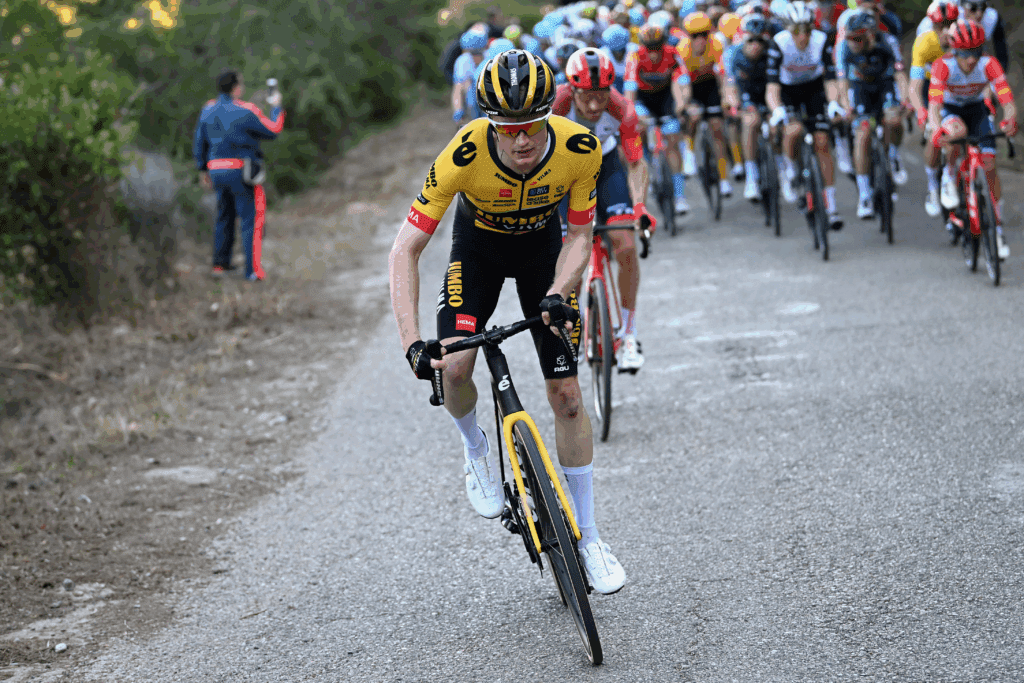 Photo Credit: Getty
Thomas Gloag gets another Grand Tour opportunity with Pinarello Q36.5
Thomas Gloag is one of the most intriguing British riders on the start list because his underlying climbing talent has rarely been the question.
Continuity has been the bigger issue.
Gloag’s career has repeatedly been interrupted by injury, but when fit he has shown the ability to compete with high-level WorldTour climbers. One of his clearest examples came during the 2025 Tour of Britain, where he finished second to Remco Evenepoel on the uphill Stage 5 finish at The Tumble, beating Oscar Onley in the same reduced sprint.
That performance is covered in ProCyclingUK’s Tour of Britain Stage 5 race report and remains a useful illustration of what Gloag can do when his preparation has been uninterrupted.
His move to Pinarello Q36.5 Pro Cycling Team for 2026 has given him another opportunity to rebuild that progression.
The Vuelta is a particularly useful race for him because there is no need to force an immediate GC target. He can contribute around the team’s wider objectives early, see how his condition develops and then potentially move towards breakaways once the race reaches the bigger mountain stages.
Gloag has shown before that he can attack rather than simply follow. Earlier in his career he was repeatedly aggressive at the Volta a la Comunitat Valenciana, including an attacking ride covered in ProCyclingUK’s 2023 Stage 2 report.
That willingness to race aggressively should suit the Vuelta.
If he reaches the second half with good legs, there are several mountain stages where he has the climbing level to become much more than a support rider.
British outlook: A difficult rider to predict but one with genuine climbing upside. A strong mountain breakaway offers the clearest route towards a major result.
Callum Thornley makes his Grand Tour debut with Red Bull-BORA-hansgrohe
Callum Thornley is one of the younger British riders in the race and begins his first Grand Tour as part of the Red Bull-BORA-hansgrohe structure.
At 23, the Vuelta represents a significant step in his development.
Thornley is not being sent to Spain with the expectation of producing a general classification result of his own. His immediate value lies in being able to contribute across rolling and climbing terrain while gaining experience of the demands of a three-week race.
There is already evidence that aggressive racing suits him.
At the 2024 Tour of Britain, Thornley went on the attack during the opening stage in Kelso and collected enough climbing points to take the King of the Mountains jersey. ProCyclingUK’s Stage 1 report detailed how he used the breakaway to dominate the early classified climbs.
He then retained the jersey through Stage 3, another indication that he can turn an attacking role into a sustained objective rather than simply appearing in an early move. That race is covered in ProCyclingUK’s Stage 3 Tour of Britain report.
The Vuelta is obviously a much bigger test, but that background makes him an interesting rider if Red Bull-BORA-hansgrohe eventually give him freedom.
His first task will be supporting the team’s broader race plan, particularly on medium-mountain days before the specialist climbers take over. If he adapts well to the accumulated fatigue, a second- or third-week breakaway would be a natural progression.
British outlook: Primarily a domestique and development project, but his attacking instincts make him worth watching if he earns freedom later in the race.
 Photo Credit: Getty
Finlay Pickering returns to the Vuelta with proven mountain-stage experience
Finlay Pickering should not be treated simply as another young rider discovering the Vuelta.
He already has meaningful experience in this race.
At the 2025 Vuelta, Pickering repeatedly showed that he could remain involved deep into difficult mountain stages. On Stage 12 he followed Juan Ayuso on the decisive climb before eventually fading from the winning move, while later in the race he was still present with the reduced GC group on La Bola del Mundo.
Those performances are covered in ProCyclingUK’s 2025 Vuelta Stage 12 report and Stage 20 report.
That experience matters.
Pickering now returns with Team Jayco-AlUla, alongside fellow Brit Paul Double, and should be better equipped to judge where to spend his energy across three weeks.
His climbing remains his main strength.
The 2026 route contains enough mountain and medium-mountain stages that Pickering does not need to wait for one perfect opportunity. He can support Jayco’s leaders when required and still have several days where moving into the break makes tactical sense.
The most encouraging part of his 2025 Vuelta was that he remained competitive deep into the third week. That is often the hardest thing for a young rider to achieve in a first Grand Tour.
If he can carry that durability forward, the target should move beyond simply finishing.
British outlook: A developing climber who has already shown he can survive deep into hard Vuelta stages. Breakaway opportunities and a high mountain-stage finish are realistic targets.
Oliver Peace makes his Grand Tour debut with Team Picnic PostNL
Oliver Peace is the youngest British rider in the field and one of the most intriguing long-term development stories among the 10 British starters.
Born in 2005, Peace arrives with Team Picnic PostNL and begins his first Grand Tour at only 21.
That means his Vuelta needs to be judged differently from Onley’s, Brennan’s or even Pickering’s.
There is no need for Peace to produce a headline result immediately. The first objective is learning how to manage three weeks of racing: positioning, fuelling, recovery, repeated climbing days and the constant accumulation of fatigue that separates a Grand Tour from every shorter stage race.
His selection itself is significant.
Very few riders receive Grand Tour exposure this early in their professional development, and the experience can accelerate progression even when the individual results remain modest.
Picnic PostNL can also use Peace in a variety of roles. Early in the race he is likely to spend much of his time working for teammates and learning the rhythms of the peloton. If he reaches the second half in good condition, there may be opportunities to join a breakaway or contribute more deeply into selective stages.
There is no need to manufacture expectations around a stage win.
For Peace, reaching Granada after three weeks of useful work would already represent substantial progress.
British outlook: Primarily a development ride. Finishing his first Grand Tour and gaining experience across the mountains would be a successful Vuelta, with any breakaway opportunity an additional bonus.
Britain has several realistic routes to a Vuelta stage win
The strength of the British contingent is not simply its size. It is the range of ways those riders can win.
Oscar Onley can challenge from a GC group or on a summit finish.
Joshua Tarling is one of the leading contenders for both individual time trials and has an immediate opportunity to take the opening red jersey in Monaco.
Matthew Brennan can win conventional and reduced sprints.
Ben Tulett has the climbing and punch to attack selective stages while protecting an overall position.
Ethan Hayter gives Britain another strong time-trial option and can win from smaller groups.
Ben Turner is dangerous on rolling stages and reduced finishes whenever his work for Onley allows him freedom.
James Shaw, Thomas Gloag and Paul Double are all credible breakaway options once the race reaches the mountains and medium-mountain stages.
Finlay Pickering has already demonstrated that he can remain competitive deep into difficult Vuelta stages, while Callum Thornley has the attacking instincts to become useful if Red Bull-BORA-hansgrohe give him freedom.
For Oliver Peace, the expectations are necessarily different, but even his presence adds another potential breakaway option if he adapts well to his first Grand Tour.
That gives British riders realistic involvement across virtually every type of stage on the 2026 Vuelta route.
Onley leads the British GC challenge, with Tulett the secondary storyline
Britain’s general classification hierarchy remains straightforward despite the enlarged contingent.
Oscar Onley begins as a designated leader with genuine top-five ambitions. Netcompany INEOS are starting the Vuelta with an established GC project around him rather than waiting to see whether one develops.
The confirmation of Tarling and Turner actually strengthens that position.
Tarling gives INEOS enormous power against the clock and on transitional terrain, while Turner provides exactly the kind of Classics-style protection a GC leader needs on stages where positioning can matter as much as climbing.
Ben Tulett approaches the classification differently.
Visma | Lease a Bike have several stage-winning objectives, meaning Tulett can initially concentrate on staying close rather than defending a predetermined placing. If he reaches the first rest day inside or around the top 10, his role can evolve naturally.
The remaining British climbers should not be forced into the same conversation.
James Shaw, Thomas Gloag, Paul Double and Finlay Pickering all have the ability to produce major mountain-stage performances, but breakaways and support work offer more realistic routes to success than protecting a minor GC position for three weeks.
Onley therefore begins with expectation. Tulett begins with opportunity.
-
 Photo Credit: quentinphotographiebe
 -
 Photo Credit: Getty
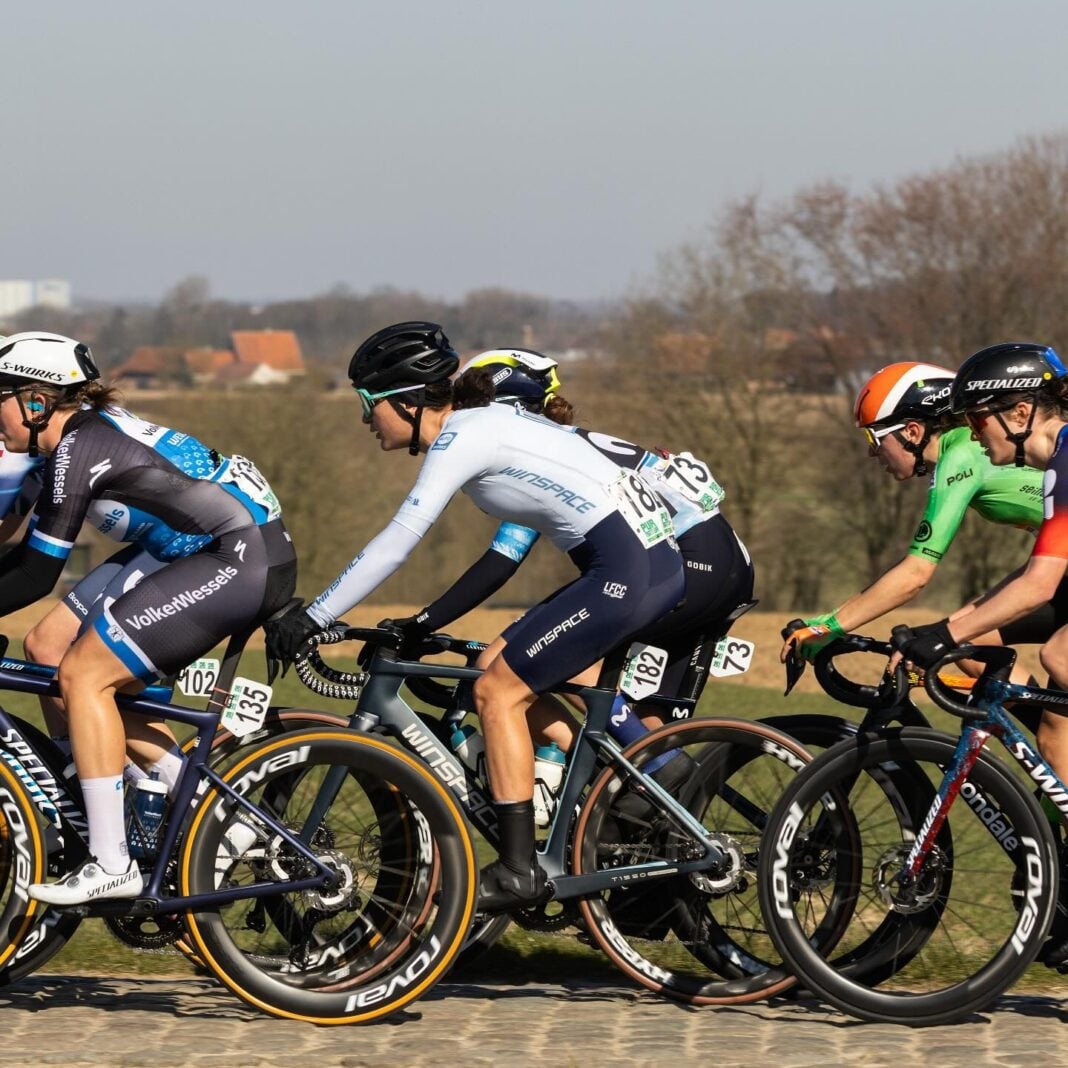
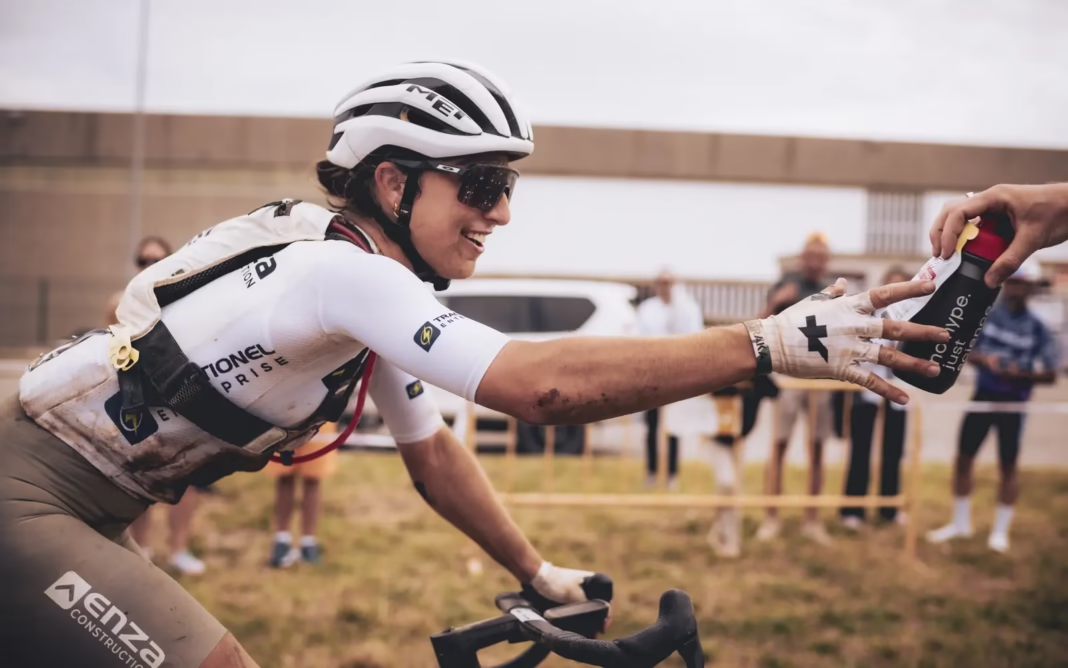
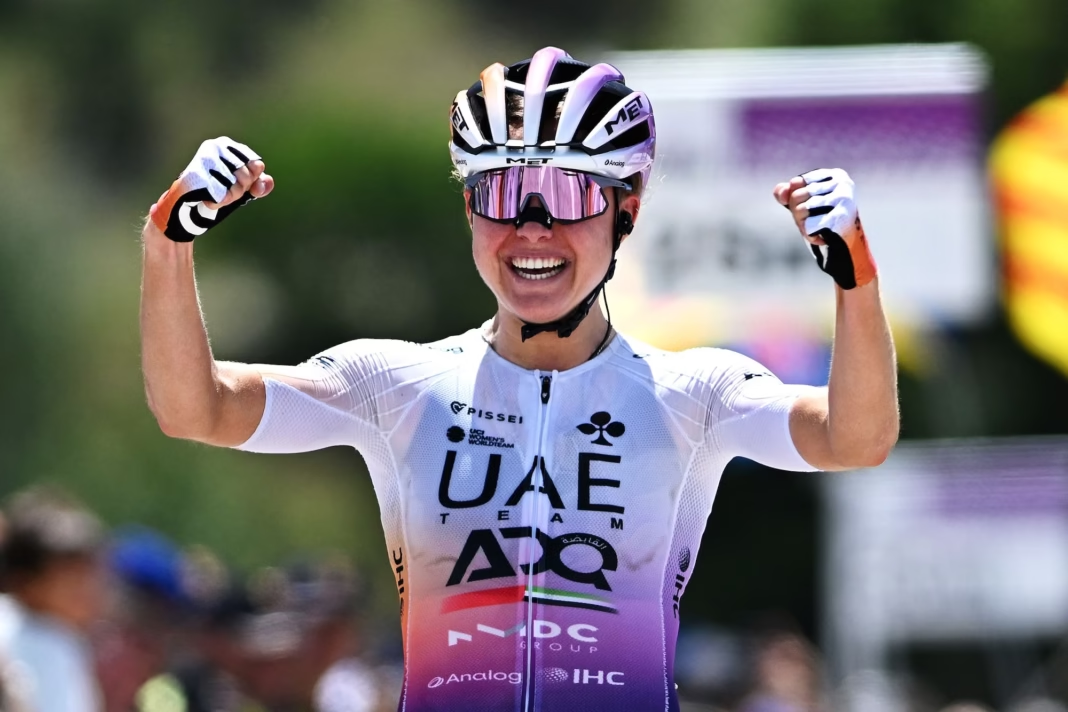
Brennan could still be the British breakout rider of the Vuelta
Onley carries the biggest overall expectations, but Matthew Brennan may still be the British rider most likely to produce the race’s breakout moment.
That is a significant distinction in a 10-rider British contingent containing an established GC leader, experienced breakaway riders and several promising young climbers.
Brennan arrives with immediate winning form and a role that should give him opportunities from the opening week. His ability to handle harder terrain than many conventional sprinters is particularly valuable on a Vuelta route with relatively few straightforward flat stages.
What would represent a successful British Vuelta?
For Oscar Onley, success should be measured through the general classification. If he remains healthy, a top 10 should be the baseline, a top five would confirm his development into a high-level Grand Tour leader and a podium would represent the major breakthrough.
For Joshua Tarling, the objectives are much more stage-specific. Winning either time trial would make his Vuelta a success, and taking Stage 1 would also give him the first red jersey of the race.
For Matthew Brennan, a stage victory would immediately make his Grand Tour debut a success. Given his form heading into Monaco, that is an ambitious but realistic target.
For Ben Tulett, the question is whether his strong performances in shorter stage races can translate across three weeks. A top-10 finish would be a major result, although Visma do not need to force that objective if stage hunting becomes more attractive.
Ethan Hayter also has specific opportunities against the clock and on selective stages. A time-trial podium or stage victory would transform his race.
For Ben Turner, much of the value may come through protecting Onley, but a strong reduced-sprint or breakaway result would give him a personal return as well.
For James Shaw, Thomas Gloag and Paul Double, breakaways provide the clearest route to success. All three have the climbing level to reach the decisive part of a difficult stage if they make the right move.
Finlay Pickering should be aiming to build on his 2025 Vuelta rather than simply repeating the experience. Remaining competitive in the mountains and challenging for a strong stage result would represent another step forward.
For Callum Thornley, successfully completing a first Grand Tour while becoming useful within Red Bull-BORA-hansgrohe’s race structure would already be valuable.
For Oliver Peace, the objectives are even more developmental. At 21 and starting his first Grand Tour, reaching Granada after three weeks of productive team work would itself be an important result.
Britain now arrives with 12 riders, including one genuine GC leader, two major time-trial threats, one of the most exciting young sprint prospects in the race and considerable depth among the climbers and breakaway specialists.
Onley remains the central British GC story, but the confirmation of Tarling and Turner makes Netcompany INEOS particularly important to the wider British Vuelta narrative.
Tarling could put a British rider in red on the very first evening. Turner strengthens Onley’s support. And Onley still carries the biggest three-week ambition of them all.

